Angélica Fuentes on Women's Empowerment, Leadership & Gender Equality
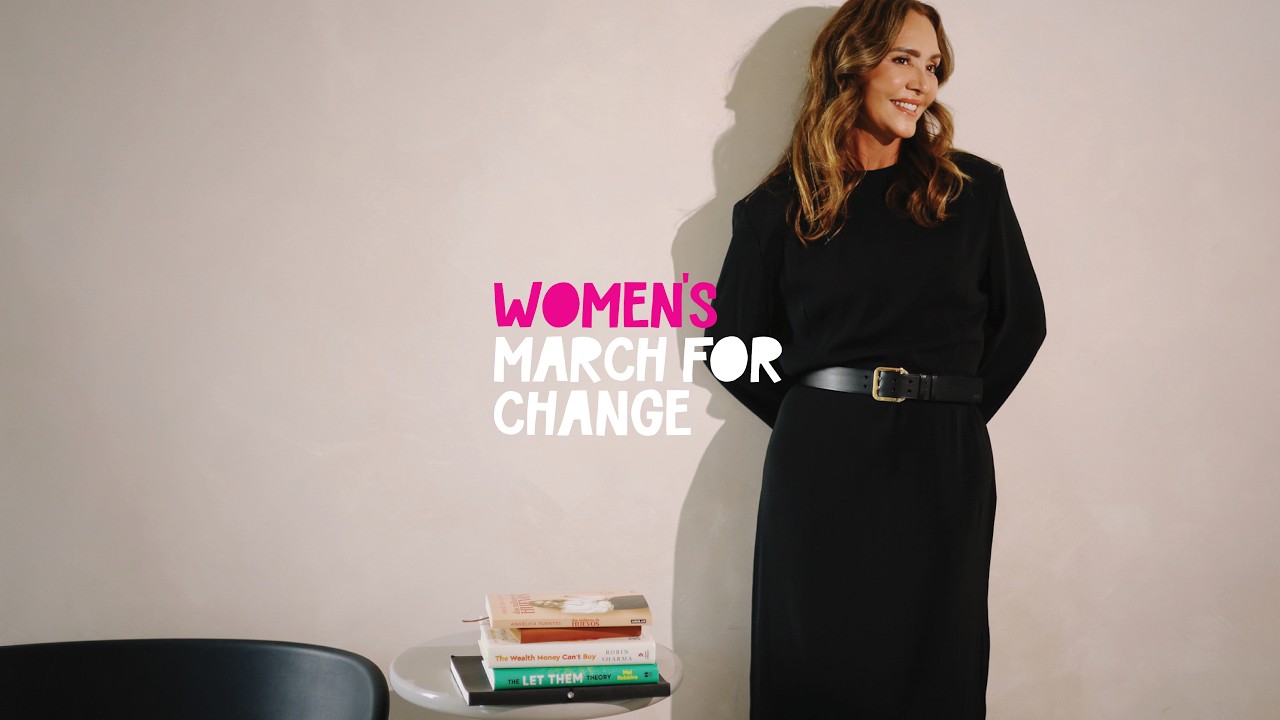
In this Under the Sisterhood Season 5 episode, host Elizabeth Elfenbein interviews Angelica Fuentes, a Mexican‑American business leader, impact investor, and gender‑equity advocate. Angelica recounts her first encounter with gender bias at age 11 while working at her family’s gas station, describing how that moment sparked a lifelong mission to “move stones” for women. She explains her rebellious personal philosophy – reclaiming a “wild and pure heart” – and how it propelled her from entry‑level roles (gas‑station attendant, secretary, coffee runner) to becoming CEO of Grupo Imperial at 29, later leading major energy‑sector bodies in Mexico. Angelica details the double hurdles she faced as a woman: having to work twice as hard and confronting overt sexism (e.g., the basket‑of‑eggs metaphor). She shares stories of demanding respect from male executives and using creative tactics to assert authority. The conversation shifts to her advocacy work: founding micro‑finance/education platform Muvo, creating Mission Moms, partnering with UN Women, the UN Foundation’s Girl Up, the World Economic Forum’s Gender Parity Program, and leading a campaign that raised Guatemala’s legal marriage age from 14 to 18, impacting over two million girls. She describes the launch of Nowful (also spelled Naufol), a wellness brand offering an app, affirmations, magnesium cream, and sleep‑enhancing powders to help women recover from burnout and reconnect with themselves. Throughout, Angelica emphasizes self‑belief, inner work, and the importance of women caring for themselves to better serve others. The episode ends with her urging listeners to believe in themselves, regardless of age or circumstance, and to keep pushing forward despite adversity.
Chapters
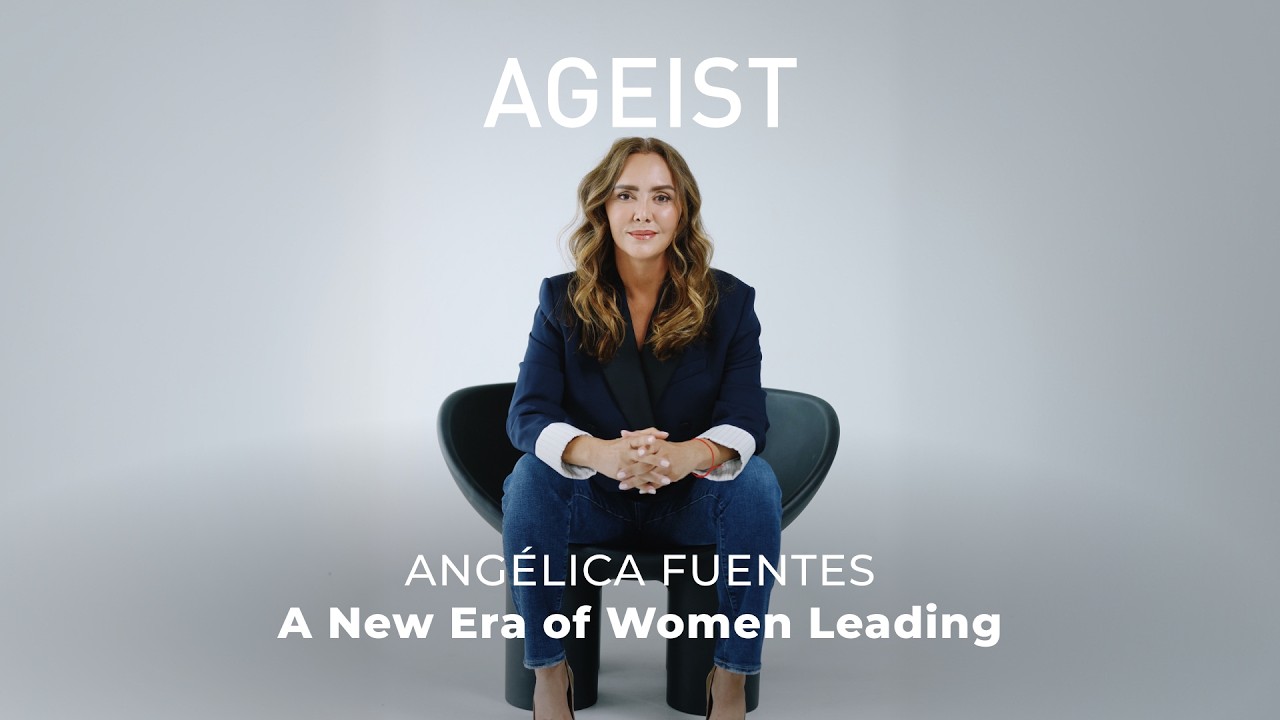
Welcome to season 5 of Under the Sisterhood: Women's March for Change. This season, we're honoring women who are driving progress in health, in equity, in leadership, and in life. These are the changemakers and truth-tellers challenging systems, reshaping narratives, and creating a world where every woman's voice matters. Each week, we'll share powerful stories of courage, purpose, and transformation from the front lines of women's health the heart of social impact. This podcast celebrates women, their resilience, and the change they inspire every day. I'm Elizabeth Alfenbein. Let's get under the hood. Today, we're marching for change with Angelica Fuentes, a mother, daughter, sister, Mexican-American businesswoman, impact investor, entrepreneur, and lifelong advocate for women's rights and gender equality. At just 29, Angelica was appointed CEO of Grupo Imperial, where she helped position the company as a leading force in northern Mexico's energy sector. She went on to serve as president of the Mexican Natural Gas Association, president of the APEC Business Energy Network, and to later as CEO of Grupo Omnilife Angelisma Chivas, one of Mexico's top corporations. Her commitment to women's empowerment has shaped everything she has built, from Muvo, a microfinance and education platform focused on financial empowerment, to Mission Moms, created to support working mothers across the United States and Latin America, And most recently, she founded Nowful, a restorative wellness experience designed to support deep recovery, stress relief, and intentional living. Angelica has served with global organizations including UN Women, the World Economic Forum's Gender Parity Program, the UN Foundation's Girl Up campaign, Global Dignity, the Smithsonian's National Museum of the American Latino and the Woodrow Wilson Center. Her leadership has been recognized by UN Women, the United Nations Public Foundation, Maestro Cares Foundation, and Mercado Global for her lifelong commitment to advancing gender equity and equality, dignity, and financial empowerment. Wow. Welcome.
Thank you so much for having me in your podcast, Elizabeth. It's an honor for me to Be able to share some of my stories.
Amazing, Angelica. I love this season, Women's March for Change. You have been marching for change forever. So if it's okay, let's get going.
Wonderful. Let's do that.
Awesome. I love this question, Angelica, because everybody has a point in time, an inflection point, a spark that gets them on a path. And in this case, marching for change. What was that for you, Angelica?
That happened when I was 11 years old. And that first summer, I started working at one of my family's gas stations, doing what an 11-year-old can do, which is filling up, you know, cars with gasoline, cleaning windshields, putting air in tires and things like that. And I realized after the first week to 10 days of being there that I was not being tipped like the guys were. So I gathered the courage to ask, I'm doing the same service, why aren't you tipping me? So this man finally tipped me. It was such a small city, Juárez, at the time that we had lines of cars waiting to be taken care of by that young girl who was at that gas station because I thought that was very unique, I would guess. But it was also there that I understood that the world was going to treat me different Because I was a girl. And that was the first time that I faced real gender discrimination, like boom, like right on my face. And it was then and there that I also realized that nobody was gonna raise their voice for me. Nobody was gonna ask anything for me. And I learned that if I didn't raise my hand and raise my voice, I was gonna be at that place that I was supposed to be, especially in Latin America. There is a saying, calladita te ves más bonita, which translates literally to, while staying quiet, you are more beautiful. Girls are supposed to do that. And I decided that was not me. I was not gonna stay there. And I planted a seed then and there that became my life's mission. If I was going to open a door for me, if I was going to take one stone out of the road for me, I had a responsibility to do that for all the women that came behind me. Mm-hmm.
I am sitting here in utter goosebumps. First of all, I want to say you are very beautiful and not silent, which is a wonderful thing. Kudos to you, Angelica. But I can only imagine this little 11-year-old girl at the gas station cleaning the windows, pumping the gas, and And realizing in that moment that you weren't being treated fairly and equally. And so, and kudos to you. I mean, I don't even know what to say that you, at 11 years old, you knew something was wrong. Since then, you've made it your life's mission to move stones for yourself and for other women. So I want to now go on this journey because 11 years old and having that moment, you must have been like an old young person, not a young old person. You know what I mean?
You must—
you were so wise at 11 to have figured that out.
I don't think I figured it completely out in my mind, but somewhere within me, and I think you're meaning to say I'm probably an old soul, you know, and a little girl's body.
Exactly.
So in my mind, I really didn't quite grasp it right then and there, but somewhere inside of me, I realized that it was not something I was going to allow. It was something that I wanted to change for me. I was born very rebellious. If I was told go left, I went right. If I was told to stop, I would push forward. As if I was told don't do it, I did it. Self, that rebellious spirit that I had is what allowed me to achieve everything that I've achieved. I've always been the black sheep of my family because I did not conform to what society said I needed to be, I needed to do, I needed to live. With and by. And it was not until also later in life that I realized that that rebellious spirit meant freedom. I have a quote that actually made t-shirts with that says, I'm reclaiming my wild and pure heart. And that means that it's always been like something negative. And I don't see it that way. When I say I'm reclaiming that wild and pure heart, has nothing to do with what people think about. Oh my God, her wild heart, was she like a crazy wild young girl? No. My wild heart meant that rebellious, that, that amazing wanting to be, wanting to do things different, because that's who I am. Like, we all are our own unique Beautiful, amazing, incredible beings. Reclaiming my wild and pure heart is because it's always pure. Love is always pure. That that makes us be who we are is always pure. It's always clean. It's always transparent. We sometimes kind of muddy things up because we don't know where to go. But but I think that when we reclaim our wild and pure heart, we become free.
Mm-hmm.
Because we become free to choose to be who we want to be, to do what we want to do, to feel what we want to feel, to open up, you know, those doors and achieve whatever it is that each one of us is meant to do, to go out and find your purpose, your mission.
Yeah, I love that. Well, there's so much to that. And of course, with what you're doing now. But I want to kind of go back and go on a journey with you because I'd love to understand after age 11 when you felt something intrinsically and inherently wrong, your nature was to be and to do differently. And so what journey did that take you on? You've accomplished so much, Angelica. So we'll get to that. But clearly, you went on a journey in the process to getting you to where you are today. So what was that like?
I always knew since I was very little that I wanted to be a businesswoman. And so I wanted to learn the business from the very bottom up, obviously, because I did not have the age, the knowledge, the maturity to do anything other than what I was doing. So every summer for 3 summers, I worked at gas stations, a smaller one and then a big one. And then the 3rd year was like I was kind of taking, taking care of both. But then I went on and I became The general manager of the liquefied petroleum gas, LPG, area of the group's secretary. I'm talking, I don't know, like 40 plus years ago. So back then, you were literally a secretary. You know, I would come in with my little notebook to write and stand up in front of him to write what he wanted. Everybody knew that the first time I ever worked in the summer, my father said, "If you ever complain, you're out of there." So they kind of took advantage of that. This guy would yell from his office, everybody could hear, Angelica, bring me some coffee. So I would go to the back of the office, make his coffee, bring it into his office. I would go back into my little desk outside, and then he would yell, you forgot the donut. So I would literally go to the back again, get him the donut he wanted, bring it back. It was A huge, amazing, difficult, hard learning experience. This guy would also say, "Oh, come here. I need to you know go over something with you." So I would go stand there with my little notebook. I'm fourteen at the time, okay? And he would be on the phone and continue talking and talking. By the time he hung up, maybe a minute, two minutes after that, which is a while to be standing in front of somebody on the phone, he would tell me, "Oh, I forgot what I was going to tell you. I'll call you later." Those things that happened to me made me realize that I did not want to treat people the way I was being treated. The people needed to be treated with respect. I also believe that everything we go through has a lesson behind it. It's not why me, it's what is this for? What is this meant to teach me? Why am I supposed to learn? And then, you know, 2 years after that in the summers, I was accountant's assistant in different areas of the group. And I just learned from the bottom up, and I kept climbing and climbing and climbing the ladder until at age 29 I became the group CEO. But by that time, I had already visited many other plants, knew how to load, unload, drive the big trucks. I mean, I, I was very aware of basically all of the intricacies, everything that went on. you know, everywhere on the group in order for me to lead. I also learned, because it was in energy sector, that I could not compete with or against men, much less women, that I could only compete with me being better today than I was yesterday. And that has been my motto. I love it. And what— in everything, as much as I can possibly You know, be conscious of what's happening in my life, how I'm leading, how I'm feeling, what I'm doing. So that's been my journey, and that's what took me to where I've been.
Well, I mean, first of all, kudos to you. I really admire this fiercely independent young woman going in. And in a way, yeah, he might have beaten you up metaphorically, if you will, or mentally, at age 14, that having that opportunity also to witness and experience that, to teach you that lesson of knowing how you didn't want to lead. And then within 15 years, you're the CEO of the company. You know what I mean? That's pretty frigging awesome because clearly you were able to absorb and really learn the business sense. And your gender, I mean, while it did get in the way then, it didn't get in the way of— I mean, age 29, you were clearly so competent, capable, and brilliant at what you did. you did to put you into that role. And so I'm kind of curious, like, getting into that role, because you did start at such a young age, which they would take advantage of you. It makes sense. But like, what did you see? And as you became so 29, the CEO, like, what did you witness and experience? And what strengths did it pull out in you?
Well, it wasn't easy. Obviously, it wasn't something that was given to me. Have to ask for what I wanted, for what I deserved, because of the results I was giving. So I realized very, very early on that because I was a woman, I had to get over 2 huge hurdles. The first one was that I needed to get over the hurdle that because I was a woman, I did have the capacity to think because I had a very keen intellect. I was a wise person. I could achieve what I was looking for, so I prepared myself twice as hard, twice as much as any man. So I was very well prepared. I wanted to learn everything. I even worked on weekends because I wanted to learn more and more and more. So I was very conscientious of that. And the other hurdle I had to overcome is that just because I was a woman, I needed to get and push off obstacles they put in front of me because of my gender. So because I accepted that not as something to be lived forever, but as something that was there, and I, I still feel that it's there in many areas and aspects of women's lives, I realized that I had to take— I view a woman's life as a path full of branches And rocks on the on the on the path, you know. And I kept thinking, if I can just get one of those branches out of the way, if I can cut one and take one stone out of it, it'll be one less for those women who are coming behind me. And you know, I learned to cooperate with men and cooperating and by achieving results and by understanding that we cannot do anything on our own because it takes a village to achieve anything. And by being open to that, I could, you know, continue scaling up in my professional career. And like I said, it wasn't easy. I was tested constantly because I was a woman. Let me tell you one story I remember perfectly well. When I became the CEO, I sat on the— how do you call it— on the board office where we have the board meetings in the office. All men. And the executives were all men, all older than me, because I usually sit in tables where I was the only woman. Often enough, I was the youngest person there.
Hmm.
And I, you know, you know, the transportation and the LPG and the natural gas and the hotels and the agriculture and every, every, you know, every person heading the different areas were there. And I said, okay, I said, I just came here, introduced myself. I would like to sit down with each one of you. Let's schedule meetings so we can go over what you're doing, so we can, you know, set a path forward, set strategy, so we can figure out how to better the different areas. We did that. I remember the first time— no, not the first time, I think like a week later, I can't remember the exact time because it was too long time ago. I went back into the office to the, you know, the where we were going to have the meeting with the first person. He didn't show up, and they're waiting five minutes and a little past five minutes. And I said, "This is weird," right? I said, "I'm waiting. We're gonna go. You know, we're gonna review the area." And he said, "Oh, you really meant it." I was going like, "Oh my God! They think that I'm here to play businesswoman." So I was very strict. So I mean, and.
And, and that would have made me so crazy. That would have made me so crazy. Good for you. Thanks.
So this is another story that I absolutely have to share with you. I think you kind of appreciate it because they were all men and they were kind of starting to feel a little overwhelmed because there was this young woman who knows what she wants and is sitting there and they kind of trying to navigate what they need to do. I remember right before you walked into my office, it was like 2 steps down. There was a real pretty desk, you know, like like a little whatever arrangement that was there, and I bought a huge basket, and I put a huge pink bow, and I filled it with eggs. It just filled it with eggs. So it sat there, and and the men would look at the basket, and they were coming in out of my office for meetings, and you know follow-ups, and all kinds of stuff. So this went on for. Probably, I don't know, three, four, or five days, and nobody had had the courage to ask about the basket until Manuel. And I remember perfectly well, he was a manager for the transportation companies. He walks into my office, and he's he he's kind of he's like the short man, kind of sitting real nervous all over the chairs. Angelica, you know we've been because I I can see him. I can see him. He was like moving around his. You know, we've been we've been wondering. I've been you know, I don't know what to ask you, but all the other guys had asked you know told me that I needed to ask you why do you have a basket of eggs outside? Let me say that in Spanish, not in Spain, but like in Latin America, eggs mean means literally huevos. But Huevos have two different versions, so it's either testicles or literal eggs like chicken eggs too. To cut, I don't want to say the other word that starts with a B, but that's—I don't know if I can on the podcast—but that's what they are. And when he asked me, "Why is that basket full of eggs outside?" And I looked at him and I said, "Well, Manuel, very simple. If you need them." To come to me, talk to me, and see me as your equal. On your way out, grab one, and you can tell all of them that that's what they're there for. Because I mean, I just need to be very creative to figure out how to make them understand that I was not there to play, that I was there meaning what I was there to do. And things slowly—it took a while. You know, started to change. Oh, I have stories like that, like you have no idea. But—
Oh, I can— well, I can only imagine because I know my experience, but it sounds like in Latin America it would have taken it a whole— the whole next level. So I just want to sit and pause for a second and just applaud you, first of all, for bringing the basket of eggs to make a point, which is freaking brilliant, but also just to not let that get in the way. of you being you and showing up as your authentic self and accomplishing all that you've done. I mean, what an incredible introduction in terms of all of your leadership, both as president and CEO in the gas space and now with NOWFUL. But I also would like to— before we get into NOWFUL, I'd love to understand your journey with everything you've done with UN Women and all of UN. What was that like? And is this a recent thing? What was the journey in—
Well, I have a phrase that says, be more to do more. I come from a generation of doers, of people who acquire, keep, grow, acquire, keep, grow, grow. And I think that my generation and older generations never tapped into being. You know, I think the newer generations now— I have been for the last 20 years, I prefer for profits, for purpose, for profit type of investor. But back then, there was like, that didn't exist. In my 20s, I realized that even though I had everything— well, it was a little earlier, like maybe when I was 17, 18 years old— I was asked by a friend of mine, how can you be sad when you have everything? And I looked at her and I said, I have everything, yet I have nothing. Because I had everything on the outside, but there was something missing here that I knew, and I realized with a lot of work that only I could feel that. So that took me on an amazing journey where I understood that I needed to learn to be more, to do more. And I believed very, very early on— this is like in my early 20s. That I was doing good. I was, you know, making us— I was obviously making a salary, and a little part of that I've been saving, by the way, since I was 11 years old. But like in my 20s, I would remember putting it in pockets of my little green terry cloth, uh, thing that I had in my closet. But like in my 20s, Elizabeth, I starting— obviously a little part of it was saved, but a little part of it I gave, donated in a way for girls to be able to go to school, even if I could only pay for one at the time. Nice. And I started, and I started, you know, participating in— I remember being part of the board for the Tecnológico de Monterrey en Ciudad Juárez, because if we were doing so well in the company, we needed to give back. And education to me has been at the core of everything. An educated country is a country with a future. An educated woman is a woman with a future. So that was one of the biggest spaces where I participated in. And because I love working with women, I was invited one time to a meeting of the Girl Up Project. And I loved it. That's from the UN Foundation.
Yeah, yeah.
And I loved it because it involved young girls to help them change, transform the way they viewed themselves and the world, the girls around the globe who did not have opportunities. So I decided to be a part of that. And then I became global advocate for the Girl Up campaign. And then I decided my foundation needed to be the anchor for the Guatemalan project. So we work with the UN Foundation through the Girl Up, with UNICEF, with the government of Guatemala. And I would travel to Guatemala, actually took my daughter Valentina a couple of times because I wanted her to learn you know, that her life was very privileged. And she— I always believed that when you have a privileged life, you have to give back.
Oh, God.
Yeah. And so we went to Guatemala, and I would speak to the girls. And I have so many stories. For example, one of the stories is I remember the girls were not going to school, and I said, why, why were you pulling out of school? It's because our bathrooms, you know, they don't have doors, and they're in front of the boys' bathrooms. And that comes again, my innovation, my creativity. I said, oh, I'm gonna teach you how to be a door. So I said, I need to go pee. Come on, girls. We went up there. I said, 2 of you get in front of me. And I did. And I said, okay, who's next? I said, you become your own doors. You cannot stop coming to school. We got to change in 2013 the law of marriage from 14 to 18 years old. That benefited a little over 2 million girls in Guatemala.
That's amazing. That's amazing, Angelica. Oh my goodness.
And then working with UN Women was amazing because we were the first company in Latin America to sign the 10 Principles for Gender Equity. Our group was nominated 3 years in a row, you know, the best group for gender equity. I put in— this is even way before that. It was important for me to give the same opportunities to women as there were to men. I put breastfeeding infrastructure when women were still embarrassed of breastfeeding their babies, especially, you know, in a public place, even though it was a private space. So, uh, World Economic Forum— I was on the board of the World Economic Forum for gender parity. I was, you know, the one heading the gender parity in Mexico. It's just been part of my life, Elizabeth. It was part of me giving back so much that I had received. It was part of giving back because I had already opened so many doors for me. I believe that there's no sustained anything without women. Uh, I, I believe that we cannot exclude half of the world's population because There's a lot of talent. There's a lot of amazing things we're missing by excluding half of the world's population. Creativity comes from our feminine energy. All these people on the tech and all that world, that's tapping into the feminine energy. That's not masculine energy. Masculine energy is decision-making. It's, it's, you know, being strong and being mathematical. but not the creative. Creative is tapping into your energy, your feminine energy. And, and I believe that what really matters has no gender. Love, wisdom, intelligence, happiness, strength, power, resilience. And because I believe that for so many years of my life, over 40 years of my life, Then I wanted to see what little grain of salt I could put into the vast universe of possibilities to be able to be a part of the change and the solution.
I love that. I so love that. And I think, you know, there's so much to that. I want to go back and I want to highlight your comment around being in those rooms, whether it was the, you know, the World Economic Forum, UN, UN Women, all of the work you did, but getting seats at those tables and ensuring that, you know, and understanding starting with giving back, but then those opportunities to have seats at the tables, which gave you an opportunity to make a great, even greater impact. And I just want to applaud you and applaud the work. And first, I love the fact that you brought the age, the marital age from 14 to 18 in Mexico, impacting over 2 million young women. And that's amazing. I heard a story last night about that from India. and changing laws there. That's really, really huge. Whereas young women can go in and get educated and be set up to have a more sustainable and empowering future. So, kudos to you for that work, for giving back that way, and for understanding that when you come from privilege, Angelica, it doesn't matter where you come from, when you come from any sort of privilege, we have a social responsibility to give back. So, the question is, how are you gonna give back? And that leads to the perfect next question. question, which is, how are you marching for change today, Angelica?
I have been marching for change with something that probably seems very simple, but it's very powerful. It's by inspiring women to reconnect with themselves. I think that we have been so disconnected from who we are because we have been taught for so long And I'm talking about the women that I've been working with for 40 years, which is in Latin America. We've been taught to be, to be and to do for others, take care of others, whether it's your parents or your children or your significant other, or, you know, we just take care and take care and do and do and do for others. And then, you know, I always say, when are you gonna ask, what about me? When we reconnect with who we are, when we reconnect with what makes us be those amazing selves, those amazing humans, then we understand that I first have to take care of me, love me, respect me, wake up into my confidence, my resilience, and my power in order to give more and better of me. So It seems and it sounds simple, yet it's not. It's very powerful though. I think women need to learn to reconnect with what we are born with. Every human is born with all of that. We just forget to, to take care of it, to fill it with, with energy, and we lose our way, ourselves on, on the way, because society has dictated So I so love this.
It resonates with me deeply. You made a comment early, Angelica, that was literally in my script for my documentary, which was, from the outside, it looked like we had it all, but on the inside— and that's basically what you're saying right now, is doing that inner work. And I think— I don't know if you had that moment, but I had that inflection point, that aha moment. I think it was 8 years ago. I started meditating. I actually put the oxygen mask on. Mask on. I started— I'm learning to set boundaries, but learning all of that to do you, to take care of you. Women have these— the broadest of shoulders. We do everything for everybody else. We have, you know, we raise families, we have these big careers to support the family. We give, give, give, give until our cups are profoundly empty. And so I love what you're doing, and I know that you're doing it with your new company the past year, Now Full, which is just a wonderful concept. And it is like that feminine energy you're speaking to, which is, you know, really about understanding that we'll always serve others. But in order to be able to serve others, you have to serve yourself. Right? Right.
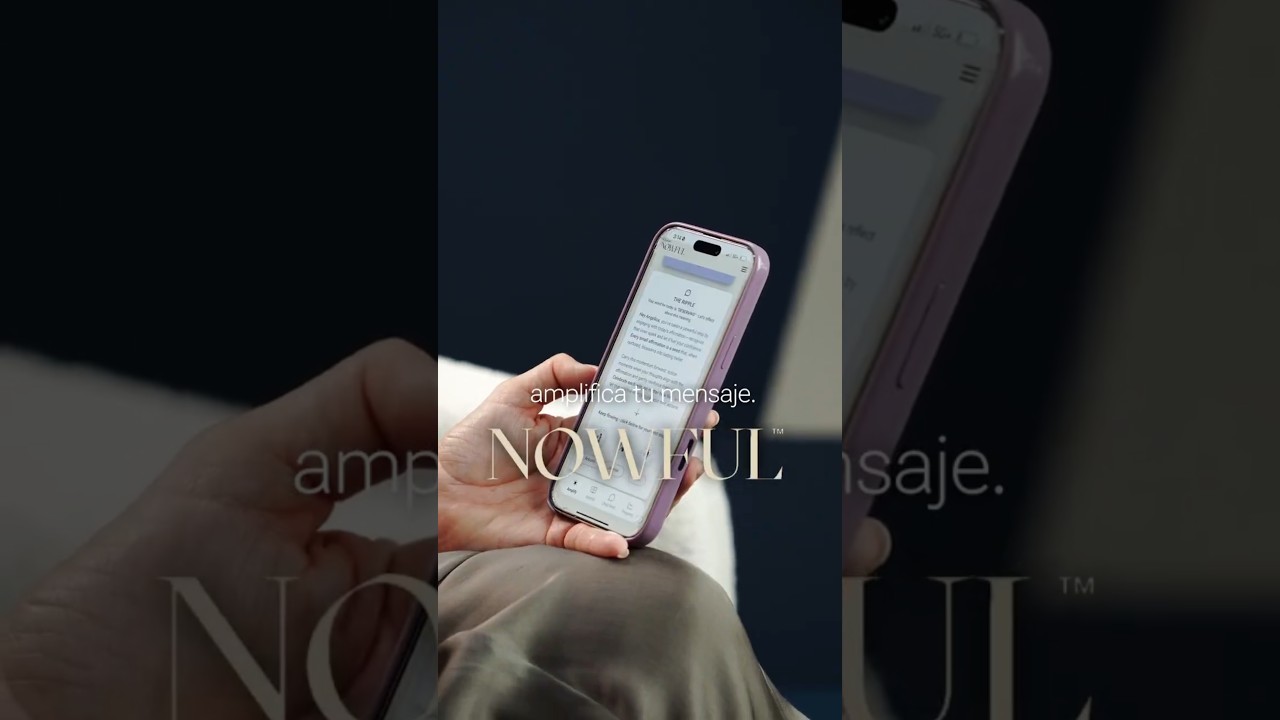
So Naufol is a company that I brought to the market because of my life experience. We help alleviate, you know, pain on the body. Deep rest and recovery. Sometimes, so many of us have worn burnout as a badge of honor when it should not be. I come from an entrepreneurial family. My grandpapa and my father worked all the time, including weekends and on holidays, which to me was admirable. Their Crazy discipline, disciplined. Yes, very successful. So that's what I learned. That's what I did. I worked. I went. I did nonstop. Big responsibility. You know, a super long to-do list. And I remember every Monday we would go to. I instilled something that every Monday whoever was in town would come have lunch at my parents' house. And I remember very few times I would be exhausted, Elizabeth, like, like just could not have my eyes open. And I would, after lunch, just crash on the, on the, on the couch. I mean, literally sitting and just my head would go to the side and I would fall asleep deeply. But then maybe 10 minutes later, I would wake up and I said, oh my God, what time is it? I need to go back to my office. And my mom said, it's okay, you can rest. I said, no, no, no, no, I gotta go. I did not realize until until very long after that that I felt guilty for resting. That if I had to fill in the blank, somebody asked me, what does it mean to rest? If I had been asked that question back then, it would probably been I would feel maybe not worthless, but not productive. Lazy. That would have been my description of me, when in fact I have learned through the years that if I had an ache or that I was not totally rested, I could not think clearly and I could not focus the way I needed to, to make the decision. So I made it a point through natural things, make myself rest, make myself sleep, make myself feel good. Continuous learning was always something that, that I knew I had to, to achieve. And the one constant in my life over the last 43 years now has been the continuous connection with me. When I connect with me, when I'm okay here, when I have filled this void, when I have taken so many masks off that I don't need to survive anymore, then I can give the best of me. And that's what Naful is. Naful is a place for women to learn to reconnect or to continue being connected, a place to let go of masks And that we do through our app—a place to vent, to chat, to journal, to meditate, to have an opportunity to literally read actions to take that are short and powerful on a daily basis. Like we forget to breathe. We breathe; otherwise we die. But we forget to really breathe. We forget that we need to get up at least. Walk around, you know, a little bit, you know, not just be stuck in our tears. And, and it's a place that you can come back to be reminded of those little actions where we can write a little something for you to get over whatever it is you're going through, where an affirmation of the 30 themes— there's one affirmation per theme. I've been writing affirmations all my life since I was a little girl in my closet with my dog. I did not know I was doing that, but it was, it was words and little phrases that I gave to me to feel a little less lonely, where I could feel a little love from my dog and maybe a little for me, where I could feel a little, a little less scared, where I could feel protected. It was in a closet, dark, with my dog. So I would write little notes And so I have over 10,000 affirmations that I've written throughout my life. Words are so incredibly powerful, and we forget that. So I want to give women that. I want to give— and men too. I want to give that back through our app. And then, you know, our amazing magnesium cream that relaxes the muscle, that relaxes you, that allows you to go to sleep. And, and, you know, we have another product that's coming on the market that is amazing. Because— and it's all natural, and it's all been designed and done in the United States through labs in Florida. That tastes amazing. You put this little powder in water, drink it. 10 minutes later, you will have the most restful sleep. If we do not rest our bodies and our minds, If we don't take care of our bodies, you're not gonna last long. You're gonna be burned out. There's too much on our to-do lists. There's too many notifications and comparisons and you know things with that we feel we need to achieve constant moving. I did that for half of all of that time until. I decided that if I wanted to even get further ahead, I first needed to take care of me— my mind, my body, and my soul, my spirit, my energy, my light, or whatever you want to call it. And that's awesome.
That— well, first of all, congratulations on your new company, and I'm sure it's going to be a huge success. I myself know that is required. I burned out and did the very thing now that you're offering for myself. And interestingly, You know, you accomplish all these things like you've accomplished, but now you're going— it's next level. Angelica, I love this question because every woman has just such a wonderful message they want to give. This is your platform today to give women a message of all ages, of all backgrounds, of all cultures. What do you want to leave them with?
To me, the most important thing I can leave women with is believe in yourselves. We usually don't, and it doesn't matter how old you are, no matter where you come from, never stop believing in yourself. And if you have, then go grab that and put it in you and believe in yourself. It doesn't matter the hardships you've gone through. the fears that you might have, all of that you can overcome. Believe in yourself. Believe that you at least have one amazing talent. But I believe that women have a lot more talents. I used to tell women all the time, I say, you know what, guys, I believe in you, but that's not enough if you don't believe in yourself. Believe in the possibility of achieving whatever it is that you want because you can. Maybe the only small difference between me and you, and this is why you said to them, is that already awoke all those parts in me and used them to continue on my path. So women, believe in yourselves. You are amazing. You're beautiful beings. Some women think they're not beautiful because they're not perfect. We're not perfect. We're beings who came here to perfect ourselves. I have always believed that we need to give each other a hand, that we need to touch our hearts so we can touch other people's hearts. But nothing can be achieved if we do not believe in who we are, especially for the older women. I started my life again at 52. I lost everything in 24 hours in Mexico, and I think now with all the news, people are finally understanding that yes, it is an extremely corrupt country, sadly. And a judge took literally in 24 hours everything from me, found me guilty before I even realized that that lawsuit was already answered. And I could have just gone under the sheets because I had two choices, and hope that the storm would pass, or the tsunami, because it was more tsunami than a storm, and become a victim of my circumstances, or of my then partner and ex-husband— and husband, later ex-husband. Or I could do what I did, which was choose me, choose my daughters, choose my life, because I believed in me. I believed that whatever came to me had a reason. It was like I, like I started, and one of my first comments was, it's not why me, it's what force is happening to me. There's always a lesson behind everything life's— life gives us.
Yeah.
And we are not given anything we're not ready to overcome. Um, back to what I want Leave with you.
Yeah, I love that. I love the message. I love the believe in yourself. You know, you, you can say— I like the way you said this, Angelica— you can say, I believe in you, but that's not enough. You need to believe in yourself. And yes, we are not given what we cannot handle. I think I, I would agree with that. I mean, you're extraordinary. This has been a wonderful conversation and celebration of your life journey, the 11-year-old Angelica and who you are today, and your magnificent The process, right? It's all about the process. So thank you so much for joining me and Under the Sisterhood and for doing the incredible marching for change work you do every day.
Thank you so much, Elizabeth. It's been a pleasure speaking with you, having this amazing conversation. So I really appreciate you for this.
I appreciate you. You're amazing.
Thank you.
Thanks for listening to Under the Sisterhood. If you haven't already, please give us a quick rating and review on Apple or Spotify and make sure to follow us on Instagram, Facebook, YouTube, and LinkedIn so you can hear from more amazing women. This podcast is created and hosted by Under the Sisterhood LLC and Elizabeth Elfenbein, produced by Elizabeth Elfenbein and Matt Butler, and edited by Matt Butler. The music is by Ayla Schaefer, her song Rose.
More from Angelica

Choosing Yourself and Redefining Success with Angélica Fuentes | Building the Best You