The Empowerment of Being Nowful with Angélica Fuentes

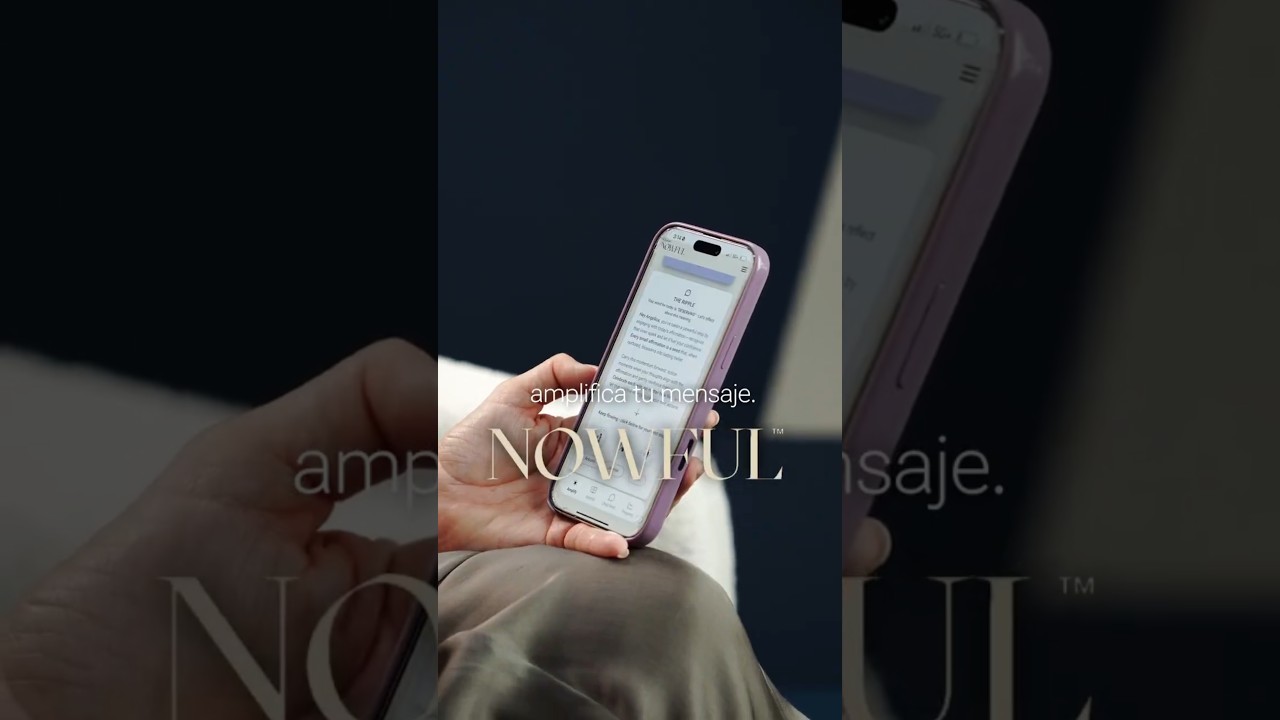
In this in‑depth interview, host Diane Roussel converses with Angélica Fuentes, a Mexican‑born business leader, investor, philanthropist, and founder of the wellness company Nowful. Angélica recounts her unconventional upbringing in a traditional Mexican family, beginning work at age 11 in a gas station and rapidly moving through every operational role of her family’s energy conglomerate, ultimately becoming CEO at 29. She describes the gender‑based obstacles she faced—being the only woman in boardrooms, leading the Mexican Natural Gas Association, representing Mexico at APEC, and presiding over a 21‑economy energy forum—while emphasizing that success required asking for what she deserved and competing only with herself. Angélica shares her philosophy that true power comes from internal resources (intelligence, wisdom, resilience) rather than external titles or assets, and that rest, energy, and mindfulness are essential for sustained performance. This insight led her to launch Nowful, a bilingual (English/Spanish) wellness platform that combines AI‑driven CBT profiling, NFC‑enabled affirmation cards, magnesium pain‑relief cream, and essential‑oil blends. She explains how the app guides users through personalized meditations, journaling, and actionable prompts to cultivate presence (“nowfulness”). Throughout the conversation, Angélica weaves stories of grassroots philanthropy—working with girls in Guatemala, supporting women’s financial literacy in Peru, and mentoring the next generation—illustrating her belief that women’s economic empowerment lifts entire communities. The interview blends personal narrative, leadership lessons, and product details, ending with a call to listeners to explore Nowful and adopt a mindset of continual self‑improvement.
Chapters
Hello everybody. Gee, today I have an exciting episode. I'm really honored to welcome Angelica Fuentes. She is a business leader, investor, philanthropist, and a very powerful advocate for women's economic empowerment. Through her work across business leadership and social impact, Angelica has championed the idea that when women have access to opportunity, capital, education, and influence, entire communities can rise. So today we're going to be talking about a lot of things, but included in that would be women, her career, her life, business empowerment, and what it takes to create lasting change. Angelica, welcome.
Thank you so much for this opportunity, Diane. It's great to be here.
It is wonderful to be here with you. And I have to say right off the bat, I have studied Spanish in school. I studied it for 6 years. I practice with everyone I meet, and I totally admire someone who can go back and forth in 2 languages and do international business. So congratulations on that off the bat. It's impressive.
Hey, thank you.
Tell me about you. You have such a fascinating career and you're onto something very interesting right now.
Well, um, I'll first tell you a little about me and how I grew up. So I grew up in a very traditional Mexican family, and like a lot of Mexican girls, I was expected to be somebody's daughter, somebody's wife, and somebody's mother. Those were the roles that they were expected from us. Not that there's anything wrong with that, but I wanted something very different. I started my career at 11 years old. I was working at a gas station doing what an 11-year-old does in the summer, which is pump gas, clean windows, you know, check tires. And I think that's when I first realized what being, um, seen different than men happened. They were not tipping me.
Mm-hmm.
So it took me about a week to ask. And gather the strength to ask, you know, why aren't you tipping me after doing the exact same work that the guys in the gas station do? The guy obviously got kind of nervous and said, well, because you're a girl. I said, so, so then he tipped me and, you know, Juárez at the time was so small. We had lines of cars coming to get their cars filled up with gasoline from this very young girl who had the courage to ask. It was then and there that I realized that nobody would ask anything for me, that it was me who had to raise her hand and her voice, speak up for whatever she wanted. So then, you know, I did that 11, 12, 13 years old, every summer, one gas station. Then I went to a bigger one. Then I was kind of, you know, in between both of them, kind of running them. And at age 14, I became the general manager's LPG, which is liquefied petroleum gas, area of the group, which was, you know, still is my family's. I became his secretary. And then at age 15, mind you, only in the summers. At age 16, I became the assistant to the accountant that was handling the agriculture and the hospitality area. And then at age 17, I was doing, you know, assisting the accountant that was handling the whole energy end of it. So On weekends, I took on learning other responsibilities of how the group, you know, what structure, what they were doing. And I made it my mission to understand every single aspect of our group.
Mm-hmm.
I wanted to meet everybody. I went physically to the plants, to the LPG plants to see how they worked, how, you You know, the tank cars got, you know, unloaded, how to load a bobtail or another type of big semi. And that's what I did so I could climb slowly the ladder to then later at age 29 become the CEO of our family's group.
What a fascinating process that you really had to learn every role. Which is challenging. You know, you're in the family, but you're getting to learn every role and you're forced to learn every role and you're absorbing it. And then you take that to the CEO level. That's not very common.
No, that's not very common. But ever since I was very little, I knew I wanted to work obviously in the family's, uh, Businesses. And I knew very early on, maybe at the age of 14, 15, that I didn't just want to work in the company. I wanted to become, you know, the person who was leading the corporation. And I remember very distinctively when I was probably 17, my father, my brothers and sisters, you know, Our family, uh, sat down with this specialist in family businesses from Wharton. And he was asking each one of us, where did we see ourselves in the following 10 years? And I remember my youngest brother sitting next to me and he said, I don't know, but he went like this. I know that she wants to be the president of the group. And I said, yes, I do. Yes, that's what I'm working towards. So I worked very hard. I never complained because that was one thing that my father said, the first time you complain, you're out of there like that. So people kind of took advantage of that, but it also allowed me to take a deep breath and keep pushing forward. It was not an easy time because often in the rooms where we were having meetings, I was the only woman, and sometimes I was the youngest person there. So I needed to prove twice as much or as hard as any man that I could do what I have prepared myself to do. And it just was a very amazing experience for me. All the things that I learned, I learned never to compete with or against men, especially not against women. I learned that the only person I could compete with, not against, but with, was me. And I wrote, today better than yesterday. And that's how I kept, you know, pushing forward.
That right there is, no matter what happens in this episode, that's a killer soundbite because seriously, Angelica, it's amazing how many people And, and we see this as women in business, either women trying to become men, you know, in how they compete, they lose their femininity. They, you know, or they are competing against women and men obviously do the same thing. So it's not, you know, one way or the other. What I've always believed, it's yourself. Did you get better than you were yesterday? Did you tackle the problem better than yesterday? And I'm curious, you talked about your 11, 12, 13-year-old self at the gas station asking for the tip. How did you translate that lesson forward in your career along the way through each step? Did you have to ask for each raise you got or each different position?
Oh, obviously. I, I, well, yes, I had to ask. It was not something that was, you know, transitioning from place to place. I had to ask. for what I wanted, for what I deserved because of what I was giving back as results. I mean, the group was growing 9.5% per year in the energy sector. I had to work very hard. Yeah, it was not easy. It was hard being in Latin America, a young woman in a sector that even today is still controlled mostly by men.
Mm-hmm.
I also became the president of the Mexican Natural Gas Association, where I was the only woman, by the way, there. And I did not have a unanimous vote the first time, but before my second year, because it was a 2-year term, before my second year was up, they had already voted unanimously for me to stay 2 more years. Then the Mexican government asked me if I could represent the country in APEC on the energy sector, the private sector, and I said yes. So I did that for years. And then the 21 Economies voted for me to become the president of the 21 Economies. And I said, yes. At the time, I was the only one who did that twice as well. And I believe it had to do with that part of what I went through when I was a little kid, when I was 11 years old. I think it had to do with my understanding of that non-competing against anybody and the understanding that in order for me to move forward, In order for things to happen, I needed to cooperate with mostly men. I needed to understand that unless I did that, unless I realized that talent didn't have a gender, intelligence didn't have a gender, wisdom did not have a gender, work ethics and integrity did not have a gender. When I got that, I was able to achieve so much more than if I had been You know, just fighting against it and against it. And I think that as women, we need to realize and understand, and in a way accept, that even today, 2026, 26 years into the 21st century, we still have to face 2 very distinct things as women. The first is that we need to Prove that we are intelligent, that we are wise, and that we can achieve anything we want. And the second one, that we need to take obstacles out of the road, out of the way, just because they are put there for the only reason of our gender. If we understand that, and if we work hard to Get those 2 sorted out, then I think the sky pretty much becomes the limit.
It's interesting you use the word obstacles because I once lost a deposit in an apartment because I took a black Sharpie and wrote on the wall. I think it's the quote by William James, obstacles are what we see when we've taken our eyes off the goal. And when I was leaving the apartment, I tried to paint it and the Sharpie kept bleeding away from the paint. But it was worth it because for 2 years I lived in that space and looked at that every day on the wall because I do believe we see sometimes we create these obstacles, you know, our perception, how we look at our lives and where we believe we belong. And What I'm hearing a lot from you is that your confidence, your self-esteem raised with each challenge you put yourself into and proved, I can pump the gas, I can wipe the windows, and I can ask for the tip because I, I earned it just like everyone else. I can, you know, answer the phones. I can. Negotiate the deal. I can lead the company. And each of those kept building for you.
It did, because I think that that's one of the things that sometimes we miss, and especially women, that confidence you're talking about, because we are meant to believe that the very intelligent, the very smart, you know, and the wise are usually Male attributes and the soft skill, the, the nice, you know, compassionate and, you know, kind of quiet are supposed to be the feminine attributes that we have. And in a way it's true, but I don't see a woman lacking either.
Mm-hmm.
Every human walking this planet to me has both. Feminine and masculine energy. You can at one time, you know, fill up your tank with that push forward, with that, you know, that strong energy, that confidence that we're born with. We're born with strength and confidence and all of it. And we forget, we kind of give it away, you know, as we go through life. And I think that there are times to really bring in our masculine energy. And there are times to bring in not our Subservient, because that's what a lot of people think that's feminine energy. No, the most distinct part of our feminine energy is our creative energy. Both men and women have that. I think, for example, you know, a lot of the engineers and the AI people, that's, that's, they're using the feminine energy because that's the creation part. That's very feminine. The understanding of how things should work, you know, when we cooperate with one another, that's very feminine. That's, you know, being, that's creating teams. And then the pushing forward, the negotiating and the being strong and the understanding that, that yes, you can have all the confidence to achieve what you want. That's your masculine energy. So I think that we need to tap into both.
Mm-hmm. I think it's about tapping into both and owning that you can own both as a female. You can own both as a male. It's not gonna change the fact that you're a male or a female. And if I'm a female, I, because I do think for everyone, regardless of your sex, the, the process of asking for what you need, you know, or asking for what you feel you deserve because you feel you've earned it. Is always a difficult thing for people. And why? Because someone may say no. And unfortunately, too many people take that no as a, you know, a reflection on themselves instead of, well, that was information. Do I, did I really not, or do I really need to revise my pitch and present it differently and prove to them that they were wrong with that no, and I really deserved a yes?
Yeah, I think you just have to shift from that notion. You're gonna get a lot of nos in life. That's just part of living. That's part of learning. That's part of getting better at whatever it is that you do. And the other thing that I believe, Diane, that sometimes us women have a hard time with is that we want everything so perfect before we pitch, everything so perfect before we move forward with our project. So we start very little. We don't think big. Because we're terrified of failing. Hey, so who cares if you fail? Failure's just an opportunity to dust your knees, get up, and go at it again. Failure does not define you. Mm-hmm. But the attitude you take towards whatever it is that you failed at does.
Mm-hmm.
And the only person that can control the attitude Which is up here, is me. Not you, not anybody around you, me. That's the one thing, you know, like, like, uh, Viktor Frankl said that when he was in, in, in the concentration camps, you know, they, they could basically not feed him, clothe him, make him work, treat him like they treated him. They can never take away the way. He was thinking the way he wanted to live in his mind. That's called attitude.
Mm-hmm.
That was a positive place that he went back to.
Yeah.
And we all have that. That's the one thing we and only we, or I and only I can control. And it was see life that way and not as victims of, or the nos or the failures. But the opportunities and the, okay, maybe that wasn't it. What can I change to achieve what I want? Um, how can I smile at me and not take everything so seriously? How, how I am not a victim of the circumstances or X or Y person, but I'm choosing me again. Then things change. Then things are different.
That is so refreshing to hear. I'm loving you right now, Angelica. You know, I have a sign that says I fall in love at least twice a day. This is one of them.
That's great.
Huge painting in my home. And, but you know, you mentioned something about failure and I find, you know, when people talk about failure and I say, you know, I've had a lot of businesses and Very successful ones, not running a conglomerate like you, but, you know, ones that, you know, allowed me to live a very good life. And, you know, people say, well, yeah, but you never failed. I'm like, are you kidding? I said, not only did I have countless failures, they were the ones that made me better. Because when everything's going great, you just think you're a rock star. You think you're, you know, you think you're all that. As the kids would say, you're all that, you know? Yep. And you're not. And then you have that stumble that forces you to say, whoa, how do I have to tweak this? What do I have to do differently?
Yeah. Yeah. I think, I think that when we understand that part in life, then you change it, then you move on. You know, it's like giving women opportunities. I've worked for the last 40 years of my life with the women at the base of the income ladder, which I have absolutely loved. I was a global advocate for Girl Lab from the UN Foundation, and I would go to Guatemala personally because once I get involved in a project, I also need to be hands-on, which I really love. And I remember taking Valentina, my oldest daughter, when she was, I think she was 3 years old at the time, Because I wanted her, she probably could not get it here, but she would get it somewhere else, what it meant to work with other people, to give other people opportunities. And when I was there and I would talk to these young girls and talk about the importance of, for example, financial independence, importance about it's okay to fail, the importance of, you know, what can you do with something as simple as they would not allow the girls, the girls would not go to school because Their bathrooms were on a hill across the street, across the, very close to, but across from the boys. The girls' bathrooms did not have any doors, but the boys did. That's so the girls would not go to school. This is, you know, in the mountains of Guatemala. And I told the girls, everything has a way of fixing it. All of it. You just need to be innovative. You just need to create. And they look at me like, But there's no doors. I said, that's okay. You have your bodies. So I took 'em up and I said, I'm gonna pee right now. One or two of you are gonna stand in front of me facing the boys' bathrooms, and I'm gonna do it. Watch. So I did.
Love this story.
Next. So you see, it's about creating whatever it is that's lacking there. To achieve what you want. Vilma, one of the girls, told me, oh my God, it feels like I had a blindfold on my eyes. And now it's like taken off. I can come to school. I can achieve things that I thought I was not able to, just from a few conversations I had with them. Another woman, Anna, from, she came from Peru. We were in Colombia. I was giving them a conference. She was with a little girl in her arms and another girl in her hand. The little girl in the arms must have been a few months old, maybe 4 or 5. And the one she was holding in the hands must have been 2 or 3. She said, I came with my partner, you know, from Peru to Colombia. And the instant I got pregnant with the second one, he left me. And I had an opportunity because I would give them, you know, um, a possibility for them to have financial independence, but also training program. school called Favi.
Wow.
And she said to me, I have a, you know, my own business now, which was the financial opportunity. She said, but in the school I learned about me, about financial literacy, about what it took to wake up into who I truly was meant to wake up into. She said, now I can put a ceiling over my daughter's head. Food on the table and clothes on their, on their bodies. She said, but the most important thing is that I'm going to continue working harder than ever because today I know the importance of education.
Mm-hmm.
See, it's, it's through learning from one another, through giving opportunities to others. You were asking me a little while ago about the women and And one has, one has all the tools to, if I grew, you asked me if, you know, what I, what I did, if I grew, if I could do it for me, what and how can I do it for others that come behind me? No matter where they're at in their lives, no matter the social, cultural, economic space they are born in. Once we do something for ourselves, I always would tell women, you now have woken up into a place within you that you had not in the past. You have a responsibility with all the other women to remind them what they are made of and what they can do.
I think you're an ideal spokesperson for that message personally. You know, you're, I think you're, you're speaking from, you know, the word empowerment, the word authenticity. Certain words get thrown around, especially in an internet social media age where they become irrelevant. Or, you know, women will, you'll hear the messaging of talking about power, but men get then pushed down. You know, we're better, you know, you're better. You know, it, it's this fight. It's this battle for power instead of, as you've pointed out repeatedly, not just in your words, but in your example of living, that it's the battle of you against yourself and how you challenge yourself, overcome those challenges to create that. Is self-esteem from the confidence of knowing you can chat, you can handle the next challenge, and then bring that to other women or people because really your message is universal. It's a unisex message. Yeah, because there are plenty of young men that would hear this and say, "Wow, I just want to hear more of what Handa Panhelika has to say." Because it's, it's inspiring.
You know what, you're talking about challenges. I don't think life has ever given me, and I don't think life ever gives any of us a challenge we're not ready to tackle and, you know, get over it, which is a lesson to me, kind of like, like they're lessons. And once you learn it, then, okay, time to go on to the next step because I can. And I believe that when you are stuck in a place of, oh my God, this happened to me. Why?
Why?
Then you are stuck in a sort of a victimization mode, which we are not.
Mm-hmm.
The question should always be, what for?
Mm-hmm.
What is this trying to teach me? What am I needing to learn from this? No matter how hard, no matter how difficult it is, because I've gone through some very extremely dark phases in my life. And my question was always, okay, what is it that I need to learn from this? Where do I need to go from here? It's okay to cry. It's okay to feel devastated that you can't breathe, but There's always a lesson behind it, and you don't get it unless you're ready to overcome it. And the other thing that you were talking about, you know, sometimes we are always competing against each other, and I don't, I just don't agree with that. I believe, and I have believed this for, oh my God, the last, probably started believing in it 40 years ago. And started working on it, you know, on a daily basis, every day, every day. And now it's like just embedded in me is that real power. And I told women this and all these conferences that I would give them for years and years and years. And I would tell them, guys, real power is not where we put it all our lives. It's not in the, well, at least where I put it for so long. Not in the assets I've acquired, not in the titles I've had, in the invitations to speak here or there, or to go here or to go there. It's not in, you know, the income that I've received. It's not in all the externalities that I've been able to be and all the places that I've been able to get to and all the accomplishments that I've had, which is where I thought that I would put my success, which at one point I did there, but in the place that matters, real power. I don't know if you can hear my—
Yeah.
Is here. Real power is waking up into everything that makes you be who you are. Real power is Opening all the little drawers that we have. I visualize like tons of little drawers, you know, that we are born with. And I told you this before, intelligence, wisdom, resilience, strength, power, which are different, love, happiness, and, you know, leadership, talent, everything that we required to get ahead and to achieve Anything we want to personally and professionally is already within us. When we wake up into all those little places and we fill them up with more light and more light and more light, then no one, no matter what happens, can take away real power. That place that no one can ever break. And I was stripped from everything in Mexico in 24 hours from, by a very corrupt judge. And I think now in the U.S., people are, after reading what's going on in Mexico, can really believe how it can, how bad it can be. And it didn't break me.
Mm-hmm.
It, you know, it made me kind of like not be able to breathe for a while. And, and it made me have to figure out a lot of things and it made me have to start all over again at age 52. But hey, there was a reason behind all of that. And it was really becoming an amazing mom to my 2 Now teenage girls and life, you know, had a question for me. Are you gonna be able to walk your talk? And I looked at life and I said, this is very frigging hard, but okay, I am, I will. And I did.
I, I'm loving this conversation and no doubt the audience is too. You know, one of the things you said, it's funny, just this morning before Recording this, I have a lot— I'm 65. I have a lot of friends that are in their 30s and very early 40s, but mostly in their 30s. I don't know how that happened in life, but I have a bunch of them. And I think I'm their other mother sometimes, their sister sometimes. You know, I'm sure as you mentor women in all that you do, you take on many of those roles as well. And one said to me just this morning, well, how, how am I different? You know, people say I've changed since I met you 10 years ago. And I said, I don't think you're different at all. You are the same hustler, fun, hilarious, wonderful person you were. You've just accomplished more. That doesn't mean if you accomplish less, you'd still be the great person. So you have all these accomplishments that people in life either, you know, check you off by, and especially with things like social media or say, oh, uh, you know, they're, they're nothing. They, you know, put them in the irrelevant box, which is the worst thing you can do to any human being, you know, based on what they've gotten versus who they are. I said, you're just still the same cool, awesome woman you were when I met you. And I couldn't believe he wanted to hang out with the old lady.
You know what?
I don't know.
I want to differ a little here with you. I believe that we do change only when we want to change. I think that, that she's probably still an amazing, outgoing, successful woman, but if people are seeing her different, it's because she is different inside. Maybe achieving Her goals, maybe by continuing and being more outspoken and better at whatever it is that she does, she has changed. And people see her confidence that they didn't see before. And people see her strength that maybe she had, but not as powerful as it is today. And people see— And her talents are more out there than they were before. So when we choose to change, then no one can ever treat us the way they used to or see us the way they used to, even if that change is this big, because we are no longer the same person.
Mm-hmm.
So I do believe that people change. They don't change. I mean, yeah, you do, can change on the outside a lot if you want to, but You can still be that amazing person, but different because there's something, there's something, something personal. You've chosen to, yes, I, I, I want it. I'm good. I deserve it. I, you know, I wanna feel that and now I wanna feel that and I, now I wanna be You know, able to open up more into my love, you know, for me and for others. I mean, there's just so many amazing places that we can start filling up inside of us that when we do, we are different. We do change. I, you know, and, and you can change for the not so nice as well. You know, this is the freedom to choose.
I actually think we're 100% in agreement. I think it was how I was defining change versus how you were. I think we're still a core essence that's just opening and letting ourselves grow. But our core essence, if you're a good person, you're still that person. You're just, you're just showcasing more of it. You're, or as I think it was David Bowie said, you're, you know, peeling off the layers of the onion to get to the— Not that I want to be an onion.
Oh, but we all are. That's what's so amazing. You know, I was, I was talking to somebody earlier today and he was telling me, well, um, you know, you, you, you know, there's some things that you probably need to work through. I said, hell, of course there are things I still need to work through. And I've been doing this for 40 years, okay, within me. I said, that's what's so great, cool, amazing. fabulous significance about life is that there's always an opportunity to be better at something in our lives, whatever it is, because there's a thousand things that we can better within ourselves. And there's always something to learn from, from ourselves, you know, to Put it out there to become, uh, always say to become better. 'Cause I, that's one for me. I always wanna be better today than I was yesterday.
Now, Angelica, how are you taking all this fabulosity? 'Cause if there was a word fabulosity, your picture would be in the dictionary. How are you taking all this fabulosity to the world right now? Because The world benefits from your message.
Um, I just started a company called Nowful last year in last part of August. The 23rd was like soft launch. So I'm going to say September. And I wanted to put on the market something.
I love the name, Nowful.
Nowful, it's, we invented it. It does not exist. Nowful, I will hope, I'm not going to be around, but I will hope, you know, mindful. Has been, the word mindful has been around for hundreds of years. And I think we started using it a lot more during COVID especially after COVID. Be mindful. You know, I want people some in the future to say, be, be nowful. Be present with your presence. 2 huge differences. You can be present, but you can be here physically, but you're not present with your presence, with With your attention, with your energy, with your love, with, with who you are. So that's what Nowful is. And I wanted to bring something of the things that allowed me to achieve what I've achieved, but you know, in, in my professional career, but also to go through the hardest of times in my life.
Yeah. Mm-hmm.
So Nahuatl is about being able to rest, to alleviate pain. I, for one, come from a family where my grandpapa and my father worked 7 days a week, including holidays. You know, they were very disciplined. You know, my, my family is an entrepreneurial family that fed the business. That they are still running. Well, now it's one of my brothers for 75 years. So I come from a very entrepreneurial, crazy, hardworking, disciplined, uh, family. And I saw them. So I grew up doing that, uh, working a lot, feeling guilty when I rested.
Yeah.
I remember distinctly coming to my mom's house. Every Monday, I, I set this out. Every Monday, whoever in the family was around, we would all come to my parents' house for lunch so we could all be together. I mean, we were, you know, growing and some were married and some were, so we needed a space to at least meet once a week. And I distinctly remember very few times that I was just exhausted. Like I could not even open my eyes. And I would take like a short little nap and my mom would like make everybody kind of be quiet.
Okay.
And I would nap maybe 10 minutes and I would wake up startled and like, oh my God, I fell asleep. And my mom said, that's okay. It's okay to rest. And I said, okay, I gotta, you know, so I would like, you know, wet my face, brush my teeth, and I would go back to the office immediately. And I didn't realize How much I was working, how sometimes I was so burnt out I could not even, you know, stay alert.
Mm-hmm.
Um, I've always been somebody that has had a lot of responsibility, a lot of decisions, running companies, doing things that were, you know, that, that were very, I'm not gonna say important, but they were big decisions and they were decisions that could make or break.
A lot of people, lives, circumstances, infrastructure. Yeah.
And so I, a few months ago, somebody asked me, okay, Angelica, if you could fill in the blank, you know, I rest, I felt, I don't feel that way anymore, but I rest, I felt, I would say Almost worthless, nonproductive, not, um, achieving. If I rested, I, that, that's, that's how much going, going, going, doing, doing, doing did to me.
Mm-hmm.
So I created a company that is all about it's okay to rest because when you rest your mind and your body, And your soul, then you become more creative, more innovative. You're more energized. You make decisions from a different place. You make decisions from a place where your brain is connected to your heart and your wisdom is all over, and then decisions are better. I became to know that probably 15, 20 years ago.
Mm-hmm.
I realized I needed to rest, not just my body, but take care of my, of my mind by continuous learning, but also by resting it at night and always coming back to me, always understanding that this part of me was very important. So Nowful has An amazing app with affirmation cards that take you onto an amazing journey. We won number 3 on Newsweek, right below Calm and Gaia, above Mindspace and Alo. I mean, that's just, you know.
Nice. Nice.
And we just started this, but it's so complete because it's what I worked and what I did for me for 40 years. It's a magnesium cream that truly alleviates pain. I have a lot, you know, lower back pain. I started playing.
Okay.
Tennis just recently, I'm not very young and that sometimes hurts. So I put it on before, put it on after, and I can do it. We have an anchoring essential oil that brings you back to calm, back to a place where stress no longer runs your day. And that's very important to me. It's understanding That wellness is the base of everything else that you do in life.
I can't wait to get this app and I will get it by the time we hang up. But you know, it's an interesting point you added because I always hear people, and I talk about this a lot with people, cuz everyone says, well, time is your most valuable commodity. And I'm like, I don't dis— I disagree with that. On some level, because I think that your energy is, because if you don't have energy, it doesn't make any difference how much time you have. But if you have time and no energy, it makes a big difference. You're not going to get anything done. And when you have energy, you can take the time, you can hire people, you can delegate, you can have other people do things. But that core essence of energy, and it's interesting what you were talking about, Angelica, because Over the years, people would say, well, I mean, I learned hypnosis back in like 1992 after I first in the '80s learned TM. Then I moved on to hypnosis, which I really like. And people would say, well, how do you know when you needed to take a break? And I would say, well, if I am looking at everything on my desk and it's a mess, I surely know I need to take a break. And if I have a piece of paper in my hand Longer than a couple of seconds and I can't decide, should I read it? Should I hand it to my assistant? Should I put it in the garbage? Should I put it in the file thing? Then I need a break. You know, there's such little things that let you know it's time to take a break. And then you take that break and everything gets sorted out almost during the break. When you're, you know, it's that old expression, do nothing and accomplish more.
Yes, yes. There's a saying in Spanish. ¿Cómo es? Es importante descansar y después no hacer nada. It's important to rest and then do nothing. That's the hardest thing to do.
Okay, I knew what you were saying in Spanish.
When you rest, when you rest.
Spanish.
But Qué importante es descansar y después no hacer nada. So it's important to rest and then do nothing. It's so hard for do for us to. It's okay. Yeah, we might rest, but it's so hard to do nothing after we rest. That means it's okay to rest and not feel guilty. It's okay to pause. We don't know. How to pause. We want to do, do, do, do. I have a belief that in order for us to do more, we have to be more. And to be more, we need to learn to do nothing, to connect. Because we go through life connected in our brains all the time. Just, just go, go, go, go, go nonstop. Notifications, comparisons, productivity, Doing, doing, you know, it's just like constant output all the time. And we forget to connect. There's no, you know, there's, there's no connection. We need to come back and reconnect with ourselves. And in order to reconnect, we need to learn to be, to be here, to ask, what is it that I need today? Why am I not achieving that? What am I missing? Here, not, not what am I missing outside? What am I missing here that I'm not achieving that?
So it's now full available in English and Spanish.
It's available in English and Spanish. Our app is 100% either or. We have the cards in English and in Spanish. There are affirmation cards. Let me tell you a little about that part. When I was, I guess, my late teens, I had a friend ask me, medium, One time she said, she looked at me, she said, how can you be sad when you have everything? She was right. I had everything on the outside and I had nothing on the inside. Mm-hmm. And I told her, I said, I have everything on the outside. I have nothing here cuz I have this big black hole in the middle that no one could feel, fill.
Nothing.
Nothing and no one. I mean, didn't matter how many Clothes I bought. And I think we're going through that huge, sad era right now, especially. No matter how many clothes I bought, no matter how nice my car was, no matter what school I went to, no matter the parties I was invited to go to, the trips that I took. I was not riding that much anymore, but you know, even if I had a horse or a new saddle, who cared?
Okay.
None of that would feel amazing. Boom, the minute I got it. But, you know, a few days later it was like that emptiness again, that place where I felt alone, not protected, not loved, uh, scared. It was dark and it was, you know, and I would, I would literally go into my closet and hide with my dog since I was a little girl.
Do you want to—
And I would write me little notes. I didn't, I know I was writing affirmations for me and I would read them for me. And that was the only space where I felt Okay, where I felt good. And then later in life when I answered that question, I said, oh my God, I need to go back into my closet and figure this out. So it took me, you know, a few years until I read a book called Living in the Light by Shakti Gayan.
Yes.
And then I read another one called Visualization, and then I could not get enough books in my hands to read.
You know, I was like, please, hungry.
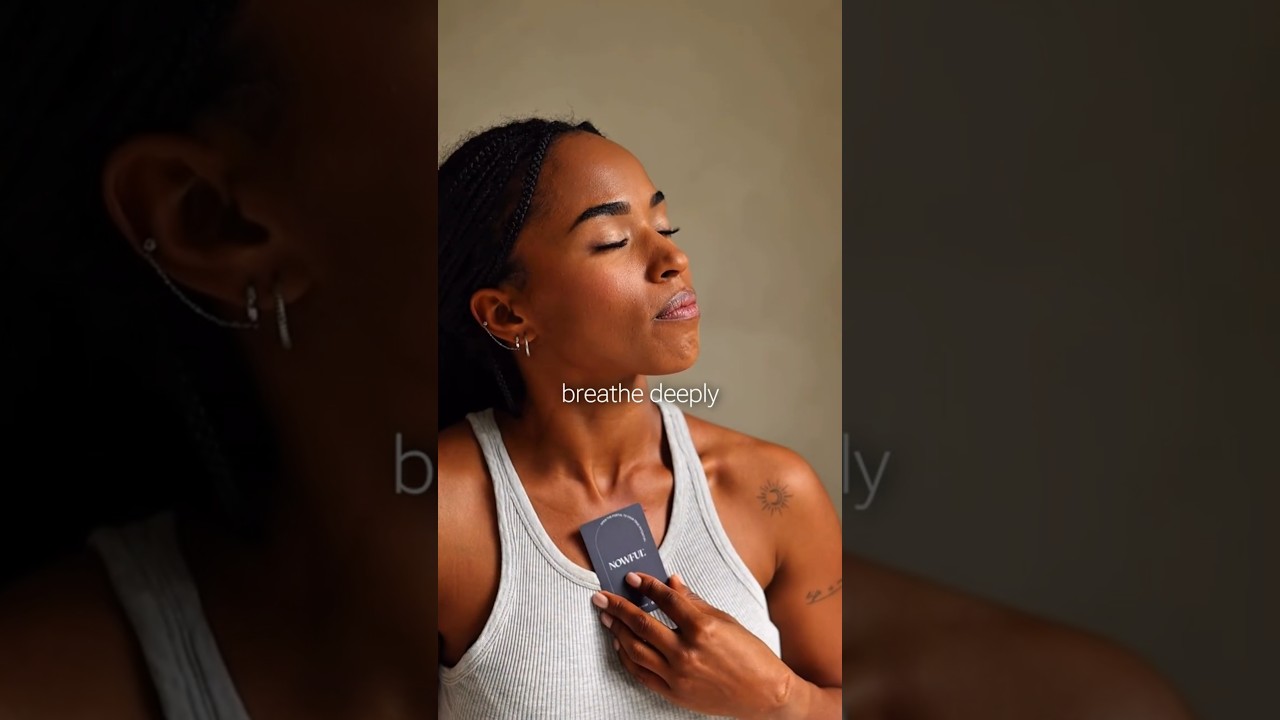
I was, I was so hungry for all of that. And I realized that the only person who could fill that void was me. And that's when I started visualizing my little drawers, which by the way, they're beautiful, beautiful wood little drawers. And I started realizing that it was me who needed to fill them. Me who needed to wake up into all of those little spaces to become who I am today. And the cards, because I've written over 10,000 affirmations in my life, the cards have 30 themes and each theme has an affirmation that I wrote. For example, love says, fear shrinks, love expands, choose love over fear. And when you put it, when you tap it on the phone, because it has an NFC, tap it on the phone, you come up with, with, with our app. Look how pretty it is.
Uh-huh.
And the card pops up and it pops up and it gives you a ripple effect. It goes more in depth as to what that card means to you and what that card means to me. Because when you're first going to the app, it asks you 9 questions that are based on cognitive behavioral therapy. We did this huge research, which were the 9 questions To truly come back and give you a psychological profile as to where you are today after you take the test. And then it gives you a narc type. And then when you tap the card, because of how the AI knows part of you, the ripple effect goes more in depth about you. And then you can journal and you can track your journal. I've been journaling all my life, but I mean, if I want to go back to 4 months ago before the app, it's like, oh my God. Where am I going to find, you know, going through the pages, what I'm looking for? But with our app, you can track how you felt 4 months ago. Maybe 4 months ago, you put 3 sad emojis in a row. And maybe today you're putting 3 emojis in a row where you're sad. And you go back and you say, oh my God, am I going through the same thing that I haven't healed or overcome? Or is this something different?
Mm-hmm.
It gives you actions to take. Usually one is to either stand up, but always breathe. We forget to breathe.
I know.
We breathe in and out, but we don't really breathe. You know, the, the deep breaths that oxygenate our whole body. We just do the automatic in and out, in and out. But, you know, so it reminds you to breathe, to walk, to be present. It, you know, gives you different actions to take depending on the card that you got. And then you can chat or vent, which is amazing. I do that a lot because of my teenage girls.
Mm-hmm.
And then it gives you, oh my God. Yeah, it's, it's, it's a, it's a different time in my life with them. Beautiful, but kind of, you know, that chaotic love mother-child time and space. And then it gives you meditations and the meditations are also guided by AI. So depending on the card that you got and the meditation that you choose, It first says, hello, Diane, and then it goes in through that particular meditation. So it is everything you usually do in one app. And that has been my journey for 40 years, and that's what's in there. I want people to feel as good, as energized, as grounded and connected like I do today. I want people to do what I do in the mornings, look in the mirror and smile and love what they see inside and out.
You, like I said, I fall in love twice a day. You're one of them. You are just a treasure. Oh my gosh. I can't wait to tell everyone about the Now for Lap because if it has a smidgen of you, it's gotta be amazing. It does not surprise me it zoomed up the charts. It clearly has to deserve that ranking. And anyone who's written 10,000 affirmations in her life, which I believe you probably even wrote more that you've even forgot about just based on this interview, thank you so much for joining me.
Diane, thank you so much. It's been a pleasure having this beautiful conversation with you. I really have enjoyed it. Deeply.
Well, don't go anywhere, Angelica. I am Diane Roussel. This is the Silver Disobedience Perception Dynamics Podcast, and I've been speaking with Angelica Fuentes, who is the founder of Nowful. She is a dynamo. This has truly been one of my absolute favorite episodes. And if you've been following this, you know, I interview some pretty remarkable people, but if I have to put somebody in my top One, I think this could be it. So I want to thank you all for watching. I want you to follow every link that's below this episode. So even if you're driving, when you stop, pull over and click the links, hit subscribe. Make sure you follow Angelica as well as NowFolk because I just have a feeling it could only change your life for the better. Hit subscribe. Thank you. And thank you, Angelica.
Thank you so much, Diane.
More from Angelica

Choosing Yourself and Redefining Success with Angélica Fuentes | Building the Best You