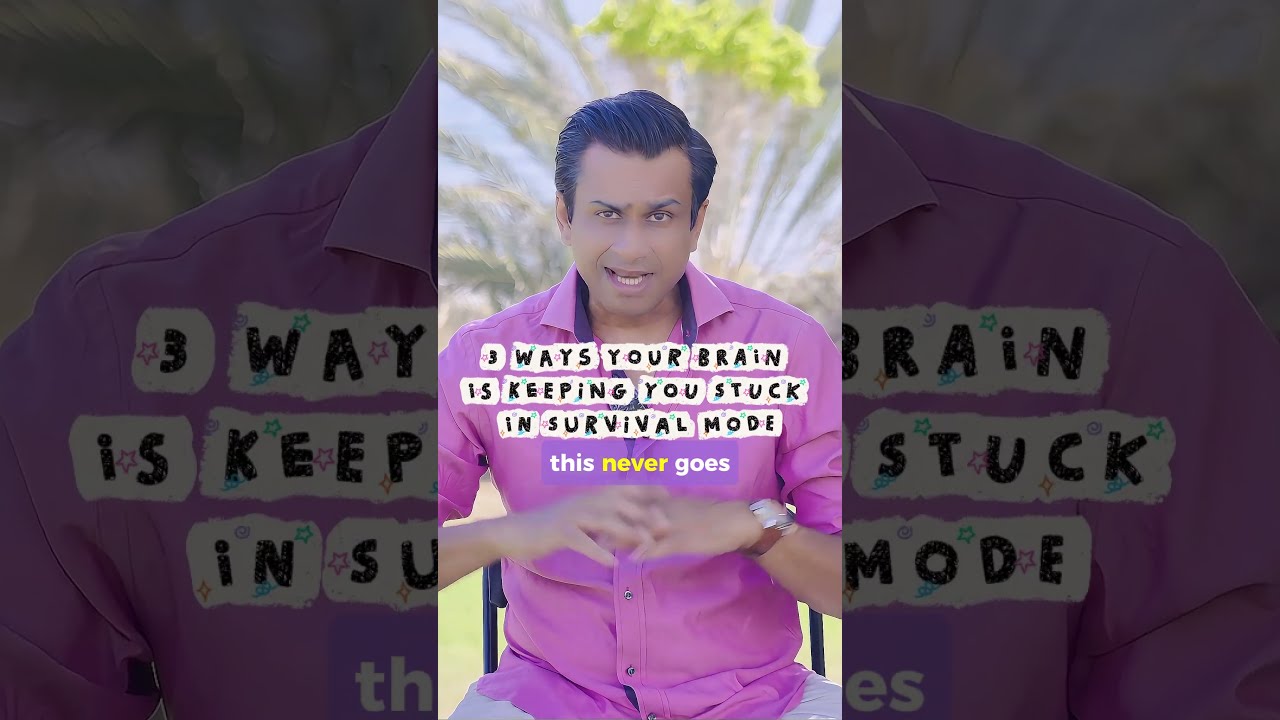
Ashok Gupta identifies three habits that trap your nervous system in survival mode: catastrophic what-if thinking that blurs real danger from imagined, hyper-focusing on body sensations which amplifies them, and fighting symptoms which signals threat to your brain. These are automatic safety mechanisms you can unlearn.
Chapters
Catastrophic thinking. You keep asking, what happens if this never goes away? What happens if it gets worse? We eternalize the problem. Your brain can't tell the difference between what's real danger and imagined danger. So this kind of thinking, this kind of eternalizing the problem, keeps your nervous system on high alert. The second is hyperfocusing on symptoms. Checking, tracking, scanning your body every moment. Every sensation is analyzed. But this actually trains your brain to Notice and amplify those signals, and that fuels your symptoms. And the third, fighting or resisting your symptoms. Saying, this shouldn't happen, I hate this, I want it to go away. Trying to force your symptoms to go away. This makes your brain label them as threats, which keeps those protective alarm bells ringing even louder. Now, it's of course not your fault that your brain automatically resorts to this type of thinking. It's just trying to keep you safe. But these patterns can trap your body in survival mode. The good news, you can retrain your brain out of these loops and help your body feel safe again.