5 Types of Grief in Retraining | Ashok Gupta | Gupta Program |
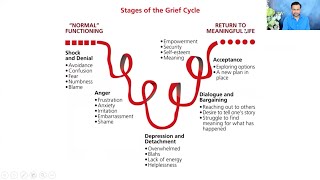
Ashok Gupta (Gupta Program) explains how many retrainers experience an emotional grief cycle after developing chronic conditions (e.g., long Covid, mold illness). He maps common non-linear stages—shock/denial, anger, depression/detachment (inner cynic), bargaining/dialogue, and ultimately acceptance—and links these to five specific resistances: resisting the condition, loss of time/life, doctors/medical system, family/friends, and self-blame. Gupta emphasizes emotional acceptance (distinct from endorsing the condition) as a way to calm the nervous system and accelerate retraining, offers a reframing metaphor (caterpillar→cocoon→butterfly), and directs listeners to an "Acceptance and Surrender" meditation in the program's membership Exercises & Meditations (20-minute meditations) as a weekly practice.
Chapters
When we first come to retraining, there's sometimes a hidden block, which is our grief about having this condition and sometimes a grief about the time that we've lost. And some people aren't aware of this. And this is when I want to kick off our content today. So this is called the Grief Cycle. I don't know if you can see the title there. And this is where various great researchers and therapists have noticed that when we experience loss emotionally, we go through certain cycles, and these aren't linear cycles. We might jump into different aspects of this. On the left hand side, let's say we're experiencing normal functioning. Then this condition comes along, whether what you're experiencing is long Covid or mold illness or all the other various different conditions that we treat. And the first reaction is this shock and denial that we can feel quite numb with this condition, especially when the doctor says there's nothing that they can do about it, or you're going to have this for a long time, or all the negative messages you may hear. And especially when it comes to support groups. So many of you may be members of very well meaning support groups, but if you find those support groups are generally quite negative and say things like, look, there's no way to recover from this condition. You're going to have it for a long time. There's nothing you can do. And if you do get better, well, you never had the condition in the first place. As often they say, I would avoid those types of support groups and just focus on our support group within the Gupta program. And the second phase, or it's not really second, but a phase can also be anger. And I notice some retrainers have a lot of repressed anger about having this condition. They have anger towards themselves because sometimes they blame themselves inappropriately for having the condition, or there's anger at other people, doctors who aren't understanding their condition, or it may be anger at family members for not understanding them. So it's just recognizing some of these emotions which may come up as a result of having this condition, which is useful to address these before we go into the retraining. Sometimes it can be the depression and detachment. We can feel overwhelmed with having this condition and we can become cynical even about it. And I want to introduce a new member of the puppet team for those of you who are new to the program. You'll think, what on earth is going on here? But we have various puppets that we use to represent what we call our sub personalities. These little parts of us running around in our Psyche that create certain emotions and certain emotional thoughts. So one of these is Bartholomew Mew Bart. A new edition to our team of puppets. And he's our inner cynic. And the inner cynic can get triggered when we feel overwhelmed, detached. I think there's no point even trying. Yeah. Do we recognize that? So now I've got the gallery. I can see who's kind of recognized it. Does anyone want to raise their hand? Do they recognize this type of park coming up? Yeah, actually, most people, in fact. Yeah. When you're having a really bad day, there isn't this serotonin or dopamine keeping you going. And of course, Bartholomew Bart comes up and says, there's no point. But now we've got a toolkit because we now recognize. Aha. I am not Bartholomew Bart. Bartholomew Bart is a little part of me that comes up when I feel lost and overwhelmed and cynical, that I can't get better. Okay, that is Bartholomew. But. But it's not me. It's not the real me. And I don't need to take these thoughts seriously. Someone asks me, what does cynic mean? So C, Y, N, I, C. So perhaps for those of you watching a different language, you can look that up. So that's. I'll just type it into the chat window there. C, Y, N, I, C. The inner cynic. Okay. Oops. And this can really contribute to the helplessness, which can re. Trigger the amygdala and those parts of the brain that create that stress. So that's there at the bottom. Depression of detachment with condition. And then as we begin to look for answers, there's this phase that they call dialogue and bargaining. This was actually a process that was created by Elizabeth Kubler Ross and another psychologist. We start looking to understand what's going on for us, and we try to find meaning in what's happened for us. And we start exploring new options. We start planning a path of recovery. And often that can only occur once we've acknowledged the fear, the shock, the anger, and the depression or the upset that's underneath what we're aware of consciously. And really, a lot of that is related to acceptance. So acceptance is a word you can see on the top right of the diagram. Acceptance is a word that we're going to be using quite often. That acceptance is really the antidote to a lot of these different stages that we see in the grief cycle. And to get to a process of acceptance, there's often processing, first of all, an acknowledgement or even an awareness. So we talk about the different a's in this. So the first A is awareness. Simply having awareness that, yes, I'm angry, I'm angry at myself, I'm angry at my doctors. I'm angry about something in relation to this condition. Let me write down what I'm angry about. So that second. So the first a is awareness. The second A is acknowledgement, acknowledgement of that emotion and say, hey, it's okay to have that emotion. I acknowledge that within myself. And even that shock and denial is about fear. Then there's anger, and then there's sadness, which is the depression and detachment. So three types of emotions which often occur during this grief cycle. As we grieve our old life, our old way of living, and getting to a place of acceptance really helps us with our retraining and can indeed accelerate the process of retraining. And you can see under dialogue and bargaining, struggle to find meaning for what has happened. This is very relevant to the grief that we may experience about the loss of those years or those loss of those months. If you've only had the condition for months and we can feel like, oh, all of that time I wasn't able to be my normal self, and perhaps my peers are moving forward, and I'm stuck with this condition. And actually something that can really help us with that and that story is to reframe the story. And we often give the example of the caterpillar turning into a butterfly, don't we? That when a caterpillar is born, is a certain way of being, then it enters the cocoon. And this condition is like a cocoon, but that cocoon feels painful. That caterpillar has to sprout wings. But eventually that caterpillar emerges, transformed into who it truly is destined to be, the bigger, brighter version of itself reaching its potential. And so the cocoon that you may feel like you're in right now may feel annoying and painful, but actually is part of a transmutation, a transformation in who you are. And so whereas it can feel like other people are moving forward, you are moving forward in your journey by being in this cocoon. This is not wasted time. And if you subscribe to this idea that actually life isn't necessarily about how much you earn, how much you consume, how much you prove your status. But there's something deeper. How much did we learn, how much did we grow, and how much did we love? If that might be a way of defining success, then actually going through this condition, as painful as it is, may offer some silver linings, some understandings of the deeper messaging. And we'll talk about that later in our webinar series. So from that grief cycle, you can see how important acceptance is. And for the coming week, what I'd love for everybody to do is to practice with the acceptance exercise. I'm going to show you where that is. So in the membership area, if you go to exercises and meditations. In this area, you can see some new ones that we've added at the top. And here you can see your 20 minute meditations for morning and evening. So you can pick the ones that you enjoy. We've even included one 40 minute meditation for those of you who are particularly keen. And we'll be adding more here as well. And here you can see the acceptance and surrender meditation that's under your 20 minute meditations. I'd love for you to listen to that meditation at least once or twice during this week. And that meditation really helps us to recognize those blocks to retraining and be able to accept and really think about what is it that I really need to accept about the condition? What resistances do I have? Is it a resistance to having the condition itself? Just saying, I refuse to accept this condition. That's a first type of resistance. I don't accept the condition. The second type of resistance is I don't accept the loss of time and the loss of life experiences that I could have had. So that's a resistance I resist. Thirdly, the doctors or the people who I feel unfairly treated by. A fourth resistance can be our family and friends who perhaps don't understand the condition. Fifthly, do we accept ourselves? Sometimes it can be self blame, self flagellation, because, oh, I brought this on. Oh, I shouldn't have done this. I shouldn't have done that. That can be a resistance. And in all of these five different resistances that may occur, they can unconsciously create that agitation that can create fear, anger, or sadness. The resistance to the condition is more likely to create fear. The resistance to doctors and family around us, that's going to create anger and a resistance to the time that I've lost or perceived loss. It's not loss at all that can create the sadness at a time that I've lost. So can we see how the grief cycle can be applied to having this condition? Yeah, give me a thumbs up. Does that make, does that make sense? Yeah. Good. And can we see the importance of acknowledging those different types? I want you to think about these five types of resistances. Just to write down what is it that you're experiencing? What type of thought patterns, what type of emotion. And then in your acceptance and surrender meditation, you can begin to release, to acknowledge and release those emotions. And it also helps you, if you're working with a coach, to have those patterns available. And this is something that we're constantly updating the Gupta program and constantly seeing what's working for people. And this was certainly a piece that we recognize. And many people was holding them back from really engaging with the program because they were still stuck in that first stage of I'm just resistant to what's going on. How many people ask Ashok, how can I accept this condition? Are you crazy? I don't accept this condition. That's why I'm here. I bought the Gupta program, but I don't accept this condition. So this is where, you know, in certain languages, there are far more words for these types of experiences. So acceptance is an experience, and words are imperfect representations of experiences. So when we say acceptance, what we mean is emotional acceptance of your condition, not pushing it away and wanting it to go away. Ah, I hate this condition. Please go away. It doesn't mean that you accept what has happened in the sense of this is a good thing, but you no longer have that emotional resistance to what is going on, because what is so is what is so. Right? So accepting to save our own mind. As an example, if somebody hits somebody else, we don't say, that's acceptable. It's not saying that's acceptable or that it's okay. But now the incident has occurred. There's no point us getting wired and angry and upset by it. We accept what has happened. It has already happened. It's done. The path of least resistance is to accept what has already happened. And then from that strength and that powerful place, we're able to deal with that situation. So acceptance is saying, not it's okay, it's saying, I'm okay. Does that make sense? Great. And yes, acceptance can be cycles where there are periods of time where you really accept. And then I'm going to predict this. You're going to have a dip. And you might say, ashok, that's being negative. You're saying, I'm going to have a dip. I want you to already be prepared for that to happen. So when it happens, you've got the strength to move through it. When you have a dip, that non acceptance and resistance will come back. Because you'll say, I was doing so well. I was feeling the benefits, I was getting better. Now I've had a dip. And then the resistance comes back. You start blaming yourself for it. You start Blaming the situations you're in or the stress around you. So in that moment, you go into that place of acceptance and remind yourself of accepting even the dip itself. And then you're far more likely to move through the dip faster and with grace. Okay, and someone just saying, what emotion goes with each of these five? So, yes, resistance in terms of the condition itself, that tends to be a fear. Yeah, I mean, remember, these emotions are, you know, they intermingle. They can be different for each person. But generally with a condition, we have a fear of, what is this condition? Why is it affecting me? I don't accept it. There's a fear about the condition. The time loss tends to be a sadness, a grief about the time people around us, friends and family in the medical profession, that tends to be anger. And fifthly, with ourselves, that sometimes can be anger as well. Anger at ourselves. Well, why did I allow this to happen? With a sense of blaming yourself. So something that helps with acceptance in all five of these cases is a forgiveness or certainly a releasing. Sometimes we're wasting so much energy trying to convince people around us of this condition that we waste that energy and the anger isn't helping. So there's a forgiveness that people don't understand. This condition, it's not well defined. So we can forgive ourselves, forgive people around us, that helps move us towards a state of deep acceptance for this condition. And when we're in that place saying, hey, look, the condition is here, I can fight it, I can resist it, but all that does is rev up my nervous system. Or I can just let go and accept it is here. And by doing that, I calm my nervous system, I preserve my energy, and then I can put the tools into practice to gently and compassionately retrain my brain to get my health back.










