Latest Neuroscience of Chronic Conditions Q & A | Ashok Gupta | Gupta Program |
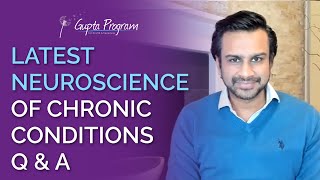
A recorded Q&A (Facebook Live / YouTube) with Ashok Gupta discussing the Gupta Program (brain/limbic retraining) for chronic conditions such as CFS/ME, long Covid, Lyme, MCAS, MCS and autoimmune disorders. Gupta describes the program’s neuroplasticity basis (amygdala, insula, prefrontal cortex), practical elements (meditation, breathing, relaxation, pacing, weekly webinars, support groups), claimed outcomes (clinical trial evidence, sustained recovery focus) and practical logistics (minimum 30 minutes/day, short meditations when very ill, one-year money-back guarantee). He answers many audience questions about triggers, genetics, toxin exposure, trauma, tinnitus, addictions, and co-occurring conditions.
Questions this video answers
2007
Minimum half an hour (30 minutes) per day.
One-year money-back guarantee.
Monday 31st January (announced in the video close).
Friday 21st January (mentioned as an upcoming event).
Chapters
So welcome back, everybody, to our Facebook Live to the Q and A section of our meeting together here. And I'd love to answer any questions that you have about the Gupta program, about some of the neuroscience that I just went through. And I'll be looking at the comments section and really welcome any questions that you've got. So you can put your questions in the comments section. And these can be questions about the Gupta program, as I said, about the experience that you're going through with your chronic condition. Anything else that you'd like to ask? So Colleen asked the question, do all of your meditations help to shrink the amygdala and increase gray matter in the prefrontal cortex? So there is some evidence, and I wanted to mention that. So thank you for bringing this up, Colleen, that actually there is shrinkage of the prefrontal cortex in these types of conditions, sometimes up to 10% shrinkage in the gray matter. And this can then mean that the prefrontal cortex doesn't have enough power to inhibit the amygdala and inhibit these processes. So, yes, there is some evidence that gray matter volume is increasing the prefrontal cortex through when people get better from these conditions. But also with meditation in general, and in terms of meditations shrinking or increasing the size of the amygdala, for me, the size of the amygdala is actually a bit of a gray herring, because that's not gray herring. A red herring. I'm getting gray matter and red herring mixed up. Bit of a red herring because actually it's all about the reactivity of the. So certainly we know that regular meditation and breathing techniques is able to reduce the reactivity, which then goes on to calm down the sympathetic nervous system. Navina asks, how does your program. Sorry, let me just get the right to the right question. Can this brain overstimulation also happen through other triggers? My CFS developed after bowel inflammation. Yes, absolutely. So the trigger for these types of conditions can be wide ranging. It's any type of physical insult to the body. That can be in the bowels, that can be a localized pain syndrome that generalizes to the entire body. That can be a pathogen. It can be a virus or bacterial infection. Anything that puts the body and brain under. In danger can have the potential to create this condition response. And Megan asks here, how does your program differ from other brain retraining programs? Okay, well, we are actually, you know, there are many great programs out there and hopefully helping lots of people. We're the first in the original uroplasticity program because we first published our program in 2007 and I've been working on this for the last 20 years or so. And I think some of the main differences are, as far as I understand, we're the only program that actually has an independent randomized control trial published which shows that it's effective. And we also focus on not just teaching you how to get well, but to stay well. So there can be many programs that try to be that quick approach of just do this one thing and you'll get better. But it's also about how you stay well of regaining your health and understanding why you got the condition in the first place and the deeper meaning behind these conditions and how we control our stress for the rest of our lives. Because we know many people may get better, but stress arrives and they get a dip. How do you stay well? We also focus on that part of it as well. And rather than a strict regimented approach, which is almost like a boot camp approach, do this one thing again and again and again, you'll get better. We believe that healing from these conditions requires kindness and self compassion, especially since many people who get these conditions have had a background in trauma and burnout and anxiety. So it's not about pushing your way through, it is compassionately healing your body. And we also offer obviously the weekly webinars with myself and we offer this one year money back guarantee. So there's some of the ways that we differ to other programmes out there. Someone asks, I have long Covid, but on really bad days, is it okay to only do the meditations or do you advise still to do the seven steps? I would say that if you're finding yourself severely affected, it is still possible to do the short versions. If you can't do the full seven steps. Erica asks, isn't neuroplasticity hindered by being stuck in the freeze response much harder than in a healthy brain? Yes, Erica, and that is why we look to some of the relaxation of the nervous system type responses to stimulate the parasympathetic nervous system through breathing, meditation, the holistic health that we promote to just almost loosen up the brain's responses to encourage neuroplasticity and whatever experiences you're having with the freeze response, just keep positive, keep focused, that the brain is flexible, it is there to serve you, so keep going no matter what. Sonali asks, how do you do this while still being in mold, which is recurring, which is different to a one time viral infection? Yes, absolutely. So in the diagram that I showed earlier, there's an arrow, which is the external stimuli impacting on the vicious cycle. And how do we deal with that? The first thing is doing whatever you can to minimize your exposure without it massively impacting on your life. Some people advocate, you know, going and living in a trailer in Arizona. We don't believe that's the answer because it's literally teaching your brain and reinforcing this conditioned response. So instead it is about engaging with the retraining, repetitively persuading the brain that you aren't in danger. And even whilst you are in environments where you might be exposed to mold, it is possible to heal and recover. And the way to think about this is initially at some original sensitizing event, you may have been exposed to what we call 100% mould, which created 100% response. And it may have been a legitimate response at the first time that you were exposed. But now what's happening is the brain has got entrained to react in this way. So now just a 10% exposure or a very mild exposure is causing a chronic reaction, 100% reaction in the brain. So this chronic reaction can be retrained. It's called differential activation, where just a 10% exposure can get 100% response. Mark asks, just curious, how do the GUPS program would help treat patients that are suffering from extreme anxiety? Health trauma associated with recently being diagnosed with Lyme or ebv? Yes. So many people use the GUPS program just for extreme anxiety in and of itself, and that's because it is a holistic program. So it's looking at the mental, emotional, physical and even spiritual aspects of these types of conditions. So absolutely it could support people through that. Yeah. Have you had success with tinnitus? Yes, people have used the program for tinnitus, which is often a co occurring condition with many others. Christoph asks, is the program effective at treating the impact of psychological or childhood trauma on the body? Now, this specifically isn't a trauma recovery program, but obviously trauma can often be the foundation or the basis of some of these conditioned responses. Because if the brain is trigger happy and the image is trigger happy from childhood experiences, it is more likely to learn these conditioned responses in adulthood. Which is why we know that a background of trauma is more likely to then increase the chances of having chronic infections or chronic illnesses later in life. They can increase it by a factor of three to five. And so the program, as a secondary effect, people have found it useful to reduce the impact of trauma on the body because we are engaging with deep relaxation responses. And many people find as they use the program, they actually find that there's a lot of emotion that is released. And they don't know why, because as a result of meditation, when you're finally calming the mind, that emotion starts bubbling up and releasing itself naturally. And we do encourage, if anyone is experiencing trauma, to work with the support of a therapist or V asks, is brain rewiring scientifically proven? That's a very, very good question. So all of these hypotheses are essentially coming up with a picture based on little jigsaw pieces that come together. We can't see the full picture. We have little pieces that seem to allude to this hypothesis. Now, in terms of brain rewiring, this has been scientifically proven in animal studies, which obviously aren't exactly human studies, but approximate to the way human brains work. So rewiring from that perspective has been proven. Okay, we've got lots of questions here, so I'm just going to focus on ones that I haven't answered already. Nicole asked, can MCAS be improved with the program or are genetically based inflammatory issues impossible to treat? Nicole, the good news is your genes are not your destiny in these conditions. Now, there are a minority of illnesses that exist in nature that are purely genetic in the sense that X equals Y. You have this gene, it will absolutely cause this type of condition. But in conditions like chronic muscle activation or chronic sensitivities, I believe that these genetically based responses are risk factors. These genes are risk factors, and it's more about the gene expression. What causes that gene to actually express itself and cause these problems versus the gene itself. Did you know when you meditate, at least 30 genes or 30 inflammatory genes are switched off? So once again, our genes are not our destiny. They're just inclinations towards a specific response. Most of the time, Laura says, I'm in the GUPS program and loving it. Thank you. Do you have any advice for those of us out of the program? How do we communicate our conditions to friends, family, strangers, etc. But in a way that doesn't strengthen the unhealthy wiring? We all say, Laura, that it's very important that you don't spend ages trying to convince people of your condition, because that just re emphasizes the way your brain is processing the signals, which is they're highly dangerous. I'm severely affected and there's nothing I can do about it, which then disempowers us. So the best way to communicate it is that this is a neuroimmune condition. Use the language that we use. It's a Neuroimmune condition. And I'm using a neuroplasticity approach to retrain it. That's all that people need to know. And of course, a lot of these conditions now are becoming more accepted in the population. So before Maine chronic fatigue syndrome, there was a vague understanding of these conditions. But now that you know, between 10 to 30% of people with COVID 19 infection are going on to having chronic symptoms, which in no way is psychological, a lot of these conditions are becoming more and more accepted. A different Laura I think says, I love your program. Do you think you could ever help those with addictions? I would love to suggest it to those I know are struggling with alcoholism. Yes, Laura. We've had people who've used it for co occurring conditions such as alcoholism, other types of addictions, even obsessive compulsive disorders, ocd. Because essentially what the program is doing is it is a neutral program. It doesn't care what you're trying to change. It simply gives you the tools to be able to do it. It's an agnostic program in that sense. So if you have an addiction, these addictions often involve the same brain structures. The amygdala, the anterior cingulate, the insula, all of these different structures working together to create this almost obsession with something that can make you feel good. It's an addiction. Everything, to an extent, any type of craving that we have is a moderate addiction. So when we learn this brain retraining, we're able to regain control and empower ourselves. And I'd love to conduct studies using the Gupta program with addictions. I think it'd be fascinating research. Inga asks, where does the limbic system fit in? Are all those brain structures you showed us, are they part of the limbic system? Yes. So it's very interesting, this phrase limbic retraining or whatever is now become quite mainstream. And in fact, many of the structures involved are in the limbic system, such as the amygdala and the hippocampus. But in fact, many of these brain structures aren't in the limbic system. So the insula is not part of the limbic system. The prefrontal cortex is our conscious, rational mind. All of these brain structures are involved in enabling us to get back to homeostasis and health. So limbic retraining isn't a full definition. It is a partial definition of what is going on. Kolinos, I have the original DVDs. Is there a way to transition to the online program? Oh, yes, obviously. Colleen, the online Program has been around for a couple of years now, our latest program. So we'd love for you to transition. So just simply email our clinic@infouptaprogram.com and they'll take care of you and be able to tell you how you can upgrade. What happens if I didn't have a trigger? It actually doesn't matter if you can't remember the trigger now that the condition is here. Once you get it fully checked out by your doctor, your medical practitioner, then you can continue with the retraining as it is. And you've said, are there situations where the genetics are more of a cause than the trigger itself? I don't believe so simply because we've had people who've had those genetic tests, they've been told by their doctors that they are genetically vulnerable to this type of over response or sensitivity and yet they've still gone on to be able to heal. So as we say, your genes are not your destiny. Does this help Lyme disease? Yes. Because you see, Lyme disease in our minds is yet another opportunistic infection. So when we engage with a program, we strengthen the effectiveness of our immune system. Not the fact that it just keeps over responding, but fine tuning and honing the immune system only to respond appropriately to the needs of the moment. And therefore it's then able to deal with opportunistic infections in a much better way. Francie, asking how much time is needed per day to commit to the program to see results and how soon can one expect changes? So we ask for a minimum half an hour commitment each day, which we think everyone you know is able to commit to. And obviously the more effort and input you put into the program, the better results are that you're going to see. And the key commitment is just saying, right? For six months I'm going to commit to doing these processes, whatever goes on, whatever happens. If I see instant results within hours and days, great. If I don't see any results, it's okay. So keeping going no matter what is so important. Because if your brain has process these signals this way for years, do we expect that in one moment we'll be able to tell the brain not to do this anymore? No. It requires ongoing persistence and patience and repetition to train the brain out of this survival response. Lisa asked a very interesting question here for mcs. How do you address the potentially noxious and toxic properties of triggering chemicals? Yes, absolutely. So the way to look at chemical sensitivities is yes, we now live in a more toxic world than we did a Few hundred years ago, there are more toxins that we are using in our food, in the chemicals that we use, like shampoos, and obviously pollution that's all around us. And of course, in a general way, as a society, we want to reduce people's exposure to these chemicals. But what we're talking about here is an acute response to those chemicals. So, yes, at one point in time, you may have been exposed to a harmful chemical and the brain responded appropriately. But what's now happening due to differential activation is just that 5 or 10% of your original exposure is causing the same 100% response. This is the conditioning in the insula and the amygdala, this heightened response. And so this means that you could be living in an environment where people around you are not responding to that toxic exposure anymore, but you are, which indicates there's something different about your brain compared to the people around you. And that, in my mind, is this differential activation or overactivation of a defensive response. And on top of that, what then happens is when we have this overactive immune response and nervous system response, detoxification is compromised. And therefore, you may go to a practitioner who says that your body is also detecting high levels of heavy metals, etc. Which then can make you think that the presence of the heavy metals or the presence of these toxins is evidence of ongoing exposure. But in fact, it's evidence of ongoing inflammatory responses and nervous system responses which are compromising detoxification. Carolyn says, how do you keep up the motivation and stamina to do the program when your feel good? Neurotransmitters and hormones are reduced. Yes. So in these conditions, as a result of the overstimulation, you have lower levels of serotonin, dopamine, oxytocin, endorphins. These are all lowered, which reduce your commitment and your ability to feel motivated. I understand that. And that's why we are trying to do whatever we can to help keep up that motivation. So our weekly webinars with the re engaging with joy, the singing, the dancing, and all those kinds of things. That's why we have the support group to keep up the motivation for you to find the buddy in all of those good things. So hopefully we're providing all the resources to keep up that motivation. Yes. And people asking very good questions about autoimmune conditions like Crohn's disease and Hashimoto's. I do believe that these conditions can also be supported by brain retraining, because it's once again a similar thing because of our exposure to chemicals in our environment. Because we live in a more toxic environment, we have this background inflammatory bias where the brain constantly is stimulating the immune response in the background. And then when we have a genetic susceptibility, when we are then exposed to some kind of trigger, it can then trigger a chronic immune response, which is what conditions like Crohn's are. And hopefully, by using these techniques, especially the retraining the brain and relaxing the nervous system, we're able to reduce the impact of these autoimmune conditions. And once again, we don't just say that we want to actually conduct research in this area. Sonali says, how significant is the stress component, for example, a divorce that happens at the same time as the infection exposure? Yeah, this. This is what we're saying, is that, see, stress is endemic. Right? Everyone experiences stress, but each person's brain is unique and different, and it will make a decision at that point that the stress is overwhelming, and therefore it creates this conditioned response. Erica says, this is so fascinating. I'm so thankful for how much hope you bring. I was having all kinds of issues. Food, chemical sensitivities. And on top of that, long haul Covid, will the recovery time be much longer because of the compounded symptoms and conditions? You see all of these conditions, these neuroimmune conditions, have at their heart the same underlying brain neurology. So sometimes by getting to the heart of it, all of the downstream symptoms are able to dissolve away. Have you seen people recover before coming off medications such as benzos? Yeah, absolutely. So what we encourage people to do is keep everything the same and then come off any medications slowly. In long Covid, there seem to be two main theories in terms of the origin. The blood clot theory and the one connected to mast cell activation syndrome. How does the Gupta program stand to these? Does believing in the Gupta program contradict this? You know, this is all about what is a mediator of a response and what is the core reason. So, mast cell activation. So the mast cells are essentially cells that activate an immune response. Specifically, more focused on the TH1 response, the more inflammatory response that responds to pathogens or dirt that's in the body. Right. And those particular responses do not define the condition. They are simply a mediator of them. So what I'm saying is the core conditioning or core reason these conditions occur is in the brain, specifically the amygdala and insula. The mast cell activation is the mediator. The insula tells the body to create this response, which then causes the downstream symptoms. So, yes, mast cell Activation is just one aspect of this underlying hypothesis. So yes, it is mast cell activation. At the same time, it also fits with our hypothesis that there's something upstream that is causing the mast cell activation. If that makes. Connie says thank you Ashok for continuing to keep us updated. I've had CFS and been using your program for a couple of years, two, three years. I've improved 90%. I'm so glad I learned about your meditations, pacing and your studies. Thank you for your concern and empathy. Thank you so much. Connie, Inga says thank you for helping us understand that the limbic system is part of the puzzle. Does that mean amygdala retraining is only a partial piece? Yes, that's why we have renamed it for many years now it's called Amygdala and Insular Retraining. So we're using the prefrontal cortex to retrain the amygdala and the insula. Anaya says I totally healed from CFSME with the help of Gupta Program. Highly recommend. Is comprehensive and all about learning the art and acts of learning to love yourself. So thank you Anaya. Very kind of you. Great. So thank you to all of you for watching and being here with me today. It's really appreciated, appreciate you spending the time with us. And I just want to say to give you that hope that recovery is possible. You can do it. Or if you know people who are suffering from these conditions who are just feeling really down, know that many people do recover and sometimes it's just random, sometimes through other things, sometimes it's through the Gupta program. Just give them that hope that they can get there. And if you're interested in finding out more about the Gupta program, you can visit gupta program.com and take the free trial, learn more about neuroplasticity and your condition and then obviously take the program if you choose to. So thank you for watching once again. I hope you'll join us for our 80s party on Friday, which is once again part of our program of healing, uplifting the spirit. And if you want to find out more about our 80s party on Friday the 21st of Jan, just visit iriseapp.com and you can download the app, find out more information and once again, singing, dance and music that also impacts on our neurology and helps us heal. So I hope you can join me for that. So thank you so much for watching and we'll see you next time. Thank you and goodbye. I'm sorry I forgot to mention our next webinar series is starting on Monday 31st January, so hope you can join me for that. Thank you and goodbye.










