Overcoming the 4 Habits of the Mind
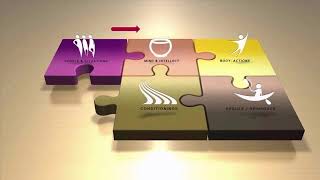
A live Irise/YouTube talk by Ashok Gupta exploring the four core "habits of the mind" (conditionings) that shape personality and wellbeing. Gupta uses metaphors (bowl of light, photographic plate, mountain grooves), interactive audience exercises, and examples (achiever sub‑personality, advertising conditioning, parent/child attachment) to explain how desires/resistances, beliefs, unresolved emotions and egoic patterns form repetitive thought channels and block an underlying sense of bliss/love; he outlines causes that keep these patterns (repetition, emotion, ego) and suggests letting go through awareness, meditation and releasing emotion.
Chapters
Hello and a warm, warm welcome to the Meaning of Life show live here on the Irise platform. Very excited for you to be with us today where we're going to be talking about the four main habits of the mind. Yep. We're going to be going deeper into and trying to understand what makes up our personality, what makes us who we are. And have you ever asked yourself that question, who am I? Why is my personality the way that it is? Those are some of the deeper questions we're going to be delving into. And not only that, once we understand these tendencies of the mind, these habits of the mind, some of which are conducive to our health and well being, some which are non conducive to our happiness, how do we then overcome these habits of the mind to feel healthier, to feel happier, to feel that we're not in control or we're not being controlled by our mind, but instead we are the leader of our mind, we're managing our mind. And these questions are so important because so many of us are randomly buffeted by the ups and downs of our unconscious mind, aren't we? We sometimes are slave to our own minds. The example being, let's say the mind is like a car and a car is designed for us to come out of our house, go into our car, get to where we get to, need to get to. But so often we let the car take us where it wants to go, the mind takes us where it thinks it wants to spend time and we become a victim of all this busyness and this negativity of our minds. So understanding the main habits of the mind, what causes these habits is incredibly important for our health and well being and that's, I'm very excited to share this content with you today. And sometimes these habits, by the way, we're going to refer to as conditionings and conditioning simply means the way your brain and your mind has learned to respond to the world around you. Now, as we go through the content today in our live event, we'll also be followed by an interactive discussion on the Irise platform and I really hope you can join us for that. So that's at 7:30pm UK time, so just in half an hour or so. And you can Access that@irisetv.com live-events it is in the description of this particular live event and there what we do is in a group, we share our experiences on Zoom and it becomes an interactive discussion. And you know, with this type of knowledge and this type of content, it's very profound. It's very deep, and so discussing it in a group is so incredibly beneficial for us. So I really do hope that all of you who are joining us live will also come on to our discussion on Zoom on the Irise platform, and details will be in the description of this particular event. Okay, so let's get cracking with a game. Okay, so let's play a game. Right. Think of a fast food restaurant Now. Okay. Now. Think of a soft drink now. Okay, Let me use my psychic powers. Yep, they're working pretty well today, I reckon. When I said fast food, you probably said McDonald's. Yeah. And when I said soft drink, let's think. I think you said Coca Cola. Now, perhaps in the comments, you can tell me whether I was correct or not with my psychic abilities. But the point here is these companies spend millions of dollars, if not hundreds of millions of dollars, training your brain that when you think of food, when you think you're hungry, that's what you'll think of. McDonald's, Coca Cola. They're two of the biggest advertisers in this particular space, in fact, if not the biggest advertisers. And so your brain becomes conditioned. That is an example of a habit of the mind. And just think, that is a habit which has been conditioned by other people around you, never mind the conditioning that you've created through all of your experiences in life. So these habits of our mind get created by what we're exposed to, what we're conditioned to believe and react to? Yes. If Sarah say, yes, that was correct. Henny saying McDonald's and Orange Aid. There we go. So we all have our personal conditionings or habits of the mind. Okay, let's play another game. Let's see. When you look at this picture, can you see an. What can you see? Can you see an old woman or a young woman in this particular picture? You can put those in the comments. We should really do a poll, shouldn't we? But, yeah, you can let me know. Do you see an old woman or a young woman? Oh, some of you actually see both. Rosie sees both, which is quite incredible. Yeah. When I first saw this, I was racking my brain, so I was like, look, I can see the young woman. She's looking away, but I can't see the old woman. Where's the old woman? Where's the. And someone had to really point it out to me. And the purpose of this is to help us understand that we don't see the world the way it is. Yeah. The world is external to our consciousness and light hits that world, that light then bounces off that particular object, comes into our retina, then goes into our brain and is processed by our brain. But our brain is processing that information based on its past conditionings, its past habits. Almost like a photographic plate that that photographic plate, the more it's exposed to light, the more it creates images upon images upon images on that photographic plate. So we don't see the world the way it is. We see the world the way we are, through our own imperfect lens, as it were. And so we take the analogy of our sunglasses and we mentioned this, I think, last week, where we don't see the world clearly, we are seeing the world through this photographic image plate which, which represents all the memories and all the reactions and all the experiences that we've had over our lifetime. And this is the clue to our personality. Our personality is based upon these sunglasses that we're wearing and the way that we envisage and see the world around us, the impressions, the lens. Yeah. Should I keep these on, do you think? I think it's a bit too Bollywood, I think so. This gives us a clue to understanding our own personalities, our reactions to the world around us, and how we can begin to change these. So as we're watching this today, I'd love for you to share this on social media. So please do share this stream, whether you're watching us on Facebook or YouTube or Twitter. If you like to share the stream on your own social media, that's great. So we can get this amazing bit of information out to people and tell people about the free event afterwards, which is our Meaning of Life discussion live on the IRISE platform. And you can go to irisapp.com and click on Live Events and you'll see the zoom link for our event today. Or indeed you can download the app as well. Okay, great. So we've been talking about these different impressions in the minds, and let's relate it now to what we've been talking about in the Meaning of Life experiment. Yeah. Over the last few weeks. And if you're new to all of this content, that's absolutely fine. I'm going to explain it from first principles anyway. So how do these conditionings impact on our sense of health and well being, the love and bliss that we've talked about? Well, let's go back to our analogy. So imagine before anything existed, all that existed was the light, the light of consciousness, what we call blue. And blue stands for bliss, love, unity and eternal existence. Blue, that's everywhere. The light is all that existed. The sun rays of the light, if you will. And then we put a bowl into the light. Now, some of you may recognize this is not the same bowl that we normally have, but I'm in a hotel room, so just making do with what I have. Hence the very dodgy 70s interior that we have behind me, apparently a retro interior. So we have the bowl of the sunlight. So is this. The bowl is put into the sunlight and creating a separate being, a separate ego. And then into that bowl we put the water. And the water represents our thoughts and emotions, our minds. So now, before we were the light, and now we have these thoughts and emotions running around in our consciousness which block the light. And instead of identifying with the bliss and love that we truly are, we start now identifying with the water in the bowl. It takes up so much room, so much space in our consciousness. And then the habits of the mind, which we're talking about today is like pouring this chocolate milk into. This is all I could find in this hotel room. So it's like pouring the chocolate milk into the water and suddenly it makes that water cloudy. Yeah. So before we knew we were the light, we knew we were bliss and love and unified with the whole. Then the ego came along and the minds, and then the conditionings in the mind. And this milky water now represents our personality, our habits of thinking, behaving, reacting to the world around us. And this is so important because when we understand the mechanics of the mind, the mechanics of our thoughts and emotions, the mechanics of our conditionings and learnt reactions to the environment, then we can begin to overcome these habits and go back to that true bliss and love that is our deepest nature. Yeah. And how do we know that? Well, many of us describe when we finally meditate and we learn how to meditate and practice, eventually we get to the stage where at the end of a meditation, we suddenly notice, wow, I feel really happy for no reason. I feel really loving and compassionate to the people around you. I feel like I'm at one with the environment. And this obviously takes plenty of practice. But that is because we've stopped identifying with the thoughts and emotions and the habits and the dirt in the bowl. But we start identifying more with the space, the consciousness, and being connected to the light outside the space in the bowl when we're connected to something higher. Great. So once again, please do share all of this on your. On your social media. It'd be great. More people to our discussion later on. And this bowl analogy now gives us clues as to where do all these, what we call ants Come from automatic negative thoughts. They might be positive thoughts as well. But have you ever wondered, where do my thoughts come from? Yeah, I'm not particularly thinking about anything. But these random thoughts pop up out of nowhere. It's coming from the dirt in the bowl. So the thoughts and emotions are being driven by the dirt. The dirt represents our habits. And another analogy to help us understand what are these habits. Imagine there's a mountain and it's raining on top of the mountain. Now what happens to that rain that falls on the mountain? Grooves start occurring down the side of the mountain and that water starts pouring down those grooves. And the more water, which is our thought energy that starts pouring down the side of the mountain, the deeper the grooves become. So they start forming rivers, and then those rivers form valleys. And then from then on, whenever there's any thought energy, whenever there's any rain on that mountain, the rain automatically goes down those thought channels. So our conditionings or habits are these thought channels. Wherever the water is, as it falls onto the ground of your consciousness, it starts going down these channels. Our automatic repetitive thoughts or automatic negative thoughts. And so many of our thoughts are exactly the same as they were the day before. Yeah, they say 80 to 90% of our thoughts are exactly the same ones that we had yesterday and the day before and the day before and the day before that. Right. And those particular thought channels then dictate our personality, which is made up of those thought channels. So what we all have in common is the space, the bliss and the love which is above the water and all around it. That is our common, shared humanity. But what happens is this ego starts getting created. And these thoughts and emotions operate within that ego being driven by our conditionings. And so conditioning is often in modern psychological thought or modern spiritual thought, Something that's often neglected or we don't go deeper into that. And today I really want to help us understand that at a deeper level and share my understandings. And so many of you know the work that I do with subpersonalities, don't you? Unfortunately, my puppets aren't here with me. I'm traveling at the moment. So I can't show you my puppets. But those puppets represent the sub personalities or the conditioned sub personalities of the past. So let's take the example of one of the puppets that I have is the achiever. The achiever puppet. And sometimes when we're younger and we're told that we are only lovable or good enough if we're achieving things, if we're doing well in life, then this Little achiever puppet starts getting created so that we recognize that, right, if there's a situation or circumstance around us or a task that we've been given, our achiever comes forward and says, I must do this brilliantly and perfectly and really push to do it well, because when I do, then I get love and attention. I do well at school. And so that sub personality then gets created in the mind and then lingers into adulthood. And then that starts manifesting as overworking, what we call the insecure overachiever, right? And so many of our thoughts and emotions start getting driven by the achiever. And something that the achiever is very prone to is comparison. Comparison to others thinking, oh, look at all those people, how successful, how famous, how rich they are. You know, I haven't. I'm not as good as they are. That starts creating this churning of emotion, that background negativity or despair about who we are is being driven by the groove in the mind. Another example of this would be how this often quoted idea in childhood, sorry, in psychology, around how the reactions that we've had to our parents. Let's say if our parents were, or caregivers or teachers were particularly critical or particularly harsh, or withdrew love, or showed conditional love rather than unconditional love, then we may crave love from our partners in a similar way to when we were a child and craved love from the people around us. So sometimes our partners in adult life are simply proxies for the love and attention that we did or didn't get as children. Once again, is a groove in the mind, a groove down the mountainside. And literally, those are like grooves in the brain. There are connected neurons or packets of neurons that we call cell assemblies that become very stuck. We become stuck in a certain pattern or habit of thinking. And modern neuroplasticity research shows us that before we used to think, the brain was fixed. So whatever happened in the first five or 10 years of life, that was your destiny, and you're going to be like that for the rest of your life. But in fact, modern neuroplasticity research shows us that the brain is constantly changing and shifting and thinking new thoughts and forming new habitual patterns. Therefore, we are not a slave to our past. Okay? And that's very empowering. Now, why don't these conditionings disappear? That. Why doesn't the dirt just disappear from the bowl? This dirt that represents our habits blocks the disappear. Now, why doesn't the dirt just disappear from the bowl? This dirt that represents our habits blocks the light of sunlight, blocks Us from realizing our true, blissful, loving nature. This dirt continues to stay in the bowl for three reasons. Number one, if we continue to repeat these same patterns again and again and again. So if we just live unconsciously and navigate our lives unconsciously, then the mind keeps responding from its old habitual patterns. So there's that repetition which keeps the dirt in the bowl. The second one is emotion. So if we, not only are we repeating these reactions, but there's more and more emotion connected to it, then emotion keeps these things stuck in our mind. As an example, something that I've noticed a lot in the therapy room when I've treated many patients is if we are very much attached to this idea that we must blame people in our lives for what is happening to us, perhaps in childhood, perhaps in adult life, that blame, that anger towards people keeps us stuck with all our reactions and emotions. So going on the path of releasing and letting go can be so powerful to release the emotion that's keeping these stuck habits in the bowl. And finally, ego. So when we operate continually from a space of what's in it for me? What about me? Poor me. If we solely operate from that level, then we're not operating from the space of bliss and love, we're operating from these conditioned habits. So that also keeps the water stuck in the bowl when we operate from the self centered or ego space, because that's not our true nature. So three things that keeps this water stuck. Repetition, emotion, and ego. So now how do we get rid of all this, you know, all these conditionings that are blocking the light? Yeah. Do we want to even let them go? Well, what are the four types of conditionings that we want to let go of? The first type of conditioning in the bowl. And isn't it amazing that our whole personality may be just based on four core conditionings or habits of the mind? The first one are our desires and resistances. Things we want and things we don't want. So one person likes coffee, One person likes tea. One person doesn't like conflict. Another person relishes conflict. Can you see how our personality is formed on the basis of the things we like and dislike? And the issue with these likes or dislikes is if these are strong likes and dislikes, it forms dirt in the bowl. Because then we no longer flow and accept whatever happens in life. We say, no, I want this, I want this to be a certain way, that to be a certain way. And we become attached to those outcomes. Those are our desires and resistances. Resistances. I don't like this. These are strong likes and dislikes. It forms dirt in the bowl. Because then we no longer flow and accept whatever happens in life. We say, no, I want this person. I hate this. I wish this would change. And the stronger those resistances, the more we block the light of consciousness, of bliss and love. Because we're no longer. I want this to be a certain way, that to be a certain way. And we become attached to those outcomes, flowing with the rhythms of life. Instead, we're. We're tight, we're tense. Liking and disliking things in our environment and within us. That's the first type of conditioning. The second type of conditioning are our beliefs, our negative and positive beliefs about three things. About ourselves, about other people, and about life in general. So we gave the example of the achiever. Yeah, that would be example of a belief. The belief is, if I achieve things, then good things happen to me and I get love and attention. That'd be an example of a belief about yourself. Or if you have the cynical part, you'll have a belief about life. Oh, life's terrible. The world's a mess. There's nothing good happening in life. These are all beliefs, repetitive beliefs that we just allow to fester in the mind. The third type of conditioning is what we call unresolved emotion. This is when we've been through past.










