Reduce The Chances of Long Haul Covid. Ashok's Interview With Sarah.
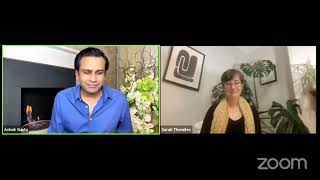
Sarah Thwaite went bedbound with long Covid by September 2020 and recovered using the Gupta Program. She emphasizes deep rest, pacing, limiting stress, and the MEND protocol. A study found the program reduced fibromyalgia scores by 40% and pain, depression, and anxiety by 50% over eight weeks.
Questions this video answers
23 March 2020 (the day UK lockdown started).
By September 2020 she had to give up work and was largely bedbound.
M = Mind; E = Exercise; N = Nighttime routine and sleep; D = Diet.
An 8-week intervention reduced fibromyalgia scores by ~40% and produced ~50% drops in pain, depression, and anxiety compared to a control.
Chapters
Hello and a warm, warm welcome to our Facebook Live today with myself, Ashok Gupta from the Gupta Program. And today's video is going to be all about how we can avoid getting long haul Covid or at least reduce the risk of getting long haul Covid. If we've got a COVID infection, or we know that we are have been tested positive for it, as well as looking at how if we do get long haul Covid, what can be done about it? And as you may know, this is something that we're actively treating at our clinic right now. And just to give you a bit of background, long haul Covid is a condition that has been recognized as developing in a percentage of patients who contract COVID 19 and they go on to having symptoms for many weeks, if not months. And we don't know how long that potentially goes on for. And we at the clinic specialize in treating ME CFS and fibromyalgia and chronic fatigue syndrome. And we've already started treating patients successfully with long haul Covid. But what's really important is we'd love for people to have the knowledge to not get it in the first place. What can we do if we have a COVID 19 infection, we're recovering at home, what increases the risk factors? And we know that for instance, being overweight or high blood pressure increases the risk, the older we are, there's more risk, etc. But we also know from our experience here at the clinic treating similar conditions that there are other risk factors that may increase the chances. And rather than it just being theoretical, I'm very delighted to be joined by one of our patients at the clinic, Sarah Thwaite. So thank you so much, Sarah for joining us today. Much appreciated.
Good to be here.
And Sarah is actually someone who is experiencing long haul Covid and gradually recovering using the Gupta program. And we thought it'd be really useful for all of you who perhaps have Covid or know somebody who has Covid to learn from our experiences here at the clinic, but also one of our patients as well, who has also thought about, reflected on what could have been done differently to reduce the chances of getting long haul Covid. So, Sarah, as I said, wonderful to have you. Do you want to just tell us how it all started in March 2020 for you and, and what exactly happened when you first got Covid?
Yeah, so my first symptoms first developed on the day lockdown started in the UK, 23 March, feeling really, really unwell, Horrendous diarrhea, shivers, aches. I didn't know for definite, it was Covid at that point, but I knew it was something I'd never had before. I felt worse than I'd done with any other illness that then progressed on. Didn't get any better ever, really. Have the classic temperature and the cough and the breathing problems didn't come till later for me, but it got worse and by about four weeks, instead of recovering, my breathing was really, really bad. So much so that a doctor friend who did a FaceTime call with me came around and rushed me into A and E because he was concerned at how fast and how shallow my breathing was and thought it was quite dangerous.
Right. So at that point, you really had some of the classic signs of COVID 19, in terms of the cough, the breathlessness. What other symptoms did you experience at that point?
It was mainly the cough and the breathlessness that was the main concern. And the cough got worse until a couple of months later. I was even, at one point, coughed up some blood and made. My doctor said it was all sorts of other different things, because Covid can have that many different effects on people's bodies and it seems to affect so many of us so differently, they can be really hard to predict how it's going to affect you. What I did, unfortunately, though, I tried to carry on and I was carrying on working even when I was so ill, I couldn't sit up and I was working from bed and I was trying to carry on as much of my normal life as I could, because at the time we didn't really know any better. Now there's a lot of learning from those of us who've had Covid and turned into long Covid, and I would certainly encourage other people to take it a lot more gently in their recovery than I did.
Right, yes, absolutely. This is the core of it. This is what we'd love to dissect a bit more. So you obviously had a confirmed clinical diagnosis from a doctor that you had COVID 19, because you had all the classic signs. And at that point in time, as you say, we didn't really know much about the condition back early last year. And so you found that although you felt quite ill, you continued to work in whatever capacity you could do. You just describe how you think that might have impacted the course of the condition and what you would have done differently had, you know what you know now.
Yeah, I think if I'd known that Covid was more than just a respiratory disease and that it was going to affect all of my body, I would have paced it a lot more slowly. I would have taken a decent amount of time off work. I did slow down my other activities, but nowhere near enough, in retrospect, for what I should have done, for the scale of the illness that my body was fighting. I don't think I gave my body a chance to really heal. And instead I panicked it because it thought that I was kind of going to charge back and carry on doing all my everyday activities when it was really screaming out, you're not ready for this. You can't do it.
Yeah, it's very interesting, that little voice. There's this little voice that we have in the back of our heads that says, I don't think you should be doing this. You're doing a bit too much. And traditionally in society we're taught to just push through that, especially if we're a gym junkie or an achiever, say, right, no, keep going, you'll be fine. You know, just walk it off. And actually, it's a signal from our bodies that we need to pace and we need to rest. But as you say, we didn't know any better. And for anyone out there who's got long Covid, this isn't about feeling bad about what you could or couldn't have done. We didn't know at that time what this was about. This is really for us to try and help others who are experiencing Covid to make sure that they don't go on to contract along Covid. So we're just trying to share what might be best practice and how could you feel? Because often when people think of resting, they think of just physically resting. And we here at the clinic are big advocates that resting is across all the areas of your existence. So it's physical resting, but it's also mental and emotional resting, which is just as important, if not more important, when you have COVID 19, do you want to just speak about that?
Yeah, definitely. So I told myself that because I was working from bed and I was lying down, I was resting, but actually I was attending sort of five, six zoom meetings a day, a lot of them about COVID because that was related to my work and it wasn't really surprising that my body didn't really feel like it was resting.
Yes, exactly. And especially in the context of the pandemic, we're all experiencing slightly heightened anxiety and uncertainty about what's going to happen. Especially last year when it was new. I think now we've kind of surrendered and more to what's going on and accepted it. But at that time, it was all very fresh. So there's that added anxiety plus, as you say, sitting in bed doing zoom meetings, which we know can be really stressful with all the technology. And I can imagine that that continuously might not allow someone's body to fully fight off the virus.
Yeah, in hindsight, that's how it feels that I didn't really give it. I mean, there's no saying that it might have happened anyway, but I think I would have given myself a better chance of not having had the last nine, what, 10 months now of illness had I taken it more gently at the start and been more gentle with myself.
Yeah. So this is really crucial information because no one's done any research on this as yet. And it's quite anecdotal. It's quite tricky to do research on whether someone overdoes it at the beginning of the condition. Do they rest enough? Because you're talking about different layers, mental, physical and emotional. So this anecdotal information is incredibly important. So if you are out there and you have COVID 19 or you know, someone who's got COVID 19, certainly Sarah's experience and other people that we're treating right now, it really is about as soon as, you know you've got COVID 19, please take that deep. Rest mentally, physically, emotionally. Drop everything. Don't feel guilty about, oh, I'm not at work, oh, I'm missing out on this meeting, or, you know, work will think I'm a, you know, a lazy person for not doing this. That and the amisherka. No, it is really about listening to your bodies, just like when we have a flu and deeply resting, be as lazy as you want, let go and say, I love myself. I'm going to take that self care to really get better from this condition. And I think that the next step, and we'll come on to that, Sarah, is even once you feel that you've got over the condition, take your time getting back to work or getting back to a busy social life or looking after the family. Can you tell your employer to give you some more time? Can you tell your family to take on more responsibilities? You know, these are all kind of important things. So, Sarah, coming back to your experiences. So I guess you then at that point realized that this has gone from just having COVID 19 to then long haul Covid where it was lasting for many weeks and months. At what point was there any particular point you realized, okay, this is what's going on, or was it just a gentle carry on?
I think it was a slide. But by July I realized that it definitely wasn't going away. I took a week off work thinking that, you know, a week of rest would be really, really good, but tried to do a little bit of walking, and I set myself back quite badly. And from then, it was a slide downhill until September. I had to give up work completely. I needed to move in with family for care, and I was pretty much bedbound, just about able to get to the toilet. So at that point, it was clear it wasn't an ongoing infection that had long since gone. But there was definitely something my body was trying to tell me. It wasn't going to recover if I carried on with the way I was going.
Right. And just so that, I mean, obviously you're aware now, because you're on the Gupta program, you're aware of our hypothesis, but people always hear it so many times from me. But in terms of your interpretation of our hypothesis as to what we believe causes me chronic fatigue syndrome, fibromyalgia, long Covid, how do you interpret hypothesis in terms of what may have happened to you?
For me, it felt very much that my body was triggered into like a fight, flight, freeze mode. My heart rate was very, very fast, especially whenever I wasn't lying down, with symptoms that are very similar condition called pots, which a lot of people with long Covid have been experiencing. That then makes you feel more and more unwell and it makes you not want to stand up because you know that when you do, you're going to feel ill. And it becomes like a vicious cycle. The body starts, well, if I do that, I'm going to feel worse. And. And in the end, it's almost like it stops you from doing it as a protection device is what it feels like. I was mentally really, really calm, longstanding meditation habit, and my mind was quite calm through the process, which I feel quite grateful for. But my body was still in that panic mode. It felt that my body was stuck in that mode, not necessarily my head. It wasn't a mental thing particularly. It was just there was something that my body needed to heal. And a lot of us have been doing things like meditation and yoga and things to try and improve the. The parasympathetic response, things that are built into the program anyway. But it felt that kind of there was more needed. There was that built on top of a program of rest and a planned program of dealing with it, rather than just kind of ad hoc things.
Yes, I agree. I agree. And obviously, Sarah, I think many of us have been seasoned meditators at the same time, even when we've got a very calm mind. When we are working, it still is an activation of our nervous system, even when we're calm, isn't it? So just working, just having so many meetings can still rev up our system and impact on our immune system and.
A system that's been under attack from what is a really, really powerful virus that affects every part of your body. It would be amazing, really, if our bodies didn't kind of want to kind of fight back and defend us and protect us in some way from that.
Yeah. And as you've described, it almost feels like kind of fight or flight. And we describe the condition as a physiological traumatic response. So the body says, right, let me fight off this virus. But if there isn't enough resources or energy in the system, we've got a busy life, we're stressed or whatever it may be, the body goes into this traumatic condition response to say, right, I am going to call the cavalry every time I notice anything that might mimic this condition. So even once it thinks it's fought off the COVID 19 or it has successfully done so, the body stays in the on position, which is stimulate the nervous system, stimulate the immune system, keep defending all those cytokines going around the body, which keep the body in this altered state of what feels like illness. But actually it's our own immune system causing all the symptoms and our own nervous system. And then it stays stuck in that mode, creating ongoing symptoms as you've described. So that kind of got to its worst in September, and then I think at that point. Is that when you then got the Gupta program?
Yeah, that's when I started reengaging with it properly. I'd used it in the past many years ago, so I had confidence it was going to be the thing that was going to help me. But yet once I'd stopped work and I was resting, I had this time and space to engage with the program properly, and that's when I started to recover.
Fantastic. And so you've been working with the program. What aspects of it do you think were most powerful for you?
For me, personally, it's been the emphasis on the different parts and kind of understanding what drives me. So the fact that I carried on working from bedbound shows I've got a real strong, active kind of achiever type. I want to get things done. I also really hate letting people down. So it's kind of seeing those different parts within how I respond to situations and trying to get all of the discipline aspects of how I work to function together on board for my Recovery. And I just want to kind of something that.
So go ahead, Sarah.
That really helped.
That really helped. Okay.
No, that feels like it's really helped, and it feels like an ongoing focus.
Great. And I want to really emphasize this, Sarah, that, you know, obviously what we're. If anyone's watching this and coming to the Gupta program new, obviously, we're not saying that these conditions are in the minds. They're definitely real physical conditions in the body. But what we're trying to help people understand is there are certain unconscious patterns that we have, certain reactions that the brain has to the body that can keep this body in this altered state. And sometimes we have to go deeper and see this condition as a, I suppose, a learning experience to help us understand more about ourselves that can gradually get those final steps towards recovery.
Yeah, No, I definitely wouldn't want anyone to think that it was your mental health disposition that led anyone to this, because a lot of people have been getting that from some health professionals and understanding people react against it because this feels. And it is a very, very physical condition. But it feels like we need to harness all the possible tools and all the possible resources that we have at our disposal to give ourselves the best chance of recovery.
Yes. And that's why a holistic approach is most powerful. So we advocate the brain retraining and the limbic retraining, which is the core of the Gupta program, using neuroplasticity techniques, which obviously we're using, as well as supporting techniques like meditation and diet and sleep and all the other things that kind of bring our systems back to balance. So I'd love to understand more, Sarah, about the contrast between, obviously, in September, you being pretty much bedbound, as you say, you moved in with family, they had to kind of look after you. And. And now, once you've. Now you've been on the Gupta program for a while, what are you able to do now? How would you describe your health now?
On average, it's vastly, vastly improved. I can do a daily walk. I've been out on my bike several times. I used to be a real cycling addict, and I can't go as far or as fast, but I can use it again. I'm sitting up in a chair. I mean, for months, the idea of sitting up in a chair for more than a minute or so would have been unbelievable. I started back at work this week on a phase return, and I'm pacing it and taking it gently. But after, from. In September, I couldn't look at a screen. I had to have my eyes Closed. I couldn't cope with any sound. So to get to a point now where I can quite confidently arrange meetings knowing I'm going to be well enough to attend them, just feels kind of life changing, really. It's like I'm getting my life back again.
Yes. That must just be an incredible liberation. Especially because we didn't know what this virus is about, what effects it could have. I mean, we don't want to scare people, but it. It must just feel such a relief to have that fear behind you about that.
Yeah. And I don't mind if it takes me a little while to get back completely to how I was, because every week I can see progress, every week there's something new I can do that I couldn't do the week before. And that's really, really powerful to keep coming on.
Absolutely. Are there any kind of critical success factors that you find in your experience of using the Gupta program to overcome long haul Covid? Is there any advice you'd give to others who are using the program for that?
I think one thing might be to kind of limit how much exposure you have to the news. Because at the same time as you're trying to help your body understand that it's safe, there's so many messages out there that we're not safe at the moment. And we can do all the things we can to keep ourselves as safe as possible from reinfection. But we also need to calm down our bodies because our bodies don't necessarily always realise that. So I will only choose to look at the news as a bulletin every so often. I don't have it on regular updates. And it's just being sensible about noticing what works for your body and what doesn't. So for example, if like for me, meditation is a regular part, but if I miss that, I do notice it. My body feels more agitated. It feels like I've got less capacity to get through the rest of the day. So it's noticing the things that work and make a difference and making sure I don't neglect those even as I start to feel better.
Yeah, I really like that. There is something about that commitment to your own health. To me, that's a definition of self. Love is rather than as being embroiled in the outside world and that taking priority, it's going inwards, listening to our intuition and listening to our bodies and really taking and indulging in that self care and giving ourselves permission. Right. Anything you want to speak to about giving us a permission to do that, that it's okay to do that for.
Ourselves, especially if we've learned a big, long, strong habit of taking care of other people rather than ourselves. That can be a really hard lesson to learn. And I think the other bit which is against part project is that reengaging with joy. For most of us, there hasn't been enough joy in the past year. If we've been feeling really ill and those of us have been stuck in bed, it's really easy then just to dwell on the things that we can't do. But for me, it's also felt really important to find things that I could do even if it was lying down, because that was. It was positive for me and for how I was feeling about life. But it's also very reassuring, I think, as part of a recovery to discover things that you can do that support that, whether it might be something creative or whatever it might be, it doesn't really matter what it is, so long as it's that thing that kind of gives you something to look forward to as part of not just thinking about being ill and wondering when you're going to get better.
Yes, such an important part. We've had a challenging year, there's no doubt about it. And you know, in some ways we should be grateful that previous generations didn't have all the uplifting content that we now have. You can go onto YouTube, Facebook, etc. And find uplifting positive videos. Right. You can have access to lots of online libraries of audio books and various things that perhaps previous generations didn't when they were going through something like this, even war, for instance. So I'd really encourage people, as you say, to switch off some of the more violent or negative or types of content or the news, and instead switch to things that uplift your positivity, that uplift your spirit in some shape or form that re engaging with joy that you've talked about. Yeah, it's a beautiful idea. And I really encourage anyone who's going through COVID 19 or recovering from that to just take this time out, to re engage with the little things that bring you joy, rather than thinking I need to rush back to work as quickly as possible and be achieving or doing this or doing that. So important.
Yeah, we want to get back to our lives, but we want to do that in a stable, sustainable way so that we can keep being able to help other people and do our jobs and do their activities that we'd normally love to do, but not just for a week of a month, but to be able to sustain that in the long term. And feel that we actually kind of can put this year behind us. I think that's what all of us want.
Yes. And so moving forward now, in terms of your recovery, what is it that you think you obviously using the Gupta program or other things, what is it that you now feel will get you to that 100% recovery so you can put this fully behind you? Is it just continuing as you are?
I think, yeah, continuing as I am, but being aware that there's going to be different challenges as I go along. So for a while, one of the fears that I was having to deal with was the fear that I might not get better. But as I've started to improve, there's also been fears of what happens if I do get better. How am I going to cope with a life of being well? Am I going to rush it? Am I going to do it too fast? Am I going to find that I can't sustain it? So I think it's keeping up with all the different things that work, but just being prepared to be flexible with them as the situation develops.
Yeah, no, that's great. A real optimistic note for everyone who is suffering from long Covid. Long Covid. Because it's a brand new condition. It can feel like doctors will tell us there's no cure, there's nothing that you can do about it. And actually, people are recovering from long Covid. We're seeing it at our clinic. There are other people doing other things that are improving. So that's the hope and positivity you want to give to people that just because you have long Covid, it's not a long term sentence. There are ways through this and we want to support you in any way that we can. So there's two messages from today. Number one, if you do get COVID 19, there are things that you can do to try and reduce the chances as much as possible for it not to turn into long haul Covid. And if it does, and you do develop long haul Covid, there are ways through that people do recover from that as well. We're seeing it already. And the Gupta program is one avenue that you may choose to try for that. So finally, Sarah, any final thoughts that you'd like to share with people about you talked about resting. When you have COVID 19, is there anything else that you want to share in terms of any tips or tricks to make sure that you recover and go on to lead a normal life afterwards?
I think mainly just listening to your body and listening to that kind of inner voice of wisdom, that kind of Gives you better idea because hopefully as it goes on, doctors will be able to give people more tips and advice. But for those of us to start with, there was no medical input, really. Nobody knew what to do and we had to find our way through the dark. But I'd like to think that other people will find their way a little bit easier than we did. And if any of our experiences can help people, just listen to that kind of, that kind of innate sense that, okay, this is not quite how my body's supposed to be feeling, I need to do something to support it, then I think that would be a lesson well worth leaving people learning.
Brilliant. Brilliant. So everyone out there, if you have got COVID 19 or you know somebody's got COVID 19, please do share this video with them. So we'd love for you to share this video on your social media feeds. Now you can share on Facebook, Instagram, etc. And give us a thumbs up. Give us a like if you're liking what you're hearing. Always nice to see those across the screen. And also in addition to what we've talked about, which is if you have COVID 19 resting physically, mentally and emotionally, those two things are incredibly important. And really giving yourself permission to do that until you feel really strong in your body to then go back into a normal life. And secondly, we have something called the Gupta MEND Protocol. Mend M stands for mind, E for exercise, N for nighttime routine and sleep, and D for diet. And you can find all of this in detail at our free not for profit program, which is the coronavirus challenge.com it will also be in the description of this video as well. The Coronavirus Challenge.com it's a 10 day program based on all the latest science. I think We've referenced over 500 medical studies there on what has been shown to reduce our chances of getting an infection. Yeah, not just COVID 19 specifically, but infections in general. And we also believe if you follow some of those tips and tricks within that program, that might also support your recovery from COVID 19. So M stands for mind. Sarah and I have talked about switching off the news and all the things that make you anxious and meditating instead. E stands for exercise. Now in the Coronavirus Challenge, we do talk about getting lots of exercise to reduce your chances of infection. If you have got the COVID 19 infection, we will say the reverse. So it's not about exercising or overdoing it. You really pace yourself. You can't exercise your way out of this condition. So the information is slightly different if you've already got COVID 19 when it comes to EFRA exercise, really pace yourself. And remember that certain hospitals and certain rehabilitation centers will say we need graded exercise therapy or get you to gradually increase your level of exercise to get rehabilitate your body. But in our experience with me CFS as well as COVID 19 and post Covid, that isn't a good idea. We don't want to rush back into activity and exercise. N stands for nighttime routine and sleep. So really making sure you get lots of deep sleep, you know, not looking at gadgets late at night, having that depth and quality of sleep and having lie ins until you get that full recovery. And D for diet, lots of great tips on how you can boost your immune system in general. And some of these things can reduce our chances of getting COVID 19 by a factor of five. And once again, most of these things we believe can help you also strengthen your immune system once you do have COVID 19. And if you do go on to getting long haul Covid, then we have a program called the Gupta program, which is a neuroplasticity brain retraining program where we believe that COVID 19 is caused by this traumatic response. And it's a whole set of 15 interactive video sessions, audio sessions and meditations, as well as a community of people all supporting each other as a pathway to recovery. And as some of you may know, we've also just published a peer reviewed medical study on the Gupta program, on its effectiveness against fibromyalgia, which is a very similar condition to what we're talking about. And we had some very good results. It showed that just an eight week intervention of the Gupta program reduced fibromyalgia scores by 40%. There was a 50% drop in pain, depression, anxiety compared to a control. So it's a groundbreaking study. So I encourage you to have a look at that on our website as well. So there's a couple of resources for you. If you haven't got COVID 19 but you're worried about getting it or you have COVID 19, please visit the coronavirus challenge.com and if you unfortunately are unfortunate enough to get Long Haul Covid, Then please visit guptoprogram.com there's lots of resources and free information on there as well. So thank you so much for watching. What we're going to do now is we're going to go on to a Q and A. So we're going to end this particular stream for our Facebook feed and then we start a new stream on the same Gupta program Facebook page, wherever you found this video to go into a bit of a Q and A where we can answer your questions about COVID and anything else that you want to ask us. So all that's left for me to do is to say a big thank you to Sarah for sharing her experiences. It's a great inspiration to people out there not just to hear it from me, but to hear it from somebody who's gone through that experience and what they would have done differently. So thank you so much Sarah. Any final words you'd like to share?
No, just good luck for everybody on staying well or getting well.
Great, beautiful words. Thank you so much Sarah. Thank you to all of you. Please do check out our websites and we're going to go on to a Q and A now. So I wish you all the best healing and luck with your recovery from whatever you're experiencing and and once again, please do share this video. This is really important information. This could be the difference between someone going back to a normal life or going on to having a chronic condition. So we really need to get this core information out there that there are things that you can do to prevent yourself from getting long haul Covid. So thank you so much and we'll see you next time. In fact, next Thursday. Just to let you know, Next Thursday on 28th January, we'll be doing a Facebook live on acceptance and surrender if you have chronic illness. So look forward to seeing you there. Thank you and goodbye.










