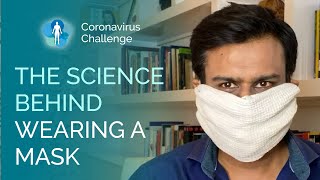
A short video by Ashok Gupta (April 2020) arguing that widespread mask-wearing—including homemade masks—reduces COVID-19 transmission. Gupta cites recent studies on airborne/aerosol spread, viral shedding during presymptomatic phase, mask materials' relative effectiveness (N95 > dishcloth/HEPA > high-thread-count cotton/T-shirt), and demonstrates simple homemade mask designs; he also encourages a 10-day immune-boosting challenge.
Chapters
It seems incredible to me that certain countries are still not advocating the wearing of masks. And in a policy change, even the Centers for Disease Control in the US has recommended that people make their own homemade masks and wear them in public. This virus is far more contagious and more airborne than perhaps scientists first thought, which is why it's spreading so fast. And I believe we all need to be wearing masks against the virus. The scientific research seems to point to that. And if we all wear masks, I believe that we can all play a part in reducing the burden on the healthcare system and flatten the curve, just like they have in certain countries. But what does the science actually say about the nature of this virus? And which material should we use to make our mask? Well, firstly, some latest studies, only published this month and listed below, have now shown that when we breathe, or when we talk, or when we cough, we may be breathing out the virus in little micro droplets or even what are known as aerosol type particles. And if we wear a mask, we reduce the chances of spreading the virus onto others. And for the first week after being infected, we may have no symptoms at all. So it's better to assume that we may have the virus and that by wearing a mask, we don't spread it onto others. Secondly, despite us being told it's not airborne, recent research has found that in fact the virus can remain suspended in the air for up to three hours. It can spend in micro droplets of moisture or dust as well as form a type of aerosol. This is why healthcare workers have to wear the N95 masks. So whilst homemade masks might not be as good as surgical masks at removing the virus, they still drastically reduce the chance of inhaling it. And they can also reduce the amount of virus that we inhale, what we call the viral load. Thirdly, we touch our faces around 20 times an hour. So wearing a mask outdoors could prevent us from transferring the virus from a surface onto our nose or mouth. Now, I would advise wearing a mask wherever you go outside, but what homemade materials are best? Well, in a very casual non scientific experiment, let's see which materials seem to offer the best protection against a virus which may have turned into an aerosol type mist. Look what happens when we spray it in the air. Now we spray it through an N95 mask. Nothing gets through. Now look what happens through a basic cheap mask. It's ineffective. Now look at this T shirt material. It offers some protection, especially if it's doubled up. And now look at this dishcloth. Much better protection. Now the research that we've done online seems to indicate that most universities recommend high density cotton materials to make your own mask. It's the easiest to use as well as most breathable. In fact the best home material is a HEPA filter such as a vacuum cleaner bag but that's a little trickier to make. The research seems to show that dishcloths or tea towels offer the best filtering especially if you put a sheet of kitchen towel in the middle so you can take your high thread count cotton could be a T shirt or a sheet or your dishcloth. Place a couple of rubber bands or hair ties around it and then fashion yourself this homemade mask like this and putting the rubber bands around your ears and there we go. Not really much of a fashion statement but hopefully it will keep you safe. So thanks for watching guys and please keep yourself safe by wearing a mask anytime you go outside. And of course please take the Coronavirus challenge, a 10 day challenge to improve and supercharge your immune system.