World Exclusive Interview Naomie Harris OBE | Ashok Gupta |
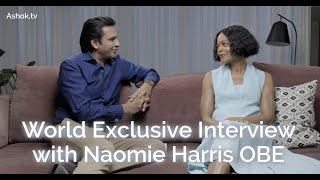
Naomie Harris talks about her role in Moonlight, how meditation and compassion shaped her approach to playing Paula, and why she keeps choosing meaningful film projects and charity work over bigger paychecks.
Chapters
Hello and a warm welcome to the show. Today's show is part of our series of interviews looking at how we can transform ourselves to help transform the planet. And we're very privileged today to have with us Naomi Harris, OBE. Now, Naomi has had an illustrious film and TV career. She's been nominated for BAFTAs and also Golden Globe for her portrayal of Paula, a crack addicted mother, in the film moonlight, which she also was nominated for an Oscar for Best Supporting Actress. She's a dear friend of mine and it's wonderful to be able to speak to her today. We've had many conversations and finally we get to put it on camera. So a warm welcome. Naomi, it's wonderful to have you on the show. How are you?
I'm really good, actually. Yes, today is a good day.
Good, good. And this is the first time I've done an interview on a sofa like this. And I think I'm going to do every, every interview on the sofa. Intimate, relaxed. Exactly. It's a better place, definitely. So you've had an illustrious film career, you've been involved in so many different projects. What really started it off, was that always an interest of yours or were you kind of, kind of pushed into that area? And how does it bring you joy?
So I have always known that I wanted to be an actress. I used to, when I was a kid, like at the age of, I don't know, four or five, I used to stand in front of mirrors making, trying to make myself cry, pretending I was other people. I was just always interested in inhabiting other worlds and pretending that I was somebody else. So it was very clear that I wanted to be an actress. And I would tell everybody who would listen that I wanted to be an actress. And my mom, who absolutely amazing, listened to that and thought, right, I'm enrolling her in an after school drama club. So she enrolled me at the Annalshire Theatre School and I started going at the age of nine and then I started getting professional jobs. So I started doing kids TV like Simon and the Witch, Tea Leaf on the Roof.
I remember that.
Microman, Runaway Bay, the Tomorrow People. And it just went on from there. And I just knew once I started that that's what I wanted to do with the rest of my life.
That's incredible to have discovered that at such a young age. Because in the Meaning of Life we talk about discovering your purpose, something that brings you that, that joy. And do you think you've. That's really what it is for you?
I think it definitely was and is for now, my Thing I don't know what the future holds. You know, I don't know whether in five years time I may well discover that there's some other passion that I want to explore. You know, there's so much out there to be explored and there are so many different ways of expanding and learning and growing and I'd love to explore all of them. But what I love about acting is it's one of those professions that does allow you to expand in so many different directions and to learn so many new skills. Like I've just done a TV show called the Third Day, which is out in May. And for that I had to learn to swim. And I've always wanted to learn how to do front crawl, but I've never been able to do it properly and I've never been a great swimming. But because I have to swim in that, I had to learn that skill. Another show that I did when I was a kid, I played someone who owned a ranch, so I had to learn to horse ride. I did a film with Woody Harrelson many, many years ago. Can't remember the name of it now anyway, but I had to learn to scuba dive for that one. So there are all these amazing skills as an actor you get to learn. It's incredible.
Yeah, and it's incredible opportunity, the variety that you get involved in. And I guess with our life purpose, it changes as we change. So as we evolve, as we change, then we look for new horizons. And so it's a, it's a, it's a moving feast, as it were.
Yeah, absolutely.
Now, probably your deepest and most powerful role was that of playing a crack addicted mother in the film Moonlight. Now when I watched that, and I'm sure many people have said it to you, I was just so moved because, because I know you and actually to see that transformation was incredible. And I was drawn in, almost moved to tears by her plight. I mean, how on earth do you research a role like that?
Well, it's a privilege when you get a role like that because so often roles aren't as, you know, as deep and meaningful as those kind of roles. And you don't get so, so much handed to you in the opportunity to explore and create a character with such depth, as I did with Paula. So it was a real privilege to get that role, but it was also a real challenge as well, because I'm someone who doesn't drink, doesn't smoke, and there I was playing someone who's crack addicted. And I thought, oh my gosh, you know, the Chasm between myself and someone like that is huge. And I had all these kind of judgments as well, because I thought, how can she be a crack addict, cracker, have this addiction, and also be raising her son as well? And she's so abusive to her son as well, verbally. And so I really struggled to be able to find her. But the first thing you learn when you're acting is that to find any character, you have to have compassion, and you have to put aside the judgment and really understand, like, how did that person become who they are? And so, for me, it was just watching a lot of interviews with women in particular, who suffered with crack addiction and. And learning about their story. And what I discovered was that what united every single woman that had this addiction was they'd all been sexually abused as children. And then I put myself in the position of someone who is a young child from a very impoverished background, not having anybody to speak to and express their pain to. Or perhaps they did express their pain to that person, but they weren't believed. And what do you do with that kind of level of pain and trauma that's never been confronted as a child? Where does it go? Basically, it looks for release somehow in adulthood. And that's why, you know, Paula turns to crack, because she is trying to escape her own pain, and she knows no other way to do it. And once I discovered that, then I could have compassion for her, and then I could play her.
You know, that's so powerful, because I think compassion is something that's beginning to almost reduce in some ways in society. But also, there are a band of people who are looking to increase that in society. And I think when we see someone addictions, whether it be trauma, whether it be mental illness, we can sometimes make that judgment of, oh, they're depressed, you know, snap out of it, or you have an addiction. What's wrong with you? You lack control over yourself.
And also, you're so different from me as well. I would never do that. I would never behave like that, you know, but we just don't know what the other person has been through until.
We walk a mile in their shoes.
Exactly.
You know, so I think this idea of bringing compassion into a role and actually discovering that person's voice is so powerful. And I wish we could all do that, because that's what it's about, isn't stepping in the other person's shoes and understanding that they are who they are because of their past and what they've been through. And it's so easy to bring the Walls up. And we see that in modern society, the debate about immigration, the debate about mental illness. And now I think that's beginning to change. And you've been involved in some of the films around that, so, yeah, it's.
A privilege to be able to be part of that conversation, in a way, and helping people to develop more compassion, hopefully. And it's lovely that you said that you really. You watched moonlight and felt Paula's plight, because so many people actually say, I watched the movie and I couldn't stand her and I hated you. And that isn't the point. You know, that wasn't the. The point about Paula was that here was a woman in immense pain and suffering. And I love that you were able to see that. Yeah.
And I think that's because at the clinic, we talk about how severe trauma can impact on our adult lives in terms of illness, mentally and physical illness. And I guess from your perspective when researching the role, was there something specific about female trauma that you think is under expressed in society? Obviously, the MeToo movement is trying to now have that conversation and open up that conversation. But do you think there's a lot of people out there who are suffering from trauma, but as you say, that pain doesn't know where to go?
Yeah, I think that's definitely true, but I don't think it's unique to women. I think it's just as hard for men, perhaps even harder for a young boy who's been sexually abused to speak up and talk about that. I think it's, you know, men and women are in an equal position in that respect, you know, that we can talk about the fact that there's all this male privilege, but then along with that male privilege are all these expectations, which are very. They kind of restrict the flourishing of the true identity of that person. So. And maybe women have an opportunity to express their feelings and share their feelings in the way that men don't. So I think both men and women are subject to that.
Subject to that, definitely. And I think this is where we're seeing more men's empowerment workshops and videos to give them an opportunity to connect with this debate. But what I do like about social media and things we're seeing in society is that it is beginning to open up that conversation now.
Absolutely.
If celebrities, royalty are talking about it, then it gives people opportunity to say, this is okay.
Yeah, absolutely.
Now, we first met when you downloaded the app, the Meaning of Life app, And I think you were just starting to go through it. How did you find the app and what Made you turn to it.
I don't even know how I found the app. I was trying to remember, actually, because I knew obviously I was meeting you and I was trying to think, how did I stumble across this amazing app? But I really don't know who recommended it. But honestly, when I started it, it was. It was literally life changing. And I was just thinking the other day, because I've been filming for quite a long period of time and got out of, you know, I've stopped looking at the app, but I just thought it was a wonderful way to get imbalance again. And it brought me so much joy and it's such a special app. So thank you for creating it, Ashok. It's really special.
No, that's. That's very kind of you to say.
It's not. I'm. Well, it's not me being kind. It's just honest. It's actually really truthful. It's one of those app that apps that really does work. Absolutely.
And how do you think it touched you in terms of you've talked about it, making you feel calmer, a different perspective?
It really did, yeah.
In terms of the video content, were there specific aha. Moments that you had or is it just in general you found the process?
I think the process, I think, you know, the writing down things that you're grateful for, the exercises, I think the videos are incredibly inspiring and uplifting and it just gives, you know, gives you a sense of hope.
And I think that's something that's missing in society as well. This idea that a lot of people are living in this background feeling of fear. I don't have enough. That insufficiency. I need more. And those can be genuine people in poverty. But even people who actually have the modern amenities in life are still saying, I want more. I feel dissatisfied competing with people around them, comparing themselves. And I think that that background sense of fear is within us all and it's about overcoming that. Was that something that the app made you aware of?
I think definitely. It definitely made me aware of that. It also, by encouraging me to explore different techniques of meditation, it helps me find a meditation practice that really works for me. So that was very powerful and it encouraged me to get into regular practice as well. And I think also because it encourages people as well to do acts of service, it makes you realize that, you know, because what I started to do was to volunteer in my local church by helping in a soup kitchen. And that really helped me to put my own issues into perspective. So I think it does a Wonderful job in that respect.
Yeah. You mentioned the idea of service, and we really emphasize that in the app. It's an important part of it. What is it about service that really opens up the heart, do you think?
Because I think it's. We put ourselves so often at the center of everything and we're seeing self absorbed almost sometimes, and we're seeing experiences through our own eyes. And when you're of service, it feels. Forces you, encourages you to look through life through someone else's eyes. And then you start to realize just how privileged you are and how much you actually have. And so it's a wonderful way of shifting perspective very quickly.
Definitely. Wow. So I think that's hopefully some words of inspiration to people who are doing the app and thinking, I don't have time to go and do some voluntary work or some service work. It is actually so powerful for us as human beings.
It really is. It really is. And absolutely, it makes sense. Such a difference to other people. And, you know, I was very lucky that I worked with Martin Stone, who organizes our local soup kitchen at the church. And because obviously the platform that I have, I was able to help him as well to gain awareness about the work that he's doing. And he actually released an app which is helping people to find local soup kitchens in their area and not just in the uk, but also throughout Europe. And so that was wonderful to, you know, help him in what he's doing and, you know, as well as volunteering at the soup kitchen. Yeah.
Wow. So it's gone global now. Yeah. You've inspired a movement. So in terms of when you were watching the film, we talk a lot about things are happening for a reason. There's a deeper reason, a deeper philosophy of life, as people might say, that then encourages us to be able to relax. Was there anything around that kind of area that you found interesting?
Well, I think, you know, it's one of the things that is really hard to accept, you know, and I definitely struggle with that because often when things are not going well and, you know, you have a particular view about how you'd like your life to go and it's not matching that or something really traumatic has happened, it's very difficult to think this is happening for a reason. But having an app that on a daily basis is reminding you that, you know, there is a reason for what is happening was. It was really calming. Had a really calming effect on me.
Yes. And it's the idea of we have these reactions to the world around us, our trained reactions, but if we Take that step back. We can observe it and see the deeper meaning behind it. Kind of stoical or philosophical perspective on our problems. Yeah.
I mean, it requires a lot of faith and a lot of trust, which, you know, you don't have to have any particular faith, obviously, when you're, you know, joining in with the app at all. But you do have to have faith in something, obviously, because you must believe in something greater than you that is orchestrating things in life. Right. And so you do have to develop this faith and trust.
And something that I say to people is, if you don't have that faith, something as human beings we universally believe in is love. I mean, here we are filming this on Valentine's Day. How romantic. We all have faith in love to a certain extent, and whether it be love of our family, love of ourselves, if we have faith in that and surrender to that, it can really bring us that self awareness and expand us. And that is something that's universal to all of us. And it's about bringing these universal values and saying we can bring the world together. Rather than looking at what separates us, let's look at what brings us together.
That's beautiful. That's really beautiful.
Now, in the film, we say, the truth cannot be revealed to you, only through you. And most of us have very busy minds, crazy schedules. We don't have that moment to just be at peace and be at stillness with ourselves. And you've mentioned, obviously, meditation. So how has meditation impacted on your life? And how often do you meditate?
So I meditate twice a day for 20 minutes. And it is such a huge part of my life that I can't imagine living without it because I really, particularly about a year ago, just kind of really had a burnout and really spun out. And life was just way too hectic and just moving way too fast. And so I really made a concerted effort to slow things down. And it didn't mean slowing the world, because the world is not going to slow down.
No, it's not.
And it doesn't mean like slowing my schedule down, because sometimes it just is the way it is. But it was about me slowing down. It was about me saying, I put myself first for two times a day for just 20 minutes, and I focus on just relaxing. And it was like, so powerful how that feeds into every moment of the day. Just those 20 minutes.
Yes. And most people can relate to that, that they are beholden to someone else's schedule and they just feel like they're out of control. And actually we do have that control if we're prepared to invest the time. But then my friends will say, oh, I don't have time to meditate. You know, I've got 10 minutes, I've got 20 minutes. But they'll spend half an hour on their phone scrolling through cat videos on Facebook.
Yeah, absolutely. That's so true. That's so true.
The average person is spending an hour or two. So 20 minutes. You know, we work 1,440 minutes in a day, but 10 or 20 minutes, less than 1% can make the impact. And when you have such a busy work schedule, filming schedule, where you obviously have to be on set, how do you find the time? How do you force yourself to make sure? Right, I've got to meditate.
So I think the thing is about. It is not to be too precious about it in the sense that I think some people think that to meditate I need to be in my special room with my little meditation altar. And, you know, there has to be absolute silence. And no, it just isn't going to work like that. You know, like today I meditated in the car on the way here here. You know, I asked the driver not to have the music on and then was able to just, you know, meditate on my way here.
Join you in trouble.
Yeah, that would. Then I'd definitely be in trouble. But no, you know, so sometimes you have to do it like that. Sometimes you have to meditate on the train. You know, I've meditated on the tube many times, so it's about not trying to. It's not about not making excuses, ultimately, because you can find 20 minutes. It just isn't necessarily the perfect 20 minutes that you want. You know, ideally, I would have liked to have woken up earlier and got everything organized and then sat at home, in my own home and in my environment and meditated. But I didn't work out today. And that's okay. That's all right. Just so long as you do it no matter what.
Yeah, there's a space somewhere in our day that we can do that. Yeah, we even have people sometimes at work that will go to the toilet and then. And then just meditate for 10 minutes just because they need to.
I've done that before. Yeah, I've done that. Events when it's all got a bit crazy and I'm like, okay, I really need to go to the. Go and meditate. So I go to the cubicle and I meditate.
Yeah. To kind of recenter ourselves.
And it just gives me energy as well.
That's the key thing isn't. It gives us energy, gives us perspective on life, and it gives us insights. Do you find that as you've meditated, this idea of becoming more the witnessing, awareness. So rather than being kind of caught up in the tumultuous mind, we're able to take a step back and say, okay, this is my crazy mind, but I don't have to be involved in it. I can take that step back. Have you. Have you noticed anything around that?
I've definitely noticed, Noticed that. But I think I also still do have a tendency to get caught up in the craziness. I'm new to meditation. I only started meditating a few years ago. I think you've been meditating a hell of a lot longer than me, so I think you're reaping a lot more benefits. But I definitely see that happening. But I've got some way to go, I would say, on that one.
Yes. Well, we're all work in progress. We've all got our journey. But what's great is that it's kind of helping you right here, right now with the big screen is obviously a fantastic medium to really hit on the bigger issues of life. And you've been involved in a few of them, such as Black and Blue, touching on Black Lives Matters, and then also moonlight as well. Is that something you'd like to explore more of as you continue along your career on your journey?
Well, I think, you know, people often ask me, like, you know, are you going to produce something? Are you going to direct? Are you going to write? And I feel like, this pressure because I'm like, oh, my gosh, I'm just an actress, guys, you know, and it's almost like being an actress isn't enough these days that you have to do all these other things as well. And it is a wonderful way of producing projects that are meaningful to you and that have the kind of message that you want them to have. But so far, I haven't engaged in those other ways of getting my voice heard. And the only way that I can do that is through this choice that I make. And it's the choice about what projects I want to be part of and what is the message behind them. And that's incredibly important to me because, as you say, it's. It's an incredibly powerful medium. It affects so many people. It touches people really, really deeply. But I do think that people learn best not when they're being bashed around the head and being told, you should do this and you should do that. But actually when you feed them spinach and candy floss, you know, and I think that's a wonderful. I think that's a wonderful thing about Black and Blue. It's an. It's an amazing roller coaster, thriller ride of a movie, but it also has a really powerful message. But we're not bashing people over their heads with it. We're entertaining them at the same time. And I think that's the way to do it.
Yes. This idea of edutainment, where you're being entertained, you're being educated, there's a deeper, more powerful message. And actually many things in the world have shifted as a result of photos or video. So An Inconvenient Truth, when that first came out, that was one of the first films that Americans really had exposure to global warming and climate change. How do you think meditation or other things you've come across in your life, such as the Meaning of Life app or other things, how they changed this idea of a connection with yourself? And what does that mean?
I think the thing is that when you. I think when you're younger and you're starting out in life, you believe that everything is extinct, external. So I have to go out into this world and I have to make things happen by doing things, by following a particular path, by engaging with certain people. And I think what I've learned from all of the work that I've done on myself and, and through meditation and through lots of different workshops as well that I've done, the most important thing I've learned is everything starts, starts and ends with you and your relationship with yourself. And actually the world is an extension of you and that relationship. So if you want to focus on anything, focus on that. Because if you really want to bring about change, then really start with this internal relationship with you have with yourself. And it really is ultimately about self acceptance and self love and they're the hardest things. It's the hardest thing to do. But if you can do it with yourself, then you can do it with other people. And then it expands out from there and that's how life really starts to work for you, how life starts to really change, how you can truly connect with other people and how you connect with life in a much more meaningful way.
Wow, that's so inspirational. The idea that it comes from within, as you say, most of us, especially when we're younger, there's an insecurity.
Yeah.
And we use the world as a. As almost like the playground for our ego, that how can we feel good from our external Accomplishments.
But I also think it's not just because, you know, you know, it's not. It's not a function of just being young. It's also that we're educated to believe that that is the case. We are told that, you know, if you achieve X, then you will have, you know, feel a certain way. You know, if you win this award, then you're going to feel on top of the world. If you earn this certain amount of money, then you're going to feel amazing. And that's what society wants you to believe. Right. That's how it functions from lying to you, basically. And the wonderful thing is, is if you have the opportunity to start achieving some of those things, start earning some of those, the amounts of money that you thought, you know, would change your life and what have you, and you realize, oh, it doesn't, then if that doesn't change my life, what really does? And then you start asking questions which lead you to a deeper answer about what life is really about and what really matters. And it's not about the external.
Yes. And as you say, we have that accomplishment. Yes, I've done this, I've earned this. I'm at the pinnacle of my career and you think I should be happy now, but it's temporary. And then we move on to the next thing and the next thing and the next thing.
Yeah, because there's always someone else earning more and there's always someone else, you know, achieving more. So unless you have this peace with you and, you know, this moment right here and the people you're with, then you'll never have peace. So that's the thing to work on. And then that peace you can bring into any situation, no matter where you are, you'll be at peace. So that's my aim.
Well, and it's as you say, it's like a. It's like a magic trick, isn't it? The world, society, our conditioning makes us think that we're not good enough and we have to have X, Y, Z to be happy.
Yeah.
And once you see through the illusion, see through the magic trick and say, hang on, this was never true. I can be peaceful happy right now. And from that place, then I get the stuff.
Yeah.
But it's a nice to have, not a must have. My sense of self isn't reliant on it.
Yeah. And I think, you know, for me that really manifested itself because when I was younger it was all about work, work, work to achieve. And now I realize there's another way to achieve. There's Another way where you actually have peace within yourself and you actually bring joy to what you're doing and how much more can you achieve then.
Yes, exactly. Before we're motivated by fear, I fear that I'm not good enough. I fear I haven't achieved as much. And that becomes our motivation. But as we evolve, then love becomes our motivation. What do I love doing? What brings me love.
Yeah.
And that transition, the gift I really would love to give to people is really overcoming that sense of lack and actually finding something that is their purpose and that they love. And then everything becomes an inspiration.
But I want to just. I want to just out myself here and say, it's not like I'm talking from a place of my life is perfect and I've figured all this stuff out. I do realize that that is the path. I'm walking that path and I'm trying my very best, but I find it as hard as the next person, you know. But I think ultimately if I want to say anything, it's that that is the way, you know. And, you know, following the kind of external route to happiness is not going to bring you happiness. And I've really learned that now. And I'd love to, you know, help other people learn that too. Yeah.
And it means a lot more coming from someone like yourself. If they read it in a book or some self development guru says it, that's one thing. But someone who's at the pinnacle of their career, that's, you know, got a lot of things that other people would aspire to have and still says that's not going to bring you happiness, then that is an inspiration to young people to say, don't live life from lack. Live it from a sense of abundance. You already are complete.
Yeah.
The other things are nice to have, but they're not going to make you permanently happy.
And as you said, it all comes down to love. And I think really, you know, Whitney had it right. It's like that greatest love is yourself. It's the hardest person to love is you. But really that's the first person you. I mean, what I can't remember, there was some great sage who says there's. You can travel the world and discover no person more deserving of love than yourself.
Yes.
Which sounds egotistical, I guess, and it's not how we're. We're raised. But actually it's the most truthful thing because it's only by loving yourself that your life starts to work. And only by loving yourself can you really love other people.
Exactly. And that phrase loving yourself has been misinterpreted to say, oh, it means that I'm somehow a narcissist. I love myself, I look myself in the mirror, I love myself. But it's deeper than that. It's the self acceptance. The loving yourself that they're talking about is the arrogance, I think. So that self acceptance, self love is. Yeah, a gift I think we'd all love to give to the planet.
Absolutely.
So, moving forward now in your career, perhaps professionally or personally, is there anything that you'd like to get involved in or have plans for?
I. I don't know. I mean, personally, the things that I would like is just to sort of more serenity. So moving out of London and through, just more of a kind of peaceful, in touch with nature, life. That's what my aim is at the moment. Personally, professionally, it's to continue finding, unearthing great projects that really connect with people, that inspire them, that uplift them in some way and that are meaningful, as we talked about, because it's using that powerful medium of film and television to really make a difference in, you know, helping the world to grow and continuing to work with the charities that really, you know, mean a lot to me. Like, I work with Intermission Youth theatre and it's really important to me to help encourage young people, particularly disenfranchised young people who often got involved with crime, to use theatre as a way of expressing their anger, their rage, their frustrations, their pain and finding their voice. So, you know, organisations like that are incredibly important to me and find a balance, which is all about encouraging people to, you know, helping people with mental health issues. Again, incredibly important to me.
Wow. I'm excited to hear about these various projects you're involved in. Very rich, exciting future from that perspective, that looks like it's coming your way. So just finally we have the Meaning Of Life book coming out this year, which you've kindly agreed to write the forward for. So we'll make sure the first copy that's hot off the press will be. Will be swinging its way towards you. Any final thoughts you'd like to leave with our audience today?
I think we've really covered everything, actually. Yeah, I think my main thing I'd say is, you know, you've created an incredible app. It really does work and I'd encourage people to stick at it and do it and give it a try. If you haven't download it, it's pretty easy to do. It's, I'd say, about 20, 30 minutes of your day. That you spend on it, but it really does, I'd say, change your life.
Well, Naomi, it's been wonderful to have you on the show. You're so eloquent in your descriptions of self development and your own journey. It's been very, very powerful and a real inspiration to myself and I'm sure our viewers as well. So thank you so much. See you next time.
Thank you.










