Live Panel: Open-Source Software Companies in the WP & Elementor Space | Insights from Entrepreneurs
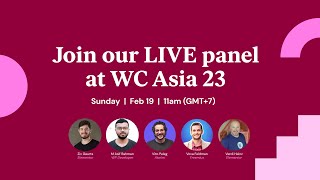
Recorded at WordCamp Asia (Bangkok), this livestream panel brings together entrepreneurs and founders active in the WordPress/Elementor ecosystem to discuss building open-source software businesses. Panelists describe their origins, product launch and go-to-market tactics, customer discovery, feature prioritization, team growth, and the early impacts of AI on content and design tools.
Chapters
Hi and welcome everyone. We're very excited to be live streaming this special event from our beautiful pink booth here at WordCamp Asia in the lively city of Bangkok, Thailand. It's the destination for anyone who loves WordPress and we are really proud to be part of the biggest gathering of its kind in Asia. I'm Ziv, your host for today and joining me are some well known entrepreneurs to talk about building success, successful open source software companies in the world of WordPress and Elementor. Whether you're just getting started on your journey, developing plugins, themes, templates, widgets or other software products already running a successful business, our expert panelists have a wealth of knowledge and practical experience to share with you. So let's get ready to be inspired. We have prepared some questions that touch upon a range of topics including software development, business strategy, marketing, community building, and a lot more as well. But that's not all. We invite you to share your thoughts and questions and insights as well. During the session, you have the unique opportunity to ask questions via the live chat, so don't hesitate to type in any questions you have or make sure to address them too. Also, we have our very own community content manager, Ashley Whitehair joining us from the floor. He has been gathering questions from attendees here at WordCamp and we've put some of them together for our panelists to answer during the session as well. So welcome Ash and thanks for joining. We'll get back to you soon. Thanks for having me, Ziv. Yeah, I'm out on the floor here at WorldCamp Asia and I've collected some great questions from you guys. I'm super excited to send them over shortly.
Back to you, Ziz.
We'll get back very, very soon. All right, without further ado, let's meet the panelists. Okay, so we're very excited to have Vova, you're the founder and the CEO of Freemius joining us today. Thank you very much. Freemius is a well known platform for selling WordPress plugins, themes and templates. And thank you for being here. We're looking forward to learning more about freemius and also learning more about your journey as well.
Thanks so much for having me. Awesome.
We're also thrilled to have Asif, the founder of WP Developer, join us today. And WP Developer is a leading provider of WordPress products, including themes and plugins such as essential add ons and much, much more. So welcome Asif, and thank you also for taking the time to be with us and we very thrilled to learn more about your journey.
Too. Thank you. The place is fully mine.
Awesome, thanks. We're also very delighted to have Vita over here co founder and and CEO of Adorim and also co founder of Birth AI. Adorim is a project delivery platform for Web creators and Birthai is an AI powered content creation tool that offers content suggestions for WordPress websites. So welcome and thank you for joining us. We're eager to learn about you as well.
Thanks for having me. I'm excited for this session.
Awesome. And last but not least, we have our very own Verdi as well, who recently has taken on the role of head of developer partnerships at Elementor, Also is quite well known in Elementor community and also co founded Code Snippets, which is a platform to manage and edit code snippets on WordPress websites. So welcome, thank you for joining and also looking forward to learning more about your journey and also the developer partnerships, what you're going to be doing over there.
Thanks for having me.
Awesome. All right, so let's just give a big round of applause to Vova, Asif, Vito and Verity for joining us today as we delve into the world of all right software companies in the WordPress and elemental space. Okay, so let's begin with question number one, and this is open for discussion. Of course I'm going to ask somebody to volunteer or go first, but it's what inspired you to start building open Source software for WordPress or Elementor. Who would like to take that first? Who would like to go? Shall I? That's it, Please.
I could go like for me, the main reason why I started like working in WordPress back in like 2004, it was easy. Like all the other solutions I had, WordPress was the easiest one. And for the reason why I drive into like Elementor back in like 2016 is because Elementor actually gave me the freedom to build whatever I want, the way I want to see. So it was about the freedom, if you ask me.
Thank you for sharing that. Would anybody like to take it, show their motivation?
I would say. I don't think I intentionally went into the open source ecosystem. It happened kind of naturally, you know, we had an issue, scratched our own each and it happened to be in that amazing ecosystem, fell in love in the community, which I think is one of the most powerful things in an open source ecosystem. And the rest is kind of history. So I would say just happened, you know, like many things in life stumbled.
Upon and then stumbled upon that and.
You know, I'm really happy to be in this kind of inclusive ecosystem. That has so much to offer.
Awesome. Thanks, Vova. Please go ahead.
For me was a matter of flexibility. I was looking for a way that I was already building websites through different systems and tools before going into WordPress. But I felt that WordPress, especially with all the plugins and the ability or the capabilities of open source, allowed me to take things to the next level for what was my freelance business at the time. Later grew to an agency and then started building plugins and products in the space as a kind of a feel that this is one of those natural evolutions that you see very often in the space from freelancer to agency product.
It was much smaller and much simpler. It was simply scratching an itch. We had a need for our own websites, for our own projects. We created something for it. It worked out and then what do you know, more people wanted it too. And it started growing from there.
Awesome.
I think there's something very unique in the fact that you can put something out there and people are using that. There is this magic.
So it's like something that you stumbled upon and it helped you. And of course it helps so many other people as well. So it's giving back to.
In general, I think people enjoy, you know, especially creators put things out there and seeing, you know, usage of that that you didn't build it only for you. Like you already said, there are others that need that.
But also like you said, you stumbled upon and. But you didn't have a total solution in the beginning. It's something that you also developed, tweaked each time. That made it better for you as well, probably also that's a big role. This brings me on to the next question for today, which is how did you go about launching your product and also attracting the first customers? Which is, you know, kind of like a big thing. We all want to know.
Please.
Yeah, I would like to answer this one. So in our case, we just created something, put it out for free. People use it for literally almost 10 years. And it grew quite organically and naturally. And then we reached the point we really need to add more features to this to make it grow, make it richer, make so much more people happy with the end products. We needed money to do that. So it wasn't like, let's get rich on this. It was simply, we need more features, we need some tools for that. And one of those tools was money. So we started creating a pro version and monetized that on freemius. On freemius. Very true.
Anybody would like to take that for us?
It was very much intended, intentional from the beginning, or especially was essentially this. The tool Atari was designed to help our agency at the time, to help us collaborate with clients and remove all of the back and forth and challenges like this. And it just, once we did it, it just worked. And so I started thinking, maybe other agencies have the same problems. So I went into a few Facebook groups, even the elemental community group on Facebook, and I posted a survey which basically asked, how are you gathering content, how are you approving designs currently? What's your challenge, doing those things, how are you communicating with clients for support? You know, all of those kind of questions that help us understand what if there is a problem, or maybe it's just me. And the response was overwhelming. And that really helped a lot to launch a product that was a lot more focused. But it also gave us a pretty solid mailing list early on from people that said, if you figure this out, let me know. And we knew that we had a good solution for them. So that really drove it really quickly. So we started with a small group of beta testers from that list, from that initial list. And after a month, we launched a very limited lifetime deal. But not those $30, 40 bucks kind of this, but a $600 lifetime deal that allowed us to actually build a company. And I always like to look at this like, you know, a lot of us are from Israel in this booth like, like a Jewish wedding, right? So everyone comes in and they give you this little check to start your life and be the life from it. So I look at lifetimes, it's very much like that. You want to get that as maybe even a replacement of an initial seed round where you. Where basically the community becomes their your early investors in smaller amounts. And then they help you make improvement product, they help you kind of understand. So we did that. And within the first 30 days, we were the first solution in the workforce space to generate more than six figures in revenue in the first month. And that was a lot because of market research and connecting with the community and finding a problem that is potent enough for people to care.
Thank you very much for sharing. That's very, very interesting. Please, you'd like to go ahead.
For me, like any of the product that I developed, I was actually the first user. So I made a product because it fulfills my need. So it's true for essential add on, it's true for notification. And when it comes to gathering feedback or get to know my user, I feel some need. But what other people might think, I always reach out to People I know first. So maybe it could be our old client or it could be friends that I know that might have some use of it. And that kind of like blunt feedback from the people I know always actually help to shape the initial phase of the product all the time.
Thank you very much.
So I can really relate to everything that, you know, the guys said here. We're also our first customer, so was born from need, had this side project turned that into a business. I learned struggles and pains on the way and realized that and realized that there are many other developers out there. So I started to do discovery. You know, talking with other people, the ecosystem, you know, validate the need, understanding how big of a problem is that, you know, whether we are on the right direction with our offices and what we build, if it's compelling. And this is how we started. So. But it was a very long journey for us. We're slightly different. We're not a plugin, we're a platform. And, you know, you need to like putting all your business on our platform. So it took us about a year to find the first customer who is not us.
So it's a whole different way to get your first customers.
Yeah, you do discovery, you understand, you know, you learn from the conversation so much. I think, you know, it's key in any business to really understand your audience and their needs. But when you're getting into a new market.
Right.
You still. You have assumptions, right? Not necessarily.
And research, but also just trying and.
And, and racing assumptions. Ask questions, a lot of questions, showing what you have.
Right.
And finding that path.
Well, I hope that we can share some of those insights as well from you with some people that have got questions over here which will take us to the next question from one of the WordCamp attendees. So Ash has been walking around and he's got a question. So let's just turn our attention to Ashley on the floor who has been gathering these questions for the past couple of days. So let's just ask. Okay. What's a burning question, Ash, that our expert panel can shed some light on? We'll go over to you now.
So what is your name and where are you from?
My name is Vineet and I'm from New Delhi, India. Yeah. And I'm a developer by profession. I create websites for my clients.
And what is your question today for our experts?
So my question is regarding the modules or the blocks in Elementor. The thing is, like, I have multiple clients and for them I create websites.
On Elementor and most of the times they want me to create, create modules for them.
Right. Because there are things which are specific to those clients. So my question is like when I create those modules and ship them to my clients, I want to create like standalone plugins that I can sell in the market. But still I'm thinking like if I'm, you know, creating something which is very specific to a client, how can I sell to the market and what my approach should be. So my question is this, how can I do that?
Thank you, that's a great question. Thank you. Just going to go over the question again. So he says he's got clients, he makes custom modules also for Elementor and he wants to know how he can ship this and actually turn it into a plugin or a product and to get started. So who would like to take that one first?
I'm happy to start.
Okay, go for it.
So I think there are two things. First of all the technicalities, you know how to start selling. There is also what you want to achieve out of this. And doing some research, I think that many people in our ecosystem, because they're not coming with startups business background, it's just, okay, I solved the problem, let's push it out there and then without really analyzing the market potential, understanding where they want to get to with this plugin and how big they want to grow. So I would highly recommend, I mean, if you're just passionate about it, you know, do it, that's the main thing. But if you want to grow a business, try to think how big you want to grow it and run the math, try to see what is the market potential, how many people actually would need, you would need to would want to use your product and pay for it, etc. Make sure the math makes sense. So I would say this is a big recommendation from my end because I'm seeing that for so many plugin developers and in terms of solutions, there are a bunch of out there, there are marketplaces, there are platforms like freemius where you can sell things from your website. There are sell hosted solutions, a bunch of them. So there are many options. I would say today it's more about what we're looking at.
Thank you for sharing that. Thanks Verni. Please go ahead.
Yeah, what I want to add is it's good to learn from the mistakes others made. So I'm going to tell you a mistake I made and hopefully others won't have to. Do not wait. Do not procrastinate. Do not try to be perfect, do not try to be complete and have this really beautiful Website built in. Elementary, of course.
Just start.
Get something out there, however small it is, even if you just sell it to your grandma.
It's a start. Just begin, don't wait.
Thanks.
I feel the one thing that people sometimes don't come consider when they're going into creating new products is do you care? So I know that we built a bunch of plugins for our clients, but these were for problems that they had, not necessarily problems that I cared about and felt strongly about. And one of the things that is very apparent here on the panel is that all of us built businesses or built down battle successful businesses because we care about the problem that we're solving. And it was, it was a personal thing for us. So when to answer the question? When building models and plugins and elements for clients and thinking about launching them into the market, I like to picture how will my life look like two years from now supporting this solution, expanding the solution, working with the people that need this solution. And do I, do I really want to be there? Or maybe there's someplace else where I would like to focus my time.
Thank you for sharing.
You have to be passionate about the problem because in the beginning it's like love, right? You get in love, excited, blinded by love. There are challenges in every relationship and, and you want to make sure that you pass through these challenges. So you want to be passionate enough about the problem to do that.
Right?
Extremely passionate. You have to have that burning desire for it. Thank you.
I would like to actually thank Vineet who asked the questions. I could understand his main concept, like why he wants to know this. So he has client who want specific features and he develops that as an elementor widget. So his question is like should he bundle it as like a single plugin or should he ship it like a separate add ons or something. So now if he asked this question like 3 years ago I would have asked like he should have a like bundle together and have a single solution where he have multiple elements. But right now the way Elementor is growing we are more into like micro solutions. Instead of bringing like a larger solution, couple up with like elementor. Now I think it's a time Elementor is already very robust. Elementor. Elementor Pro comes with a lot of features. So small agencies like them who make specific solutions. They could release like smaller solution, maybe one for one of his clients. He need to solve like payment problem. So he could sell that separately as an element or add on a small one. So I, I would ask like for him the, the way Boba said already like don't release something just because you can. You need to understand like what's the path you are following. So selling something is not easy. At the same time it's not very difficult if you are very committed to. So you need to understand like how far you want to go.
Right, that's also interesting. That's what you said. The two year view on the look. You're like saying at falling in love, it's like oh, you actually do that then how can you look two years ahead? So it's very important to have insights and to be able to, you know, find out stuff people that have actually already experienced it. So thank you very much for sharing that. Would anybody like to follow up on that? Shall we move on to the next question? I just want to check the live chat. So I'm going to check that over here because it was hard for me to end also listen and, and respond also to read the chat. So I'm just going to read the chat. Just a minute, let's have a look. So maybe you've, you've got a, a nice message for us. Live chat question.
Maybe there's a question from the audience.
Actually I've got a question I'm going to move on to. Sorry, did you say there was a question?
Did you hear somebody?
No, I was asking, I was just asking.
Ah, okay, go ahead, go ahead. Okay, there we go. How do you approach marketing and promoting your products in a crowded market? Okay, so you've got to a certain point and now you know, promoting and marketing it. I assume that a lot of the products that you've got, it's probably different aspects or different strategies that you might have gone through. It's very interesting to find out each story. Who's got the mic? Please go first.
So if you talk especially about an ecosystem where it's very crowded, if you're entering like a little bit late, I would always approach it to like you need to understand the market completely. See like where you stand. So are you going through like a comparison factor? Like you have all the features that your competitor have already and you are adding some values on top of it. So that's kind of approach. But overall when you talk about marketing and when you talk about like marketing in a crowded space, it's all about consistency. So how well you are actually consistently developing your product, adding more features at the same time how you are actually maintaining the communication with the crowded market. Like are you maintaining like a proper blog. Are you actually very available in the social. Are you Actually giving the people who are actually looking forward to or having something new. So are you actually touching those base? So consistency, I think would be the main key for marketing. If you are in a crowded market.
Thank you very much.
I feel that when you're starting off and there isn't a marketing budget right, it just doesn't exist, then you have to start being resourceful and think of ways to actually get your product out there and start moving with it. What, what I found that was really powerful for us early on was instead of trying to promote a logo, I just myself went on multiple podcasts, events very much like this. People are looking for content, especially in our space, all the time that can be useful for their audiences. So that was my initial approach approach because we didn't have that the marketing budgets that we have right now. Then on the other hand, I really like the concept that you're saying we have the same mindset of build fast, ship fast. Especially when you're small and when you're really agile and you can build small bits and pieces and not just think of things as massive projects, but keep releasing something new, small and new every week, every two weeks stops. That keeps you in discussion, that keeps you, your users engaged with innovations and things that with how you're advancing or solving the bigger problem that you are there to solve. Because early on you have an idea for a solution, but you don't have the full shebang like we've already said, you don't. It takes time and you want to get it out there as quickly as possible and then start building from that point on while people are already using, buying, experiencing, growing solution over time.
With code snippets. We are a relatively small plugin and we have zero marketing budgets as you described. So what we do is really focus on community, on listening to actual users, on giving back to them. When we implement something they requested, reaching out to them, saying, hey, we created it for you, now if you want to tell somebody about it, but we don't actually ask, but it happens. And collaborations. We love partnering up with other companies who have similar goals and you know, very cliche, one on one equals three. If your user is better off because of the combination you can offer with somebody else, that's absolutely amazing. You add to the ecosystem and we grow without having to do any marketing.
Thanks Berdy.
So I will, you know, kind of piggyback on top of everything that was said here. Marketing is challenging and you need to be aware of that. And I think the key in the end of any Product company is understanding the audience, you know, understanding their pains, what are, you know, their challenges and our approach, and I think that's, you know, the best approach and many of us do it here, is making sure we bring value. Marketing, in the end is a, you know, kind of a balance between value also promoting your product. So you need to find your balance. Depending on the audience, you have to be consistent. It's a long journey. And what I also wanted to say about that is you need to adapt to the current media. Like today, there's so much content and people don't have the time actually to read. So, you know, video is probably something that's much more appealing, but it's changing all the time.
Time.
Sometimes it's audio, sometimes it's video. So you need to choose the channel that is most relevant to your community, know them really well, their pains and challenges and produce content in that medium, provides them value and connect it to a product.
Thanks.
That's.
It's very interesting. Sometimes it's very, very hard to get to that specific way to communicate the value. And that's probably awesome.
The community helps you to understand what the values that you're bringing to, you know, you have your assumptions, but then you start to see how they use it, how they engage or what they say. As the community grows, it also helps you to shape the direction. That's good.
So that's a whole different topic. The community itself being something very, very valuable to help shape and to help steer. So thank you very much for giving those answers. And I think we've got another question. What we're going to be doing is we're going to go back to Ash. Ashley, let's go back to you. Ohad Ashley, let's go back to you for some more questions. Let's have a look.
Hi.
So what is your name and where are you from?
Hello, I'm Sinji Dehalal and I'm from Bangladesh. I work at xpit Studio as a content writer.
That's great. Thanks for being here today. So what is your question for our experts?
I would like to ask Mr. Asif. I would like to ask him that how does he specify the features or the updates that he provides for the plugin? And since there are tons of requests all around the world. So yeah, that's it.
That's a really great question. Thank you. And I believe you have another question for us as well.
Yes, I do, since there are like lots of chatgpt craze all around the world. So I would like to ask our Panelists that where this AI tool will go at the end of the day as my company X Studio also you know, developed a plugin called Get Genie AI. So how it will be like what's the future?
That's some really great questions. Thank you. So thank you very much. Ash, I'm just going to say the first question again it's directed to you Asif, about how do you choose which features, which updates to make on the plugins because there's so many requests. So please if you could take that question.
This is very tricky the way you actually pick the features. So for me the first thing is like your product should be user focused, right? So so your user will tell you what they want. But the same time as I mentioned at the beginning, I created a product because I feel the need. I see a particular problem that I'm going to solve. If that problem, because of the user feedback you deviate from your core goal. Just because user wants something I will not develop because I have a specific goal, what I want to build. So as an example, we have a recruitment SaaS easy jobs when you release it, most of the people's perception that it might be a job portal, but it was not, it was always a recruitment SaaS. So it doesn't matter like how many, how user are actually telling me that they want a job portal. I would not be a job portal because I have not started to build a job portal. Maybe after a certain point I will decide that we have fulfilled our like quarter one, quarter two, quarter three goal. Now we have some space, now we'll see like if we want to pivot to something else. But I would not do it. Generally the second thing is like when you are listening to users, you also need to give them a specific feedback like why you are building it or why you are not building it. So this is kind of like a very tricky balance like what you pick and what you don't pick. But I would not let user completely deviate me from the product I want to build.
Right, thanks for that. And the second, well, this was directed Asif, but please feel, feel free to share if you want as well.
Well, I definitely agree that there needs to be an all star to every project and, and you know, I don't have anything to add. I think this is exactly what I would say. You have to have your own vision and make sure that whatever has been requested does it comply with that vision and or else it's just not going to get in there.
Thanks.
Combination of your goals, your resources.
Right.
What value does it bring to you? Sometimes there are things that you've been asked that maybe you know, has a lot of value in marketing or has, you know, depends what you want to achieve. So it's all about goal setting, resources.
Thanks.
And just a small addition, I'd like to take it back to the community. If you are really active and engaging in it and really listen to your users, you can often give them what they need, even above what they ask. But you got to pay attention, you got to keep your finger on the pulse there.
Cool.
Thank you for sharing that. Also I want to thank you all for the great insights. I just want to remind our viewers that they can join a discussion via the live chat, so feel free to address also specific panelists you want to thank you please. We'll be looking out in the chat. Actually I've got a question in the chat. Let's have a look. I'm just going to read it. I haven't read it before but I'm just going to read it.
There's another question by the way, from her. There are two questions.
Oh, you're right, I don't remember the question. You know what? Yes, I'm going to come back to this question. The chat GPT question was since this it's a such a big thing, where is it going? How's it going to be incorporated in software products?
So.
So I will say from a freemius perspective, we're definitely seeing growth in that vertical. I think the past month, two months, we saw like, you know, a major growth in AI related plugin integrations and if we look on it on generative AI, it's mostly around visuals and content. This is exactly what we're places. So I will definitely see like a lot of that happening and I do think WordPress will push that forward. So definitely major growth.
Cool. So I just happened to create the first content plugin for WordPress or AI.
Just happened, right?
Just happened. Which we started a year and a half ago. So we've seen the journey of AI happening really from an early stage and how it can affect our ecosystem. I think it will touch every single aspect of it. Not to a minor degree but to a huge degree. Content was a starting point about a year ago. Now we're starting to see the incorporation of images and, and visual generation and we're going to start seeing things more like creating full on websites very, very soon. Even I think there was some kind of a solution that was released recently. Now let's not freak out because like many times in the history of humanity, people adapt. And so instead of us needing to do the same repetitive tasks, we adopt technology. Very much like the computer that you're holding right now, you know, or even me speaking to a mic that goes through and broadcasts to a lot of people around the world. Instead of us flying to each one manually. Right. Or going to each area manually. So we will just, as humans, we will just adapt to this new reality. And I believe that it's going to make us, all of us even more creative than we were before and which will again go into the. And will again start being automated through AI and then we will evolve once again. And again it's going to be automated through some kind of technology and we will evolve once more. And this is the beauty of the dance between humans and technology in my mind. When we started building websites 20 years ago, it would take 10 hours to build a page and you would write everything manually. Then page builders like Elementor came into the market and then it's just a drag and drop. It was an initial pushback from some designers. Why would I do that? I could just write everything manually. Right. But actually the question that we should all pose for a own profession is why should you do that if you can actually automate the flow and get a lot more done with a lot less time?
Right. I think we need to look on AI as a tool that help us work more efficiently. And I would say that our team already using that. And if you're not using AI right now, you're missing, you're missing the bet because the people that do use have an advantage. Like Vito said, you know, someone that has a laptop, someone that doesn't. So it's definitely something.
So you might have a laptop, but you need to know what to, what, what to make it do.
And that's also something that we are all learning right now. What can you get out of it? So I would encourage everyone to take a look on the tools today and see how you can actually utilize them in your business.
Which you saying also don't make sure you know of it so you don't.
Miss out and start using them because they're already in use and production ready.
I mean not everything is updating themselves.
But it just saves so much time.
Right.
In everything.
So highly recommend to check that out and start using AI.
Thanks Baba.
So they mentioned one of their own tool, Gate Genie. So try to think in AI like we will see generally like two kind of adoption. One is in content, one is in like design or building. So Gate Gene is kind of a tool that doesn't give specific answer like chat GPT. Instead it actually helps the writer if the writer wants an alternative suggestion for the title or if the writer want a more specific understanding about the content he has written already what should be his focus keyword. So git gin is a kind of tool which is assistive to the editor writers. And let's think about like from our website building perspective. Like when we are talking about Elementor or the smart web creator who are building website, there are a lot of people who are discussing like as an example you want to build a website for a doctor and you have all the colors in mind, all the kind of like page you want to have. Maybe in future it's possible that you specified few things you will get some options like those are the ready made to pages for a design for you. And there are already some experiments. I even seen an experiment that somebody forked Elementor in a way that they are using Elementor as a backend of serving in an AI based design tool. So I think like Elementor has a lot of potential in terms of like what they want to deliver in terms of how they collaborate, how they handle the design aspects. As Bhopa said, like a lot of things is going to happen in 2023 and years going forward and you can't actually just hide yourself that think like it will not happen. It is just like Microsoft table or something. So we are discussing a lot like Google Glass or something. And you can't actually just hide yourself that think like it will not happen. It is just like Microsoft table or something. So we are discussing a lot like Google Glass or something. Ultimately go away. AI will not go away, will need to adopt. So we need to understand like what's going on and how we are going to make ourselves relevant in the growing world.
Thanks. Thank you. All right. Okay. So thank you for reminding me of that question is very, very, very interesting. And thank you for touching on all of that from your own perspectives. Now I'm going to move on to another question which is probably also very interesting for our viewers in hindsight to find out what the challenges were that you faced when actually growing your business and also how you actually overcame them. So if you could pick maybe one or two of the main struggles, how you overcome that would be really great. Who would like to take that first?
One of the problems when you start small and you want to grow, you finally get some income is finding good people. It is incredibly hard to find people who have the same entrepreneurial Spirit as you, who want to take initiative, who want to really own their piece of what they're doing. So when you finally find someone that is good, keep them, celebrate them, let them know every day they are much better than you at what they do. And give them the freedom to make mistakes. Give them the freedom to share those mistakes, so we can all learn from that. Anyway. Finding good people, I think, is somebody all of us can attest to here. It's difficult.
Thank you, Verdi.
With this. There's a really. Maybe a bit insensitive saying, but it's very true in business when it comes to building teams, that you have to hire slow and fire fast.
Sorry, what did you say?
Hire slow and fire fast. If you find that the person that you hired is not a good fit for the organization, then just move on. It's okay. And this is something that I had a lot of trouble accepting early on, that I felt that I can make it better, but sometimes it's just not a good fit. And if you identify that, then it's okay. You can release them back into the wild, if you will. Then one of the. You were asking about specific challenges, but I think that that's the. The challenges are the fun part and the most frustrating part about running a company, because essentially, as entrepreneurs, you know, we jump out of the plane and try to build another plane on the way down. That's really what we're doing. And so it kind of makes that. That urgency, that experience of urgency as you're. As you see the ground getting closer to you, it encourages creative thinking. It encourages you to figure out solutions that are completely out of the box, encourage you to reach out to other members of the community and ask these questions to them in real time when you're facing the challenge and try to gather information from people that already have arrows in their bag so that you don't get them. So I think that the main thing to realize is that it will happen. It's a good thing. It means that you're actually getting somewhere. If you're not experiencing any challenges, it's probably. It probably means you're not doing anything.
Thank you for sharing.
So, like, what Vito said, I heard a lot of people say that, like, you need to hire slow and fire fast. I can't really do that, and I never want to actually do that in this way is because I feel my team as more. Or not as. As a resource, more up to like. Like they're real human. So as I'm working for a cause, for a goal, like what I want to build. They also have the same intention in the line life. So if that aligns like what I want to do and what they want to do in their time, what they want to do in future, if that aligns, maybe it's easier to build the team. So when you are talking about like scaling the team, finding talent is one challenge, that's just half of it. Retaining the talent challenge is the hardest part of it. So maybe in some part of the world hiring talent is hard, in some part of the world is moderate right? Right now nowadays when a lot of people are going into remote work, it's getting even harder everywhere. So for me it's about like if your goal and like what kind of company you want to build, what kind of future you are actually driving yourself into. If you are very clear about it, if your company is not about giving people job, it's about more about the kind of lifestyle they are building, then maybe attracting people will be easier. For me I, I my company is building Indhaka Bangladesh is also the capital and we have tons of like, like telcos, larger corporations, company backed by vc. We are always facing challenges with them and we're a fully physical company. So I have nowhere else to go and they have to live very near to my office. That's the rule. So we face a lot of challenge. But now after a few years when we made our mission very clear, like what kind of team they are joining, what they want to get and why they will work harder because they are very aligned with the goal. Now I do not face a lot of problem of finding candidate. Now the part is about like you have to find out like who is the very tuned one who could actually get away with your team and then you need to keep them motivated the way it will actually make sense to them. I don't really want to see that my team member leaving me, I could understand their goal of life could change. Maybe their family wants to go in a different place in the world but I really don't want them to sell. So obviously their mission and goal could change. But if somebody wrote a piece of line of code for me, if somebody build a feature for my product, it's actually been done forever and all the hundreds of thousands or millions of users using that feature will be always in depth for the code or the piece of content or any design he did, I want him to feel very connected to the product all the time. So I'm very emotional and I build my company in the same way. So that's the way I want to grow.
Thank you for sharing.
I will just say the sentence is fire fast, hire faster, but.
Okay.
And I think what Vito actually meant is not that he is just firing people, is that once you see you can spot if it's a good fit very fast. And if it's not, there's no point, you know, to waste years just because of, you know, you're not feeling into business at the end of the day. Right. And you want great people working with you that align with your expectations and your mission. We kind of drafted to, you know, hiring, and I think it's very relevant to bigger, you know, companies. But I would say that there are different challenges in different stages of the business. When you're just starting out, when it's only you, it's kind of the discovery stage, you know, talking, chasing after potential customers, finding the audience, you know, talking to them, understanding. So that's the initial challenge. Then building the product, you know, and shipping it fast enough, moving fast and being dynamic and adjusting, and then you start growing. So, like, the challenges changing all the time.
All the time.
And as Peter said, that's the beauty of entrepreneurship. You know, you always have to challenge yourself, get out of the comfort zone. Being sent panels like this. Okay, I'm an introvert, right? I'm a technical co founder. I was technical co founder many years ago. Today I'm not coding. So that's part of the journey. So you always need to develop, you know, look, what are your goals? See where you want to, you know, get to in several years and build.
That map, how we're getting there.
And obviously hiring and getting. Getting, you know, great people is one of the biggest challenges.
Thanks.
I think that a good point that Vova is making here is that evolution that we have to evolve as entrepreneurs. And, and many times when you see entrepreneurs or, you know, makers that just want to stay in their own. In. In their own. In the. In the way that they are today. And that's. That could be fine if it's a side hustle, if it's something that you're doing from. If there is no bigger goals. But if. If you want to unlock realities that you don't have today, then you have to unlock them within yourselves first. Like moving from being a coder to sitting in panels in front of cameras or, you know, literally putting yourself out there or figuring out, hiring or figuring out. Or maybe you're not a technical founder and you need to learn how to code. So you go and you get it done, and then you become a different version of yourself. And this is part of the journey. And it's 10 years ago. You didn't dress up as so sharp and clean. Right. We evolved into these. Into these Personas that help us drive our businesses.
I will just add one thing every time that I know. Okay. I realize I have a need and I don't have the knowledge or the experience. I try to learn on YouTube. There's so much knowledge out there. You know, just need to know what to search and.
Right.
You know, and also talk with other fellow entrepreneurs, business owners that, you know, pass that barrier.
Right.
To get tips from their firsthand experience. And then you try experiment and see what works for you.
Cool.
One small note to Peter, like, about 21 years ago, I got paid for the first time and do you know, like, what I did with my first paycheck? I purchased a suit. So I always like dressing up.
I like it. It's really sharp. I wish I had a blazer on today as well. It would be nice. I love it. All right. Would anybody like to still continue that very, very interesting conversation that's got so many more things to touch on? Would you like to. Verity. Okay. Would you like to.
Oh, good.
Okay, cool. All right, so let me just check with the team how long we've been. For how long have we been.
14.
Okay, so I think we're gonna go to the last question for today, which is can you share some tips? And this is very similar to maybe what we just discussed as well. Well, but if you can really, like, drill down to something specific. Can you share some tips and advice for those who are considering starting their own product, like right now in the WordPress or Elementor space? Like one or two tips main, like just how to do it, how to get started. How to what?
Obviously, start joining the elementor community. Then going back to my earlier suggestion. Start building, start making, start showing it, start sharing it. Ask for feedback. Don't be afraid to get out there and thank everybody who's willing to burn down your product, because that's going to help you grow so much faster.
Thanks, Bernie.
I have the same suggestion. Speed to market. That's it. Nothing else matters. Everything else is going to. You're going to figure it out on the way. You have to jump out of the plane in order for you to build a new one on the. The way down. And many people just hang on to those doors for many, many years, and they. They talk about what they want to do, they talk about what they should be doing. They talk about their ideas, their vision. But put all of that aside, get out of your own way and just freaking do it. That's, that's the, that's the main, main point.
Thanks.
I will try to give a tactical advice. If you're just starting out and you don't have a brand, you are not an influencer. You know, when you're starting something, you need to choose your business model. So you can go paid only or you can go with the freemium model and the freedom. If we are talking about, you know, elementor extensions, we have the WordPress support repo which is a free resource, discover resource for users. So I would highly recommend to evaluate the freemium model because the audience and the amount of traffic that it has. Even if you don't do any marketing, just put a plugin in the water resort repo, you will get some users, some initials. Especially if you don't have marketing capabilities.
Right.
You're still not experienced, you're a developer. I think that's a great way to start because, because you have an assumption you can throw a product on the market, see how it reacts, start interacting with audience in more versatile forums, get more feature requests and kind of slowly, you know, build up the product out of this kind of feedback loop that you're getting for free From More of Us.org so this is my recommendation and use for image later.
Thank you.
And don't try to do everything yourself. If you can can get a service to take the load off you to not have to worry about all these complicated things like for instance paying taxes all over the world. Go to a company like freemius that can take away all that worry so you can refocus on your product and do the speed to market thing. Speed to market is indeed the number one tip there.
Thanks Radi.
For me like if somebody is starting out, one of the main advice would be like to have a focus instead of building like 20 features or doing 20 things, maybe focus on first three and solve that problem properly and communicate properly. And when it comes to release a product in nowadays with for WordPress or Elementor, which I feel it little bit too crowded for anybody to start with. It's not easy like it was 10 years ago or five years ago, but at the same time maybe it's startup today, then tomorrow. So start as soon as possible. But haven't focused about like how you want to market all through our discussion. I have always said like you need to have a clear mind like what you are building. And I always build because I, I feel a need. But as I grew, mature over the years. After running the business for 19 years now, I always think like how I will sell this product. So I have an itch that I want to solve that why I build a product. But I always think like how I will market, how will I, I will position this product in the crowded market. So it needs to be unique, it needs to solve a problem that exists already. So always keep that in mind.
Thanks.
This is very true. And it reminds me that of something that we practice and that I had challenges with early on as well is the, the fact that as entrepreneurs, especially as product makers, you're always looking at the next feature because you know it's a creative process. You love the ideas that come up in your mind. And you always, while you have a product that is currently out in the market, in your mind, it's already two years, you're already looking at what's going to be built one year ahead, six months ahead, two years ahead, five years ahead. Right. So, and that aspect a lot of times slows down marketing and it kind of have, this creates this mentality of the next feature is gonna unlock the growth for us. So let's just wait until we have that and then we ramp up marketing. And once you have that, then you already have that next big feature in your, your mind and you can, you can say that forever. And so work with what you got. You can talk about your plans and if you're actually honestly are going to go down this path, you can have a public roadmap early on to make sure that you are offering more robust solutions for your users as you evolve. But market what you have right now so that you can already start attracting users, already start generating revenue, which is very important because that is the blood of a company and without it it's very hard to move.
Thank you very much.
Also kind of related to a previous question about feature prioritization. I think in the beginning, when you still don't have a lot, right, and you're looking where to go, it's very easy to get confused because one user wants this, one user want that and go all over. So yes, we need to ship fast and move fast, but also not too fast. Like listen and see enough users asking for something and don't just develop something for every individual person because your product gonna get a message which just confuses you know yourself, you know what is your direction and your users too. You don't want to end up with this all in one solution that don't have a clear value proposition because like everyone said in the end you need to market so you need to have a clear Persona, clear pinpoint a problem that you're solving. So be careful with how you choose what to develop the still ship things.
Thanks.
And just adding to what Vova says, don't just go for the next new shiny thing continuously. Also take care of what you already created. Keep building on that, keep making sure it's still relevant and robust.
Awesome. Thank you very much. Before we wrap up today, I just want to thank you also personally I've been meeting you also throughout these couple of days in WorldCap Asia has been really my privilege to host you over here. And before I am going to read my teleprompter and say thank you and make my finish this, let's just have a look at everybody over here. And now let's cut to the outro. And that's a wrap for today's live panel interview. Thank you to all of our expert panelists, Vova, Asif, Vita and Verdi for sharing their wealth of knowledge and practical experience with us. It was truly inspiring to learn about their journey and building successful open source software companies in the world of WordPress and Elementor. And also to our viewers, thank you for joining us today, participating in the discussion via the live chat and also on the floor. We hope that we found that you found the insights and the answers provided by our panelists that they were helpful. And also we'd like to thank Ashley, our community Content Manager, for joining us from the floor and collecting questions from attendees at WordCamp. Thank you all once again for making this a memorable and informative event. Until the next time, stay connected and keep building. Ciao. For now.
More from M

How to Deploy EmDash CMS in One Click on xCloud: A Fast, Lightweight WordPress Alternative

Self-Host OpenPanel in One Click on xCloud: A Privacy-Friendly Google Analytics Alternative

xCloud September 2026 Release Notes: Site Security Pro, AI Caching, Docker Backups & More | xCloud







xCloud August 2026 Recap: App-First Deployment, 250+ One-Click Apps & DeepSeek Harness Hosting

Deploy Vaultwarden Password Managed on xCloud (Self-Hosted Open Source Password Manager)