Travel After 60: 7 Mistakes We Don’t Make Anymore

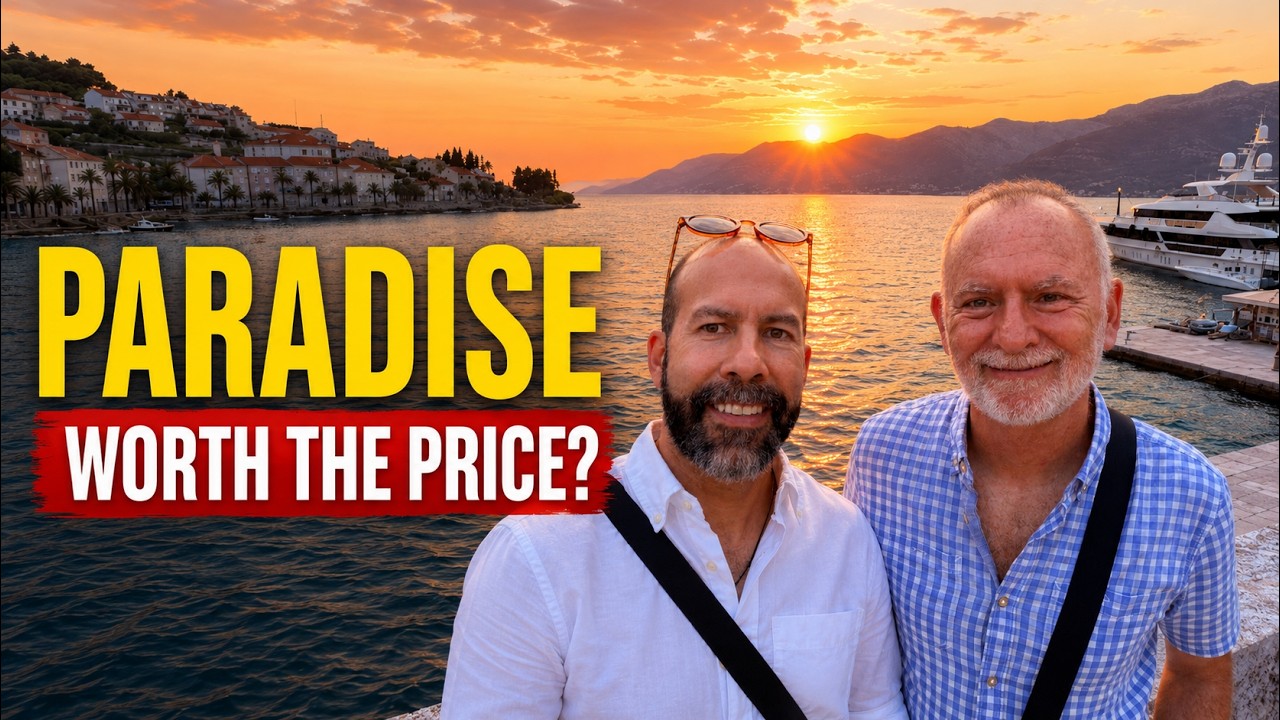
After 60, travel requires different priorities. AskRobAnything and his partner James learned to stay longer in fewer places, choose quiet accommodation with good beds, take heat and crowds seriously, stay fit enough for stairs and walking, plan for medical needs, and give each other space. Comfort and pace matter more than hitting highlights.
Chapters
At 30, a bad night's sleep was an inconvenience. In our 60s, it can ruin the following day as well, and possibly the day after that. Looking back at some of our recent trips, James and I have realised that the way we travel has changed considerably. We can no longer travel exactly as we did 20 or 30 years ago. The early flights feel even earlier, the heavy suitcases feel even heavier, and after a long day of walking, our knees are considerably more vocal than they used to be. So are we becoming too old to travel? Well, absolutely not, but we might be too old to travel the way that we used to travel. But that's not the same thing as being too old to travel. So today I'm going to share with you 7 honest reality checks that now shape the way that we travel. These are not theoretical travel tips, they are lessons that we've learned from experience, occasionally the uncomfortable kind as well. And the final reality check is probably the most important because it has nothing to do with flights, hotels, or physical fitness. So let's begin with number 7. Completing a difficult journey doesn't necessarily mean that the journey worked well. You can endure an early start, a connection, a delayed flight, a long transfer, and arriving late at night, but if you then lose the first 2 days of the trip recovering, was that itinerary really sensible? Well, when we were younger, we could arrive somewhere tired, have a shower, and then go straight out. Now, after a long travel day, we need a bit of time to recover. And that isn't necessarily a problem. The mistake is pretending that the recovery time won't be required and then filling the following day with activities. We now try to avoid planning anything important immediately after a long flight or a complicated journey. And if we arrive feeling energetic, well, you know what, that's a bonus. But if we arrive exhausted, we haven't already ruined the itinerary and we give ourselves time to recover without a sense of missing out. Now number 6 is that moving constantly is no longer enjoyable. There is a version of travel that looks extremely impressive on paper: 7 destinations in 14 days, each day filled to the brim with seeing all of the sights, and a new hotel every other night. Several flights, trains, and ferries followed by a very long list of places that you must visit so that you can say that you've seen all the But how much of that time is spent actually enjoying those places, and where is the chance to just soak in the culture? Every move means packing, checking out, traveling, finding the next accommodation, checking in, and unpacking again. Even when the journey is relatively short, it can consume most of the day. Now, our recent trip to Croatia really reinforced this point, and here I think we got the balance right. We love seeing different parts of the country, but moving between destinations added a surprising amount of work. There were ferry times to consider, luggage to manage, accommodation to find, getting to the ferry port, and the new surroundings to kind of understand. And by the time you've worked out where the nearest café or shop is, it can almost be time to pack again. This is why slower travel and longer stays increasingly appeals to us. Staying longer allows us to experience ordinary life rather than constantly chasing highlights, and I think it's the But in that ordinary life, that is where the magic in travel can be found. Do you agree with that? We can visit somewhere at a sensible pace, we have occasional quiet days or even a nanna nap post-lunch, and we change our plans without feeling like we've wasted a significant part of the trip, because you can't always anticipate what a place will be like and how it will affect you until you are actually there. So how often do you like to change location? Would you happily move every 2 or 3 nights, or does even the thought of that make you feel tired, and would you prefer to unpack and just stay put for your trip? Number 5 is that accommodation matters more than it used to. This isn't about requiring 5-star luxury. We can compromise on design of furniture, room service, and even the size of the bathroom, but we've become much less willing to compromise on things that determine whether we sleep properly and feel comfortable the following day. So for us, a decent bed matters, preferably a king size or bigger. Quiet matters, so we don't want to be somewhere that's super noisy. Air conditioning definitely matters in the hotter countries, and the location can completely change the experience. A cheaper apartment may stop looking like a bargain when it's at the top of a steep hill or a long walk from the shops or even an expensive taxi ride from everything that you want to do and see. For a short holiday you might tolerate those inconveniences, but during a longer stay small irritations become part of everyday life and you may wish you'd paid just a little bit more to be more centrally located. This is one of the reasons that we believe in test driving retirement destinations. The attractive view from the balcony is important, but so is the walk from the supermarket carrying 2 bags of groceries. Now number 4 is that the heat and and crowds often affect us more than we expected. Look, we absolutely love warm weather. We crave it when we go traveling, especially during the cold, dark British winters. In fact, a major part of Cape Town's attraction to us is the opportunity to escape the British winter. But there's a difference between pleasant warmth and heat that is so oppressive and debilitating that it changes what you can realistically do. Croatia was a really useful reality check in this regard. It was absolutely beautiful, during the hottest and busiest periods, we had to organise parts of the day around the temperature and the crowd because walking in the oppressive heat becomes super tiring, busy public transport feels less comfortable when it's absolutely packed, and of course you need to be a bit more organised because in busy times restaurants need to be booked. And some destinations can feel completely different when thousands of other people have arrived at the same time. That doesn't mean we'll avoid all the popular destinations or the warm country. It means that timing matters more, especially when you're retired. The best weather according to a travel brochure may not be the best weather for walking around a city, sleeping comfortably, or living there for several weeks or even months. So would you prefer guaranteed sunshine with intense heat and crowds, or maybe less predictable weather with more space and lower prices? Do let us know what your strategy is. For us, to be honest, the answer is the second option. Now, number 3 is physical fitness. Travel has a rather effective way of revealing your actual fitness level. At home, it's easy to believe that we are reasonably fit and active. Then you arrive somewhere with hills, cobbled streets, heat, stairs, heavy luggage, and a full day of exploring exploring, and you receive a much more honest assessment. A single day involving 15,000 steps might be manageable, but the real test is whether you can do something similar again and again tomorrow in 30-degree heat. Now, we don't need to be athletes, but we do need to have enough strength, balance, and stamina to manage airports, luggage, public transport, and ordinary walking without every day becoming a bit of an endurance test. And this is something that we can absolutely influence. Of course, we can't make ourselves younger, but we can walk regularly, maintain our strength, go to the gym, and recognize limitations. For active travelers over 50, fitness isn't simply about health in the abstract. It directly determines what sort of travel remains enjoyable. And we should also recognize that we are in the go years at the moment where we're fortunate enough to still be fit, healthy, and adventurous. This perhaps is the least exciting part of travel, but it becomes increasingly important as we get older. Travel insurance needs to cover the trip that we are actually taking and the medical conditions we actually have. I was talking to some friends the other day who said that their friends didn't even take out travel insurance just to save a few pounds on their recent trip, and I think this is absolutely crazy and a gamble that I wouldn't like to take, and neither should you. Medication also needs to be organised properly. Prescriptions, vaccines, and other medical information need to be accessible and prepared for. And as grim and sort of negative as this sounds, we also need to understand what would happen if one of us became ill. Would appropriate healthcare be available? Could we communicate to the medical staff? Would we have to pay upfront? And could we manage an unexpected interruption without creating a financial These questions shouldn't frighten us to stay at home, but ignoring them doesn't make them disappear. There's a balance between sensible preparation and allowing anxiety to control every decision. We don't want to travel as though something will inevitably go wrong, but we do realistically want to have a plan in place in case it does. And that brings us to number 1, which is travelling together. A holiday allows you to step away from normal life as a couple. Longer travel creates a new normal life, usually in unfamiliar surroundings and with far more decisions to be made. Where are we staying? How are we getting there? What are we eating? Who has the passports? Why is the booking confirmation on our phone when we've got no signal? And which one of us was supposed to check the ferry timetable? Tiredness also affects people differently. One person may want to continue exploring, while the other one needs a quiet afternoon. One may want every detail planned in advance, while the other prefers to decide on the day and be a bit more spontaneous. Neither approach is especially right or wrong. The difficulty comes when you assume that your partner will always want to travel in exactly the same way that you do. James and I really enjoy travelling together, but that doesn't mean we need to spend every minute doing the same thing. Personal space still matters. So does being honest with each other when one of us is tired, uncomfortable, or simply not enjoying something. The ability to change the plan is often more valuable than the plan itself. So could you spend every hour of every day with your partner for several weeks or months and still enjoy the experience and still stay married at the end of it? Sounds like a humorous question, but for long-stay and retirement travel, it is a serious one. So, are we too old to travel? Absolutely not. But we are too old to pretend that comfort, recovery time, fitness, health, and pace doesn't matter. We're too old to treat exhaustion as proof that we are adventurous, and we're too old to spend an entire trip rushing between destinations simply to increase the number of places that we visited and we can tick off. And we're definitely too old to believe that a terrible bed is acceptable because it was slightly cheaper. Travel after 60 can still be enormously rewarding. In some ways it can be more rewarding because we have more time, more experience, and a much clearer understanding of what we actually enjoy. But it works best when we stop trying to travel like the people we were 30 years ago. So our 7 rules are simple: allow time to recover, move less frequently, choose accommodation for everyday practical Take heat and crowds seriously. Maintain fitness that makes travel possible. Prepare properly for medical problems, and recognize that traveling together still requires compromise and personal space. So we may be too old to travel badly, but we're certainly not too old to travel well. In fact, we have big travel plans that we will tell you about in the next few weeks, so watch this space and make sure that you've hit the The subscribe button so you're alerted when our new videos go live. It doesn't cost you anything, but it really helps the channel. So which part of traveling has become more important to you as you've grown older? Do you prefer new adventures or the security and routines of a familiar location? Is comfort, pace, healthcare cost, or simply having time to enjoy where you are the most important thing? So do leave a comment and let us know, and as you know, I'll answer all all the comments that you leave. And as always, thank you so much for watching, and we'll see you next Sunday.