We Saved £2,300 on Travel Insurance After 50. Here's How
Rob and James cut their travel insurance cost from £5,000 to £2,297 for a 360-day round-the-world trip by switching to True Traveller. They broke down six criteria for choosing a provider: continuous coverage, geographic match, age eligibility, medical disclosure, pre-departure protection, and technology coverage. The final policy included baggage, tech, and medical screening.
Chapters
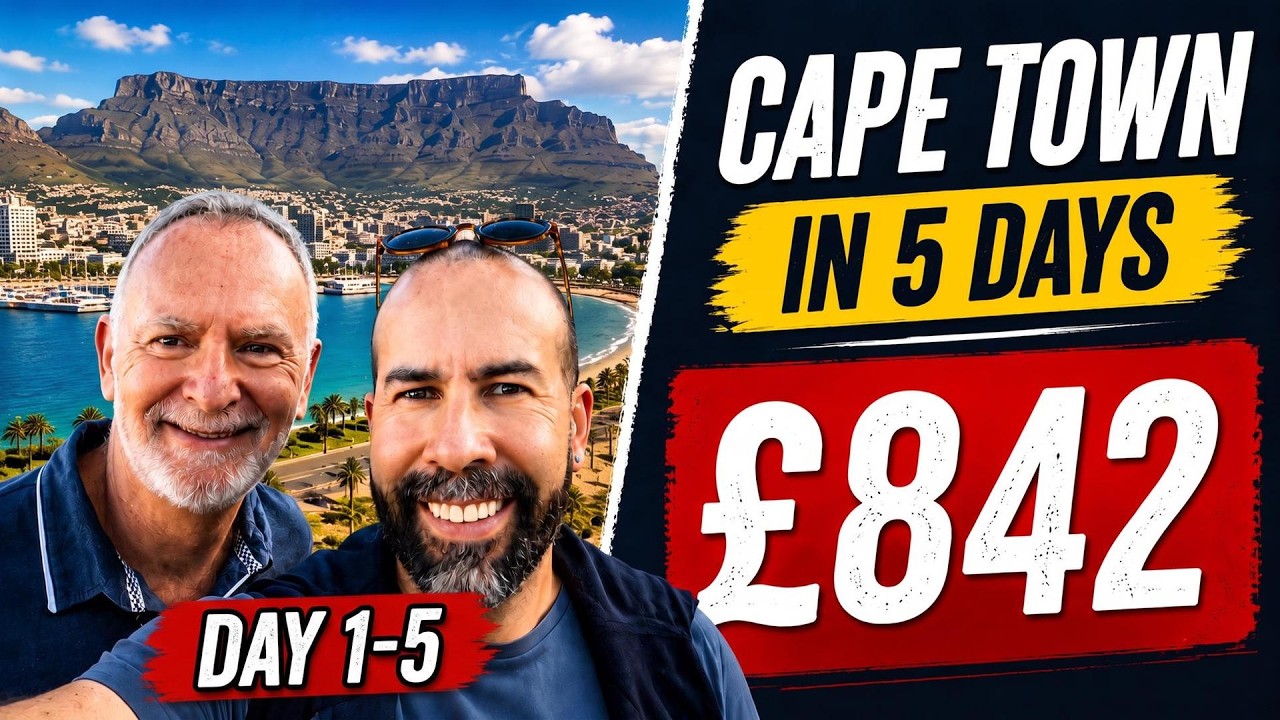
We weren't insuring a holiday, we're insuring almost a year of our lives on the road, and when James first started researching travel insurance for our year travelling around the world, the first quote came back at more than £5,000. That's more than 5 grand for travel insurance, and remember that we've already worked out that our round-the-world trip was going to cost almost £70,000, so So this was suddenly pushing that budget even higher. Now this isn't an insurance policy for a 2-week holiday in Spain. We're leaving the UK in November and we're traveling for over 360 days through 11 different countries, starting in New Zealand, then traveling to Asia, Mexico, and South America before we eventually finish in South Africa. And we are 51 and 62 and we'll be taking long-haul flights, boats, trains, buses, and hire cars. We'll be carrying cameras, phones, and computers, and we need one insurance policy to keep working while we move from country to country for almost that entire year. And that created a problem. There really weren't that many companies willing to insure us, and eventually we found one. And instead of paying more than £5,000, this is what we actually paid: £2,296.74 from a company called True Traveller. So how did we get from more than grand to just over £2,000, and perhaps more importantly, what have we actually bought for that money? And just to be absolutely clear before we get into this, this video sadly isn't sponsored by True Traveller. We found them ourselves, we bought the policy ourselves, and they have absolutely no idea that we are making this video. I think the first mistake we made was assuming that travel insurance for a year would work like normal annual travel insurance and not realizing just how big a chunk of our travel budget it was actually going to eat eat up. That's the thing about traveling for this much time— there are so many additional things that you have to factor in, and this is probably the first thing that I'd want anybody planning a long trip like ours to understand. An annual travel insurance policy doesn't necessarily mean that you can travel continuously for a year. A lot of annual travel policies are actually designed for people taking several separate holidays during any 12-month period, so you might take 2 weeks in Spain, Spain, come home, go somewhere else for 3 weeks later in the year, and then come home again. And each individual trip will have a maximum length, and often that's around about 30 days, sometimes more depending on the policy. And of course, our trip is completely different. We leave the UK on the 23rd of November '26, and the insurance runs for 360 days until at least the 17th of November 2027, with the potential to extend it. Now we're not planning to pop home every few, few weeks and reset the clock, so straight away the maximum continuous trip length ruled out a lot of policies that we found. And then of course there was geography. We need a policy that works as we travel through lots of different countries and navigate different healthcare systems. Our policy is a worldwide policy excluding North America, and that's simply because we aren't going to the US Canada on this trip, so there's no point buying cover for somewhere that we're not actually visiting. And as you can imagine, adding in the US would significantly have increased the cost of the policy. And then you add our ages into the mix. James will be 51 when we leave and I will be 62, and we both had medical information that we needed declaring to make sure that we were covered for everything. So put all of these things together and suddenly the number of realistic options becomes really small. We seriously looked at only 2 or 3 providers in the end. So at that point we stopped asking who has the cheapest travel insurance policy. The question became who will actually insure this trip properly. And I'd be interested to know if any of you have done this. If you've travelled for 3 months, 6 months, a year, or even longer, who did you insure with? Because finding companies that would cover a trip this long was much harder than we expected. Now after that first quote of more than £5,000, we went back to the drawing board, back to Google, and started doing more research, and we eventually narrowed it down to 6 things that really mattered for us. First of all, could the policy cover us continuously for 360 days? Pretty fundamental. Second of all, did the geographical cover match the countries that we're actually visiting? And third, would it cover us both at 51 and 62? Fourth, could we properly declare our medical histories and still be covered? And fifth, what protection did we have for all the money that we're spending before we even leave? And sixth, could we cover the technology that we will be carrying with, with us? Now the fifth one became increasingly important because by the time we leave in November we have already spent quite a lot of money— long-haul flights, accommodation, transport, and also booking some of the experiences that needed booking months in advance. So if something happens to us before departure and we had to cancel the trip, potentially there is a significant amount of money at risk. So that one is one of the reasons why we chose the Traveller Plus level of COVID from True Traveller rather than their cheapest level. For our policy, Traveller Plus gives us up to £10 million of medical and repatriation cover, up to £7,500 of cancellation cover per person, and up to £7,500 of curtailment cover per person if something happens and we have to cut the trip short. And importantly for us, because this is a single trip policy, the cancellation cover started from when we bought the policy back in July, not when we leave in November. So this wasn't about trying to buy the cheapest insurance we could find, it was about finding a level of COVID that made sense against the scale of the trip that we are actually taking. And the base True Traveller Plus policy came in at £1,464.07 for both of us. which looks considerably better than £5,000. But of course that wasn't what we actually paid for the final price. So this is where it gets interesting. As I said, the base Traveller Plus policy for both of us was £1,464.07. This provides things like medical and repatriation cover, cancellation and curtailment protection, subject of course to the policy's terms and conditions. But then we started adding things that we specifically wanted for our trip. Baggage cover added another £191. Then we insured 5 specific valuable items— computers and cameras and so on— and that added another £568. Travel disruption cover, £25. And then there was our medical screening that added another £46.51 to cover the conditions that we declared. So altogether, a grand total for both of us of £2,296.74. And there was something in that breakdown that I just shared that genuinely surprised me. Our medical screening only added £46.51, yet protecting our technology added nearly £600 to the price. So the expensive extra wasn't our medical history, it was all the stuff that we're taking with us. And if you're following us because you're thinking about doing something similar later in life, then do hit the subscribe button to come along the on this journey with us. Now we're sharing the actual costs and practical decisions behind this trip before we leave, and then of course we'll be testing all of it once we are actually on the road. Now you might be sitting there thinking, Rob, blimey, over £500 just to insure some gadgets? And that's an absolutely fair question, but this is where the fact that we're traveling for a year matters again. We're also going to be making content for this channel while we travel, So the technology we're carrying isn't simply stuff we'd quite like to have with us like our phones, it's also our cameras because that's how we film, our computers because that's how we edit the videos, and our phones are how we navigate, communicate, make bookings, manage banking, and do pretty much everything else these days. So we specifically ensured the items that we considered most important for the running of this channel. So if our MacBook disappeared in Mexico or one of our cameras gets damaged halfway through our South American trip, waiting till we get back to the UK to replace them isn't going to really be an option. So we made a conscious decision and paid £568.60 extra, and you absolutely might well make a different decision when you're looking for your travel insurance, but for this trip and particularly because we're making these videos as we go, it made a lot of sense to us. But would you have paid the extra £568 to cover the technology, or would you have taken the risk and saved the money? And strangely, the thing that I'd expected to be far more expensive was our medical screening. So let's make the medical a bit more practical. Imagine we're 6 months into this trip, we're in Japan, and one of us unfortunately ends up in hospital. What actually happens? Well, before we bought this policy, we both went through a medical screening questionnaire. We declared the conditions that we have with our insurer that they asked about, and those conditions were screened and accepted under the normal policy. And nothing major here, just asthma, and I've got high blood pressure. And the additional premium for that screening was £46.51. So the conditions we declared have actually been screened and accepted, which is reassurance that we wanted before we There is an important responsibility on us though. If either of our health situations change, then we absolutely need to tell the insurer. This could be a new condition, or it could be a change to something that we've already declared. Let's hope not. There's another important point here: paying £2,296 does not mean that we can do anything we like for a year and assume somebody else will pick up the bill. It definitely isn't a blank cheque. check. We still have to stay in the geographical cover, we have to tell the insurer if our health changes, we have to follow the claims procedures, we need to protect our belongings properly, and if we plan to do something unusual, we need to check that the activity is actually covered. So no bungee jumping for us, much to James's disappointment. So having gone through all of this ourselves, these are the 5 things that I would check if you're looking at long-term travel insurance Particularly if you're in your 50s and 60s or beyond. Number 5 is how long can you actually stay away? Don't assume the word annual means that you can leave home and stay overseas continuously for 12 months. Check the maximum duration of one trip. Number 4 is does the geographical area match your actual route? There's no point paying for North America, as I said, if you're not going there. Particularly you don't want to discover halfway through a trip that a country that you've just arrived in sits outside of your policy. Number 3 is how much money have you already committed before you leave? Look at your cancellation limits, then look at what you could genuinely lose if the whole trip is cancelled tomorrow before you have even left. Number 2 is what medical information does the insurer need from you? And answer what they ask and don't hide any of your ailments because you won't be covered. And find out what happens if something changes after you buy the policy. And then number one is what are you carrying with you? Phones, cameras, computers, jewelry, whatever matters to you. Check the individual item limits before assuming that the standard baggage cover will replace everything. The biggest thing I've learned from all of this is to start with the trip. And work backwards. Where are you going? How long are you going to be away? What have you already paid for? What are you taking? What could realistically go wrong? Then start looking for the appropriate insurance rather than finding a cheap policy first and trying to make your trip fit inside. In fact, if you do find a cheap policy and then you start adding on all the extras to match your actual trip, you could well find that that cheap policy is more expensive than a mid-priced one. So was £2,296.74 good value? Well, is it cheap? Absolutely not. It is still a significant cost, especially when you add it to our total round-the-world budget. As I said, that takes it over £70,000. But compare it with the first quote of more than £5,000 and suddenly it looks considerably more manageable. And ultimately the real test comes if If we ever need to use it, of course. Imagine one of us requires serious medical treatment halfway around the world. At that point, £2,296 could suddenly look like a really good deal compared with paying for those medical costs ourselves. But actually, of course, I hope we never get our money's worth, because the best possible outcome is that we spend 360 days traveling through 11 countries and we never make a claim at all. So our first quote was more than £5,000, and what we actually paid was just over £2,000. And for us, that bought a policy designed around the trip that we are actually taking— not a 2-week holiday, but a year of our lives on the road. And if something does go wrong, at least we now understand what we bought, what we need to do, and who we need to call. Now next week, we're going to be looking at another side of leaving normal life behind for a year, because buying flights and insurance is one thing, but what do you actually have to sort out, in our case the UK, before we disappear overseas for that long? That's what we're tackling next, and it turns out, trust me, that it isn't as simple as we thought. So if you want to follow all of this from the planning here in the UK through to us actually leaving in November, then do subscribe and come along with us, because in a few weeks All these spreadsheets, budgets, insurance policies stop being plans, and we actually have to go and do it. So this is Rob and James, who's finishing work, signing off for now, and we'll see you next Sunday. Bye.