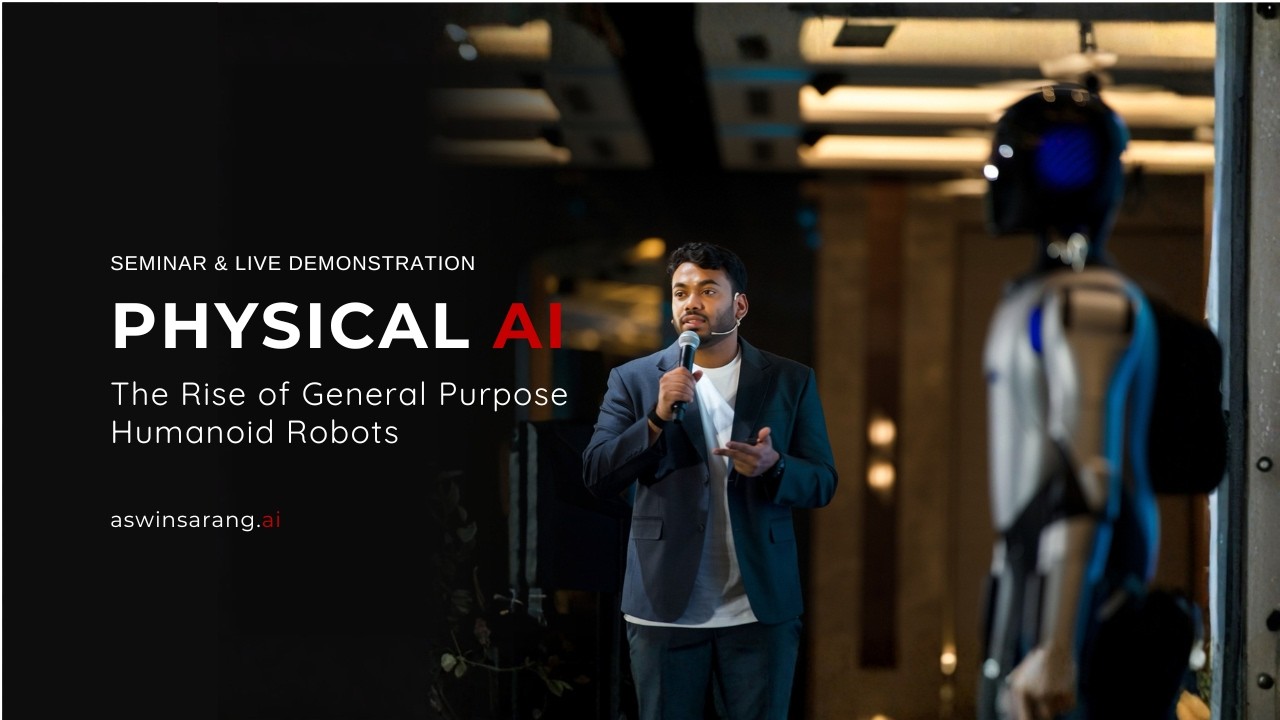
Aswin Sarang, CEO of Reliable Robotics, explains how COVID-19 pushed cleaning companies toward robotic systems that log usage data to forecast chemical needs and cut waste. Self-disinfecting surfaces could eliminate traditional cleaning entirely. Automation replaces repetitive jobs but creates new roles, though training costs and employee resistance remain obstacles.
And Aswin Sarang, CEO of Reliable Robotics. Please give them a huge round of applause. Now let's start our session.
Before I talk about cleaning industry in general, one of the biggest digital transformation reasons or how do I say, a push was COVID. And all of us have experienced in our life where most of us have moved from, you know, going from a manual, so using a manual service to using any kind of digital service in our daily life. That itself is a primary, how do I say, a sign or example that it's not a matter of, you know, digitization being a threat or a messiah. It has become part of our life now. We are very inertly dependent on it for everyday life and things like that. Now, in terms of cleaning industry, for example, if you look at the efficiency aspect of it, cleaning as a service itself, we are using a lot of, you know, solutions and chemicals, and digitization would help you, you know, reduce wastage. So by monitoring the usage of it, you can understand, okay, on this particular month, we will only need this much amount of solution to be, you know, used for cleaning. So all this data is being captured and all of our systems, say cleaning robotic systems, they're logging all this data. So we'll help you make informed decisions. At the same time, you know, reducing wastage will of course, you know, help you, you know, improve the costings as well and save a lot of money. So digitization in general, it definitely has improved efficiency. So that's, that's probably my take on it, yeah, and my personal experience as well. How many of you actually like the process cleaning or like to If you could raise your hands. 1, 2, 3. It's very few. Okay. So personally, I don't like the process cleaning itself. So the way I see it, the best way to clean is not to clean at all, right? I'll explain more on that. Now, why do we have digitization? And, you know, why are we discussing about this whole digitization as a threat or as a— because most of us humans don't like to clean or would like to delete that process itself. So what do we do? We either build systems to make the process easier or to replace the process itself. Now, what you— from a sustainability standpoint, when I said best way to clean is not clean at all, is I'll be very happy if I have surfaces that disinfect itself instead of me actually going and cleaning it. So right now there are different kinds of surfaces, you know, surfaces in terms of materials that is being researched to, you know, developed to be used in hospitals which can disinfect itself. So instead of you actually using a solution or a chemical to actually clean it, the surface actually disinfects itself, which is pretty cool for me. Now, that's one of the future technologies that is being, you know, introduced into cleaning. And again, that itself gives a lot more space for sustainability itself because you don't really need to introduce a smart system to clean itself because the cleaning is automatic itself because you're deleting the process. But it's not really a challenge for the industry because the cleaning industry itself is going through a transition phase to using chemicals to using smart systems to using self-disinfecting surfaces. So that's something that I've experienced and, you know, during my studies and research that I found out and, you know, working with. So that's, that's my take and perspective and experience on it. You know, manual decisions have been taken away from humans and very advanced AI algorithms are able to take those decisions and basically sent out to their particular tablet, which most of these cleaners have, and they know what task to perform. So that's new. That's something that's new, sure. So how do you see from the service industry's perspective that— If you talk about any industry, you definitely have to take workforce in perspective. Now, if you look back at the history, right, every time there was an industry revolution, from the time that we moved on from steam engine, there definitely was No job loss, but at the same time, 10 times more jobs were also created. But the difference between these jobs were that it was always upskilling. All of us need to be upskilled. The same thing is happening now as well. Now it's part of the evolution, so we cannot stop technology and change. And as humans, we do fear change sometimes, and change is also one of the challenges that most industries face. So if your job is repetitive and if it's Monday, that's the first thing that's going to replaced. Now, from a cleaning industry standpoint, we do have robots right now in Japan being trained, thousands of robots being trained on household activities, and the primary household activity is cleaning. Now, that's the key thing. So it's not about job loss, but creating more jobs, but at the same time upskilling. But there is a challenge to it. So when there is upskilling, there is going to be extra cost involved in training. So that's the challenge that we have to face. And it's part of the process. We'll all have to get used to that. But it is what it is. But we can be happy that as evolution happens, we all improve and be better human beings in terms of upskilling. So that's my perspective on it. Systems, definitely, you know, keeping all the privacy in mind. So we collect this data, we do implement those data into this hardware so that you are having— when you implement a particular robotic system, it comes with 10 years of experience. Like you, you know, hire a laborer. So because of, you know, all this data collection. So as I previously mentioned, as humans, every time there is a transformation, most of us humans, we fear change. So change is something that, you know, most people are, you know, struggling with. When we implement a new technology, the existing employees, they kind of, you know, fear that change because some, some people don't want to upskill. Some people are so used to the existing process. The first thing is fear. Second thing is, like I said, cost. The initial cost is, you know, in terms of training, is quite high.
Utilizing technology and still maintaining a personal touch in your services. This is a bit tricky, you know, because we're talking that we're going to technology, everything machines will do, everything sensors will do. So how will you still give that personal touch in all the services? Regular checks can help.
It's good. Yeah, I'll give you an interesting take on it. Now, the question itself is quite interesting. So how does humans make— do decision-making? Based on 3 things: intuition, emotion, and logic. How does robots, you know, make decisions? Purely based on logic. We don't have robots that, you know, process emotions. We do have certain logical-based algorithms that can detect emotions and make certain informed decisions, but, you know, the kind of human experience that you get from a robot is— we are far away from it. Like, for example, if I want to look for robotic glances, me Google searching, And going through multiple websites, finding an answer for it is quite time-consuming. So in terms of time and faster accuracy, definitely AI and human experience is definitely needed. But then again, it depends. We'll have to watch and see how this human experience is going to go away. Even like, for example, massages. We do massages. Right now we have robotic systems that can perform massages. Basically, it can measure the level of pressure that is required. Use very advanced systems to understand the body texture and shape and create the motion accordingly. It definitely has its benefits, but from an energy perspective, human energy perspective, a robot cannot offer you that.