5 Things You Need to Look Out For Before Buying a Condo in San Francisco
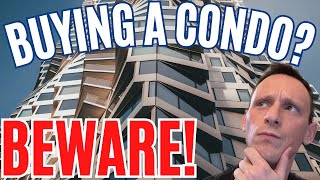
Austin Klar, a lawyer-turned-real-estate agent in San Francisco, breaks down five risks of buying a condo: HOA fees that can reach several thousand dollars monthly and rise annually, the association's financial reserves, CC&Rs that may ban Airbnb rentals, slower market liquidity than single-family homes, and shared walls that invite neighbor disputes.
Chapters
If you're thinking of buying a condo and want to avoid making one of the biggest financial mistakes of your life, there are 5 things you need to be on the lookout for when you're searching for the right condo, and I'm gonna break them down in this video. This is Austin Klar, your lawyer turned real estate agent and real estate developer in San Francisco. I have lived in multiple neighborhoods throughout the city, giving me in-depth firsthand knowledge of what it's like to both live and work in San Francisco. If you're thinking about relocating or want more information about the market, definitely reach out to me. My contact information is in the description below. I will personally answer every call, every email, every text, and I would be more than happy to help you. And if you like videos just like this, please consider subscribe to my channel, and don't forget to click the bell so you're alerted every single time I post a video. All right, so this video is all about things that are unique to condos compared to single-family homes. Condos tend to be more affordable than single-family homes, which make them great options, especially for first-time home buyers. But setting aside whether a condo lifestyle is really for you, there are things that you definitely need to account for and watch out for that can be the cause of real financial pain down the line. So let's dive into those right now. First on the list is HOA fees. HOA HOA fees. fees increase the cost of ownership over and above property taxes, insurance, and your mortgage payment. HOA fees pay for things like insurance, maintenance of the common areas, a gardener. If there are amenities in your building like a gym or a pool that need to be tended to, or if you have a doorman or concierge service that those people who work in those jobs need to be paid for, that all comes from HOA fees. Depending on the type of building, HOA fees in San Francisco can range from as little as just a couple hundred dollars a month— all the way up to $3,000, $4,000, sometimes even like $8,000 or $9,000 a month depending on the type of building. If you're in a small condo building that really doesn't have any amenities, maybe it's a house that was converted into 2 condo units, chances are you're probably gonna be paying in the $300 to $500 a month range. But if you're in one of these modern high-rises that you see in a lot of downtown areas of San Francisco that have gym and a pool and conference rooms and movie theaters and doormen and all that stuff, chances are you're probably gonna be paying $1,500+ in HOA fees. Probably even more than that. So when you're in the market to buy a condo and say you think, okay, my income can support a $2 million condo, you need to double check how much the HOA fees are and make sure you're accounting for that when you're considering how much money you can afford from a monthly payment standpoint. You also need to keep in mind that HOA fees aren't fixed for life. They go up every year as the cost of goods and services go up as well. So when you're thinking about how much condo you could afford, you don't wanna just plan for that year's HOA fee amount. You wanna plan for a little bit of a cushion because chances are the fees are going to raise over time. The second thing you need to keep in mind Another thing you need to be on the lookout for when buying a condo are the HOA financials. In every condo transaction, as part of the disclosure packet before you put an offer in, you're gonna get a set of the HOA's financials from at least the last calendar year. It's gonna have the HOA's balance sheet, income statements, a reserve analysis, expenditures. These are incredibly important to review because they're going to give you a sense of how well-capitalized the HOA is for stuff that comes up day to day. If the HOA only charges the bare minimum to cover day-to-day expenses, it means they're not gonna have enough money in reserves to cover any major issues that happen, like if a roof needs to be repaired or worse, foundation needs to get repaired. And if that happens where the HOA has only been charging a minimum amount and a big expense pops up, the tenants are gonna get hit with what's called a special assessment. And that's on top of the HOA fees that you have to pay ordinarily. That special assessment is a special one-time fee to pay for that issue. So say you live in a small 2-unit condo building and there's a big storm that hits the area and causes your roof to fail, or there are serious leaks, water intrusion into your building from the storm. The roof has entirely failed and it's gonna cost $40,000 to fix. Well, if you're in a 2-unit condo building and you don't have enough money in reserves to account for that from prior tenants and from the collection of HOA fees over time, then you're gonna get hit with a special assessment to come up with whatever cash is needed to cover that expense. So when you're going through the HOA's financial statements, you wanna look at how much the HOA typically spends in a year, what types of expenses have come up, what's the useful life left on these major parts of the house, like the roof, like the plumbing, and anything else you think might end up being a large expense. You need to figure out if the HOA has enough to cover that stuff so that you can avoid that special assessment. Do they have a healthy reserve such that if something catastrophic happens to the building, they have enough to cover it, or you're gonna have to come out of pocket to pay for it? The third thing you're gonna wanna look out for are the CC&Rs, covenants, conditions, and restrictions. These are basically the HOA's rules that govern the building. A lot of people like the idea of buying condos and using them for Airbnbs, but if you actually look at the fine print of the HOA, rules in the CC&Rs, they actually prohibit short-term rentals. A lot of condo buildings, especially modern large high-rises in San Francisco, prohibit rentals of less than 30 days. And most Airbnbs, you don't rent them for 30 days or longer. You rent them for maybe 2 or 3 days at a time over a weekend. So the last thing you wanna do is buy a condo thinking you're gonna be able to Airbnb it, make some money off of the investment. Turns out HOA rules actually prohibit you from doing that altogether, and you just made a huge mistake. So it's really important that you look at what the CC&Rs say before you actually make an offer and get into contract on a condo. The CC&Rs are also gonna cover what types of renovations you're allowed to do to your unit. Are there any specific paint colors that you're required to use? A lot of single-family homes actually have HOAs that are governed by CC&Rs as well, and there are limitations to what you can paint the exterior color of your house. The CC&Rs will tell you if there are any design guidelines or architectural review boards or other boards or processes you're gonna have to go through if you do need to do renovations to your house. The CC&R should be a part of the disclosure packet, which you should get upfront before making any offer on a condo. The fourth thing you need to understand about condos is that they're potentially harder to sell than single-family homes. Condos tend to take longer to sell than single-family homes. They stay on the market for a little bit longer. Right now, as the date I'm recording this, uh, at the beginning of April, March statistics just came in and the average condo spent about 53 days on the market compared to about 28 days for a single-family home. So, Mm-hmm. They do take a little bit longer to sell than single-family homes. Why is that? Well, not every buyer wants the condo lifestyle. Not every buyer wants to be governed by an HOA. Not every buyer wants to have neighbors like in an apartment building. And if the building isn't well maintained, that might also dissuade people from buying in the building as well. Condos can be great investments if the buildings are well maintained, but a lot of people don't like having to rely on other people, your neighbors, other tenants, to do that maintenance. When you own a single-family home, something happens, it's on you to fix it. If you don't do it, it's never getting fixed. In a condo, you have to rely on other people to maintain the common areas, to maintain their units, and maintain the building as well. To get a sense of how the building is run and to make sure that you're not gonna run into a situation where there's deferred maintenance or people not doing what they're supposed to be doing, you'll actually get all of the HOA's meeting minutes from the last year in the disclosure packet. So you can see what types of issues have come up, how the board has addressed it, what action has been taken or not taken to remedy any issues that arose. So you can really get a sense of how well a building is actually run. The fifth thing that you need to be aware of when buying a condo is that you're buying into communal space. Maybe it's one unit in a small 2-unit building, or maybe it's one unit in a 150-unit building. Either way, chances are you're going to be sharing walls with neighbors. You're gonna be sharing the gym, the pool, all these other amenities with neighbors. There's less privacy in a condo compared to a single-family home, and that's part of the reason why they take longer to sell and why they're less expensive. expensive than single-family homes. And who your neighbors are can actually cause problems for you, not only when you're living there, but when you go to resell your unit. If you get into altercations with your neighbor or there's something that the neighbor does that's a nuisance, that's something that might have to be disclosed when you go to sell the unit and something that a future buyer is going to consider as well. So it's good to do your diligence on who the neighbors are, what the relationships are like in the building to make sure that you're buying into a communal space that you're going to be happy with. I don't intend any of this to freak you out or dissuade you from buying a condo. There are a ton of really great condos in San Francisco and they can be a great option to get into a home and start building generational wealth through homeownership. None of these issues are insurmountable. These are just things that you need to be on the lookout for when you're considering buying a condo. Make sure you have eyes wide open and make sure you're working with a professional who knows what they're doing and knows what the issues are so that they can spot them and alert you to them if you don't spot them yourself. If you're thinking about buying a home and want more information about the market, definitely reach out to me. My contact information is in the description below. I will personally answer every call, every email, every text, and I would be more than happy to help you. And if you like videos just like this, please consider subscribing to my channel and don't forget to click the bell so you're alerted every single time I post a video.










