6 Reasons Why You Should NEVER Move to Marin County, CA
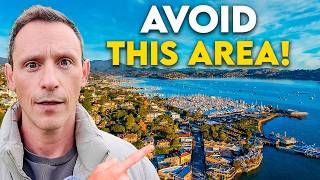
Austin Klar, a lawyer-turned-real-estate agent, breaks down why Marin County might not be worth it: homes average $2.1 million, you'll need a car since transit is sparse, and the county is over two-thirds white with limited dining and nightlife. Wildfires, floods, and traffic on the Golden Gate Bridge add more friction.
Chapters
Marin County is consistently ranked one of the best places to live in all of California, but there are definitely some things you need to be prepared for if you're thinking about relocating to Marin, and if you can't handle them, then you should probably look elsewhere for your next home. This is Austin Klar, your lawyer turned real estate agent in San Francisco and Marin County. I moved to the Bay Area over a decade ago to work as a lawyer at one of the biggest law firms in the world before getting into real estate. I work with so many people relocating to Marin County at all stages of life, and very often there are common questions that I always get asked by people who aren't familiar with Marin County and what the lifestyle is like, things that you definitely need to know about if you're thinking about relocating to the area as well. And in this video, I'm going to break down all of those things for you so you have all the information you need in one place. Let's dive right in. And the first one, let's just get it out of the way, is the cost of living. It is incredibly expensive to live in Marin unless you're coming from a major metropolitan area like New York or Austin or Los Angeles or San Francisco. You need to be prepared for how expensive it is to live in Marin. The average price of a single-family home over the past year was just under $2.1 million. Now you're gonna get a decent amount of land for that, at least compared to an area like New York or San Francisco where you're not gonna get much or any land at all. Average lot sizes are typically closer to a third of an acre in Marin County, which is a great size. And there are certainly a bunch of other places in the country where you can pay a lot less and have a lot more land. I've worked with people moving from suburban towns all over the country and, you know, some of them are selling their, you know, 3,000 square foot house on an acre and a half for, you know, a little over $1 million, and then they come to Marin thinking they can spend maybe a little bit more than that and get something similar. And it's like soul crushing because you can't get anything close to that in Marin for anything close to that price. You know, you can barely get a fixer-upper in like a mid-tier neighborhood for close to that on like a really small lot. So depending on where you're coming from, and it's probably gonna be true if you're coming from most places, your market expectations need a reset. If you're coming from New York, for example, probably gonna laugh at how, you know, cheap it is to have all this land. But unless you're, you know, coming from anywhere else, probably not gonna be the case. And there are a lot of other costs beyond just the cost of housing itself that you need to be aware of. Obviously food, incredibly expensive. Like good luck getting a salad or a sandwich for like less than $18, $20 most anywhere in Marin. Also, if you live in Marin, you're probably commuting to San Francisco for work or to the South Bay for work. So you need to factor in how much you're gonna be spending on bridge tolls and parking every day, or, you know, ferry tolls every single day that you need to go to the office. The bridge toll to get over the Golden Gate Bridge right now is $9.50, and parking for a day in the city can range anywhere between $25 and like $75 depending on where you have to park. So it is incredibly expensive and it adds up. If you want to learn more about different neighborhoods in Marin, how they stack up against each other, and how much each of them cost, I've got separate videos on that. I'll link those up top in the description below. And if you like videos like that, make sure to subscribe to my channel because I make videos about that stuff every single week. And if you have more questions about the various markets in Marin County or other questions about the Marin County lifestyle, definitely reach out to me. I'd be happy to be a resource for you, I'll put my contact information in the description below. Now back to the list of things that you need to know about if you're thinking about relocating to Marin. And the next one is that having a car is an absolute must. Something I get asked about a lot from people coming from different areas is if there are different places in Marin that you can live where you're not necessarily car dependent. A lot of people are relocating from big cities, so they might not even have a car. They just rely on, you know, pretty robust public transit. So coming to Marin, uh, it's a potential change for them. Now, in theory, it is possible to, you know, get around anywhere without owning a car,, but I think that if you don't own a car in Marin, you are gonna really hate your life. Marin County is largely suburban. It's, you know, small downtowns intermixed throughout like various cities. So unless you are right next to the commercial corridor and you can walk to get groceries or to the local restaurants in that little downtown strip, you need a car to get, you know, your basic daily necessities. Also, as I mentioned, probably gonna be commuting to work unless you work remotely, so you're gonna need a car. There are ways to get to San Francisco or to the South Bay without having having a car. A lot of companies, for example, have shuttle pickups throughout Marin. So, you know, you can take the Google bus to the Google campus from different parts of Marin, or you can even take a ferry from Larkspur Tiburon in Sausalito to downtown San Francisco. You don't need a car necessarily, but unless you live really close to that shuttle pickup or really close to that ferry terminal, you're probably gonna have to drive to those places. So you still are going to need a car even if you don't ultimately take the car to your end destination. You could bike, I guess, but you. I personally wouldn't want to start my day off biking, and you know, I get sweaty. So I think you're going to need a car if you live in Marin. Just be prepared for it and make sure you budget for it. The next thing I get asked about a lot from people relocating to Marin, and it's a concern for some people, is, you know, whether Marin is a diverse place. Like, what is the diversity in Marin? And honestly, it's not the most diverse place. Over two-thirds of the population is white, about a fifth of the population is Latino, and then everyone else is the remaining 10% of that. So there's nowhere near as much diversity as nearby cities like Oakland and San Francisco, for example. I had someone reach out to me relocating from Southern California, potentially thinking about Marin or San Francisco. And one of the questions they had about Marin specifically, they're an Asian family, were, you know, what, what was the Asian presence like in Marin? They were worried about sending their kid to school and having their kid be the only Asian person in school. And the reality is that— That's might happen. There's just not as much diversity in Marin as there is in a place like SF. And it's not just a lack of diversity from a, you know, people standpoint. It's just a lack of diversity from a cultural standpoint as well that comes from having those different cultures represented in your area. You don't have anywhere near as much variety in terms of food in Marin than you do in SF. The events, the festivals, the activities, way more diverse in SF or in Oakland than in Marin. Now, to be clear, there are different types of food available in Marin., but you might be traveling 20, 25 minutes to get that specific type of food that you want depending on where you live. Whereas in San Francisco, it's going to be literally outside your doorstep. And that brings me to my next question that I get asked a lot is how the food scene is in Marin. And honestly, it's gotten a lot better over the past several years, but it's not the best. There's been an influx of really great options. A lot of restaurants that were in San Francisco have now opened up outposts in Marin, which is awesome, but it's not like the same as San Francisco. You have one Michelin-star restaurant in Marin, you've got over 2 dozen in San Francisco. Obviously having a Michelin star is not the mark of good food. You can have great food and not have a Michelin star, but that is a metric to look at. Each little downtown does have some pretty awesome options. Some of my favorites like The Joinery in Sausalito, awesome fried chicken sandwiches, get a beer, go sit by the water. I love Sam's and Malibu Farm in Tiburon, great brunch spots. Pizzeria Pico in Larkspur, really good pizza. I love Masa and Sushi Ron for sushi in Novato and Sausalito. There are awesome food places, and I travel up to those places from San Francisco specifically to get some of that food. So there is great food. It's just not a very robust food scene, and it's a very spread out food scene. And if you like, you know, late night, you know, dirty like street food, you're not going to get that in Marin. That doesn't really exist up there. You're not hitting up a club or a bar and then, you know, coming out at, you know, 1 o'clock, 2 in the morning and getting food from a food truck. You're not getting, you know, 50 different Asian restaurants on Clement Street. You're not getting 50 different Italian restaurants in North Beach. You're not getting hundreds of different Latin food options in the Mission. So it is not a super robust food scene, but it is getting better, and there's some awesome options there. And related to that, there's not really a nightlife scene either. There are a few local bars like the Silver Peso in Larkspur, for example, or like a Barbachi in Sausalito. But for the most part, if you're going out to a bar in Marin, you're going to a restaurant that happens to have a bar. There's definitely not like a club scene there. There's really not a general bar scene there, and everything shuts down pretty early. I've got a client that's from Marin originally that moved to Los Angeles who's single and he, you know, really misses being in Marin and wants to move back, but is worried about moving back to Marin as a single person. It's just not a great environment for somebody who's single because unless you don't want to go out at all, you're probably going to be going out in San Francisco and going to meet people in San Francisco, not in Marin. So it's really difficult not having a nightlife scene at all to be in Marin. So if you're single or if your goal is to, you know, meet people other than through your work or you're a big foodie or you like going out, then, you know, don't move to Marin. Your life will be miserable having to drive all the time to go visit other people, you know, across the bridge in San Francisco or in Oakland. The next thing people don't really have a grasp on from out of town is, you know, how bad traffic can be in Marin. Traffic is by no means as bad as it is in S.F., and I'm from Southern California, and it's definitely not anywhere close to as bad as Los Angeles. But the traffic can be really crappy in Marin. But there are certain places in Marin, certain streets and certain areas where traffic does get pretty heavy and very annoying. A lot of Marin is built into hillsides and there are very narrow windy roads. So if there's any road construction going on or when people are parked on one side of the road, you know, that two-way traffic becomes on a single lane. It becomes really frustrating and takes a long time to navigate. Either have to pull over on the side of the street to let somebody come past you, or you're going to be waiting in a long line of cars until a construction worker waves you through on this, you know, one-lane road, basically. Yeah. If you commute to the city for work, you'll probably hit some traffic after you get off the Golden Gate Bridge as you get into San Francisco and head closer to downtown. And then you're gonna hit traffic on the way home. If you live anywhere like Cortemadera or north, you're gonna hit traffic on the freeway starting at around Cortemadera, and it will be very slow. If you need to travel on Sir Francis Drake Boulevard to get to or from wherever you need to be, it's gonna be slow. There's a lot of traffic there, especially during rush hour. Marin is also biker heaven. So if you are stuck behind a biker on one of those curvy roads, it's going to be a slow drive. Nothing you can do about it. It's not the end of the world. It's just annoying. So if you can't handle traffic, don't move to a place in Marin where you're going to experience that. And the last thing people ask about all the time who are moving to Marin are about the environmental risks. And there are several of them. The first one is the risk of wildfires. Not everywhere in Marin is fire-prone. There are, you know, definitely places near water that aren't heavily wooded that don't have fire risk. But a ton of Marin is built into those forested hillsides, parts of Mill Valley, Kentfield, Ross, Fairfax, San Anselmo, or built over dry, arid land like parts of Novato and San Rafael, where wildfires are a very real risk. It makes insurance more expensive. There are sometimes city or county-mandated, you know, home hardening, defensible space measures that you're required to implement that add to your cost of living. Things like tree maintenance, making sure your house is made of certain fire-resistant material, things like that. Being in those wooded areas also means more maintenance. Tree maintenance is a real thing. It's really cool having a redwood in your backyard. It's really pretty, but those needles drop onto your lawn every single day. Another major one for Marin is flood risk. A lot of Marin is built up to waterfronts, places in Belvedere, Tiburon, Novato, Corte Madera, Greenbrae, Larkspur. All of them have like waterfront communities or parts of them are waterfront and there is risk of flooding in heavy rains. And depending on the precise location, if you're in like a FEMA flood zone,, you will need to supplement your insurance with special flood insurance. So it adds to your cost of living. And the last major one is liquefaction. There are different parts of Marin built on liquefaction, like expansive soils that will liquefy in the event of an earthquake. If that happens and your house isn't built in the appropriate way to account for that from a structural and engineering perspective, you might lose your house. So all of these things make Marin A, more risky, B, potentially more expensive. And you know, when you go put an offer in on a property, we're going to have the natural hazards report upfront before you make an offer. So we'll go through all of those potential risks to see, you know, whether the house is in or out of that particular zone. And we'll talk about if it's in one of those zones, you know, what we need to look for to make sure that all of our boxes are checked and that you're comfortable before moving forward, or if you want to walk away. Well, there you have it. Those are reasons why you might not want to move to Marin County and what people most commonly ask about who are thinking of relocating to the area. If you're thinking about relocating to the Bay Area, maybe you got a new AI job or a new tech job, or your office is calling you back to work and you're thinking about moving to Marin County, definitely reach out to me. I've helped people relocate to Marin County from all over the country, and I'd be happy to be a resource for you. I'll leave my contact information in the description below. And if you want to know more about different neighborhoods in Marin County, how much it costs to live there, and how they rank against each other, I've got a separate video on that. I'll link that up top in the description below as well. Definitely worth checking out. And if you like videos like this about current events, new developments, lifestyle in San Francisco and Marin, definitely subscribe to my channel because I make videos about that stuff every single week. I hope you enjoyed the video and I'll see you in the next one. Bye.










