Century Old "Master Planned" Communities of San Francisco -- What You Should Know
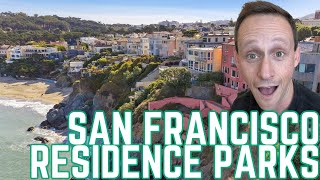
In this video, real‑estate professional Austin Klar surveys San Francisco’s historic, master‑planned “residence parks,” a set of about a dozen neighborhoods designed over a century ago to offer suburban, park‑like living within the city. Klar introduces himself, notes his background, and explains that many of these districts were originally built with racist and exclusionary deed restrictions that barred non‑whites and multifamily housing, though those covenants are no longer enforceable and the areas are now diverse. He then provides a concise profile of each residence park, covering its geographic location, layout, architectural character, notable residents, nearby amenities, and recent market data (average sale price or representative recent sales). The neighborhoods covered are Presidio Terrace, St. Francis Wood, Seacliff, Lincoln Manor, West Clay Park, Forest Hill, Balboa Terrace, Ingleside Terrace, and Jordan Park. Klar highlights unique features such as gated streets, shared driveways, historic designations, and the only park that allowed multifamily units from the start. He concludes by inviting viewers to contact him for more market information, watch deeper videos on individual parks, and subscribe to his channel.
Chapters
San Francisco has over 80 subdistricts and a small handful of them were designed and planned over a century ago to provide residents with a suburban park-like feel in an otherwise very urban environment. And those neighborhoods remain among the most desirable in all of San Francisco. And in this video, I'm gonna give you a breakdown of what houses are like in each of those neighborhoods and how much they cost. What's up everyone? This is Austin Klar, your lawyer turned real estate agent and real estate developer in San Francisco and Marin County. I've been a Bay Area resident for over a decade, giving the in-depth, firsthand knowledge of what it's like to both live and work there. If you're thinking about relocating or want more information about the market, definitely reach out to me. My contact information is in the description below. I will personally answer every call, every email, every text, and I'm more than happy to help you. And if you like videos just like this, please subscribe to my channel and don't forget to click the bell so you're alerted every single time I post a video. All right, so this video is all about San Francisco's master-planned communities known as residence parks, which have some of the most sought-after real estate in the entire city. Now many of these neighborhoods actually have racist and exclusionary origins when they were first developed. Developed, a lot of them had covenants and deed restrictions in them prohibiting the sale of those homes to non-whites. And there were also a lot of deed restrictions prohibiting the development of any multifamily housing whatsoever, prohibiting any sort of business or other commercial spaces to be brought into the area. Now, luckily today, those racial restrictions are obviously no longer enforceable. And actually, over time, a lot of these neighborhoods became majority non-white. So the neighborhoods that exist today are a far cry from how they were initially intended. They're much more inclusionary, much more diverse today than they were back then. Regardless of their storied past, there is no debate that these neighborhoods are among the most beautiful in the city and have incredible historic homes, and I'm going to take you through each of them right now. The first residence park is Presidio Terrace on the northern side of San Francisco. The gated community is built around one circular street, Presidio Terrace, and homes in the area are widely considered the most exclusive homes in the entire city. Many famous residents, including multiple politicians, have lived in Presidio Terrace—Nancy Pelosi, Dianne Feinstein—and it reigns one of the most affluent communities in the city today. Now, for how small it is, the area has one of the most diverse architectural styles. There are Beaux-Arts buildings, Tudors, Italian villas, and there are like more mid-century desert style homes there too. It's a very odd collection of homes. Homes there don't come for sale that often. In fact, only 21 homes have sold there in the last 20 years, and the most recent one was a 9,400 square foot, 6-bedroom home, and it sold for $13.6 million. Next up is St. Francis Wood on the southern side of San Francisco, and it's one of my favorite communities in the entire city. St. Francis Wood is right next to West Portal and Mount Davidson. The neighborhood St. Francis Wood is extremely spacious with curvilinear streets that have incredible landscaping. All of the homes in the area are fully detached and they tend to be on larger lots than your standard 2,500 square foot lot you see in other neighborhoods in San Francisco. And a lot of them actually have ocean views. The area's also really walkable because of these spacious streets. And there's such beautiful architecture in the neighborhood that it was placed on the National Register of Historic Places. There's not a whole lot to do in St. Francis Wood itself, Like many of these other residence parks, there are no businesses within their boundaries, but it's really close to popular neighborhoods like West Portal, so you are close to plenty to do even though there's not much in the immediate neighborhood. Homes in the area over the past 18 months have averaged nearly $4 million, so they're definitely on the more expensive side. Next on the list is the Seacliff neighborhood on the northwestern end of San Francisco. The neighborhood borders Presidio and Lake Street districts to the east, the Pacific Ocean to the north, and Lincoln Park to the west. Houses in Seacliff, some of them are literally built onto cliffs over looking the Pacific Ocean, the Marin Headlands, Golden Gate Bridge. They have truly incredible views. And like St. Francis Wood, a majority of the homes there are fully detached and they're quite large. Many of them are well over 5,000 square feet. The area is pretty far from downtown San Francisco, but it is nearby California and Clement Streets, and it's not too far from Ocean Beach and the Presidio National Park. So plenty of activities and places to like eat or drink or shop, you know, in or around the area. There are a ton of celebrities and like famous tech executives who have called Seacliff home. Jack Dorsey, founder of Twitter and Square, Kirk Hammett, Metallica guitarist, actors Robin Williams and Sharon Stone, uh, singer Linda Ronstadt. The list goes on. With how big these homes are and how exclusive the area is and how incredible the views are, shouldn't be any surprise the area's super expensive. Homes there sell on average over the past 18 months for about $5.7 million. Next up is Lincoln Manor on the northwestern end of San Francisco in the Richmond District. The area is quite small, bound by 36th, 26th and 28th Avenues east to west and Clement and Geary north to south. The neighborhood is slightly raised from the streets surrounding it, so it gives homes in Lincoln Manor a better view looking out to the Pacific Ocean than homes in the immediately surrounding area. There are 3 entrances into the area that are designated by these large pillars framing each side of the street. Houses here, like other residence parks, are set back from the street, creating a barrier between the street and front yards, which is much more common in like suburban areas out in Marin or the East Bay than it is in most neighborhoods in the city. It is a very small community, as I mentioned, it's only a few blocks wide. So, you know, the area is not like amenity rich, but it is near Clement and Geary Street. So plenty of dining, bar options, and shopping in the area. And also because it is so small, there aren't a lot of homes sold in the area. The most recent sale was a 3,400 square foot house that sold for $3.3 million, which on a per foot basis makes it one of the least expensive residence parks. Next up is West Clay Park on the northwest end of San Francisco, right next to the Seacliff neighborhood. It's situated between 22nd and 24th Avenue north of Lake Street, and the area is marked by two identical gateways with pillars similar to Lincoln Manor. The layout of West Clay Park is like other residence parks in that the homes are set back from the street and fully detached, but unlike most other residence parks, there are some condo units in the area. Um, they weren't condo units at the outset but have become condos since the West Clay Park subdivision is only 50 lots. So it is incredibly small and incredibly exclusive. Many homes in the areas are serviced by a private driveway. The homeowners who access their properties over the driveway don't own that driveway. Someone else owns the driveway. All of these homeowners just have an easement or a right of way over that driveway. Because the area is so small, it does have a more exclusive and private feel like Presidio Terrace as compared to like other residents parks or other neighborhoods in San Francisco. And because of the incredible views of the Presidio and the Golden Gate Bridge from many of the homes, these are among the most desirable homes in the entire city. A downside to some of these homes in the area is that unlike most other residence parks, many of the homes in West Clay Park actually don't have backyards. Instead, they have a more spacious front yard, and then some of them either have roof decks or decks off the upper level of their home to provide at least some outdoor space. But many of them don't really have true backyards, which makes it a little bit less desirable for people with younger children who want to take advantage of outdoor space. Now, like Lincoln Manor, the area is very small. Like I said, only 50 lots. So there aren't many homes that come to the market there. The last one that sold was a massive 4,400 square foot fixer-upper on a very large 4,500 square foot lot, and it sold for just shy of $5 million. Next up is Forest Hill, which is in the middle of the city, right next to the Inner Sunset and West Portal neighborhoods. The area is bound by 7th and Laguna Honda to the north and east, Tarravelle to the south, and 14th Avenue to the west. Believe it or not, the streets in Forest Hill were actually originally built for horse and carriage. Some of the streets are so narrow that they are divided into upper and lower lanes separated by landscaping, so it's a much more unique architectural style than a lot of the other residence parks on this list. The area is actually on the larger side by residence park standards. There's, you know, nearly 700 homes with curvilinear streets, kind of like St. Francis Wood.— pedestrian stairs are laid out throughout the area, making it really easy to navigate the somewhat hilly neighborhood. Homes in the area over the past year and a half have sold for about $3.2 million on average and sit on pretty large lots that are nearly 5,000 square feet large, so on the larger side compared to some of these other residence parks, but a lot cheaper just because of the location that they're in. Next up is the Balboa Terrace neighborhood. The area is bound by Monterey Boulevard and Darien Way to the north and Ocean Avenue to the the south, and San Aleso and Aptos Avenue on the east. The blocks of Balboa are graded into a series of terraces that gradually decrease in elevation east to west. Um, like other residence parks, you get the same wide sidewalks and streets, but unlike other residence parks, you actually don't have gateway structures marking the entrance. Instead, you have this really unique 25-foot wide, you know, open space for pedestrians with great greenery. Mm-hmm. In front of all the beautiful homes of the area. Houses in the area are a mix of custom to planned development homes with identical footprints. So it's an interesting mix of bespoke homes and then what I call like cookie cutter homes. Like St. Francis Wood, the area is really close to West Portal and all the activities and amenities in that area. It's also very close to like San Francisco State University, Lake Merced Park, Balboa Park. So plenty to do outside of your area. If you live in Balboa Terrace, you're not going to be bored living there, even though there's not a lot to do in Balboa Terrace. Itself. Homes in the area over the last year and a half have sold for about $2.6 million, making it one of the more affordable residence parks on the list. Next up is Ingleside Terrace, which is one of the larger communities on the list, about 800 homes in the area. And the area is actually built on the former site of the Ingleside Racetrack in the southwestern part of San Francisco. It's right near Balboa Terrace, Ingleside, Merced Heights, and Lakeside. And there's a really wide variety of architectural styles in the area. There are a lot of old Craftsman and Edwardian-style homes that were built in the early 1910s and the '20s. And the layout of these is a bit unique compared to other residence parks, except maybe Presidio Terrace, because the homes sit along an oval alignment that tracks what the old Ingleside racetrack looked like. There are also a number of pedestrian pathways throughout the area, and there's also this really cool Sundial Park in Entrada Court, the main focal point of which is, you know, a 17-foot high and 30-foot long sundial at center of the park. So some really interesting architectural and like layout choices for this community compared to other residence parks, which, you know, look a little bit more traditional. Over the past year and a half, about 20 homes have sold there for an average of $2.45 million, which makes it the least expensive of the residence parks. Last up is Jordan Park, which is unique among the residence parks because it was the only one that allowed for multifamily developments at the outset. Jordan Park is also unique because I think it, along with Presidio Terrace, are the best locations of any of the residence parks in terms of day-to-day lifestyle. Close to Presidio National Forest, close to Golden Gate Park, Alta Plaza Park, close to shopping and dining on Fillmore and Sacramento and Clement. It's really close to Laurel Village. So you not only get the architectural flair of residence park style architecture and wide streets and, you know, luxurious sidewalks, you have the best amenities in the city at your doorstep. With those amenities, it wouldn't be a surprise Jordan Park is a relatively expensive area to live. Over the past 18 months, homes there have averaged about $3.8 million. Well, there you have it. That's the scoop on residence parks in San Francisco. I'm working my way through making full videos on each of these residence parks. So far I've got Jordan Park, St. Francis Wood, and Seacliff. I've linked those in the description below if you want more information. Also, if you want more information about the market or have questions, definitely feel free to reach out to me. My contact info is also in the description below. I will personally answer every call, every email, every text, and I'd be more than happy to help you. And if you like videos just like this, please subscribe to my channel and don't forget to click the bell so you're alerted every single time I post a video.










