Fisherman’s Wharf is BOOMING... But Here's What Nobody Tells You
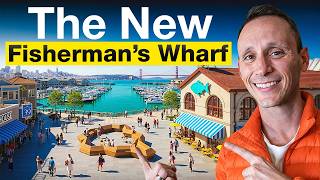
In this video, former lawyer‑turned‑real‑estate agent Austin Klar delivers a comprehensive overview of San Francisco’s Fisherman’s Wharf, tracing its evolution from a 19th‑century immigrant fishing hub to a pre‑COVID tourist magnet of 14 million annual visitors, through the pandemic‑induced collapse that saw hotel occupancy dip to 35 % and iconic eateries like Alioto’s close permanently. Klar then details the city’s multi‑billion‑dollar recovery strategy, highlighting the Fisherman’s Wharf Forward public‑plaza project, the $500 M Pier 45 master‑plan (including seismic and sea‑level upgrades, a rebuilt Shed C, a new food hall, seafood market, entertainment venue, and fishing museum), and recent activations such as the SkyStar observation wheel, new long‑term restaurant leases, and a floating dock for off‑boat sales. He presents post‑pandemic metrics—foot traffic at 75 % of 2019 levels, projected 13 million visitors in 2025, hotel occupancy rising to 65 %—and notes uneven recovery in international tourism and retail vacancy. The video also touches on broader citywide trends (AI‑driven job growth, declining homeless‑encampment crime, housing market rebound exemplified by the fast‑selling Norboire complex) and ends with a call for viewer engagement and an invitation to contact him for real‑estate assistance. The overall narrative positions Fisherman’s Wharf as a pivotal, revitalizing force in San Francisco’s economic future.
Chapters
Fisherman's Wharf is San Francisco's most visited neighborhood, yet many locals dismiss it as just a tourist trap. But beneath the clam chowder bowls and souvenir shops lies a very complex, layered history. Immigrant fishermen, devastating wildfires, iconic family-owned restaurants, a neighborhood wrecked by the pandemic, and now it's the subject of an over half a billion dollar redevelopment plan with a bunch of new businesses and new visitors coming back. This is Austin Klar, your lawyer turned real estate agent in San Francisco and Marin County. And in this video, I'm going to unpack the incredible history of San Francisco's iconic Fisherman's Wharf. Fisherman's Wharf and what's to come for the destination. From its working-class origins to peak tourist glory, through the devastating pandemic collapse and into the ambitious recovery blueprint the city is rolling out, there's no San Francisco without this incredible place. And I'm really excited for all the things coming to the area, and I'm going to walk you through it all in this video. So let's kick it off with how Fisherman's Wharf came to be one of the most visited destinations in the entire city. So where is Fisherman's Wharf? Fisherman's Wharf is an historic neighborhood along San Francisco's North Waterfront, basically stretching from Ghirardelli Square on Beach to Pier 39 on the Embarcadero. The core of the Wharf starts at the iconic crab wheel sign at the corner of Taylor and Jefferson. And while it's famous for sourdough bread and its colonies of sea lions, there is way more to it. Rich heritage for immigrants in the fishing industry. Starting in the mid-1800s, Henry Meigs built the original wharf with the intention of anchoring commerce and housing on the North Waterfront. That original wharf eventually collapsed, but set the stage for the future of that area and the future wharf to come, that whole area as a maritime hub. By the late 1800s, Italian and Chinese immigrants were frequenting that area for fresh catch, and by 1900, California officially set aside that stretch of waterfront between Taylor and Leavenworth as an area for commercial fishing, officially establishing it as an industry and working port. During the 20th century, family-owned fish processors established roots at the pier, and staple restaurants like Aliotto's and Tarantino's turned that fresh catch into— Fresh catch. Awesome food for locals and tourists in the area. And by the 20th century, the Wharf had become one of the few areas where tourists and industry professionals really coexisted. A very unique area within San Francisco. And by the late 20th century through the 2010s, it cemented itself as one of the busiest visitor districts in San Francisco. The Wharf's visitorship reached around 14 million annual visitors in 2019, over 100,000 people every single day during the peak season. Retail vacancies were negligible and rare vacancies didn't remain vacancies for long. And then came 2020 when everything changed. Before I go through what happened to the Wharf during the pandemic and all the incredible work the city is doing to bring it back to life, if you could do me a huge favor, if you like videos about San Francisco lifestyle, current events, new developments, or all things San Francisco real estate, subscribe to my channel because I make videos about that stuff every single week. And if you're thinking about relocating and have questions about what all these changes mean for our local housing market, reach out to me. I was a lawyer at one of the biggest law firms in the world before getting into real estate, and I've helped numerous people relocate here from all over the country. I'd be happy to be a resource for you. I'll put my contact info in the description below. Reach out anytime. Now back to Fisherman's Wharf and how everything started to go downhill in 2020. Virtually overnight, the Wharf, along with a lot of other elements of San Francisco's economy, basically collapsed. International arrivals fell to near zero. International tourism basically vanished. By 2021, the average hotel room occupancy was about 35%, less than half of what it was pre-COVID. At the Wharf, the blow was worse. Conventions disappeared, cruise ships disappeared, international and domestic travelers disappeared, and the businesses there that relied on that daily foot traffic for their business saw sales collapse by more than 70%. And to make matters worse, tragedy struck the Wharf in May of 2020. A 4-alarm fire destroyed Pier 45's Shed C, completely annihilating thousands of crab and black— traps, and for the fishing fleet, this was absolutely catastrophic. An already lean year made even worse by the literal destruction of their facilities. The pandemic also wiped out true iconic staple places at the Wharf. Alioto's, a family restaurant that opened in 1925, never really reopened after the pandemic. By 2022, its closure was officially permanent, a truly generational loss for San Francisco and the Wharf itself. Pompeii's Grotto and Lou's Fish Shack shuttered as well, leaving prime real estate vacant on Jefferson Street. Street performers disappeared. Even the sea lion colony that would frequent there thinned out, really symbolizing what was going on with the broader Wharf and San Francisco at that time. But what was once a symbol of San Francisco's downfall during the pandemic is now becoming a symbol of the next phase of San Francisco. Hundreds of millions of dollars are being poured into a total revamp. Retail and restaurant spaces are coming back, tourism is on the rise, and the Wharf is once again reclaiming its status as a vital piece of San Francisco's economy. And I'm going to go through all of that right now. Beginning in 2023 and into 2024, San Francisco started showing renewed signs of life citywide. Tourists began coming back to the city as crime rates in homeless encampments fell. Workers started returning to the office as vacancies fell and more employers demanded hybrid or full-time in-office environments. New jobs have been coming to the city, thanks in large part to AI, and our housing market is rebounding because of all of these changes. I've got a separate video going over all of these changes and how San Francisco has started the impossible comeback. I'll link that in the description below. Go check it out if you want to learn more about what's going on and all the incredible of the things the city has been doing to jumpstart its revitalization. And all of that positive change we started to see in late 2023 into 2024 and now into 2025 is spilling over into the Fisherman's Wharf area. By 2024, Wharf foot traffic had returned to about 75% of its peak 2019 levels. Pier 39 reported sales approaching pre-pandemic numbers. Citywide hotel occupancy is projected to hit 65% in 2025, still shy of 2019, but a huge jump from the low 30% range during the pandemic. 657 1,000 Moscone room nights are on the books for 2025, up 25% year over year. Major events like NBA All-Star Weekend, major concerts, and conventions are all having a spillover effect as people attending those travel over to the Wharf. But not all metrics have bounced back evenly. International tourism still drags meaningfully. Retail vacancies at the Wharf are still well above pre-pandemic levels, and many iconic staple locations at the Wharf still are looking for permanent residents. But there are definitely signs of positive momentum and a bright for the Wharf, including millions of dollars being invested to construct new and improved spaces, as well as a ton of new businesses and more visitors coming to the area. On the development front, one of the most visible projects is the Fisherman's Wharf Forward project. That project focuses on a complete revamp of the public space in front of the now-defunct Alioto's restaurant and the restaurant space itself. In 2023, the Port Commission approved a resolution officially terminating Alioto's lease of the restaurant space because of Alioto's inability to continue operations after the pandemic. After that approval, they retained a leasing agent to try and find a new tenant to take over the space. But after touring a couple of dozen tenants through the area, I guess prospective tenants through the space, it became very clear that leasing to somebody on a permanent basis was going to be untenable because of the amount of repair work and investment that was going to be required for them to take over the space. So the port ultimately made the tough decision to just remove the Alioto's restaurant space from the wharf altogether and pave the way for a new open public plaza with a bunch of new amenities and features. The whole goal is to to completely change the way that people visiting the area experience the space. Agli Odos is in a particularly special location at the Wharf, bordering on the Wharf's inner lagoon. It's the oldest section of the Wharf fishing harbor, and it's critical operation center for the fishing industry. So removing the restaurant and putting in a new public plaza there, the goal of that is to create a better connection between the visitors who are in the plaza area to the workers who are in the lagoon area. So think things like a new lagoon overlook, new picnic tables, new public seating facing the bay, new pop-up space for retail. The city's also working on improvements to the Inner Lagoon itself. It's not just visitors who are going to benefit from this, but the industry stands to benefit as well. For example, they're going to create new lighting along the harbor. They're making seismic and sea level resilience updates. They're improving flood protection for the structures in the area, and they're making a lot of upgrades to the facilities that are used by industry workers there. This new public plaza is scheduled to break ground on construction by the end of this year, and the goal is to open it by summer of 2026. Separate from the Fisherman's Forward Project is a much larger scale total revamp of the master plan for Pier 45 and the adjacent seawall lot. And this is geared specifically toward helping the fishing industry utilize the previously destroyed Sheds A and C and developing a ton of new attractions to bring even more visitors to the area. The project contemplates over half a billion dollars of investment into a number of different projects and phases. First and foremost, measures to help make the area resilient to sea level rise and reinforce seismic integrity. To make sure the wharf lasts for decades to come. It also provides funding to rebuild Shed C, which was destroyed by the fire that I mentioned earlier. The creation of new public spaces and bringing new tenants and visitors to the waterfront is also a big part of the plan. They want to create a brand new food hall, a public seafood market, a retail beverage garden, short-term vacation rentals, and they want to bring enhancements to existing fish processing that goes on at the wharf. It contemplates the creation of a flexible open-air entertainment venue for things like like performances, concerts, school events. There's also supposed to be an experiential fishing museum dedicated to the goings-on of the fishing industry. All of it is geared toward protecting and highlighting the industry that's been at the wharf for over a century and bringing visitors back. This is still in the works. There is a very long way to go. It has to go through CEQA and a ton of different permitting to even get the approval before the actual construction begins. So we are still years away, but it is moving along. And it's nice to see something of this scale with this much ambition being focused on an area like Fisherman's Wharf that is so important to the overall trajectory of San Francisco. In addition to work planned for the future, there have been some recent improvements that have already been completed at the Wharf. For example, they completed a brand new floating dock to promote off-boat fish sales, new furniture, new greenery, new signage. They brought the SkyStar observation wheel from Golden Gate Park to Fisherman's Wharf in November of 2023. It's a 150-foot tall amusement park ride, a giant Ferris wheel towering over the Wharf. It was moved from Golden Gate Park because of the Asia-Pacific Economic Cooperation Summit, and it's been wildly successful in just the first few months after its installation. Over 90,000 riders. And as a result of that success, they renewed their lease for a much longer term at Fisherman's Wharf. It continues to bring foot traffic back to the Wharf, and it's going to be an icon of the future of the Wharf going forward. And several restaurants have already signed long-term leases for space at the Wharf as foot traffic has started to return. Chaska Rio, a Salvadoran restaurant, signed a long-term lease at the old Pompeii's Grotto on Jefferson Street. Everett and Jones, a family-owned and operated barbecue spot, signed a long-term lease at 300 Jefferson at the old Lou's Fish Shack. Taco Bell Cantina is opening its second San Francisco location at the Wharf, also on Jefferson Street at Anchorage Square. Beyond bricks and mortar, the city has targeted efforts at creating new activations so people have new ways of enjoying and experiencing the Wharf. The Office of Economic and Workforce Development has spent millions of dollars on marketing events, pop-ups, and new activations of the space there to basically remove the sense of dead space at the Wharf and bring more people people back. And these efforts have already started working. Fisherman's Wharf expects 13 million visitors in 2025, a huge boost from the about 6 million visitors it saw in 2020. And we're seeing a boost in our local housing market in the surrounding area as well. A new construction complex right next to the Wharf, Norboire, developed by JS Sullivan, is one of the fastest-selling new construction complexes in the city right now. Nearly a third of it sold out in just the first few months on the market. Generally speaking, there aren't a ton of sales on the North Waterfront every single year, just a few dozen. We'll see if that changes as that area continues its transformation and Fisherman's Wharf returns to the icon that it once was. I'm really excited for the future of Fisherman's Wharf, and I think it's incredible that the city is dedicating so much time and resources to its next phase. But that's just me. I wanna know what you think in the comments and what you'd like to see at the Wharf as well. And if you like videos about San Francisco, its history, culture, lifestyle, current events, new developments, or all things San Francisco real estate, subscribe to my channel because I make videos about that stuff every single week. And if you're thinking about buying a place in San Francisco, having trouble figuring out what the right neighborhood is for you, or wanna understand how all of these changes we're seeing in the city impact our local market, reach out to me. I've lived in San Francisco for over a decade and have helped numerous people relocate here from all over the country. Be happy to be a resource for you. I'll put my contact info in the description below. Reach out anytime. And if you wanna learn more about how San Francisco is working on revitalizing another hard-hit area from the pandemic, Union Square, I've got a separate video on that as well. I'll link that in the description below. Go check it out. I hope you enjoyed the video and I'll see you in the next one. [FOREIGN LANGUAGE]










