Has San Francisco Lost The Plot? Headlines You Probably Missed in March 2026
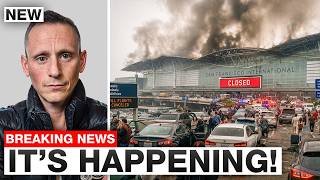
Austin Klar covers five San Francisco stories from March 2026: night markets reviving downtown neighborhoods, a controversial two-tower housing project at Marina Safeway, free music events driving cultural revival, major SFO construction that will cut arrival capacity sharply, and a housing market where prices jumped double digits and homes sell in days with multiple offers.
Chapters
San Francisco had a really busy March, and if you only paid attention to national headlines, you probably missed how much actually happened locally. In just last month, we saw major signs of life in the city's event scene, a massive controversial housing proposal in the Marina move closer to the fast track, a doubling down on music as a core comeback strategy for the city, a serious warning shot about airport delays at SFO, and a housing market that frankly has gone from competitive to just plain absurd. This is Austin Klar, your lawyer turned real estate agent in San Francisco, and in this video I'm breaking down the biggest headlines in San Francisco that you might have missed for March of 2026. Not just the headline, but what actually changed and why it matters for the future of our city. Let's get right to it and start with how Friday nights in San Francisco are about to get way more fun with the return of the Fort Mason Night Market. The annual night market is officially back with initial dates set for April 17th, May 22nd, and June 19th. The event is free. It's It's for all ages and it's designed to turn the former military base into an event destination for the community. The Fort Mason Center for Arts and Culture is partnering with some pretty heavy hitters to bring the ultimate combination of food, shopping, and music to the waterfront. More than 25 food and beverage vendors curated by Off the Grid will set up booths and food trucks in the parking lot outside the historic warehouses. There'll be live music curated by Stern Grove Festival. There'll be public art installations and workshops hosted by locals in the historic warehouse spaces all along the waterfront backdrop. Past events have brought in literally tens of thousands of people, so it is hugely beneficial to local businesses and to supporting the arts in our local community. And it's not just Fort Mason. This event series is part of a broader resurgence of night markets across all of San Francisco. Cole Valley Nights came back on March 19th, running from 4 to 9 PM on Cole Street between Carl and Parnassus, with its own food, shopping, music, all supporting local businesses. The Castro Night Market also returned for 2026 on March 20th, and more events are scheduled across the upcoming season. Local food vendors, merchants, and live entertainment on the third Friday of select months. Downtown First Thursdays keeps building momentum too, continuing its monthly street party model. The Sunset Night Market was back starting Lunar New Year, so you can see that these aren't just isolated events. These are part of a pattern. Neighborhoods across the city are leaning harder into the idea that you need to do more to activate your public spaces, your retail corridors, your commercial spaces, than just having storefronts there. You need reasons to bring people to these areas too, beyond just those stores. And Fort Mason stands out from the rest of them in my view because it's more of a regional draw. It's not just serving adjacent blocks of a small neighborhood. It has much broader regional pull. Presidio, Pacific Heights, Marina, Cow Hollow, North Beach, Telegraph Hill, Russian Hill. You know, Fort Mason itself isn't a neighborhood. It's pulling— this night market is pulling from a bunch of different neighborhoods. But all of these night markets are really important and they're helping our community feel alive again, our city to feel alive again. And it's all supporting local businesses, which is great. So I hope to see a lot more of these pop up in the coming months. My next story relates to what might be the most divisive real estate development in the city right now, and it's happening right across the street from Fort Mason. But before I get there, if you like videos about current events, new developments, San Francisco lifestyle, or all things San Francisco real estate, subscribe to my channel because I make videos about that stuff every single week. And if you're thinking about buying or selling a place in San Francisco and have questions about what all these changes we're seeing mean for our local real estate market, reach out to me. I was a lawyer at one of the biggest law firms in the world getting into real estate, and I've helped numerous people relocate from all over the country. Be happy to be a resource for you. I'll put my contact info in the description below. Reach out anytime. Now back to updates on the most controversial proposed development in San Francisco right now happening at the Marina Safeway. This project has become one of the clearest examples of how dramatic San Francisco housing politics has become. The site in question is the Safeway on Marina Boulevard, and the proposal from developer Align Real Estate would replace the existing grocery store and parking lot with a two-tower structure with the taller of the two spanning 25 stories, 297 feet tall, and overall it would contain about 790 rental units and a larger replacement grocery store at the base on top of underground parking. And in the most recent published details about the proposed project, 86 of those units would be restricted to affordable housing for lower-income households. This development was announced last year, but the biggest update we've received about the project to date came in March when the San Francisco Planning Department issued a Notice of Conditional Project Eligibility for approval under California's AB 2011. process. AB 2011 allows for streamlined development approvals for certain residential projects in, you know, commercial zones that otherwise meet certain affordable housing mandates. So as a result of that eligibility determination, the city now faces a strict timeline, about 6 months from when the project was submitted, to go through the design review process for the project. So based on the eligibility determination date, we have until around August to get a decision back from the city. SF Planning's own guidance says that San Francisco San Francisco has fallen short of meeting both lower income and market rate state housing goals. And because of that, qualifying projects can receive ministerial review rather than the traditional discretionary path with a ton of public hearings and CEQA review. The family zoning plan endorsed by Mayor Lurie and passed last year was designed to address that shortcoming. But part of the controversy over this development is that the application for it was submitted right before the passage of the family zoning plan. So a different set of rules applied when the project was initially applied for. Another big— part of the controversy is the sheer size of the project. The Marina Safeway proposal has become such a lightning rod for people in the community. On one side, you have people looking at this project and saying it's great. San Francisco has underbuilt housing for decades, especially in affluent, low-rise, amenity-rich neighborhoods like the Marina. The site already has a grocery store. It sits on a major corridor, so it's a logical place to add a ton of homes. On the other side of this, you have people looking at a proposed 25-story height for the project and thinking it is way out of character with the existing conditions in the neighborhood. It's going to block views for a ton of residents nearby. To put how tall this is into perspective, if built, it would be between like 6 and 8 times the existing allowed heights under existing zoning rules in the neighborhood. And what makes the story even more fascinating is that both sides understand that this, you know, debate and this project is much broader than the specific project at issue on Marina Boulevard. The Marina project is becoming a test case for a bunch of other potential redevelopments all across the city. And it's become becoming a test for how much control San Francisco retains over whether these projects move forward. In the old San Francisco, a project like this could spend years in the planning and environmental review processes. But in the new California housing environment, the city is increasingly being told you don't have forever anymore to make these things work. I'll definitely be keeping an eye on this project, and I'm sure many of you will as well. Would love to know your thoughts in the comments. My next story is a little more upbeat and exemplifies one of the core strategies the city's been implementing to revive our social scene. The Embarcadero is getting a free EDM concert on May 9th to celebrate the 30th anniversary of local record label Ohm Records. Another Planet Entertainment, which is known for its work restoring the historic Castro Theater and operating the Outside Lands Music Festival in Golden Gate Park, is collaborating with the San Francisco Recreation and Parks Department to put on the show. Free concerts are becoming mainstays in the city, and organizers have framed them as both a cultural celebration and a downtown activation strategy. strategy, and it's been working wonders across San Francisco. Mayor Lurie's office announced in January that SF Music Week is making a return and explicitly tied music and its role in the revitalization of our local economy and downtown specifically. City Hall has backed a free downtown concert series, new entertainment zones, and more than $24 million in arts grants over the past year, programs that have helped increase foot traffic and neighborhood activity. In February, Mayor Lurie announced announced the 6th season of Illuminate Live at the Golden Gate Bandshell. The 2026 season launched in March and is going to include over 100 different free performances in Golden Gate Park at the historic bandshell throughout the rest of the year. And on top of that, another free concert series is expanding downtown. The Yerba Buena Gardens Festival announced more than 100 free shows running from May through November of this year. So this is not niche programming. It is becoming a mainstay of How San Francisco is reactivating its public spaces and bringing people back to the city from a social perspective, not just return to office. And it's not just San Francisco putting a lot of time and energy and money into these concert series and free programming. Private parties are getting into it as well and making investments. Empire, the independent record label founded in San Francisco, won approval to transform the historic 1908 Bake Building at 1 Montgomery Street into its new global headquarters. The SF Chronicle reported that Empire has plans to move over 150 employees into the space and invest over $40 million on top of the purchase price to transform it. The approved concept includes office space, a public restaurant, an event space, and a commitment to host public concerts on the rooftop as part of the negotiated deal. Music is becoming much more than just a piece of culture. It's becoming a piece of infrastructure for the city's overall recovery. It's a system for bringing people into public spaces, into creating new communities, supporting local businesses, and reviving our downtown. And if you're traveling to or from San Francisco for any of these events or anything else going on in the city, you're probably going to care about my next story. At the end of March, the FAA announced the enforcement of a safety measure at San Francisco International Airport that, combined with all of the construction going on at the airport, is probably going to create significant delays. In an official March 31 statement, the FAA announced the end of side-by-side approaches on SFO's east-west parallel runways, even in clear weather when pilots have the other aircraft in sight. So now staggered approaches are going to be required. That sounds a little technical, but the long story short is that fewer planes are going to be able to land at SFO every single hour. The effective arrival cap drops from 54 flights an hour to about 36 flights an hour, and SFO is now estimating that about 25% of arriving flights could face delays of 30 minutes or more. And if that weren't making things difficult enough for travelers, there are so many other things happening at SFO right now that are going to compound the issue. SFO announced back in December that one of its runways is going to close for about 6 months, starting in March and going through October of 2026. So during that period, all arrivals that would have been scheduled for that runway are being shifted to other runways. That means more congestion at a time when the FAA is limiting the amount of landings that can happen. And that's before you even start about all the weather delays that we get because of the climate in San Francisco. And then you add the Terminal 3 messiness on top of it. SFO is in the middle of a multibillion-dollar upgrade to Terminal 3. The airport says it includes a seismic retrofit, an expanded checkpoint, new amenities, 200,000 square feet of added space, more retail, more dining, and major circulation upgrades. The western half is expected to open in 2027, and a 6-story companion building in 2028, and then the renovated eastern check-in lobby in 2029. And while it's a great project long-term, if it looks half as good as what Terminal 1 looks like, I'm really excited for it. But in the meantime, it's going to create a lot of delays and a lot of havoc. Part of Terminal 3's departure doors are closed. SFO SFO is a hub for United, and a bunch of United's counters are closed and being shifted over into Terminal 2. The Terminal 3 AirTrain station is closed until 2027. Certain baggage claim carousels are closed, and some passenger walk routes require detours outside or through, like, interim pathways during construction. Long story short, we're getting a whole new experience at SFO, and in particular in Terminal 3, but it might be pretty clunky in the interim. And the timing is pretty rough because this is all happening at a critical inflection point for the return of San Francisco, the the revival of San Francisco and the revival of tourism here. The more delays stack up, the more it affects business travel, leisure travel, conventions, you name it. I think SFO is one of the pieces of the city's infrastructure that a lot of people take for granted. But as soon as these delays start mounting, people are going to start to see how, you know, significant and central it is to the city's recovery. We'll see how it all shakes out. The FAA is apparently working on ways to alleviate the burdens associated with the new rules enforcement. But for now, the rules remain enforced and are definitely going to have an impact on travel. So make sure you plan for it. And that brings me to the last thing I want to talk about in this video, and it might be the most impactful on you personally of all the stories I've talked about so far. If you follow San Francisco real estate at all, you know that overbidding is part of its culture. Underpricing is common. Offer dates are usually set. Buyers compete. None of that is really new. But what felt different about San Francisco's housing market in March, what made it so abnormal, was the scale and frequency and how fast it seemed that prices accelerated. And the headlines have finally caught up. National news outlets are finally telling the story that realtors have been saying for a few months now, and the numbers back it up. Homes clearing list prices for $1 million, sometimes even $2 million or more. Even homes that sold just a couple years ago are selling for millions of dollars more now. A home in the inner Richmond sold for just under $5 million after being listed around $2 million lower., and it got 18 offers. Many of them were cash. A Diamond Heights Eichler sold for $3.8 million, about $1.3 million over its $2.5 million ask price, drawing 11 offers. Even condos are subject to the frenzy. I represented a buyer on a condo in Pacific Heights that received 9 offers and sold $1 million over ask, almost $1 million more than what the owners bought it for just a couple years prior. And he wasn't even the highest or second highest bidder on that property. A home in Presidio Heights sold in 2023 for under $5 million, just traded at the beginning of April with no updates made to it for $6.88 million. $2,000 per square foot used to be a marker for like prime iconic view homes in San Francisco, prime neighborhoods, prime blocks, Golden Gate Bridge views, bay views, city views. That number now is getting blown out of the water even on properties that really aren't that special and require a ton of work. And I'm going to give you some data to put what's happening into perspective from a numbers standpoint. The average price per foot of single-family homes is up over 14% so far this year. This year compared to last year. Median sale price is up over 22%. The average sale price is up over 24%, and they're selling on average in under 3 weeks, and in less than 2 weeks in prime areas like Pacific Heights and the Marina. We used to have at least 2 weekends of open houses before offer dates were getting set. Now we're really only having 1 weekend of open houses if properties even make it to their open house deadline, you know, if nobody submits a preemptive offer. So if you miss a scheduled open house or you don't schedule a private showing almost immediately, you put yourself at serious risk of— even being able to buy the property at all. All of this is happening because supply is staggeringly low in relation to the number of buyers actually looking for property in the city. And it's not just single-family homes. These issues are plaguing the condo market as well. The average price per foot of condos citywide is up 9% so far this year compared to the same period last year. Median sale prices are up over 17%. Average sale prices are up over 16%. Days on market are down almost 30%. The competition is so fierce that the prices we're seeing today are blowing past any reasonable expectations that we had just a few months ago.— we saw signs of future appreciation. I talked about it in multiple videos on this channel, but what I didn't see is how much appreciation would actually occur so quickly. It is really unhealthy. It's not sustainable. It's not good for anybody. Yes, sellers are getting great results, but what happens when they have to go buy their next home? They're entering into a very unhealthily competitive market. We need more inventory to alleviate this, and I really feel for anybody that is entering the market to buy something right now. It is good though if you're a seller who, you know, doesn't need to buy a replacement property or is just looking to downsize. Those sellers are in the absolute best position they probably would've been, you know, if they were looking to sell anytime over the last 5 or 6 years. So if you're a potential seller and you've been waiting on the sidelines to see conditions get a little bit better, you need to start paying attention to what's happening in the city because the time might be now. I don't know what the future holds. I don't know if things are going to continue this way. I don't know if they're going to intensify in a way that benefits you. All I know is that conditions right now are ripe for people who do not need to buy something else or who are looking to downsize. These are far and away the best conditions we've seen in the city in years. If you have questions about what the market looks like in a specific neighborhood or how it differs from another market you might be interested in, reach out to me. I've lived in San Francisco for over 13 years and I've helped numerous people relocate here from within San Francisco and from all over the country. I'd be happy to be a resource for you. I'll put my contact info in the description below. Reach out anytime. And if you like videos about San Francisco real estate, lifestyle, current events, new developments, or its incredible history, subscribe to my channel because I make videos about that stuff every single week. And if you want the biggest headlines about San Francisco delivered to your inbox every single week, I've got a weekly newsletter that accomplishes exactly that. The link to subscribe is in the description below. Would love to have you on there. I hope you enjoyed the video, and I'll see you in the next one.










