How Much Does it Actually Cost to Live in Pacific Heights San Francisco?
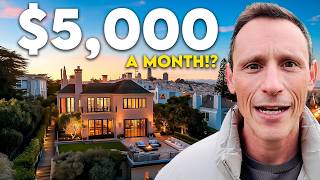
Austin Klar, a lawyer turned real estate agent, breaks down what it actually costs to buy in Pacific Heights. Entry-level condos and TICs start around $1.5 to $2 million, while single-family homes run much higher. Location within the neighborhood, square footage, and building type all shift prices significantly, plus you'll pay ongoing HOA fees and property taxes of about 1.178% annually.
Chapters
Pacific Heights is one of the most desirable neighborhoods in all of San Francisco, and it has incredible amenities like the Presidio, Alta Plaza Park, Lafayette Park, the shops and restaurants on Fillmore Street and Sacramento Street, charming walkable streets, stunning architecture, and the best views that you can get anywhere in San Francisco. And for these reasons, it is routinely ranked in the top 3 for the most expensive places to live in the city, and it's why so many billionaires, athletes, authors, entrepreneurs, Titans of tech and industry, CEOs, all call Pacific Heights home. But what does being one of the most expensive neighborhoods in San Francisco actually mean? Do you need millions and millions of dollars to live there? Can you live there without making many millions of dollars a year? Are there good entry points into the area without going crazy and spending a whole bunch of money? And if you happen to have all the money in the world, how far does it actually go? I'm Austin Klar, your lawyer turned real estate agent in San Francisco and Marin County. I've lived in Pacific Heights for over 4 years And in this video, I'm going to break down exactly how much different types of property cost in Pacific Heights. So whether you're looking for a 1-bedroom condo all the way to a 12,000-square-foot mansion or a multifamily investment property, you have all the information you need to get a sense of how much that's going to cost you. I'll even talk about some hidden costs that surprise a lot of homeowners, especially first-timers. So definitely stick around to the end. Before I dive into the specific costs, I'm going to give you an overview of the different property types in the area because How much property costs is going to be very dependent on what type of property you're looking for. I'm also going to talk about some of the factors that influence what makes certain properties cost more or less in the area. So starting with the property types, generally speaking, there are 5: condominiums, stock cooperatives, tenancies in common, or TICs, the traditional single-family homes, and then your multifamily properties. Single-family homes are what you traditionally think of when you think of a home. It's a standalone house. You own the land, you own the house itself.. There's usually not an HOA involved. It is just you. Multifamily properties, you're probably familiar with those too. Things like duplexes, triplexes, all the way to larger, you know, 50, 70, 100-unit buildings where maybe you own the whole building and rent it all out, or maybe you live in one unit and rent out all the rest. And then there are condos, co-ops, and TICs, and I group those three together because the lifestyle at those three is relatively the same. It involves owning a single unit in an otherwise larger building. There are legal differences between those three property types. With condos, you own your unit plus a share of the common space. With TICs, you own a percentage of the overall building, and that ownership gives you the right to use exclusively a particular unit and a portion of the common space. And then with co-ops, you own a share or a portion of a company that owns the entire building, and that ownership share gives you the rights to use your unit and share the common space. If you want to learn more about these legal differences and how they impact your ownership, your ability to get a loan, future property appreciation, and all these other different factors that you need to be thinking about if you're actually going to be buying one of these, definitely reach out to me. I'll leave my contact information in the description below. And if you want more videos about living in San Francisco, the housing market in San Francisco, what day-to-day life is like in San Francisco, or upcoming events, current events, future developments in San Francisco, definitely subscribe to my channel because I make videos about that stuff every single week. Now back to condos, co-ops, and TICs. Setting aside the legal differences, again, I'm grouping them together because for all intents and purposes, the actual day-to-day life owning one unit, living in a larger multi-unit building is going to be the same regardless of which one you own. It could be a single unit in a Victorian that was converted into a duplex, or it could be a single unit in a 50-unit building. Mm-hmm. So what does it cost to buy these different property types in Pacific Heights specifically? Obviously, there's no one-size-fits-all answer, so I'm going to give you a bunch of ranges here and give you examples at each end of the range. It's going to depend on things like the finish, the layout, how tall the ceilings are, what types of views they have. Did they only have views of the city to the south, or do they have views of the Presidio or views of the Golden Gate Bridge? Are the room sizes large enough to fit king beds or only queen beds, or is one of the rooms that counts as a bedroom only big enough for a little office? Or a twin bed? Is it on a really busy street or a quiet street, a slow street? Is it on a flat block or a hilly block? Is it on the west side? Is it on the east side? Is it on the north side? Is it on the south side? All of these different factors are going to influence how much a property individually costs. So all these figures I'm about to give you, definitely not applicable globally. They're just helpful to give you a rough sense of what things are going to cost in different property categories. Okay. At different ends of the spectrum. So let's start with single-family homes, 'cause that's among the most popular and most common that you're going to get in Pacific Heights. Over the last year, the median price single-family home is about $5.4 million, or about $1,450 a foot. So that looks like about, you know, 4-bed, 4-bath, and about 4,000 square feet. But remember, that's just a median, and that means 50% of homes are priced below that, and 50% of homes are priced above that. The least expensive single-family house in San Francisco that sold in the last year was a 3-bed, 3-bath, for about $2.7 million, and the most expensive was actually a record setter. It was a 17,000-square-foot house that just sold to billionaire Laurene Powell Jobs for $71 million. So the range is obviously very wide, absurdly wide, and where you fall within that range for a particular property is going to depend on all those different things I just talked about. The one that sold for $70 million is on Billionaires Row, one of the best parts of Billionaires Row with the most insane views and finishes. You you probably will ever see in a house. The one that sold for about $2.7 million was on a busier street, didn't have views, and it was definitely more dated and needs some layout changes. From a location standpoint, general rules of thumb to think about: the farther west you are and the farther north you are, the more expensive the home is going to be. The farther east you are and the farther south you are, the less expensive the home is going to be. So properties on the northwestern edge, like homes bordering the Presidio Wall, or homes along Billionaires Row, like the one I just mentioned, which is a 3-block stretch between Divisadero Street and Lyon Street on Broadway. Those are going to be among the most expensive homes in Pacific Heights and in San Francisco more broadly. And then as you go further south into the east, homes along Franklin and Goth and Van Ness or California Street and Sacramento Street, all of which tend to be busier than the other streets I just talked about, those are going to be less expensive. Homes bordering Alta Plaza Park, especially along Clay Street, are going to be more expensive than homes in the surrounding area, not only because you get views of the park, but that stretch of Clay Street is flat. It's not super heavily trafficked. It's one of San Francisco's slow streets, so it is a very serene, peaceful place. A renovated house on Clay Street facing Alta Plaza Park probably going to cost you between $1,900 and about $2,200 a foot. So if you're looking at a 3,000-square-foot house on that block or in that immediate vicinity looking at the park,, you're looking at at least $6 million. But again, if you live on Billionaires' Row, fixer properties there sell for north of $2,000 a foot, and that's because the super high end of properties there can sell for $3,000 or $4,000 a foot. I just closed on a property one block east of Billionaires' Row between Divisadero and Normandie on Broadway. It was a little over 3,000 square feet and it sold for $6.375 million, a little bit over $2,000 a foot, even though it needed a little bit of work. It had these amazing views and a sick rooftop with views all the way across the bay and the city. So it commanded a huge premium for the specific location and the views, even though it needed a bunch of work. And it received 4 offers. 3 of those 4 were over the asking price. It was very competitive. It is just a very desirable block to live, and that's why it got so much action and went for such a high price. If you want to live on a street that runs north to south that doesn't really have any views, you should expect to pay about $1,200-$1,300 a foot for a fixer. And $1,600, $1,700 a foot for something that is fully renovated. So in that instance, a 3,000 square foot that, you know, is relatively move-in ready might cost you $4.5, $5 million. You're going to be really hard pressed to find single family homes for less than the mid twos. Like I said, the least expensive one was about $2.7. Table stakes for a single family home in Pacific Heights, mid twos. Anything below that is going to be very, very small or it's going to be a complete teardown. You're basically buying land value. If you want to live in the area and don't have, you know, high twos to spend, then most likely you're going to be looking at a condo or a TIC. So we could talk about those next. And because those types of properties range all the way from, you know, 1-bed, 1-baths, or maybe even studios, all the way up to like 5,000-square-foot, you know, duplex penthouses with crazy views in beautiful amenity buildings, the spreads there are really wide as well. Over the past year, the median-priced condo in Pacific Heights was about $1.65 million, about $1,130 a foot. The least expensive was a $500,000 studio, and the most expensive was a $17.5 million duplex penthouse at the Pacific, which is one of my favorite buildings in all of San Francisco, and definitely my favorite building in Pacific Heights. The building was designed by Handel Architects and has absolutely beautiful finishes, marble everywhere, Gaggenau appliances, 12-foot ceilings. The amenities there are awesome. There's a gym, there's attended lobby, so you have security at all times., there's a gorgeous rooftop and like a library space. It even has a guest suite that you can rent out so that when guests come visit you, they don't actually have to stay in your unit. That's amazing. Tenancies in common, very similar to condos, like I mentioned, from a lifestyle standpoint, but because of those legal and financial differences that I could talk more about if you reach out to me, they tend to be on average a little bit less expensive than condos, all other things equal, about 10 to 15% less expensive. The median priced TIC in Pacific Heights over the past year, about $1.2 million. The least expensive was a $900,000 one-bedroom, and the most expensive was a $3.1 million three-bedroom. General rule of thumb for two bedrooms, between $800K and $3 million, depending on, you know, ultimate size and all those other factors that I talked about. And then at the high end, you have condos selling for well north of $2,000 a foot. The one at the Pacific that I mentioned sold over $3,000 a foot. So depending on the view profile, the finishes, whether it's an amenity building or not, that can really push the upper limit very, very high. And some other things with condos that impact value that, you know, don't really apply for single-family homes, you know, is the building professionally managed or is it informally managed by the owners? You see that kind of informal management a lot more in like these 2-unit, like Victorian houses that have been converted into duplexes. Whereas if you're in a much larger building, it's going to be more likely professionally managed. Obviously, if a building isn't well run, that could mean that there's deferred maintenance. There could be issues with the building. It makes buyers uneasy about a building. So units in those buildings sometimes can be worth less. Another thing that impacts potential value is whether there are reserves in the HOA bank account. The reserve account is sort of like a savings account for unexpected things that come up. If there isn't enough money in the reserve account to cover those costs, then special assessments are going to be levied against the owners of the condos or the TICs, and they're going to have to come out of pocket to cover whatever the savings account doesn't cover. So when there aren't reserves, buyers tend to get a little queasy about it because it means they might have to come out of pocket unexpectedly for big expenses. Another factor is whether most of the units in the building are rented or if they're owner-occupied. You know, when things are rented, the tenants tend to be more transient. They change a lot. There is a little bit more uncertainty about who the next one is going to be. You might live next to a lovely neighbor today, but in a month they move out and somebody terrible moves in next to you. So when things are more owner-occupied than renter-occupied, people have a little bit more ease, and those tend to be worth a little bit more on average. Are there amenities in the building? Is there a doorman, an attended lobby? Is there some sort of security so that packages aren't just being left outside for somebody to potentially take? Amenity buildings tend to be more expensive on average than buildings without amenities because you might have, you might have that security, you might have access to a gym or a roof deck or some other common area amenity like a library. Those new construction condos over at the Pacific, which is one of the nicest buildings in the city, even the 1-bedrooms start at about $2,000 a foot. Very hard to get something less than $2,000 a foot in this market in that building. One bedrooms in a much smaller building that doesn't have amenities will run you about half that, closer to $1,000 a foot. The first listing I ever had in Pacific Heights was a one bed, one bath, went for about $1,100 a foot. There was no outdoor space, but it did have parking. The kitchen was updated, but the rest of the house was more or less in its original condition, and it went for just shy of $900K. So with condos and with CICs, and just like with co-ops, which I'll talk about in a second, there is a really wide range and there are a lot of different factors that are going to influence what it's ultimately going to cost, but hopefully that gives you some guideposts. Condos are the other property type that I mentioned, similar from a lifestyle standpoint to a TIC or a condo. You're living in one unit in an otherwise a multi-unit building. Generally speaking, similar rules apply to co-ops as do CICs and condos, except with co-ops on the very, very high end, it is way more expensive than even the highest-end condos. Generally, this is because co-op buildings are these very, very beautiful, like, pre-war buildings that occupy the best blocks in Pacific Heights, and they are often built up higher than a lot of these condos and have incredible views. They're also very well-managed, very closely held, pristine buildings. A 3-bedroom, 5,700-square-foot co-op is currently on the market for $29 million in Pac Heights,. There's another one right next door, another 3-bedroom, 5,000 square feet that's on the market for about $18 million. So they get incredibly expensive at the high end. But on the other end, you know, you have like a more dated, smaller co-op. There was a 3-bedroom that just sold recently for about $1,000 a foot. And then you have the investment properties, the duplexes, triplexes, you know, sometimes larger buildings. That is very, very rare in Pac Heights. It's generally Actually really rare that even duplexes or triplexes come to market. Only 9 of those have been on the market and sold in the past year. But to give you a ballpark, a vacant duplex, which is one of the more desirable types of duplexes because you get to set market rents when new tenants move in, will run you mid-2s. If it's tenant occupied with below market rent and it's a protected tenant, like in a rent control building and you can't kick them out, those are going to be less desirable and less valuable as a result, sometimes in the mid to high 1s. Triplexes, minimum $2s, usually high $2s, low $3s. So for all of these, there's obviously a huge difference. But bottom line is you clearly do not need millions and millions of dollars to get into Pacific Heights. You can buy a small one-bedroom just to get into the area. You can buy condos, you know, in the high $1s, low $2s. You do not need to be a multi-multi-millionaire or a billionaire to own something nice in Pacific Heights. It's obviously not going to be the biggest and nicest home on the block, but you will be living in one of the best areas, not just in San Francisco, but in the entire state. You don't need to spend anywhere close to the median price or these big headline prices that you hear about in the news, like Laurene Powell Jobs' $71 million mansion. And of course, the actual cost of the home is not the end of it. You have things like HOA fees, not something you necessarily need to think about with a single-family home, but with TICs, condos, co-ops, you definitely need to be thinking about those. You know, general rules of thumb in smaller buildings that don't have amenities, you know, $200 to $500 a month for TICs and for condos. In slightly larger buildings, expect, you know, between like $500 and $800 a month if they don't have amenities. If they do have amenities, usually table stakes are $1,000 a month, but they definitely can get more expensive than that. Like ones at the Pacific, that building that I mentioned, run sometimes well north of $2,000 a month depending on the size of the unit. For co-ops, HOAs are actually going to be substantially higher than for comparable condos and TICs, and that's partly because they are so well run. They take so much more money to run them in that fashion. I've seen them sometimes $5,000 a month and even higher than that. That $29 million co-op that's on the market right now, just shy of $12,000 a month just for HOA fees. For any property you buy, you also need to be thinking about maintenance. If you buy a single-family home with a large yard, better be thinking about landscaping. If you buy a condo that just has a balcony, probably don't need to be spending money on landscaping, but easily landscaping will cost several hundred dollars per visit. And then you have your property taxes. In San Francisco, it's about 1.178% of the assessed value, which is based on the purchase price. So if you buy a $2 million condo, expect to pay a little over $23,000 a year or $2,000 a month in property taxes. So definitely make sure you're budgeting for all of those things, not just the actual cost of a home when you're trying to figure out what you can afford, where you want to live. Knowing all that, do you think Pacific Heights might be for you? Let me know in the comments if you're thinking about moving to the area and what you love most about it. And if you are thinking about moving here, I'd love to be a resource for you. I've been here for over 4 years and have been in San Francisco for over 10 years. It is a very difficult market to navigate alone, and at the price points that we're talking about, even small mistakes mean a lot of money. It is just not worth it going about it by yourself. So if you ever want guidance, definitely reach out. I'll put my contact information in the description below., and before you go, I've got a whole separate video that I made giving you an overview tour, a walking tour of the neighborhood, showing you some of my favorite spots and favorite locations. Go check that out. I'll link it in the description below. I've also got a pros and cons video, like an honest review after living in the area for so many years. I'll put that link in the description below as well. Go check 'em out. Thanks for watching, and I'll see you in the next video.










