How to Interpret Real Estate Disclosures -- Easier Than You Think!
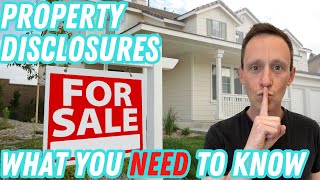
In this instructional video, lawyer‑turned‑real‑estate agent Austin Klar explains why property disclosures are critical for both buyers and sellers, especially in San Francisco where disclosures are typically completed before a home hits the market. He outlines the most common disclosure documents—natural hazard disclosures, home inspection reports, preliminary title reports, the Transfer Disclosure Statement (TDS) and Seller Property Questionnaire (SPQ), the agent’s visual inspection disclosure (AVID), the 3R (Residential Building Records) report, and HOA documents (financials, CC&Rs, meeting minutes). For each, Klar describes what information the document contains, why it matters, and how it can be used to price offers, anticipate repair costs, assess renovation risk, and evaluate ownership obligations. He emphasizes that understanding these disclosures up‑front helps sellers set realistic listing prices and avoid surprise negotiations, while buyers can accurately budget for renovations or avoid hidden liabilities. The video concludes with a call to action for viewers to contact Klar for personalized assistance.
Chapters
If you wanna avoid making one of the biggest financial mistakes of your life when buying or selling a home, then these are the top things that you need to be on the lookout for when you're reviewing property disclosures that will give you extra insight into a home. So if you're a buyer, you'll have a perfect picture of how much you should offer. And if you're a seller, you'll have a better understanding of what your home is actually worth. What's up everyone? This is Austin Klar, your lawyer turned real estate agent and real estate developer in San Francisco. I've lived in multiple neighborhoods all across the city, giving me in-depth firsthand knowledge of what it's like to both live and work in San Francisco. If you're thinking about buying or selling a home or have questions about the market, definitely reach out to me. My contact information is in the description below. I will personally answer every call, every email, every text, and I would be more than happy to help you. And if you like videos just like this, please consider subscribing to my channel, and don't forget to click the bell so you're alerted every single time I post a video. All right, this video is all about what to look for when you're reviewing property disclosures. These are probably one of the most important, if not the most important parts of a real estate transaction, and they're one of the most overlooked by both buyers, sellers, and believe it or not, their agents. Disclosure packages include things that are as simple as, you know, the floor plan of a home or the square footage of a home, and as complex as inspection reports and environmental hazards reports. Reading through these disclosures, both as a buyer and as a seller, will disclose things that aren't going to be obvious from a, you know, 15-minute tour that you see with 80 other people in the house during an open house. In this video, I'm going to break down the most common disclosures you're going to see in a real estate transaction and focus in particular on the ones that are going to have the most specific and pertinent information to a particular house. All right, so before diving into the specific documents, I wanna explain a little quirk about San Francisco and other parts of the Bay Area that's a little bit different than other parts of California and other parts of the country. Typically in other parts of the state, most of the disclosures are done after you get into escrow. For example, you get into contract on a home and then you order a property inspection and then you read the inspection report and find out, oh, there are all these issues with the home that I didn't know about or I couldn't tell. You order a title report to see if there are any issues with the title of the house. Like, are there any mechanics liens? Are open tax issues with the house. You order pest inspections, environmental hazard reports. All that is done typically after you get into escrow, after you've had an offer accepted for a house. And then maybe depending on what's in there, you try and negotiate repairs, sometimes renegotiate the price. It opens up a whole can of worms when things come out in the disclosures that, you know, you didn't know about before. That's not how it works in San Francisco and in other parts of the Bay Area. Typical practice, it's not gonna be true every single time, but typical practice is for sellers and their agents to have all of those disclosures done upfront before a house comes to market. So all the inspections are going to be ordered and done and disclosed right when the house gets listed. Title report, environmental hazards report, 3R report, uh, an agent's AVID. I'm going to go over all those in this video, but all those things are typically disclosed upfront right when a property hits the MLS. Why is this a good thing? If you're a seller and you're trying to figure out what's my home worth, what price should we list at? You're gonna wanna know anything and everything about the home, and it's not just how the home looks, but are there any issues with the home that are gonna cost money to fix? The last thing you wanna do as a seller is get into contract on a home and then discover through a home inspection that there's some crazy issue that you had no idea about that's gonna basically blow up the deal or reopen negotiations for the contract. So you might get in at price X, but end up having to get price minus $100,000 or $200,000. Nobody wants that. And if you can't agree on a price, well, then you fall out of contract, you go back on the market, and then people think that you're weak or willing to accept lower offers. So it's not a good look when that happens. So it's better if you're a seller to know everything that's potentially wrong with your property upfront, and then you have options. You can either address those issues so that your house is, you know, as clean and ready to go as possible when you come to market, or you can take the cost of fixing those issues or addressing those issues into account when you're figuring out what to list your price at and what you think in your head your home is worth. As a buyer, it's helpful to know more information upfront so you can take all of that into account when figuring out how much to make an offer for on a home. This is especially true for people who are potentially going to be doing renovations to a property. If you think you're, you know, based on the way a house looks, you're only going to have to spend a few hundred grand renovating the entire home, but then you figure out there's some crazy structural issue and you're going to have to redo the foundation as a result of it, or there are water leaks everywhere that you weren't aware of when you just saw the house for 10 minutes at an open house, that that's going to add time, it's going to add a lot of money to your project. Well, you know, you didn't budget for that, you didn't account for that in your purchase price, and you're going to be in over your head when you get into contract on that house. So it's good as a buyer, whether you're renovating properties to flip them, to live in them, or if you're just buying a house that's already ready to go, ready to move in, you need to know what you're getting into so you can accurately account for that when you're making your offer. Okay, so with all that said, now I want to dive into the documents. The first set of documents that you're going to see in disclosures are what are called statutory disclosures. Disclosures. And these are things that both the state and local area that you're in— there are lots that are specific to San Francisco, and they're going to be ones that are specific to other jurisdictions as well— things that are actually required to be disclosed that are more or less boilerplate and apply to any and every home. For example, if your home was built, you know, in the 1960s, you're going to have to disclose that there might be lead-based paint used in the home. Stuff like that is not going to be house-specific. Those disclosures are boilerplate, and they're going to be the same regardless of what home you're buying. So for purposes of this video, I don't want to focus on those things, but those are things that you'll certainly want to read because they give you a lot of really great information about a home, just not going to be pertinent to this specific home that you have your eye on. So what disclosures do you want to look at to find information out about this specific home? It's going to be your natural hazard disclosure, inspection reports, title reports, seller disclosures, the transaction disclosure statement and seller property questionnaire, the 3R report, an agent's AVID, and if you're buying a condo, it's going to be the HOA documents for the building. First up are natural hazard disclosures. So real estate sellers and brokers are legally required to disclose whether a particular home is in a state or locally mapped hazard zone. There's a standard reporting format for this information. There are a few companies that pretty much everybody uses across the Bay Area. And it's as simple as a box checked yes or no, whether a home is in a particular area. And then if one of the boxes is checked yes, you're able to go down further and read what that means. What are the risks associated with my home being in an earthquake hazard zone or being in a fire zone or a flood zone?, that you should be aware of. The natural hazard disclosure is especially important for people who are looking to renovate, whether it's an end user who just wants to renovate their home and move into it, or for a developer or flipper who's going to renovate the house and then sell it, because it will reveal to you what the environmental conditions are, which can impact how much it's going to cost to renovate your home. The next thing you're not going to want to miss when you're reading property disclosures is a home inspection. This is probably one of the most, if not the most important one. Home inspections are done by certified, licensed home inspectors. The home inspection is meant to tell you what the current condition of a property is. It's not meant to tell you whether or not the condition of the property is in compliance with different codes that are applicable. So what does it involve? The inspector basically looks at every part of the house and determines whether or not they're in serviceable condition or whether repairs need to be made to make the condition safe. For example, they'll inspect the roof and tell you if any shingles need to replace or any tiles need to be replaced, or if there are any leaks coming in from the roof, or evidence that there may have been water damage at some point from a roof, or they'll turn on all of your faucets, make sure they work properly. They'll flush all the toilets. Uh, they'll look at the foundation. They'll look in the basement. They'll look in the attic. They'll look at everything that's visually accessible or reasonably accessible to get an assessment of whether that piece of property or that portion of the property is in serviceable condition or is likely to need repairs. The next thing you're not going to want to skip is the preliminary title report. The title report is a document that outlines the legal status of the property and related ownership information based on a search of public records., and it outlines the conditions under which a title insurance policy will issue from the company that is issuing the title report. So what's the purpose of the report? Basically gives you an opportunity to review whether there are any issues that could impact your future ownership of the property. For example, maybe the seller had some renovations done to the property 2 years ago and didn't pay their contractor, and the contractor put a mechanics lien on the property. That— something like that, if it was recorded properly, will show up in the title report, so you'll know when you go to close that transaction that that mechanics lien needs to be addressed, otherwise title realistically wouldn't transfer. But if it did, it would transfer subject to that lien. So now you'd buy a property that has a lien on it already day one. Title reports also tell you whether there are any special assessments on property, you know, beyond just property taxes. Is it in a special district that has special taxes for schools or for libraries or, you know, some repair program that's going on to the streets in the area? If a home, whether a condo or a single-family home, is part of an HOA, The title report's going to tell you whether there are CC&Rs, covenants, conditions, and restrictions, or other declarations that are going to state the rules that apply to your ownership of the home. Are there any easements or rights of way from a neighbor or from, for a public utility over your property? These are all things that you need to know so that when you buy the property, you know what you're getting into. It's not perfect, but it does give you information you otherwise would not have had. And because San Francisco, typically you have these title reports done up front, you can see all that before you make an offer on the property. Next on the list are the transfer disclosure statement, the TDS, and the seller Property Questionnaire, the SPQ. These are documents that cannot be filled out by an agent. They have to be filled out by the actual owner of the home, and it gives the owner a chance to disclose issues with the home that, you know, might not otherwise come up in these other reports. California law in certain circumstances requires sellers to fill out these forms and disclose anything that's going to have a material impact on the value of a home. So in a TDS, for example, Section A is going to ask the seller to outline what items are part of the property. Is there a range oven, a microwave, a dishwasher. That's good to know because when you go to fill out your offer, you're not only negotiating things like price, but you're negotiating, you know, what is and isn't included in a particular transaction. Part B asks if the seller's aware of any defects or malfunctions. Part C asks if there are any issues that might affect the home's value, like conditions restricting their use of the property, like, you know, encroachment from a neighbor. And the next part refers to what's called the agent's inspection disclosure, the agent's visual inspection disclosure, or AVID. An agent is basically required to do a visual inspection of the home and list out in writing any issues that they can see with the naked eye. Stains on a carpet, visible cracks in a home's foundation, things like that. A similar document to the TDS is the SPQ, the Seller Property Questionnaire. It's basically designed to trigger a seller's memory into any issues with the home that need to be disclosed. Have there been any insurance claims? Are there any litigation claims outstanding? Was there litigation over the property and what was the issue? Is the seller aware that when it rains really heavily, sometimes there's a leak at that back window? Maybe the home inspector came and it was a really bright sunny day, so we didn't see that rainy leak issue. The seller knows from having lived there for 20 years that every time it rains, that one window near the kitchen always leaks. They have to disclose things like that. The next one you're definitely going to want to read, and it's specific to San Francisco, is called the 3R Report. The 3Rs are Reports of Residential Building Records. It's a mandatory disclosure in San Francisco, and it's going to be required as part of any real estate transaction. It's very easy to get the report. You get it from the Department of Building Inspection, and it basically contains a permit history related to that particular property going back decades.. So if, you know, in the 1950s they filed a permit to replace the plumbing in the house, or they put a new roof on in the 1970s, all that is going to be listed in the 3R Report. And you can see the status of the permit— was it issued, did it expire, was the work completed? It also tells you how the city zones your property and what the authorized uses are for the property. Maybe you want to buy a big house and add a second unit, but maybe that zoning doesn't allow for multi-family housing. That type of information is going to be in the 3R. It's important to keep in mind that information in the report just reflects the current rules, the current zoning applicable to your property. I have seen situations where the city will change that designation, and there are factors that go into that, and that can be a subject of a different video. Uh, but the 3R report is the best record that you're gonna get reflecting what the city currently thinks about a particular property. The last set of documents you're not gonna wanna miss are specific to properties that are governed by an HOA. Most of the time that's going to be condos, but there are some planned developments in San Francisco where there are single-family homes that are actually managed by an HOA. And in every one of those transactions, you're going to get financial statements of the HOA. Basically your chance to see, is this HOA adequately capitalized? How much is it charging for assessments? What is the money going to? You're basically going to be able to see, okay, if I buy this house, is the HOA going to be able to cover any of the major expenses I think might come up in the near term. If not, then you probably should expect a special assessment coming your way, which is an extra charge by the HOA that goes beyond, you know, your monthly dues. So in a condo building, for example, let's say the roof malfunctions and it needs to be entirely replaced. Well, if the HOA is not adequately capitalized, they're going to basically split that cost among all the units, and you're going to get hit with an extra bill. So it's really important to see how capitalized is the HOA before diving into a condo. Or anything that's managed by an HOA, so you know what the likelihood is that you're gonna have to come out of pocket more than the monthly HOA fee. You're also going to get a copy of the CC&Rs, which are the covenants, conditions, and restrictions— basically the rules that the HOA has in place that apply to your home. So for example, they're going to tell you whether or not you can do short-term rentals of a property, or only rentals more than 30 days, or more than 6 months. They're going to tell you what types of renovations are permitted. Is there a color scheme that you have to follow? They're also going to tell you what the steps are for you to take if you do want to do any renovation to your property. Is there an architectural review board? Do you have to get something special from the planning department? All that stuff is going to be laid out in your CC&Rs. You're also going to be able to review meeting minutes from the board of the HOA so you can see what issues they talked about over the last year, what issues were addressed, and you can ask questions based on your review of that information. All right, those are the documents you definitely need to read. You do not want to miss them if you are buying or selling a home in San Francisco or anywhere for that matter. And if you are thinking about buying or selling a home, definitely reach out to me. My contact information is in the description below. I will personally answer every call, every email, every text, and I would be more than happy to help you. And if you like videos just like this, please consider subscribing to my channel. I post videos like this every single week, so don't forget to click the bell so you're alerted every single time I post a video.










