INSIDE San Francisco's #1 Park BIGGER Than Central Park (Golden Gate Park)
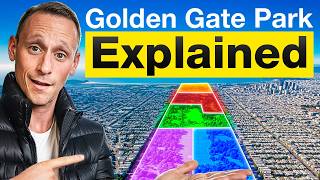
Austin Klar, a real estate agent, tours Golden Gate Park's 1,017 acres, bigger than Central Park. Built from sand dunes by landscape architect William Hammond Hall and horticulturist John McLaren, it now holds the de Young museum, California Academy of Sciences, Japanese Tea Garden, bison herd, and hosts the annual Outside Lands music festival. Recent changes include a car-free JFK Promenade and Great Highway park conversion.
Chapters
Golden Gate Park is one of the most extraordinary urban parks in the entire world, stretching 3 miles from the Haight-Ashbury neighborhood all the way to the Pacific Ocean. This 1,000+ acre park is bigger than New York's Central Park, gets more visitors every single year than Disney World, and has so much history, culture, and hidden gems that even locals are still discovering stuff there every single day. This is Austin Klar, your lawyer turned real estate agent in San Francisco and Marin County. And in this video, I'm breaking down one of the most extraordinary amenities that San Francisco has to offer, Golden Gate Park. From its incredible history back when it was just sand dunes to its transformation into the park we know today with all of its museums, gardens, lakes, and so much more. Let's get right to it with where it's located and its incredible history that a lot of people don't know about. Golden Gate Park sits on the western side of San Francisco, running more than 3 miles long and about a half a mile wide. In total, it covers about 1,017 acres, about 20% larger area than Central Park in New York. It starts at Stanyan Street on the east, right by the Haight-Ashbury neighborhood, and stretches all the way to Ocean Beach on the west. On the north side, you've got Richmond neighborhood, on the south side you've got the Sunset neighborhood. Living anywhere near the park essentially means you have a world-class park basically as your backyard, an extension of your living space with so much to do. Because of its location on the west side of San Francisco, the weather in Golden Gate Park does trend a little bit colder, a little bit more foggy, but there are plenty of days where the weather is stunning, enabling residents and visitors alike to enjoy all that it has to offer. I'm going to walk you through all the incredible amenities of Golden Gate Park in a minute, but first I want to tell you a little bit about the park's incredible history, its Fascinating. Golden Gate Park was officially established in 1870 at a time when San Francisco was still a young, rapidly growing city in the short aftermath of the California Gold Rush. The land that is now occupied by Golden Gate Park used to be known as Outside Lands, basically uninhabitable sand dunes that covered this stretch of San Francisco. You guessed it, that's how the music festival that happens in Golden Gate Park every single year got its name, Outside Lands. Landscape architect William Hammond Hall came up with the original plan for the park, but it was John McLaren, a Scottish horticulturalist, who really brought it to life. McLaren devoted over 50 years of his life to this park, planting more than 2 million trees, designing the winding paths and meadows, and mixing wild landscapes with the formal gardens here. McLaren was known for hating statues and ornamentation. He really wanted just pure nature, but over time, art and culture became just as important part of the park as its greenery. In 1894, Golden Gate Park hosted the California Midwinter Exhibition that brought millions of visitors to the park from all over the world. And that exhibition left behind some of the landmarks that we're going to talk about today, like the famous Japanese Tea Garden and the Music Concourse. So basically, what started as sand dunes over 150 years ago is now a lush green oasis with a ton of cultural and historical landmarks that we know and love today in San Francisco. Before I get to what's in Golden Gate Park today, if you do me a huge favor, if you like videos about San Francisco current events, new developments, San Francisco lifestyle, or all things San Francisco real estate, subscribe to my channel because I make videos about that stuff every single week. And if you're thinking about buying a place in the city and having trouble picking the right neighborhood for you,— or want to better understand what's happening in our local market, given all the changes we're seeing throughout the city, reach out to me. I was a lawyer at one of the biggest law firms in the world before getting into real estate, and I've helped numerous clients relocate here from all over the country. I'd be happy to be a resource for you. I'll put my contact info in the description below. Reach out anytime. Now let's get right to all the incredible things that Golden Gate Park has to offer, and we're going to start right in the heart of the park at the Music Concourse. The Music Concourse is a sunken oval plaza built for the 1894 Midwinter International Exhibition, surrounded by trees, fountains, walkways, and some incredible museums that I'm going to talk about in a second. And at the heart of the Music Concourse is the Spreckels Temple of Music, also called the Bandshell. This Beaux-Arts-style structure was a gift from Klaus Spreckels, the sugar magnate, and it's been hosting concerts for more than a century. Everything from the San Francisco Opera's free performances to jazz festivals and other cultural festivals throughout the year. And around the plaza, you will find two of San Francisco's most important cultural institutions, which I'm going to go through right now. On one side is the de Young Museum. The original building, known as the Fine Arts building was originally built as part of the Midwinter Exhibition, named after M.H. de Young, a San Francisco newspaper magnate. By 1916, his collection had grown to over a million pieces, so he needed a bigger building, like a real building, to house all of that art. Construction of that larger museum space began in 1917 and stood for almost a century until about 2001, when it was completely rebuilt by legendary architects Herzog de Meuron. The copper-clad building is now a world-famous landmark, and if you go all the way up to the observation tower, you get incredible views of all of the in San Francisco. And inside, of course, you will find an incredible collection of art and textiles. Across the street from the de Young Museum, on the other side of the Music Concourse, you have the California Academy of Sciences. This place is unlike any other. It's part natural history museum, part planetarium, part aquarium. It's a mix of all these incredible science-based activities. You can walk through a 4-story rainforest dome. You can watch penguins being fed. You can see a 30-year-old albino crocodile named Claude. And then head upstairs, you can see a living green roof planted with 1.7 million native plants designed by world-famous architect Renzo Piano. It's one of the most sustainable buildings in the entire world, and it's gorgeous. It's great for kids and even for adults. They host adults-only nights with drinks at the museum certain days throughout the year. And just steps away from both of these landmarks and the Music Concourse is my favorite place in all of Golden Gate Park, the Japanese Tea Gardens. It was originally built as part of the 1894 Midwinter Exposition by an Australian immigrant, but it was later expanded and cared for by a Japanese landscape designer named Makoto Hagiwara, who actually lived there with his family until he died. His daughter took over for him and lived there with her children until they were unfortunately evicted and forced into internment camps in 1942. The 5-acre garden in Golden Gate Park is now the longest-standing public Japanese garden in the entire country, and walking through it really feels like you are stepping into a completely different world. You'll see an iconic drum bridge, Zen garden, pagodas, koi ponds, carefully manicured bonsai trees, and in the spring you even get cherry blossoms, which are incredible. The garden brings in over $1 million annually for the city, and it's by far one of the most beautiful cultural icons we have. I absolutely love this place, and if you haven't been before, you 100% need to check it out. And of course, it's not just museums and cultural staples. It is a park after all, and what would a park be without nature? This park has nature in spades, from lakes to flower conservatories, botanical gardens, open green spaces, windmills, promenades filled with bison. You name it, it has it. Let's get started with some of my favorite lakes in the park. First up, you have Blue Heron Lake, which used to be known as Stow Lake, the largest and most famous of the lakes in the park. It surrounds Strawberry Hill, which is a wooden island right in the middle. You can rent paddle boats or rowboats or just walk around the path of the lake. At the far end, Huntington Falls cascades down from the top of Strawberry Hill. Really peaceful spot for families, birdwatchers, or people who just want to escape the city for an afternoon. You also have Spreckels Lake, which is actually famous for model yacht sailing. The San Francisco Model Yacht Club has been there for over 100 years, and on weekends you can actually see people racing their model yachts. And tucked away farther west in Golden Gate you have the Chain of Lakes, which is comprised of North, Middle, and South Lakes. These are smaller, quieter spots where you'll see more wildlife, ducks, turtles, even the occasional heron. These lakes are perfect if you want to avoid the crowds and just enjoy the more natural side of the park, walk around the path, and just take it all in. And adding to the mix of natural offerings are beautifully manicured floral spaces throughout the park. One of the most iconic, most famous is the Conservatory of Flowers. Built in 1879, it's It's the oldest surviving municipal wood and glass greenhouse in North America. The bright white building looks something out of a Victorian postcard, and inside you'll find exotic orchids, tropical plants, and rotating exhibits. At night, they light up the side of the Conservatory of Flowers with projections, basically city art, a great example of how the city turns its natural setting into an art exhibition. Nearby is the San Francisco Botanical Garden, which is a 55-acre living museum with around 8,000 species of plants from all over the world. You can wander through redwood groves, southeast Asian rainforests, South African succulent gardens, all of that within a few minutes of the Conservatory of Flowers. It's especially famous for its magnolia collection, which blooms every single winter. It's a plant lover's paradise being in Golden Gate Park. And if you're a plant lover, you won't want to miss the windmills surrounded by tulip gardens in the park. At the western edge of the park, out near Ocean Beach, you have two massive Dutch windmills. They're originally built in the early 1900s to pump groundwater and irrigate the park, and now they're one of the most visited destinations of the park because of the peaceful, beautiful setting. North Dutch Windmill is surrounded by the Queen Wilhelmina Tulip Garden, which was donated by the Dutch royal family. In spring, thousands of tulips bloom here against the backdrop of the ocean. It's one of the most photographed spots in the park, and they actually pick a lot of these tulips, bring them to Union Square, and give them away for free in the springtime. The second windmill, the Murphy Windmill, was actually once the largest in the entire world and has been beautifully restored. Really awesome place to visit and something very unique to Golden Gate Park. Definitely worth checking out if you haven't been before. And Golden Gate Park's nature offerings extend beyond life. It's actually home to a gigantic herd of bison. Bison have actually resided at the park since the 1890s when the city decided that it wanted to help preserve the species. At its peak, the herd was over 100 bison, but it's dwindled over time. I remember the first time that I saw these bison in the park. I'd lived here for years and had no idea that there were bison in Golden Gate Park. I was driving through the park and saw a crowd of people over by a fence. And when I went over to the crowd to see what everybody was looking at, thinking it was some sort of like like car crash or something, I was amazed at what I saw. It was literally a giant herd of bison just openly grazing in a paddock. It's pretty surreal to see something like that in a place as metropolitan as San Francisco. You wouldn't really expect it. It underscores how special this park really is and the reprieve that it gives you from the hustle and bustle of the city. And that reprieve extends beyond the natural plant life and animal life at the park and beyond the cultural icons and landmarks that are at the park. It also extends to recreation. There's an 18-hole disc golf course tucked into the trees near Mark's Meadow, free to play, and become a real community hub for tournaments. There's a 9-hole public golf course on the West End, literally golfing in the middle of one of the world's greatest cities. It's very strange when you think about it, but it's awesome. You have a polo field, which was originally built for polo and later used for rugby and even auto racing. Today, it's just a multipurpose field. They use it for a ton of different things, soccer matches, community events, and most famously, it's the central stage for the Outside Lands Music Festival, which draws over 200,000 people every August. And now you know the origin of the name Outside Lands too. And scattered throughout the park, you have tennis courts, soccer fields, there's an archery range, and a ton of open space for people to hike, walk, or just lounge around. And over the past few years in particular, the park has been undergoing a transformation to adjust to the realities of post-pandemic life and to improve safety for pedestrians and bikers. And one of the biggest transformations in recent years was the creation of the JFK Promenade. What used to be a busy road cutting through the park has been permanently closed to cars and turned into a car-free space on the promenade. So now it's one of the most popular gathering spots in the city. You'll see people biking, roller skating, walking dogs, or just hanging out with friends along the promenade. The city has actually added different pop-up experiences along that Golden Mile, most recently the Whale's Tail pop-up bar. It's a family-friendly bar with outdoor seating, a cafe space. They have drinks there, and it's all car-free, so really safe to walk around.— it's a perfect example of how the park is evolving to meet the outdoor needs of people living in the city post-pandemic. And beyond the gathering spaces at museums and these open green spaces and cultural landmarks, you have historic real estate in the park that also serves as community gathering space. What's known as the Beach Chalet on the far western side of the park is one of those places where people congregate for food and drinks. It's an historic two-story Spanish Colonial Revival style building originally built about 100 years ago and designed by one of the most prolific San Francisco architects, architects for real estate, Willis Polk. It originally opened as a restaurant and changing rooms for people visiting nearby Ocean Beach, which I'll show you in a minute. And it actually replaced an older building, the Golden Gate Park Chalet, that was on the opposite side of the street that was built in the 1890s. The building was taken over by the military during World War II and after the war largely fell into disrepair. It was eventually renovated and in 1996 reopened as the Beach Chalet Brewery and Restaurant, as well as a separate Park Chalet restaurant. And in keeping with the beach theme, one of the best parts of Golden Gate Park is that On its western edge, the park flows right into the Pacific Ocean at Ocean Beach. You can still see the remnants of those early sand dunes that existed at the location before Golden Gate Park was built. The 3.5-mile stretch of coastline is still popular for surfing, long walks, dog runs, and bonfires. The fog can really roll in heavy, but when the sun breaks through, you get some of the most spectacular sunsets in the city, and it's a great spot for bonfires. It's the perfect way to end a day in Golden Gate Park after exercising and eating your— drinking your way through the area. It's also home to a brand new park created on the upper Great highway, used to be open to cars. It was recently closed down to cars and turned into an open space similar to the JFK Promenade, car-free space, perfect for pedestrians and bikers. It's a very controversial park. Residents in the area didn't necessarily want it because they were afraid closing it to car traffic would create more car traffic in other areas and more impact those local residents than it would people living in other parts of San Francisco who were in favor of the park. It remains a very hotly contested park space, but it remains a park space for now and open and available for anybody to use. Well, there you have it. That's everything you need need to know about Golden Gate Park, probably more than you ever thought there was to know about Golden Gate Park. It is an anchor for San Francisco lifestyle, culture, nature, and community space all in one. If you live nearby in neighborhoods like the Richmond, Sunset, Haight-Ashbury, or Cole Valley, the park is like an extended backyard for your home. Morning runs, afternoon picnics, weekend museum visits, evening concerts under the stars, it's all right here, and it's a huge reason why real estate around Golden Gate Park is so desirable. If you enjoyed this deep dive into Golden Gate Park, want other park videos similar to this, or more videos about San Francisco lifestyle, current events, new development, or San Francisco real estate, make sure to subscribe to my channel because I make videos about that stuff every single week. And if you're thinking about buying or selling a home in the city, I've lived here for over 13 years and I've helped numerous people relocate here from all over the country. I'd be happy to be a resource for you. I'll put my contact info in the description below. Reach out anytime. And if you want to tour another iconic San Francisco park, one that's even bigger than San Francisco's Golden Gate Park, go check out a video I made about San Francisco's Presidio. It's one of the most fascinating park spaces and most beautiful park spaces that we have in the entire country. I'll link that in the description below. Go check it out. I hope you enjoyed the video, and I'll see you in the next one.










