Is San Francisco BETTER or WORSE in 2024? Truth About Living Here Now
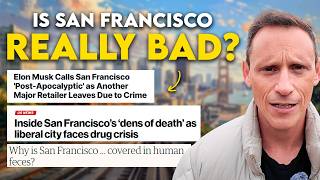
In this 2024 YouTube video, lawyer‑turned‑real‑estate agent Austin Klar offers a first‑hand, nuanced assessment of San Francisco’s post‑pandemic reality. He argues that national headlines exaggerate the city’s problems, noting that while many neighborhoods retain stunning views, food, architecture, and proximity to wine country, the downtown core—especially SoMa and Mission Bay—has undergone a dramatic shift. He details record office vacancies, a steep decline in commuter traffic, and the exodus of 55,000 residents during the pandemic, which together have hurt retail, restaurants, and tourism. However, he highlights ongoing massive waterfront and mixed‑use developments (e.g., Transamerica Pyramid overhaul) and a move toward hospitality‑driven office spaces. The housing market is split: condo prices in high‑rise areas have fallen to pre‑pandemic levels, making them buyer‑friendly, while single‑family homes remain pricey. He praises the city’s new outdoor dining parklets, which have revitalized the food scene. Klar acknowledges persistent challenges—crime, homelessness, drug use, and lingering office vacancies—but stresses that tech and venture capital investment remain strong, hybrid work models are improving quality of life, and the city is gradually recovering. He invites viewers to contact him for real‑estate guidance and to explore his other videos on development and AI‑company locations.
Chapters
San Francisco's become one of the top targets for national headlines that prey on scare tactics and clickbait about how everything is awful here after the pandemic. I've heard the city be described as apocalyptic, a homeless wasteland, poop-infested, you name it, I've heard it. And not surprisingly, it comes from a ton of people who have never been here, never lived here, or who used to live here and moved away years ago, or people who are visiting on vacation and only go to the areas that are most impacted by what's gone on since the pandemic. The truth is most of San Francisco's 80+ neighborhoods are nothing like what you see on national headlines. Incredible views, incredible food, incredible food, Michelin-starred food trucks, beautiful historic architecture, amazing outdoor amenities. The list goes on and on. Plus, it is very close to amazing destinations like Carmel, Napa, and Sonoma. But there are things that the headlines do get right, sort of. San Francisco has 100% changed in many ways since the pandemic, and it's probably not going to return to the way it was, you know, in 2019 and before in a lot of different respects. I'm Austin Klar, your lawyer turned real estate agent in San Francisco and Marin County. I moved to San Francisco from Orange County over 10 years ago. I worked in downtown San Francisco for 8.5 years before the pandemic, and I still live here now, so I know exactly what the city was like before the pandemic, during the pandemic, and now after the pandemic. And in this video, I'm gonna break down everything that has really changed and what I see for the future of San Francisco going forward. And believe me, I know it's not all roses, and we're gonna talk about that, but there are a lot of ways that the city is going to change, I think for the better. So let's leave the fearmongering and sensationalist headlines aside, and let's just talk about how things really are right now. So let's get right to it. And the first thing I'm going to talk about is how the commercial real estate market in downtown has changed. There is zero debate that the landscape of San Francisco's downtown and the tech-heavy SoMa and Mission Bay neighborhoods has changed substantially. It is not the same as it used to be. And I know firsthand because, as I mentioned, I worked in the financial district for nearly 9 years. And if there's one thing that the media has spot on, it's that commercial real estate in San Francisco is in a very tough spot right now with office vacancies at record highs. 4 years ago, as we all know, the world completely stopped. And even though San Francisco had among the lowest death rates in the nation because of the policies that were implemented, there's no area that was more impacted by downtown because all the areas there became completely desolate when all the offices sent their workers home. And most of the people who were fortunate enough to be able to work from home pretty much learned that they loved it and didn't want to come back to the office. Before the pandemic, there were nearly half a million people commuting to San Francisco every single day from like the South Bay, North Bay, East Bay, you name it. But after the pandemic, we haven't even recovered half of that. And as we all know, San Francisco had an outsized share of residents leave the city during the pandemic. Over 55,000 residents left during that time. And in a city of only 800,000 or so people, that's a lot. And it's not just commuters and residents. Tourism is down as well in a lot of the business-heavy and tourist-heavy areas where crime rates have increased. And this huge downturn of, you know, population and traffic has caused a ripple effect for local businesses, things like movie theaters and retail and restaurants in all of these areas. You know, I remember when I was working as a lawyer in downtown, after work for happy hour, colleagues and friends working in the area, we would go to the bars and restaurants around where we were working all the time. And as we left the office to work from home during the pandemic, you know, our social lives, once we were allowed to have them again, shifted to the other areas of the city away from that downtown hub because we weren't going in anymore. And a lot of those other areas where our life shifted to, yeah, they were impacted by the pandemic, but nowhere near the same level as downtown. And, you know, the tech and business-heavy areas like SoMa. So places like Fillmore Street in Pacific Heights, Chestnut Street in the Marina, Union Street in Cow Hollow, Cole Street, Cole Valley, Irving Street and 9th Street in the Sunset, and Balboa and Geary in the Richmond. 24th Street and Noe Valley, you know, all these other main, you know, commercial corridors of the city, they are still humming along. If you go there, especially when the weather's nice, there are so many people that are walking around having a great time eating outside. The vibe is great, but it's the exact opposite in downtown San Francisco and it's trending in the right direction. It is getting better, but it is nowhere near like it was before the pandemic. And I'm not sure it's ever going to get back that way again, at least not for, you know, another 5 to 10+ years. I also used to go to the Westfield Mall and Union Square to go shopping all the time. Sometimes, you know, during the day when I wanted a break from work or on the weekends. I don't go down there as much anymore, and a lot of people don't either. And that's why a lot of the retail fronts at, you know, the Westfield Mall, for example, which has made a lot of headlines, have closed. They are bringing on new tenants. It's going to take a lot of time. But, you know, that mall has completely changed from what it used to be, and so has Union Square. A lot of the luxury stores in Union Square actually, if you look at the data, are doing incredibly well. Places like Hermès and Brunello Cucinelli and those super high-end stores, they're doing great. But a lot of stores aren't as well, and there have been a lot of closures and, and exoduses in the area like Nordstrom and Adidas and Macy's. Bottom line, there's no arguing that downtown in some areas are different now than they used to be. They are just simply not as busy. They're not as happening. Not as many people are frequenting restaurants there and bars there like they used to. But I go downtown still multiple times a week, and it is nothing like the barren zombie wasteland apocalypse that you hear about in the news. It's actually quite pleasant. It's actually the cleanest I've ever seen it, and that's partly because not as many people are coming there anymore. And parts of SoMa are like that too. There are a lot of great new outdoor spaces in SoMa that are awesome. There are definitely parts of SoMa though that are more zombie apocalypse wasteland areas. And if you want to know what those parts are, I can let you know. But those parts were those parts even before the pandemic. So it's not really a huge shift post-pandemic. So yeah, if you want to know what those areas are, hit me up. My contact information is in the description below. And by the way, downtown and the waterfront areas like Mission Bay and near SoMa are undergoing huge transformations right now. There are literally billions of dollars being invested into things like a complete overhaul of the iconic Transamerica Pyramid, into creating private clubs, converting office spaces and building huge new mixed-use communities all over the waterfront. So the landscape is changing. How people think about offices is changing. They're more changing into like hospitality-driven and luxury spaces that are designed to attract people back to the office and less, you know, corporate feeling like older offices used to be. There's so much transformation coming to the city, and I think a lot of it is for the better. I've got videos about all of that transformative work going on downtown and along the waterfront. I'll link those at the top and the description below. Check 'em out and let me know what you think of those in the comments. And if you like videos on all the new development in the area and what's going on in San Francisco, definitely subscribe to my channel because I make videos about that stuff every single week. Now, the second biggest change I want to talk about is how the housing market has shifted substantially since the onset of the pandemic. Since a large cohort no longer needs to be in the office, they don't need to live near those main commercial hubs in really expensive condos with insanely high HOA fees anymore. So, you know, the high rises in like SoMa at South Beach in Yerba Buena areas, they've taken a huge hit with condos retreating from their, you know, 2019 pre-pandemic highs all the way back to like 2016, 2017 levels. You know, I'm helping clients look at places down there because the deals there are so much better than in other parts of the city. There are condos going for well under what sellers purchased them from like 8 to 10 years ago, and those places are staying on the market for literally months at a time. And overall, the condo market continues to be a much more buyer-friendly market than the single-family home market because there's just more inventory available. people don't need to pay a lot of money to live in a condo environment or a condo-like environment when they don't have to be in the office anymore. They can move, you know, 30 minutes, 45 minutes away, or even farther away into the suburbs and buy a house for the same price as a high-rise condo. So overall, that condo market remains a little bit slower and a little bit more buyer-friendly than the single-family home market in San Francisco, which is still ripping. But the trends that I just talked about in SoMa and near downtown are really an extreme. There were definitely corrections in the condo market all over San Francisco once interest rates started to increase and as people were leaving the city during the pandemic. But the correction that was seen in these other areas is nothing like what is being experienced right now in the SoMa and South Beach areas. Condos in desirable places like Pac Heights and Presidio Heights and Cole Valley, Noe Valley, Russian Hill, Marina, all these different neighborhoods are still selling relatively quickly in just a few weeks on the market when the overall condo market on average is about 7 weeks days on market. You know, all of these areas where there's, you know, great food, walkability, safety, views, good weather, those places have been and are going to continue to be very desirable and the markets aren't going to experience what the SoMa market has experienced with respect to condos. The third thing I want to talk about is the food scene and dining scene. While the pandemic definitely brought a ton of negative change to the city, this one I actually think is a change for the better. One of my favorite things to do in SF right now, especially when the weather is nice, is eat outside. And when the pandemic hit and restaurants were allowed to reopen, a ton of them built all these new parklet spaces, took over parking spaces and built, you know, these beautiful parklets with heating and booths, really fun dining experiences, new way to experience restaurants and to experience the city. And you get to eat outside surrounded by beautiful architecture and parks and people just walking around with their dogs and kids. It's a whole different vibe, and I love it. You can go to sports bars now and watch games outside. You can have Michelin-starred meals outside. It's pretty wild. I think it just brings a whole new vibrancy to the city, seeing people out and about enjoying their time outside. So I think it's a huge positive, and I'm looking forward to those things staying for the long term. Austin Klar. And the last thing I want to talk about is all the change that is going on in the city in response to the dynamics that were brought on by the pandemic. With changes in people's perception of, you know, working in the office, developers are having to adjust their model to get people to come back to work. So, you know, all these old stuffy offices like I was talking about earlier are being converted into these, you know, massive hospitality-driven luxury spaces. Think like luxury coworking spaces and lounges. The Transamerica Pyramid, for example, is going to have a theater. There are going to be multiple restaurants and private clubs. Clubs and bars. Vacant commercial buildings are being reimagined into housing. And there's a shift right now toward hybrid work policies instead of full-time in-office and full-time remote. And I think that has drastically improved quality of life for residents and workers in San Francisco. I know that it did for me when I was working as a lawyer. What little free time I had, I, I didn't want to spend it on a commute. I didn't want to spend it on, you know, putting on a suit in the morning or nice clothes in the morning. Not to mention, when there are less commuters on the road, it's just a better air quality environment and it's cleaner. And more people are going to continue to come back to San Francisco for work. The commercial real estate market is not going to stay this way forever, you know, despite what you may hear in the news. Jobs are coming back to San Francisco in a big way. Tech, like it always has, is leading the charge. You've got huge AI players leasing literally hundreds of thousands of square feet of office space. You've got all the traditional tech players who still have offices in San Francisco. You've got, you know, service sectors with offices in San Francisco— law firms, consulting firms, healthcare, financial firms like my old firm. They're requiring people in office 3 days a week, so it's coming back. How they operate is shifting, but I think it's for the better, and it's going to continue to shift as we adapt to this post-pandemic world. And you can look at statistics on where VC money is being invested. The geographic location receiving the most VC investment? San Francisco. San Francisco still is in the top 10 for most billionaires in the city with over 50. Just like it once was, it is still a massive hub of innovation and investment. It's just that the dynamics of day-to-day life are shifting and adjusting to new realities. This city is definitely not without its downsides. There is a ton of work that we need to do to address the crime situation, address the homeless situation, the drug use situation, the office vacancy situation. It is not a perfect city. It never has been and never will be. There's so much that we need to do in this new reality. It's going to take time to get tourism and commuting back to pre-pandemic levels, but it's all happening. And I promise, if you spend any meaningful time in any of the, you know, 80+ neighborhoods besides the, you know, 5 or 6 that are the problem areas, you will see that this city is still one of the most beautiful places in the country to live. So I'm looking forward to the future of SF. We still have a long way to go, but I think the city has already recovered a lot more than people think. And there you have it. That's, you know, my perspective, uh, living here for, you know, the last nearly 11 years, pre, during, and after the pandemic, and working for a majority of that in downtown, which is one of the most impacted areas by the changes. If you're thinking about making a move here and have concerns over what's going on or how to navigate the market here, definitely reach out to me. My contact info is in the description below and I'd be happy to help you. And if you wanna know more about all those new developments and where AI companies are moving to and where maybe you should live if you're gonna work at one of those companies, I've got videos on all that. I'll link 'em in the description below. Go check 'em out. I hope you enjoy and I'll see you in the next video.










