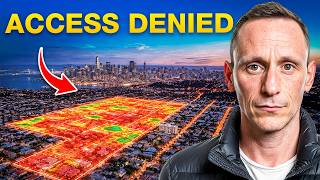
In this comprehensive YouTube neighborhood guide, lawyer‑turned‑real‑estate agent Austin Klar explains why San Francisco’s Sunset District has become one of the nation’s hottest housing markets. He begins with a geographic overview, defining the district’s large, ocean‑exposed footprint and its three sub‑neighborhoods—Inner, Central, and Outer Sunset—while noting the consistent but cooler, foggier climate that intensifies westward. Klar then traces the area’s transformation from the sand dunes of “Outside Lands” and the squatter‑filled “Carville” to a post‑1906, Twin Peaks Tunnel‑linked residential zone, highlighting the historical roots of today’s layout. He catalogs the district’s abundant outdoor amenities: Golden Gate Park (its size, museums, gardens, and sports facilities), smaller parks (Hawk Hill, Grandview, Mount Sutro, etc.), Ocean Beach, the newly pedestrian‑only Sunset Dunes Park and its contentious political history, the San Francisco Zoo, and local surf culture. The food scene is mapped across commercial corridors—9th & Irving in the Inner Sunset (Tartine, Furela, Ebisu), Noriega, Judah, and Taraval in the Central Sunset, and standout spots like Damn Fine Pizza and Devil’s Teeth Bakery in the Outer Sunset—illustrating the neighborhood’s solid but dispersed dining options. Klar discusses walkability, noting that the Sunset’s size and spread‑out retail make car‑free living possible only near specific corridors, and that longer downtown commutes (up to 45 minutes) depress prices farther west. He provides 2025 housing data: typical 3‑bed/2‑bath, ~1,750 sq ft homes at $1,060 per sq ft (~$1.8 M average), with Inner Sunset averaging $2.2 M, Central $1.7 M, and Outer $1.6 M. The market’s speed is emphasized—average days on market ~2 weeks versus 3.5 city‑wide—driven by two forces: (1) buyers shifting from pricier neighborhoods (Pacific Heights, Marina, etc.) to the more affordable Sunset, and (2) sellers/agents deliberately under‑pricing listings to spark bidding wars, resulting in sales >20 % above ask and sometimes $1 M+ over list. Klar expresses frustration with this lack of pricing transparency for buyers and advises prospective purchasers to have financing locked, monitor off‑market inventory, and act quickly on offer dates. He closes with calls to subscribe, join his weekly newsletter, and view related videos (e.g., Golden Gate Park), providing contact information for personalized assistance.
Chapters
How did a part of the city that used to be nothing but sand dunes transform into one of the hottest real estate markets in the entire country, with homes selling in just 2 weeks on the market, with quick trigger offer dates and competitive bidding processes that are pushing sale prices to, in some cases, over $1 million above list price? This is Austin Klar, your lawyer turned real estate agent in San Francisco, and the Sunset neighborhood is one of the most brutal markets in San Francisco right now for buyers. Solid homes sell in line with the city average, a little over $1,000 a foot, so it's great value for the types of amenities you get in the lifestyle it affords. But what's really interesting is that despite all it has to offer, some people rule it out immediately when they're searching for homes. In this video, I'm breaking down everything you need to know about the Sunset neighborhood day-to-day life, the pros and cons, and why it's one of the neighborhoods I think you need to keep your eye on heading into 2026. Let's get right to it and start with an overview of where the Sunset is within the broader San Francisco geographically, because its geography explains almost everything that you need to know about the Sunset. The Sunset District is located on the west side of San Francisco, stretching from Golden Gate Park down to Lake Merced, and from Ocean Beach on the west to about Argüello Boulevard as far east. And immediately that tells you two things. Number one, it's huge. It's one of the largest neighborhoods in all of San Francisco. And number two, it's very exposed. Unlike neighborhoods that are tucked behind hills like Noe Valley, Bernal Heights, Cole Valley, the Mission, even parts of Richmond, the Sunset is entirely exposed. It's wide open to the Pacific Ocean. And what that means is there's nothing standing between the Sunset and thousands of miles of cold water. So that means marine layer, fog, wind, overall colder temperatures, especially the farther west you get in the Outer Sunset, closer to the beach. Now the Sunset is typically broken into 3 distinct sub-neighborhoods: the Inner Sunset, Central Sunset, and Outer Sunset. The Inner Sunset, which basically runs from Arguello to 19th Avenue east to west and Lincoln Way to Lawton north to south. Central Sunset runs from 19th Ave out to Sunset Boulevard to the west and from Lincoln Way on the north to Ortega to the south. And then the Outer Sunset runs from Sunset Boulevard on the east to Ocean Beach, and then from Lincoln Way on the north side down to Slope Boulevard. And as a general rule of thumb, the further west you go, the colder it gets, the windier it gets, the foggier it gets because you're getting closer to the ocean. But one thing the Sunset has for it from a weather standpoint that a lot of other San Francisco neighborhoods don't is consistency. San Francisco's weather patterns are crazy. I've got a separate video about San Francisco's weather patterns and different neighborhoods in each of the different subsectors of the weather regions in the city. That's in the description below. You can check it out if you want to learn more about it. But suffice to say, you know, long and short of it is that San Francisco's weather is very erratic. It's hard to predict. It changes a lot throughout the day, and one neighborhood to the next, or even just a couple streets over, temperatures can vary drastically. But the Sunset, to its credit, although it's colder, it is consistently colder, so it's easier to plan for. You don't have as much temperature fluctuation throughout the day. So in some ways, that's actually a plus of the neighborhood that a lot of other neighborhoods in the city don't have. Another plus about the Sunset, in my opinion, is it's really cool history. But before I get there, if you do me a huge favor, if you like videos about San Francisco real estate, lifestyle, history, current events, or new developments, I make videos about that stuff every single week. So subscribe to my channel. And if you're thinking about relocating to the city and you have questions about how all the changes we're seeing are impacting our local real estate market, reach out to me. I was a lawyer at one of the biggest law firms in the world before getting into real estate. I've helped numerous people relocate here from all over the country. I'd be happy to be a resource for you. I'll put my contact info in the description below. Reach out anytime. Now back to all things Sunset, and I'm gonna turn to its incredible history. Now, believe it or not, the Sunset used to look a lot different than the colorful row homes and open green spaces you see lining the neighborhood today. The Sunset was once a gigantic sand dune along the coast, colloquially known as Outside Lands, which— yes, that's how the music festival in Golden Gate Park got its name. And Outside Lands wasn't its only nickname over the years. During the late 19th and early 20th centuries, after squatters took shelter there in abandoned horse-drawn vehicles and cable cars that were left for dust in sand dunes, it became known as Carville. It really didn't start to look like the Sunset we know and love today until after the 1906 earthquake and fires. That's when numerous smaller homes were built up throughout the neighborhood on what are now like standard San Francisco lots, 25-foot-wide lots, some detached homes all across the area. And this whole area became a lot more desirable after completion of the Twin Peaks Tunnel, which connected these outer lands to the main hub of San Francisco. It was at that same time that Golden Gate Park started to take shape. More commerce came to the area to serve all the new residents moving in, and the area really started to boom. And I'm going to talk more about the food and parks in the area because those two things are among what makes the area so desirable despite having not so great weather. From a park standpoint, everything is anchored to Golden Gate Park. It forms the entire northern border of the neighborhood. I've got a separate video breaking down the history of Golden Gate Park and all of its attractions. You can watch that using the link in the description below as well. The high level— there's just so much to do in Golden Gate Park. Multiple museums, multiple lakes, a golf course, a disc golf course, tennis courts, a Japanese tea garden, botanical garden, conservatory of flowers, windmills, tulip gardens. It's over 1,000 acres, 20% larger than New York's Central Park, if you can believe it. It's one of the best amenities in the entire city, and it's right in your backyard if you live in The Sunset. And it's not the only park in The Sunset. There are a number of other smaller parks that are interspersed throughout the entire neighborhood. You've got Hawk Hill, you've got Grandview Park, you've got Mount Sutro Open Space Park, Reserve. You've got Sunset Reservoir Park, you've got Stern Grove, you've got Pine Lake Park. So a lot of different parks spread throughout the neighborhood. It's not just Golden Gate Park. And going all the way out to the ocean, you have Ocean Beach, which forms the entire western edge of the Sunset neighborhood. You also have a pedestrian-only section of the Great Highway, which is the road that aligns Ocean Beach. That is a brand new park called Sunset Dunes Park. Sunset Dunes has actually been the topic of a lot of debate over the past couple years. There was a voter initiative on the ballot in 2024 for to close this area of the highway to cars and create a park. Until that time, it'd been open to cars during the week but closed cars on the weekend, and the majority of voters ultimately decided to close it to cars in full. Turns out though, a majority of voters who actually live in the Sunset wanted to keep it open to cars during the week because there were concerns about traffic congestion, and a majority of voters who lived farther away from the area voted in favor of closing it to cars. So that created a ton of uproar in the community. The Sunset supervisor was recalled over this because he, you know, was one of the people behind actually putting that initiative on the ballot. There were a bunch of lawsuits surrounding the park, and now the Sunset has a new supervisor who's been working on a ballot initiative to reopen the Great Highway to Cars and get that on the November ballot. So it's a complete mess. It's an ongoing debate throughout the city. But right now you have a beautiful park right next to Ocean Beach that is pedestrian-friendly, jogger-friendly, pet-friendly, great spot to hang out and visit right next to the ocean. And because you do have beach proximity living in the Sunset, you actually get a lot of surfers in the area as well. The The water is legit freezing, but I know several people who, as part of their daily routine, they wake up in the morning, put a wetsuit on, and take their surfboards out to Ocean Beach and do that as a form of exercise during the week. It's a good way to start the day. And obviously you don't have to surf to enjoy the beach. There are plenty of ways to still enjoy the beach. I've done a number of bonfires out there. I've done a number of picnics out there. Just remember, even though it might be warm during the daytime, at nighttime it gets extremely cold. So if you are staying into the night, just come prepared. And in addition to parks, you're also close to the San Francisco Zoo, on the southwestern corner of the neighborhood, as well as multiple golf courses. Aside from the range of parks and recreation activities in the Sunset, it has a pretty great food scene. It's not a premier dining destination in the sense of like multiple like Michelin star restaurants. People don't necessarily travel from all over the world to eat at places that are in the Sunset, but there is really solid food there. The main commercial corridor on the inner Sunset is around 9th and Irving. Tartine Bakery, which serves some of the best pastries and breakfast food in the entire city, is there. Furela Sunset, which is awesome pizza and a really cool patio space, Ebisu for great sushi, and a ton of other great food spots. It's one of the best reasons to live in the Inner Sunset and brave that cold weather. It has a great selection of food. In the Central Sunset, Noriega is the main commercial corridor, and it runs all the way out west to the Outer Sunset, along with Judah and Tereval. None of them are major destinations on their own, just a few blocks here and there scattered throughout the neighborhood, but solid food throughout all of them. You have smaller markets, you have coffee shops, shops, you have sandwich shops, pizza, Thai food. Damn Fine Pizza, which is in the outer Sunset, is one of my favorite pizza places in the entire city. Highly recommend. Devil's Teeth Bakery in Sunset has some of my favorite breakfast sandwiches in the city. Whenever my fiancée and I want something like decadent for breakfast, Devil's Teeth is always on the list of places we go. Their breakfast sandwiches are on biscuits and they're incredible. Definitely worth the trek if you haven't tried them before. Anyway, suffice to say, there's solid variety of food scattered throughout the Sunset, but especially as you go farther out into the Sunset, it's just not as concentrated. And that leads to my next point, which is that the Sunset neighborhood overall, especially as you get farther west, is not the most walkable neighborhood because things are so spread out. Obviously, that's going to depend on where you live within the neighborhood. If you are very close to 9th and Irving, for example, you can walk to a lot of things. Or if you're very close to some of these other smaller commercial pockets, you can walk to restaurants or a grocery store. But because the neighborhood is so big and it's not that concentrated from a commercial standpoint, chances are you're probably not going to be able to walk very easily to a lot of these places. If you think about it in contrast to a place like the Marina or Pac Heights or Russian Hill or North Beach. These are really dense neighborhoods from an amenity standpoint, and the neighborhoods themselves are a lot smaller, so you have easier access by foot to all the different restaurants and boutiques and bars, parks, all of that. In the Sunset though, because it is so spread out, whether you can truly live a walkable lifestyle or a car-free lifestyle depends on how close you live to those commercial corridors. So along with the weather, that's one of the reasons why the average cost of homes in the Sunset is in line with average cost of homes in San Francisco. The other major driver of that, it's because of its location. You are faced potentially with a much longer commute if you live in the Sunset. And that's why, among other reasons, the farther out into the Sunset you live, the less expensive homes become. If you live in the Sunset and work downtown, it might take you 45 minutes to get to downtown during rush hour, and maybe even longer than that if you're going by bus. So it is a real commute when you live out there. So that commute, the weather, and lack of walkability overall drive pricing in the neighborhood. So what does that actually mean from a numbers standpoint? How much are homes here? What can I get for my money? Because a lot of the housing stock in the Sunset was built around the same time and in the same style, there is sort of the consistency, kind of like with the weather, with the types of homes that come to market. The majority of the homes here tend to have the same flavor and same style. It's on average smaller houses, smaller row houses, smaller marina-style houses or mid-century-style houses. And just to give you a sense on pricing, the average home that sold in 2025 was 3-bed, 2-bath, about 1,750 square feet, so not that big. There are definitely homes that reach 3,000 or even 4,000 square feet, but getting much beyond that is really rare in the Sunset. What that means is the Sunset is a great area to find a starter home, homes that aren't super big and they're not super expensive, but they're turnkey and move-in ready potentially. On average, those homes sold for about $1,060 a foot or about $1.8 million. Now that's the average for the entire neighborhood. As I mentioned, as you get further out into the Sunset, it becomes less expensive, and the closer you are to the center of the city, the more expensive it becomes. So the Inner Sunset, the average cost of a single-family home was much more in line with the average cost of a single-family home in San Francisco, about $2.2 million. Central Sunset, about $1.7 million, and then about $1.6 million in the Outer Sunset. And that's because commuting gets more difficult, the weather becomes harsher, gets less walkable the farther out you go. So home prices are lower the farther out you go. And I mentioned at the start of the video that the Sunsets become one of the most competitive markets markets, not just in San Francisco, but in the entire country. What do I mean by that? Well, to put it in context, the average home sold in about 2 weeks in the Sunset. That's compared to about 3.5 weeks in all of San Francisco, which is still really fast, but that is blazing fast in the Sunset. What's driving that? Why is that happening? I think it's really 2 main factors. The first thing, housing in a lot of the other neighborhoods that people tend to gravitate to that, you know, you hear about or read about in the news, or that I talk about all the time on my channel, Pacific Heights, Presidio Heights, the Marina, Seacliff, Russian Hill, all those types of neighborhoods are getting incredibly expensive and home prices are going up very rapidly in those areas. It is very, very rare for somebody to be able to afford a first home in one of those neighborhoods. Single family homes in most of those neighborhoods start closer to $4 million, whereas you can find good quality single family homes for under $2 million in the Sunset. So if you're looking for a house and not a condo, it's a great place to look because you can actually get a good start starter home for your budget. And as I talked about in this video, there are a lot of awesome things about living in the Sunset. Of course, drawbacks too, and that's driving pricing, but there's a lot of things to love about the Sunset. The second factor driving that activity is that a lot of listing agents and sellers are playing games with pricing when they're selling homes. The Sunset is notorious for listing homes at well below market value to drive activity, drive bidding wars, and push sale prices up. Homes in the Sunset sell on average more than 20% above ask price, and there have I've seen many examples of homes selling 3/4 of a million over ask, or even more than a million over ask. It's not because people are necessarily bidding amounts that are way above market value. It's that the homes were initially listed for so far below market value. So a house that's listed for $1.5 million is drawing a crowd of people whose budget might be $1.5, $1.6, $1.7, but in reality, that home is likely to sell for $2.2, $2.3 million. So you're pulling that market in too. You're creating a much larger target market for that house, even though only a subsector of that are actually going to be able to afford the house. So you're getting hyper competition across different market sectors, and that's driving these competitive processes. That's starting to happen more and more in other neighborhoods too. It's just, it happens so much in the Sunset. I personally hate that when I represent buyers. I hate it. The buyers certainly hate it. The lack of transparency and really being able to understand from looking at pricing kind of where their thought process should be is very difficult. Obviously I have to educate them and, you know, let them know what is transparently priced versus priced below market value. So, you know, we know when we're not wasting our time and set expectations, but it's very difficult. But that's the reality of the market that we're in. And I think it's only going to get worse as interest rates fall, if they do fall, and as more people return to the city because of return to office and improving city conditions. You really need to be prepared from day one if you're looking at houses in areas like this where they sell at warp speed. Your financing needs to be dialed before you even start looking. You need to be on top of inventory. You need to know what's coming soon, what's off market. So you have even a couple days advantage over the rest of the market to see things and get prepared. You don't want to get caught flat-footed seeing something maybe on the second weekend of open houses with a very quickly approaching offer date, having to do all your diligence on a very short timeline. So if you're trying to game plan buying something in the area or in any other neighborhood in San Francisco and have questions about how best to prepare yourself, reach out to me. I've lived in the city for over 13 years and I've helped numerous people relocate here from all over the country. Be happy to be a resource for you. I'll put my contact info in the description below. Reach out anytime. And If you like videos about San Francisco real estate, lifestyle, history, current events, or new developments, subscribe to my channel because I make videos about that stuff every single week. I also have a weekly newsletter where I deliver the top headlines of the week about all those different topics right to your inbox. A link to subscribe to that is in the description below as well. And the last thing before you go, don't forget to check out the video that I made on Golden Gate Park. That link's in the description below too. I hope you enjoyed the video and I'll see you in the next one.