MASS MIGRATION: Why Everyone Is Returning To SF From Austin, Miami & MORE
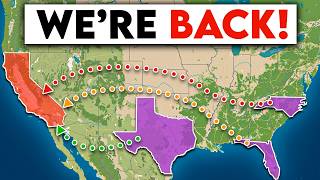
Austin Klar, a San Francisco real estate agent, breaks down the city's population swings: roughly 57,000 to 70,000 residents left between 2020 and 2022 due to remote work and rising costs. Now it's reversing. Remote job postings fell 71% from 2022 to 2025, offices are filling up, and the city added 13,000 people in 2024. Home prices are climbing again, especially in Pacific Heights and Noe Valley.
Chapters
Tens of thousands of people fled San Francisco during the pandemic. Crime rates rose, homelessness rose, office vacancy rose, and city dwellers who no longer needed to be near their offices fled San Francisco and other major metropolitan areas across California in search of a lower cost of living, larger houses where they could set up remote offices, larger lots so they could set up indoor-outdoor sanctuaries at home while we figured out how we were gonna grapple with life post-pandemic.— that mass exodus from San Francisco and even other major metropolitan areas in California has come to a screeching halt with renewed domestic and international migration back to those major cities, in particular SF. And that's all thanks to incredible changes we're seeing across the city. This is Austin Klar, your lawyer turned real estate agent in San Francisco and Marin County. And in this video, I'm going to break down what happened to San Francisco's population during the pandemic, why so many people fled the city in 2020 and 2021, why they're coming back, and how it's impacting our local real estate market. So let's get right to that mass exodus and discuss why so many people called it quits on San Francisco during the pandemic. So as we all experienced, the pandemic brought a major shakeup to the makeup of various regions across the country. People fled major cities with high cost of living for suburban areas that were close to those major cities that they were fleeing, or to suburban areas generally with a lower cost of living. So places like Austin, Texas, For example, saw a huge influx of people, even though it's a major city, because it had such a substantially lower cost of living at the early stage of the pandemic. And there were numerous suburbs in the sprawl of the greater Austin area where people could buy literally like 4,000 square foot houses on close to an acre of land for the approximate cost of a one-bedroom condo in San Francisco. Places like Marin County, which is a county full of different suburbs immediately north of the Golden Gate Bridge, north of San Francisco, also saw a huge influx of people. Marin always gets migration from San Francisco because, among other reasons, it has better public schools and it lends itself more to a bit more of like a family-friendly lifestyle. So you always get natural migration out of SF into Marin, but during the pandemic, that was like migration on steroids. So many people left SF specifically for Marin. In total, at the outset of the pandemic, between 2020 and 2021, San Francisco lost about 57,000 residents, and by 2022, that had grown to nearly 70,000. Remember, San Francisco is not that big, a little over 800,000 people, so almost 10% of the population had left San Francisco in about 2 years. And there are several reasons for that. First and probably foremost, nobody was going into the office anymore. The Bay Area had always been dominated by tech companies that were already a bit loose with in-office requirements. But when the pandemic hit, remote work became the norm. And it wasn't just for tech. My law firm that I worked at at the time was going fully remote. My friends that worked at different investment banks were going fully remote. And of course, all my friends at major tech companies who were part-time in office were now fully remote. Nobody had to live close to their office anymore. So if people were living in the city, and didn't want to live in the city, they didn't have to live in the city anymore. They had the option to leave, and a lot of people opted for that option. At the outset of the pandemic, before Marin County home prices skyrocketed, just like they did in Austin and in other outmigration targets, you could get actual single-family homes on good-sized lots in good school districts for meaningfully less than single-family homes in the city, and in many cases less than condos in downtown San Francisco high-rises. People who all of a sudden needed to work remotely. It's not just that they wanted to at the outset of the pandemic, they needed to. Nobody was even allowed to go into the office anymore. They all of a sudden wanted more space in their residence because they needed dedicated office space to work from home. People with small children living in the city could now move to an area where they could get way more space, extra bedrooms, lots, large lots, backyards, front yards where children can actually play near parks. They went from these little small patios or small backyards in the city to like lush landscapes that they could really take advantage of during the pandemic. So on top of the normal reasons that I hinted at earlier, like schools, for example, where you see people leaving SF for the suburbs, Marin County, East Bay, South Bay, you had other reasons piling onto the list of reasons why people leave San Francisco for the suburbs. And they could do that now without having to commute 45 to 60 minutes a day because nobody was going to work. People were also moving out of San Francisco to increase their overall quality of life outside the home. As we all know, it wasn't that long into the pandemic where life sort of resumed. We were able to go to restaurants and coffee shops and be outside and be around other people, you know, shortly into the pandemic. And at the time that started happening, San Francisco wasn't exactly the model city. Like I mentioned before, crime rates were on the rise, homelessness and drug use were on the rise, tourism was falling as a result, the office vacancy rate had skyrocketed, so all the local businesses around downtown were getting hammered. A lot of the great retail hubs of San Francisco were getting hurt because of that lack of foot traffic as well. So overall quality of life in certain parts of San Francisco especially was getting hit pretty hard. So while a lot of neighborhoods in San Francisco were still incredible places to live, The city overall became less desirable, so people left the city in search for better quality of life. So that drove more people out. It attracted less people coming in. So the net migration, net outmigration versus immigration, completely got skewed to what it normally was, and way more people left than were coming in. San Francisco is also big for international migration as well. And at the early onset of the pandemic, visas stopped. Nobody was approving visas anymore. So a lot of that foreign migration that you get into the city completely stopped. So overall, more people leaving than coming in. And as you You can imagine this had a direct impact on home prices. Not only did demand for city housing decrease because less people wanted to live here, but toward the end of the pandemic, we had a significant, really rapid increase in mortgage interest rates that curtailed demand for housing all over the country. So it was a double whammy for a place like San Francisco where quality of life had deteriorated as well in certain respects. And housing prices fell as a result of that. I mean, that's just basic economics. When demand falls, prices fall, absent some change in supply. So between 2020 and 2023, there was a meaningful hit with home prices. We didn't see appreciation appreciation, and in fact, we saw some slight depreciation. The median condo in 2020 sold for $1.195 million, about $1,078 a foot. And by 2023, that had dropped to $1.12 million, about $996 a foot. In 2020, the median single-family home sold for $1.61 million, about $979 a foot. And in 2023, median single-family homes sold for about $1.55 million, about $965 a foot. So over a 3-year period where you would expect some meaningful appreciation in like normal housing markets, we actually experienced depreciation in San Francisco. So not only were fewer people wanting to live here anymore, fewer people were wanting to buy houses here anymore as a result of what they were seeing in the market. So kind of a chicken and an egg thing, but it kind of snowballed and kept prices down. And by the way, just keep in mind that those are citywide numbers. There are parts of San Francisco that throughout the pandemic remained incredibly desirable places to live. Very safe, very clean, very family-friendly, incredible parks, incredible amenities, incredible architecture. So those neighborhoods substantially outperformed the rest of San Francisco even during the pandemic downturn. If you want to discuss those neighborhoods in more detail and maybe figure out where the best places are to park your money in real estate in San Francisco, reach out to me. I'd be happy to chat with you. I used to be a lawyer at one of the biggest law firms in the world before getting into real estate, and I've helped numerous people relocate here from all over the country. Be happy to be a resource for you. I'll put my contact info in the description below. Reach out anytime. And if you like videos about different San Francisco neighborhoods, San Francisco lifestyle, current events, new developments, or all things San Francisco real estate, subscribe to my channel because I make videos about that stuff every single week. So I just spent some time talking about all the things that went wrong in San Francisco and why so many people left during the pandemic. Now I'm going to shift to how those negative trends are changing for the better and bringing people back to the city. Remember that nearly 57,000 people that left during the first year of the pandemic, that outmigration rate has dropped by 90%. And that slowdown, that screeching halt of population exodus, is due to a number of different factors. First of all, foreign immigration has resumed. Visas are getting approved now, and there's a growing number of foreign nationals that are migrating back to San Francisco. So that imbalance between people leaving and people coming in is starting to right-size. San Francisco gained over 13,000 new national residents in 2024 compared to they did in 2023. So that population cohort is growing. Another reason is the increasing adoption of hybrid in-office work environments. Companies that instituted full, you know, remote work policies during the pandemic have shifted gears and are starting to implement hybrid in-office requirements. So maybe it's 2 days a week, maybe it's 3 days a week, maybe it's full-time. But companies are calling employees back to the office. According to the San Francisco Business Times, remote job postings in SF have plunged 71% over the past 3 years as more employers have demanded at least part-time in-office. Remote job listings dropped from 20,000 in April of 2022 to just under 5,600 in April of 2025. And there's a shift away from hybrid work as full-time in-office policies now account for almost 40% of corporate to tenants models. The Return to Office survey by EMC Research conducted earlier this year showed that the number of full-time remote workers dropped from 32% in October of 2021 to just 11% in February of 2025. And that same survey showed that 40% of companies with at least 10,000 employees are thinking about changing their policies to demand even more in-office time. We're also seeing a meaningful surge in office leasing activity. There are a ton of AI companies leasing office space. There are a lot of other companies that are renewing their leases or moving from smaller spaces to larger spaces to account for a now growing workforce that was previously shrinking during the pandemic. We've had 3 quarters in a row now of falling office vacancies, and that trend is likely to continue as more new jobs come back to the city and more companies demand workers be in office. Aside from foreign migration and people coming back to work, San Francisco is just generally becoming a better place to live. Crime rates have fallen significantly across both violent and nonviolent crime types. There's a very noticeable increased police presence in the major commercial hubs like around Union Square, and the police are actually pursuing people that commit crimes. The city has cracked down on open-air drug markets. The city has made a huge improvement on the number of tents that are visible in San Francisco. We have a major increase in the number of conventions that are happening in San Francisco and renewed commitments from big companies holding those conventions to hold them for years to come because of the improvements that they're seeing in the city. And that's having a huge impact on local businesses, on the hotel business, especially near downtown. We We have numerous retail pop-ups in our commercial hubs, which are turning into long-term retail leases that otherwise wouldn't have existed without these short-term pop-up programs. We have outdoor festivals for free all over the city, outdoor concerts all over the city, food events, beer events all over the city. There's just so much to do all over San Francisco. So the overall quality of life is improving as perception of the overall city is improving as well. Another reason more people are coming back is because the difference of cost of living isn't as big anymore. Home prices in places like Texas, Florida, Marin County, the East Bay, the South Bay, home prices there completely skyrocketed during the pandemic and were either like flat or, as I noted earlier, slightly depreciated during the pandemic in San Francisco. So it narrowed that gap substantially. And with interest rates cresting 8% at their, you know, peak in this post-pandemic world, now sitting at about 7%, just in the high 6s right now as I'm filming this video in July of 2025, it created a huge affordability crisis all across the country. And in a lot of these places like Texas, like Florida, there are drawbacks to living there that aren't present in San Francisco. Or when the cost of living gets too high in these places, those drawbacks start to not be worth it. Weather, for example. Weather's not perfect in San Francisco, but it's better than in Texas and better than in Florida, at least for a meaningful part of the year. You don't have to deal with hurricanes, you don't have to deal with flooding. There are a lot of perks weather-wise living in San Francisco not present in Texas and Florida. Another one's culture. Like culture, politics, those don't necessarily align for people leaving San Francisco to go to Texas or Florida. Don't really care what side of politics you're on. I think everybody could agree that people in SF aren't always going to agree on the culture or the politics that people in Texas or Florida and vice versa. And there probably are some that align and probably a lot more that don't. There was also a big infrastructure lag in places that saw huge population growth over a very short period of time, like in suburban Austin, for example. They could not build fast enough during the pandemic. They couldn't build new highways. Fast enough, so traffic would build up. There weren't a ton of, like, restaurants, grocery stores in these suburban areas that were now becoming increasingly popular. Just couldn't support the new population there. Another factor: the food scene. Food scene in Austin, it's solid. It's nowhere close to San Francisco. There's really no comparison at all. And the amount of museums and festivals, outdoor events, cultural diversity— there's way more of that in San Francisco than in places like Texas and Florida. Having proximity to places like Napa Sonoma, Carmel, obviously a big plus for San Francisco being by the Pacific Ocean, obviously a plus. So as the city improved and as other places became more expensive, while SF became comparably less expensive, the drawbacks of those areas started to weigh more heavily and people had a desire to come back. So overall, right now, substantially less people leaving, more people coming back. Population decline slowed rapidly and we're going to start seeing actual growth in the city again, especially if the trends that we're seeing with new jobs and hybrid in-office work requirements come back to stay. And all of these changes are having a positive impact on home prices. They are on the rise again. Year over year so far in 2025, both condo and single-family home prices are up several percent. Again, it's just simple supply and demand. And again, that's citywide. The neighborhoods so many people want to move to in the city, like Pac Heights and Noe, Russian Hill, the Marina, Cole Valley, Presidio Heights, Seacliff, Lake Street, all of those are outperforming the city averages. And I expect appreciation even for condos to continue as the city dynamics continue to improve. And all of that is happening without real meaningful drops in interest rates. Rents are increasing year over year again. The number of multifamily buildings that are selling is increasing year over year again. It's just overall a more desirable place to be. More people want to be here, so more transactions are happening. If there are particular neighborhoods you're thinking about buying in and aren't sure what's going on in the marketplace there, or if you're not even sure about what neighborhood is the right neighborhood for you, reach out to me. I've lived in SF for 13 years and have helped numerous people relocate here from all over the country. I'd be happy to be a resource for you. You, my contact info is in the description below. Reach out anytime. And if you like videos about what's happening in San Francisco, current events, new developments, the San Francisco lifestyle, and all things San Francisco real estate, make sure to subscribe to my channel because I make videos about that stuff every single week. And if you want to learn more about the specifics of all the new things that are happening in downtown San Francisco and how the city is reshaping what downtown is like, I've got a separate video on that. I'll link that in the description below. Go check it out. I hope you enjoyed the video, and I'll see you in the next one.










