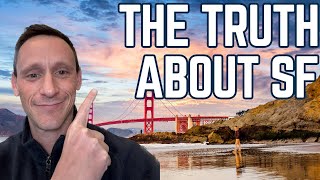
In this 2023 YouTube guide, Austin Klar— a former lawyer turned San Francisco real‑estate agent and developer— shares five crucial insights for anyone considering a move to the city. Drawing on a decade of personal experience (since 2013) and his professional work buying, selling, and developing property, he outlines: (1) the extreme cost of living, with 2022 median home prices around $2.2 million for single‑family houses and $1.5 million for condos, plus high everyday expenses such as groceries, gas, dining, and bridge tolls; (2) the chronic difficulty and expense of parking, especially in dense neighborhoods, compounded by pandemic‑era parklets that further reduce street spots, and the city’s notorious traffic, particularly around the Financial District and Bay Bridge; (3) the reality that San Francisco residents are often stereotyped based on their neighborhood (e.g., Marina = “bro,” Haight‑Ashbury = “hipster,” SoMa/FiDi = “finance professional”), which can affect social perception; (4) the post‑pandemic decline of downtown’s vibrancy as remote‑work policies have emptied office‑area bars and restaurants, though a tentative rebound is noted amid economic pressures; and (5) the public‑transport ecosystem—BART’s limited reach, Muni’s inexpensive but sometimes unreliable bus service, and a rich set of alternatives like rideshares, bikes, scooters, and short‑term car rentals—making the city still walkable despite transit imperfections. Throughout, Klar offers practical advice (use rideshares, consider parking costs, explore micromobility) and invites viewers to contact him for real‑estate assistance, while encouraging subscriptions.
Chapters
San Francisco is one of the greatest cities in the world, but like any other city, there are some downsides to living here, and there are things that I wish I knew, and that if you're considering moving here, things I think you should know before moving here. And I'm gonna break down 5 of those things in this video, and the 4th one might surprise you, so definitely stick around for it. What's up everyone, this is Austin Klar, your lawyer turned real estate agent and real estate developer in San Francisco. I've lived in multiple neighborhoods all across the city since moving here in 2013, giving me, you know, in-depth, firsthand experience of what it's like to live and work in San Francisco. Every single day I put my courtroom advocacy and contract negotiation skills to work for people buying, selling, and investing in property in San Francisco. If you want to know more information about the San Francisco real estate market, or you want to, you know, tour a property or get more information about particular communities, definitely reach out to me. My contact info is in the description below. I will personally answer every call, every email, every text. And I'd be more than happy to help you. Don't forget, if you like videos like this, please subscribe to my channel and don't forget to hit the bell so that you're alerted every single time I post a video. So I moved to San Francisco in 2013 after graduating from law school in New York City. I moved here to start a career as a lawyer. I knew some people I worked with, but I didn't really have any friends here. I didn't know a lot about what it was really going to be like to live here. And now, with having 10 years of experience of living here in the rearview mirror and having lived here throughout the entire pandemic and seeing how the city really shifted from what it was like before the pandemic to now experiencing what it's like after the pandemic, I thought it would be a good idea to make a video about things that, you know, if you're thinking of moving to San Francisco, things that you should be aware of and how the city has changed. And honestly, things that, you know, I wish I knew more about or better understood when I was moving to San Francisco. All right, first things first, San Francisco is very, very expensive. That's probably not going to be a surprise to anybody. You all probably knew that. That, but I just want to put things into perspective for you. It is one of the most expensive cities in the country, if not the most expensive cities in the world. You know, the housing market here is incredibly competitive, and there's a very limited supply of homes, less than a 2-month supply of homes, which is very much a seller's market, even, even in the, um, you know, less competitive time that we're in at the time that I'm posting this video at the beginning of 2023. Price of a single-family home in 2022, the average price was about $2.2 million, and condos went for $1.5 million. And it's not just Housing, right? Pretty much everything that you can think of is more expensive here. Getting groceries at the grocery store is more expensive. Gas here is some of the most expensive in the entire country. If you wanna go out like on a date or something and the two of you probably can expect to spend $80 to $100 a person unless you're getting a lot of alcohol and then it's probably gonna be double that. Activities here, whether you're going to concerts, movies, or just events, all those things are gonna be a lot more expensive than you might expect in other parts the country. Bridge tolls here, which you need to pay every time you come into the city, are very, very expensive. When I first moved here, the bridge toll was like $4 or $5, and now it's like $9. So literally every time you come into the city, you are spending $9 just to set foot on city grounds. The second thing that I wish I had a little bit more clarity on when I was moving here was the parking and traffic situation. So one of the things that I like about living in San Francisco is that you don't necessarily need a car, but there are obviously a lot of benefits to having a car, including, you know, making the day trip out to like Napa or Sonoma or, you know, down to Carmel, or, you know, maybe you want to drive to the airport instead of taking a car, or maybe you need to drive to the grocery store to just pick up a large load of groceries or something like that. So parking here is tremendously, tremendously difficult, and it's also very expensive. That was a problem when I first moved here, and it's more of a problem in certain areas like the Financial District. Good luck finding parking except, you know, in a covered garage. Uh, you know, in the Marina District and in Cow Hollow areas, in the busy parts of those neighborhoods like Chestnut Street and Union Street, pretty much not going to find street parking. You have to circle a block like 10-15 minutes, uh, in order to find parking if you're trying to get something that's like walking distance to a shop or restaurant you're going to go to. Um, there are a lot of garages throughout the city, but it's not as if in the main areas that you're going to find, uh, readily available street parking. And if you do, chances are you're probably gonna have to pay for it. That problem was made even worse by the pandemic, and a lot of the restaurants and bars here, you know, created outdoor parklets for outdoor seating to increase capacity of restaurants, especially when, you know, indoor dining wasn't allowed. I love these outdoor dining areas. I truly hope they never go away. I think it makes for a great eating experience and totally kind of changes the vibe of your evening when you're there, but a lot of those parklets took up what was available parking. There are also some restaurants that actually took over entire blocks of the city, eliminating a ton of parking. So, you know, they do have their pluses and minuses, and it does make it difficult to get around the city. So I do recommend if you are, you know, going out for an evening or something like that, that, you know, maybe consider, you know, taking an Uber, taking a Lyft, or carpooling or something like that, because parking in areas that you're probably going to be going out in, it's going to be very difficult. Traffic is probably even a worse problem. Traffic in the city is a complete mess and a nightmare, more so in the Financial District and getting on the Bay Bridge. So traveling from either San Francisco to the East Bay or East Bay into San Francisco, it's truly a nightmare. There's also pretty bad traffic, you know, if you're traveling to the South Bay, if you're commuting to, you know, Menlo Park or Redwood City or San Mateo or Cupertino, Palo Alto. A lot of the big tech offices are down there. A lot of people live in San Francisco and commute down there. Traffic is pretty bad too, but I would say it's even worse, you know, in downtown San Francisco during rush hour trying to get on or off of the Bay Bridge. Third thing I actually didn't know at all about San Francisco, and it seems kind of silly to me even now, but it does happen, is that, you know, people do sometimes stereotype you based on what neighborhood you live in. It's not true for every single neighborhood that you live in, but there are certain neighborhoods in the city that if you live there, people are going to have like an immediate reaction to to you telling them that or them learning that information. I don't know how big of a deal that is, but it is real. For example, if you live in the Marina, people automatically think that you are, you know, a bro, a frat boy. You know, it's a lot of young professionals, people just graduating college who live there. And it's a very, you know, lively part of town. And some of the, you know, most happening bars and restaurants are in the Marina. So it just has that vibe, which, you know, It's true, but it also doesn't really make a whole bunch of sense because the Marina is one of the most expensive and the nicest neighborhoods to live in in all of San Francisco. Homes there sometimes cost an average of like $4 million. So it doesn't really make a whole lot of sense, but it is in part true. Other neighborhoods like the Haight-Ashbury neighborhood, people are going to think that you're a hipster. If you live in SoMa or in FiDi, people are just going to think that you're a finance person or a lawyer or something like that. So none of that really— Yeah. Like matters, and anybody who talks to anybody for 5 minutes can figure out, you know, the type of person that they truly are. But when you're considering what neighborhood to live in, people, you know, just be aware that there might be a stigma or an opinion attached to where you live. All right, reason number 4, this one's pretty important. I would say that downtown San Francisco post-pandemic isn't anything like what it was pre-pandemic, and you know, it is kind of sad. When I first moved here in 2013, my office was at 555 California Street, which is at the corner of California and Street in downtown San Francisco. It was in the Bank of America building, which is right next to, you know, a ton of really awesome bars, both like very nice upscale cocktail bars and then like more pubby, you know, happy hour type bars. There are also, you know, a ton of great fast food— not fast food, but like more casual quick food, like not chain restaurants. But there are also a lot of very high-end upscale restaurants in the area. Everybody was coming into work it was a very, very lively part of town. I could go out with my coworkers to a very packed restaurant, very packed bar, and have a really great time. And it's just not necessarily that way anymore. As I'm sure a lot of you people know, San Francisco is very much, you know, a tech-based town, and a lot of the tech companies during the pandemic made remote work permanent. Not all companies did, but a lot of companies did. You know, law firms and other financial firms are, you know, requiring full in-office or have some sort of hybrid a little bit of both. Because of these, you know, adjustments to, you know, remote work policies that were kind of brought on by the pandemic, a lot less people are in downtown San Francisco than I would like to see because I think it's actually a really fun place with a lot of great bars and restaurants that people should experience when they're, you know, living here or visiting here. I think that is starting to change. You know, I'm posting this video, you know, early 2023. Talks of a recession looming. A lot of corporations A lot of companies are taking a hard line to try and get people back to the office. A lot of people have a lot less leverage with work right now because of, you know, the economic state. So I think there's a real push to get people back into the office. And it does seem a lot more lively now than it has been over the past, you know, 2 years, 3 years during the pandemic. So hopefully that trend continues. I would love to see the downtown area get back to, you know, what it was 3 years ago. All right. Last on the list is that public transportation, I would say, is It's good, but it's not great. It is somewhere between the public transportation systems of, you know, say like Orange County and Los Angeles, which are almost nonexistent, to, you know, New York City, which is incredible. There are two sort of main public transportation systems in San Francisco proper. One is BART, Bay Area Rapid Transit, which is sort of like a tram in San Francisco. Really, it runs on the south end only and mainly along Market Street until you get to you know, South City. It does not run, you know, north into the city at all. So if you're traveling from, say, the East Bay into San Francisco and you need to get to the Marina, for example, you're gonna have to take multiple forms of public transportation or transportation to get there. There's no BART that's gonna get you there. The other transportation option is the bus line, which runs, you know, all over the city, and it's great, is Muni. The only problem with Muni is that, you know, it's It's not necessarily the most reliable, it's late a lot, the buses aren't the nicest, but it's pretty inexpensive. It's a couple bucks just to get anywhere you want in the city and it's fairly easy. Of course, you know, if you don't want to take either of those, you know, and you, but you don't have a car, you can always, you know, Uber or Lyft. Rideshare is actually, I would say, more readily available here than in other cities. Like when I go to LA or Orange County when I go back home, it actually takes a lot longer to get those than it does here. I mean, I can get cars within a minute like that and it's relatively inexpensive. Compared to what it is in those other locations. There's also a ton of bikes, a ton of scooters, like Vespas. There are, you know, short-term car rental services all over the city. So even if you don't own a car and you don't want to necessarily take, you know, true public transportation, there are a ton of options for you to get around. And of course, like, I, I'll say it a million times, I think this city is so great partly because of how walkable it is. So you don't necessarily need to take any of those. There are so many places that you can walk to from wherever you live in the city. So hopefully it's not that big of a problem. All right, so those are the 5 things that I wish I knew, or at least had a better understanding of before I moved here, and that I think if you're considering living here that you should be aware of as well. If you're thinking of moving to San Francisco and want more information about any particular property or any particular community, my contact information is in the description below. Definitely reach out to me. I'd be happy to help, and I will personally answer every call, every email, and every text. If you like videos just like this, don't forget to hit the subscribe button and make sure you click the bell so that you get alerted every time I post one of these videos.