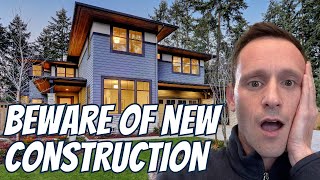
In this video, Austin Klar – a lawyer‑turned real‑estate agent and developer operating in San Francisco and Marin County – outlines the three biggest advantages and three biggest disadvantages of purchasing a new‑construction home, whether a condo or single‑family residence in a larger development. He begins by establishing his local expertise and invites viewers to contact him for personalized market assistance. The pros he highlights are: (1) move‑in ready homes featuring modern, energy‑efficient appliances, new windows, high‑quality insulation and luxury amenities such as gyms, pools and rooftop spaces; (2) lower short‑term maintenance costs and protection from builder’s and manufacturer’s warranties; and (3) developer‑offered financing incentives like mortgage rate buydowns and closing‑cost credits that can offset today’s high interest rates. The cons he discusses are: (1) higher purchase prices with limited room for negotiation because developers must protect pricing across many units; (2) elevated HOA fees driven by extensive amenities and the need to build cash reserves in the early years of a new association; and (3) the growing‑pains of brand‑new homeowners associations and boards, which may face administrative challenges that can affect property values. Klar concludes by urging prospective buyers to weigh these factors and reach out for tailored advice.
Chapters
Everyone loves the idea of buying new construction. It's modern, it's shiny, it's new, but there are some downsides. And in this video, I break down the 3 biggest pros and the 3 biggest cons of buying in a new development. So if you're thinking of buying new construction, you have the information you need to make the right decision. What's up everyone? This is Austin Klar, your lawyer turned real estate agent and real estate developer in San Francisco and Marin County. I've been a Bay Area resident for over a decade, giving me in-depth firsthand knowledge of what it's like to live and work here. If you're thinking about relocating or want more information about the market, definitely reach out to me. My contact info is in the description below. I will personally answer every call, every email, every text, and I'd be more than happy to help you. And if you like videos just like this, please subscribe to my channel and don't forget to click the bell so you're alerted every single time I post a video. All right, so this video is all about the pros and cons of buying new construction, whether it's a new condo or a new single-family home in a larger development. There are several things that you need to be thinking of that are both good and potentially bad. So let's start with the good. Pro number 1, the homes are spotless and there's no need to make any updates when when you move in. These homes are ready to go. They should have modern appliances, all of them energy efficient. Windows are new. The building is well insulated, so you should save money and be more energy efficient. Instead of moving into a home that the prior owner redesigned 10 years ago for their specific tastes and their specific lifestyle, you have something in line with today's modern standards that it's typically more well thought out, more intentionally designed for the average consumer compared to the specific intent and design of a prior homeowner. And many of these new developments, especially in the luxury space in San Francisco, for example, are built by very well-known builders very high-profile, high-end architects and designers. And a lot of the new condo buildings have awesome amenities, rooftops, gyms, lounges, catering kitchens, dining rooms, pools, you name it, most of them have them. Pro number 2 is that maintenance costs on new construction homes are typically lower. You don't need to worry about your roof aging too quickly after you move in, or your roof leaking, or your windows leaking, or the heating not working during the winter. And typically new construction buildings are covered by builder's warranty, and a lot of the appliances are still are still within their manufacturer's warranty life. So if anything does go wrong, you do have recourse and hopefully minimize your out-of-pocket expense. Whereas if you bought an old home, especially one that was, you know, well over 10 years old, like some in San Francisco and Marin that are 100 years old, you're probably gonna have to come out of pocket unless you have some other homeowner's warranty or your insurance happens to cover the issue. And pro number 3, I think is the most important. Today's higher interest rate, higher cost environment is that financing incentives are often available from new construction that aren't really available as much from existing homeowners because builders often are building at scale, like in a large new development complex. They're building hundreds of homes potentially. So they have a larger profit margin built in than, you know, the average seller of, say, one unit. And because of that margin that they have built in, they've been able to offer incentives to, for example, buy down a buyer's mortgage rate or offer cash to cover closing costs at the closing table so that buyers either have a lower monthly payment in perpetuity or for a temporary period of time or have to come out of pocket less money to get to closing. And that is huge right now where interest rates are, as I'm filming this video, you know, close to 7%. And home values are, you know, by many indices at record all-time highs. In fact, there are several new construction condo developments in the city of San Francisco right now that are offering incentives that can buy down buyers' mortgage rates into the 5s and even lower than that. So if you're buying in one of those developments today and taking advantage of one of those incentives, you would get a rate that is a couple percentage points lower potentially than the average rate if you were to go out there and just buy an existing condo or an existing single-family home. Now for the cons. Con number 1 is that new construction tends to cost more on average than existing homes, and you have less of an ability to negotiate, especially in large development complexes. The higher cost part makes sense. New builds have all of the bells and whistles of modern construction, newer windows, newer electrical, newer light fixtures, newer appliances, newer floors. So naturally they're on average going to cost more than your existing home where Things might be outdated. Maybe they were last updated 20 years ago or 10 years ago, or even like 50 years ago if it's a real fixer property. On average, because they have those modern bells and whistles, they're going to be more expensive. And everybody's out there looking for deals right now in this environment, and you're much less likely going to get a deal, at least on the purchase price, in a new construction development. Why is that? Well, developers have to set a precedent when they put buildings to market. Mm-hmm. If they have a 100-unit condo complex, and let's say there are 20, you know, 2-bedroom units in the building, if they put one of those 2-bedrooms on the market and it sells at a discount, then they're setting a bad precedent for the entire rest of their development, at least for similar units. So you're unlikely going to get a developer who's willing to budge a lot on price because it's going to hurt their overall development as a result. Whereas if you're just buying from a prior owner and it's just one unit, they don't care about the precedent that it's setting. They want to get the deal done. So you're much less likely going to get a deal, at least on the purchase price, if you're buying from a developer. But as I mentioned, one of the pros is that you might get some sort of financial incentive in the form of a rate buydown, closing cost credit, or some other credit. Con number 2 is that new construction developments, especially these luxury condo high-rises that you see in San Francisco, are going to have higher HOA fees because they come with a lot of amenities like the gyms and pools and lobbies with attended doormen. And all these other amenities that you may not find in an older condo building, like let's say a house that was converted into 2 units, you have to pay for those things, and the HOA pays for those things out of HOA dues. And because those things are very expensive, you know, for doormen, for example, you pay their salaries, you pay for their insurance. For gyms, you pay for maintenance. Pools, you know how expensive one pool is to run, you know, for a house. Pools in these amenity buildings are often larger than what you would find in a home. And so they're very expensive to maintain. So as a result of that, HOA dues for these new construction buildings, especially amenity buildings, tend to be higher. Another reason why they tend to be higher is that when new condo developments or, you know, new single-family home developments even first open, the HOA needs to build up their cash reserves to cover emergency issues that come up. And when they first open up, they don't have any reserves unless they are self-funded by the developers. So oftentimes what you see is that HOAs during the first few years of inception, they're higher than they might be, say, 5 to 10 years down the line because the HOA is trying to build up those cash reserves. And con number 3 of buying into new construction is that the homeowners associations there and the boards of directors there are new. The building is new. So they haven't worked out a lot of the administrative issues that might come up. There might be issues that they don't even know about that they're going to face in the future and have to figure out kind of on the fly because it's the first time that they're dealing with them. So oftentimes new HOAs tend to be a little bit messier administratively, even if they're run by you know, super high-end professional management corporations, the reality just is there are things that you learn with every building. No two buildings are the same. So there are some growing pains from an administrative standpoint with HOAs, especially in newer developments. And the reality is, if the HOA doesn't get its act together quickly and things in the building, say, go unmaintained or aren't addressed properly, that can actually erode the value of a unit that you purchase in that building or in that development. So it's really important that the HOA and the board stays on top of it and gets these issues under control. And running smoothly very quickly. Well, there you have it. Those are my top pros and cons of buying in a new construction development. If you're thinking about relocating or want more information about the market, definitely reach out to me. My contact information is in the description below. I will personally answer every call, every email, every text, and I'd be more than happy to help you. And if you like videos just like this, please subscribe to my channel and don't forget to click the bell so you're alerted every single time I post a video.