San Francisco Is About to CHANGE Forever (Union Square Revitalization)
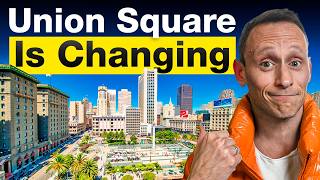
Austin Klar, a San Francisco real estate agent, walks through Union Square's collapse during COVID, when vacancy hit above 20%, and the revitalization underway from 2023 to 2025. The plan includes 200 days of programming yearly, a $4 million Powell Street redesign, office-to-residential conversion incentives, and $40 million in private capital commitments from a new Downtown Development Corporation.
Chapters
Can San Francisco's Union Square be saved? Union Square is one of the most famous public plazas in the entire country, and for over 170 years, it's been the commercial and cultural heart of San Francisco, where locals shop, tourists gather, and major events unfold. But in recent years, Union Square has become a symbol of San Francisco's challenges. During the pandemic, it seemingly emptied overnight. Visitor numbers plunged, storefronts went dark, and the national headlines cried out that San Francisco was dead. Today though, something very different is happening. Union Square is the epicenter of one one of the largest public-private revitalization projects in the country. The city, property owners, and cultural organizations are teaming up to completely reimagine what Union Square can be in the next phase of San Francisco. This is Austin Klar, your lawyer turned real estate agent in San Francisco and Marin County, and in this video we're doing a deep dive into the history of Union Square, its tough years during and after the pandemic, and most importantly, the strategies the city is implementing right now to bring Union Square back to life. So let's kick it off with how Union Square came to be one of the most important city centers in the entire country. Union Square's history goes all the way back to the 1850s when San Francisco's first mayor, John Geary, set aside a plot of land to be used as a public plaza. Just a decade later, as the country hurtled toward Civil War, pro-Union rallies were held at that plaza, and that's how it got the name Union Square. And over the 20th century, the city really developed into the retail hub that we know and love today. By the 1930s, department stores like Macy's and I. Magnin and Saks came to define the area. Then something revolutionary happened in 1939 that completely changed the game for Union Square— the world's first underground parking garage beneath a public plaza. That move reinforced Union Square as a go-to destination for the increasingly more car-loving public and as a shopping center for downtown. And it wasn't just about shopping. Hotels, theaters, art galleries, restaurants— all of that completely blew up in and around the square. By the late 20th century, Union Square was known as a high-end retail hub that places like Fifth Avenue in New York City and the Magnificent Mile in Chicago. In 2002, the square underwent a $25 million redesign. Renovation created open granite plazas, café seating, palm trees, and space for public events, largely what it looks like today. And it really emphasized Union Square as both a shopping magnet and a gathering place for locals and tourists. And it worked like a charm. By the 2010s, Union Square was thriving. Vacancies were— So low. Staggeringly low at around 3%. It was basically completely full. Millions of tourists passed through there every single year. Conventions at Moscone Center overflowed into Union Square, and the rise in international tourism, particularly from Asia, fueled luxury sales in Union Square. There was zero doubt Union Square was San Francisco's crown jewel. And then came 2020. Before I tell you about what happened in 2020, if you could do me a huge favor, if you like videos about San Francisco neighborhoods, its parks, lifestyle, current events, new developments, or all things San Francisco real estate, subscribe to my channel because I make videos about that stuff every single week. And if you're thinking about buying a place in the city and want to know more about how all the changes that we're seeing citywide are impacting our local housing market, reach out to me. I was a lawyer at one of the biggest law firms in the world before getting into real estate, and I've helped numerous people relocate here from all over the country. I'd be happy to be a resource for you. My contact info's in the description below. Reach out anytime. Now back to what happened to Union Square starting in 2020 and all the strategies the city is implementing to turn it back around. When the pandemic hit, San Francisco locked down sooner and for longer than most other places in the country. Offices went remote, conventions were canceled, crime and homelessness rates surged, tourism completely collapsed, and all of that was disaster for Union Square. Foot traffic fell to near zero in early 2020. Retailers there who depended on that foot traffic saw revenue completely disappear. A lot of retailers limped along for another year or so, but many of them closed immediately. And the statistics are pretty dire. In 2016, Union Square retail vacancy vacancy was around 3%, like I mentioned earlier, but by 2023, it had surged to above 20%. That meant almost 1 in 4 storefronts sat empty. And remember, Union Square isn't just like local retail. We're talking about huge luxury names. And when those companies start pulling out, the impact isn't just economic, it's reputational. Anchor tenants began to disappear. Macy's and Saks, which had been fixtures on the square for decades, announced their departure. Bloomingdale's and Westfield nearby at the Westfield Mall, they're gone. Entire blocks along Powell Street saw multiple vacancies as and at the same time, the lack of activity there created safety concerns. Fewer eyes on the street meant more incidents of crime and more visible homelessness. Media narratives piled on, as media does, declaring Union Square unsafe, unclean, and totally in decline. Basically, by 2022 and 2023, Union Square had become the symbol, the national poster child for urban decline in the United States. So what had once been the pride and joy of San Francisco, its cultural and commercial hub, now represented its challenges. But this is where the story shifts, and for the better. By 2023 and heading into 2024 and into 2025, the city launched an all-out campaign to bring Union Square back, to completely turn it around. And I can't overstate the scale of these efforts. It's a mix of both public and private. We have so many stakeholders all betting on the turnaround of Union Square and investing in it specifically. And happy to report, we're already starting to see positive results, and I'm going to go through all of that right now. The first component of building a new and improved Union Square centers around innovative ways to activate the space, and the city has implemented a number of different programs to do Exactly that. And one of the most exciting of those efforts is the city's partnership with Biedermann Redevelopment Ventures, which famously transformed New York City's Bryant Park from a crime-ridden space into one of the most famous and most loved public parks in the country today. In late 2024, Mayor Breed announced the partnership that would bring 200 days of programming put on by BRV to Union Square in 2025. The programming there is very wide-ranging— yoga and tai chi classes in the mornings, chess and art workshops in the afternoons, concerts and movie nights in the evenings. There's a Tulip Day when thousands of fresh tulips carpet the plaza, a Winter Walk which brings holiday markets, lights, performances, ice skating. The idea is to make Union Square a destination for both locals and tourists, not just a place that you bring your relatives to or your friends to when they're in from out of town. If you're a local, there's stuff for you to do from family-friendly activities to adults-only activities, and that's on top of the awesome shopping and food that still exists in Union Square and that's coming back to Union Square, which I'll talk about later this video. Afternoons on the Lane is another new initiative implemented by the mayor's office, the Union Square Alliance, and the Office of Economic and Workforce Development. The city is debuting a series of live music and DJ sets centered on Maiden Lane, which is one of the prettiest streets in the area. The goal is to make it into a more like European cafe-style street— new chairs, tables, afternoon food and drinks, all sponsored by local businesses. And in addition to that year-round programming that they're implementing, seasonal activations are going to be a big part of the comeback as well. Think of like holiday markets in December, flower markets in the spring, cultural festivals in the summer. The goal is to create a sense of tradition in Union Square, bring people back at the same times every single year to Union Square. In 2025 alone, the Union Square Foundation has planned dozens of seasonal highlights. Lunar New Year celebrations to global food festivals. Winter Wonderland space they create with giant Christmas trees and ice skating rinks are always popular, and it's great to see more of these take place throughout the year. And there are also non-seasonal events held in Union Square. The 2025 NBA All-Star Game, for example, had several offshoot events in Union Square specifically, and that was a huge boom to the local economy. It brought over 140,000 visitors to the area, $200 million in direct spending revenue, and it impacted over 1,700 jobs. The city's also expanding its very popular Entertainment Zone program into Union Square and other parts of the surrounding downtown area. If you don't already know about Entertainment Zones, basically legislation was recently enacted that allows bars and restaurants to sell alcohol to go during certain designated hours. So what that means is people can actually enjoy alcohol outside of restaurants themselves. They can enjoy them in public open spaces. The city holds events in these entertainment zone areas, which are sponsored by local businesses, Halloween parties, St. Patrick's Day events, live music and activities, and thousands of people attend every single one. They bring a ton of foot traffic and revenue to the surrounding businesses and the sponsoring businesses in particular. And under the mayor's most recent initiative, he announced in September, the heart of the City Initiative. There are new entertainment zones being created specifically in Union Square, on Ellis, and on Maiden Lane. So basically just giving people other ways they can use these existing streets. These events have already proven wildly successful, in particular the ones that have happened on Front Street, which is nearby, and I think we're going to see very similar success to these new ones in Union Square. The Shared Spaces program is another initiative that is changing how people experience Union Square. The Shared Spaces program was created during the pandemic and allows restaurants and cafes to utilize outdoor space. So it's the reason why you saw all these parklets pop up on Fillmore Street, Chestnut Street, Union Street, Polk Street, Hyde Street, Castro, all these places. It's why you have those outdoor café spaces in Union Square as well. The city is encouraging outdoor dining. They're encouraging outdoor drinking in these designated spaces to get more activity on the street, which in turn leads to cleaner streets, safer streets, and an overall more pleasant experience. So that's activation of public space. The next pillar Of this improvement to Union Square is a redesign of its core spaces, and there's probably no space more in need than the Powell Street corridor. Union Square is only as strong as the streets that feed into it, and that's exactly why the city and the Union Square Foundation are focusing a lot of effort and a lot of money on revamping Powell Street. The iconic cable car line on Powell was historically one of the busiest pedestrian corridors in San Francisco, but in recent years, vacancy and underinvestment made it far less welcoming. In fact, at a time when the city's retail vacancy rate is is at just under 7% in September of 2025 when I'm filming this video. Powell Street's vacancy rate is 10x that, over 70%. It is staggering how empty that street has become, and the city is working on a complete redesign of that area. In 2023, Mayor Breed announced a $4 million project for the redesign of the Powell Street corridor, and in 2024, concept plans were announced, renderings were provided for that redesign, what it would look like. The design, led by Field Operations and SiteLab Urban Studio, reimagined the area with new sidewalks, new landscaping, new lighting, and public art to reestablish Powell and the cable car stop there as a vibrant gateway into Union Square and the rest of downtown. And the hope is to complete the redesign before 2027. They're also raising several million dollars to provide grants to retail vendors there to fill up vacant storefronts and bring new vibrancy to the area. Made in Lane, which I talked about earlier, also got a major overhaul. A former red light district before the 1906 earthquake, Made in Lane is home to an incredible collection of boutiques and art galleries and serves as an important corridor linking Union Square to all the shops and, you know, cafe spaces on Grant and Stockton. Earlier I talked about ways the city is changing how people use Maiden Lane, but they also gave Maiden Lane an overhaul as well with new hardscape, new softscape, new flowers, new planters, new lighting, new public art. So it's both about improving how the area looks, but also giving people more things to do and just improve the overall experience. Another pillar of Union Square's revamp is commercial to residential adaptive reuse. The city basically wants to change what has been traditionally very heavy office into a more residential-friendly area. The pandemic left downtown San Francisco's heavy office core with millions upon millions of square feet of vacant space, and part of the city's efforts to revitalize all of downtown, not just Union Square, is to make it more residential-focused, bring more residents in the area who can use that space 24/7 instead of just 9 to 5. So in 2023 and 2024 and into 2025, San Francisco passed a series of ordinances to make office-to-resi conversions easier, relaxing height limits, relaxing zoning restrictions, changing building codes, basically to streamline the whole process and promote that development. The efforts backed by the Downtown Revitalization Financing District, which offers financial incentives to developers to take on these projects. It's definitely a long-term play, but the goal is to just turn it into a 24/7 space. And just recently, at the beginning of September, the mayor announced his Heart of the City initiative, which focuses in large part on Union Square and in particular doubling down on that office to residential conversion. We obviously need the financial markets to improve. We need interest rates to come down. Construction costs are out of control. So other things need to happen to promote that development. But it's good that the city is doing what it can to get out of the way. Another awesome program the city's been working on that has already seen incredible success is the Vacant to Vibrant program. Instead of leaving empty storefronts as dead space, the city and Union Square Foundation have invited local entrepreneurs to launch temporary pop-ups in these spaces, basically providing grants to these businesses to cover permitting and setup costs and give these businesses the chance to experiment with a new space they might not otherwise have invested in. And a lot of these companies with temporary leases are signing long-term leases because of the successes that they've had. Since 2023, when the program launched, the city has helped nearly two dozen businesses access about 30 different storefronts, and a dozen of those businesses have already signed long-term leases. And there are more on the way. Just last week before I'm filming this video, Dandelion Chocolate announced another Bake into Vibrant program pop-up specifically in Union Square itself. And beyond the pop-ups, there's a ton of new retail and restaurant activity in the area as well. Since January of 2025, Union Square has seen 15 new store openings, including Nintendo's new flagship store, which has drawn record crowds, lines literally around the block. Additional anticipated arrivals: Pop Mart, a new Zara flagship, an Eighth Rule, which is a bar in the Westin St. Francis by Golden State Warriors Steph Curry and celebrity chef Michael Mina, plus a return of Michael Mina's Bourbon Steak, which is one of the best steakhouses I've ever been to in San Francisco. Patek Philippe opened a new store. Breitling opened a new store. Rolex opened a new store. Goyard announced an expansion on Grant Street. Brunello Cucinelli's new store is doing really well. Hermès is doing very well. There are so many high-end brands thriving in Union Square, and the vacancy growth rate has slowed meaningfully, and I think it's going to correct and head in the negative direction, meaning more stores will be coming in than are leaving in Union Square. in the coming year. And none of this would be possible if people weren't feeling safe enough to come to Union Square. And the city has done a tremendous job to improve street conditions, crime, and homelessness in particular in the area. For example, in February 2025, the mayor's office and the SFPD launched a hospitality task force focusing on accomplishing that goal through a multi-pronged approach. New police presence, increasing police presence, enabling higher level of security, quicker response times, deploying multiple teams of officers over as many as 20 hours a day. Day, just increasing safety around the clock and working directly with local businesses and hotels to make sure that their needs are met and people feel safe, especially at large events and conventions. But not just those, literally every single day. The work done has already seen incredible results. Property crime down, violent crime down, murder rates down to 60-year lows, tent encampments down. There's increased foot traffic to our downtown because of these conditions. We have more people returning to office, we have more conventions coming back to the city, tourism is rising again. It's all because everything feels safer. And you might be wondering how a lot of this is being funded. None of this is cheap, and there are a number of ways that it's getting funded. But one of those ways, I think, which is really innovative and cool to see, is private funding. Specifically, a new nonprofit established in 2025 called the Downtown Development Corporation, helmed by a board of directors made up of a former U.S. ambassador, tech entrepreneurs, a union leader, and a museum trustee. The nonprofit public benefit corporation is working closely with the to deploy private capital and their expertise in consulting to help launch a lot of these initiatives the city's been working on. Most recently, the mayor announced that they've secured about $40 million in capital commitments to start putting these programs into place. So it's not just the city. Everyone— local businesses, big businesses, some of the most influential people in tech and industry— are all invested in seeing Union Square, the next phase of Union Square, come to fruition. If you want to stay up to date on all the exciting things that are happening in Union Square and other parts of the city, current events, developments and all things San Francisco real estate, subscribe to my channel because I make videos about that stuff every single week. And if you're thinking about buying a place in the city, having trouble figuring out what the right neighborhood is for you, or want to understand what these changes mean for the local real estate market, reach out to me. I've lived here for over 13 years. I've helped numerous people relocate from all over the country. Happy to be a resource for you. I'll put my contact info in the description below. Reach out anytime. And before you go, check out another video I made about the beginning stages of San Francisco's comeback. Back. I go over what's happened with office vacancies, retail vacancies, tourism, crime, homelessness, and a little bit about the housing market. I'll link that in the description below. Go check it out. I hope you enjoyed the video, and I'll see you in the next one.










