San Francisco Neighborhoods Ranked From WORST to BEST
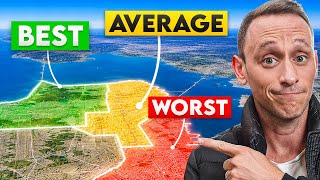
In this YouTube video, former lawyer‑turned‑real‑estate‑agent Austin Klar expands on his earlier tier‑ranking of San Francisco neighborhoods. He briefly recaps his original D‑ to S‑tier list of 19 neighborhoods, then introduces five additional areas—SoMa, the Mission, North Beach, and Cole Valley—assigning each a new tier based on a mix of lifestyle appeal and investment risk. For each neighborhood he outlines specific pros (walkability, food, transit, parks, architecture) and cons (crime, homelessness, noise, lack of parking, seedy pockets), often citing recent crime statistics, office vacancy rates, and local news reports. Klar explains why SoMa falls to D‑tier despite its amenities, why the Mission lands in C‑tier, why North Beach is placed in B‑tier, and why Cole Valley earns an A‑tier rating. Throughout he emphasizes his expertise as a former top‑lawyer and current real‑estate agent, urging viewers to subscribe, join his newsletter, and contact him for relocation or buying assistance. The video serves as an opinionated guide for prospective residents and investors, blending personal experience, market data, and lifestyle considerations.
Chapters
San Francisco has over 80 subdistricts, each of them vastly different from each other, which can make finding exactly the right neighborhood really challenging. And the wrong neighborhoods here can be really bad, not only from a lifestyle perspective, but because it puts your investment in a home at real risk. This is Austin Klar, your lawyer turned real estate agent in San Francisco. And about 2 years ago, I posted a video on my channel ranking in tiers some of the most popular and some not so popular neighborhoods in San Francisco to help guide people looking to relocate to San Francisco. But since there are so many different pockets of this city, I couldn't get to all of them without making like a 4+ hour video that, let's be real, nobody was gonna watch. And so many people in the comments lashed out saying, how could you not talk about this neighborhood or that neighborhood? So it's finally time to make a part 2 to that video, slotting in some neighborhoods that I didn't get to in my first one that a lot of people wanted me to include. And before I get into what those neighborhoods are and where I rank them, let's go over the rankings from my first video, from D-tier to S-tier. And I I will be very brief. If you want to watch the full video, it's linked in the description below. So in that video, I ranked 19 different neighborhoods. On the D tier, I put Bayview, Hunters Point, the Tenderloin, and the Civic Center. On the C tier, I put Sunset, Nob Hill, and West Portal. Honestly, if I were remaking that first video today, I'd probably move West Portal up to the B tier. It's one of the hottest real estate markets in the city right now. There are a ton of new restaurants that have opened up in the area, a lot of renewed foot traffic in the area, especially along the commercial corridor of West Portal Avenue. So I'd probably move it up if I was remaking that video. I've got a full video about West Portal on my channel. I'll link that in the description below as well if you want to learn more about why it's such a hot market right now. My B tier from the last round was Noe Valley, Jordan Park, the Inner Richmond, and Lake Street. And actually, now that I think about it more, it's kind of hard to put West Portal on the same level as some of these neighborhoods. So I know I'm kind of waffling now. It's definitely a wobbler. My A tier in the first round was Russian Hill, Cow Hollow, the Marina, Seacliff, and St. Francis Wood. And my S-tier, which is like my GOAT tier, was Pac Heights, Presidio Heights, and Presidio Terrace. If you want all of my rationales for these rankings, go watch the video and let me know what you think in the comments. And I'm sure you're going to disagree with me, and that's fine. And now with that out of the way, we can turn to some of the neighborhoods that I didn't cover in my part 1 video that a bunch of people were talking about. And we're going to kick it off with SoMa, which I'm going to slot into my D-tier. There's a lot to love about SoMa, which makes it really hard to rank it that low. Now, when I talk about SoMa, I'm not talking I'm not talking about broader SoMa, like everything south of Market Street, and I'm not talking about certain subsections of the broader SoMa, like Yerba Buena and the East Cut. What I'm really referring to of that broader SoMa is west of those neighborhoods, basically west of 5th Street, south of Market, out to around Van Ness Avenue. SoMa is like the city's connective tissue. You have proximity to BART, Muni, Caltrain, the highways. You've got a mostly flat neighborhood, making it incredibly walkable. You've got some of the best weather in San Francisco. It's also got great food. Close to the ballpark, it's close to Union Square, there are a ton of great bars in the area, it's close to the Theater District, and homes there are unique. It's a lot more modern homes, newer construction, converted loft-style buildings than what you would get in other neighborhoods like APAC Heights or Inouye, for example. And this is because during the 20th century it developed into a heavier industrial use district because it was so close to the water in San Francisco Bay. So it became working class, lower middle class community that supported the industrial boom of San Francisco. So that's why it has a distinct character within the broader San Francisco compared to a lot of other neighborhoods higher on my tier list. So you might be asking yourself how it's ranked so low with great qualities like food and nightlife and weather and walkability and easy transit access. No doubt the pros are definitely there, but the cons are there too, and they really impact day-to-day life if you're living in SoMa. Historically, a bulk of residents chose to live in and visitors chose to visit the area because of its connectivity. Office workers could easily get to work, transit riders could easily get to the East Bay or the South Bay or to downtown, and Over the past several years, especially during and immediately following the pandemic, those benefits that the neighborhood historically provided basically evaporated. Remote work took over. Office vacancy skyrocketed. Crime skyrocketed. Homelessness skyrocketed. Retail and restaurants shut down. People wanted more outdoor space. They wanted home offices. They wanted larger places, and they didn't have to pay the big bucks to live in these smaller spaces closer to downtown San Francisco because they didn't need to live in the city anymore. They could work remotely. Lack of foot traffic., and the business closures led to an increase in crime and homelessness and drug use. So an overall decline in street-level conditions, and those changes really changed the SOMA lifestyle and are the principal reasons why I'm ranking it so low. A higher proportion of theft, larceny, drug use, break-ins, homelessness— all that is present in this area comparative to other parts of San Francisco. To be fair, the city's been working really hard and has been pretty effective in reducing a lot of these issues. But if you look at statistics on San Francisco's crime dashboard, you could see a high concentration of Those issues still persist in and around SoMa. In fact, SoMa was the most violent neighborhood in both 2024 and 2025, followed by the Tenderloin and the Mission. And the San Francisco Chronicle reported that more than 40% of the city's overdose deaths occurred in the Tenderloin and SoMa areas. Office vacancies as of Q4 of 2025 in Bader San Francisco, closer to 30%, but in the western part of SoMa, over 50%. Key retailers have shuttered, especially like the San Francisco Center Mall. There are great destinations and things to do in SoMa, but parts of the area feel dead. Or feel uncomfortable when you're walking around. It's quite variable block to block, and a lot of people don't like that unpredictability and that instability. So despite some of the pros that I talked about, which are very real, I'm slotting it into my D tier. And I hope that if I remake this video in another, like, 5 years, I can put SOMA on a higher tier because there's so many great things that it offers, and it's such an important part of our city. If you want to learn more about the SOMA neighborhood or any other neighborhood in San Francisco, or want to learn more about current events, new developments, San Francisco lifestyle, or its incredible history, subscribe to my channel because I make videos about that stuff every single week. And if you're thinking about buying a place in San Francisco and want a better understanding of how the broader changes we're seeing across San Francisco are impacting our local real estate market, reach out to me. I was a lawyer at one of the biggest law firms in the world before getting into real estate, and I've helped numerous people relocate here from all over the country. I'm happy to be a resource for you. I'll put my contact info in the description below. Reach out anytime. Now back to my rankings, and we're going to move on to a neighborhood that so many people asked me to talk about and angry that I didn't talk about in my first part tier list, The Mission. And I'm putting The Mission on my C tier, and I know people are going to give me a lot of flack for that. C sounds bad. I know nobody like aspires to get Cs in school, but in my system of rankings, it means it's an iconic neighborhood that can be a great fit for a lot of people, but it's definitely not a fit for everyone. And there are real trade-offs that prevent it from being higher in my rankings. The Mission has two truths living side by side. It's at the same time one of the most culturally important neighborhoods in the city with an absolute absolutely fire food and nightlife scene, but it's another example of potentially unsettling block-by-block neighborhoods, especially around key transit nodes. So basically the same cons that make me put SoMa on a lower tier, I'm putting the Mission on a lower tier, but the pros of the Mission in my view outweigh the pros of the SoMa neighborhood, so it is a little bit higher on my tiers list. If you want a neighborhood that still feels like it has a heartbeat, murals, multi-generational families, corner taquerias, community events, street life, The Mission is that. It is historically a center of Latino culture in San Francisco, and you feel that in the food, in the art, the architecture. It's everywhere. And it's basically a cheat code for eating and drinking in San Francisco. From multiple Michelin-star restaurants to the street food vendors and corner taquerias, it is an absolutely A++ food scene unrivaled anywhere else in San Francisco. The Mission is also warmer and sunnier than most other neighborhoods in San Francisco as well. So you can really take advantage of its walkability. Around main commercial corridors, bar hopping, restaurant hopping, walking to those major BART stations, biking in designated bike lanes that will take you to downtown. And it's a good thing it's walkable in large part because it's almost impossible to find street parking in the neighborhood. It's a lot more dense. It's a lot busier, a lot harder to find parking. The Mission is also home to one of the most iconic parks in San Francisco, Dolores Park. Incredible views of the San Francisco skyline, great weather, great open green space, an awesome place to have a picnic or hang out in the afternoon. There's also incredible architecture in the Mission from the Mission itself. Which is believed to be the oldest standing intact building in all of San Francisco, to the tree-lined streets and the old Victorian buildings. So again, it's kind of surprising that something this great ends up on a place other than A tier, but the cons are very real, just like with SoMa. It all comes back to the day-to-day experience you get walking around the neighborhood. Are you going to walk your dog around at night? Are you going to feel comfortable with you or your partner coming home after a long day of work in the evening and walking home? Whether the sidewalk is clean and navigable, a lot of the Mission's negatives are highly concentrated but they're highly concentrated around the areas that people most frequent, the transit hubs and the main commercial, like, restaurant and bar hubs of the neighborhood. According to the San Francisco Chronicle, the Mission had the third highest number of violent crimes per 1,000 residents in 2025 and had among the highest overall crime rates in the city in both 2024 and 2025. San Francisco Standard reported last year that public drug use and intoxication had surged in recent months in the Mission, especially surrounding the 16th Street BART station. The 24th Street BART plaza has been the center of illegal vending and sale of stolen goods. Does that mean the entire The Mission is unsafe? No, definitely not. It's about where you are within the Mission itself. I know several people who live in the Mission. They absolutely love it. They live on beautiful streets, very walkable streets, clean streets, but it's not like that everywhere. So it's not necessarily for everyone. If you want walkability and great food and nightlife and good weather, then the Mission is a no-brainer. If you want quiet streets and easy parking and sort of a reprieve from the hustle and bustle of San Francisco, then it's not the right neighborhood for you. So for now, the Mission's staying on my C tier. Next on my list is the first neighborhood neighborhood that I moved to when I moved to San Francisco, and honestly, I don't know how I forgot to include it in part 1 of my tier rankings, and it was one of the most talked about neighborhoods that I excluded. The North Beach neighborhood is easily one of the most enjoyable, livable, lifestyle-forward neighborhoods in San Francisco. Great walkability, great food, great energy, but it stopped short of the A-tier because of the architecture, the noise, and some pockets of seediness. It was absolutely the perfect neighborhood for me to move to when I first moved to San Francisco. I was mid-20s, I was single, and I had a brand new lawyer job in the Financial District. I could walk to and from work about 20 minutes door to door with barely an incline on that walk. The walk was next to Joe DiMaggio and Washington Square Parks, which are smaller parks in the city, but they're both awesome. Washington Square is like open green space surrounded by a ton of restaurants. Joe DiMaggio is a playground with basketball courts, tennis courts. There's an indoor swimming pool. A library is there. And then the walk to downtown along Columbus is lined with Italian food galore, which is easily my favorite food. Molinari's Deli is hands down my favorite place to get a sandwich in San Francisco, and it's still there after all these years. I would be devastated if something happened to it. Today, when I go back and visit North Beach, people are always out and about. They're always walking around. There are dogs everywhere. It's a great neighborhood. The coffee shops and restaurants are packed with people. There are lines out the door. There are people sitting in parklets. It's got great energy. You can walk to pretty much anything you want in the neighborhood— the parks, the restaurants, bars, you name it. I didn't own a car for the first several years that I lived in North Beach. I was 2 blocks from multiple grocery stores. I was a block from the gym. Like I said, I was walkable distance to and from my office, so I got by without a car just fine. I eventually bought a car just because I'm from SoCal and I like driving and I missed having a car, and I eventually sold it like within a year and a half because I was only driving it about once or twice a month. It just wasn't worth it at all. So North Beach is like genuinely one of the few places in San Francisco, depending on like your work situation, where I think you can actually genuinely get by without a car. It's also really close to the waterfront. It's close to Fisherman's Wharf and Pier 39. It's close to the Embarcadero. It's close to great shopping, restaurants, and bars in Russian Hill. Hill on Polk Street and Hyde Streets. So definitely a lot to love, but it's out of my A-tier, and really that's mainly because of the architecture. It doesn't have the same charm that places on my A-list do. The buildings are, for the most part, older. They don't have the same flavor and character as like a Russian Hill or a Seacliff, for example. When you think of quintessential San Francisco, it's not really North Beach architecture that comes to mind. It's also not the most peaceful place, kind of like the Mission. It's packed all the time, and because pretty much no matter where you live in North Beach, you're so close to all of these amenities, it just feels busy, especially late at night and on the weekends when everybody is visiting the area to enjoy all those awesome amenities. It's also home to a small concentration of the remaining strip clubs in San Francisco. The old Embarcadero Freeway used to terminate in North Beach near Broadway, and for that reason, all these, you know, strip clubs set up shop right at the freeway exit, and a lot of them are still there. So, you know, that sector of North Beach is a little seedy in my opinion. It has a lot of great qualities, but it's still geared toward a very specific demographic and a specific lifestyle. lifestyle, and there are definitely some negatives to it. So that's why I'm slotting it into my B-list. And the last neighborhood that I want to talk about today, I'm slotting it into my A-tier, and that's Cole Valley. I've got a full video on Cole Valley if you want a deep dive. I'll link that video in the description below. You can go check it out. But this is the trimmed-down version. Cole Valley is A-tier for me because it hits the rare sweet spot of neighborhood charm, walkability, nature access, transit convenience, and calm living. It's not boring or isolated. It is smack in the center of the city, in the heart of the city, but it doesn't have a lot of the negatives that you might think would come living in the center of a major metropolitan area like San Francisco. It really feels like a quaint, smaller village within the broader city. There's a small commercial strip on Cole Street, and it hits all the right notes: coffee shops, grocery store, bakeries, casual restaurants, small retail. It's a happening area. There's always people around. Not quite to the level of a North Beach or a Mission level poppin'. It's just a cute, charming little neighborhood center. And where you live in Cole Valley, you can walk there because Cole Valley is one of the smallest neighborhoods in San Francisco. It's only a few blocks wide, a few blocks long. So even though it's one of the hillier neighborhoods in the city, you're not experiencing those hills over long distances. It's very easy to get around. And if you live there, you will actually walk around because the weather is relatively mild because it's right in the center of San Francisco. It doesn't get as much of the cold and fog fronts coming in from the Pacific Ocean. It trends warmer than most of the west side of the city. You're also right next to Golden Gate Park and the Panhandle, so you have immediate access to incredible parks. There are multiple Muni lines. Lines, both bus and trolley, that come through the neighborhood, so you're still connected to other parts of the city, which is great if you work downtown, for example. You're also close to so many other awesome neighborhoods like Haight-Ashbury, like Noe Valley, like the Inner Sunset. So if there's something you want that's not in immediate Cole Valley, you can probably get it without going that far. And the architecture here is stunning. This is what I think about when I think about architecture in San Francisco— beautiful Victorian and Edwardian homes, tree-lined streets, vibrant colors, just classic San Francisco. Very few examples of modern architecture. Most of it is historic homes. So in my view, it's an all-around perfect blend of urban and suburban with modern convenience and classic San Francisco character. So for those reasons, it's on my A-list. Well, there you have it. That's part 2 of my neighborhood rankings. Obviously these are just my rankings. I would love to hear where you would slot these, and I would also love to hear what neighborhoods you want me to talk about that I haven't talked about yet. And if you're thinking about buying a place in any of these neighborhoods or any other parts of San Francisco and you're trying to figure out if those places are a good fit for you and your lifestyle, reach out to me. I've lived here for over 13 years and I've helped numerous people relocate here from all over the country. Be happy to be a resource for you. I'll put my contact info in the description below. Reach out anytime. And if you like videos about San Francisco real estate, lifestyle, history, current events, or new developments, subscribe to my channel because I make videos about that stuff every single week. And if you want the biggest San Francisco headlines every single week delivered to your inbox, I've got a weekly newsletter. I'll put a link to subscribe to the newsletter in the description below. Would love to have you on there. I hope you enjoyed the video and I'll see you in the next one.










