San Francisco's Housing Market Just Shifted (Here's Why)
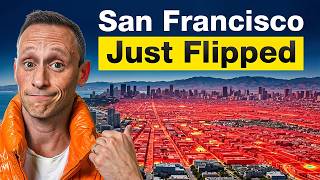
In this September 2025 video, former lawyer‑turned‑real‑estate agent Austin Klar explains why San Francisco’s housing market is undergoing a rapid turnaround. He links falling office and retail vacancies, reduced crime, declining homeless encampments, rising tourism, new jobs, and a modest dip in mortgage rates to a surge in demand that outpaces the city’s limited housing supply. Klar presents data from sources such as Apartment List and Zumper showing the nation’s fastest rent growth (4.7% metro‑wide, 11.5% in the city proper) and highlights the competitive rental market, where units receive dozens of applications and bidding wars have returned. He then examines the multifamily sector, noting modest price gains (10% per unit for 2‑4‑unit buildings, 6.6% for 5‑unit buildings) but flat cap rates, constrained by high financing costs, construction expenses, and strong tenant protections. Absorption rates have risen 60% year‑to‑date, yet monthly supply remains in buyer‑friendly territory. Klar moves to single‑family homes and condos, where sales have accelerated (68% of single‑family inventory sold YTD vs 48% last year) and monthly supply has dropped to 1.5 months for homes and similarly low for condos, indicating a seller’s market. He cites multiple recent transactions with 4‑11 offers and sales well above asking price. Throughout, Klar stresses that limited new supply, continued population inflow, and even with mortgage rates still above 6%, demand will keep pushing prices upward. He concludes with a call to action for viewers to subscribe, reach out for personalized market advice, and watch a companion video on broader city‑wide trends.
Chapters
San Francisco's housing market is shifting right beneath our feet just as the city is starting its impossible comeback. Falling office vacancies, falling retail vacancies, falling crime, falling homeless encampments, rising tourism, new jobs, new conventions. Interest rates have reached the lowest levels that we've seen all year. And when you combine the drop in mortgage rates and improved city conditions with renewed population growth, new jobs, and an extreme housing shortage, you get exactly what's happening in San Francisco's housing market right now. This is Austin Klar, your lawyer turned real estate agent in San in Marin County, and San Francisco's housing market has become one of the most competitive in the entire country. In this video, I'm gonna show you the receipts so you have actual numbers backing all of this up. It's not just rhetoric. I'm gonna break down what's happening in the rental market, the multifamily market, the single-family market, the condo market, all of it. And I'll give you specific examples of what clients and friends have been going through in each of those markets over the past several weeks. So let's get right to it and start with the rental market and the related multifamily market, because I think the multifamily market is where the— the most opportunity is right now in San Francisco. According to a recent report from The Apartment List, the San Francisco metro currently has the nation's fastest rent growth with a 4.7% increase over the past year. And the fastest growth within that broader metro is happening in the urban core of San Francisco itself. San Francisco proper has seen rent prices spike a staggering 11.5% over the past year. Zumper, a different company, has a slightly different measurement, but still showing staggering 9% growth across bedroom counts in the city. And this rent growth is really centered around places like Mission Bay, for example, where you have a huge influx of new jobs, population growth, new restaurants, new activations. And the reason rent is able to grow so fast in these places is because it's newer housing stock. So it's not subject to rent control. I don't handle rentals personally, but I work very closely with agents in the city who do. I refer them a lot of business and they always tell me what's going on in the rental market because it is directly related to what's happening in our home sales market. and these agents told me they placed 3 tenants recently in the past couple of weeks. For each place that they placed these tenants, there were over a dozen applications on each of them, and one of them had over 40 applications. So the rental market is extremely competitive right now. And when things are that competitive, how do people stand out? You know, they can do only so much on paper. The real way to stand out is by upping their price. Bidding wars are back. Even in the rental market. So what we saw during the pandemic and shortly after the pandemic where rents were falling below their pre-pandemic levels and you didn't have as much rent demand as you did previously, we're seeing the opposite now and it's hypercompetitive. I helped clients buy a place in Kentfield up in Marin County. They were living in a condo in Jordan Park. Instead of selling their condo, they've decided to rent it. They're softly marketing it off market for $15,000 a month. It's a pretty big and very nice condo and Jordan Park's a nice area. Before they even started marketing it broadly to the public, they got an offer for over ask, $16,000 a month, and eventually rented it out to someone else for $16,500 a month, all before even coming to market. So I can't overstate how difficult the rental market has become, and it's a huge change from what we were seeing during the pandemic. As of when I'm making this video in September of 2025, rents are barely below their pre-pandemic levels, and I would bet that by the end of the year, we're going to see rents eclipse their pre-pandemic peaks. And all of this is defying broader rent trends. In California, rents are only up about 1%, and nationwide they're actually down over that same period. And in places like Austin Klar, where rents absolutely skyrocketed during the pandemic, we're seeing more drastic drops in rent, down 6.5%. We're seeing drops in their home sales market as well. So what's happening in San Francisco right now is much different than what we're seeing nationwide. It's driven by all the positive changes we're seeing Renewed population growth, all the new jobs coming, improved city conditions, all of it is interrelated and having an impact on the rental market. And we're probably going to see this into the foreseeable future because we don't have a lot of housing supply that can satiate or alleviate that demand. We have a ton of incredible projects in the pipeline in progress right now. Some of them have broken ground, some of them are just making their way through planning. Many of them are years before breaking ground, years before completion. So— Austin Klar. While we have a lot of units coming, we are still very far behind the current pace of demand that we're seeing. So I think it's going to be several years before supply starts to satiate that demand if the trends we're seeing citywide continue. And what that means is you should expect rents to continue rising. And that rental outlook is having a demonstrable impact on the multifamily sales market, which I'm going to go through in a second. Before I get there, if you could do me a huge favor, if you like videos about the San Francisco real estate market, current events, new developments, about the San Francisco lifestyle, its history, subscribe to my channel because I make videos about that stuff every single week. And if you're thinking about buying a place in the city and want to better understand how all of these changes are impacting our local market or submarkets, reach out to me. I was a lawyer at one of the biggest law firms in the world before getting into real estate. I've helped numerous people relocate here from all over the country. I'd be happy to be a resource for you. My contact info's in the description below. Reach out anytime. Now back to the multifamily market, and this is where I think— the biggest opportunities are in San Francisco right now. Rents are skyrocketing out of control, but the multifamily market is more muted than that rent growth. Pricing and demand are improving, but at rates far below what we're seeing on the rental front. From a growth standpoint, for both 2 to 4 unit buildings and 5+ unit buildings, the price per unit is up. For 2 to 4 unit buildings, up 10% Q2 2025 compared to Q2 2024, but the price per foot is up just 4.6%. And for 5 unit buildings, price per unit is up 6.6%, but the price per foot is actually down 6.4% and cap rates are basically flat year over year. So depending on which metric you want to use, a different picture could be painted about the multifamily market. We're definitely not seeing as much growth in prices and in the pace of sales as we are in the rental market. And I think that's largely because the cost of financing and the cost of construction remains very high. Plus there are limitations here with multifamily buildings like rent control and different protections for tenants that can keep pricing deflated. So with interest rates as high as they are, unless you're you're able to buy a vacant building, which is very rare in the city because of those tenant protections that I referenced, it's really hard to get rental income to cover your expenses. And with the tenant protections as strong as they are, which we can talk all day about if you want to give me a call, if you buy a building that's tenant occupied, it could be many years until you're able to meaningfully update a unit and increase rent to market rates. So demand for multifamily housing hasn't quite taken off quite as much as demand for rentals has, at least not yet. But there are definitely signs of increased demand across multiple metrics. Absorption rates, which is the percent of available multi-unit buildings selling, is up 60% year to date compared to last year. Sounds like a huge jump, but we're working from very low numbers, starting from 15%, going up to 24%. So percentages can be a little bit deceiving. 60% is definitely a lot, but we're going from low numbers to slightly less low numbers. We are still very much in buyer's market territory from an absorption standpoint. Similarly, monthly supply, which is how long it would take to sell out of all existing inventory based on the pace of sales if no new inventory came to market, is down 38.8%. %. So it means demand is rising in relation to supply, but that big drop, it's from 6.5 months down to 4 months, which is sort of neutral market territory. To get real price appreciation, you need to see sustained monthly supply in the sub-3-month range. So neither of these supply-demand metrics are showing a seller-friendly market. It's still a buyer-friendly market in the multifamily sales. And that means at least for now, pricing isn't going to start meaningfully increasing like it has in the rental market, at least not yet. That said, there are instances where multifamily properties are in very high demand and go for very big prices. A vacant duplex came on the market in Pacific Heights over the summer, move-in ready, each unit 2-bed, 2-bath, listed for under $2 million, received over 40 offers and sold for over $3.5 million. I sold a 5-unit building in Pacific Heights in the spring. It was totally renovated, completely vacant, had 2 cash offers within 6 days of coming to market. So there are situations where premium rents can be generated day one without meaningful capital expenditure. And in those situations, those properties are going to be in very high demand and pricing for that will be elevated. As interest rates come down, as monthly expenses come down, and as citywide trends continue and rents continue increasing, expect the multifamily market to heat up. So that's the multifamily market. What about the single-unit market, single-family homes and condos? What's happening there and what can we expect going forward? Both of these markets took hits during the pandemic, but they've started to reverse course with rising prices, rising demand, and falling supply. Remember, more and more people are coming to the city and they are gaining confidence in the city's trajectory, becoming more willing to set down roots here and invest in the city's future through real estate. And that's having a direct impact on the housing market. For single-family homes, 68% of available homes so far this year have sold compared to just 48% over the same period last year. Monthly supply of single-family homes, a staggeringly low 1.5 months. Basically, if no new homes came to market, it would take just about 6 weeks— for the entire inventory in San Francisco to sell out for single family. Anything below 4 is a seller's market. So this is very entrenched in seller's market territory. And we're seeing the same trend with condos. Absorption rates up 46%, meaning over 46% more homes getting into contract compared to last year. Monthly supply is down 31%, meaning there are effectively 31% more buyers in relation to the number of condos for sale compared to a year ago. Inventory has remained low as well. We haven't seen inventory spike out of control in either sector either. You You would need these inventory lines to skyrocket without a commensurate increase in demand. And with how little we're building in terms of units for purchase, I don't see how that's going to happen if the trends we're seeing citywide continue. The percentage of homes on the market cutting their list price is also falling for both single-family and condos. The percentage of homes on the market cutting their list price is below the levels that we saw at the same time in the past several years. If price depreciation was coming, you would expect this number to be rising compared to prior years, but it isn't. So all of the forward-looking metrics that we analyze to determine what's going to happen with home prices in San Francisco are pointing to appreciation in the future. We've started to see it so far this year, not insane amounts like with rents, but we've started to see it so far given the supply-demand imbalance. Condo prices per foot were up 1.3% so far this year compared to last year. And, you know, condos had 5 to 6 years of downward momentum. So this is definitely a change in the market. Single family also up 1.6%. Again, not crazy appreciation, but we're seeing appreciation and that's something we hadn't seen for several years. And what these numbers don't show you is how how fiercely competitive these markets really are. With so few homes available, with falling inventory and rising demand, it is extremely competitive. We're getting multiple offer bidding war situations in both markets. And here are a few examples for you. A single family fixer in Pacific Heights listed at $1.9 million, sold for over $2.6 million with 6 offers. A single family in the Marina that was listed at $2.9 million sold for $3.65 million with 7 offers. A single family home in the Richmond listed at $2.1 million sold for over $2.8 million with 11 offers. These are just a few examples of ones that I've recently been involved in with clients, but this type of thing is happening all over the city. And it's not just single-family homes, it's happening for condos too, although not quite as competitive in comparison to what we're seeing with single-family. I submitted an offer earlier this year for clients on a condo in Pac Heights, got 4 offers, sold for $400,000 over ask. Submitted another offer for someone over in the Lake Street area, that one got 5 offers and sold for $400,000 over ask. I'm submitting an offer for clients tomorrow on a condo in Pac Heights, and I expect at at least 4 offers, if not more, and thought that it would sell for more than $500K over ask. And we'll see if I'm right about that. It's happening over and over, and not just on the north side of the city. It's happening in many, many different neighborhoods all across the city. There are definitely some pockets of San Francisco where you can still get good deals and not really have to compete. And if you want to know more about what those areas are, you can reach out to me and go all over it. But generally speaking, the market is increasingly more competitive, and it's going to continue getting more competitive if the trends we're seeing citywide continue. If we see continued falling office vacancies, more people coming back to work, more people moving here, if we see an uptick in retail, an uptick in tourism, an uptick in conventions, new city activations, new events happening all over the city, just overall improved city conditions, expect demand to rise. The more pleasant the place is, the more people are going to want to live there. And it's all supply and demand because we don't have that influx of supply to satiate this demand. It's going to continue elevating prices going forward. And all this is happening without massive drops in interest rates. As When I'm filming this in September of 2025, interest rates, you know, the average 30-year fixed mortgage is a little over 6.2%. And just in recent months with the slight rate drops compared to the same time a year ago, we've had 32 consecutive weeks of year-over-year growth in mortgage applications and 19 consecutive weeks of double-digit year-over-year growth in mortgage applications. So basically more people applying for homes than last year with rates still above 6%. So we don't need much downward movement in interest rates to get more housing demand. And if we don't have more supply to alleviate that demand, it means prices are going to rise. Well, there you have it. That's everything going on in San Francisco's housing market right now. The city's comeback has only just begun. Interest rates have only just started to fall, and the city's housing market is already coming back. If you're thinking about making a purchase and want to dive deeper into different geographic sectors or different subsectors of the overall market, reach out to me. I've lived in the city for over 13 years, and I've helped numerous people relocate here from all over the country. I'd be happy to be a resource for you. My contact info's in the description below. Reach out anytime. And if you like videos about San Francisco real estate, the San Francisco lifestyle, current events, new developments, San Francisco history, then subscribe to my channel because I make videos about that stuff every single week. And before you go, if you want to learn more about all the different facets of San Francisco's impossible comeback, what's going on with office, retail, crime, homelessness, tourism, all of that, and how it's all interrelated, I've got a separate video on that that I'll link in the description below. Go check it out. I hope you enjoyed the video and I'll see you in the next one.










