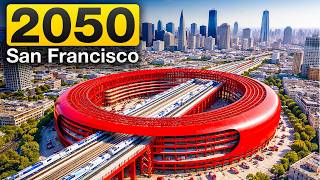
In this 20‑minute explainer, former lawyer‑turned‑real‑estate agent Austin Klar walks viewers through the ambitious master‑planned redevelopment of the 4th & King Caltrain rail yard – a nearly 20‑acre, active train‑yard site in San Francisco. Klar first establishes why the location is uniquely strategic, sitting at the nexus of SoMa, Mission Bay, Showplace Square and the northern terminus of Caltrain, linking the city to Silicon Valley. He then introduces the developer, Prologis, a global logistics REIT that owns the land, and explains the joint‑venture structure with Caltrain and other public‑private stakeholders. The proposed program includes roughly 2,500 residential units, about 4 million sq ft of office/retail space, a potential hotel, and multiple high‑rise towers – the tallest possibly 850 ft with a new Caltrain station at its base. Klar details the urban‑design goals: reconnecting the fragmented neighborhoods via new streets (5th St, Townsend Promenade, 4th St), dedicated lanes for cars, bikes and pedestrians, and activating under‑bridge spaces with parks, plazas, restaurants, and retail. He situates the project within the larger “Portal” (Downtown Rail Extension) vision that would tunnel Caltrain into the Salesforce Transit Center and eventually link to California’s high‑speed rail, noting the $8 B cost and uncertain funding. The timeline is outlined – environmental review now, multi‑phase construction over 15‑20 years, with negotiations on affordable housing, public benefits, and infrastructure. Klar concludes that, despite the engineering challenges, the development could deliver much‑needed housing, new public realms, and a new connective spine for San Francisco’s next growth phase. The video ends with calls to subscribe, contact Klar for real‑estate services, and links to other San Francisco development videos.
Chapters
Imagine building an entire neighborhood on top of an active train yard. A nearly 20-acre piece of land in San Francisco that most people completely overlook might become exactly that. If you take Caltrain, if you go to Chase Center or Oracle Park, or you walk anywhere near Mission Bay or SoMa, you've probably seen it dozens of times. Today, it's nothing but train tracks, maintenance yards, and parking lots, but over the next 20 years, it could transform into one of the most ambitious developments the city has seen in generations. This is Austin Klarck, your lawyer-turned-real estate agent in San Francisco, and I'm talking about the massive rail yard at 4th Street and King Street, the northern terminus of Caltrain. And plans are in the works to build thousands of new homes, millions of square feet of commercial space, a new transit hub, new parks and plazas, and what might become one of the tallest towers in the entire city. In this video, I'm breaking down why this location is so important, who the developer is, what they're planning to build, and what the timeline for construction is. Because this isn't just any other development, it's a once-in-a-generation transformation opportunity that will have a huge impact on San Francisco. So let's get right to it. And to really understand why this project matters so much, you have to understand its location. The Rail Yard sits at one of the most strategic locations in all of San Francisco. The site is almost 20 acres bordered by 4th Street, King Street, 7th Street, and Townsend Street. And it sits right at the intersection of 3 major San Francisco neighborhoods where a ton of action is going on right now. Soma, Mission Bay, and Showplace Square. Just to put that in perspective, that location is blocks from downtown San Francisco, blocks from Oracle Park, blocks from Thrive City in the Chase Center, right next to Mission Bay and its waterfront, and at the intersection of hubs for AI, biotech, tech as a general matter, finance, law, and a ton of other industries that shape our city. It's also the northern terminus of the Caltrain station, so it is the literal connection point between San Francisco and Silicon Valley. Every single commuter train that travels from Silicon Valley into San Francisco ends right at that Caltrain station. So that rail yard is a connection point not only between important neighborhoods within San Francisco itself, but between San Francisco and the other kind of tech hub of our country, Silicon Valley. So there can really be no debate, it's one of the most strategic, one of the most important and influential locations in all of San Francisco, and it is vastly underutilized. The rail yard at 4th and King has been the end of the Caltrain line for decades. It was originally operated by Southern Pacific, and the infrastructure here was always was designed as a terminal station, not a through-running system, and that's why the tracks just stop here. Trains pull in, passengers get out, the trains are either turned around or they're stored here until they need to be used again and head out of San Francisco. And the rail yard completely separates the neighborhoods to the north of it from the neighborhoods to the south of it. There's no connection through points across the rail yard. You have to go completely around it to get to the other neighborhoods. So as you can imagine, urban planners hate this, and they have long envisioned something completely different for this site. And that's a future that exists above the rail yard where neighborhoods connect to each other and where the train station doesn't just end here, it connects to downtown San Francisco. And I'm going to talk about each of those pieces in this video. But before I do, if you do me a huge favor, if you like videos about San Francisco real estate, current events, new developments, lifestyle, its incredible history, subscribe to my channel because I make videos about that stuff every single week. And if you're thinking about buying or selling place in the city and have questions about how all the changes we've been seeing lately are impacting our local real estate market, reach out to me. I was a lawyer at one of the biggest law firms in the world before getting into real estate, and I've helped numerous people relocate here from all over the country. I'd be happy to be a resource for you. My contact info is in the description below. Reach out anytime. Now back to the Rail Yard development and how it's going to completely transform the future of transportation in San Francisco. And I want to start by telling you about the developer because you might think something like this of this scale would be led by a traditional real estate developer, but it's It's not. It's led by a company called Prologis, which is a real estate investment trust that primarily invests in logistics facilities worldwide. They are the masterminds behind this project. They're the largest industrial real estate company in the entire world with over 6,000 buildings in their portfolio, and they're the actual owners of the underlying land that Caltrain operates on. And Caltrain has a perpetual lease to use that land for rail purposes. So this project is really a joint venture between Prologis and Caltrain, and there are a number of other stakeholders involved, both public and private, beyond just those two. And for Prologis and Caltrain, a master-planned community like this, a mixed-use community like this, it's definitely not in their typical wheelhouse. And what they're planning is far from typical as well. They're planning about 2,500 new housing units, 4 million square feet of commercial space, brand new retail, brand new restaurants, potentially even a hotel. And if all that weren't ambitious enough, they're planning that the entire development will sit on top of an active Railyard, a neighborhood that is basically elevated above everything surrounding it in the heart of San Francisco. The developers in their latest submission to the planning department have proposed multiple variants of the development, so the precise mix of residential versus commercial use is nowhere near set in stone. But what we do know is that in line with the surrounding neighborhoods, there isn't going to be a lot of like low-rise and mid-rise housing. The plans include multiple high-rise towers, the tallest of which will potentially reach 850 feet tall, and it's going to be at King and forth, and there'd be a brand new Caltrain station sitting at the base of it. And it's so much more than just building new homes and new offices. Right now, the Caltrain station itself isn't exactly a place where anybody would want to spend meaningful time. It's just a place where they have to go to accomplish their daily commute. But the goal of the development is to change that. New restaurants, new seating areas, new park spaces make the Caltrain station a more inviting area where people can spend time beyond just right before or right after their daily commute. But what's really cool about this development is that it extends beyond the Caltrain station and the rail yard itself. In particular, much of the development will focus on connecting all the surrounding neighborhoods together that really feel separate right now. For example, they want to connect the station to Showplace Square, where our renowned Design District sits, which is to the west of the rail yard. They want to create new activations on the stretch of Townsend leading to the Design District from Caltrain so that there are things for people to do walking between neighborhoods. As it stands right now, if you, you know, walk a few blocks on that stretch of Townsend, there's not really much to do. There's not a lot of shops, there's not a lot of bars. It's very office-heavy, it's very industrial-heavy. The goal is to change that, really build out that corridor and make it like a whole new neighborhood that people actually want to spend time. They're also looking to build a brand new Townsend Promenade leading from there to 4th Street with new landscaping, densely packed retail restaurant spaces that are all like indoor-outdoor, which is great because the area generally has better weather, you know, compared to the rest of San Francisco. They're also looking to open up 5th Street so that there's a direct connection from SoMa into Mission Bay through 5th Street instead of having to go all the way around the rail yard to get to your next neighborhood. They're going to create dedicated traffic lanes for cars, for bikes, for pedestrians so that you can get to and from those neighborhoods through any means of transportation. And there's going to be new restaurants and retail and seating areas and park spaces on that corridor so people can actually spend time there as well. There's also going to be a ton of time and money spent on improving including pedestrian safety, activating areas under various bridges, improving traffic flow, like I said, with those dedicated lanes, creating new ground floor activations and shared spaces for public use, transforming the landscape of the area from an overall industrial vibe to a much more beautifully landscaped, more like neighborhood feel. And the grand vision for the Rail Yard Development extends far even beyond that. The ultimate goal is to connect it with what's being dubbed the Portal. The Portal, also known as the Downtown Rail Extension, has been in the works for decades. It's the second phase of the Salesforce Transit Center, and if it's completed, it would extend Caltrain from its current terminus at 4th and King through a more than 1-mile-long underground tunnel into the Salesforce Transit Center right in the heart of downtown San Francisco. So if that ends up getting built, Caltrain will no longer be the northern terminus of, you know, the trains that run from Silicon Valley into San Francisco. It'll actually extend into downtown and further connect places like Mission Bay, which are, you know, biotech and AI hubs, startup hubs, into the heart of downtown where finance and law and those other industries are. And that would also eventually allow for California's high-speed rail to connect to downtown San Francisco as well. The cost of the portal is absolutely insane. It's ballooned over the years and right now sits at over $8 billion. Funding hasn't been secured for the full amount. So, you know, still a big TBD if it ever gets built. But that's the grand vision. How this development connects to kind of broader changes in San Francisco. So what's the timeline for all this? Well, as things stand now, we are still in the early stages of planning. The project is just entering environmental review, which is going to take several years to complete. During that process, the city will be negotiating with the developers on allocations for affordable housing, public benefits, open space requirements, infrastructure improvements, and whatever changes need to be made to mitigate potentially adverse environmental impacts from this major development that's going to completely change that area. And once all that's done, assuming everything's approved, then construction can actually start. They're anticipating 15 to 20 years for a full build-out. It's going to be a multi-phase build-out for something like this. And frankly, that timeline sounds really ambitious to me, given the amount of engineering and site prep that's going to be involved in something like this. I mean, they're building a neighborhood on top of an active rail yard. I just can't imagine that that can be done in 15 to 20 years, but we'll see. Worth the time and the money though, for what it will accomplish. It's going to be an awesome development. When once it's done. It weaves together multiple neighborhoods, multiple cities that are each the site of growing industry, forming the backbone of San Francisco's next phase of growth. It provides so much more housing at a time that we desperately need it, and it creates new public gathering spaces in an area that's just dominated by urban sprawl. I'm really looking forward to seeing progress here. It's already been in the works for several years, and it looks like it's finally starting to actually progress. If you want to learn more about this development or other developments going on in San Francisco, or about current events, or all San Francisco real estate lifestyle or its incredible history, subscribe to my channel because I make videos about that stuff every single week. And if you're thinking of buying or selling a place in San Francisco and want to better understand how developments like this and all the other changes we're seeing are impacting our local real estate market, reach out to me. I've lived in San Francisco for over 13 years and I've helped numerous people relocate here from all over the country. I'd be happy to be a resource for you. I'll drop my contact info in the description below. Reach out anytime. And if you want the biggest San Francisco headlines delivered to your inbox every single week, I've got a newsletter that accomplishes exactly that. That. The link to subscribe is in the description below. Go check it out. I would love to have you on there. And one last thing before you go, if you wanna learn more about some other exciting new developments going on in San Francisco, Mission Rock, Pier 70, ePetrol Power, Stonestown, Treasure Island, and Yerba Buena Island, I've got videos on each of those. I'll link some of them in the description below. Go check them out. I hope you enjoyed the video and I'll see you in the next one.