The BEST Value San Francisco Neighborhoods in 2025
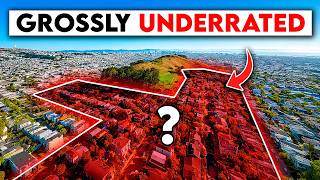
In this 2025 YouTube video, former lawyer‑turned‑San Francisco real‑estate agent Austin Klar explains why the city’s average home prices ($2.4 M for single‑family homes, $1.4 M for condos) are out of reach for many, yet highlights five neighborhoods where housing costs are substantially below the city average. For each area—Potrero Hill, Glen Park, Bernal Heights, Dogpatch, and the Inner Sunset—Klar describes location, climate, walkability, transit options, nearby amenities, parks, architectural styles, current development projects, and recent average price ranges for single‑family homes and condos. He emphasizes each neighborhood’s commuter advantages, unique character, and value proposition, and repeatedly invites viewers to contact him for personalized assistance, promoting his real‑estate services and a related video on neighborhood prioritization.
Chapters
We all know San Francisco has become an absurdly expensive place to live. On top of things like groceries, going out for a night on the town with friends, transportation, gas, bridge tolls, parking, we have one of the highest housing costs of any major metropolitan area in the entire country with a $2.4 million average price for single-family homes and $1.4 million price for condos. And it's only getting more expensive as people return to San Francisco because of return to office and all the new jobs that are coming to town. The city. This is Austin Klar, your lawyer and real estate agent in San Francisco. And a lot of people think you need to spend well north of the average cost of a home in San Francisco to get into an even half-decent neighborhood. And that's 100% not accurate. There are plenty of neighborhoods all across the city that are safe, clean, family-friendly, walkable, with a ton of amenities where you can get homes below the average price in the city. I'm going to break down 5 of those neighborhoods in this video and give you a quick rundown of what the neighborhood is like, what the amenities are like, what the weather's like, what types of housing is there, and of course, how much homes cost in those areas. Let's get right to it with the first neighborhood on my list, Potrero Hill. Potrero Hill is one of the most family-friendly neighborhoods in all of San Francisco, and it happens to have among the best weather you can find in the city. Neighborhood is on the eastern edge of the city between the Mission District and Dogpatch, just south of Mission Bay and South Beach neighborhoods. And because of its precise location in San Francisco, it's pretty shielded from the cold and fog fronts that are coming to the city from the Pacific Ocean on the far western side of the city. This is next to the eastern waterfront of the city. So you tend to have a lot warmer weather in Potrero Hill than you do in most areas of San Francisco. And if you couldn't guess by its name, Potrero Hill, the neighborhood is built onto a giant hill in San Francisco. And that presents, you know, one of the downsides of living in the area,, but also one of the upsides of living in the area. The downside is it isn't the most walkable because of that hill, but there are a ton of local businesses in the immediate Potrero Hill area. No matter where you live in Potrero Hill, you're going to have ready access to those businesses. So it's not like you have to walk a crazy distance to get to things that you need in the area, but it does still make the walk a little bit more arduous having to deal with those hills. I'll talk more about some of those businesses in a minute and where they are.. But that's really one of the main reasons why it's less expensive in Potrero Hill. It's not quite as walkable as some other parts of San Francisco. On the flip side though, the big benefit that that hill provides is views. If you live in Potrero Hill, chances are you're going to get incredible unobstructed views of the San Francisco skyline, and you might even be able to see the San Francisco Bay. And it's pretty cool because you're not looking at these places from like a really far distance. You're actually pretty close to these, you know, monuments, these landmarks. So the views are pretty unique in Potrero Hill compared to a lot of other places in San Francisco. And because you're pretty close to downtown, the commute is very reasonable, whether you're commuting by car, bike, or public transit. Very easy to do, even if you're going into the office 5 days a week. You're also really close to the 101 and 280 freeways. You're really close to the Caltrain station. So it's also a really convenient place to live if you commute to the South Bay. It's definitely one of the best neighborhoods in San Francisco for commuting. And there are a ton of amenities, you know, immediately in Potrero Hill and surrounding it. Like I said earlier, you're really close to the Central Waterfront. Depending on where you live in Potrero Hill, you might be able to walk to the Central Waterfront, but at, you know, a maximum, you're just a few minutes drive away. And that means you're close to Oracle Park, where the San Francisco Giants play. You're close to the Chase Center, where the Golden State Warriors play and where they have huge concerts and events every year. You're close to Thrive City, which is an 11-acre mixed-use space outside of the Chase Center with a ton of new restaurants, breweries, outdoor activities, a bunch of things to do. There are several new parks around there. You're also close to several multibillion-dollar mixed-use communities that are being built on the Central Waterfront. Mission Rock, which is in Mission Bay. You've got Pier 70 and the Potrero Power Station, both of which are in Dogpatch. All along that Central Waterfront, thousands of new homes, acres and acres of new park spaces, hotels, restaurants. So much is going up there, you name it. And immediately within Potrero Hill, there are a ton of great restaurants along the main commercial corridor, which is 18th Street. Incredible mix of coffee shops, Spanish food, Mexican food, American food, a ton of variety all within a couple minutes of no matter where you live in the area. You also have several parks in the area: McKinley Square, Jackson Playground, Potrero Hill Recreation Center, Star King Open Space, plus new parks being created along the Central Waterfront that I mentioned earlier. I promise you will never be short on things to do in and immediately surrounding the Potrero Hill neighborhood. And the architecture in Potrero Hill is just as good as the amenities. You've got a ton of historic homes, some, you know, 150, definitely over 100 years old in the area. You have so many examples of Victorian homes, classic like stick style Victorians, Queen Anne style, Italianate style. You've got Dutch colonial style revival homes, Edwardian homes, just a great mix of historic architecture in the area. And if that's not really your style, there's a fair mix of more modern homes in the area too. So really something for everyone. And as far as condos go, there are several different types in that area as well. You have the smaller like 2 to 4 unit buildings, low-rise buildings, as well as some much larger newer construction amenity buildings in the area. And you'd be surprised at the home prices in the area, meaningfully below the city average for both single-family homes and condos. Over the past year, the average single-family home has sold for under $2.1 million. Still expensive, obviously, but that's 15% below the city average. And similar for condos, under $1.2 million. So like, no, it doesn't have the walkability of places like the Marina or Pacific Heights, for example. And that's one of the big reasons reasons why it's less expensive, but it has an incredible amenity set, big views, and amazing weather, and it's great for commuting. So there's a lot to love about Potrero Hill. If you want to learn more about the Potrero Hill neighborhood or any other neighborhood in San Francisco, or want to know more about what's going on in our local real estate market, reach out to me. I've lived in San Francisco for over a decade, and I've helped numerous clients relocate here from all over the country. I'd be happy to be a resource for you. My contact info is in the description below. Reach out anytime. And if you like videos about San Francisco neighborhoods, current new developments, and all things San Francisco real estate, make sure to subscribe to my channel because I make videos about that stuff every single week. Now back to some neighborhoods in San Francisco where homes cost less than the city average, where they're actually worth looking into. And the next one on my list is Glen Park. Believe it or not, Glen Park was ranked top 20 of neighborhoods for millennial population growth because of its great access to awesome food, big park spaces, big views, and an easy commute. And if it isn't already on your radar of places to think about moving to, if you're moving to San Francisco, It definitely needs to be. The Glen Park neighborhood of SF is very much tucked away from the hustle and bustle of downtown. It's just south of Twin Peaks and right next to Glen Canyon Park and Noe Valley and Diamond Heights neighborhoods to the north and Bernal Heights to the east and Mission to the south. And because of its location, temperatures are very mild year round. Not quite as warm as like Noe Valley or the Mission, but definitely a lot warmer than most of San Francisco's western side and northern side. The community very much feels like a small small town village vibe because it is set on top of these rolling hillsides, has A+ views, and this really great little collection of, you know, boutiques and restaurants. Similar to Potrero Hill, the hills are one of the reasons why it's less expensive. It's less walkable, but there are areas in Glen Park that are very walkable, flat streets, and areas close to the main commercial hub, which I'll talk about in a second. And you do get those big views just like you can in Potrero Hill. It's also a great neighborhood for commuting. Glen Park is one of the few neighborhoods in San Francisco that actually has a BART station in the community itself. So it's really easy to get around on public transit through Glen Park. You're not relegated to just using Muni. If you need to commute downtown for work, for example, really easy to do that via BART, multiple stops near downtown. If you need to get to the airport or outside of San Francisco, really easy to do that. If you want to go to the Ferry Building on the weekend for the farmer's market, really easy to do that. You do not need a car. You're also not that far away from those new developments that I talked about along the Central Waterfront in Mission Bay and Dogpatch. You're not far from the AI companies setting up these massive offices in the Mission Bay neighborhood, and you're not far away from the, you know, SoMa and Financial District kind of commercial hubs of San Francisco. Now, as far as amenities go, it's not the most robust from like a food and shopping standpoint. There are some cute boutiques and cafes like little stores and restaurants that really kind of give it that more quaint, like small town village vibe. But it's not going to have like the most robust scene like a marina or Mission, for example, will. The main drag in Glen Park for shopping and dining is along Chenery and Diamond Streets. That's where you're going to find your coffee shops, your bookstores, your hardware stores, your cafes, that sort of stuff. But not to worry, if you live in Glen Park, you have really easy access to a lot of surrounding neighborhoods that themselves have great dining scenes. If you want more options, you can go to the neighboring Noe Valley, which has 24th Street. You can go to Castro and Mission areas, which are among the best neighborhoods in the city for food and nightlife. Glen Park also has incredible park access, among the best in the city. It's right next to Islais Creek and Trail, which is historically the largest creek in San Francisco, one of only two in the entire city that actually still flow today. There's also Glen Canyon Park which is a 66-acre recreation space that sort of serves like a wildlife refuge. It's got an over 17,000 square feet recreation space, gym, auditorium, offices, hiking trails, open green space. There's a playground. They've got baseball, soccer field, tennis courts, a ton of space for all types of activities for people of all ages, a ton of organized sports. You're also really close to a lot of great parks on that side of San Francisco. Walter Haas Park, which sits at the top of the hill and has great views. Billy Goat Hill, which has amazing views views of downtown and the city. You have McLaren Park and Balboa Park, which are massive parks in the area with a ton of outdoor green space. You're by Mount Davidson, Vernal Heights Park. There's so much to do in and around Glen Park. Another great activity in Glen Park that gives it sort of a small town, quaint village residential vibe is the annual festival that's held every year. It's great for families, for people of all ages. They have live music there and vendors. They'll have games set up there. They'll have bounce house there for kids. So something to do for people of all ages. Great way to spend an afternoon. especially if the weather's nice. Similar to Potrero Hill, there's a mix of like historic and modern homes in the area. There's a big push, especially on Laidley Street, which is sort of a relatively flat block at the very top of Glen Park with the best views that you can get in Glen Park where developers and I guess residents are building these super high-end, you know, very modern, like hyper-modern, much larger homes. Laidley Street is really popular right now for people looking to expand and take, you know, what was originally built as like smaller houses go vertical and expand horizontally and turn them into like 4,000 and 5,000 sq ft homes that really take advantage of the views. It's just the perfect street, especially if you're on that southern exposure, to get all these views of downtown and the bay. And all these super modern, much larger homes are juxtaposed near like these older bungalow-style homes and some Victorians and Craftsman. So there is something for everybody, just like in Potrero Hill. Unlike a lot of other communities in San Francisco, condos aren't that common in Glen Park. There are some, but a lot rare. It's really dominated by single-family homes. And those single-family homes are a little bit more expensive than Potrero Hill, but still under city average at about $2.3 million. Condos in the area, when they do sell, average about $1.1 million. So pretty far below city average on the condo front. So again, Glen Park might not really be on your radar. It doesn't get the same press as like Noe Valley and Pacific Heights and Marina and Russian Hill, all those neighborhoods you think of when you think San Francisco, but it does have a lot to offer. And and you can get a lot of the same characteristics and amenity types in Glen Park as you can in those other neighborhoods at substantially lower price points. Next on my list is another neighborhood that commands insane views without sacrificing easy transportation, giant open green spaces, great food, and at prices well below the first two neighborhoods that I talked about, Bernal Heights. The Bernal Heights neighborhood is a perfect area in SF if you need to commute. It is really close to the 101 and 280 freeways. BART and Muni also really accessible there. So it's popular for people who want to live in the big city but have to commute, say, to like the South Bay where a lot of the tech companies are based. It's also not far from downtown San Francisco or Mission Bay, where there are a ton of new AI tech jobs coming to the city. You can get to Mission Bay in a car in under 15 minutes and downtown San Francisco in under 20 minutes. So not a bad commute at all. In addition to easy commuting, Bernal is also close to a lot of other great neighborhoods that have a ton of great amenities, great shopping, great dining scenes. You're really close to Mission and Castro you're close to Noe Valley, you're close to the other neighborhoods I talked about, Potrero Hill and Glen Park. So if you live in Bernal, you've got a robust set of things to do and places to eat in Bernal itself, but also in the surrounding communities. And one of the most unique aspects of Bernal is its topography. It's uniquely situated on the north-facing incline of a giant hill, so residents and visitors get some of the best views available from homes in San Francisco, like full-on views of the city skyline to the San Francisco Bay. It's also less foggy because of its location in the central and eastern part city shielded from those cold and fog fronts. Like, you can actually get sun in this area. And while you're close to so many other places that have a bunch of amenities, there's actually a lot to do in Bernal itself. The main commercial corridor of Bernal is on Cortland Avenue, which has a great collection of small grocery stores, cafes, bookstores, restaurants, boutiques. There's an Epicurean Trader with great food and specialty groceries. There are pastry shops, there's Japanese food, there's sandwich shops, so many different options in the area. Bernal Heights also has a great collection of parks. At Bernal Heights Park, you have 360-degree, like, incredible views of all of San Francisco and the Bay. There are also smaller parks like Precita Park, which is a dog-friendly park with a playground surrounded by some really cute older homes. You've got Hawley Park, which has picnic tables, basketball court, tennis court. You have tree swings and slides built into the hillside with incredible views. You've got an outdoor cinema where you can see independent films and documentaries. Bernal is actually where the very first farmers market market started in California. There are beautiful murals and public art pieces spread throughout the neighborhood, so there's a lot to do for recreation in the Bernal Heights area. Really take advantage of that great weather. And as far as the architectural mix goes, I would say it trends a little bit less modern and certainly a lot less expensive than what you see in Potrero Hill and Glen Park. There are a lot of older, like, mixed-use Edwardian buildings with retail on the ground level, condos upstairs. There's a good mix of single-family homes, some modernized for for sure, like restored historic Victorians, but it's not as much dominated by newer construction that you see in places like Glen Park and Potrero Hill, and certainly not dominated by like high-rise buildings. It's a lot lower density. And from a pricing standpoint, incredibly reasonable by San Francisco standards. Over the past year, the average single-family home sold for under $1.7 million, which is absurd for a single-family home in San Francisco. And the average condo sold for under $1.1 million. So we're talking like— 25% %+ below city average. Again, you're not getting as much walkability depending on where you live because of that topography, but you do get great amenities, probably better than in Potrero Hill and Glen Park in Bernal Heights. The next neighborhood on my list is different than these first 3 because it is extremely walkable and has an incredibly unique history in San Francisco. Dogpatch, located next to San Francisco's central waterfront. The Dogpatch area is an old industrial and warehouse shipbuilding community that's become one of San Francisco's most up-and-coming neighborhoods. The neighborhood is really tiny. It's 9 blocks long, just a few blocks wide, bound by Mariposa Street to the north, the 280 Highway to the west, Cesar Chavez Street to the south, and the San Francisco Bay to the east. And the area is really commuter's paradise. The Muni light rail on 3rd Street runs right through Dogpatch. It'll take you right to downtown. So if you work in the commercial hubs of San Francisco, it is an incredible place to live. You can also easily get to Caltrain if you commute to the South Bay and you don't want to drive. You're also really close to the airport as well, so it's great for travelers. Basically the same level of commutability as Potrero Hill, which neighbors Don Patch. And I say this area is up and coming because there's so much development going on and there are a ton of new tech jobs coming in the immediate area and right next door to it in Mission Bay. This area is where those mixed-use communities are that I talked about earlier, Pier 70 and the Potrero Power Station redevelopment. It's also immediately next to the one in Mission Bay, which is the Mission Frog development. So there's so much new construction, new amenities, new businesses all coming to this area. It already looks so different than it did 10 years ago, and I can't even imagine what it's going to look like 10 years from now. It's really changing a lot, among the most of any neighborhood in San Francisco. The closest of those big developments I talked about earlier is the Pier 70 redevelopment. Brookfield Properties is helming that one, and they're taking a former, like, shipbuilding warehousing site and converting it into a huge mixed-use community. Thousands of new homes, new parks, restaurants, offices. The first anchor tenant, RH, is already open, an incredible restaurant and rooftop space. The first park, Crane Cove Park, is already open. It's got its own beachfront. It's great for kayaking, stand-up paddleboarding. That's literally in your backyard if you live in Dogpatch. You've got Chase Center in Thrive City, also in your backyard. You've got Bayfront Park, which is on the other side of Chase Center on the waterfront. You've got Building 12, which is already open at the Pier 70 redevelopment, which has a bunch of food vendors, breweries. There are paddle tennis courts there's so much to do in and immediately surrounding Dogpatch. And for being so close to the water, I mean, it's literally on the waterfront, the weather is great by San Francisco standards. It definitely can get windy on certain days, but overall it's a generally pleasant and pretty temperate area to live. And that temperate weather is great because unlike the first 3 areas that I talked about, Dogpatch is basically entirely flat. So it's easily the most walkable of the neighborhoods that I've talked about so far. And you're so close to all those great amenities that I talked about. Walking to them is awesome. Yeah. And as far as architecture goes, it's also really different from those other neighborhoods that I've talked about so far because of the history of Dogpatch, you know, its history with shipbuilding and warehousing. A lot of the housing stock there is like converted loft-style buildings. You know, they took a lot of these old warehouse-style and industrial spaces and turned them into living spaces. So it just has a much different kind of flavor and vibe than these other kind of more historic neighborhoods historic, you know, traditional neighborhood. There are also some single-family homes there. There are only a few, and the ones that remain actually survived the 1906 earthquake, so they are among the oldest homes in San Francisco, which is pretty cool. There's just not a lot of them left. There's a small little like Dogpatch Historic District that has most of these single-family homes that remain in Dogpatch. The rest of it around it is more of those like condo loft style buildings, and of course like new construction amenity buildings. And prices for these units in the area, I bet will surprise you for being close to downtown, close to a bunch of amenities with great weather, all walkable. It's surprisingly affordable, at least by San Francisco standards. You can get new construction, not just like average quality, like actually good new construction, 2-bedroom units for $1.2 million. Compares to the average 2-bed across all of San Francisco of just average quality, average price point, $1.4 million. The average of all condos in Dogpatch is about $1.1 million. $1,000, over 20% less than city average. So it's definitely a great option if you want to be close to the action and in a location that actually has a lot of upside trajectory because of all that's going on. And the last neighborhood, but certainly not the least on my list, is the Inner Sunset. I think the Inner Sunset is the perfect neighborhood for people who want a more kind of natural environment, like people who love nature but don't want to move all the way out into the suburbs and give up all the amenities of living in San The area is immediately south of Golden Gate Park, running down to Lawton and Kirkham Streets, and it runs from Argüello Boulevard to 19th Avenue, east to west. This area is way more walkable than Trohill, Glen Park, Bernal Heights, maybe not quite as walkable as Dogpatch. The weather though does trend way cooler in the Inner Sunset than any of those other neighborhoods I talked about because the Inner Sunset is more toward the western side of San Francisco, so it's a lot closer to the Pacific Ocean where those cold and fog fronts come in. From. Also, because it's farther west in the city, commuting is a little bit more difficult than these areas that I talked about earlier. You know, if you're commuting to SoMa or Mission Bay, you know, if there's no traffic at all, it's not bad, maybe 20, 25 minutes. But most likely if you're commuting, you're commuting during rush hour and you need to bank on at least 30 minutes by car and definitely longer by bus. Same thing for commuting south. You're really close to Highway 1, so you do have easy access to get south, but during peak times, that road gets extremely backed up. It is not an easy commute. But what it lacks in commute, it definitely makes up on food. It has one of the best food scenes in the city. The commercial corridors are centered around 9th Avenue and Irving Street. So much variety— Mexican food, Thai food, pastry shops, pizza, Korean food, Japanese food, American food, Peruvian food— like, all of it available in the area. Little grocery stores, coffee shops, ice cream parlors, boutique retail stores, wine bars. It really has most of what you'll ever need on a day-to-day basis, so it is a really convenient place to live. You're also immediately next to the crown jewel of parks in San Francisco, Golden Gate Park. That's why I said it is perfect for nature lovers. You can walk to Golden Gate Park in literally minutes and take advantage of all the incredible things to do in Golden Gate Park. You can spend multiple days exploring it and still not have seen everything. Museums, tea garden, lakes, golf, disc golf, windmills. There's bison. There's a ton to do. You're also right next to the Mount Sutro Open Space Preserve. And on the opposite end of the sunset, you've got Ocean Beach. You're close to the San Francisco Zoo. You're also really close to some like quintessential San Francisco neighborhoods, Haight-Ashbury and Cole Valley, which themselves have their own awesome— Awesome. Some like food and shopping scenes. The neighborhood also has a great mix of architecture. You've got a mix of moderns, Spanish Revival style residences, mid-century moderns, Craftsman homes. You got a little bit of Victorian sprinkled in there, but not a whole lot compared to these other neighborhoods. But overall, just a great mix of home types to choose from. And the main reason these homes trend lower in price point is because they're further from downtown, so longer commute, and the weather's not as good as some of the areas that I talked about earlier. On average, a single family home costs around $2.1 million.— about 10-ish percent less than city average. And condos on average in the area cost about $1.3 million, which is just under the city average. And that's just the Inner Sunset. If you go farther out into Central and Outer Sunset, the further out you go, the less expensive the homes become because the weather gets harsher and the commute gets longer. Well, there you have it. Those are 5 neighborhoods in San Francisco where you can purchase homes at substantially less than the city average. And these neighborhoods are actually worth looking into from either a commute standpoint, weather standpoint, walkability, amenities, you name it. Whether you're looking for something that's really close to all the new tech jobs and all the new development that's going on in the city, or you want a little bit more of a reprieve from the hustle and bustle of living in San Francisco without actually giving up the amenities and the benefits of living in San Francisco, there's something to offer in all of these neighborhoods. If you have questions about them or any others that might be on your radar, are, or you wanna know what's going on with our local real estate market in light of all the changes we're seeing across the city, definitely reach out to me. I was a lawyer at one of the biggest law firms in the world before getting into real estate, and I've helped people relocate to San Francisco from all over the country. I'd be happy to be a resource for you. I'll put my contact info in the description below. Reach out anytime. And if you like videos about San Francisco lifestyle, current events, new developments, all things San Francisco real estate, subscribe to my channel because I make videos about that stuff every single week. And before you go, if you wanna learn more about some other San Francisco neighborhoods and how I prioritize them based on different factors like food, walkability, views. I've got a separate video on that. I'll link that in the description below. Go check it out. I hope you enjoyed the video and I'll see you in the next one.










