The BIGGEST Waterfront Project That Will CHANGE San Francisco in 2025
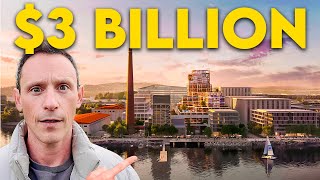
Austin Klar walks through the Potrero Power Station redevelopment, a former power plant being transformed into a 5.3 million-square-foot mixed-use community with 2,600 homes, a 250-room hotel, and 7 acres of public space. Phase 1 is underway with $400 million in infrastructure upgrades and 700 units arriving by 2025. UCSF is in talks to anchor a precision-cancer-center there.
Chapters
For the first time in 150 years, this portion of the San Francisco waterfront is gonna be open to the public. Developer Associate Capital is collaborating with some of the most renowned architects in the entire world to convert a defunct power plant into a 5.3 million square foot brand new community. Thousands of new homes, offices, lab space, retail, 7 acres of open space, rooftop soccer field, pool, and a Bay Trail extension with waterfront access. This is Austin Klar, your lawyer turned real estate agent in San Francisco and Marin County, and the developer has been working closely with the city and the Port of San Francisco on this mega development for over a decade, and Phase 1 is already well underway thanks to incredible efforts by all the parties. And in this video, I'm going to break down everything that's going on at the site, including what you can expect into 2025 and beyond at this brand new adaptive reuse space. By the way, if you want to learn more about all the incredible developments going on on the waterfront and across San Francisco, make sure to subscribe to my channel because I make videos about that stuff every single week. Now let's get right to it and start with an overview of where this development is, because its location makes it one of the most unique developments going on in the city right The Potrero Power Station is located along the central waterfront, bound by Illinois Street to the west, 22nd Street to the north, 23rd Street to the south, and the San Francisco Bay to the east. It's very close to 3rd Street, which is the main thoroughfare running north to south through the financial district. So connecting this area to the hubs, the commercial hubs of San Francisco. The location has some of San Francisco's best weather. The cold and fog fronts from the Pacific Ocean don't make their way across the city onto this side of San Francisco. So it tends to be warmer here. And you combine that with, you know, the generally flat space, it makes for great walkability, great exercise, great for taking your pets out, going to play with them in the park, for running. It's great for recreational sports. It's great for anything that you could possibly want to do outside. And those characteristics really play into the plans for this development, which I'm gonna go over in this video. To get those plans actualized, the developer and Perkins Will Who is designing the master plan for the whole site had to go through some pretty major hoops to completely rezone this site from heavy industrial to mixed use. A century ago, the power station located at this site was actually used to power the electrical grid for San Francisco. In the late 19th century, San Francisco Gaslight constructed a small generator at the site, which was the first power plant for the company that would eventually become PG&E. Today, the site houses two power plants, Station A, which was built in 1899, and a 130-foot-tall steel power plant called Unit 3 next to the turbine at the waterfront. And until the plant was closed, the plant actually generated about a third of the entire city's power. Over time, as the city adopted more efficient and cleaner energy, demand for power from this space dwindled, and eventually Governor Newsom shut the space down. That happened back in 2010, and since that time it's largely been unutilized space. Associate Capital purchased the site in 2016, and part of the overall plan plan for the space is to keep those historical power stations as anchors of the new development. Obviously, they're going to be repurposed into new uses. They're not power plants anymore. So what are they actually building here? The power station site is currently approved for over 2,600 homes, 1.6 million square feet of commercial space, a 250-room waterfront hotel, and nearly 100,000 square feet of retail. All in, the development will be about 5.3 million square feet. So it is massive what they're doing here, and all of it will be oriented toward the water with that awesome weather in mind. The design framework for the space has all the streets effectively leading to the water. So the whole focus is the water. Pedestrians are going to have access to a 1-acre waterfront park called The Point. It's going to feature discovery play elements for kids. There's going to be public art. There's going to be seating spaces, picnic spaces, new landscaping. There's going to be birdwatching space and all of it with stunning views of the city, the bridge, and the East Bay. This is all going to take years to complete, but a lot of work has actually already been done as part of phase 1 for the project. There's been an insane amount of infrastructure infrastructure work to convert the site from industrial use to mixed use, which all in, that infrastructure work cost roughly $400 million and took a huge legislative push from former Mayor London Breed to facilitate financing for the project, which was in jeopardy at various times throughout its life. They've installed new utilities underground, they've poured concrete, they've cleaned up and remediated the space, they've created a sea level wall to help combat against future sea level rise over the next century. They've demoed a ton of old buildings. There's been so much work already going on to get the site prepped for all the vertical building. In addition to the seawall that the developer installed, they're also installing piles to create a new waterfront dock, and that's super cool. It's going to be used for ferry service to the iconic Ferry Building and potentially other destinations throughout the bay as well. So basically, residents are going to have not only access from the street, but they'll also have access from the water to get to the site. And the first residential building is already under construction at the power station, the Sophie Maxwell Building, designed by Letty Madeham Stacy Architects. The 85-foot-tall building is bringing 105 new Workforce Housing units, which is reserved for people making no more than 80% of area median income. So it is below market rate housing. It is 100% affordable housing. Alongside of that building will be the completion of several blocks of the project, all part of Phase 1. In total, over 700 units are expected in the first phase of the project, which is twice as much as was initially planned for this initial phase. And those units, along with some of the waterfront parks that I talked about, are supposed to come online in 2025. And the commercial space that was originally planned was for a lot of office space, but given the trends we've seen with the office market in San Francisco, the focus has been shifted more towards lab and R&D space than for office space. So that conversion is in progress too. Most notably, I think UCSF is in discussions with the developer to become one of the development's anchor tenants and open a really cool state-of-the-art facility here. They're exploring opening a clinic, a precision cancer center, an incubator for new health technology, all on a 50,000-square-foot plot of land right near where the Sophie Maxwell Building is going up. They've engaged Star Architect firm Herzog de Meuron, which is the Swiss architect team behind things like the de Young Museum. They're also working on adaptive reuse of Station A into that commercial space that I was talking about, and they are building on multiple blocks of the development site. The developer is also working with Foster and Partners, one of the most renowned architects in the entire world, responsible locally for things like the Apple Visitor Center and the $500 million renovation of the Transamerica Pyramid. And they are working on the design of several ground-up residential buildings at the Petro Power Station site. So super, super— Exciting. Exciting to see all the heavy-hitting architects that they have involved. And other big names like CMG and Plural Studio are working on the incredible landscape design for the site. CMG might be a familiar name to you. They're also working on the landscape design of the 8,000-unit redevelopment of Treasure Island and Yerba Buena Island as well. So a ton of new parks and open spaces that they're creating all along the waterfront. I've got a separate video on all the development going on at Treasure Island and another one on the development at Yerba Buena Island. I'll link those up top in the description below. Go check those out. And remember, if you want more information about all the new developments going on across San Francisco, subscribe to my channel because I make videos about that stuff every single week. The Power Station location is relatively remote. I showed you a map of it earlier, but it's all focused on connectivity, both on the street side and on the water side. It's all about connecting this area through streets and water to other parts of San Francisco that in the past it was isolated from. It's the third in a string of new mixed-use communities along the waterfront. You have the Pier 70 redevelopment immediately to the, and then north of that you have the Mission Rock development as well. And I've got separate videos on those two that I'll link in the description as well if you want more information. You've got the Chase Center nearby where the Golden State Warriors play. You've got Thrive City immediately outside the Chase Center, which is an 11-acre like restaurant and bar space and open space that supports the Chase Center. Really awesome food coming to the area. You've got the brand new RH Gallery at Pier 70 immediately to the north of this area with an awesome restaurant and beautiful rooftop. And you're walking distance distance to Dogpatch, to Potrero Hill. You're not far from SoMa and Mission Bay. You can get to Fidei and to the main, like, tech center in SoMa and your Boboyna areas through public transportation from here very easily. So what used to be a very isolated space is not isolated anymore, and it's going to become even more connected as the development progresses. I'm really excited to see all this development come to fruition. It's super exciting to see actual progress be made, and I'm going to be making video updates about all these new communities as they progress. So if you want to stay up to date what's going on, what's coming soon, make sure to subscribe to my channel. I'm gonna be making videos about that stuff all the time. And if you're thinking about buying a home in the area and wanna understand how all this new development impacts the local real estate market, definitely reach out to me. I moved to the Bay Area over a decade ago to work as a lawyer at one of the biggest law firms in the world, and now I help people relocate to San Francisco from all over the country. I'd be happy to be a resource for you. I'll put my contact info in the description below. Reach out anytime. I hope you enjoyed the video and I'll see you in the next one.










