The SECRET Area In San Francisco's Most Luxurious Neighborhood
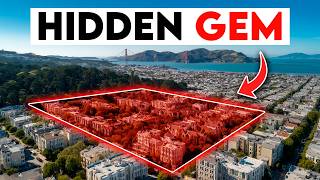
Austin Klar, a former lawyer turned real estate agent, explores Lower Pacific Heights, San Francisco's more affordable alternative to its famous neighbor. Condos here average $1.26 million compared to $2 million in Pacific Heights, while single-family homes run $2.9 million versus $7.5 million. The trade-off: you get Victorian homes, parks, and Fillmore's food scene, but trade views and quiet streets for traffic noise from major corridors.
Chapters
Everyone's heard of the Pacific Heights neighborhood in San Francisco, routinely one of the most expensive neighborhoods to live with homes owned by celebrities and titans of tech and industry with incredible parks, great walkability, and some of the best views money can buy in San Francisco. But it actually has a lesser known little brother neighborhood directly to the south with access to similar incredible amenities, great walkability, and its own share of beautiful homes. And the best part of it all, it is way less expensive. This is Austin Klar, your lawyer and real estate agent in San Francisco, and I'm talking about the Lower Pacific Heights neighborhood. Neighborhood. And in this video, I'm breaking down everything you need to know about Pacific Heights' lesser-known brother to the south, the Lower Pacific Heights area, what the lifestyle is like, what amenities are available, and why some people actually prefer to live in Lower Pac Heights than actual Pac Heights. And of course, I'll be telling you about what the home styles are like there and how much they cost. Let's get right to it with an overview of the neighborhood's location and what that means for weather and commutability. So where is Lower Pacific Heights? So where is Lower Pacific Heights? The neighborhood sits immediately south of the Pacific Heights neighborhood. So it runs from California Street on the north side to Geary Boulevard on the south side, and then from Presidio Avenue on the west side to Van Ness Avenue on the east side. So it's on the north side of the city, but it's actually a relatively central location. And because of that central location, you actually get pretty mild weather by San Francisco standards. The cold and fog fronts that come in from the Pacific Ocean all the way on the west side of San Francisco don't quite make it so far inland to reach the Lower Pacific Heights neighborhood. And because it's more inland from the north side of San Francisco for the San Francisco Bay, it doesn't get as windy in the area as it does, say, on the Marina Green at the North Waterfront. Not really a huge difference weather-wise between Pacific Heights and Lower Pacific Heights, especially on the south side of Pacific Heights, which is on, you know, the other side of the giant hill that makes up the Pacific Heights neighborhood. And that's great because as I'll talk about later in this video, there's so much to do in Lower Pac Heights, so many places to walk to and things to do, as well as immediately outside of Lower Pacific Heights. So no sacrifice really on weather compared to its more expensive neighbor to the north, Pacific Heights. And actually, one aspect where I think Lower Pac wins over Pac Heights is commutability. Because it sits slightly south of Pacific Heights, I think it's a better place to live if you're commuting to the South Bay, for example. Maybe you have a tech job down there but still want to be in a big city instead of the suburbs. Lower Pac Heights is definitely a viable option for that. Not as convenient as, say, Noe Valley or Glen Park or St. Francis Wood or West Portal might be for commuting south, but more convenient than neighborhoods even farther north like Marina, Cow Hollow, Presidio Heights, or Pacific Heights. It's also better for commuting to downtown San Francisco, in my opinion. This is sort of a double-edged sword, which I'll talk about in a minute, but you are a lot closer to several of the major transit thoroughfares that run west to east through the city that can take you to downtown San Francisco, to the commercial hubs of San Francisco very easily. And those are the streets that run west-east throughout the entire neighborhood: California Street, Pine Street, Bush Street, Sutter Street, Post Street, and Geary Boulevard. So it's definitely a little bit easier to get around Lower Pac if you have a car. And certainly if you don't have a car, I think you have a lot more public transit options in Lower Pac than you do in the more expensive neighborhood, Pacific Heights. By the way, if you want to learn more about what neighborhoods are great for commuting or walkability or food, nightlife, views, you name it, or you want to learn more about current events, new developments, or all things San Francisco real estate, make sure to subscribe to my channel because I make videos about that stuff every single week. If you ever have questions about how what we're seeing citywide, the trends we're seeing citywide impacts our local real estate market, definitely reach out to me. I've lived in San Francisco for over a decade and I've helped numerous people relocate from all over the country. I'd be happy to be a resource for you. I'll put my contact info in the description below. Reach out anytime. And now back to Lower Pac Heights, and I want to talk about that double-edged sword that I mentioned. So as I mentioned earlier, one of the main benefits of living in Lower Pac Heights is ease of access to the main transit corridors that run west to east through San Francisco. But the, you know, obvious downside of that is that you are in close proximity to a lot of street traffic and attendant noise. The streets that I mentioned, California Street, Pine Street, Bush Street, Sutter Street, Post Street, and Geary Boulevard, all of them are among the busiest streets in San Francisco, especially on the north side of San Francisco. So if you're living in Lower Pacific Heights,, and this is the main reason why it's less expensive than Pac Heights. You're living in close proximity to a very heavily trafficked transit corridor, or if you're not directly on that transit corridor, you're on a side street that is, you know, in between two of these major transit corridors. So you're on a side street between California and Pine or Pine and Bush, for example. Now, obviously living on a busier street like that isn't ideal, but it is an amazing way to get a deal on property. A great example of that is this house that recently sold on Pine Street. It was a 3-bed, 3-bath, little over 2,000 square feet with expansion potential. It was so nicely finished. It had a great yard off the kitchen. The flow indoor-outdoor was amazing. It had these classic Victorian details from when it was built 125 years ago. It was such an adorable house. It listed for $3.2 million. There were multiple offers on it. Sold for $3.5 million a little bit after a week on the market. If that house was 2 blocks up from Pine Street on Clay Street, an actual pack Kites, closer at all to Plaza Park, it would've sold for north of $4 million. And even though it was on a busier street, it was actually really quiet and peaceful inside. You would never know that you were on Pine Street living in that house. The layout was optimal. The primary bedroom was on the back of the house. You couldn't even hear anything from the backyard, even though it was exposed to the outdoors. You, you would never know that you were living on a busy street. So just because you're on a busy street doesn't mean it feels like you're living on a busy street and you still get that discount. The only real downside or practical downside of living on a street like that, all those busy streets, is is pulling out of your driveway. Backing out of your driveway onto one of those busier roads can be a little bit of a pain, but you know, on Pine Street and Bush Street in particular, that are one-way streets in those areas, you just wait for the traffic light to stop and nobody's going to be coming. It's actually quite easy. You just need to wait a little bit. And of course, when you walk outside, let's say you want to walk to the grocery store or you want to walk to the park or you want to take your dog out for a walk or your kids, whatever, it is going to be louder and it's going to be busier. Other than that, there's no real like practical downside of living on one of those busier streets. You're still close to the park, you're still close to the grocery store, and you're still close to so many other amazing amenities that I'm going to talk about in a few minutes. And like I said earlier, you don't have to be on one of those busier streets. There are side streets running north to south in the neighborhood where you can avoid, you know, that extra noise and that feel of being on a busier street altogether. A great example of that that recently sold is 1812 Scott Street, another Victorian built in 1900. This one was 3-bed, 2.5-bath, a little bit under 2,000 square feet, and didn't really have a real yard. It had more like an outdoor patio space as opposed to a true yard. There was a level downstairs that could be excavated to create a much larger house, but didn't have legal ceiling heights, so it would require digging. It would be major cost to do. The interior though was beautiful. It had high ceilings. It had so many great historic Victorian details. Out front, it actually had the first ever gas lamps that were installed in a San Francisco residence. Yeah.. It's a pretty cool detail and not something that you get at most homes in San Francisco, even ones that are 3 or 4 times as more expensive. That one sold for $3.2 million, a little bit over $1,900 a foot. It also got multiple offers. The reason why that one had a slightly higher price per foot than the one on Pine Street is because this was on Scott Street, which is one of those north to south quieter streets compared to Pine Street. It was also a slightly smaller house, uh, which tend to have higher price per foot than slightly larger houses. But the principal reason for it was that Scott Street location. Bottom line is if you're living in Lower Pac Heights, you are going to be either on or very close to one of those busier streets, but that does provide an opportunity for a discount compared to living in Pacific Heights to the north. And there are ways to optimize for that and account for those with upgraded windows, for example, that insulate from noise by having optimal layouts, bedrooms not exactly on the front side of the house, more toward the back of the house. You don't hear as much noise. It's still a very peaceful place to live, and all the better that you can get it at a little bit of a discount. Compared to Pacific Heights. And no matter where you live in Lower Pacific Heights, you are going to have access to incredible amenities. For example, there are several great parks both in and around Lower Pac Heights that you're going to have access to no matter where you live. Specifically in Lower Pac Heights, you have Raymond Kimball Playground, which is a relatively new park. It's been open for about a decade. There's a clubhouse, children's play area, baseball fields with like bleacher seating, a lot of open green space for visitors. Lower Pac Heights is also a mecca for anybody who likes to play tennis. You've got both the California Tennis Club and the Hamilton Tennis Courts in the area. Hamilton has public courts. The tennis club is like a members-only sort of country club. There's also a gym, full bar, restaurant, event space. It's definitely more country club vibes, whereas Hamilton is just public rec space. You've also got the staple parks to the north in Pacific Heights, Alta Plaza Park, and Lafayette Park. Both of them are going to be within walking distance with their own tennis courts, basketball court, playgrounds, open green space. Both of them are surrounded by some of the most stunning architecture in the city. Both of them have great views. Personally, I prefer Alta Plaza Park. I think Lafayette Park is surrounded by busier streets, and I think the views are a little bit better at Alta Plaza Park compared to Lafayette Park. That said, Lafayette Park is surrounded by probably some of the most stunning architecture in all of Pacific Heights. You've got the Spreckels Mansion, which is insane. You've got two of the most sought-after co-op buildings in Pacific Heights around Lafayette Park, 2000 and 2006 Washington Street. So definitely pluses and minuses on both sides. Both of them are incredible parks. You are going to be very blessed if you have them within a short distance of where you live. On top of the great parks, there's great food and shopping in Lower Pacific Heights. You've got Fillmore Street, which has a great collection of clothing stores, big brands like Frame, Rag Bone, Paige, and then you have more boutique-style places. You've got candle shops, spice stores, antique stores, stationery stores. You've got a ton of different food, Italian, Vietnamese, Mediterranean, Mexican, you've got donut shops, pizzerias, delis. My favorite pizza spot is Pizzeria Delfina. It's just off Fillmore Street. It's on California, so technically on the border of Pacific Heights and Lower Pacific Heights, but a great casual spot, easy to walk in. They have outdoor seating. And immediately next door to that is a Johnny Donuts, excellent donut spot, great spot for dessert when you're done eating pizza. There are also great sports bars and cocktail bars. Harry's Bar is one of my favorite sports bars in the city. A little bit more of an elevated sports bar experience, but still a sports bar through and through with TVs everywhere. They have some pretty solid food, great way to spend a happy hour or to watch a game. This stretch in Fillmore between Lower Pacific Heights and Pacific Heights is actually undergoing a lot of change right now with what's being called the Upper Fillmore Revitalization Project. An investor group led by a native of the area through a nonprofit foundation purchased a lot of commercial real estate along the corridor, including the iconic Clay Theater and a ton of storefronts and restaurants. So there's a bit of tenant changeover right now and some empty storefronts that need to be filled. Overall, the goal is to revitalize retail presence and restaurant presence in the area. It has caused a little bit of uproar in the community because some long-standing businesses are being displaced to make way for new tenants. There's a lot of backstory to each of the various businesses that are being displaced. Don't need to get into it in this video, and, you know, can debate the merits of the project all day long. Not really the point. The point is the area is undergoing a lot of change, and I think we can all agree, whatever our position is regarding that specific project, that we need to do whatever we can to support local businesses and local restaurants, local stores in the area, and bring more foot traffic back to these areas. Sort of a tangent, but the long and short is a lot of stuff is available to you within walking distance, pretty much no matter where you live in Lower Pacific Heights on Fillmore Street. You're also close to a ton of food along Divisadero Street. You've got B Patisserie, which is one of the most renowned bakeries, pastry shops in the entire city, if not the country. You've got Routier, which is a great casual French restaurant. You've got the San Francisco Athletic Club on Divisadero Darrow Street, which is a great sports bar. They do trivia on Tuesdays. I've been many, many times. It's a lot of fun. You're also really close to Japantown, a huge mall with a ton of different food options and Japanese stores. The Kabuki Theater is there, which is the larger, like, multi-screen movie theater in the neighborhood. One of the best Indian restaurants in the city, Cobra, is right next to it. There's so much food and things to do at your disposal. You'll never be left bored living in Lower Pacoima. Heights. If you live in Lower Pac Heights, you're also really conveniently located to several grocery stores. There's a Whole Foods on Franklin and California. There's a Mollie Stone's on Fillmore and California. There are two supermarkets, Brian's Market and Cal Mart at Laurel Village, which is right off California Street as well. There's a Trader Joe's off Geary Boulevard. Like I said, there's a ton of different, you know, food stores like Japanese markets at the mall. There are also a ton of local and like ethnic markets Chinese markets, Japanese markets, Indian markets, you name it, all scattered throughout the area. I promise you will not be short on food options if you live in Lower Pac. You're also not going to be short on stunning architecture. No, the houses are not as opulent as some of the homes in Pacific Heights, which can sometimes reach 10,000 square feet. But even though they're a lot smaller, they are still incredibly stunning. There's plenty of century-plus-old Victorians on tree-lined streets. Historic Cottage Row has a set of homes built in the 1860s and 1870s next to a beautiful little mini park that's perfect for dogs. There are a lot of low-rise condo buildings in the area, a lot of buildings that are 2 to 4 units, sometimes old Victorians that were converted into like 2 or 3-unit buildings. You don't get a whole lot of like larger-scale multifamily buildings in the area. There is some modern construction, but not a whole lot. Uh, one of the bigger ones in the area is the Rockwell on the eastern edge of the neighborhood. It was built in 2016. It's 260 residences, so by far one of the largest condo buildings on the north side of San Francisco, and it's got a ton of amenities— gym, rooftop terrace space— and it's really nicely located right next to Whole Foods off of Franklin and California. And it's really rare to have something like that on the north side of San Francisco. Not a whole lot of modern new construction amenity buildings, especially at price points that you can get in the Rockwell. You can get 1-bedrooms there for under $1 million. You can get 2-bedrooms there for under $1.5 million, which is, yes, on an absolute basis expensive. But when you consider the overall location on the north side of San Francisco, newer construction with the amenities, it's actually quite reasonable. If you want something newer construction in Pacific Heights proper, 2 bedrooms, you're going to be looking at around $1.8 million, if not more. And for 1 bedrooms, you're going to be looking at like $1.1 million or more. So definitely a lot less expensive at that building than in other, you know, similar units in Pac Heights. And that's true for condos generally in the area. They're just less expensive. Condos in the area over the past year have sold for an average of $1.26 million, just over $1,000 a foot compared to Pac Heights where the average was about $2 million for condos and over $1,250 a foot. And the same trend holds true with single family. On average, about $2.9 million, a little over $1,300 a foot for single family homes in Lower Pac compared to about $7.5 million and nearly $1,600 a foot in Pac Heights. Obviously it can go higher than this on a perfect basis. I went over a couple examples of that. It can also go lower. Those are just averages. Mm-hmm. Generally speaking, substantially less expensive to live in Lower Pac Heights compared to Pac Heights. You're not going to get the views that you get in Pacific Heights because you're basically blocked by the giant hill that is Pacific Heights. But you still can get incredible views of the city to the east and to the south. So that lack of views combined with, you know, being closer to some of the busier streets in the area are what drives pricing lower in Lower Pac Heights compared to Pac Heights. The most expensive home that sold in Lower Pacific Heights in the past year was actually the house from the show Full House, and it sold for $6 million on the dot. It was 150 years old but was completely redone on the inside. 4-bed, 3.5-bath, little over 3,700 square feet on a little over 3,100-square-foot lot. Like I said, sold for $6 million in early 2025. That's really going to be as high as it gets in the area. You're really going to find much more available in the high $2 million, mid-$3 million range in Lower Pacific Heights. If you're in Pacific Heights, they're really going to start at $4 million and go way up from there. Well, there you have it. That's the scoop on Lower Pacific Heights. No, not as glamorous as the Pacific Heights neighborhood to the north, but I promise there is plenty to love about Lower Pacific Heights. You can enjoy all the things that you can enjoy living in Pacific Heights, living in Lower Pacific Heights, and you can do it at half the price, if not a greater discount. If you want to learn more about different San Francisco neighborhoods and what might be a good fit for you as you start your home search, reach out to me. I worked as a lawyer at one of the biggest law firms in the world before getting into real estate, and I've helped people relocate in San Francisco from all over the country. I'd be happy to be a resource for you. I'll put my contact info in the description below. Reach out anytime. And if you like videos like this about San Francisco neighborhoods, or you want to stay up to date on current events, new developments, and all things San Francisco real estate, make sure to subscribe to my channel because I make videos about that stuff every single week. And if you want to learn more about what neighborhoods might be a good fit for you based on different competing priorities— commuting, walkability, food, views, nightlife, those kinds of factors. I've got a separate video on that that I'll link in the description below. Go check it out. I hope you enjoyed the video, and I'll see you in the next one.










