These San Francisco Neighborhoods Are BOOMING in Value (Here's Why)
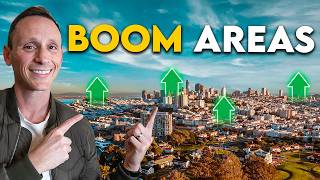
In this video, former lawyer‑turned real‑estate agent Austin Klar explains why the narrative that San Francisco is in permanent decline is wrong and outlines the market forces that are reversing that trend. He first describes how pandemic‑era policies, a surge in remote work, rising crime, homelessness, and a drop in office demand caused a sharp downturn in the city’s economy and real‑estate values. He then details how recent data show falling crime rates, reduced unsheltered homelessness, stabilising population, a rebound in tourism, and a massive influx of venture capital and AI companies that are re‑energising demand for office and residential space. Klar uses this macro backdrop to identify six neighborhoods he believes will experience the strongest appreciation over the next few years, providing concrete transaction data, price‑per‑square‑foot trends, and descriptions of new mixed‑use developments that underpin each forecast. The neighborhoods covered are: (1) SoMa, South Beach, and Yerba Buena – currently offering deep condo discounts but poised for a rebound as office demand returns; (2) Jackson Square – benefitting from a $650 M acquisition and renovation of the Transamerica Pyramid and upcoming luxury hotel development; (3) Mission Bay – attracting major AI firms like OpenAI and large waterfront mixed‑use projects such as Mission Rock; (4) West Portal – a suburban‑style area with single‑family homes, a growing food scene, and the nearby Stonestown Galleria redevelopment; (5) Dogpatch – adjacent to waterfront projects Pier 70 and the Petro Power Station, offering affordable modern condos; and (6) a brief market‑data overview that compares recent sales volumes and price trends across these districts. Throughout, Klar positions himself as a resource for buyers and investors, encouraging viewers to contact him for personalized advice.
Chapters
The media told you San Francisco was dead, reigniting the doom loop narrative as crime, homelessness, drug use, and an exodus from the city led to a downturn for San Francisco's economy. But just as it has multiple times over the past many decades, San Francisco is proving the doomers wrong. Tens of thousands of new residents expected to come into the city in the coming years, the AI boom completely reshaping the city's trajectory, and billions being spent on new communities all across San Francisco. And there are certain pockets of San Francisco that are poised to benefit the most from the shifts we're starting to see,, and I'm going to break down what my predictions are for those neighborhoods in this video. What's up everyone, this is Austin Klar, your lawyer turned real estate agent in San Francisco and Marin County, and in this video I'm breaking down which neighborhoods I predict are going to be experiencing the next boom from all the exciting positive things happening in the city right now. I'm going to give you an overview of the trends we saw during and after the pandemic that caused the downturn in the city, how those trends are starting to correct right now, and which neighborhoods already are and will be experiencing the benefit from those shift in trends. So whether you're a tech worker looking to relocate to San Francisco or you're someone looking to invest in real estate in the city, you've got a head start on your research. So let's get right to it with an overview of how San Francisco went wrong and how those negative trends are starting to shift in the opposite direction. So what happened to San Francisco? We can debate the specific politics all day long, but the long and short of it is that certain laws were passed and policies were enforced that fostered an environment where property crime and drug use could flourish, in particular in certain pockets of the city near downtown, the Civic Center, Market Street, and the Mission, most notably. And at the same time, the pandemic caused a surge in the number of people who could work remotely. So all of a sudden, a greater percentage of the population didn't need to actually live in the city to be able to work for companies that were based in San Francisco. They didn't need to be close to their offices in downtown or in SoMa anymore. So demand for those offices and demand for condos in those areas fell precipitously. And as foot traffic in the commercial hubs of the city fell, as crime rates rose, as homelessness rose and drug use rose, commuters and visitors alike stopped coming into the city as much, and that had a negative impact on San Francisco's economy. And a number of local businesses, both small and large, ceased operations in those areas, and that caused commercial vacancies to skyrocket, both from an office standpoint and a retail standpoint. But the good news is we are actually starting to see a shift. The city has worked tirelessly over the past several years to reverse those trends so that we can hopefully chart a path to get the city to return to its former glory. Over the past 18 months, crime rates have fallen across categories ways, violent and nonviolent, and we've even seen record lows in certain violent crime categories. Levels of unsheltered homelessness have fallen. Tourism is up each of the past 2 years, as is tourist spending. San Francisco's population is stabilizing, so people aren't, you know, mass exiting the city anymore. Developers are renovating office spaces into world-class properties to attract people back to the office. Companies are demanding workers back in the office, some full-time, some only part-time. Developers are creating multi-billion-dollar mixed-use communities all across the city in previously underutilized areas. San Francisco received the largest share of venture capital investment in the country, and most notably, there's been a massive surge in the number of AI companies setting up shop in San Francisco. They are scooping up massive office spaces and bringing thousands of new employees with them. There's still a ton of work to do, but I firmly believe in the data that we've seen in the past year backs it up that the city is back on track heading in the right direction. And there are a few subdistricts within the city from a residential perspective that I think are going to benefit the most from these shifting trends that we're seeing. So let's get right into those. And the first one on my list is the SoMa, South Beach, and Yerba Buena area. No areas were hit harder by the changes I talked about than the SoMa, Yerba Buena, and South Beach areas. These are dominated by mid-rise, high-rise condo buildings, including some of the most luxurious amenity buildings in SF, like Millennium Tower, The Avery, The Infinity, The Lumina, Mira, One Steuart Lane, those types of buildings. And because these buildings and these areas are really close to the financial hub and commercial hubs of the city, and they're close to the Embarcadero, they were once hotspots for young professionals, you know, tech workers, people working in law or finance or other companies that are based in those areas. They were hotspots for people moving to the city. It's super convenient to live there. They could be close to the office. So it was a logical spot for people to set up shop. But because of those trends that we saw during and the immediate aftermath of the pandemic, there was virtually no demand to live live in those types of buildings anymore and to live in those areas anymore. And as it stands right now, it's hands down one of the best places in San Francisco to find deals on condos. Properties there routinely trade for prices that they last sold for, you know, 10+ years ago. In 2023, 355 units sold in these areas for an average of about $1,000 a foot. In 2024, 376 units sold for an average of about $1,060 a foot. So there is a trend back in the upwards direction as more people move back into this area and there's slightly more demand. But for context, this area peaked in the 2018 timeframe and 675 units sold during that year for just shy of $1,200 a foot. So there has been a substantial drop-off from 6, 7 years ago, but things are starting to pick back up and head back in the right direction. So as things stand right now, you can get incredible value in the area. And I think as more companies relocate the area, as more companies that are already there, you know, demand more in-office time from their workers, you're going to see a resurgence in demand for those, you know, really high-quality, high-rise, mid-rise amenity buildings in those areas. And it's not just that there's good value to be had there. These are actually really great areas to live in the city. I lived in South Beach for a couple of years before I moved to Pacific Heights. I was working at a law firm in downtown San Francisco. I could walk to work every single day. It was a relatively flat walk. 20 minutes door to door from my place in South Beach to the Financial District. And because the weather in that part of the city is generally warmer than in other parts of San Francisco, or at least by San Francisco standards, it's relatively warm. My walk was relatively pleasant. There are also a ton of really high-end restaurants in the area. You've got, you know, several multiple Michelin star restaurants around there like Benu, like Saison. There's a ton of other great casual food as well, serving those commercial hubs in that area. You're also near Oracle Park where the San Francisco Giants play and all the bars and restaurants serving that area. You're walking distance to the Embarcadero and the water, so it's a great area to like go on a jog or, you know, walk to the farmer's market on the weekend at the Ferry Building. It's also really easy to get to the South Bay for work. So if you happen to work in the South Bay and not San Francisco, but you want to live close to the city or in the city and not in the suburbs, it's a great place for a commute. All around, I think those areas are great to live in. And as the trends that we saw that led to the downfall of San Francisco over the past several years start to shift in the opposite direction, I think that area uniquely stands to benefit because values are so depressed right now. If you want to learn more about those areas, I've got a separate video that I made about my time living there and the reasons why I left there for Pacific Heights. I'll link that in the description below. Go check it out. And if you like videos just like this or about San Francisco lifestyle, current events, new developments, or the real estate market, I make videos about that stuff every single week. So make sure to subscribe to my channel. And if you're thinking about buying a place in the city and you have questions about what all these changes mean for the market, definitely reach out to me. I've helped numerous people relocate here from all over the country. I'd be happy to be a resource for you. I'll drop my contact info in the description below. Reach out anytime. Now back to the neighborhoods I predict are going to boom over the next couple of years. And the next one on my list is one that's already starting to see a resurgence, and it's Jackson Square. Jackson Square is easily one of the most unique parts of San Francisco. It's a small area at the northern part of the financial district anchored by the Transamerica Pyramid on the south side. It has super cool architecture. Super cool architecture. A mix of older, like, brick buildings, modern loft-style buildings, and modern amenity buildings. There are a ton of great restaurants in the area, including Michelin-star restaurants, as well as a variety of, like, wine bars and more casual Italian spots or Asian spots, a great variety of stuff, all servicing, you know, those commercial buildings in the area. You've got multiple members-only social clubs near there. You've got The Battery, you've got The Bank at Amador, which is a new one that just replaced Wingtip that was there previously. There's also a great little park by the Embarcadero, as well as Transamerica's Redwood Park, which recently reopened and is gorgeous. Now, despite that area being a really cool and unique part of the city, it took a major hit during the pandemic for similar reasons that the SoMa, South Beach, Yerba Buena areas did. There just wasn't as much demand to live in that area when you didn't have to go to the offices that are right next door. But that area has seen a massive resurgence because of some really positive changes that we're seeing next door in downtown. In 2020, developer Michael Schvo purchased the Transamerica Pyramid for $650 million and put another $400+ million into it to create like a true Class A, like super, super high-end office space and amenity space. He also brought new restaurant concepts there, and that area has seen a huge increase in foot traffic as well as several high-end, like residential and commercial sales by really well-known tech executives. Office rents at Transamerica Pyramid are among the highest in the country for those top-tier amenity and luxury spaces. So the work that he did on the Pyramid is paying off, and it's having a trickle effect into the rest of the neighborhood. So much so that another major developer, Related, just announced plans to build a brand new 5-star hotel and high-rise office tower in that area. It'll be the first 5-star hotel to come to San Francisco in decades. So it is a huge deal. I think with what's going on in Jackson Square, this area is going to become the new center, like new downtown hub of San Francisco. It's going to start to radiate out from the old financial district toward these newer, higher-end buildings, and the neighborhoods that are immediately adjacent to those areas are gonna see some big impacts. Now, it's definitely not the cheapest part of the city. Most of the places on my list will be less expensive, at least from a condo standpoint, than Jackson Square. Newer builds in the area trade in the mid to high thousands per foot, like $1,500+ per foot. Depending on the property, expect to pay in the high $1 million or low $2 million. Mm-hmm. For quality 2-bedroom units in the area. And while it's expensive, it's a lot less than what people were paying for them years ago. So there's real upside here if the trends we're seeing continue. The next neighborhood on my list is Mission Bay. And of all the neighborhoods on my list, this one is already starting to see the biggest impact of the shifts that we're seeing citywide. Mission Bay is a 300+ acre neighborhood located on the east side of San Francisco, directly bordering the San Francisco Bay. It is super close to both the 80 and 280 highways, making it really convenient if you need to travel to the East Bay or the South Bay for work, for example, or if you want to get to SFO or Oakland airports if you're going away for a work trip or vacation. And because it's largely an infill site, the area is basically entirely flat, so it is super walkable. And because of its location on the central waterfront, it has some of the best weather in all of San Francisco. Which is awesome because there is so much to do walking distance. From wherever you live in Mission Bay. You've got the brand new Chase Center and Thrive City, which is 11-acre like entertainment area with like bars and restaurants immediately outside the Chase Center. You're really close to Oracle Park, to China Basin Park, to Bayfront Park. A ton of brand new amenities in the Mission Rock area. And because it's one of the newer areas of San Francisco, you know, it's largely been built out over the last like 20+ years. Most of the condos there are very modern, modern condos, converted loft spaces, lots of, you know, glass and steel and concrete buildings, similar similar vibe to what you get in the SoMa, South Beach, Yerba Buena areas, but less like massive high-rises. There are some, but they're more like mid-rise, low-rise amenity buildings. And the reason why I think this neighborhood is going to boom in a big way over the next several years is because a ton of major tech companies are relocating to Mission Bay, including most notably OpenAI, which has recently leased nearly a million square feet of office space in Mission Bay and has already announced that it intends to lease more and grow its employee base in the area.. So they are already bringing and will be bringing a ton of new people to the area. Plus, there are 3 multibillion-dollar mixed-use communities being built along the central waterfront right next to Mission Bay. The main one in the area is Mission Rock, a partnership between the San Francisco Giants and developer Tishman Speyer. That development has been a decade in the making and is bringing thousands of new housing units, acres of park spaces, and new lab, office, and retail space to service the community. Phase 1 of that development is nearly complete, and it's already brought a ton of foot— Foot traffic. Traffic to the area. The newest residential towers there are Canyon and Verde, both high-rise amenity apartment buildings. You've got Visa's brand new headquarters there. The Golden State Warriors have leased office space there. You've got brand new restaurant spaces opening there, including world famous Arsicault Bakery opening another location there. There are also two other mixed-use communities being built near the neighborhood just down the road. I'll talk about those in a minute when I talk about another neighborhood on my list that I think is going to boom over the next several years. Bottom line, if you're buying into Mission Bay right now, you are buying into a grand vision for that area. It has come a long way since the empty, you know, kind of wasteland that was there 20+ years ago. And it's going to completely change as more business comes into the area and an influx of new San Francisco residents move to that location. And honestly, even though it's like walkable with great weather, great amenities, and close to a ton of awesome things, it's really not that expensive to live there. On average, condos are under $1.1 million. Under $1,000 a foot, well below city averages. So at least by a comparison standpoint, relatively inexpensive place to live. So I think there's really good value and I think those values will increase as more and more get built out in the area and more people move there, increasing demand. So there's really good value there. And I think values will go up as more businesses move to the area, more of those developments get closer to completion, and more people move to the area to be closer to, you know, all the new jobs that are being created there. The next neighborhood on my list is West Portal, and it is completely different in character from the other neighborhoods that I've already talked about. Those other neighborhoods are really, really close to downtown, basically a walking distance to downtown San Francisco, and dominated by like mid-rise and high-rise condo amenity buildings. Not West Portal. West Portal is a little bit farther from downtown, not walkable to downtown, and it's basically a suburb of San Francisco. With a ton of single-family homes that are detached from their neighbors. Really a more neighborhood feel than the first few areas that I talked about on my list. And there are a few reasons why I think that neighborhood is going to pop off. First of all, I know it's farther from downtown, but it's not that far from downtown. I helped clients buy a place in West Portal recently, both of whom work near downtown. They take the Muni trolley into work and can be in the office in under 30 minutes. So it's really easy to commute. Easy to commute.. So it's a good balance between living the suburb life without giving up the benefits of the city. So as more people come back to San Francisco needing to work in the commercial hubs, but not wanting to live like in the heart of a big city, San Francisco feeling type place, they're gonna look to places just like West Portal as a potential option to set down roots. But really the reason why I think it's gonna pop off is that it's becoming an under the radar food destination. One of the hardest restaurants to get into in San Francisco right now, Elena's, New Mexican spot that recently opened in West Portal, a high-end donut shop, George's Donuts and Merriment, just opened in West Portal. They have a little Original Joe's there, and there are a ton of like old school West Portal staples that have been there for decades, many of which are becoming increasingly popular as more people learn about West Portal, visit West Portal to go to some of these newer restaurants and discover some of the old favorites. And aside from the food scene that's having a moment there right now and bringing a ton of new people to the area, the largest redevelopment on San Francisco's West Side in the last 50 years is going up right next door to West Portal. Brookfield is redeveloping the Stonestown Galleria into a gigantic multibillion-dollar mixed-use community right next door to West Portal. Brand new homes, brand new park spaces, restaurants, you name it. So it's going to be a huge hub and completely change the landscape of that area. I've had multiple clients reach out to me about what's going on in that neighborhood because it really isn't on a lot of people's radar. Yeah., but it's been in the news a ton because of that new development going on, because of the food that's going on, and because other people are choosing to live there and talking about it because it's a great place to live. So people who previously weren't really thinking about it at all are starting to really develop an interest in it, and that's already having a positive impact on real estate values there. The clients that I helped purchase a place in West Portal late November of 2023, they refinanced their loan less than a year later., after their purchase, and the appraised value of their home was already up 10% from less than a year when they bought it. So the demand is real there. It's getting a lot more attention, and that's already started having a positive impact on home values in the area. And I think that's just going to continue as more and more people learn about the area and explore it, and demand increases as more people start wanting to live there. Even last year, the average home in West Portal sold for more than it did the year prior, and they sold in less than a month on the market. So things are going very fast and for a lot of money. Generally speaking, the average single family in the area over the past year was about $2.36 million, about $1,050 a foot. So not cheap at all, but not like that far above city average. And I think there's a ton of upside in the neighborhood as more people are learning about it and wanting to move there. So definitely keep an eye on it. And the last neighborhood I think is going to experience a boom, but certainly not the least, is Dogpatch. Dogpatch is approximately 9-block enclave of historically industrial worker housing located east of Potrero Hill, right next to the central waterfront. And for the same reasons I think Mission Bay is going to boom, I think the Dogpatch area is going to boom as well. There are 2 multibillion-dollar mixed-use communities being built right now, right next to Dogpatch. The first one, Pier 70, being developed by Brookfield as well, the same one that's doing Stonestown. They're converting a former industrial shipbuilding site into something similar to Mission Rock, You know, thousands of new housing units, acres and acres of open park spaces, a ton of new office space and retail space. And then you've got another one right next door to that at the Petro Power Station, which is being developed by Associate Capital. They're taking a defunct power station and turning that into a brand new community with thousands of new housing units and a bunch of new park space, all right next to the water. Phase 1 of both of those projects is already underway, and some of the buildings have already started to open. The new RH San Francisco at Pier 70 is open with an awesome restaurant and gorgeous rooftop. You've got Building 12 with paddle tennis courts and new food vendors popping up, and the area is mostly flat, so all of it walkable from Dogpatch. You can also walk to the Chase Center and Thrive City just like you can from Mission Bay. The Muni trolley runs through that neighborhood, so it's really easy to get to Caltrain. It's really easy to get to downtown, so it's a great place to— Mm-hmm. To live if you are working in downtown San Francisco, in SoMa, or even in the South Bay. So as AI scales in the Mission Bay area and these new developments get closer to completion, you're going to start to see demand go up for Dogpatch. And I think home values in that area are going to go up as well. Right now in the Central Waterfront Dogpatch area, you can get condos for on average about $1.06 million. About $1,030 a foot. So really great value, a lot lower than the city average for condos. So good value there for more modern construction. And I think those values are going to go up as those developments get completed and more people move to the area. Well, there you have it. If you're searching for potential areas to park some money in San Francisco real estate over the next several years that you hope might appreciate in value, these are the neighborhoods that I think are really good —there are definitely other parts of San Francisco that offer a lot of stability and are really safe places to put your money into from a real estate perspective. If you want to know what those neighborhoods are, or you have questions about any of the neighborhoods on this list, definitely reach out to me. I've helped numerous people relocate to San Francisco from all over the country, and I'd be happy to be a resource for you. I'll drop my contact info in the description below. Reach out anytime. And remember, if you want more videos about San Francisco lifestyle, current events, new developments, or the real estate market, subscribe to my channel because I make videos about that stuff every single week. And if you want to learn more about those new multi-billion dollar developments that are going up along the Central Waterfront, I've got videos on each of them. I'll drop those in the description as well and go check them out. I hope you enjoyed the video and I'll see you in the next one. [FOREIGN LANGUAGE]










