What’s NEW in San Francisco (Feb 2026)
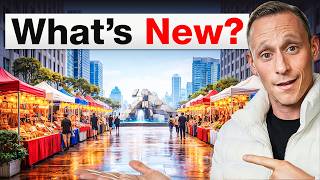
In this YouTube video, former lawyer‑turned real‑estate agent Austin Klar reviews the five biggest San Francisco news stories from January 2026 and explains how each will influence the city’s trajectory into 2027 and beyond. He begins with San Francisco International Airport’s new guest‑pass program that lets non‑ticketed visitors pass through security and spend time in terminals, highlighting the airport’s recent renovations and potential crowding concerns. Next, he covers the city’s decision to dismantle the controversial Van Cort Fountain on the Embarcadero, outlining its history, safety issues, and the $4 million versus $32 million cost debate. He then details the official closure of the former Emporium/Westfield mall—once a top‑performing retail hub—explaining its rise, decline during the pandemic, foreclosure, and the site’s redevelopment possibilities. The fourth story examines the closure of the iconic Williams‑Sonoma flagship in Union Square and its upcoming takeover by Chanel, illustrating the shift toward ultra‑luxury retailers in the area. Finally, Klar discusses the transformation of 88 Spear Street into San Francisco’s first luxury office‑resort, featuring a new rooftop restaurant and high‑end amenities, and how this reflects changing office‑tenant expectations. Throughout, Klar intersperses personal commentary, calls for viewer engagement, and promotional messages for his real‑estate services and newsletter.
Chapters
Something we haven't seen since before 9/11 coming to San Francisco International Airport. The destruction of an iconic piece of San Francisco's history along the Embarcadero. The official closure of what was once one of the most successful malls in the entire country. The final chapter of an iconic retailer in San Francisco's Union Square. And a brand new rooftop restaurant opening at San Francisco's first ever office resort. This is Austin Klarig, your lawyer turned real estate agent in San Francisco. And in this video, I'm breaking down the 5 biggest news stories from January of 2026 that are sure to change the trajectory of the city into 2027. 6 and for years to come. Let's get right to it and start with the revival of something we haven't been able to experience since before 9/11 that is going to change the way we travel. San Francisco International Airport announced plans to roll out a guest pass program that will allow people without airline tickets to go through security, hang out with their friends and family at the airport, and wait with them at the gate before takeoff. I'm sure I'm not the only one who remembers as a kid being able to see people off right up to their gate and also meet people at the gate when they're arriving. That was obviously done away with once TSA down across the country post-9/11. I'm really excited this is coming back, especially to San Francisco International Airport, because of the incredible food and shopping that already is at SFO and that's coming to SFO. The newly renovated Terminal 1, Harvey Milk Terminal, is one of the most beautiful airport terminals in the entire country. There's an amazing food hall there with a ton of great food, including San Francisco staples like Tony's. And it's not just Terminal 1. Terminal 3 is in the middle of a multibillion-dollar renovation and expansion project that'll see the creation of a brand new new mega lounge as well as a new 6-story, 200,000-square-foot building for more food, retail, and hospitality. So if you have friends or family visiting and you want to spend a little bit more time with them and you have the time to spare, great place to hang out. Now I bet a lot of people are going to complain about this because if a bunch of non-travelers are being let through security, it's going to increase security lines a bunch and lines at restaurants and lounges and all these other places in the airport that people are using are going to get a lot more busy. But according to SFO, they're going to limit the number of guest passes they issue any given day to minimize the chance that this happens. And you also still might not be able to access airport lounges because most often you do need actual like ticket information to get into the lounge space. So we'll see how this plays out. We'll see if they expand the program as time goes on. I'd probably take advantage of it if I had good friends or family visiting and I had some time to spare. Why not hang out with them for a little bit longer? But let me know what you think in the comments and whether it's something you'd try out. And if you like videos about San Francisco, current events, new developments, lifestyle, its incredible history, or all things San Francisco real estate, subscribe to my channel because I make videos about that stuff every single week. And if you're thinking about buying a place in the city and wondering how all the changes we're seeing across San Francisco right now are impacting our local real estate market, reach out to me. I was a lawyer at one of the biggest law firms in the world before getting into real estate, and I've helped numerous people relocate here from all over the country. Be happy to be a resource for you. I'll put my contact info in the description below. Reach out anytime. Now back to the headlines that made waves in January of 2026, and the next one I want to talk about is the —firm destruction of an iconic piece of San Francisco's waterfront, probably the most infamous fountain in the entire country, the Van Cort Fountain on the Embarcadero. If you've ever walked out of the Embarcadero BART station or just walked around the neighborhood and thought, why does San Francisco have this massive concrete jungle gym that looks abandoned? Well, I'm going to answer that for you right now. The structure is called the Van Cort Fountain, and it's one of the most controversial pieces of public art in the city's history. It's been called visionary, it's been called an eyesore, and after more than 50 years, the city has voted officially to dismantle it. The fountain was completed in 1971 when San Francisco was radically thinking its downtown. Market Street had just gone through massive redevelopment, the Embarcadero Freeway was still standing, and the city wanted bold, modern public art that symbolized civic confidence. The fountain was designed by Armand Vaillancourt, a French-Canadian artist who was known for his association with Brutalism and political, you know, concept art. The fountain is a 40-foot-tall mass of precast concrete blocks originally paired with an extremely powerful water system that blasted water through the structure in directions. But fast forward to the 21st century, the Embarcadero Freeway is gone. The fountain looks seemingly abandoned, and it's very out of place without the freeway in the background. After years of neglect, a study was conducted that concluded the fountain to be a safety hazard because of asbestos, because of seismic concerns, and because of its overall deteriorating condition. So the question arose: what do we do about this? Do we preserve it and restore it, or do we simply get rid of it? Preservation advocates argued that dismantling the fountain would violate the city's obligation to protect civic art. The artist himself argued that destroying the work would be a violation of art protections. And on the other side, city attorneys argued that the public safety overrides preservation concerns, especially when the structure can't reasonably be brought into compliance. Meanwhile, the broader Embarcadero Plaza was undergoing a complete redesign. So what to do with the fountain wasn't being thought about in isolation. It was being thought of in connection with this broader kind of next phase for the entire Embarcadero. And the two possibilities, like preserve preserving and restoring it versus just getting rid of it came at vastly different price points. On the one hand, just dismantling it, getting rid of it, about $4 million. On the other hand, taking it apart, storing it, preserving it, and then restoring it and putting it back together once the Embarcadero redesign was over, over $32 million to do that. And after months of debate and cease and desist letters and a lot of public commentary and back and forth on the issue, the Board of Supervisors officially voted to just dismantle the fountain. So the saga over what is probably the most controversial piece of art in San Francisco's history is officially over. This is definitely a hot-button issue, so would love to know what you think in the comments. I was never a personal fan of the fountain. I understand it had kind of a different place in San Francisco, and it could be thought of differently with the Embarcadero Freeway as sort of a backdrop. But in its current state, it really did feel out of place, and it did suffer from years of neglect. So I personally think it's the right decision, especially financially, to see it go. but would love to know what you think. The next big story I want to talk about is the official closure of what was once one of the most successful retail centers in the entire country, the former Emporium Westfield and San Francisco Center in downtown San Francisco. How does a place this beautiful go from one of the best performing shopping centers in the entire country to a boarded up symbol of retail collapse in San Francisco at a time when San Francisco is actually bouncing back with falling office vacancy, falling retail vacancy, falling crime, falling homelessness? This building went in the opposite direction. And now Now the mall has officially closed. Before Westfield, the site was the Emporium, San Francisco's flagship department store dating back to the late 1800s. And after surviving the 1906 earthquake and fire, it became the heart of Market Street retail, famous for its Beaux-Arts architecture and massive glass dome. But like many department stores nationwide, it eventually declined, and by the late 1990s, it had closed down, leaving just an empty shell of this beautiful building. In the early 2000s, Westfield redeveloped the Emporium and the adjacent San Francisco Center into a unified mega mall, a nearly $500 million redevelopment that preserved the historic facade while completely modernizing the interior, turning it into a 1.5 million square foot retail behemoth that reopened in 2006. And it worked spectacularly. It became one of the most successful retail centers in the country. By the late 2010s, 96% occupancy, over $1,000 a foot in sales, and over 10 million annual visitors. And even better, it was fully integrated with BART and Muni, so it was a major transit hub for the city of Francisco. And then came 2020, which is when all of the assets of this mall turned into liabilities. Retail was already under pressure nationwide, but San Francisco got hit especially hard. Downtown faced remote work eliminating daily foot traffic. Tourism collapsed, office vacancies peaking north of 38%, and there were rising concerns about increased crime and declining street conditions. So all the mall's biggest strengths its proximity to transit and to downtown and a site for, you know, people traveling by foot all became liabilities. Tenants started leaving en masse and the mall became worth hundreds of millions of dollars less than previously, way less than its outstanding debt. And that's why in June 2023, Westfield and Brookfield walked away from the mall and surrendered it to their lenders. A receiver rebranded it back to the Emporium, hearkening back to The old days, but a rebranding couldn't fix the dire math situation. The mall was spiraling toward its death, and every time there was an auction scheduled for a potential buyer, the auction was postponed. Vacancies kept mounting and mounting, and valuations kept plummeting and plummeting. Eventually, in late 2025, after numerous suspended auctions, the lenders eventually bought the mall out of foreclosure. They evicted the last remaining tenants in the space, just a few restaurants and retailers that were left, and they officially closed the mall toward the end of January. And that marked the final chapter in what was once one of the most successful malls in the entire country. But it's not all hopeless. Lenders have since retained CBRE to market the mall, find a potential buyer, and take advantage of the potentially limitless possibilities there because it sits on an over 5-acre site and has 400-foot height limits. So there are a lot of things that could be done with the mall site. It could be new retail, new housing, new offices, event spaces, lounge spaces, education spaces. You name it, there are a ton of different configurations and possibilities, especially as San Francisco continues to mount its comeback. I'm really sad to see the small go, but I'm hoping something even better will take its place and reinvent what we know as Market Street in downtown San Francisco. And that's not the only retail shift happening in that part of San Francisco right now. The next story on my list is the closing of a bedrock retail flagship store in the heart of San Francisco's retail center in Union Square. Williams-Sonoma is about as San Francisco as a retailer can be. Found Founded in 1956 and with its headquarters right in San Francisco, the William Sonoma flagship was so much more than just any old store. When it opened in the early 2000s, it was the ultimate brand statement, the ultimate showcase of what retail, experiential retail could be. And it was in what was then an absolutely prime location in the heart of Union Square, exposed to so much foot traffic and visitors. But after several tough years in Union Square and elsewhere across the country following the onset of the pandemic and the explosion of e-commerce, William Sonoma, like so many other retailers started shrinking their physical footprint, leaning harder into the internet, and prioritizing higher-performing locations. Their massive flagship just wasn't mission critical to the business anymore, and valuations in San Francisco for these retail spaces started getting really juicy for opportunistic buyers. And one of those buyers was the ultra-luxury fashion house Chanel. Chanel purchased the building during the pandemic with the intent of relocating its existing flagship to what is now the former William Sonoma location. William Sonoma was supposed to vacate in 2024, but after multiple lease extensions, the official closure of Williams-Sonoma is scheduled for early 2026. So by the time I post this video, it's probably already going to be gone. There's no official timeline on when Chanel is going to move in. They're planning on doing a pretty big renovation to the space in advance of moving. There's going to be a skylight atrium, there's going to be kind of a multi-floor redesign and new VIP rooms for like ultra high net worth clients. This is yet another example of a trend that we've been seeing in Union Square over the past couple of years where the ultra high retailers are actually seeing a lot of success. They're doubling down on the area, they're expanding and opening new spaces. Big name brands like Patek Philippe, Rolex, Breitling, Goyard, Brunello Cucinelli are snatching up space at really low valuations because of the changes that we had seen in Union Square in particular during and immediately after the pandemic. They are seizing the opportunity and it's starting to pay off as San Francisco mounts its epic comeback. I love the Williams-Sonoma store. I'm really sad to see it go. It was one of the last like large-scale remaining cookware stores in San Francisco. So it's definitely a bummer, but I'm excited to see what Chanel does to the space because it is such a gorgeous building. And speaking of really pretty buildings, the next one that's the subject of my last story in this video isn't quite pretty yet, but it's in the midst of a major transformation that will see the creation of San Francisco's first ever luxury office resort outfitted with a brand new rooftop restaurant as well as a number of other high-end hospitality wellness-driven luxury amenity spaces. 88 Spear Street sits at the edge of downtown where the financial district, SoMa, and the waterfront all slide. It is right next to the Embarcadero, really close to Salesforce Tower, close to Transbay Transit Center, has easy ferry building access, and it's close to the major tech and financial corridors of San Francisco. This hasn't been a fringe location in many decades. It is absolutely prime from a commercial standpoint. And for a long time, the building was performing exactly like that. What is now 88 Spear Street was completed in the 1980s at a time when San Francisco was modernizing and expanding south of Market. SoMa was transforming from the old, like, industrial warehouse space into like the converted residential loft spaces and kind of modern commercial corridor of San Francisco. And at its inception, this building was a Class A office space because of the insane views of the Bay and of downtown San Francisco that you got from there. And for decades, financial services firms and other big name tenants called that space home. But by the late 2010s, and especially during the pandemic, tenant expectations changed. Office tenants wanted hospitality-level amenities, experiential common spaces, outdoor areas, fitness centers, food, social programming, basically buildings that felt like a destination. They needed a reason for employees to come to the office. And by that time, this building that was great, you know, 40 years ago was a bit dated. And on top of that, the pandemic absolutely cratered San Francisco office. Seeing an opportunity in 2023, Presidio Bay Ventures acquired the building for about $41 million at a time when it was 70% vacant, with plans to transform it into what it's being called as the first office resort in San Francisco. An A+ amenity space that makes being at the office at least somewhat of an enjoyable experience. Think wellness spaces, communal destinations, food hubs, very similar to the types of spaces we're seeing being created across San Francisco right now in other Class A buildings like the Transamerica Pyramid. And the owner's latest announcement is the creation of a brand new rooftop restaurant from the mind that brought us Holbrook House at One Sansum, Phil Spiegel. The new project will span a 2-level, 10,000-square-foot penthouse designed by Jeff Schlarb, who also designed Holbrook House, and it's slated to open as soon as early 2027. I'm super excited about this. I think this part of San Francisco is ripe for a brand new rooftop restaurant. One, because it's just fun, but two, because this area has some of the best weather in San Francisco and views to match. So it's a great spot for it. It'll be a great place for happy hours and hopefully drive more foot traffic to downtown. Well, there you have it. Those are the biggest news stories from January of 2026 that I think are going to reshape our city in the coming years. If you like learning about what's happening happening in San Francisco, current events, new developments, or about San Francisco lifestyle, history, or all things San Francisco real estate, subscribe to my channel because I make videos about that stuff every single week. And if you want the biggest headlines from every single week delivered straight to your inbox, I've got a weekly newsletter you can subscribe to. I'll put the subscription link in the description below. And if you're thinking about buying a place in San Francisco and wondering how all the changes that we're seeing across the city are impacting our local real estate market, reach out to me. I've lived in San Francisco for over 13 years, and I I've helped numerous people relocate here from all over the country. I'd be happy to be a resource for you. My contact info's in the description below. Reach out anytime. And if you wanna learn more about how the city's trajectory has changed with office, retail, crime, homelessness, tourism, and housing, I've got a separate video on all of that. I'll link that below as well. Go check it out. I hope you enjoyed the video, and I'll see you in the next one. Austin Klar.










