The Employee I Walked Through A Million-Dollar Mistake | Authenticity Inc. Podcast Ft. Hannah
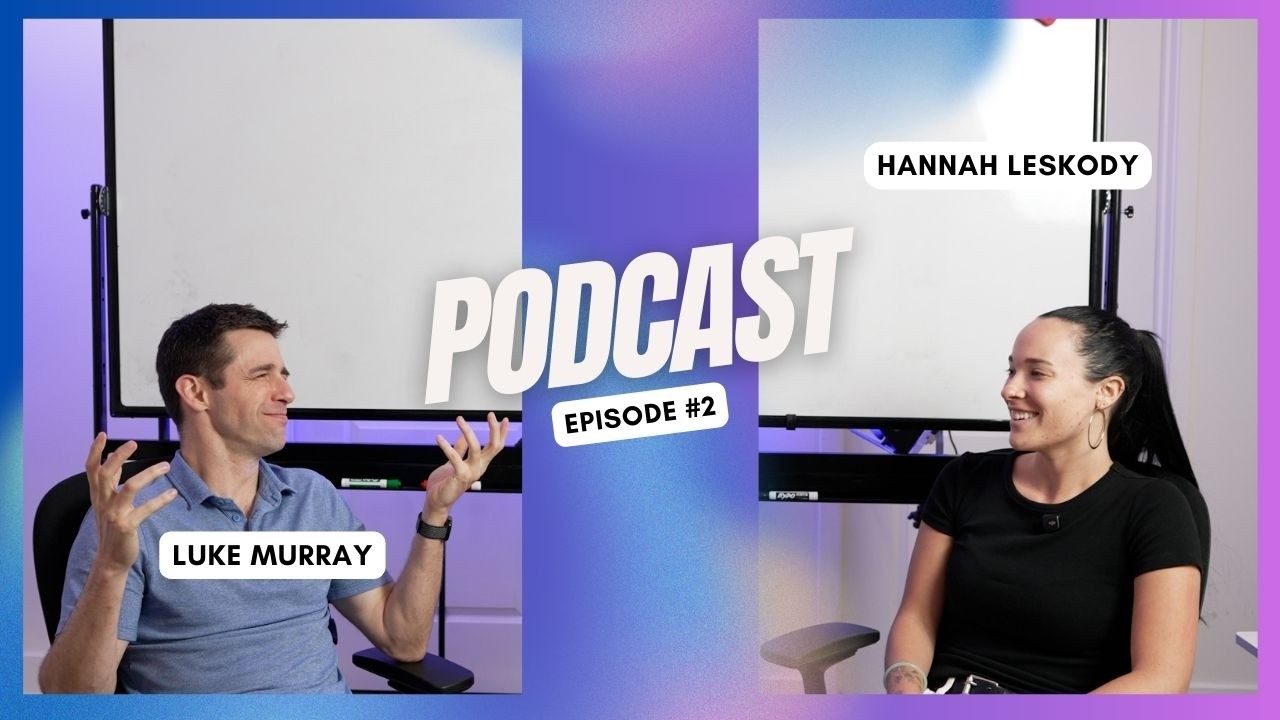
Luke Murray coaches Hannah Laskoti through owning a million-dollar billing mistake and its emotional aftermath. They explore how to sit with hard feelings without chasing constant excitement, and why surrounding yourself with high-performing friends who give honest feedback matters more than most people think.
Chapters
This is my friend Hannah Laskoti, um, and we're going to talk about how we met, uh, what she's learned by working at one of the companies that I ran, and how she's hopefully applied those lessons ever since. Thanks for coming, Hannah.
Yeah, thanks for having me. Excited to chat.
Um, so yeah, you tell your version because my version is when we went on that walk at the gorge where I was like, I had realized it, and I don't know how long I'd realized that you were exceptional. It was the first time that I was like, I need to make sure you understand. How old were you when we did that vlog?
I was 21. 21.
Holy crap.
Okay.
Yeah. Give me your backstory of how we ended up working together.
Yeah. So I was in college at the time, posted a job for COVID testing. It was like $17.50 an hour, the most money I had ever seen. Okay. And so I applied for the job, got it, and was working there for like 6 months before we had even met. You were kind of like the guy behind the curtain as Luke. Yeah, yeah. And yeah, I started taking on more like leadership roles in terms of management.
Did you start as like a swatter? Yeah. That's all you were like, just picking up.
Negative degrees out there, PCR testing, working at JCPS. Okay. So really started like ground level and I recognized opportunities of like more admin things to kind of get out of the testing. The day-to-day. Yeah. And took on an HR role and then started managing some of the clinics. And I remember the first time we met, like, in person was at the NKY COVID testing site. We were doing insurance, things like that. You came for a visit and—
Oh!
Yeah.
I remember this. Keep telling the story. You struck me then. Like, you struck me then. But go ahead.
I was so nervous 'cause like, you know, at that point I'm 21. I'm like, I just wanna do well. I wanna make sure everything goes well. Insurance is tricky.. And the whole time things kept going wrong. It was like things weren't— the tech wasn't working, clients weren't showing up. Everything that can go wrong, in my opinion, was going wrong. And so I was like, dang, that really just did not go well. I wasn't thinking I was making any sort of impression. And then— so that was when we first met. And then at an offsite, I think it was the next—
So I want to tell you my experience of that.
Yeah.
So So we were headquartered in Lexington. We went up to Northern Kentucky because before we'd been state contracts. So people would show up, say, my name's Joe, here's my license, give me a test. And that's all that we needed to do. And so this is when people had to start— the state contracts ran out, people had to do insurance. And so I remember going up to the Florence Mall, which is where I grew up, you know, hanging out in that mall. And It was myself and then Matt Dawson, who was even a bigger deal than I was, because we wanted to see what you would— and then Yaz, who was running JCPS, which is the Louisville— we were testing 60 sites, doing a million a week or a million a day or something crazy. Anyway, you're right. Everything was broken. And I never thought to ask you this. You stayed on the outside so calm that I wasn't working that day. It wasn't my site. I had nobody to impress. I was just trying to learn the process. I was getting frustrated and almost starting to like, I don't, do you remember me being a little dickish?
You were, no, I think you were just like agitated. Like moving around so quick.
Extremely agitated.
Yeah.
So you stayed calm when you're like, oh, and then we scan their license on this scanner and then the scanner didn't work. And so you used like 3 or 4 different workarounds and I was like, this is taking forever. Why is this girl not shitting her pants I was internally. Internally?
Yes.
Your external, like, countenance was— so as we drove back, I remember talking to Dawson, Yaz, and I was like, that process sucks and that girl is awesome. That was my, my first experience with you. I do remember that.
Yeah, yeah, yeah. And so after that, I like, I remember I called Jordan. I was like, what's the feedback? I feel like that went so bad. And she gave me some direct feedback and it was positive and it was nothing that I could really control in that sense. But I remember I remember at an offsite, like right after that, maybe a couple months, you were talking and we were going through OKRs and you were like, "Yeah, and I don't even think Hannah realizes how good she is." And that was like, we had really not had much of a conversation and I was just taken aback. I'm like, "Oh my God, I thought that visit went so poorly," and all this stuff. I was like, "Okay, cool." And that, I think, had an impact on me more than you realize of just like, Wow, someone sees my potential and, like, believes in me in that sense. And I'm like, I don't think I realized that, you know? And so just you saying that in front of everyone, I was like, oh, wow, that was big for me. And I think it was the same offsite that we went on our walk.
Our walk, yeah.
Yeah, right after. And we just had a conversation, a really good conversation about, like, my career goals, where I wanted to go, what I want to do, and, like, how I felt working in the company. I felt so supported in just my vision of my life, even though it was very unclear at the moment. It was like, oh, someone's interested in supporting me going further.
My life. Yeah, yeah, yeah.
Yeah, and that was, I think, my first exposure to a leader that was people first and heart-centered of, OK, here's a chance for someone to invest in me and my capabilities at this little COVID testing place that was so random.
One of the things that I never thought to ask you this either. There was another— so you were doing client management, I think, at the time.
Yeah.
And there was another client manager, older, professional, medical sales, you know, made quarter million a year or something like that. We were paying her commensurate to that. And for a variety of reasons, let's just call them all ability level, because this is like a— this is probably an unhealthy egoic driven way to like try to encourage somebody that was like, you're so much better than this person. Like, yeah, you are worth several times this much. You know, this person like I think I've done that in other ways because like when I'm writing a letter of recommendation, for example, instead of saying she's great, I say I had 1,000 employees. She was one of the best 5. Yeah, because that is the thing that you can't say about everyone and lie. You know, whatever, like, and tell the truth.
Yeah.
So I was— and honestly, that is the math that you are doing with your employees, like the people that respond, reply to you now. Like, some of them are stronger than others and you land on them and you have them ranked in your head. And so I wanted to be like, basically, I was trying to give you a letter of recommendation to yourself by like trying to give you a sense of where you ranked. Yeah. How did that actually land with you? Because again, my intention was to try to get you to quantify your own value on the team.
Yeah.
And it sounds like what you took away was like, oh, he cares about me as a person.
Yeah.
For any other, like, bosses that are trying to, like, again, there's some definitely some negative residue that could potentially come from something like that.
Yeah, I think it landed in a sense of like, oh, he cares about me and my growth, but also it helped me understand, like, my capabilities of, like, actually seeing, oh, I— this person is saying so much, like, so many good things about me in the sense of, like, I'm more capable than someone with— that's tenure. Yeah. And I'm like, oh, wow, okay, maybe I am that good. Like, I don't think I really know— knew in myself my full capability and my full potential at that point. And that was a huge catalyst of realizing what my capabilities and full potential were.
Did the money comments land at all? Because again, I'm just trying to quantify stuff.
Yeah, it wasn't necessarily the money. I think it was the experience of like someone who has so much experience. Like, I'm— I could be better than her. Yeah. Okay.
And you were. You were then. I'm sure you are now, at least in that context. That is really helpful feedback for me because I've been accused more than once of like being so transactional when I'm like, hi, are we going to build something? How are you going to make me better? How am I going to make you better? Not at all. Have a great day. You know? Yeah. And even though when we talk, It's awesome. And like, I benefit from learning about what's going on in your life and hopefully vice versa. Like, you ain't building shit. You don't work for me. We don't talk.
Yeah.
You know, like, unless you are sleeping in the other room for a few days. Yeah. And even then sometimes we don't talk because, you know, you're doing stuff. I'm doing stuff.
Yeah.
So that is a— that's just helpful feedback for me to, to basically like As I'm framing things, it's funny, maybe it was just the energy of the conversation instead of the words, 'cause I'm like, "Meep boop, I must help you with the calculations." And you're like, "Listen, pal, you paid attention and you gave a shit and you meant it." And I guess the comparison did help around experience though.
Yeah, around experience. And it was like you saw what I was doing. Yeah.
Yeah, absolutely. I don't remember literally anything else in our relationship until you had a pretty intense experience to decide like, hey, It's COVID is winding down. What do I need to do next with my life? Do you have another like, then this happened?
No, I don't think so. Well, there was one time in Dorothy, which was a project that we worked on that was pretty intense and large and had the very ambitious—
Oh, yeah. Well, we were doing COVID tests online. So this— you want to explain it?
Yeah. So we were doing COVID tests on site, and then there was also an opportunity to, like, kind of sell DTC, direct-to-consumer COVID tests online to Medicare beneficiaries. So it's providing a great service to, like, Medicare beneficiaries and giving them free COVID tests filled through their insurance. So we had a stock supply of COVID tests. Our onsite was kind of dwindling down. So we thought this was a great way to kind of get rid of our stock and service people. Yeah. And so I became project manager of that project and we had a very ambitious goal. And I remember there was a specific deadline to either launch or like hold orders or something. I can't really remember the specifics. And I got that deadline wrong in my head. Do you remember this?
Yeah, 'cause it was a conversation between you and—
Yes.
I remember this. We had a billing person that she was kind of going back and forth via email, and it was a confusing type email. And there was a miscommunication or misunderstanding.
When we would stop billing.
Oh, we would stop billing and do something else. And so, Yeah, tell me about what you remember about the conversation that we had.
Yes.
Because there were some significant ramifications. I'd say hundreds of thousands of dollars potentially, maybe even a million dollars worth of ramifications.
Yeah, it was a lot. And the implications of that, those finances were even bigger. Like, not only the money of like, what does that mean in terms of the like, earnout and stuff?
Yeah, yeah.
So it was like 2 or 3 days off that I like, held the billing and it was wrong.
Okay, okay.
Yeah. Yeah, yeah. And so—
Actually, let's use this for fun. So it was, we were getting how many signups a day?
Probably like 1,000 plus.
1,000 plus, okay. I think it was actually 3,000, but let's say 1,000. Each of these 1,000 was worth $100 per month. So every day was $100,000 per month of recurring revenue. Let's just say it was 3 days. So obviously if it was 3,000, it'd be $300,000, it'd be $900,000, it'd be almost $1 million per month.
Yes, and you put those numbers out and I was like, Oh my God, if we missed it.
And also, because we were in the middle of an earnout, our earnout, I think, was 16x top line. So it's like, potentially, as a 21, 22-year-old kid, I was like, the weight of that is, hey, Hannah, you missed this by 3 days. If it's $3,000, that's $900 times 16 is like, whatever, almost a $20,000 or $20 million mistake potentially, because it was $150 million of earnout at stake, and there's maybe a very narrow window that we could do this.
And that revenue had to be counted in a very specific time frame.
Specific time period. Yes. Okay, great. So I do remember this conversation. So that's the weight. I don't know who to look at or how to do any of this stuff. I'm like, you or you or whatever. So, okay, I do remember that. Let's just imagine it's like a $20, $30 million mistake that you made as a 21-year-old, or you think that you've made.
Yes.
What do you remember from that conversation?
I remember like feeling that weight because you were very direct of like, this is the gravity of it. And I think that was was good because I needed to realize what the weight actually was. But then the bad part, which I did to myself, was like fully blame myself. And like, I took all that responsibility.
Yeah.
And I— that was like the first time that I made like that big of a mistake. And I was just— I lost it on myself. I was crying, like fully blaming myself. You cried on the phone? Yes. Oh, really? Yeah. Because you called me after a meeting and I was like mid mental breakdown.
You did a breakdown, okay. Yeah.
And I picked up the phone, I was like, hello? And you're like, what's wrong? I'm like, I'm so sorry. Like I messed up. Like I really can't get over this. I'm like really like not okay. And you just sat there and like talked me through my emotions of like, yeah, you messed up, you did. But it's not just your fault. Like let's walk through the like, why are you feeling this way? Like why are you placing all the blame on yourself? And helped me like calm down and realize that like, Yeah, people make mistakes all the time. This was a big one, but it's not the end of the world, and it's not a representation of like who you are, and it's probably gonna happen again. And then I remember you were like, don't work the rest of the day. Like, as your boss, I don't want to see you online.
Oh really? I did that?
Okay. Yeah.
Was that the right move?
It was. It was.
Sometimes it's like, it's like helping me work keeps me from, I don't know, whatever.
Yeah. And normally I think I lean towards that, but I was in such this like overwhelmed, like stimulated state that like I— any decisions made thereafter wouldn't have been sound.
Yeah.
So that choice to be like, I don't want to see you online, like take off— and it was a Friday, so I just needed a moment— yeah, was helpful to realize like nobody hates me. Yeah, like it's okay. Even though it was a $30 million—
yeah, whatever.
Yeah, maybe only like a few million dollars, you know, or you hated me for a second.
Yeah, yeah, I definitely did hate you for a second. Yeah. And did I say that? Do you remember me saying I was mad at you? Or like those stories came up in me?
No, I don't think you said that, but you did recognize the gravity of the mistake, which I think was helpful because if you just brushed over it, I would have been like, he's lying. Oh, you know, like he doesn't actually feel this way. Like I know how big of a mistake it is. So that directness was helpful.
So I think, and again, I don't know to talk to you or talk to you or like explain this, but I think that's a very common tactic of like, I don't want them to feel bad, so I'm going to minimize the mistake.
Yeah.
And I'm going to— but I still want to address it.
Yeah.
And so when they do that series of thought process, like they, they feel like shit anyway. Yeah. And they lose trust in you.
Yeah.
Like they do not trust that you are going to shoot them straight about. And so when you tell them good job, they're like, am I good job? Or is this, you know, And I have paid a very high price in my life for, like, transparency. A very high price in many, many ways. And I guess, like, one of the things I'll probably talk about a lot as I, you know, film 2 videos instead of 1 or whatever is that, like, there are costs to being honest and dealing with reality. But there are also benefits. And one of the benefits is people trust the shit out of you. Because you're just not going to tell them stuff that they want to hear to save the friendship, to save the relationship, to save their feelings. And my hope is that because I also want to sit with you in your goodness. And I remember when I called Becca, I think was it, who was in Western Kentucky.
I think Becca. Becca, yeah.
I remember she called me. And she was so upset because it was constantly a shit show. And like, actually, I did this with Liz, like, literally 2 days ago. Like, she was mad at me about you guys moving in because I, in the, in the, because there was, I just messed with the spreadsheet and she was like, damn it, I've got prior auth. And so like, the first thing I did with her and the first thing I did with Becca is I was like, hey, let's just breathe together. And so I might have done that with you. Maybe I just hadn't, didn't learn that trick yet. But like, we literally took 5, and it was like painful because I'm like, I am feeling anxious. It took 5 deep breaths on the phone together.
I think we did, and I like couldn't even breathe.
I was so— I was like, oh gosh.
Yeah.
And I remind myself when I'm taking those breaths, I'm like, I'm your boss and I'm feeling shit. I did— we did a meeting just 2 days ago or last week, um, where I was like, we're going to take 3 minutes. I just sat on the ground on a pillow. Everyone else was sitting on the couch. I was like, we're going to breathe for 3 minutes. But I closed my eyes and I breathed deeply, loudly, like just in my nose, out my mouth. I was like, this is so uncomfortable. And and I'm the boss of the whole thing. Like, so I could imagine how big of an ask that is for my team members who are just like, I got to get shit done. Yeah. You know, even they're staring at me and seeing that I'm doing it. It's just super, super valuable and such an uncomfortable, unorthodox thing for a boss to do.
Yeah.
And I don't think I've ever been— I don't think I've ever regretted it. Yeah.
Yeah. I think it's so helpful and grounds the energy for at least that moment.
Oh, yeah. Yeah. No. And honestly, I was on a call with, with Jason. We were getting yelled at by a, by a dad because we tested her daughter and she didn't want tested or something like that. And we said the wrong name. I don't know if you remember this happening in Northern Kentucky, but we get on the phone call and Jason is like on three-way with me and the dad's yelling at me and I'm just like, you're right, sir. We were wrong, that type of thing. And he's just like, and his daughter was dumb. Like, she, which we didn't call her name, she, but it sounded like someone else's name. And like, it's not the first time that's happened. It's like, and she knows she doesn't want to test. Anyway, I'm sure we did some stuff wrong too.
Holding her down.
Yeah, no one was like, yeah. Anyway, this is us taking a lot of responsibility, by the way. Look at how—
100%.
Yeah, no blame over here.
We didn't do it.
Idiot kids. But the point of the story is As soon as the dad hung up, I said, "Jason, what's your heart rate right now?" And he had his watch on. It was like 130.
Oh God.
And I was able to look at my watch and I was like, yeah, mine's 70 or whatever, because I think I was actively breathing. As he's yelling at me, I was thinking like, in through the nose, out through the mouth. So the other thing I did there, and again, this is an ego-based thing that you may not even have remembered, and I is very easy for leaders to do when you're trying to make someone feel better by like speaking to their ego, was like the person that also the person that you were emailing with, very unclear email. She's older than you. She was the expert. She had the experience. And as I read through that, that, that thing, I was confused, you know, based on conversations that I have. And so I remember saying to you, like, And this is probably the firmest I got, but I was like, you are smart enough to push back on fucking anybody. Anybody. Like, you're smart enough, like, you know the ramifications. You're smart enough to do that, man. And I am giving you permission. I'm absolutely begging you to push back on any motherfucker that is even an ounce unclear when there is millions of dollars at stake, myself included. And especially. Do you remember that?
Oh, I remember that.
Yeah.
That also has stuck with me. I'm just like, it doesn't matter what ranking you're in. Like, if you're unclear, ask the question. If you've already asked 100 times and you still don't get it, ask the question, especially when there's millions of dollars on the line.
I think one of the things that's helpful about that, that I remind myself of— so there's this super famous gangster of an entrepreneur called Paul Graham. He started a started a company called— he started Yahoo Stores, built Yahoo Stores. Actually, it was ViaWeb, acquired by Yahoo in like '03, '04 or something like that. Then he started a business incubator that I tried to copy. His was called Y Combinator, and they've incubated Airbnb and bajillions of companies. Lots of money, very successful. And what was I going to say? He— oh, He went to Harvard, got his computer science degree, and he was explaining, he's like, when I'm trying to figure something out, like we get a new dishwasher, I'm like, what button do I press? And I feel myself getting intimidated by a challenge. I have to remind myself, oh yeah, I have a computer science degree from Harvard. I have the ability to figure this out. And I have, like what you're doing at True Diagnostics, internet, genetics, very complicated stuff. And when I get lost and I think, Oh, I must be dumb. I'm like, I'm a fucking doctor. Like, I have— not only am I smart enough to figure things out, I should have at least a little bit of an advantage in this particular direction. And that's the kind of confidence that I was trying to give you. Like, you didn't have credentials.
Yeah.
You didn't even have a damn college degree. But I'm like, woman.
Yes, I do.
You didn't at the time when you were 21. Like, when you saw—
I was graduating.
Okay.
Yeah.
So it's like, you don't have— you You might not have a thing to be able to point to to say, because I got a fucking Harvard CS degree or an MD from Kentucky.
MBA from University of Louisville. Yeah, yeah.
It's like, you have a brain. Trust it. And honestly, I don't say that to everybody. And the ones that I can't say that to, honestly, eventually I don't want on my team because I've got to police their judgment. That was— I got a little bit caught up in like creating the story of like, well, she was an idiot type of thing, which is not helpful because then it's blaming them and it's like creating this whatever. But for you, I wanted to be like, trust your brain.
Yeah.
And hopefully take it from someone that you think is fucking knows something that you are smart.
Yeah.
And so push back. And especially when the when the stakes are that high.
Yeah.
Sometimes you can be unclear on agreements and it's like, well, whatever. It's not that big of a deal.
Yeah.
Okay, cool.
I remember that lesson.
I remember that was okay. What's the next thing you remember us doing?
My journey in Asheville was huge and life-changing for me.
What was going on at the time? And honestly, like, as much as I'm like, I was so supportive, like, —You know, non-ordinary states. —I got ice cream, I was crying on the couch. Yeah, non-ordinary states do that to you, period. But yeah, tell me about, like, yeah, just what would you fucking say to your 22-year-old self now that you're the ripe old age of what, 25, 26? 26. 26, yeah. Geez Louise, yeah. What was going on to be very, very, as specific as you're willing to be so that you're not like, you know what I should have told myself is believe in yourself and take a risk and like, Shit is just too generic. Honestly, like, folks can't relate. So as much specificity as you could give around your past, your history, or, you know, like the heroing that you would do, which is taking more than your 100% responsibility. Yeah, it's just a version of being a victim because you're helping from a place of helplessness or lack of agency. Yeah. As much specifics as you can give around that, that that for day or days or weeks, a section would be super. Yeah.
Um, so I— we were in Nashville, right? Or not Nashville, Asheville, right after this offsite. And, um, I was in this place in my life where I did not know what was next. I was in a relationship for 3 years living with him that, uh, he was an amazing person. I loved him so much, but I knew deep down, like, this is not where I wanna be. I know I wanna explore more. There's so much more expansion for me. And that relationship was really, the questioning of that relationship was taking over so much of my mental capacity. Yeah. That it was hard for me to see clearly in any way, 'cause I knew I was not living in integrity.
One of the things that was interesting about that relationship is like, You're cute. Yeah. You're capable. And like, I was like, why is— you're surrounded by a bunch of other dudes that are your age. And I was like, like, I didn't know anything about your relationship status. And I'm like, I mean, everybody else is, you know, connecting. And I'm like, yeah, like, I never heard you talk about your boyfriend like one time. And then so I was like, I don't know if I had this thought, but I wouldn't have been surprised for it to cross my mind. I'm like, is she gay? Like, you know, or whatever. Yeah. So, yeah, yeah. What's up? Yeah. What you got? Hey, we're recording a podcast here. Sweet. What's this? Meredith Herrera's college. Sounds great. Cool. Thanks. I figured you'd always say no. No, I believe in you.
And that's so sweet.
Yeah, we'll pay for her college. Yeah, sounds good. Yeah, I trust you. Wow. Cool. Good luck.
Gosh, I love hot sauce. Yeah. Hot Honey is so good.
Yeah. So he's a, he's a connoisseur. Kofar is. So that's, that's one of my entrepreneurs. And Loretta is one of our employees and she is fantastic. You know, Loretta? Yeah. And she's going to get, I think, a master's degree and we're going to pay for it.
Good. Well, that's awesome.
All right. So you— Yeah. Never talked about him. There was a lack of integrity or there was a lack of— You're like, it was a transparency. You were saying it was an integrity breach. And I think it's like, yeah, if he was supporting you, He just didn't feel integrated. Yeah. He was not integrated. Yeah. It's like you should have been like, this is the thing I'm learning or doing with my partner, or like, and he just never came up in a way that felt like it didn't. But it also didn't come out in weird ways in terms of like, it wasn't like you showed up to work with black eyes. It was just like this, this empty part of who you were.
Yeah, I think it was very unconscious of like, I wasn't intentionally not bringing him up. Okay. But there was no part of my professional life and my personal life in that sense that like overlapped. Okay. Where he understood anything that I was doing or was integrated in that way. I think I was living two completely separate lives. Yeah, yeah. And that was really hard for me. And I think it was just like we were not aligned. Um, he's very smart, but we were not aligned like intellectually, spiritually, and we couldn't get to a deeper level But I loved him so much. So I was like, what does this mean?
Yeah, it's like, you know, it's interesting. Like my projection or what it sounds like you're saying is like, and this is a very, very broad term, but like smart, grounded, wonderful, loved you more than he's ever loved anything. You like talked about expansion or growth or whatever. Like one of the, my, my stories that I make up is like to simplify it is like you were curious and he was less curious. Yeah. Would you, would you say it that way?
I would agree. I would agree. And I think that I was a little more driven in the sense of like, I know I didn't want to live in Kentucky for the rest of my life.
I don't want to sit in one place. I don't want to think one thought. I want to do one thing, like professionally and geographically.
Yes. And I felt like there was so much more that I could do and so many more places that I could go and see and Yeah, I was so curious in expanding my consciousness and my being and anything that had to do with growth, and that wasn't matched. So I felt like I was growing, growing, growing, and he was kind of just right here, and it was like I was like kind of dragging him being like, "Come on." Yeah, yeah, and both of you guys are miserable because I have brothers that are not interested in any of this bullshit.
Nick and Gus, some of the most exceptional, right, but twin brothers, amazing men, and they're like, "Yeah, no." I don't wanna fucking travel. I don't wanna read your self-help book. And they're all like crushing it at life along their lines, you know? Just a misalignment.
Misalignment, yeah. That was deeper than I think I could ever realize until I had this journey, this medicine journey in Asheville, and I had a full ego death of what I thought I was and who I was and this whole life that I was like, living in and kind of playing this role of like girlfriend, and I'm just gonna be a part of this, but like really limiting myself and my potential and holding myself back out of fear of hurting him. Yeah. Of stepping away. And the whole journey was about that, of like, here's your life, like this is what you're supposed to be doing, here's your like full potential. And I could feel it, like I fully embodied like—
Feel what, the weight or the freedom? Both.
Oh, okay. The dichotomy of the situation. Oh, okay, okay. Of like, this is what you're in right now and this is what it feels like. What it feels like if you like take the leap and go. And so I just kept saying to myself like, I have to go, I have to go, I have to go. And in the moment, I don't think I realized like what that was, but after it was so prevalent that I could not ignore it at all. And I just knew, I remember talking to Jordan, I'm like, I have to break up with him. Like I can't even go, we were living together. I was like, I can't even go back and like look at him in the eyes 'cause I have, like I just can't do this anymore. And, but I'm like, but where am I gonna go?
Yeah, like you did not know. I had no idea.
And it was so overwhelming.
One of the things I wanna do at the end of this, which for, I mean, I don't know how many other things we, stories we have to tell. Like, I want you to like stand where you are at 26 and be like, this is what I've done the last several years. And it's like a fucking crazy story. Like I did this and I did this and I traveled and I did all this stuff. And it's like, that sounds wonderful. But 21-year-old, 22-year-old, herself didn't know any of that shit. None of that. None. Yeah. And so like, it'll be cool at the end of this. I just, I'm glad that we're bookmarking this. Like, you had no clue. You did not know. No idea. You just know, you just knew you couldn't do this. Yes.
And I had no plan. Yeah. No plan. I was like, I just can't do this. So I, it was like a 5-hour drive home with Carl. He's like driving in my car. I'm like, what am I going to do? What am I going to do? Like just talking through all these scenarios.
Do you talk through it with him or you just like say it in your head?
In my head and with him and Bennett in the back and they're like, "Get me out of this farm." They're like, "Just break up with him." Yeah, yeah. "I love him." "I love him so much." Yeah, and all this stuff. So fast forward, I get home to our place and I get home and I'm just like crying. I'm like, "I can't do this anymore. Like we have to break up." And like you walked in and said that right away?
Yeah. Okay.
Or I was like, I didn't say that. I walked in and I was like, I'm moving out. I kind of said that.
As soon as you walked in? Yes. Like, okay.
Like, wow. Like, because I was visibly like, I couldn't sit there. I could not speak.
Couldn't do it. Yeah. I couldn't. Holy cow.
Okay. And he was very taken off guard and hurt, of course. And I felt so bad. But I'm like, I'm moving out. I'm going back to my mom's house and I need like some space. I need to think about it. And it took like 2 weeks or whatever for me to kind of explain to him why I was feeling this way and like how I just needed to leave. And at that point, there was an opportunity to move to New York. And I remember—
Was that like, why did that happen? Or no? Yeah. Yeah, no, I remember why. Yeah, there was an opportunity. Yeah, you should tell me more. Yeah, great.
I am. Yeah, whatever. Yeah. No, I remember in Asheville you were like, I was like, I want to be—
I was like, yeah, where do you want to go?
Where do you want to go? And I was like, New York. And you were like, do you need help? And I was like, yes, like I need help. Yeah, moving out, I need help getting there. Like, I don't know what to do. Yeah. And so, um, me, you, and Jordan had a call after, and you were like, okay, pick place in New York.
Oh, that's right. I remember being on Airbnb and being like, let's just do 3 months or whatever it is. And like, because yeah, I am seeing how I've done this so many times. I'm like, and employers, if you're a fucking employer, listen. Like, I was like, you're awesome. We were still doing like COVID testing stuff. So you were making me so much money. Yeah, you were making me way more than whatever the amount that I was paying you.
So I'm like, I think I made the rent in like 2 hours of working for like doing COVID testing, what it cost.
Oh yeah, yeah, yeah. In 2 hours. Yeah. So I'm like, you are making me money. How can I spend whatever? It must have been less than $20,000 probably. I'm guessing. Yeah, yeah, yeah.
I think it was like $8,000. I think it was like $16,000.
Whatever it was like. Yeah, I will give you $16,000 to unlock the thing that you are telling me that your soul needs the most. And I don't know what my like ROI in terms of getting $16,000 back, but I got a hell of a ton of margin to fuck with. Yeah. And you're again making it 2 hours or whatever. So yeah, yeah. Like I've done that. I just did that literally last night with another employee of mine about a health thing. Yeah. You just saw that happen with Loretta. Like, yeah. So I don't know what the ROI on any of this shit is. And I've been burnt. Like I had an employee who was like, that I— she got in a tough spot and I had like $10,000 or something like that to pay for some stuff. And like, she ghosted and I'm never going to see it again. And so like, I have definitely been burned. But I guess one of the things I tell myself, even when I get burned, is that I'm like, I don't have any doubts now about like, hey, you're done. Like, it's not— it's because I only made the investment because she was exceptional in a ton of ways. And I made the investment with you. Gosh, probably one of the best bets I've ever made in terms of spiritual ROI in a human being's life.
Oh my God. Yeah. Like truly life-changing. And I think maybe not always financially you get your money back, but in an energetic sense and loyalty, hopefully. Yeah. Like I, I just feel a sense of like loyalty to you of just like you're such a good person and such a good leader that I would do anything. Yeah.
Yeah. Well, not good job. Not good job.
Not good. No, no. Yeah.
My job's way awesome. Yeah. She works for my best friend, and I'd like to keep that best friend as much as I want. Anything happens, though. Exactly. Like, as soon as Dawson gives me some shit, I'll be like, "Hey, Luke, this is what I want." I'll be like, "Just say it." Yeah. Okay, cool. So I interrupted you in your story.
Yeah. So I got the opportunity to move to New York. You were like, "Pick a spot." I was like, "Is this real? Like, what do you mean? Like, I'm going to move to New York? And like, I'm confused." And he was like, "Yeah, like, whenever you want to go." And I'm like, "Okay, can I go in 2 weeks?". And you were like, do you want Jordan to come? And I was like, yeah. And so you were like, okay. Gus paid the, we picked the place, we sent it to Gus. Gus was like, I don't know what this is about, but it's paid. I'm like, what? I'm like, what is happening? Like, I'm so like excited, but like, wow, grateful.
Yeah, it doesn't make like, this doesn't make mathematical, or actually it does make a lot of mathematical sense. And hopefully when you have your employees, you like, have you done this for any of your employees yet? People that work on your team?
Yeah, we've given them like extra bonuses and some ergonomic chairs to just make them feel a little bit better, but not to that extent.
Well, and I don't— it's not about how much money. It's about like— actually, I've never articulated this before. I'm so glad we're having this conversation. It was because I know they sit. I was like, what do you need in your soul to feel more alive than you feel? And you're like, I don't know other than I don't want to be in Kentucky. And I was like, great. You have to pick another place. Yeah. And you said it. And I said, okay. Yeah. And that doesn't actually— so I have again an employee that's overweight and she's like, it's literally the truzepas, the shot that GLP-1. I've had several of my employees like use them and they're great. I didn't pay for it. But this employee is like, the number one, like most difficult thing about my life is my weight. And I've been an athlete. I've worked out a bunch. I've done all this stuff. Her spine is fucking fused. And so she's like, and I'm not doing it because of money. And it's like $600 a month or $1,000. And I'm like, so in this particular case, for me to pay for her to do that would have been a 7% increase in her salary. And I was like, what percentage of like improvement of your life? Because we sat down with Liz, who's lost a shit ton of weight, you know, could tell the story. You know, I think Liz lost like 50 pounds. And she's like, like, What percentage better in terms of just the physical pain that you feel? She's got some joint problems and she's like, I would say at least like 30%. Yeah. On my day-to-day waking up life. Yeah. Great. That's a good ROI for me as your employer. Again, because I've listened. So yeah, the point there is not like $12,000 or $16,000 or $116,000. It is listening actually. This is a really important point. I gave $125,000 to an employee of mine for helping me. God, I never thought of this. And he said, hey Luke, you're not gonna like to hear this, but it's not enough. And he did not feel grateful and thought I was, you know, a selfish shit. And I'm just now realizing talking to you that the issue was, I mean, there's some values alignment, misalignment or whatever, but it's like if I would have listened to him more closely about what he actually wanted. Yeah. And in his case, it might have been like, I actually just want as much fucking money as I possibly can get from just for money's sake, you know, just like, okay, cool, let's, let's figure out how to optimize for that. But I just was like, oh, this seems like a generous thing. Yeah. And And again, I'm not saying that I didn't do stuff wrong. I did. I certainly did. But I didn't ask and really listen, which is again going back to your very first story. You're like, "Did it feel good to hear that you're worth 3 times as much as someone that makes more?" And you're like, "No." I think you just listened and you said this person who's lived a longer life, done more, you are afraid of more value than. So anyway, that guy was driven by money. You were less driven by money. And if I was a better listener, I would have been able to speak to that. Anyway, cool. So you decided you want Jordan to come? Yeah. Jordan's like, yeah, I want to come. Yeah.
So we moved to New York and that ever since then it was like a butterfly effect of like my life has changed so much. Yeah. And yeah, moved. It was a great experience. Lived in like this beautiful high-rise for 2 months and worked from there every day. It was awesome. I felt so much better energetically, like more aligned with who I wanted to be, where I wanted to go, and I was just able to get— by removing myself from the environment that I was in personally, I was able to get more clear on my goals, where I wanted myself to be, like, spiritually, and more aligned with, like, my highest potential. Yeah, yeah. And just, like, get to know myself more. You—
yeah, so all those things are just like Mosey, who's— they usually have a thing in here. It's like, go to a place. In his case, he's like, work hard as possible. He's like, think of the person you want to be and then put yourself in an environment where you don't have a choice but to be that person. In your case, you just needed to breathe deep breaths of air with no, like, reference to your past. And I guess in that case, why did you pick New York? Was it because, like—
It was always a dream of mine. Okay, just period. Yeah, I was born in New York. My whole family's from there, but I've always wanted to live in the city. Okay. Yeah. And so I was like, New York.
Okay. All right. So to kind of wrap this up, I guess, like, have there been any other lessons that you've like, again, we've been like, oh, I saw you do this. And so like, this is how I now am. And actually two questions. Other weird things that you saw me do uniquely as a boss to be like, hey, and actually one that I'd like the most is like, this is something you do that sucks, dude, or that most people think sucks. Maybe I like it, but like, you know, like, I think negativeness is— would be helpful of like, this is your biggest weakness as a leader.
I think you— because we haven't worked together in a while, so I don't know if this is—
whatever, your last reference point.
Yeah, I think sometimes your delivery can— could be harsh of like not being self-aware of like how somebody might receive this, even though it might be the truth, just Yeah, your delivery could be almost too direct sometimes. Yeah. And I've seen— I don't know if it's happened to me personally, but I've seen other people kind of get affected by that. And I don't know if it's their ability to receive and them not like, yeah, receiving that sort of feedback well. But I think that could have a negative effect if you don't know them as well. Yeah.
I mean, Anybody that gets— I mean, if I get a harsh, like, anything that hits me, one of the things I've realized, I've learned a lot about myself, is I felt a lot of anger. I was like, it's my— I feel so comfortable in anger, you know? So it feels so comfortable, which is— I'm not the only man that would say that, right? Like, what, is there another song you could play in your head other than, like, you know, anger? It's interesting because, like, there are people that might only feel comfortable in sadness because they're like, that's— or fear, you know, like this is— I— it feels normal to me to be on the fucking lookout for something horrible. Yeah. And so I felt fear as well, and I feel the emotions, but I've started to recognize a lot more that the harshness a lot of times comes from anger and frustration, wanting the world to be different than it is and being like, mad about it. But what I've learned is when I feel angry, it is, it is a helpful thing. If I'm sad, I don't question. I'm like, no, this is what I've hit truth, you know, like, because I'm so rarely sad, this is probably real sadness. Yeah, actually, probably I need to take a nap. But if I've taken a nap and I still want to cry, yeah, it's probably real sadness. With this harsh feedback, I think it oftentimes there's sadness underneath that I don't feel. Yeah. Mm-hmm. You know, I've experienced a lot of sadness over the last couple of years, and it's like when I'm angry at that person, it's like, actually, I'm just fucking so sad.
Yeah. Easier to be angry.
It's easier to be angry and for them to be an asshole or for anybody, you know, associated with them to be an asshole.
Or to be their fault.
Or to be their fault or to hate myself, you know? And yeah, this is actually— this is about a breakup. So, and like the intensity of the hatred, usually the intensity of the hatred, how mad I am at her, how mad I am at myself, you know, like I just wanna put this anger somewhere and think that if I can, you know, literally like strangle myself or just like make somebody pay, I just wanna cry. I just wanna feel it in my fucking bone marrow. And if I do that, As the 15 Commitments book says, like, it's not— it's like a couple minutes. Yeah, it passes so cleanly through my body. I had this conversation with another one of our people that was like feeling sad. Oh yeah, they're going through a divorce. I mean, that's multiple waves of sadness that they're experiencing. It was somebody else. Anyway, they just didn't want to feel She didn't want to feel. Oh, this is what it was. The one that wants to lose weight. Yeah. Do the GLP-1. I said, how are you coping with that? All that stuff. And what I was thinking of from like attaching strings was like, okay, you can do this, but you have to work out and you have to do this. And I was going to attach all these strings. Like, that doesn't feel heart-centered. Yeah. And she was talking about her relationship with food. She's like, you know, I just kind of feel like, fuck it. And so like, like I have other things going on in my life that make me sad. And so it's like, it's the one thing I got or whatever. And I was like, you know what, I'm not gonna police you on this at all, but I will pay for this. And the one string that I have, and it's just a heartfelt offering to you, is to heal. Yeah. I'm not saying you don't need 3 pints of fucking ice cream. Yeah. Take a few breaths and feel the sadness, the physical pain, but like also the emotional pain, the fear, the, you know, anxiety, the regret, whatever it is. Like, and don't think about it. Like, just—
it's so hard to sit with that.
Yeah. So, um, anyway, so your feedback is, hey Luke, your house is shit. That ain't changed. Yeah. I think some of it has softened a little bit because I'm aware. I can sometimes feel the energy of it, and I'm able to be like, oh, this energy is going to be transferred to them, and I have to sit with my own feeling. Yeah, first. And I can still, um, I'm probably gonna have a conversation tomorrow with somebody that I felt some anger towards, but it's clean anger. Like, the message of anger is like, yeah, stop, this will not happen anymore.
Anger is not bad. No, it's not a bad emotion. It's a very intelligent emotion.
Not at all. And neither is sadness.
Yeah. And neither— All emotions are very—
Yeah, like they, they just, they're allowed to exist. But anger doesn't need to look like a fucking temper tantrum. Yeah. Which is what I think when you're talking about, you're like, you're so harsh. Like there's some temper tantrum shit going on in there. Okay, so that's one of my weaknesses. Yeah. Can you talk about any other like things you've been like, oh, I did this thing in my professional life a little differently. Yeah, um, because whatever.
Yeah, I think that one's easy. Um, conscious leadership as a whole, like just self-inquiry and, um, recognizing that you are likely the root of most of your problems. Oh God. Yeah, and, and some people don't ask themselves and they don't go inside and they're not expected, so they like don't even question if they are the word.
There's like, it's obviously not. Yeah, guys. This sucks.
Yeah, they just don't, yeah, they don't question it, they don't feel emotions. And in a professional sense, I think it's easier to do that 'cause it's like, in our society, we're like, emotions are bad, or like women especially don't be emotional. Oh, oh yes. Especially in a professional setting. Yeah, yeah. Signs of weakness, all things I don't subscribe to.
Yeah, yeah.
But that, being curious about my emotions and wanting to show up as the best version of myself and also bring that out in others of like, it's okay to mess up, ask yourself questions, be emotional, be vulnerable. Like, all of that has just transformed how I show up in my professional life and what I strive to be. Like, even doing, I'm doing conscious leadership coaching now. Oh, cool. Yeah, and it's been awesome. Yeah, transformative in that sense. So I think that construct, and because you were the person that introduced that to me, sure, sure, has been hugely transformational. Great.
I don't know, any other stuff you want to say about like, again, 26-year-old you, like, yeah, looking at 21-year-old you, this sweet person that you are and were, you know, ever, like, what do you want to tell yourself at 21, a half decade ago? Ago.
Oh my God, it's crazy when you put it that way. Yeah, half decade. Wow. Um, so not generic, but I really feel this in my core of like, just trust your gut. Trust your gut. When you feel— first, you know what that feels like. Like, feel that sensation in your body of intuition and sit with that because it's so deeply intelligent. It is like ancestral, and it is a sensation of what your intuition feels like. Learn that early on. And I'm telling that to myself. Yeah, if I knew what that felt like at 21, I would have made so many different decisions earlier, I think. Yeah, yeah, yeah, yeah. Awesome.
Um, and yeah, have you, have you listened to your gut and it like steered you wrong? Because one of the things that comes up sometimes is like, your gut can be made up of like fucked up traumatic connections. So like your gut could tell you like, stay away from dudes in blue shirts because, you know, like some guy in a blue shirt was mean to you on the playground when you were a kid. Yeah. You know, like, yeah. So like, do you think—
whatever. I, I don't think I don't think my gut has ever steered me wrong. I think doubting it has. Oh, wow. Yeah. And like feeling that and like, oh, and then either like thinking through it logistically or like trying to reason. Yeah. Or like go the other way of like, no, I shouldn't do that. Or if it's telling me to do something that's like really hard, like, oh, I don't want to do that. And then it's like, well, shit, now I'm in this harder position because I didn't. Do what I knew I should have done. Okay. But I think in that sense, it's like you gotta, you have to process some of those traumas for your gut to feel like the right thing.
Yeah. Yeah. Okay. Anything else? Trust your gut? That's the first thing you would say to your wonderful 20-year-old self?
Trust your gut.
Give her a hug.
Oh, I just wanna get right up against you. Yes, trust your gut and like, you are valuable.
Uh-huh. And you— Oh, that's right.
I had to— hammer that into me.
And so many other people have hammered that into you, and it's still something that we sometimes are just like— I get told still.
Yeah. Yeah. Yeah. Like, your work does not define your value.
That's interesting, though, because a lot of the feedback you're getting is like, I don't know— You're so good. You're so good at your job. You're super good at your job. It's like, ah, but that's not your value. But also, it is literally why I want to pay you more than everybody else or whatever. So good luck with that. You get a lot of like— Did you step away long enough to do some of that stuff? Because you and I have talked about, like, yeah, work remote. I'm going to travel some, you know, like, I think this is interesting. Yeah. I want you to say this again to yourself because I've traveled and guess who shows up everywhere I go? Who? You? Yes. Like, I cannot tell you how many beaches or jungles or mountains or whatever or whatever place I've gone that I'm like, this is supposed to be where you're supposed to be happy. You know, I'm a doctor, I have money, or whatever the things are that you're supposed to have. And I'm like, I'm here in paradise and I feel sad. Yes, goddamn it, say that! Because every other fucking 21-year-old girl that's like, I just want to go to Burning Man and travel and find myself, it's like, it does not mean that you will show up in fucking Bali and never feel literally shitty. You're gonna shit your brains out, by the way. And also that you will not feel sad, empty, and potentially just as lost in whatever shithole you left. Like— Oh, 100%. I think that's such a thing that I'm not saying that you should not do it, but something I've learned, like, in my late 30s and early 40s after going to so many things. Now I'm going to these parties where it's like, you know, you know, it costs $10,000 and you're around all these other successful entrepreneurs and people are like, hot, successful. And it's like, and I'm like, huh, this is also like, I still feel sad right now because of whatever, like the things you don't get to escape. Yeah, you really do not get to escape them no matter how much money you have or how much your boss fucking says you can do whatever you want. Like, and I guess you said that that New York was awesome, and I'm sure it was, but like— I still felt sad.
Yeah, but shit was so sweet. And after New York, I moved to Costa Rica to work, and I still felt sad.
Yes, you live in Costa Rica on the goddamn beach and get to surf and all this stuff that people are selling courses on how to live— How to do it. Hannah Liskowy's like, she can make a goddamn course and charge you $50.
I don't really know how it happens. Happened.
Yeah, but like, yeah, you'd have to make up the fucking steps or whatever. Like, you could tell your story, like, beep boop, here's a formula. Um, and you still were sad to the point where you're like, I don't want to be here anymore. And you came back, you know? Um, so like, I, I don't— again, I don't think the point in here is to tell people to like not go do stuff, but just don't expect anything. Yeah. To be the answer to your problems. Literally anything, including being awesome and your boss letting you go do whatever the fuck you want. And every other boss— you only have me and Dawson as your bosses for the last 5 years. Yeah. And he's just as cool, if not cooler than I am. Cool enough that she's not leaving him for me. So yeah, like, you've had people surrounding you, including your bosses, saying, how can we support you on your fucking crystal vibration spiritual journey for a half decade and like, just still feel lost, don't know. Like, you are gaining confidence and stuff like that. What do you think is different from like the lostness that you feel now and the lostness that you felt, let's just say, your first few months in New York?
Yeah, I think knowing that It doesn't mean that something is wrong. Like knowing that emotion and— of lossness? No, it's like sadness. Okay. Of wherever you are, you're gonna have these emotions and it doesn't mean always that something in your environment is wrong or that you need to change. Something to fix. Yeah, something to fix. Yeah. Because you're always going to feel that and I have experienced myself feeling those and wanting to run. And I'm like, oh, I'll go chase the next exciting thing. And through those cycles, I have learned, okay, this is gonna continue to show up. And I think one thing that I have learned is my reaction to that has changed of, okay, I don't need to go look for the next exciting thing or run away, or I need to break up with this person or not be in this relationship, or I need to be in a relationship, like try and change my environment. Yeah, yeah, it's okay. I need to sit with this sadness and let it process through, and maybe I won't feel so sad in a couple minutes, but it's okay that I'm so sad. It's okay that I'm sitting on the beach and I have what some would say this dream life. I would say the dream life, yeah, yeah, and I still don't feel 100% happy all the time, and that's okay because I'm human and I have emotions, yeah. And my reaction to accepting that sadness rather than being like, oh, something's wrong. Like, I need to— like, why don't I feel so happy? I have all these things, like something's wrong. And like wanting to look for external either validation or external escape. Escape. Yeah. To, to get that feeling to go away. Yeah. I think that has been a huge transition for me over the past 5 years.
Yeah. One of the things you're saying that is kind of what I was getting at when I asked about like Trust your gut. Like, this is some fucking cool talk because you're like, well, my body's telling me that I'm sad. And so I think it's a brilliant way you just articulated it of like the wisdom to know the difference between the awareness of a sad emotion, the desire to not feel the pain of that emotion, and also to recognize that, that the existence of that emotion and the inner wisdom of your gut are not necessarily the one and the same message. And this has happened to me over the past few months here at Chevy Chase Gardens, like in Lexington. I'm like, I was like, I'm gonna put my head down, I'm gonna get the portfolio of companies at least like making money, 'cause if it runs out of money, then I'm screwed. And I'm like, and I'm going to try to like figure out YouTube or whatever creating content is. Yeah. And I was like, and I am going to sacrifice relationships to do that. I have been more lonely. Sad too. But I think some sadness and loneliness often correlated. I'm like, I have on purpose let myself feel more loneliness over the last several months than maybe any other time in my life. And I've just said, this is the price, this is the emotional price that I am paying to set up something that matters more to me, which is alignment in my professional life. Because now I've got 6 or however many companies, and every single company is run by one of my closest friends that I deeply respect and admire. And so I still feel lonely when at the end of the day I like sit down on my couch, I'm like, hey, I ran a company with my best friend and my romantic partner, and I'm not doing that right now. That feels crazy lonely.
Yeah.
And also, I'm not gonna fucking spend this time right before I go to bed scrolling on Tinder or trying to solve that problem. The best thing I can do right now for myself and even that future partner is go the fuck to sleep. Yeah. Get up early, be healthy, go to the gym, whatever, and then build the environment, create the content or whatever it is, to then when it's time and I feel I trust the inner gut thing that, oh, now it is time. Yeah, actually, I started to feel that literally yesterday. I was driving. I was like, I think it might be time for me to like have a social life or, yeah, you know, date or whatever it is. And I'm like, is that just a thought? Or is like, so it is a skill.
Yeah. And I think one thing that's really important with that is allowing yourself to feel it, like knowing, okay, yeah, I'm going to be sad. The sadness. Oh yeah. Of not going on Tinder or whatever. Oh yeah. To avoid. Yeah. Or to push it down to where like you are now clear, maybe. Yeah. Yeah. Clear. Like, okay, now this is the time. It's developing. If you were to push it down and just like not feel it and not allow it to exist, even though it's a very uncomfortable feeling, that clearness of like when it's time to move on, I think, would be faded or not distinct.
I think it would come out in weird ways because I would try to fix it. If it's not Tinder, it would be literally— and this is, I think, a pretty extreme thing to point out— I can go over to my sister's house, who I love. I mean, there are two people I would die for, and this is like no questions immediately. One of them is my sister, um, and she's awesome, and my nieces and nephews are the shit, and my— her husband, we have a company together, so like it's awesome. And I have been— and she lives about 20 minutes away, 25 minutes away, and I've sat on my couch at 8:30 to 9:00 and been like, I could drive over to my sister's, I could read bedtime stories to my nieces and nephews, and I'm not even going to do that because I know that the feeling of loneliness inside isn't for my sister, it's for whatever the unique kind of connection you feel with a person that is, you know, that type of connection. And so I'm not going to— yes, I'm not going to get on Tinder and be like, you know, come up with jokes, which is all I ever do, or be flaky, because that's the other thing is I'm bringing this energy of— I'm not bringing an energy of intention. 100%. The date or the conversation or whatever it is, self-serving. It's self-serving and it's actually self-sabotaging. Like, it's self-serving at the ego level, or the, like, I don't want to feel pain. It is self-sabotaging at the, like, I should just feel sad for a couple minutes, recognize that I'm lonely, and then just read a book and wait to get tired. Yeah. And then go to bed. So, yeah, I think I'm glad you brought that up, the difference between, like, oh, I felt lonely. Yeah. I felt sad and I didn't need to do anything about it. Yeah. And the whole, like, metamorphosis or catalyst of like, my life is not aligned. This is not just sadness. This is lack of alignment and deep, deep love.
And it's a different feeling. Yeah, it really is. But it's easy to confuse when you don't know what intuition and that guttural instinct is like.
Well, I think part of it too is like, have you spelled it out? Like, I mean, this is a whiteboard that you can't see, but it's like, it is my priorities from top to bottom. And as you can see, like family, friends, and chicks are like at the absolute bottom.
It really does say family, friends, and chicks. Family, friends, and chicks.
Yeah, family, friends, and romance. So like relationships that are non-goal-oriented, non-goal-oriented relationships are just at the bottom of my list. And I am paying the price of that. And that hurts. And I get sad and I miss my family and I miss my friends. I miss chicks. Yeah. And but the— what I'm getting is again, I mean, at some point it's— I, I shouldn't even say I miss friends now because I'm just getting them all on my team except for Matt and a couple other people. Like almost all of my friends, I get to talk to them every day. Yeah, every day. And like, I'm, I'm looking at maybe not making payroll in the next like month or two. I'm sitting here with Ben Haskins, who just joined last month. I'm like, hey, man. And we are laughing our butts off. And I'm like, hey, I should be getting this millions of dollars, but maybe it won't come in. And that is a unique level of stress that I would normally not expose an employee to, but these are all CEO-level people that are like, you're in for the fucking roller coaster, dude. And that's what I feel like— that could not be a more aligned thing in my life than being in the trenches with, again, with all my best friends riding this roller coaster and trying to build something together that represents exactly the experience that you had. Like, hey, how do we build a place where we wake people up to who they truly are? And whether we sell bourbon or transportation or a COVID test—
It doesn't matter when you're with the right people. It doesn't matter. Yeah, that's a huge lesson I've learned over the past 5 years is like the people and the relationships. I have been amazed immensely privileged. Like, I can't even articulate how grateful and blessed and privileged that I am to be surrounded at such a young age with the people that I have in my life. You, Matt, Anastasia, Jordan, like so many people that encourage me and live this way that just make me want to be better. And I get to work with them. And they're your bosses.
That's the thing. Yeah, it's like, it's like I am forcing you to leave. Like, I— yeah, it's almost like the opposite pressure. Like, normally a boss— again, not to like be like, I'm so amazing— but like, a standard relationship is like a boss is trying to get you to ignore what you want, to only think about what the company wants, that type of thing. And so it's like you're getting pressure from Dawson or Jordan or me or Anastasia to be like, yeah, listen to your own whatever, even if it's at the expense of the company.
Yeah, yeah, yeah.
I mean, it was literally at the expense of COVID testing and be like, whatever. But yeah, so this is probably long enough. It's 6:30. Get out of here. This is so fun. Yeah, I learned a lot from this. Yeah, I learned something about you. And yeah, who else do you think I should, should do this with?
I mean, Anastasia will be here tonight. That would be really cool.
That'd be great. She'll have some good insight. Never going to get to hire Anastasia, though. She's a little too old. No, never. But Bennett would be a great— Bennett! Bennett!
100%. She's such a great guy.
He's so funny. He's awesome. Yeah.