E41: Transforming Lives Through Fitness – Autumn Calabrese
Continuation of the interview focusing on practical advice, mindset, and personal stories. Autumn emphasizes reframing negative self-talk by asking actionable questions ("What is one thing I can do today?"), stacking small wins (drink water, short walks, try a vegetable), and prioritizing lifestyle shifts over chasing appearance goals like a "bikini body." On entrepreneurship she stresses readiness for the grind, persistence through setbacks (calls them "redirects"), and an internal stubbornness shaped by upbringing (father's restaurant hustle). Personal anecdotes include failing to be picked for Biggest Loser (a moment she nearly gave up), growing up above her father's restaurant, and gifting her son a car as validation of hard work. The tone is practical, empathetic, and resilient.
Chapters
He said, if you're going to blame, you have to blame fully. So whoever's wronged you, you can blame them for all the wrong they did, but they've ultimately probably created something right in you as well. So if you're going to blame them for all the bad, you got to blame them for all the good. And that was hard. It was like a hard pill to swallow. But it also brought me a lot of peace of okay for things I've dealt with in my childhood, even from my parents and family and from the ballet master. If I'm going to blame them for all the pain that they cause, I'm going to also blame them for the lifestyle that I'm living and my ability and my passion to help people in a positive light. Because I didn't want to be that way. When I. As a fitness professional, I don't want to shame somebody or beat them down into feeling good. I want to build them up, even in their hardest and darkest moments, because I know how bad it feels when you're trying your best and somebody is like, it's not good enough. And you're just like, well, this is what I got. Like, how is it? How is all my heart and all my passion and all my drive not enough?
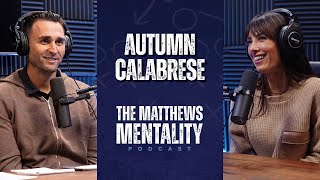
Welcome to the Matthews Mentality Podcast. Today, I'm thrilled to have with me Autumn Calabresi, Beachbody's number one super trainer and true powerhouse in fitness and nutrition, known for transformative programs like 21 Day Fit. Can you fix me in 21 days?
Is this the thing I can improve you?
Well, it says fixer. It's like 7 minute abs, but 21 day fix. I'm a sign up.
Also created by the same person. For real, my CEO.
Oh, man. I'm going to ask you about that 80 day obsession and the upcoming Bel Vital. Did I say that correctly?
You did.
Bam. Autumn has helped millions achieve lasting, healthy weight loss without fads or gimmicks. She's also the creator of the Portion Fix system and the best selling Fixate cookbook series. Fixate?
Yes, Fixate.
Is that. That's wordplay.
That's wordplay.
See, I'm locked in. Autumn's dedication to a balanced, positive approach has made her an inspiring force in wellness. Welcome, Autumn, to the show.
Thank you. Happy to be here.
I can't. So I know the answer to this question, but I always ask, like, what are you working on right now?
You said it. You pronounced it right. Belvital. I just finished. I wrapped the filming on that. October 1st we launch it December 10th. So I am in pre launch right now.
Well, what is Belvital?
Belvital is a hormone health program for women designed by yours truly, a woman. So it's a fitness, nutrition and supplement and stress management components.
Is this targeted to women? I'm not the expert here, but like middle age where they're perimenopause, going into menopause or. No, it's all women.
It's for all women. We're more and more. I'm seeing women of all ages really struggling with hormone imbalance. That's why when I pitched the idea to my CEO and said, like, I really want to do this, I was struggling with my own hormonal imbalances. And I'm 44. So mine partially related to age, but also related to some stress and lifestyle stuff. But I was watching constantly on social media, seeing so many women struggling with getting pregnant, IVF and things like that, that I was very adamant that I wanted to develop a program that helped.
Women of all ages and give me high level. What is that? Is it. Is it like a, a food, like a diet program and a workout program and, and a meditation. Is it. Or is it everything?
It's like it's everything because there is no one like silver bullet that's gonna fix it. It really has to be a whole lifestyle approach, because it's a whole lifestyle approach that's probably throwing our, our systems out of balance. So we address nutrition, making sure that we're eating a diet that is rich in antioxidants and clean proteins and carbohydrates, and making sure that we're balancing our blood sugar and in there is a fitness component to it. So it's a mix of Pilates. I wanted to actually be able to bring the reformer and Cadillac into the home. So you don't need a reformer and Cadillac. I translated those types of movements onto something that we refer to as the door track. So, like, it's this track that wraps around your door that then has Pilates straps on it so you can mimic all the same movements. So we've got Pilates, so strength training and cardio. We're making sure that we're balancing the types and intensity of our workout so that we're not getting huge cortisol spikes. Because cortisol is a.
That's bad, right?
It can be. It's good when it's in small doses, but unfortunately, we're all living in chronic stress these days. So.
My life, I just inject cortisol straight into my veins every morning.
He's like, bam, I'm ready.
Even when I wake up in the morning, I'm like, I'm gonna be chill today. Then all of a sudden, when my kids comes in, they're fighting with the other kids. I get an email for work, and I'm just like, shoot, that quarter is all straight.
And there it is. Yeah. And there go cortisol curve.
So where do you. Where do you find Belvital? How do you. Again, it's what, three, four weeks out?
Yeah, we're. Yep. We launched December 10th. So as of today, we're just under four weeks out. Belvital.com is where people will be able to purchase it from when it launches. But, yeah, it's nutrition, it's fitness, it's stress management. A lot of breath work techniques. That's very big component of it. We actually teamed up with the Breathwork app, which I love, because this is not like you have to go sit and meditate and be quiet. It's like you're driving in car. In the car in traffic, and you're stressed out, and it's like, oh, I can implement this breathing technique that's 60 seconds long and bring myself into a state of rest and digest.
So that's part of my. Is it. Is it an app you download? Is it, like, what.
It's through the Bodi platform. So that's what that is. Our name, Bodi. We used to be Beachbody. We did a rename little over a year ago. We are now Bodi, but it's on the Bodi platform.
How did you get rid of Beachbody?
That's. That was my CEO's choice. I think over the years, people felt that the name implied you had to look a certain way, and we really wanted to.
Hell, yeah. I'm trying to look. I'm trying to get my beach body going. Like, I think Body. Now I'm like, well, you know what? What body are we talking about if you say Beachbody? Like, oh, shit. All right, I got to get this. I got to get rocking.
Well, it's like.
Like, you know, when. When it's the spring, you're like, hey, summer's coming up.
Yes.
I got to get my body ready. Yes.
And it's Body stands for Beach, Body On Demand Interactive.
So when we renamed, you guys got pressured by the PC police, right? Yeah, See? No comment. Right? PC police. What do they call body shaming? Yeah, that was. That was how I started getting healthy. Like, my brothers looked at me as, like, man, you look fat as. Like, you look bad. Right now. I was like that. I think they call that body shaming. He's like, I don't care. You need to get in shape. I was like, all right, I'm gonna do that.
Yeah. Listen, I. I'm definitely not one to body shame anybody. Health looks different on people in all sizes, but I am one for results. I will say that. I definitely. I. I don't think anybody starts a fitness or nutrition program and says, I don't care if I look different at the end. In fact, if they don't, they're probably gonna feel like it didn't work. Yes, sure. So, all right.
Body platform.
The body platform. That's. Yes. That's where you would view. Where. Get all the materials to belvital, where.
You can end up with a beach body. All right.
Correct.
So. So what is that? Three, four weeks out? And, like, what is. What does life look like when that hits? Does it just go? Is it chaos?
A little bit, but yeah, it's even right now. We start. Because we're going heavy now into the marketing time, like, just to make sure that people know it's coming and. And where to find it and what exactly it is and who it's for. So. So obviously, I'm here with you in Nashville today, and I have an appearance tomorrow on Today Nashville. So there's sort of the media that will start with it, and then. It's hard to say. It's hard to say what it'll look like after December 10th, but, yes, it does tend to turn into crazy.
Yeah. I know you can't say beach body, but, like, in Nashville, there's no beach. It's like a Broadway body. Broadway.
There you go. Yes. A Broadway body.
Yeah. You want rocking on Broadway. Like, you know, they go down there. There's a bunch of bachelorettes, like, they want to be looking good in this Broadway body.
I like it.
So how do you. How do you. In. Within the, you know, fitness and nutrition industry? Like, how did you get to the place you are today, where you have millions of followers, you're very high achiever, very successful, and you've become. Word we use is authority. Like, how does that happen?
It's so interesting because there's no direct path. Like, I couldn't lay my path out for somebody else to repeat. I could say that, like, it was a series of events over the course of 20 years. And where the industry's at right now is not even where it was at 10 years ago or. Or 15 or 20. When I first started. When I first started it it was. I was doing in home personal training. I got certified through the National Academy of Sports Medicine. I had grown up as a dancer, so I'm a stickler on form and moving properly. But, like, I would take out ads in the newspaper. I taught a group fitness boot camp down on the beach in Santa Monica. It's just so different. Like, there was no social media. There was no online ads in the newspaper. Yeah. I was written up in magazines. Like, you know, it was print. That was thing. Was it?
Yeah, like fitness magazine.
Yeah. I would flyer people's cars. Literally, I would go to the Target parking lot with my flyers.
They call that guerrilla marketing.
Yeah.
Just on the west.
Grassroots.
West la.
West la. Yeah.
So just. You're taking out newspaper ads, so. All right, so let me. This. This leads me in. So you getting into this industry, it started. You becoming. Sorry, you said certified or licensed personal trainer. And then what were you doing as you made this transition into fitness and nutrition?
I was waiting tables.
Where are we waiting?
I was a waitress at the Cheesecake Factory.
Oh, Cheesecake Factory. My parents, if they're listening, they probably aren't, to be honest. But, like, you know, it's like, I did. My dad's like, you have podcasts. That's so cool. Somebody told me about it. It's like, you should check it out. It's pretty good. But no, it's.
What? Cheesecake Factory in la.
I was at the Sherman Oaks location.
I've been to that Cheesecake Factory.
Yeah, yeah.
I meant it could have happened. We might have crossed paths.
We might have crossed paths. Who knows?
So you're working at Cheesecake Factory, and what you just said, hey, like, was it. You had this desire to be this kind of fitness icon. Was that a vision you had or you just. You just wanted to do something different?
No, it wasn't even that I had a vision to be a fitness icon. I had moved to LA from St. Louis. Like I said, I was a dance major in college, so I wanted to dance. Not on Broadway, but I wanted to possibly be on tour or music videos. Cause those were a thing back in the early 2000s still. But I have a bulging disc in my lower spine. I think it happened in college, might have happened even younger. So the amount of hours I was putting in in the dance studio was wreaking havoc on my back.
We just in, like, chronic pain.
Yeah, yeah, that's like sciatic down the right leg. Just constantly trouble sleeping.
Back pain's bad.
And the doctors were like, yeah, if you keep this up, you're going into back surgery by the time you're 25.
And they say you're never the same.
After that, and that. I just know my dad had back surgery. It didn't work for him, and I. I want no part of that. So I knew I could keep. And I struggled a lot. Like, I have a lot of emotional stuff wrapped around dance from college and from my ballet master being very emotionally tough on me in a negative way.
I feel like I hear this a lot from that part of the world. You know, ballet or even gymnastics. You hear, like, these pretty hardcore coaches. Ballet probably having a lot of, like, Russian influence. That culture comes in where it's, you know, they don't. They don't soften the blows, so to speak.
Is that still a thing? Or are they, like, are they kind of more sensitive nowadays?
It's hard to say because I've been out of it for so long, but when I was in it, I mean, I never. I was a dance major, so I had to take ballet. But ballet was never my strong suit, and it wasn't what I wanted to do. It's beautiful. But I started too late. Cause I had an injury as a kid, so my parents didn't let me start dance until I was 13. Girls had 10 years on me at that point. I wanted to be a jazz dancer. Like, jazz and hip hop were the fun for me. And my ballet master, who ran the department, hated me because of it. He just didn't like that. It wasn't that ballet wasn't my passion.
And so he kind of. Would you say pretty negative coaching?
Oh, yeah.
Necessarily building you up?
No, definitely not. Tore me down. Tore me down a lot. To the point that when I left college, I didn't graduate because he told me he would never let me. Like, even though I was paying my tuition and putting in the hours, you had to be cast in the final show. And he sat me down in his office and he said, you will never receive your degree in dance. I won't cast you.
Okay. You gotta be honest. How close have you gotten to sending him, like a DM or text? Like, look at me now. Right?
You know, I don't. I. He's crossed my mind once or twice.
Is there a middle finger emoji on the iPhones?
No, no. There is.
Is there? Yeah, you just. Just out of nowhere. He doesn't even know the number. You just send him one of them.
Right, right. And I feel like he's probably, at some point, seen me on tv.
Yeah. Well, no, that's not probably. Let's make certain of this. Yeah, we're going to. We're going to make the connection, you know.
Right.
Like, so, come on, this has been your driver. Like, there's got to be a culmination to this.
Just reach out. Just so you know, I made it.
That's right. Like, I mean, shoot. Half the rap songs I hear, it's like someone's like, oh, my fifth grade teacher told me I wasn't. Wasn't going to be anything. And it's like, look at me now. It's like, yeah, this is a big driver.
Yeah.
A lot of the high achievers I've talked to, like, some of it is effectively based in. In doubt and proving people wrong. And I think this is like an iteration of that.
I would say, like, 98 of mine is based in proving people wrong.
All right. Like, see, this is a good reality TV show.
I'm a very feisty Italian, and. And anytime somebody would tell me I couldn't do something, I didn't like that. I don't like to be told what to do. I think that comes from my dad and how he raised. Like, I really have a visceral reaction. If you ask me, that's one thing. But if you tell me, like, and so if you tell me I can't do something, my attitude is, watch me.
Maybe all four of my kids are Italian or something, because they got that same attitude. I'm trying to figure them out. I didn't think they were Italian. I don't think I'm Italian, but maybe they are.
But maybe. Listen, because if I got some high.
Achievers coming, if I tell them do anything, like, yeah, that ain't happening. Yeah, if I tell them, you can't do that, it's like, I'm going to do that now, but it's got a reverse psychology. So. So that was a big driver for you. I mean, 98. I'm not a mathematician. That's pretty high number.
Yeah. I think my whole life, like, and I love my family to death, but I. I was not the one they had high expectations for. Like, I wasn't the smartest. I don't think I was the most talented, but by far I am the most stubborn and the most tenacious and driven, and I just only. I will tell me when I've had enough or when I'm done trying. So that's always been my thing is, like, nobody else is going to tell me. I can't. I'll decide that.
So let me, Let me dive into that. That's a deep topic. So clearly this gentleman, to put it lightly.
In a moment, was negatively impacting you. But I. You know, if the ends justify the means as. As unbeknownst to them, given you motivation to. To go out and be driven and to push through probably multiple stages of your pursuit where, you know, it was tough. I guess what I'm trying to ask is, how do you eventually put that to bed? Or do. Do you not like, how do you make peace with that thing? Or is it just something you hold on to forever because it gets you up in the morning?
I. Okay, so I love Tony Robbins, and I went to one of his events two years ago, and he said something that.
Oof.
That. It struck me to my core. He said, if you're gonna blame, you have to blame fully. So whoever's wronged you, you can blame them for all the wrong they did, but they've ultimately probably created something right in you as well. So if you're gonna blame them for all the bad, you gotta blame them for all the good. And that was hard. It was like a hard pill to swallow. But it also brought me a lot of peace of okay for these. For. For things I've dealt with in my childhood, even from my parents and family and from the ballet master. If I'm going to blame them for all the pain that they cause, I'm going to also blame them for the lifestyle that I'm living and my ability and my passion to help people in a positive light. Because I didn't want to be that way when I. As a fitness professional, I don't want to shame somebody or beat them down into feeling good. I want to build them up, even in their hardest and darkest moments, because I know how bad it feels when you're trying your best and somebody is like, it's not good enough, and you're just like, well, this is what I got. Like, how is it. How is all my heart and all my passion and all my drive not enough? So you got to blame fully.
I like that. That Tony Robbins guy sounds pretty smart.
He knows what he's talking about sometimes.
Yeah, he might have.
He should write a book.
Yeah. I was going to say he's pretty successful. Blamefully. Yeah, that's a. That's a great concept. I. Different iteration. I always say, you can't have all the upside down, the downside in reverse. Can't have all the downside, none of the upside. Like.
Yeah, that's. That's true. Because blame is a word usually associated with something negative. And Credit is the word usually associated with something positive. And what Tony Robbins, it sounds like he's saying is like, you can't blame them for all the negative and then effectively not assign them the credit of the positive that has come from what right your opinion was done to you.
And it's hard because you don't want to give somebody that's done something bad any credit for. You're like, no, I did it in spite of you. And you're like, but yeah, there it is.
So let's, let's talk about your child. You grew up Cleveland, Ohio.
Cleveland, Ohio.
Go Browns.
Go Brown.
That's right.
The dog pound.
The dog pound is your family. Browns fans.
Oh, yeah.
Good for them. Yeah, good for them. They sound like great people.
They are salt of the earth.
One of these days is going to be our year. Not this year. Not this year, unfortunately, but next year. Next year is the year. What part of Cleveland?
Mayfield Heights.
And so how was that growing up in Mayfield?
Well, actually, I will say this. I grew up in a couple. I was in Collinwood first, very small Italian neighborhood. Then we left Collinwood. The neighborhood started to not be as safe. We were in Euclid for a little bit.
Yeah.
Then we ended up in Mayfield Heights.
I don't know. I hope your parents did. My dad had a little car dealership. Euclid, Ohio. Clay Matthews, Pontiac baby. And then it converted. When Pontiac kind of fell apart, it converted to gmc. Just sold it last year in Euclid, Ohio.
Really?
Right off the freeway.
My dad had a brown Pontiac and I wonder where he got it from.
Clay Matthews, Pontiac. You got to ask.
I'm going to ask. Small world.
So you went to high school out there. How were you as a student?
I was not a great student up until my junior year of high school.
Why?
That's a good.
Why were you not great? Why Junior? Did something just changed?
What happened? It's hard to say. I think I was compared to my brother and sister a lot. My older brother, older sister, both very book smart. Definitely were the ones better with grades. I was the hyper kid. I didn't want to sit still. I wanted to play, I wanted to dance. I wanted to be Madonna. I just didn't care. Like, I just wasn't really interested in the schoolwork. When I was a junior, I left Ohio. I went to go live with my mom. I had been being raised by my dad my whole life. Went to go live with my mom in St. Louis. Definitely had a lot more freedom living with mom, but. And I kind of started to just find my way a little bit. Like my friends, I was dancing, I was competing. When you get to that level in high school, you get to start having electives. So I was taking classes I enjoyed more that I found more interesting. So definitely grade point average went up. But I would never say I was.
Phenomenal. No.
My sister was a valedictorian one year ahead.
Wow.
That mismanaged my parents expectations for me.
Oh, yeah.
Yeah. So, you know, I just wanted to give them both flavors. I feel like, you know, diversity is a good thing. Right. And so I said, okay, you had a valedictorian. I'm gonna show you the other side.
Right?
Yeah, no, I was. I was. Okay. I just wasn't. I wasn't valedictorian.
Same. But guess what?
I get it.
Look at us now.
That's right.
I can't.
No, yeah. I was gonna say something bad. All right. So then you went to. You went to college in St. Louis.
Yeah.
Where'd you go to school?
Webster University.
Webster, yeah. And you went there for dance.
I went there as a dance major.
Wow. What do you. And so dance major it is to become a dancer. Is it a. Is it like, is there like a Broadway track? Is there? Yeah. Like you said earlier, the touring with a band track. Are there. Are those different.
Those would be very different tracks. And I think I was never destined for Broadway because, like I said, I started late. I'm not a ballerina.
I can't even say that I really wanted to go to college, but it was sort of like you go to college, like, you finish high school and you go to college. And the beautiful part about being a dance major at Webster at the time was, you know, normally you have all your general education classes that you have to take in your first two years of college. As a dance major, you didn't have to take as many. And while there were seven areas that you had to normally pick from as a dance major, you only had to pick four of the seven. So I got to avoid the math and the science classes because they didn't tell you which ones you had to pick from. And I loved that. So I had a lot of electives of like, I love psychology and I loved anthropology and lit and stuff like that. And then other than that, I was dancing six and seven hours a day.
Did you ever take a fitness nutrition type of class or. This was.
I took an anatomy class. There was Anatomy 101 that we were required to take. And I think that was the first time I was really learning about how the body moves properly. But no, that was the one. I would say that was one of the downsides at my college. And I'm sure college has changed so much. It's, you know, over 20 years.
We didn't have any kind of nutrition education. We didn't have any kind of self care, like go see the pt. Like we just beat the heck out of our bodies five days a week and were expected to show up again on Monday and do it all over again.
That was part of my question. Like, were you at what still is early age in college? Were you just naturally drawn to taking care of yourself in a nutritional sense where you, like the rest of us, were you, you know. No, I'm soda and crap. Pizza.
Yeah, yeah, No, I was like eating crap. I worked at a Mexican restaurant, so I would eat like burrito, you know, like you melt cheese in a thing and you eat it in a tortilla really quick and you eat it while you.
And often when you're younger, your body's burning more calories. Plus, if you're dancing, you could, you know, as I say, get away with it.
Yeah, I did. I did get away with it, right until I left college. And that's when I stopped getting away with it. And I was like, oh, Houston, we have a problem.
What do you do after college?
That's when I. So I left college because he told me he was never going to let me graduate. I moved to la. That's when I started waiting tables at Cheesecake Factory.
Did you have a moment where you yelled at him like, I'm moving to L. A and I'm going to be a star?
I had one moment, yes, I sat in his. So I took a semester off and I went and worked for Walt Disney World. I did the Disney College program. And when I came back from the Disney College program, I had probably gained like five to six pounds again.
You know, partying, that's called a Saturday night.
Working.
And he let me know very quickly how unacceptable that was. And a different time, different time. And.
A couple weeks into the school year, I lost the weight as soon as I started dancing again.
But I remember he was giving me a hard time because I sat out of class one day because my bulging disc had me in quite a bit of pain. And even if you sat out, you had to sit there and observe and take notes on the class. And I did, and I handed him my notes. And I don't remember exactly what he said, but something very snarky about basically implying that I wasn't in pain and I was just being lazy and I, as if he knew and I stormed into his office afterwards and I. You let him know, Let him know.
You shared, you politely shared your opinion with him.
It was very polite.
That's funny. So you go out to la, like, what was the, what was the. Was it. You wanted to focus on dance and you figured L. A is the best place from an exposure standpoint?
I always wanted to go to L. A as a kid. Okay, you remember the, the movie Pretty Woman?
Yeah.
And the end scene where he's like, welcome to Hollywood. What's your dream? Everybody comes to Hollywood has a dream. Always. Like, little girl growing up in Ohio, wanted to go to la, Wanted to go to Hollywood. In fact, one of my dance teachers growing up, who I just adored, Gina Raston, Spotlight Dance Center, Mayfield Heights, Ohio. She was amazing. And she had been out in LA for years. Her sister Lisa actually was the first one I started dancing with. She's the one that opened the studio. After the earthquake hit the big one in la, she moved back and she would, she ended up teaching the class that I was in and she would talk about LA all the time and how great it was. And you had to go to the Edge Performing Arts center. And I just couldn't wait to get there.
Listen, I know what that's like. I every six months moved at the same time period between LA and Cleveland. So during the season, what was that? August to December, we would move to Cleveland in like July, getting ready for the season because my dad played for the Browns. And as soon as season was over, we move out to la. And you'd be crazy to think I didn't, I didn't talk up the la. Like, I go back to Cleveland and be like, man, LA is so dope. Like the Beaches, like, you know, Michael Jackson was a big things off. I know Mike, I see him all the time. Like, yeah, you know, it's, we, we hang with. None of it is true, but yeah, you play it up. You go to Cleveland from LA in the 80s and early 90s, like it was a thing, you know. Now LA's, you know, lost a little bit of its luster. I feel like people like, why would I go to la?
You know, but changed a little. But yeah, she would talk about it all the time and I just, I just knew I couldn't wait to get there.
And how was it when you got there? Was it what you thought?
No.
How so?
It was so scary. Like, you know, you see it and you see Beverly Hills 9 021, guess what? You can't afford to live in Beverly Hills. 9, 021.
Even Hollywood's a little. Say you down Hollywood Boulevard, you're like, oh, yeah, Hollywood Boulevard.
Well, I moved to Van Nuys, so at the time my older brother was living in la. So my mom at the time was in Palos Verdes, which is like an hour south, and my brother was in Van Nuys. So my brother took me looking at apartments which again, coming from St. Louis and what you can afford in St. Louis and then what you're affording in LA is very different. And I remember he was driving me down the street and I was like, Bobby, you want me to live here? Like, I'm gonna die. And you know, there it's Van Nuys. Very shocking when you're.
Yeah. Victory. Victory Boulevard.
Van Owen. Yeah. Ventura Y. And I'm. You're looking at.
You live south of Ventura. You live in the bougie spot.
No, no, no, no.
I was like, that was like Sherman Oak, Studio City. You're up in, like you're up in Van Nuys.
I was in. Yeah, I was in Van Nuys. Like you're looking at the homeless and you're looking at graffiti and you're looking at bars and. And it's culture shock.
It's different.
I just didn't know. But I moved into an apartment two doors down from my brother's apartment, so I felt safer.
I was going to say you had a little, you had a little community, a little safety net there.
And then you start to learn your way around and you realize like, oh, okay, this is just the big city.
So Louisiana is a big city. That the challenge LA's had is it's so spread out and so you go to like Chicago or New York and Philly, like some of the older cities that are population wise, New York more so Chicago, I don't think so anymore. But LA's got popular. It's just so spread out that it doesn't have like a traditional city center the way most do. And so it can feel. Can feel disconnected at times.
Yeah.
You know.
Yeah, you got to find your way for sure. I think actually waiting tables at the time was helpful because you become friends with every. Everybody you're working with and usually they live in the same area. Ish.
Yeah.
So that helped. And they were pursuing a lot of, you know, acting, dancing, performing in some way.
They start kind of giving you guidance. Oh. Like you got to connect with this company.
Yeah. Get you audition, take class here. This is who you Want to get.
That's cool.
This is who you want as an agent, if you can, and things like that.
All right, so you're. You're. You're waiting tables Cheesecake Factory for life. And then what was you. You got your. Your license and then how did you know you touched on, like, putting the flyers and putting the flyers, doing the newspaper. Like, what was it like getting your first client as a personal trainer and then entering that space?
It was a very slow burn. So I actually got hired by somebody who had her own small company out of the Palisades, and she would do in home personal training. So she was looking to bring on another trainer. So I started with her. And it was, you know, it's still scary. Anything new? It was like, great. I have this certification, but do I know what I'm doing? But at the same time, it was really fun. I really enjoy helping people. I really do. Like, I love that a lot. And getting to talk to people and meet people. And I liked that I had my own schedule and I was fairly in control of that. I could say when I wanted to work and when I didn't. I always want to work. And I built my roster up very quickly with in home clients because everything was word of mouth. So I think there's a different work ethic for our generation. Like, things are so different right now. Just everybody wants to be an influencer. Everybody just wants to be online and talk about a thing. And we had to work, and you had to show up to your 5am client as fresh and energetic as you would to your 11am client because you are your own calling card. Like, you're only as good as whatever you deliver to that person, because that person is going to be the one that gets you your next client. Like, that's really. Yes. I flyered the cars and I did all the things, but really my clientele base came from word of mouth.
So you're waiting tables and personal training or did you go cold turkey to focus on.
So I actually. It went like this. I was at Cheesecake Factory. I actually got fired because I got secret shopped. Do you know what that is?
No.
Okay, so there's like secret shoppers that will come into restaurants and rate your service. And I was working on a.
Were you having a bad day?
No, I was working on a Sunday and somebody called in sick, and they gave me more tables in my section than I was supposed to have. You're only supposed to have a certain amount at Cheesecake Factory because it's hard.
Is this the Company like self audits itself with the secret.
They hire. Yeah. They hire a third party to come do it. And so there's things that they're rating you on.
I'm a secret shop. My. My agents here.
Yeah. And so I was waiting. A big. It was Sunday. A big party came in. I was waiting on the big party, and then I had another table. And I had another table. And like I said, it was more than I should have had, especially for a Sunday morning. And I guess the two top that I had was secret shopping me. And they actually were the sweetest couple. They were like, so nice. But as they're checking things off, I guess on the. On the secret shop, which I. You don't know it's happening. It's like, well, how long did your server take to get to you? Did they get to you in under 90 seconds? Well, no, because I was taking an order at a 10 top, so not my fault.
Plus, it's cheesecake. Like, Your menu's like 176 pages long.
Right.
Like that just. Just takes time. I don't read that fast.
One of the questions was like, well, did your server bring you sweetener with your coffee? Well, they ordered the sweetest coffee drink on the menu. It was like a raspberry mocha cough. Who would put more sugar in that? Like, it's already sweet. So there were things that were like.
It was a set.
It was. It was a little bit of an unfair shop, but nonetheless, they let me go for it. But it ended up being a blessing in disguise.
Like, so do they call you in and. And say, autumn, we need to talk. Like. And you're like, you're. You're walking in like, what's up?
I walked in for my shift the next day. The manager sat me down and I knew something was wrong because I could see that he had my paycheck in his hand. And he went through this secret shop with me and he said, he's like, I don't want to fire you, but.
Like, I'm required to based on this shop. And I was like, well, you know, this is unfair. Like a server called in. I actually was doing you all a solid and taking more tables.
But they let me go. So fine. It again, it ended up being a blessing in disguise. I always say this like, you can't always see it in the moment when it's hard and you're knocked down. But I went and worked at another restaurant, Houston. Houston.
What Tony say you got blamed fully. Right?
Blame fully. So I went and worked at Houston's in Santa Monica. Working at Houston's in Santa Monica, I had been trying to get picked up by an agency called Idell James Casting. Idel James was the best cast, background cast, casting agency. And it was known that if you got on with Ide, there was a good chance you could get your SAG card because her people got used all the time in backgrounds on commercials. And a lot of times you get bumped up to principal. And if you get bumped up three times, you have three vouchers. Now you're SAG.
I lived in LA 20 years, never knew any of this. I should have been at a Adele James, right?
Well, I ended up had been sending her headshots and resumes for over a year. One day I get a table that sits down and my manager was not nice to the guy that sat at the table because he had on a sleeveless shirt and he was being a little bit rude to him.
And I said, houston's a finer dining.
Finer dining.
This is the one off Second in Wilshire.
Yeah, yeah. So we brought him over a jacket. I apologize. I was like, I'm sorry. I know that wasn't very cool. And at the end, the woman that was at the table pays. She sets down her black American Express and I go to run it, and I see the name Idell James and I'm like, oh, my gosh, this is your shot. This is my shot. So I say, I said, are you Idell James of Idel James Casting? And she's, you know, I think she was a little flattered that I knew who she was. And she said, yeah. And I said, oh, that's amazing. And she said, how do you know who I am? And I said, I've been trying to get on with your agency for over a year. She gave me her card and she said, call on Monday. And she picked me up for background casting. She also picked me up to work in the office. So I was actually working in her office and studying to get my certification from the National Academy of Sports Medicine.
How was it working in the office? And of course, being a background person, but, like, how was it working the office? How was that industry?
It's crazy. It's actually 24 7, because, believe it or not, like a commercial does background casting. And like, if you have the beeper. And yes, we had the beeper for the night, you had a binder full of hundreds of background cast members and the beeper, because you could get beeped at 2 o' clock in the morning that they need a different person. For a 6am shoot. And you got to find it, like, you got to go through the book and you got to submit people to them and like, they've got to be there. So, yeah, it was really long days. It was. Yeah, it was a little intense. And I'm not. I'm not meant to for a desk job just to. It's just not my personality movement. I just don't like to sit and be at a computer.
You got to, like we said, you got to get one of those walking, walking treadmill and have those back then.
No, not so much.
So you. How did you get your first client in personal training?
I got the certification, got hired by the company in the Palisades. They gave me my first client.
And what, what, what is that like going into effectively a stranger's home. Right. And is there like a. On average, is there gym in the garage or.
No, the gym was in my car. I brought everything I needed in my trunk. Oh, yeah. I had all the weights, stability balls, jump ropes, med balls. You name it, it was in my trunk.
How nervous were you?
Oh, gosh, that's so scary. Because again, it's like anything you knew, you've never done it. You don't know if they're going to like you. You know, you got to close the deal. So essentially, it sales at the same time as it is trying to really help somebody, but you need them to understand that you're really going to help them. You need to push them enough without pushing them so far that they don't want to do it again. There's like a really fine line.
Do they give you coaching and training on how to be a great. In terms of client retention, how to be a great personal trainer and build a book? Like, do you, do you. Are you, Are you told to tell every potential client, like, hey, you're a natural athlete?
No.
You should.
No, there's no training on it. There was no training at all with, with that. It was just learn on your feet. I ended up working at equinox eventually. After 2008, after the market crash, I lost a lot of. I lost a lot of my clients because.
Because the clients lost a lot of money.
Yeah. So the first thing to go is the trainer. So I ended up at Equinox, which was a really great experience.
Where was Equinox? Which one?
I was at the Woodland Hills location.
Okay.
They give you more training. Unlike certain things that you can do to, to sort of close the deal, I guess you would say.
So you're. Are you. You're At Equinox. But you're. Are you building your private book of business still?
I had all my private clients and I had a full roster at Equinox. I was working 14 hours a day.
So talk to me about your work life balance when you're building your career.
Oh, that. That's not a thing.
That's not a thing.
No. If people think that you have work life balance when you're building your career, then your career probably is not serious serious or your biggest priority or you're really okay with just being okay. And by the way, that's fine too. You're. If, if, if mediocre is okay for you, great. It's not okay for me.
You can be happy in mediocrity.
Yes. Not me.
14 hours a day. My son was 2. I was divorced, getting divorced, you know, but I knew what my goals were.
That, that's pretty hardcore, right? 14 hours a day for anybody and 2 year old.
How was that?
It's crazy when I look back at it.
How do you even. What did your day look like? Was there a daycare involved? Was it like, how did you even manage. Juggle. Juggle the two things every.
There was everything involved. So my ex husband and I are still very close to this day. He works for me now, which is crazy. People always laugh at us. But when we got divorced, nothing bad happened. We just grew apart. And we knew it was best to be friends and take care of her son than it was to try to stay in the marriage. So he moved down the street. So if I had my son, I would be up at 5 in the morning, like my first client was at 5. A lot of times it would be pulling my son out of the crib, driving him a mile down the street, dropping him off at his dad's, going to all my clients, picking him up at 2 from his dad because his dad was a restaurant manager. So I would take him at 2, I would bring him to Equinox with me. He'd go into the kids club for four or five hours.
That's nice.
And so he was in the building with me. But it's very hard when you know your baby is down the stairs. Because they could page me at any time so I could be with a client and they could page me if he needed a diaper changed or something like that. So it was. I look back at it now and.
I'm just like, how the hell did you do that?
Yeah.
Did you ever say, where is my work life balance?
No, I just was like, I just know I have to keep hustling so that this isn't my work life.
Yeah.
Like, that was always gonna be my life, especially in la. It's not cheap. So it was. That was necessary for survival. It's not like I was living.
Even Van Nuys ain't cheap.
No. And at that point, I was over. And I was in Woodland Hills then at that point, but.
And Woodland Hills is not cheap.
Well, in hills. Not cheap. And so, yeah.
I. I think my son's made a lot of sacrifices and he can. He's really great. He will tell me all the time now. He'll give me a hug and thank you for hard you work, Mom. So he can recognize it now. But there was a lot of guilt. A lot of guilt of not being.
You felt guilty.
Yeah. Not being around for him as much as I would have liked to have, or feeling like I missed out.
Yeah.
But I got to take my son to Italy for 10 days, just the two of us this summer. And I'm like, for all I missed out on, it's a pretty cool trip. Yeah. We are getting a lot of amazing time now together that I wouldn't have had if I didn't build the life that I built.
I think the good news is he doesn't remember you not being there when he's two.
Right.
You do. So, like, you know, it's not to that level, but when I was building this and I had young kids and there was a conscious decision my wife and I made where I just wasn't going to be home a lot early on. And the idea was like, well, they're not going to remember you not being here at 3, but they'll remember when they're 13.
Right.
But I remember.
You remember. It's hard. You miss those baby years a little bit. Like, I remember I was on a work trip because I got signed with Beachbody when he was three and a half, almost four, and he lost his first tooth. And I was in Mexico and I got a FaceTime. Mom. I lost my first tooth. And I was at a party. I was at a party when I answered and, like, literally, I hung up the phone and cried.
Yeah.
That I missed it. But he. He was just excited to show me that he lost his tooth.
A couple mimosas deep. It was just hitting hard.
I wasn't even. But I. I literally remember calling the babysitter and I was like, put a 20 under his pillow. Like, I can't believe I'm not there.
See, that's how you know inflation's real. Is 20 bucks now.
Well, that was because I guilt. That was mom guilt right there. I was like, throw him more.
That's right. $20, it'll be 50 next generation, right?
First tooth. You had to pay more for the first tooth.
You do. Yeah. And it's, you know, it's your kid. Like, what are you gonna do? So you were, geez, all right, so 14 hours a day managing 2 year old raising a kid, that's a lot. Now you, you mentioned something you said when I got picked up at the time Beachbody, now body. What happened? Because that was your big break, right?
That was it.
So you're managing this private client business, personal training. Are you still at Equinox? Okay, so you imagine kind of more commercial private clients. And then how. What is getting. What did they pick up? Did they pick up you as a person? Like, what was their product or service you were selling? Like what?
Both. I had a product called Change My Plate. It was a portion control system that I had created and launched. I had launched it on the Hallmark channel on Home and Family.
Yeah, I remember that.
And I was selling it out of my apartment on Amazon.
I mean, I didn't watch it.
I remember the ship.
Yeah.
And that product had got passed on to the head of product development at Bodi.
By one of my clients. Gave it to one of their friends trying to encourage their friend to lose weight. Their friend wasn't interested in it for themselves. They said, I think I know somebody that would like this. Can I pass it on? They passed it on to Bodi. Bodi called me literally like the next day, which was crazy because I had had so many like false starts, like you said, pump fakes. I had been up two different times for the Biggest Loser to replace Jillian Michaels. Made it all the way to the final round.
Like, that was when I feel like fitness and nutrition really hit mainstream. Was the Biggest Loser because it wasn't as much a thing, certainly culturally, but that again, you would know better than that. But I feel like that's when fitness, nutrition, health and wellness, like actually became part of like the lexicon of society where people started talking about it.
I think there was a big time in like the 70s, 80s with Venice beach and bodybuilders and Arnold and then like all the aerobics and Jane Fonda and then it faded. And then I think Biggest Loser kind of started to bring it back again.
So you met you, you said you, you got to the final finalists bold times.
The year that I was down, it was down to me and one other Person. They wouldn't, they didn't tell me who the other person was. The cast, I mean, it was four months of auditioning and the casting director called me and said, I'm pushing really hard for you, but if they don't pick you, you're gonna understand why. And that's all she would say. And so she's like, the decision will come out on Monday. And I didn't get a call. Didn't get a call. Finally, I saw it appear on the news and they had cast Anna Kournikova.
The tennis player.
The tennis player.
Is she. I mean, is she. I mean, she's obviously in shape and fit, but, like, is that really her bucket?
I don't think so, because they only had her for a year.
Yeah, it's not a tennis show.
Right. I think they were trying to pull a different powerhouse name. But here's the thing again, blessings in disguise. Because had I been on the Biggest Loser, I wouldn't have got picked up by Bodi. And if you had to ask me which one, I would have rathered, like knowing where I'm at now and how many people I've like, genuinely been able to help and programs I've been able to create. Bodi is my home. Like, that is my family. Family. And I would not trade that for anything.
So how did you. You're. You're doing the personal training. But why would you. What was the driver of like saying, hey, I'm going to create was a portion control system? Like, what, you just woke up one day and said, hey, I think there's a market there, or you just had a passion for it. What happened there?
I really wanted to help people again. As a trainer, you're. You're in the gym with these people. And my clients were really dedicated. Like they were training four and five days a week, hour at a time with me. And while they were making progress, they weren't making as much progress as they probably should have or could have been. And I'm definitely one to wanna solve a problem. And so I'm like looking at it and trying to understand what is the problem. And I, one of my really good girlfriends, I was training her. That's how I met her. I was training her. We went out to lunch one day after her session, we went to a popular sort of not fast food, but quasi fast food restaurant in la. I'll say the name. California Chicken Cafe.
Oh, yeah.
So, okay, they have these huge salads, like they're enormous. And we both ordered salads and I ate like Part of mine. But she ate pretty much the whole salad. But it wasn't just lettuce in the bowl. It was like, lettuce, broccoli, feta cheese, pasta, chicken, ranch dressing sauce.
Yeah.
And then so I looked at it.
And she's like, but I ate a salad. I'm good. You're like, that was like a 1200 calorie salad.
Yeah, that's exactly what it was. I, like, pulled the menu, because in la, they put. Put the calorie count on there. And I was like, that's our problem. And she said, what? And I was like, well, you had breakfast. I know you're gonna have dinner, and you're probably gonna have some cocktails tonight. And, you know, this was what, again, this was like 12, 13 years ago. So we were still a little bit more in the mindset of calories in, calories out, where obviously, it's much deeper than that, but nonetheless, it was portion control. And I. And that's where the idea started to come from of, okay, like, how can we show people. How can I show people that they can enjoy the foods that they like? They can have pizza, or they could have fries, or they could have a cocktail or chocolate, but without overdoing it so that they're not undoing all this hard work. Like, there's got to be a way. And so that's where. When I did it as my own, as change my plate, there were different size containers, and there were lists and, like, foods that you would put in each container based on what they were. So, you know, if you were eating M&M's, it was going to be in a much smaller container than maybe if you were putting in pretzels in a small container.
It's called my hand.
Your hand.
I just do it, like, 20 times.
Right.
Is that portion. Am I good?
Solid.
My brother Brian, he's never been heavy, but he was a little thicker guy. And this was probably five, six years ago. All of a sudden, I go up. He lives in Rocky river in Cleveland. We go. I'm swinging by his house, visiting him, his wife and kids and all. He's lost all this weight. I'm like, what happens? Like, I just ate less. I'm like. Like, in total. No, just smaller portions. And he showed me, like, it was, like, really small. I was like, man, I don't know, dude. I don't know if I want to live that life. But.
Well, I think it's really interesting because. So when I got picked up by Bodi, we took the container system and we like really dialed it in the way you could dial it in when you have some money behind it and color coded it and, you know, put a whole workout program. That's what the 21 day fix is. So it's basically 21 days to start building better habits. So it's more about fixing your habits and making sure that you're balancing your macronutrients so you're not overeating on one and under eating on the other.
It's like a total, like a reset.
Yeah. And 30 minute workouts. I designed them so that anybody could do them. They're still gonna push you. But like, if you've never worked out a day in your life or you've been working out forever, you could like basic movement patterns that anybody could do. You push yourself with the weights you pick and how hard you go within the intervals and things like that. But we got to really design it in a way that was very healthy. And so many people, they would get the containers because you don't just eat from each container one time. You eat from a multiple times a day. So people would get the containers and the first thing they would say is, oh my gosh, I'm going to starve. And then they would start using them and they would go, oh, my gosh, it's so much food. I can't eat it all because it's nutrient dense. Right. When you're getting vegetables and fruit, you're getting all this fiber and you're getting healthy carbohydrates and protein. Drinking your water, all of a sudden you're like, well, oh, I'm not even eating the bag of chips or I'm not having the blood sugar crashes where I need to go get other things. And so it's not as hard of a shift as sort of people would assume it would be.
I think it's like three days and then like up to seven. It's been my experience. I, I did. You ever heard of 75 hard?
Yeah, I've had a lot of friends do it.
Yeah, I did 45 because I was going on a trip out of the country. I was like, no, I'm not trying to do this when I'm like, you know, on vacation with my buddies. Like, I'm like, I was going to a wedding in India and I was like, oh, you know, have some drinks and celebrate. But I did 45 and the first like three to four days. From a food standpoint, the alcohol for me is easy. Like, you're like, I just don't drink alcohol. Drinking more water. Like, I'm trying to think all the things, but the food. The first three days was like, say food's like a drug. I think it affects your brain similarly.
Hit your dopamine receptor.
Like the starchy carbs, the. The pastas, the breads, the crackers. I mean, you have a kid, like, you know, there's crackers all the place, all the time. It was three or four days, and then like for the next couple days, it eased up. And I had heard that this would happen. I was kind of looking it, and it did. Then your brain kind of just like forgets about it. And to your point, you really start enjoying. And my taste buds with fruit, like, I was eating fruit that I never eat, you know, like, and everything just tasted better. I didn't actually feel as hungry, though. I was eating much less food.
Right.
It was great.
Yeah.
When you're battle through those first. Your 21 days, like you got to bath through that first week or so.
That is the hardest part. And people always are asking, like, well, what can I do? And I'm like, like, here's the hard truth. I don't. I know I haven't figured out some special hack that makes those first couple days any easier. The cravings are going to be there. Sometimes they're even worse. Making sure you're drinking water, making sure that you are eating foods that you like, so that when you're eating, eating slow, so you take time to enjoy it and chew it and, and, and just not keeping the temptation foods in the house. Like, give yourself a fighting chance.
Yeah.
And that doesn't mean again that you have to deprive yourself and like, never have a cocktail or never have dessert again. But when you're trying to make the shift from doing it every day to doing it maybe once a week, maybe you don't have it in the house. Maybe you have the cocktail out at a restaurant.
I walk by the high chair and there's like 11 goldfish crackers. I was like, man, those goldfish crackers, they look kind of lonely. And I feel like I'd be a bad person if I threw out many. You know, you go to kids, like, eat your food. There's kids starving. And you're like, well, I don't want to throw out the food. I'm just gonna eat it real quick. And then you do that like 11 times a day, and you become the human trash can. Yeah, that's one way to put it. Yeah, I guess. I guess I have that quality.
Then you end up paying for it different. Right? Like, financially, because we don't want to waste.
I thought if it was, like, snacks that your kids left out. There are no calories in those. Like, it's correct. Don't they call those empty calories?
Yeah, empty, for sure.
All right, so. So you designed this portion control. What even.
Well, what led to you even having an opinion, thoughts, or. I don't say an expert on, like, portion control? What, did you read about it? Did you. Did you. Did you. Did you take a class on it? Like, even the concept of portion control?
At the time, I had some nutrition training from my certifications, and it was more. I mean, we've got a team of experts at BODI, so we've got registered dietitians on staff. We've got PhDs on staff.
But you weren't at. But you were. This was before.
It was before. So I had worked with a registered dietitian a little bit to help me, like, guide me on it.
You saw those portions Cheesecake Factory puts out, and you're like, oh, hell no.
Yeah.
Honestly, like, those are the biggest portions on the planet.
On the planet. And you would be shocked at, like, what I would watch people put away and just going, oh, my gosh. Like, this is our problem. Everything is super sized and oversized and family sized, but we're all eating it as one person.
You get that shepherd's pie at Cheesecake factory. That's like, 2100 calories to that dome. Like, oh, it's.
It's got to be more than that.
Well, then they're lying to me. All right. No, but I don't know.
Not. I don't. I don't want to get sued. I could be wrong.
It says it on the menu. It says it on the menu, but it's a lot. You had some. A little bit of an introduction in education on the concept of Portia. Because I had never heard until my brother told me.
Right.
My brother Brian. And. And then, like, once you hear something, you're, like, more aware. But even then, I. I maybe more so today than even five years ago. It's not like this huge thing.
Right? Well, I was also, at the time, I was a fitness competitor, so I was learning a lot about it.
Does that mean.
So there's, like, CrossFit, like, you're out there. No, no. Is. Is similar to, like, bodybuilders that get on stage and pose. So there's multiple divisions. There's the bikini division, which I'm about.
To say, I think we called these swimsuit models when I Was growing up.
Yeah, but there's a lot of. So we. There's a bikini physique, bodybuilding. At least that's what it was 12 years ago.
Between that.
Yeah. So I was in the bikini division, which is. You still have to have a lot of muscle. They're really judging the symmetry of your body.
They're looking at legs and glutes more and abs. When you get into physique, they start looking for. At women, they're looking at more upper body development.
Shoulders back.
Shoulders back, yes. And then obviously, you get into bodybuilding. So there was multiple divisions, so I was competing in the bikini division. So I was learning a lot about nutrition that way as well. Like, that's where I was learning the balance of my macronutrients. And, you know, just tweaking your nutrition constantly. Like, every day, you're looking at your body, and you're looking at the way it's changing and going, what do I need? Do I need more fat? Do I need more carbs? Do I need more this?
I'm a tangent. Isn't that such a. Like a. That's such a slippery slope, especially for younger women?
I think it could be, yes. For me, I count my blessings that. That I had an amazing coach. So, like, I was eating more than I had ever eaten. I was probably eating 22, 20, 300 calories a day, and it's a good amount. Yeah, I'm five three.
Yeah.
So. But I was working a lot, 14 hours a day, still getting in my workout. So I'm on my feet, so we got to fuel me. So my coaches, the way he trained me was like, you're gonna eat your way down in weight. Because if I'm feet. If we're fueling you properly with the right food, you should be able to eat for energy. Like, there were other girls. I remember I would see him backstage, and they would just be, like, starving, and their coaches had them on, like, 800 calories a day. And I'm like, just back there pounding steak and potatoes on the day of competition, and they're just looking at me like, like, what the heck? And I'm like, literally, like, literally, like, how are you eating that right now? And I'm like, if I have to choke down one more piece of steak.
But you were burning.
I was burning it, and I won a few of those, and it was really fun. And I love the challenge. Again, that's that, like, drive. So you give me, like, a goal. Like, I gotta get on stage. I gotta. Everything you do up until the final week of training for one of these shows is super healthy. Like, you're training hard, you're eating right, you're fueling. The week before gets in is that.
We like, kind of like a fighter. You start weight cutting.
Yeah, you got to start cutting, and you got to start dehydrating. Yeah. So you got to be careful about how you do it again. You want to make sure you got somebody coaching you to do it the right way, safely.
I got. I got. I got Christmas photos coming up Saturday. I'm start dehydrating or something.
I don't advise that.
I don't have a coach, but I think I could. I can wing it. Yeah, just stop drinking water.
That's terrible plan.
We only dehydrate for like 12 hours.
That's good because you got to be safe about it. I don't know anything about that industry, but in the boxing or mixed martial arts, like, you see these fighters who dehydrate and, like, they can't even get on the scale. Like, they're just. Some of them look really bad. And it. If you go too far with it.
Yeah, it's. Well, it's dangerous. And again, it depends on. I was in the bikini division. I didn't have to dehydrate that much.
But. Yeah, so I really liked getting to have that. Getting to have that plan, getting to have that goal. After my first one, I think I took sixth place, so I was in top 10. But I didn't win a trophy because only top five got a trophy. So I was pissed.
Top five? Not just the top one.
The top five get a trophy. But I was number six. So I stepped off stage and I was like, we gotta go again. And my coach was like, take a week off. So you got six weeks till the next one.
Let me stop you. So. So much of what I've found, just talking to people and, you know, kind of hanging around the hoop is the biggest impediment to people achieving the things they want or accomplishing or getting the way they want to go. However you want to frame it is fear. Right.
And there's.
Fear of failure was a big driver. I can speak for myself. Fear of failure, but just fear in general. Fear of being judged. Right. Feel a fear of this. And it's probably some child psychology issue, like from when we were school. And literally our entire social group was like the same 50 people. And really what you did over the weekends, like, came home with you or was at school. But where I'm going with this is like, the Idea of getting on stage in a bikini. Just the idea of me in a bikini is scary enough, but, like, the idea of getting on skate stage in a bikini is like. Or anything. Like, for me, like, you know, whatever. It would be like being on stage and being judged of all things. Not just, you know, you're judged from your intelligence, you're judged from the executioner sign, but, like, the actual physical judging of your body. Like, is that a fear you had or you. If you had to overcome?
There were definitely nerves there. But you got to remember, I grew up as a dancer.
Yeah.
So I had already been on stage and I had already been judged. And my teacher, my could have been.
Worse than that guy.
Right. But I had. So the beauty was that I had amazing teachers in grade school. So Gina and Lisa from Spotlight. Like, I remember Gina. Like, they said they were like, if you want to be in the dance world, you better have thick skin. Now, don't take it personal. And I admired them so much. Like, their words stuck with me so much. So when they said, don't take it personal, you did it. I didn't take it personal. I was like, Gina said, don't take it personal. Like, if they're looking for a girl who's five' five and I'm five' three, that's not personal. I can't change that.
All I can do is get on that stage and deliver my best package. And so if I put in as much work as I can and I show up knowing that I did my best, then even if I don't take first.
I put in all the effort. I got up there, I had fun. So I controlled what I could control. Yeah. And the rest, you got to let go. And so that first time when I got on there and I took sick, I couldn't be mad because I could look at it and see where I needed to improve. I actually didn't have enough muscle. I'm a hard gainer. It's hard for me to put on muscle mass. And then when I dehydrated, like, I lost my glutes altogether, which in that division that I was in, you needed them. So it was like I was like, well, okay, I can't be mad at that. My abs, for me, come in pretty easily. Or used to, a little harder. Now at 44, we're not going to talk about it, but. Well, like I said, At 32, it was much easier than it is at 44. But so my. I feel like when they were judging me, my abs are and my legs are what saved me because I've got dancer legs, so I had muscle there and my glutes hurt me, so I got to get back in the gym and go, what can I improve on?
And you didn't take. You literally were like, oh, they said my glutes aren't good. Like, ah, okay.
You don't even see what they say. I just was watching the video and going over with it, my coach, and he was like, you lost your glutes. And I'm like, yeah, I can see that. Like when you're standing, I'm like, okay, let's go. We gotta hit these glutes. And I want to get back in there and go again.
And is that your advice for people? Any type of fear of being judged, let alone a competition where your, your body's being evaluated, is, Is just like, hey, like, don't take it personal. Like, it's, it's that simple. Because a lot of people do.
It's hard to say it's that simple, right? Because it is personal. And.
We do live in a world. I'm going to say it's harder for women as it is. Like, we're pitted against each other. We're judged so much more harshly. Do the.
Do men pit you against each other?
No, I think we pit ourselves against each other constantly.
I pit myself against Zach every day.
Yeah, but you guys probably make it fun, right? Like, it's probably like a fun. Haha, Guys, like, it's just the bro.
He gives me unlimited content because look at his hair.
He's got.
He's got a mullet, like a short, long, you know, I don't. I mean, how do I lose, right? It's kind of easy money.
Might as well take the shot.
He does it to himself. I don't even have to feel guilty, right?
He just set yourself.
But as women, we judge each other and we judge ourselves against other women, right? So somebody will look at me and, well, she's in shape and she must have done something not healthy to get there. Because if it's hard for me to get there and I can't give it up, then I can't admit that maybe she just put in the work. Because then that means I have to just put in the work, right? So we'll judge instead and we'll make up stories and we'll say like, well, they must have did it this way and they must have did it that way and you're too skinny and you're too. Instead of just giving the person the credit of, like, maybe they Just put in the work. Maybe they weren't at the happy hour. Maybe they were in the gym instead. But to answer your question about, is it just that easy to not take it personal?
It's an easy mindset to have. It's not probably so easy to apply.
But if you can.
But if you can and do, it's a good thing. But I also think we grew up children in the 80s and there were no participation trophies. And they're like, you either, you know, you got cut from the team. If you weren't good enough, you didn't get put on the team. The end, like, that was it. And I do think we are not building as strong of mindsets in people now, because everybody wants to be equal and everybody wants to win. And I'm like, we're actually setting ourselves up to take the fall harder.
Amen. Yeah, I think it's like there's always these swings, right. So maybe growing up, it might have not been sensitive enough. Okay.
Right.
And that, that in and of itself is an argument. But then it swings like, hey, like, you know, when you, when your coach lays into you the way he did, or you don't get a trophy, it's like, it really makes the kids feel left out or feel bad about themselves. And so, like, we should plug some of those holes. But in that, in that pursuit of making it better, you swing too far.
Right. And so hopefully we're always trying to find the balance. We're human, we're not perfect, so we find the balance.
Yeah. You were talking about, like, shortcuts. I gotta ask you, like, Ozempic. This is like a new thing. I don't know anything about it, but it basically is an appetite suppressant from.
What I've read and understand. And I've actually even talked to my doctors, like longevity experts, to ask them, like, what is it exactly? Explain to me how it works. Yes. Appetite suppressant. And also like a, from what I understand, like a bit of a fat burning component to it.
Yeah, yeah.
It's what? From the layman, from someone who's not an expert, I think it appears to be very valuable in like, kickstarting, especially if you're. You're overweight. Like, you can lose. It looks like you can lose weight quickly, you're not eating as much, maybe fat burning, but it's like, probably like a lot of things. You don't necessarily want to be on it for like 15 years.
I think there's a place for it for the people that need it. There's definitely a place for it for people that are really struggling with their blood sugar and their insulin management, which is really what it's. I mean, it's a diabetic drug that it's there to help them. And again, from how it's been explained to me by my doctors is.
It should be under your doctor's care only. It should be in the lowest dose possible to start getting you results. It shouldn't be a quick, fast thing. You should be on the lowest dose and try to stay on the lowest dose possible. It should be combined with diet and exercise because you still have to learn those new habits. Obviously, if you've gotten there, there's probably a reason and you're probably not eating in a healthy way. You need to learn some new habits and you're probably not exercising and you should be. So it should really be being done under doctor supervision with nutrition being implemented, exercise being implemented like you said, to help kickstart and get people moving in the right direction. And then they should be taken off of it.
Sooner than later.
And hopefully those habits have become ingrained.
It's.
Yes, they're the good habits of calorie burning exercises. What you're eating in the food, I.
Do think obviously the way it's being used a lot right now is it is kind of the miracle thing that everybody's been looking for of like, I don't have to put in the work the easy button. Right. But, and look, will they lose weight if they take it? Absolutely. But if you're not exercising and you're not eating right, then you're not fueling your body. Chances are you're losing muscle mass, you're probably losing bone mass. Is your heart strong? Are your lungs strong? Are you in disease prevention or are you just losing weight? So again, I think there is a place for it for people who need it, but I also think that it's probably being overused for people that don't want to necessarily put in the work.
I was trying to crush some pizza Saturday. Just kick in a couple ozempics and make it go away. It doesn't sound like it works that way, right?
I mean, I'm sure people are using it that way, but not how it should be.
Speaking of living the right way, you. You come up with this portion control and it gets picked up by body. What, what, what is that? What does it mean, picked up? Like what happens?
So they bought the program, they bought the nutrition system from me and they also, the way the contract was done was that I would also stay on as Talent and create a workout program to go along with the nutrition program. So I worked with the nutrition team at Bonnie Years is started in 2013.
Okay. And so was part of the program, was this like a social media push? Because I know that's a big thing, right?
Well, eventually, yes. But so we started in 20. We started development in 2013. So this is. I still had personal clients. I still had all my Equinox clients. And then I was also in development on the program with Beachbody. It was Beachbody at the time. And once we wrote the program and had all that worked out, which took about five, six months, then we go into test groups. We're very big on testing and proving that a product works before we launch.
Was supposed to start off as one group for 21 days. We ended up having three. So we had I think like a 7am class, an 8am class, and a 5pm class. This was in Santa Monica at our headquarters. So I had to give up some of my personal clients because I had to be there to teach the seven, the 8am class. So I would do that. Then I would go to Equinox. So I would go from Santa Monica to Woodland Hills. I would train all my clients at Equinox. I would go back, teach the 5pm class at headquarters in Santa Monica, the test group.
And you had what, four or five year old at the time?
Yeah, it was about four and a half. And then I would go back to Equinox again and I would have a 7 and an 8pm client go to bed. And I was also training to be a competitor. So I still just grind, just grinding even more, actually.
How many times? That's not a good question. It's. It's. Were there moments and were there any that. That you can recall, like, where you're just like, what? Why am I doing this? Like, why am I.
No, no, actually, like I. The day when they gave me my contract so I had my interview, I didn't get my contract right away. It took almost three months. I thought they. I thought they were passing on me. Like I hadn't really heard anything from them. And I was, you know, just back doing life because I kind of figured like that was just another. Another opportunity. It didn't work out. And I opened my email one night, it was a Friday night at 10pm and the contract was in there.
And what without. You don't have to disclose, like finances.
But like, I mean, it was definitely. So the upfront money, the development money was not bad at all. Like they were going to Buy the system from me. Then there was the upfront money to develop the program. I called my dad, who was in Ohio at the time, so it was 10pm in LA, so it was 1am in Ohio, called my dad and he's like, oh, shit. Yeah, he answered, what's wrong? And I was. And I was bawling, like I was sobbing because I knew for the first time I was really going to be able to take care of Dom and not have to like, struggle.
Yeah.
And, and, and he's like, what's wrong? What's wrong? And I was like, nothing. Like for the first time, nothing is wrong. Like things are right. No. He was like, so excited for me. So I signed the contract and we went into development. Like I said, five months and five or six months in development. Then we went into the test group, which was only supposed to be One round, maybe two. Two turned into four, four turned into nine. Why nine turned into 11. People were getting such amazing results. We wanted to see what happened because the people that were in the test group, we had several people in the test group that were well over 400 pounds, like, really needed to take back control of their health.
And there was no Ozempic and there.
Was no Ozempic and they were just doing the work and they were, they were losing the weight and they were having fun and they were really enjoying the process. So we wanted to keep going. And our launch date, we knew when our launch date was, it wasn't for 11 more months so we could keep going with rounds. And we did. So I had originally told my private clients, the in home ones, like, I'll be back in a month. And then all of a sudden it was two months. And by month three, I had to pass them off to other trainers because.
Were they cool with it?
They were, they were excited for me, you know, a little disappointed, obviously, because, like, we had great relationships. I had been working with them for a long time, but I had to hand them. That was hard because that was scary. Like, what happened?
You built a business, not to the scale you have today, but you had.
You had a business, I had a business.
And you had to hand it off.
Yeah. And you know, okay, I gotta make the development money last. I still had the Equinox clients, so I kept that for a long time until we launched, basically, or right before we launched. But yeah, 11 months.
What happens when you launch? Like, are you now you doing commercials? Are you going around the country doing like road shows? Like, what?
So we wrapped filming in the summer and I remember when we wrapped, the head of product development was like, it's official. And I was like, what do you mean it's official?
We've been doing this for a year. Of course it's official. And she goes, it's never official till it's in the can. We could, we could have cut you at any moment. I'm like, oh, I'm glad you didn't tell me that ahead of time.
You didn't read that part.
Yeah, I was like, I missed that. But okay. I had a six month waiting period from the time we wrapped everything until we actually launched.
Forgive me, when you say filming, is it like you working out and showing different people different exercises?
It's me doing the whole workout.
And at the time, is it going to like DVD?
DVDs? Yeah. So whole background cast, whole set on set. We didn't film in real time back then, so we were filming multiple workouts a day. We filmed, I think for seven days. I think we filmed eight. Eight or nine workouts in seven days.
And you buy this DVD set and.
You buy the DVD set that has all your workouts. And then there was a guidebook, like a 100 page guidebook that had all the nutrition information.
It's all like digital, right?
It's all digital now. But yeah, back then everything was boxing DVD. You ordered it off infomercials. So we launched February first week of February 2014.
I went to dinner with my friends that night and I was waiting, like.
I was waiting, said, drinks on me.
Well, here's the thing, right? I'm all excited. Oh my God, we're launching. And I get a phone call at dinner from my head of product development. I'm like, oh, excuse me. Like, let me step over and take this because I haven't heard anything. So. And she's like, hey, you know.
We. I think we had. I think we had filmed the first version of the infomercial. And she was like, hey, we're gonna have to get back on set and refilm. Like, this is not going well. And my heart sank. I was like, oh my God. And then she's like, just kidding. You're crushing it. I was like, oh, my God. That was so mean.
That was pretty hardcore.
That was pretty hardcore. Because, like, she's like, just kidding. It's literally blowing it out of the water. And I'm like, oh my God. And she's like, sorry, I just, you.
Know, like, where would they sell them? Would they sell them online? Would they sell them on? Do you buy it? Is it a DVD at a GNC store?
No. So everything that we've always done as a company was infomercials. And then we had, up until actually a few weeks ago we were an mlm, a multi level marketing. So we had what, what we deemed coaches, people that would sell the programs as well. So we had a very big coaching network that they would sell to their customers. You know, they've been around since the P90X days. Tony Horton and Insanity Shaun T. So infomercials and then the coach network. So in the first eight hours, we sold what we expected to sell in the first week. In the first week we sold what they expected to sell in the first three months. And then we were sold out and on backorder.
You know, I think it was the right time. Like we hit at the right time with a really easy solution. Like the tagline of 21 Day Fix is simple fitness, simple nutrition, fast results. And that really is what it is. It's like not anything crazy. It's like, here's the food, here's these little rainbow colored containers. Fill them up multiple times a day, put them on your plate, eat great, enjoy the food you love. Have the cocktail, have the dessert. 30 minute workouts. There's a modifier if you need it. Like we had with people of all ages, men, women, every fitness level, literally. I think the oldest woman in my test group was 62 at the time, lost 65 pounds over the course of like seven months. Ms. Mary, like. So we, you know, we, we proved it, we showed it, it was simple, people could follow along and it really became a phenomenal.
So you're just blowing up. I assume you're getting paid for everyone you sell.
Yeah.
And it's outperforming your expectations. What was that feeling like you touched on it earlier when you got your contract and there was the upfront kind of sum and what that meant as it related to your providing for your son Dom, and also how it made you feel. You call your dad. What was it like to actually just see it kind of take off and, and what was going through your head during those weeks and months?
It was such a whirlwind. And because I was so new, like everything was new, every day was new. I didn't know what to expect. It was kind of like the first time as a fitness competitor, the first time you do it, you don't know what to expect. So you just kind of take it one day at a time. So everything was taking it one day at a time. Just like, oh my gosh, this is exciting and that's exciting and wow, what about this? And we broke that record and it was all just fun. And you're going on this trip and you're going to Summit. You're going to be on the stage at Summit at MGM in front of 10,000 people and like presenting and teaching workouts. And like we're going to shut down six city blocks in Vegas and you're going to be on stage teaching live to 10,000. Like, it was crazy.
Surreal.
Very surreal. And even to this day, 11 years later, I'm 18 programs deep with the company.
I don't know if I've honestly fully processed the magnitude of it all and the impact it's been able to have because it's a really hard thing to accept. That probably sounds weird, but it's hard to accept of like I created that. Like, I helped those, like, like, it's just a workout program, but it's got.
To be very satisfying.
It is.
You're making money is great. Like you got to make money. There's a reality, right? But like job satisfaction, especially as you get further in your career. I think more and more the input isn't just the financial component. It's the do I feel like I'm.
Helping, making a difference? Am I leaving an impact?
What was the first time you. Someone came either recognized you and came up was like, you changed my life. I assume that's happened.
That's happened a lot and it's pretty amazing. I think the first time.
Was probably Summit because Summit was like six months after the program had launched. So that first summit in Vegas, that's like our biggest event of the year. It was our biggest event of the year. It was like all the coaches would come together different. We would go to a different city every year and it was just like a four day event. All the. So me and Shaun T and Tony Horton, Shaleen Johnson and like live presentations and parties and live workouts. So you're really, it's like the big event of the year. Just celebrating the success, talking about what's coming next, debuting things.
I think that was probably the first time people besides the test group, the test group had already told me and showed me, you know, I had people losing over 110 pounds in that test group, which was incredible. But I think like them I knew from the beginning. So I think the first time it happened at an event where it was somebody I had never met before.
Now is it normal? Like.
Did you go through the airport and people like, hey, you.
I get it. Sometimes Yeah, I get it. At the airport. It happened a lot more probably, like the first five or six years I was with the company when we were doing infomercials, because I was on TV all the time. So I still get it. It still happens, which is. It's fun. You know, that's always fun to be recognized. Like, oh, it's you. You know, you helped me. You changed my life. But it's the. It's the you change my life part that never gets old. But also, like I said, it's. It's big. It's a hard. It's a hard compliment to accept.
Do you ever feel like you have, I guess, some version of imposter syndrome like me?
Yeah, all the time. Yeah, all the time. Because, you know, social p. Social media can be an ugly place, and people can always talk about being judged.
Like, I thought social media was uplifting.
It's beautiful.
Good. Yeah. Feel good after you get off of it.
That's probably one of the only places where being judged and not taking it.
Personally must be tough because, like, you're putting yourself out there in a way that a lot of people aren't. Right. Because you're posting videos and this is how you do that.
Like, And I really pride myself. Comments, for the most part, yeah. I've had to learn to stay out of the comments.
You got posts and ghosts.
Post and ghost. Yeah, for sure.
It's weird because, yeah, in real life, I cannot take things personally, but for some reason on social, I get really, like, I take it personally because I.
I know I didn't go to school. I'm not a registered dietitian, I'm not a doctor, but I have spent 20 years educating myself on the topic. And I make. I'm surrounded by experts. Like, I have a team that I work with. So I pride myself on, like, what we put out, being scientifically based and proven to work and being healthy and not being something that's, like, gimmicky or dangerous or anything like that. And so when people come at me and try be like, well, you didn't do it naturally, or you're too thin, or you are saying that I have to be a certain way. I'm like, oh, my God, like, all I want to do is help people. I really do. Like, that's the passion and that's the joy. So it hurts when people are judging.
You harshly or when your intentions are generally good.
Yes. Or saying that your intentions aren't good.
Yeah. Or, you know, they look at the world through a victim lens where it's like you're telling people things that are wrong. It's like, well, they're adults. They can make their own decision. If what I'm telling them is wrong or doesn't work, they could just choose not to do it.
Yeah.
Like you're not forcing it on anyone.
And I also say, look, I'm writing for the masses. Like when you're selling a product like that, you're writing for them.
It's hard to be nuanced.
Yeah, yeah. So you gotta.
It's a generalization.
Yeah, you gotta understand that. I understand. It's a generalization and giving guidelines based on that.
So what does the business look like today? First of all, I want it like it seems to have the industry, let alone your activities. Like more from the infomercials and all the way back to the magazines, the infomercials. Now, is it mostly social media online?
It's mostly social media online now. Ever since infomercials kind of went away, like, it's just not the place because obviously nobody's watching regular TV anymore. The direct marketing side of it has definitely become a puzzle piece that I think everybody is still trying to figure out.
I was going to say, like, how do you, like from a business perspective, how do you mon. Is it it to increase subscribers and then you sell products through your. Your social media handles? Is it like how do you. How do you. How does the. How's the business evolved from like here's a DVD that you buy from 1999 or whatever it was. And. And you get these things like today it's.
Yeah. So we still have the Bodi platform. So we have the Bodi app so you can buy a subscription to that where you have access to thousands of workouts and portion fix, which is the original nutrition program that came with 21 day fix. Like that's on there and included with it. And there was mindset work on that app and things like that. When Belvital launches, that's what.
It'S. It's not going to be a part of the all inclusive membership. It's a standalone. So you have to purchase Belvital. Like it's packaged in a way that you need to just purchase that and once you purchase it then you'll have access to just in the app, to the videos and things like that. But you got to purchase it in app. So you can go to belfital.com you can go to bodi.com you can buy through an affiliate. Because we're an affiliate program now. Since we're no longer an mlm. We're an affiliate program. So if an affiliate throws up their link, you can buy through them. So there's lots of different ways that you can access any of our programs.
How do you distinguish yourself from. And this answer may be very self explanatory, but from competitors, from other people who offer similar services or products?
You know, I think that's up to each individual person. For me, I've always, like, I never stop learning. I really am. Every year there's a cert I'm doing, if not multiples. So, like, in the last year and a half, I got certified in women's hormone health. I spent like seven months doing a intensive certification on that. I went through one of the most intense Pilates training certifications. I'm actually still doing my hours for that. Like, I've completed all the coursework, but you got to do 500 hours.
Were you always like that as a person?
Like, yeah, because I was told I was dumb my whole life.
Who told you that?
Oh, God, everybody.
Who's everybody?
Like, everybody from my family to my teachers, like, I was the one, because I was always, like, super energetic and I would just say things without thinking that, you know, oh, she's so dumb. Oh, my God, I can't believe you said that. And I'm like, oh, you know, I'm like, this is when I was like, seven, eight. You know, you're a little kid, you just say things. But yeah, and then I didn't always have the best grades, so I sort of like.
Is like a chip on your shoulder.
A little bit of a chip. But I also sort of relate to the Scarecrow and like, the wizard of Oz, like, where you feel like you're not smart enough no matter how much.
You learn, how much straw you stuff.
Yeah, well, no matter how many certifications I get, it's like everybody's the judgment these days, which is so odd. Is like, well, if you didn't go to college for it, you couldn't possibly know. And I'm like, okay, but all the doctors are telling you that they're not taught nutrition in college. And since when can you not learn at home on your computer?
Half the doc. I'm making the half number, but I feel like half the doctors are coming out. I think there was a. Wasn't there a book, like, what I Learned in Medical School? Like, and it was, Allison, help me out. The lies I taught in medical school is like a. Oh, medical school professor basically has written a book, like, kind of Gone against the orthodoxy of like, hey, what we teach in medical school is so messed up and here's why. And maybe.
And we need doctors. Like, let's not. No, no, no. We need that.
You don't throw the baby out with the bath water.
But yeah, it's just interesting when people assume you couldn't possibly learn something sitting. I'm like, guys, we live in a digital world. You could do college online, all of it.
What's today? November. What is today?
November 12th.
It's what is a week after the election. And so this, this gentleman I'm going to bring up is very relevant, is the. Bobby Kennedy is, you know, he's been in the news, obviously, and with Trump having one, it looks like he, there's a very real shot who have a, a big position.
Right.
That's kind of what he's focusing on is, is, is fitness and nutrition as it relates to the, the childhood obesity epidemic. That is, that is a real thing in this country. I don't think anyone argues that. I have no doubt there's arguments about what is causing it, but he's, he's really looking at the food.
Right.
And again, he's not, I don't think he's a trained doctor. I think he's an attorney.
Yeah, he's not a trained doctor.
No, no, no.
But, but he's very passionate about it.
Doesn'T mean you can't like, look and say, okay, two plus two is four Right there.
Right.
There's something going on and you can.
Read, studies and learn.
Hopefully. He surrounds himself with people who are, as we trained doctors who, you know, kind of like give him the actual science behind it. But yeah, it's so, so it sounds.
Like, I think his big goal, from what I understand, is really to take on.
How the law is involved and how the, all the big companies and politics are involved with our food system.
Yeah. And the conflict of interest.
Yes, the conflict of interest, exactly.
But getting back to, to you is that it's it. So it sounds like to a degree, you've pursued a lot of these accreditations, these, these licenses, the merit badge society, like merit badge chasing. You know, you see a lot in that, the Ivy Leagues and all that is because you were told a lot as a kid that like, hey, you're either not smart or you're not, you're not qualified to speak on this.
Right. Yeah, I was the dancer. She's, she's a cute one. She's the dancer. So, yeah, there was a lot of, like, I've got to educate, like I almost think I work even harder to educate myself to stand out. Right. Like, I'm not for. Because you asked, like, how do I stand out from the competition? I don't really focus on the competition, believe it or not. Like, I really just focus on when I'm. When I'm creating something. I've usually seen that there's a gap somewhere in the market or it's something I've experienced myself. So two years ago, I was creating a gut health program because I went through it myself. And I'm like, okay. And then as I start to learn, I realize how many more people are dealing with it. So for me, I. This is part of the reason I have to be on social media. I really am trying to keep my finger on the pulse of, like, what is. What are people's issues? What are they struggling with? How can I help? What can I go learn and educate myself on so that I can bring a solution to the most amount of people? So women's hormone health. Like I said, I'm bringing the solution. Cause I was going through it myself. It was so crazy when I was at the height of it, just, like, how my body didn't feel like my own, and then seeing so many other people going through the same struggles. So I try to make sure that it's more. I'm focusing on a real problem that I want to help solve. And I'm not saying it's the end. All, be all might be the first step in, but a first step in is better than being told that there's nothing wrong and you just have to accept the symptoms.
Yeah. And to a degree, it sounds like you're saying, hey, I'm not saying this is guaranteed gonna work for you, but I could tell you this worked for me.
I could tell you it worked for me. I could tell you it worked for the test group. I could tell you it's backed by science because I've. We've teamed up with doctors to validate the way I wrote it and the studies and the supplements that we're including. We have a clinical pharmacologist that we've teamed up with for the supplements. So, again, yeah. Making sure that it's. This isn't just me going, hey, I think this is a good idea. It's me going, hey, I've spent the last two years researching and diving in and talking to the experts and putting the puzzle pieces together.
R and D, lots. So earlier in your career, in your journey, it sounds like there's a lot of inherent motivation. Your ballet Coach really created also.
Almost validation from friends and family, people, long life. Like, hey, you're not this way. You're like, okay, well, I'm gonna go do all these things. Like there. If I picked up on it correctly, I don't think this should come as a surprise motivation as it evolved and taking care of Dom, your kid, like, what are your drivers and motivations today?
You know, in a lot of ways, they're still similar. Like, there is still a little bit of something to prove. There is the biggest driver of all, which is wanting to help people and really wanting to leave a mark in a positive way. Like, when I'm not here, I want there to be some mark that I have left that leaves this place a little better than it was.
Because it makes you feel like you are worth.
Makes it feel like my time was spent well, like it wasn't just for me. Don't get me wrong. I will be the first to admit I like things. I like expensive things, but I work for them. Like, I'm not expecting them to be handed to me. So I like to earn money. I really do. But I like to earn it doing something I love. And what I love is helping people. So I don't have any guilt or shame around that aligned interest. And I like that I could possibly be leaving something for Dom as well or creating something for him. I'm actually.
I haven't said this publicly anywhere yet, but I guess I could say it now.
Breaking news.
I've been in development for over a year with my. My brother's a chef and he's worked on all three in la. He's in New York and he's worked on all three of my cookbooks. He was the co host of my cooking show. He writes all the recipes for all my programs. We have wanted to launch a grocery line for years. Like, we grew up. My dad owned restaurants, so we grew up in the restaurant industry.
Italian food's a big part of the family.
Yeah. But even more so, like just that making healthy food tastes good, accessible to everybody. So we've been in development for over a year on a grocery line, and the goal is to launch early 2025. Wow.
I mean, that's a. That's big. That's a big industry.
It's a big industry.
I can reach a lot of people.
Yeah.
And you're doing this with your brother?
I'm doing it with my brother. And very exciting to get to do that and get to bring something new that can help people again, reach more people. I think I'M always trying to do that. When you say, what's my biggest. I'm just trying to reach more people, trying to help more people.
You like this brother?
I love this brother. He's awesome. We butt heads, but, like, that's.
We're Italian going into business together.
Yeah. Well, listen, we have fought on set before. It's hilarious because people are always, like, so uncomfortable. And then I was like, guys, we're good. This is just how we talk to each other.
Yeah. You guys were one of those, like, old school Italian families where there's a lot of. A lot of emotion, right?
Yeah. Like, we'll bicker, but then we'll laugh and have a good time too, and, you know, we're there for each other. We actually have done business. We actually tried to open a restaurant. 2018.
We did open a restaurant. We opened for two weeks, and then it closed. That was a series of.
I heard it was a tough business.
That was a series of so many unfortunate events. And, like, there were multiple signs of, like, get out now. And we didn't. And we kept pushing because we wanted to.
So moving forward, just tell people it was Covid. Nobody. Nobody judged. Like, yeah, Covid hit you.
Like, oh, man, it was funny. We. We opened and closed. It was. By the time we opened, it was the beginning of December. Like, the Woosley fires took us. Like, they shut us down for a month when we were supposed to open. They burned right up to where the restaurant was. Like, we didn't know if the restaurant was gonna burn or not. And then. So all of it just set us back. Set us back, set us back. And then it was. I was the sole financial investor, so I had to pull the plug. And that was hard because I had to pull the plug on my brother's dream.
Yeah, that's a tough one.
That was a real tough one. Yeah, we fought on that one. And I said to him, I remember standing in my kitchen, I said, we were, like, yelling, and I was like, I know that you don't see that there's a blessing in here, but there is a blessing in here somewhere. I'm the only one that lost money like you. At some point, we're gonna recognize why this wasn't supposed to work out.
You still waiting them on? Are you still waiting on that?
No, we. Because Covid hit four months later.
That's right.
And I called him up when everything shut down, and I said, aren't you so glad we aren't trying to navigate this right now?
Yeah, that would have been.
And he was like, yeah, yeah, I am. And I'm like, so I know it sucked and trust me, really sucked for my pocketbook, but I am so glad we are not trying to navigate that.
All right. A grocery line. You're on your, what, 18th program?
I think it's 18 now.
Yeah. In the. The fitness side of the fitness and nutrition, like, are you just gonna keep doing, like, what. What does the future look like for you there?
You know, it's. I. I know that the grocery line is there. That's a huge part of the future, and that's something that'll. That's the first venture outside of Bodi release. Other than the restaurant. Everything that I've done has been with Bodi, and I have no intention of leaving Bodi. I love it. So.
The next year plus is definitely belvital and helping women with that.
And then, you know, who knows? Like, I. I tell my CEO all the time, I'm like, there better be a desk when I'm done in front of this camera.
But you don't sit. You don't do well at desks.
Yeah, but you know what? I don't have to really sit at the desk. I get. I just. There better be a spot for me to help the next generation then. I do. I want to help even the next. Like, there's a lot I've learned about being in front of the camera and how to work with the camera and when you're writing programs and. And I feel like I've got a lot of knowledge to share there too. Do. And there will come a day where, you know, I'm not ready yet, but there will come a day where I just don't want to probably be in front of the camera anymore.
It's hard to say you're gonna come a day where you let yourself go.
No, no, no, no. Not that at all. But it is hard. You know, it's definitely. It's hard. Again, as women, we are judged. So, like, there's gonna be a certain point where I'm just like, the prep work to be ready and over it. When we just film Velvet hall, it's 20 workouts. I had 10 days to film it in, so I was doing two a days. There are hour long workouts each. That is brutal.
You're literally on I'm.
And it's so much energy output. Yeah. People don't realize, like, you're.
You're acting right.
Like, well, for me, I'm working out. I'm doing the workout full out with them. Like, every rep. I am Rep for rep with you. And I'm not picking fake weights. Like, if I'm holding 25s and 30s, that's what I'm holding. Like, when we're doing leg day, I'm going for it, but I'm talking, I'm queuing, and I'm motivating. So my brain is, like, just firing on all cylinders. Like, by the time I get home, I am.
You're fried.
I am done.
Yeah.
And after two weeks of that, I'm like, okay, nobody can talk to me for a second. Like, I need a minute to decompress. You know, that. That gets hard. I'm not 30 anymore.
I feel you there.
Gets a little harder every year. Takes a little bit more out of you. You're.
You still got gas in the tank, but you're like, hey, not forever.
Not forever.
Not forever. So how many on. On social media? Like, how many videos do you have to do a week or. I don't say have to. Like, what. What is your cadence? Like, how do you create on social.
Yeah, I'm the worst. I hate it.
Yeah.
Like, I hate it. I actually just hired a new editor, which is great. I have. So I have this one guy that I've been working with, TJ forever. He's amazing. Great videographer, great editor. But he's actually an actor, and he's a phenomenal actor. So he's hard to get because he's on shows, like. And his. His wife is amazing. She's a dancer for Taylor Swift. But it used to be the two of them that would come over and help me do all my stuff together. Then she got picked up by Taylor, so she's been gone for, like, two years.
I just got back from the Heirs.
Tour, and it's amazing.
It was pretty.
It's pretty amazing.
Not in a bad way. I'm not. I don't listen to a lot of Taylor Swift, but, man, I. I didn't know much going in. I took my two daughters, but their.
Performance aspect's pretty incredible, though.
Wild. She's so talented.
She's talented.
She's so good.
So it was.
It was Great.
Yeah. So TJ's not available as much as I would love for him to be. And I don't have anybody at home to film me. Like, Dom's in school. I mean, he's homeschooled, but I can't exactly pull him out of class to film me. So I got a new editor who's great, but he needs me to film the content, so that's the Hardest part, like on Sunday, this past Sunday, before I flew out here, I spent the entire day filming the content that will be for all of two reels. So it's like, gross. It's like grocery shopping and reorganizing the fridge, but it takes forever. And then I was doing like a closet clean out, but so it's great. So I'm trying to get a cadence of four to five times a week, but I suck at it.
Zach is very angry. He's like, hey, why don't you do a, you know, a video on, you know, for us Real estate, Like where interest rates are heading or where the fed funds. And I'm like, man, I'm not about that life today.
Yeah, right. You're just like, all the things I gotta output. Is this another one?
Yeah. And then like, you do a take and he's like, hey, you kind of slide or like the lighting. It was like. Then I get in my own head, like, this doesn't even feel real. I'm out.
And then, by the way, you share it and. Because the algorithm just is God only knows what anymore.
Well, there is actually no algorithm for commercial real estate. We're inventing one. I don't, I don't think it's a. It's not an influencer category.
Well, let me tell you.
Maybe. Yeah, yeah, maybe if I start showing a little body.
Right. Maybe you got to do it in your swimsuit.
Yeah. A bikini.
Yeah, yeah.
No, No, I don't think so.
Yeah, it's, it's, it's, you know, because then you put it out and again, there's that feeling of if you don't get the likes, why did I bother creating this? Why did I take so much time? But then if I don't put it.
Out in your space, I don't. This sounds harsh. You almost start to become irrelevant, right?
Yeah, a little bit. Like. Or at least you start to feel that way, where you're just like, it's a grind. Does anybody care that I'm here?
It's a hustle.
It's. It's an interesting place to be, that's for sure.
It's a, it's a, it's a. It's a very fascinating industry that, that element of any business, but where you're just a content creator, basically.
Yeah.
Right.
That's why I like getting into my groups. Like, I'll run a group every so often. I just started one yesterday, actually. So I've got just over a thousand women in there. That is fun.
What do you mean? Run a group. Is this on, like. Is this, like, some chat room somewhere?
I used to do them on Facebook. I just started doing one on the mighty platform, where this one I'm charging for to be in it for me.
Everybody works out together.
No, this is me coaching people through program. So, like, okay, they're. They're actually going through my gut health program right now, and then they'll go into Belvital when it launches. But this is me really, like, being in there coaching them, motivating them, answering questions, sharing more information on gut health and hormone health and how they're connected and why and what we need to do. And that is really fun for me. Like, I really like being in there and interacting and. Okay, here's the question. And. Oh, my gosh. Okay, great. When you give me the question, I can talk forever. Pose a question, and then I'm just gonna go live and we're gonna talk. And. And that, to me, is so much fun. But that's because I'm helping. Like, I know I'm helping.
You're always helping. You're in your. In your business. You're always helping, and you're always on and you're enthusiastic and you're positive. Who. Who helps you when you need. Like, when you. When you go home and you get to let your hair down.
And so, yeah, because you said I'm always positive, and that's not accurate.
But you're a human. I make that.
Yeah. But I make sure. I also try to keep my frustrations, like, I. That is reserved first for a lucky few.
So luck. So lucky.
So lucky. My ex husband, because he is one of my best friends and my assistant.
Good ex husband. Because, like, I'm not a. I'm not an expert, but as ex husband, I don't think that really is, you know, he needs to read the fine print. I don't think he knows he doesn't have to do that anymore.
Well, he's an employee, so he works for me.
Yeah.
So he's at my house every day.
Yeah, I guess so. That's an interesting employment contract you got there.
Like, I can vent to him and he understand because he's also been a part of all of it, like, from when I was getting the certification, the first one ever, all the way through. Like, he's watched it all unfold. So he's really awesome and supportive that way, too. And, you know, he could see that being an entrepreneur was the right path. So he'll catch.
That's a good man. Because I don't Point to the clause.
No, he's a good guy.
I say, babe every now and then. If I need a complaint, say sweetheart. Paragraph 34 point C, the clause says, you have to listen to my complaints.
And then also he gets to leave at the end of the day. So he does. He only has to listen for a little while. So he catches it. Two of my best friends, they will be like, they get the call sometimes the vent.
And my CEO gets the vent, but because he's a. He's a mentor and I got to be careful how I vent. But. But he'll get the.
You guys have been working together long?
We've been working together for 11 years.
Success together.
And a lot of times he's getting the vent of like a. Oh, my God, like, I'm stressed and what should we do for this thing? And like the work vent relates. Profession.
Yeah, I understand.
So each. Each person has their own sort of category that they fall.
Category. Venting. Yeah, it's important to have a good venting tree.
But also what people know. I always say, good day, bad day, work it out. Like, sometimes the gym is just where it is. Like, I just. The music's got to go as loud as can be and the weight has to come out and I just gotta work it.
I'm gonna ask you this question a couple different ways. So the question is, what advice would you have for people who are, from a very practical sense, feeling physically not. Not stoked about how they look? Okay, like health, fitness, and nutrition. They feel overweight. They don't like. They don't like how. How their body looks in a bikini Fine. Like, they, they. Even if they're working out, they're just. They can't seem to break the spell of bad food and bad food intake. Like, what advice that you have, you found to be the most, like, effective in. In getting that process going of taking better care of themselves?
It's going to be something you do not expect me to say, oh, okay. Ask a better question.
Me?
No, no, no, no, no, no, no. Ask yourself a better question. So we ask. You know, language is just asking and answering questions. All day long in your head, you're answering, asking and answering questions. And we tend to get stuck in repetitive patterns, and they're usually negative questions. Why can't I do this? Why am I so fat? Why am I so out of shape? Why is it so hard? Why can't I give up the junk food? Your brain is designed to give you answers. So if you're asking those negative questions, your brain is Gonna give you negative answers. You're lazy, you don't care. You can't do it. You're not strong enough. So if you could flip it and ask a better question and say, what can I do right now? What is one thing today? Just one thing that I could do today to take a step in the direction of feeling better. I could drink some water. Okay, great. Just, just great. Drink water instead of soda maybe. Or I could just go take a walk. Doesn't have to be a long walk. I could walk to the end of block and back. If you ask a question that gives you an action that you can take, you can feel proud and you stack the small wins. So instead of like stacking all these negative things about why you suck and why you can't do it, which is what we tend to do and we've got a laundry list of why we can't, if you could just start stacking the small wins. Hey, I tried a new vegetable today. Hey, I drank water today for the first time. I moved my body, I took a walk. And you stack those small wins. Before you know it, you're building new lifestyle habits. But it's like we're. If you're only ever chasing the result I need to look good in a bikini. It's you. It's gotta be a lifestyle shift. And that takes time. So don't chase the goal.
Goal.
Don't chase that goal and result. Don't chase the bikini body. Focus on the lifestyle shifts that need to be made inputs. And then eventually you're going to get there. But you can't expect to get there overnight. And if you put that pressure on yourself, you're setting yourself up for failure. Doesn't happen overnight. It's a lifestyle.
It is. Yeah. And it takes time.
And it takes time and there's going to be setbacks. Like people, it's hard. It's hard. But like even right now, I, I actually, the group I started right now that I started yesterday, I purposely started it yesterday, I, I'm going to take them through Thanksgiving, Christmas, New Year's Eve, New Year's Day, but those are all.
The fun days where we don't eat.
And I'm gonna take their alcohol and I'm gonna take their junk food and I'm gonna take their gluten and their dairy and all of the things I'm unsubscribing and I, but here's the thing I said to them. I said.
This group specifically is for the people that are done with the excuses that understand that there's a lifestyle shift that needs to be made. You understand that this is not necessarily like you're never going to have a drink again or you're never going to have dessert again, but like, you understand that we're going to make some shifts right now because you're done with the hot flashes and the night sweats and the mood swings and the low libido and the stubborn weight gain and all the things that come from gut issues and hormone imbalances and you are done feeling like crap and you're ready to make a change. Like, you can't wait till the right time of year. There's going to be a birthday, there's going to be a vacation, there's going to be a holiday, there's going to be something. So if you're forever waiting for the time that it's easier to make the lifestyle shift, you're going to be waiting forever. Life is always going to be coming at us. So we got to start learning to just slowly adjust.
I had a buddy sat in that chair. We were talking about business and he said, look, someone told me, he told me this, I'll repeat his act. Like, the best days to start a business was yesterday. The second best day is today. The worst day is tomorrow. And I think that saying applies to, to taking ownership of your health and wellness.
Exactly.
The best day was yesterday. The second best day is today.
Yeah.
Now I'm going to ask you that question.
What advice would you have for the audience in that not, not necessarily starting a business and overcoming the fear of failure, starting a business? Because oftentimes I'll ask that question. I'll actually ask it. What advice would you have? Let's, let's assume most people actually can overcome the fear of failure and actually start a business. The advice for them to actually push through just the absolute grind that 14 hours a day, multiple shifts on your feet, you know, private training, Equinox 2 year old, like for years, like you got through it. But a lot of people that start, they're just like, this is too hard. I don't want it that bad. Like, what advice would you have for them?
Well, I guess my question would be back is how bad do you want it? And then how hard are you willing to work for it? And by the way, you're allowed to change what you want. But if you really want to be an entrepreneur, you've got to be willing to put in the work and you've got to know that again, it doesn't happen overnight. There's Going to be so many. You can call them failures. I like to call them redirects. Like, there's gonna be so many redirects throughout the process where you think you're supposed to go down this path, but really you're supposed to go down that path. And it's gonna feel like you failed and like you had to pick yourself back up again. And.
You'Ve gotta focus, you gotta find those small wins, stack those small wins again. But you gotta be ready for the grind mentally before you ever pull the trigger on being an entrepreneur.
Can you ever be ready? I. Yeah, it's kind of like having kids. People will say, well, I'm gonna wait to have kids till I'm ready. I was like, dog, you're never gonna be ready. No.
But again, I don't think you're ever gonna be ready for. Cause no matter, like you said with kids, like, you don't know tired until you've had kids, but. But you sort of know, like, you sort of know what to expect, what people have told you. So as an entrepreneur, you do have to just accept that there's going to be a grind unless you've got some obscene amount of money backing you. And you know that like, you're. They're surrounded by a bunch of people and you don't. But, like, usually it's you. You may be one other person and. And it's around the clock, and guess what? You can have 20 years in and still have to be grinding. Yeah.
Because if you're successful, your organization grows. Your organization grows.
You're kind of more money, more problems. More. More opportunity, more problems at the same time.
So money, more problems. I should, I should write a song about that, right?
I think that would be a great.
Song, maybe even a rap song.
I like it.
I don't know. It just rhymes.
It just feels like it goes.
I'm gonna work on that.
But. But I do think that you have to anticipate the grind to the best of your ability. To the best of your ability. For me, that's always, like I said at the beginning when you were asking me that, like, nobody else will tell me when I'm done. I'll tell me when I'm done. So I've had a million times over the process where I got knocked down, and I was just like, when is this going to happen? Like, when is the big break? I remember when I got. When I didn't get picked for Biggest.
Loser, remember, what's the closest you ever got to kind of giving up on.
The dream probably then when I didn't get picked up for Biggest Loser and it came down to me and anacort over and I remember I was like in my little one bedroom apartment. I was on my couch on my phone to one of my friends just bawling again. Like, I don't know, four months. Like four months of effort. Like, when is it going to happen? Like this grind every day of 10 and 12 hours and like, just when is it going to happen? And you know, I had my pity party for myself. But then the stubbornness kicked in and it was like, no, I'm not done. I'm not going to let you tell me that because I didn't get picked.
Why do you think you have that stubbornness? And I'll speak to like, like you see it here at Matthews, the company. It's a very entrepreneurial industry and there's you. If you succeed in this industry, you could financially it's very lucrative. But. And a lot of people go in and they work really hard for 9 months, 18 months, 36 months. But like they just kind of. The gas out, they burn out. Yeah. And they say like, listen, I want it, but not this bad, but you.
I would say their passion probably isn't there for it and that's okay. Like, like some people probably really find the joy and the hustle of it. Right. Like, there's probably like some fun to it and can I close the deal? And things like that. That is driving. And then, and then when the financial does start to happen, that makes it easier to stick with it a little bit.
So I guess my question is like, I'm sure you've met a lot of people within your space who also started doing to some degree what you did or wanting to have a similar career path who kind of just, just faded out. But you didn't. Like what, what do you think led to the difference between you and people who kind of fell off?
I do feel like even though this might not be the popular answer, I do feel like it's. It's just how I'm wired. Like there's a part of me that's just wired to not take no for an answer, to not give up again, to not let somebody else tell me what I can and can't accomplish.
We talk about nature versus nurture. So for you, you a big believer that nature is a big component?
It. I do think nature is a big component. And I think. But I do think I'm wired. Well, I was going to say I think I'm wired that way. Because of the way I was nurtured or the way I grew up of, like, we weren't babied. We weren't. Like, there was plenty of sports that I didn't make the team on. And it was like, okay, fine, but I'm going to keep trying. There was not a lot of people that believed that I would do anything. Huge.
I was going to say, not that you would typically put nurture in this gentleman in the same sentence, but like, not a lot of nurturing from that coach you had mentioned, right?
None.
Or even maybe your family dynamic. It wasn't necessarily like, hey, you're the best and you're amazing and you're going to do something special.
Right. I can tell you.
I don't think.
I don't think my dad ever saw me dance on stage. But my dad was an entrepreneur. He owned restaurants. So it's very hard to leave in the middle of a dinner rush to go watch your daughter dance on stage. Like, I remember coming off stage and I expected him to be out there. And it was my grandma and my aunt.
I'm sorry.
And no. And I love. Like, I love my grandma, my aunt, but I remember being super bummed that my dad wasn't there.
One time my dad was late to pick me up. Like 20 minutes I still haven't let him forget about.
Oh, God. That was like a daily thing with my dad. Like, he. No, I'm dead serious. Like, he was never on time.
My dad's job was unique because of the football thing. He really had some six months of the year off. Like, it was like stay at home. He had a great job, but like during the off season. So I never. I never experienced that. I'm very blessed that way. But I could. Well, I don't know if I could imagine, but I could do my best to empathize with that. That must be tough. But. But again, in his defense, I mean, he. It's like sacrifices.
I don't fault him for it because again, my dad was an entrepreneur and I watched.
It's not like he was sitting home just drinking beer.
No. Well, yeah, I knew exactly where he was and I watched. I'm sure my hustle comes from him. I watched him grind. We lived upstairs from our restaurant. Like the first one I remember. Anyways, that's old school. Like. Yeah, old school. Little Italian neighborhood. Like, we had the to go place and then two stories up, we. My dad owned the whole building. That's how I grew up. Like, dad was downstairs before we woke up. Dad was. We were asleep before he came up from the restaurant. And that was every day, seven days a week. And my dad never really trusted anybody. So he was. There was nobody else running that place. Like, my grandma was there. No, my grandma. And that was it. Like, a couple Italian kids from the neighborhood.
Is your dad still.
Yes.
And has he ever said, like, hey, you've done. You've done well. Like, I'm proud of you. Like, has he ever had that?
He has. It's hard for him in his own way.
It's a different generation for sure.
He's seen me one time on stage.
In this realm, and it was actually here in Nashville.
Oh, cool.
He was here when I launched Country Heat. So he got to watch me, like, on stage with Jodi Messina. She had written a song for the program.
Was it the moment you had built in your head where you come off stage and he, like, gives you a hug?
No. I was so mad. I came off stage, and he was just standing there in my true dad fashion, like, with his arms crossed and sort of, like, head nodded. And I'm like, un. F' ing believable. Like, the guy didn't say, like, I'm in front of 20,000 people.
I don't know if his generation gave them the tools to.
No. It took him two weeks, and I finally had to yell at him. And I was like, what is your problem? Like, I was like, you watched me on stage in front of 20,000, and you can't even say you're proud. He's like, of course. What do you think? Of course I'm proud of you. It's hard because when I look at you, you're still five, and I would, like. It's hard that his fair play baby is grown up. So, you know, like, there's those things that you don't really, like, recognize in.
The moment, and you overcompensate. You tell your son everything he does. He brushes teeth. Like, I'm so proud of you.
I do actually, like.
Yeah, see?
I do.
What happens? You're swinging too far.
Yeah. But no, I'm. I'm tough on him. I have my moments. But I definitely show him and tell him when I'm proud, because is he ever complaining?
Like, let me tell you, I had to work it.
Oh, yeah.
12 hours a day, and then I had to do. I mean, he knows this whole story probably by now.
It's probably only in the last year or two that. I mean, I'm sure he's understood it, but it's only in the last year or Two, that he's really been able to like, verbalize understanding how hard I work.
I appreciate that.
It was really fun. So end of last school year, so he's 15. He turned 16 in two months. Months. And he had been hounding me about a car for literally a year, like, driving me insane to the point where I was like, if you ask me again, you're never getting a car. Like, you're not even 16, but in California you can get your permit at 15. So I didn't want to wait. I wanted him to learn to drive on the car that he was going to drive when he's 16.
Sure.
So his dad and I talked and I was like, okay, I want to get him the car for finishing. Because we actually held him back a year. He has a little bit of a learning disability, so we held him back. So he's. He was finishing eighth grade, even though have been finishing ninth. I was like, I want to give him the car. In the last day of school. I literally was like flying home from a. Like, I had gone, purchased the car five days earlier before I left for the work event. He. He had told me what car he wanted, but he didn't think he was going to get it. He picked a, a Mustang, but a slow one and so. Or not fast one, I should say. But I had gone and purchased it. I literally, like, got off the plane, had the Uber driver, dropped me at the car dealership. I'm like, let's go, let's go. The car was supposed to be ready. They it wasn't ready. I'm like, oh, my God. Like, he's gonn school. Like, I gotta get the car home. And as I get the car home, put the big red bow on it and he finishes and him and his homeschool teacher come out and I hand him like this box wrapped, and it was a shoe box with his old shoes in it, but the keys were inside the tennis shoes. So he opens it and he's like, you know, he's looking at the shoes, but he could feel that something. And the keys fall. And as the keys fall into his hand and he realizes he, like, started crying.
Ah, good man.
And he came outside and he just was like, like in total shock and all that. He got the car and that was. And very happy and very thankful and he knows he's got to help pay for it for him.
But it was had to have been very validating for you, right?
It was so. It was really like, again, that's the hard work. Like, that's to be able to provide for him and give him those things. Like, I didn't get my first car until I was in college and I had to work for it. Like, I had to buy it on my own, so.
Years of slinging that kung pao chicken at Cheesecake.
It was before I wasn't even. It was. I was waiting tables at a Mexican food restaurant. Restaurant.
Yeah. That's dangerous. I'd eat too many burritos.
Yeah. Fried ice cream.
Well, Autumn, I meant amazing success. You've. You've helped so many people. And so it sounds like you're.
You're.
You're full speed ahead.
Full speed ahead.
You got a big launch three weeks from now.
Yeah. Yeah. And so that's.
That's going to keep you real busy. Can't thank you enough for coming out to Nashville. I'm a. I'm a. I'm gonna close this down. I'm gonna go do some sit ups in my office. You know, just get started. Smaller portions.
Little. Neat.
Yeah.
Non. Exercise activity time.
Exercise. Activity. Yeah. You were selling me on. On walking on my desk. Yeah. Doing one of those walks.
Get outside.
That's one of those things. I'm gonna buy it and, like, I'm gonna do it twice, and then it's just gonna be in my office for the next 13 years.
You think.
You don't think.
You jump on it?
I don't know, man. I think I bought that P90X like, 15 years ago. It's still in the box.
It doesn't work through osmosis.
No. You gotta do it. I know. I figured out. But thank you so much for all. It's been great.
My pleasure. Thank you so much for having me.
All right. Thank you.