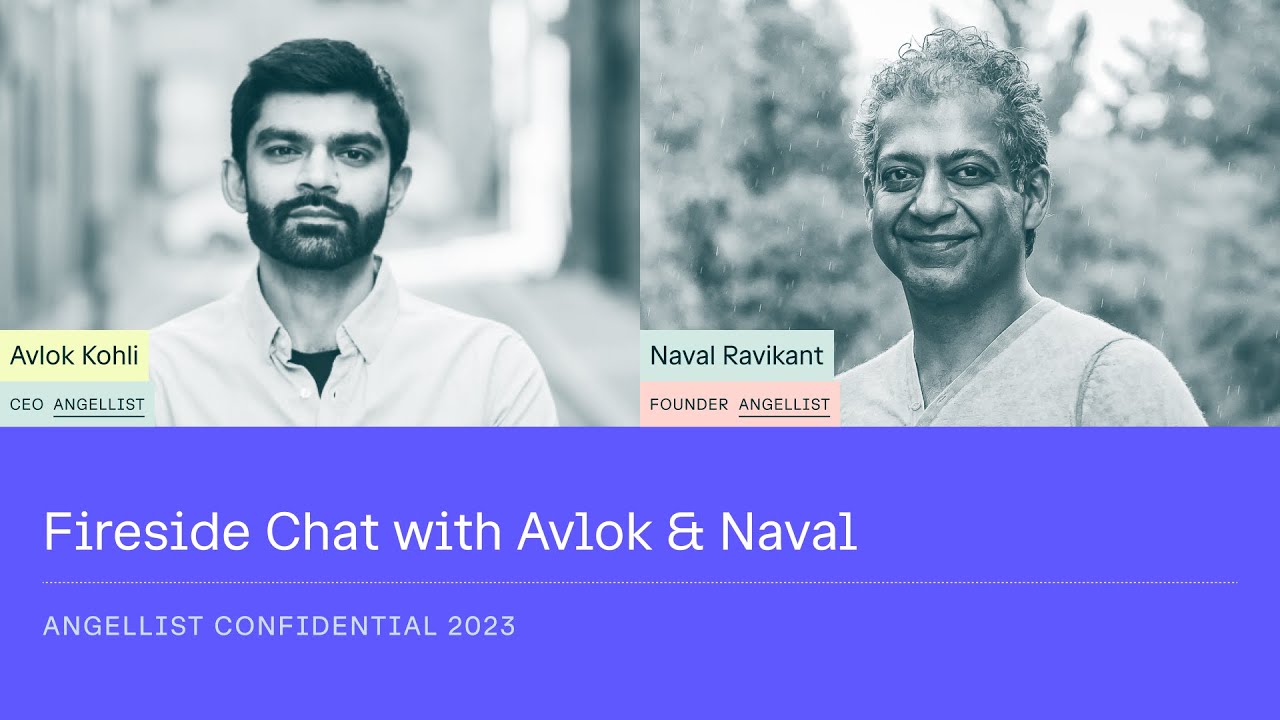
Avlok Kohli (AngelList) at Breaking the Bank Summit
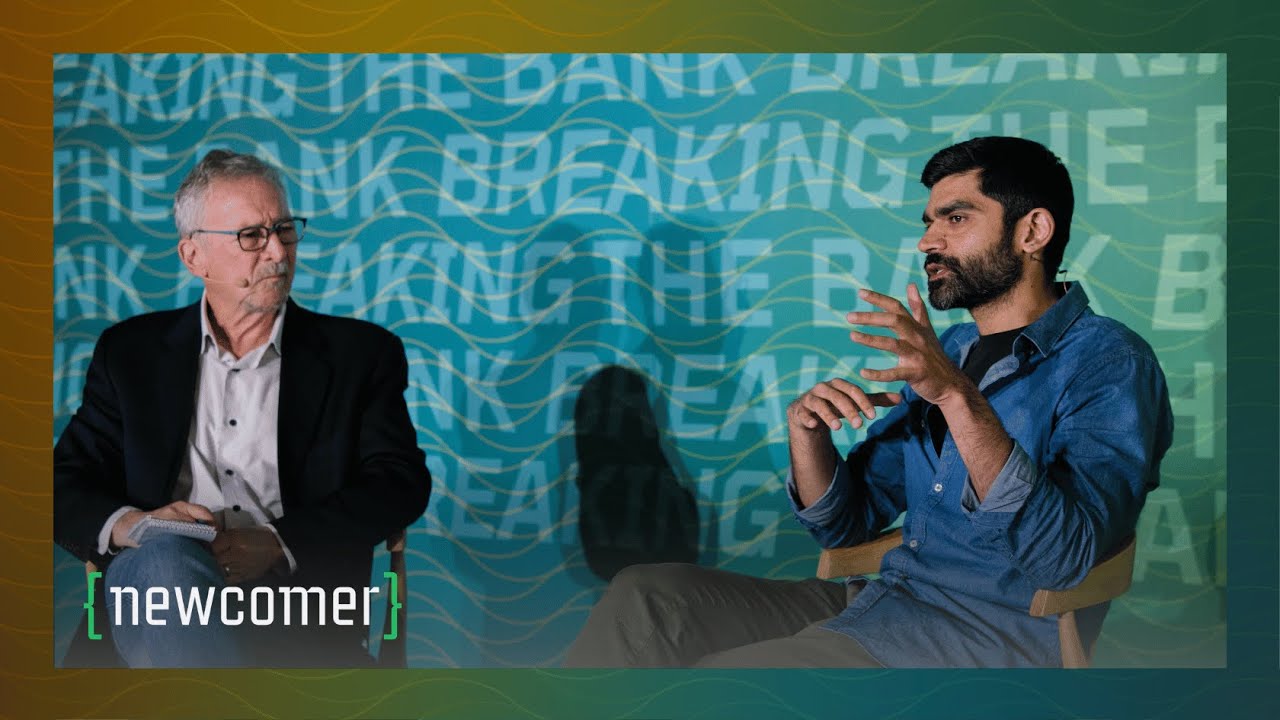
In this interview at the Breaking the Bank Summit, Avlok Kohli, co‑founder of AngelList, outlines how the company has transformed from a simple SPV platform into a comprehensive fund‑management and startup‑services ecosystem that now includes Rolling Funds, scout‑fund support, cap‑table tools, and upcoming products for individual investors. He analyzes current venture‑capital dynamics, noting rapid growth in sub‑$100 M funds and mega‑funds ($500 M+), while the middle‑market ($100‑$500 M) is contracting. Kohli highlights sector‑level shifts: AI/ML deal flow has jumped from 5 % to 50 % of all deals, overtaking fintech, whose share fell from 20 % to 10 % since 2022. He attributes the AI boom to its broad enabling potential, while fintech activity now centers on stablecoins—spurred by Stripe’s Bridge acquisition—and broader crypto‑fiat integration, with NFTs cooling off. He discusses the rise of AI‑driven service‑business acquisitions, emphasizing that only capital‑rich repeat founders can execute such deals. Regarding investors, AngelList’s user base is increasingly West‑Coast‑centric, with more qualified purchasers (QPs) and institutional participants, though the classic “angel dentist” archetype still exists. Kohli supports broader venture‑investment access for sophisticated investors via funds or index products but cautions against direct startup exposure for non‑accredited individuals. He also comments on recent regulatory and banking challenges, confirming that crypto‑related debanking was real but has largely resolved, and notes AngelList’s ongoing engagement with the SEC on policy matters.
Chapters
Avlok, thanks very much for being here.
Yeah, excited to be here.
So tell us, first of all, AngelList was established as kind of known as a platform for individuals or angel investors to find deals, and I know it's changed quite a bit in recent years. So maybe if you could just give us a quick, quick sense of what AngelList is focused on right now.
Yeah, the best way to think about it is AngelList as a brand and a company has been around since 2010. And in 2019, it went through a refounding moment. And what we did then was we actually took the SPV part of the business, which is what most people know it as, you know, there were syndicates and LPs can join, they can invest in deals. And we took that, we spun it out into its own company, and then we just started building from there. So we took it from SPVs to venture funds, we invented a whole new fund product called Rolling Funds, and then we just kept executing from there. We ended up rolling out roll-up vehicles to founders. So the best way to think of AngelList today is we're, we're a scaled-up fund management platform and startup platform. So for funds, we power a very large majority of the venture funds. We also power the scout funds for some of the largest venture firms. And then on the startup side, we have cap tables and we have our UVs as a product for them. And as we look forward, we're going to be rolling out a lot of other products for individual investors. So think of AngelList now as like a much broader ecosystem.
So that gives you a very good view of venture capital as an industry and what people are investing in, and also the shape of the firms. And I'm curious, one theme has been that the big firms at the very high end, really, they're getting very, very large. A lot of activity at the seed stage, but maybe not so much in the middle. Is that something you see, like kind of the death of the middle market VC fund?
Yeah. So we actually track this very closely. And kind of the nice thing about the industry we're in is when you're a private fund, you have to actually register everything with the SEC. And so what we're actually seeing right now is if you break the fund categories— and this is just venture only.— if you break the fund categories in terms of size from, let's call it, $1 million fund size to $100 million, and then you look at $100 million to $500 million, and then $500 million and above, we're seeing something fascinating, which is the $0 to $100 million is actually growing. The dollars into the $500 million and above is growing. So the mega firms are becoming massive, and it's kind of the— the $500 million is— a lot of these actually just become several billion large, and then the middle is actually shrinking. We have some hypotheses of why that's happening, but it's a fascinating thing to see. One thing we're seeing in just the AngelList data is the dollars going into, let's call it the $0 to $100 million, has actually gone up 2x year over year. The mega firms are obviously scaling. I don't think any of that is new because that's in the press. But the middle is shrinking.
So in terms of fintech in particular, and you also see a lot of trends in terms of what people are interested in, and so what— how does fintech fit in the current firmament, and what particular niches within that are—
yeah, yeah. So some context is, at this point, because we power such a large percentage of funds and scout funds as well for these large firms, We're basically an index on early stage, and we actually follow the companies all the way through because we're typically the signatory as well. And we basically see the entire market. One fascinating thing with fintech itself is we, for every company that comes in, we actually have a tag, which is whether it's a fintech company or not. And it—
So you tag fintech or not as just a single thing? Oh, no.
Sorry, it's like, it's a bunch of categories. And so one of them is fintech, the other one's AI/ML, and it just keeps going. Right, okay. So if we look at fintech, and let's assume blockchain crypto is also fintech, 'cause I consider that fintech, from the 2022 era, it was like 20% of all deal flow, and that's actually come down to about 10% of all deal flow. And the obvious question is, well, what's taking, what's actually taking market share? And AI/ML has actually completely flipped. It went from 5% of deal flow in 2022 to 50%, and our observation is the AI/ML companies, they're just like, it's a horizontal layer at this point where it is one of those enabling technologies that every startup adopts, but there are ones that actually identify themselves as an AI company first, and so that's how it gets tagged. So basically the way to think about it is fintech companies are still being started, but at a rate that's half of the rate of when it was in the ZIRP era. And AI, ML is just all the rage now.
And what do you attribute that to? I mean, is that just AI squeezing everything out, or is somehow the fintech opportunity perceived as different or lesser?
I mean, I just think the opportunity is massive. I mean, you're talking about a once-in-a-generation-like opportunity where you have a real enabling technology that is digital intelligence. And so The question to ask is, what can you do with it? What can a human do? Well, you can now build a startup around that. And so I just think it's the opportunity set is way larger over there. Now, the counterpoint to that is obviously, well, everyone's going after this exact opportunity. And so is it differentiated? And how do you go from there? But it doesn't matter. I still think it is. It's so large that it's worth going after. And so that's our hypothesis for what's happening there.
Right. Right. So Matt Harris was speaking earlier about, about AI, agentic AI, and the impact that could have on service businesses and how that created a gigantic new addressable market for startups. And I was wondering if you, if that was something you had seen at all, startups that were counting on AI essentially to revamp an existing old industry.
Oh yeah, 100%. I mean, this is happening across the board. Um, I would say the, the early-stage startups, typically these are started by first-time founders. Uh, they don't— like, they don't typically have the ability to raise a lot of capital, so, uh, they will pursue opportunities that are, uh, going after a service market. And so we are seeing that. We're also seeing, um, certain companies— and some of these could be scaled-up companies, some of these could be venture firms— that are also just buying services companies. And we were talking about that a little bit earlier. Uh, and that's also a very massive opportunity where you can go and buy an existing services business and you can actually, uh, look at, uh, applying AI across the board. Uh, I, I think the key there is you want to tackle, um, something that is, uh, very scoped versus something that's very broad. And so I think we're gonna see more of these services business, think of like accounting firms, as one example, and we understand it pretty well because of the fund management side, you can actually see, you're gonna see that happening quite a bit as well.
And do you think there are constraints there in terms of scope and scale, or is that limited to companies that can raise a lot of capital, or do you think there are also opportunities?
For the acquisitions?
Yeah.
Yeah, for the acquisitions, the only way for that to happen is going to be, if you can raise a lot of capital, because if you're going to go to one of these companies and acquire it, the question is, for what price? The only folks that can actually do it typically will be the repeat founders who've had some success in the past, and they have a very particular vision they're going after. This is no different than the different modes of fat startups we've had in the past. First, there was a mode for, let's call it, logistic companies. Than biotech companies, and so now we're gonna get into this next phase. But I think the, the set of people that can actually raise that capital is actually quite small. So you're gonna see it from those types of founders, and then you're starting to see it from just some of the venture firms and folks who have access and the reputation to be able to raise that capital.
To go back to fintech for a minute, and in particular particularly stablecoins. So there's been a lot of discussion this morning about stablecoins, and I'm curious, have you seen like a burst in activity around stablecoin companies? I mean, this has been really in the last few months, this has really come on.
Yeah, I mean, you could actually link it directly to the Bridge acquisition by Stripe. You know, prior to that, there was some activity in stablecoins, but it wasn't quite clear what the opportunity set's gonna look like, how many startups should be started around it. And the Stripe acquisition was just sort of a hit to the zeitgeist at that moment. It was like, all right, this is real, and the opportunity is massive. And since then, I mean, I can't even count how many stablecoin— I mean, honestly, in the fintech percentage I mentioned, probably like 50% are just all these stablecoin companies that are getting started. Opportunity is massive because what you're talking about is instant money movement internationally and at a much cheaper price. So that is your classic disruption play.
Simple.
Exactly. So I mean, if anyone's actually tried to send a SWIFT internationally, you send it, you wait like God knows how many days, you're paying a lot of money, and you don't even know where it is in the process, right? Because it's kind of going through all these different correspondent banks. And that's actually why you're seeing a lot of activity around that.
Is that kind of squeezing out other crypto things? Like, is most of the crypto activity you see on the platform around stablecoins now?
Oh, no. The other big, the other big tailwind here is you have an administration that is extremely pro-crypto. And so you're seeing sort of this resurgence again of crypto companies starting. So it isn't just stablecoins at the end of the day. You're actually seeing a much broader set of crypto companies getting started.
Is there another piece of crypto that is particularly hot at the moment?
I would say there's a lot of things getting built out around how do you connect some of the fiat rails to the crypto rails. And so a lot of the— different startups that we're seeing, especially that are consumer-facing or business-facing, are, hey, what does a new type of banking product look like where you can actually have fiat and crypto? So that's like one flavor of it. The other flavor of it is stablecoin payment rails. So these are like pure infrastructure plays. And then you're starting to see just like new ideas for different types of tokens. One thing we haven't seen as much, though I would have expected we expected there would be a resurgence, like NFTs, and a lot more excitement around that, but we haven't actually seen that, not yet at least, but we've seen more of that, all the other ones that I mentioned.
So, stablecoins are hot, what's not hot? In other words, an area where a few years ago people were super excited, now you've just seen it kind of disappear.
NFTs.
NFTs.
Like, that's a big one. I would say anything around like traditional SaaS products, SaaS platforms, a lot of that is just getting absorbed by AI. So we're not really seeing a lot of that anymore. The one interesting question we're pondering is, are we gonna see a resurgence in biotech again? And so that's, we haven't seen that yet, but that is one area that we're focused on. 'Cause the key question right now is, with LLMs starting to get really, really good and helping— starting to help with research, is that going to then drive a whole biotech wave? But we haven't seen that take off yet.
I'm just curious, how do you distinguish a company as a biotech AI company? Is that an AI company or biotech company just from a data standpoint?
Yeah, I mean, at this point, we're just looking at it as like every company will be an AI company. I mean, to go from 5% to 50% in just a couple of years of on the market share side. It just means like that is just an enabling technology, right? It's sort of like tagging something as I'm an AWS company, right? Like, no shit. Like, obviously you're gonna use it. And so we're actually gonna be just updating it to say, okay, just assume everything is gonna be an AI company. And biotech, in terms of how you determine whether something's a biotech company, you can actually just take a look at the company's website, the founder of the company, and just see what type of company are they actually doing, what's their product, and then you can tag it accordingly.
Right, right. OK, I wanted to ask a little bit about the investor profile on AngelList. And is it really now much more professional investors? And what do you see as the role of the angel? I mean, there's a kind of old cliché about the kind of wealthy dentist investing a few hundred grand. But first of all, does that kind of still exist? And then second of all, in the deregulatory environment that we have now, questions come up, as they often have in the past, about the accredited investor rules. Who should be able to invest in these kinds of businesses? And so I'm curious, first of all, if you see a shift in the profile of your investors. And secondly, is the— —credit investor regime something that you're focused on and hoping to see change? Yep.
Yeah, so there's kind of two axes to this answer. I think one is the location of majority of the investors now on AngelList. They're actually more Silicon Valley based, so more West Coast based. And in the past, we used to have a lot of people international. Now, that's still a good portion of the base, but we're just seeing a lot more located in the West Coast. Then the other dimension or axis to look at it is whether they're institutional institutional or not, right? So you have the individuals, think of these as like the accredited QPs, QPs is a qualified purchaser, and that is, we continue to see more and more QPs, so especially in this environment, but there's a good mix of institutions now that are on the platform, and this is sort of a natural progression as we continue to grow and continue to move up market, take on larger funds, we are just seeing a natural progression of these like larger institutions coming in. And so that's like just a natural progression of us scaling as a business. And then, sorry, the second— yeah, about the incredible investors.
And so, you know, would you like to see a greater democratization of venture investing?
You know, you'd probably expect me to say yes. I, I think there's a way to do it. So my take is, look, venture is extremely illiquid. It is high risk. And I do think it should be focused on sophisticated investors. Now, you know, the threshold today is one of net worth, and I know that there's a test you can take and become more of an accredited investor. But I think direct investing in startups isn't really a good idea for most people. And if you want to get exposure, you can do it through an index fund or a fund of funds.. And I actually, I was actually just reading today the SEC is starting to open, open that up, right? Can you open up more investing from non-accrediteds into the private markets? And I think that's the right approach. And we're pretty engaged with the SEC on the policy side. We have been for a decade now. I think that's the right path. But I think opening up investing into startups directly for non-accredited, I personally don't think that's a good idea.
So are there other kinds of deregulatory things that you would be in favor of?
I think a lot of the work that's happening on crypto is very positive, and it's very favorable. I put a pretty strong plus one on that happening. And I also think a lot of the relaxation on the banking system is also really good to see. And just a bit of context, AngelList actually has pretty sophisticated banking infrastructure. We work with multiple banks, and we 100% saw the results of Chokepoint. And it wasn't, it wasn't like AngelList getting debanked, but you could just see the bank's postures changing on a whim on like crypto companies, mostly crypto companies. And now it's kind of changed back. So there was 100% a lot happening in the background., and off the record I would have conversations like, yeah, we're just getting the soft pressure on like, not like, don't do these things, or hey, we will, we will do this other thing. So I'm just glad that's all over and it's just kind of back to normal business now.
Yeah, well, the debanking thing, you know, we had differing views on that, uh, this morning as to whether debanking was real or whether it was in fact the case a lot of these companies were just kind of didn't really have their compliance together. No, that's not—
it was real. Because there were like very— it wasn't just companies, it was also like funds, right? If a venture fund had even some exposure to crypto, it was like, whoa, like, hey, we just can't work with them, right? And so it wasn't just about companies, it was actually much broader than that, and it was 100% real.
So there are venture firms that couldn't have a banking relationship because they had a little bit of crypto exposure?
Crypto exposure? Oh yeah, 100%. And we, I mean, because we actually had multiple banks in our ecosystem, we were able to like look at, hey, what banks are comfortable based on what? And each bank sort of had a different threshold that they were comfortable with, but there was no objective policy, right? And it just shifted. It kind of just shifted like week to week, month to month, and then now it's all gone away. Right. So it was 100% real. I don't know. 100% real. And it wasn't just about certain companies. It was like a broad sort of threshold of, yep, we want to target this class of investments and anyone doing anything around that.
All right, great. Well, we're out of time. Thank you very much, Avlok Kohli. Thank you. Appreciate it.
More from Avlok

Knowing When to Sell: Lessons from Two Very Different Exits with Superhuman + AngelList

30 - Network State Conference 2025 - Avlok Kohli on why Angellist built their Founders Cafe

Why LPs Are Using STABLECOINS to INVEST in Startups | Avlok Kohli on TBPN April 4th

Avlok Kohli, CEO of AngelList on How He Turned AngelList into a $4 Billion Dollar Company | E18