Leveraging Crisis: The Rapid AngelList Transformation w/ CEO Avlok Kohli
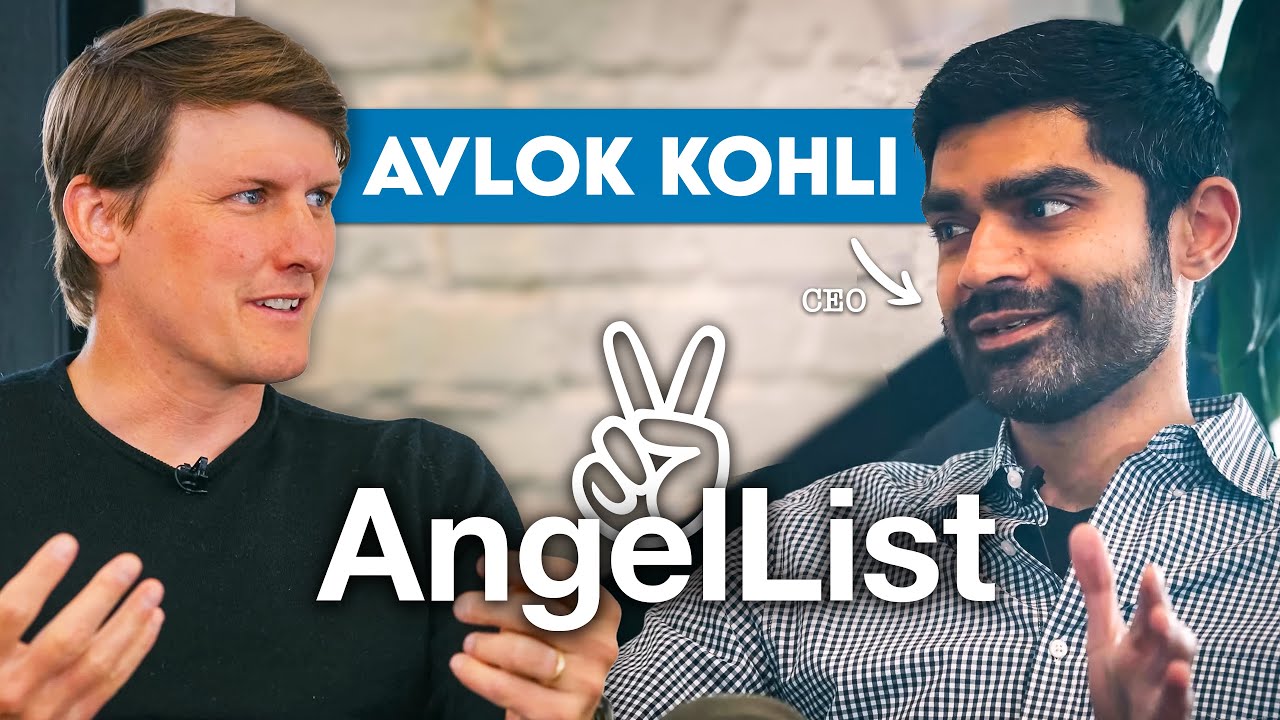
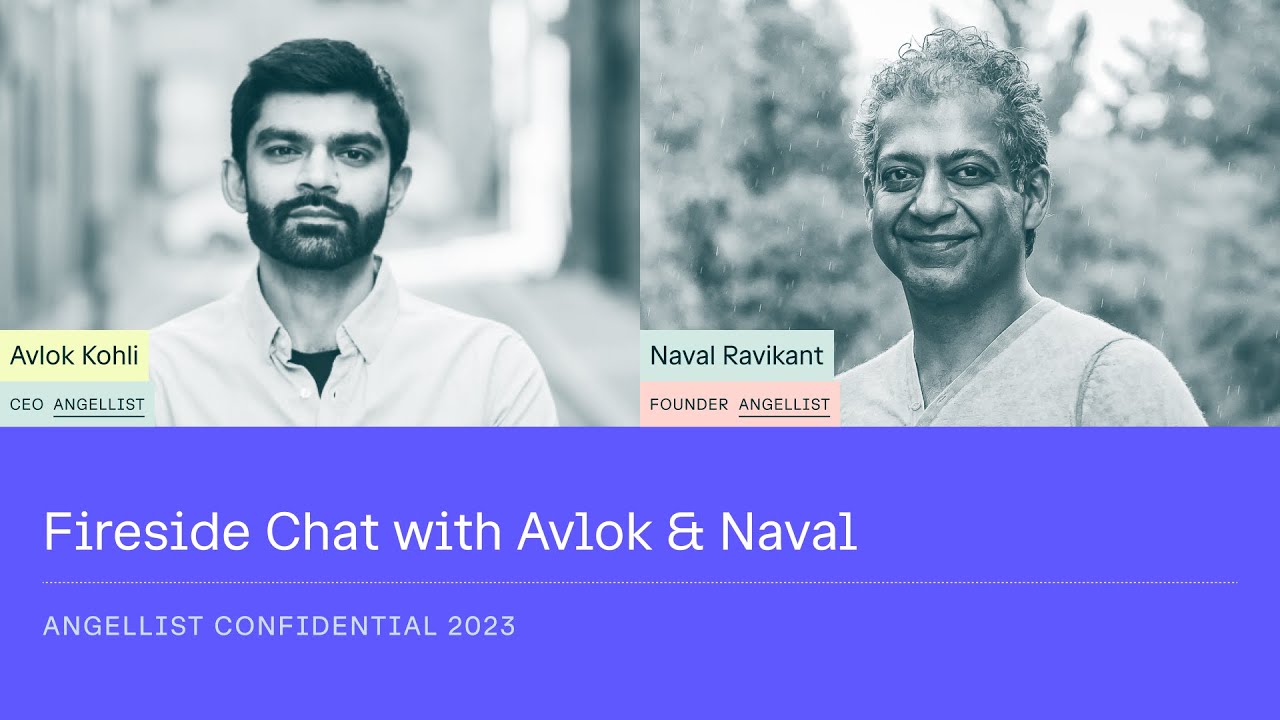
In this interview, AngelList CEO Avlok Kohli explains how the company navigated two major market crises—COVID‑19 and the May 2022 venture downturn—that wiped out revenue from its flagship SPV product. Kohli describes the strategic decision to pivot from a SPV‑centric model to a diversified platform serving general partners (GPs), limited partners (LPs), and founders through rolling funds, venture funds, RUVs, and a suite of fund‑administration tools (including the Belltower admin). He details how the team compressed a two‑year product roadmap into a three‑month sprint, diversified banking partners before the SVB collapse, and killed commoditized products (incorporation, startup banking) to focus on cap‑table and equity‑management tools where AngelList has a unique point of view. Kohli outlines the decision framework for launching new products in competitive markets—prioritizing a differentiated vision and platform momentum over market share—and discusses how AngelList’s data‑rich platform informs product‑market fit, gross‑margin considerations, and future growth. The conversation also covers the value of emerging solo GPs, LP metrics versus founder alignment, and the upcoming impact of AI/LLM agents on venture data access and decision‑making. Finally, Kohli shares a ten‑year vision: AngelList becoming the operating system for venture and private‑equity funds, expanding LP services, and solidifying its role as the leading cap‑table and equity‑management provider for startups.
Chapters
How do you think about launching a new product when there are competitors who have significant market share?
This was actually the second market crash. There was a big dip, but this one was like a really big one.
A key question for startups is how do you take a wedge product and make it a platform? And two, how do you leverage each inevitable crisis along the way to make your business stronger? AngelList makes a great case study. Today they have over $120 billion in assets on the platform as well as 12,000 startups. But in 2022, revenue from their biggest product, SPVs, collapsed overnight. Revenue growth didn't just slow, it fell to zero. So what do they do? Well, today I'm at their headquarters in downtown San Francisco to talk with Avlok Kohli, the CEO of AngelList, about where they are today and how they leverage that crisis and others to reinvent the business. In 2019, you had started 3 companies, sold the most recent one to Square, and then Naval reached out and pitched you on becoming the CEO of AngelList. So what was that pitch and why did it resonate with you?
Yeah, so the pitch in 2019 to join AngelList um, at that time was really, uh, being at the center of information flow of startups. And as a founder, having started 3 companies, uh, like you mentioned, uh, always being curious about what other founders are working on, uh, was something that really pulled, pulled on me. And, uh, so that was the qualitative pitch, uh, which was, hey, come to AngelList and you'll be at the center of all the information flow. And I think at that time the GPs on the platform were investing in 20% of all the US startups that were backed by top-tier VCs.
Yeah. And you captured about 40%, I think, of all unicorns as well.
Exactly. Yeah. So it was still a smaller platform in terms of overall revenue. But in terms of reach, there was quite a bit of reach because the GPs running SPVs going into companies were investing in quite a large percentage of some of the top-tier companies. So that was the one, you know, one pitch that really resonated with me.
Yeah.
And the second one was just the ambition around what it could become. And we had a lot of good conversations around what the platform can scale up to. And so purely from a financial lens and financial platform, when it gets big, it can get really, really big., and it can effectively be like rolling a ball down the hill where it just gains more and more steam. And so that was also very attractive. And I saw a lot of this happen at Square. So I was at Square. Square acquired one of my companies that I'd started, and I was there pre-IPO and really saw them go from being a payment dongle business to the juggernaut that they are today. So even back then, Cash App was a glimmer was still small, but you could just see how some of those early bets can really start to gain steam within a financial platform and really scale up. So I'd say those are two things. One is just being in the center of information flow, and the second is what the platform could become in the future.
I think in Silicon Valley, we're like obsessed with startups, specifically like new small startups.
Yeah.
But one thing that's very exciting is like you take your eye off of a company for a little bit, and then you look back at them like AngelList, and you're like, oh my God, they actually have 3 or 4 products. They're doing a lot more. So talk about the kind of information flows that AngelList got to see back then, and then what they get to see today.
Yeah, as well. So in terms of the information flow, you can really think of us as having pretty broad visibility into all of tech. And it starts off with GPs making an investment into a company. And typically, the GPs on the platform They are the folks who started individual SPVs all the way— now we're much larger where if you're doing like a mid-stage fund, you can also run an AngelList or even a large fund. Yeah. So the information we did— we started to see first was all of the deals that were getting done, pre-seed and seed companies. And because we're the signatory for most of these companies, we also see all of the deal docs, all the following deal docs. And so we're able then to see how some of these companies continued to graduate from round to round to round. And you can effectively think of us as being an index in all of venture. And in fact, the way that we run some of our data analysis when we're comparing to market data, we have to actually wait for PitchBook or others to catch up to us for us to be able to say something like, yeah, we do see an X percentage of all top-tier US VC deal flow. We have to actually wait 2 quarters for them to catch up to our data. And Beyond that, we are also starting to see some of the underlying portfolio KPIs because we're launching some new products around being able to track investor updates, structure it on behalf of the fund, and those are some of the new products that we recently launched.
I think that's one's AngelList Relay, which we'll talk about.
That's exactly right.
Yeah, before we talk about the breadth of products you're doing now, 2022 was probably not your first crisis at AngelList, but your first very big crisis. Your biggest product, one you're best known for at the time, SPVs, revenue doesn't just flatline, it literally goes to zero. So how did you respond to that? What was it like at the time to be operating the company? And what does AngelList look like on the other side of that crisis?
Yeah, so that was in May of 2022. And just to remind folks, 'cause I think as humans, we have a very short-lived memory.
Now when you say crisis, like, wait, was that the SVB crisis? Was that the venture funding crisis?
The very first one.
Is that the election that's coming up?
The very first one was actually COVID. Um, I was like a few months in the job and it's like, yeah, the world is literally shutting down. Okay, uh, just roll with it. Um, but speaking of the May 2022 crisis, this was actually the second market crash. There was a big dip, but this one was like a really big one. And there was something about this crash that intuitively struck me as different, and struck me as different in terms of it impacting venture in a way that The first one didn't feel like it was going to impact it. And maybe it's because I'm way too online on Twitter. Maybe it's something else. But just the overall chatter felt like venture was going to freeze. And obviously, the public markets were already frozen. And at that time, a large portion of our business was indexed on SPVs and carried interest that we have because of Angel SLPs investing into deals. And when you have activity freeze in public markets and venture, well, by definition, you would also see activities there freeze. And so we did see a decline in revenue in a very short period of time. And the way to think about AngelList is, and this is how we think about the business, is we spend a lot of time creating products that deliver a ton of value. And then we actually—
And AngelList has been around since 2000, is it '11?
Yeah, 2011. The way to think about The current instantiation of AngelList is effectively a restart and a reset when I stepped in because we actually changed a lot about the underpinnings of the business. I took what was the syndicate's business back then and spun it out. Actually, it's still a company. And so think of that as a founding moment at that moment in time and saying, "Hey, the business model's going to be different. The strategy in terms of where we're going to scale is going to look different." So that was like a new founding moment. So you can think of like, it's almost like circa 2011, 2019, but this AngelList in the current instantiation is actually 2019 to where we are today. And so at that time, we basically had revenue contract as a function of what was going on in the macro environment. But we'd already built a lot of these products that were continuing to deliver a ton of value. The way that I've always thought about AngelList is we're always heavily under-monetized. And actually, if any platform and any tech company tries to monetize too early, that's actually not a great sign for building new products. So it's always a delicate balance. And at that moment in time—
And you would say because the trade-off is— Growth. Capturing a growing share of a growing market as opposed to having a smaller market share and just trying to pull as much— economic rent out as you can.
Yeah, that's exactly right. It's also at any moment in time, you can only focus on a small number of things and you want to focus on the thing that matters the most. And at that point, the thing that mattered the most was market share and momentum. And so we really leaned into that and just made sure that as a platform, we kept getting more and more momentum and kind of linking back to what I mentioned earlier, when a financial platform really gets going, it really gets going. It's kind of hard to stop, right? And so we've always been fixated on how do we create that. We want to create that momentum that's then hard to stop, and then you find other ways to monetize over time. And so what happened in May—
it'd be a bit reductionist. AngelList in many ways is an asset management business, and there actually is historical precedent of some asset management businesses growing faster as they start to scale because you get this positive feedback loop, like Charles Schwab. Grew faster from, I think, $10 billion to $100 billion in assets than they did from $1 to $10, not just in absolute terms, but even on like a year-over-year growth rate.
Yeah, and that's because when you're building a financial platform, trust and brand is a big thing. And I actually remember I was talking to someone at Square when Square was going public, and the question I asked was, why go public?
Yeah.
And the answer was actually a really good one, which is, Well, when you go public, it's a stamp of approval for others who are on the fence about working with a private company that they may not know too well.
Yeah.
And so if you're a small business, you may not know Square, but hey, if it's a public company, you can trust it a little bit more. So I thought that was a very—
especially for consumer brands. I think that can matter. But even for non-consumer brands, you have that credibility.
Yeah, exactly. And so for us, as we thought about the business, it was like, okay, we need to evolve really, really quickly. And a lot of that was, hey, how do we take our roadmap that was actually set for the next 2 years and how do we compress it into 3 months? And that was the literal conversation internally. And it wasn't a very contentious conversation. It was more of a, okay, this has happened, let's move fast. Effectively turned into, Great, here are all the things that we have in a roadmap. Here are the things that really matter right now. We now need to get it done in 3 months. Let's go. And it ended up being a really energizing time for the company. And I was super proud of the way the team came together and we evolved the company overnight. And if we look back now, we're actually stronger than we've ever been as a company. We are also profitable. And we're now just continuing to expand and build on the momentum that I mentioned earlier, which is how do you just create more momentum? How do you create more products that feed into the overall strategy so that we can just continue to get more and more market share?
And I want to bookmark that entirely. One interesting question about product is how do you think about launching new products and what gross margin? But first, just to put a pin in what the transformation looked like going from more SPV-oriented to helping GPs, general partners, run and manage venture firms and having the multiple products. So what were some of those products you had to launch and compress the timeline for bringing into market to help serve GPs running funds?
So a lot of it actually came from us accelerating the work we were doing around venture funds and rolling funds and being able to drive a lot more volume and a lot more sophistication around the fund product. So one underappreciated fact about AngelList is when we went into the funds business, we've actually always approached it very thoughtfully and carefully in terms of us going after certain size funds. So when we originally started the SPVs, it was only SPVs. When I stepped in, we just started getting into funds, but these were like $500K funds, $1 million funds, really, really small.
And rolling— I guess you started with a traditional funds product for very small funds.
Very small funds.
And then you launched the rolling fund, and then you kind of revisited and rebuilt the traditional fund product.
Exactly, exactly. And the core of that, uh, was when you're a, um, a technology company, you have to pursue products that are differentiated, that you are known for, uniquely known for. And when you do that, the rest of the business sort of lifts, right? So rolling funds, uh, we're very uniquely known for, and in fact no one else has done that, actually also uniquely lifted the rest of the business. RUVs, same thing. We actually invented RUVs and same, you know, same thing there where RUVs actually also lifted the rest of the business. So you always want to think about certain products that have the ability to lift the rest of the business and feed the strategy for the rest of the business. But in terms of, you know, the transformation of the business, we went from primarily SPVs to actually SPVs being the smallest portion of our business today. And just having rolling funds, venture funds, and then all the other products kind of surround it have effectively diversified the business and scaled the business much faster than having SPV scale the business.
Yeah. And so the sweet spot used to be people doing SPVs or maybe small funds. Now today, probably the sweet spot is people running 10 to maybe 50. And I know you support folks with $100 million, but the sweet spot, especially in differentiation in the market, is probably $10 to $50 million funds.
So no, it's actually now— so every year it actually grows and changes because every year we actually keep expanding. And so now we're looking at $150, $200 million funds from a full-service perspective. So one of the products is we just handle everything end to end. We do serve the ultra-large funds as well. So we do serve the entire scout program, for example, for a top 5 VC. And then for some of the ultra-large funds, like a $20 billion value-add PE fund, we actually serve them with all the software needs as well. And the other transformation that's happening at AngelList is we are actually becoming fund admin agnostic. So we have our own wholly owned fund administrator that we created called Belltower. Uh, but we're now starting to work with other fund administrators because they're actually using our software to also serve their customers. And we're effectively going horizontal. And it goes back to what I mentioned earlier, which was we're really looking at creating a large financial platform that just continues to take overall market share, uh, where funds use AngelList to run their firm, kind of like an operating system, right? What are all the things you need to run a firm? Just use AngelList.
And that's newer in 2024, or more recently, they have that à la carte offering. And that was a big feature of your last event in AngelList Confidential where you basically preview a lot of the—
That's exactly right.
Yeah.
And a lot of that actually takes some of the core software that we built for the full-service product and it effectively— we start unbundling some of that software. And making it available. The magic of AngelList and why funds have such a great experience, GPs have such a great experience, is that everything lives in one place, all the way from your legal doc software down to your LP subscribing to the treasury system deployment down to portfolio management, all is in a single system. And so it allows for all the data to flow through, which allows us to create the platform. So we're taking the exact same experience and then effectively making available to everyone else.
Yep, totally. And that's been the big focus since you joined in 2019, but especially after the crisis in 2022 with benchmark correcting.
Exactly.
You've also built other products. I think it'd be interesting to talk about some of the products you built for founders and for startups.
Yep.
Specifically AngelList Stack.
The way to think about it is AngelList has 3 customers. We have GPs and funds, we have LPs, folks who invest in the funds, and then we have founders and startups. And so for startups, when I joined, we didn't have a product for startups, which felt a little bit off. And so we started looking at different products that we could build. And just like any new product exploration, we did some wandering, right? I have a tweet pinned on my Twitter account, which is from Jeff Bezos of guided wandering, right? I've always loved it. I think I've just had that pinned now for many years. It's always just a good reminder of how sometimes uncertain new product discovery is.
Yeah.
And so we did some wandering and our first instantiation of Stock was the second you have an idea for a company, click a button, we'll handle it all. Incorporation, banking, cap tables, you come to us, we got it all.
I can just see the product session that it's like, okay, let's map out the founder journey.
Yeah.
Incorporation.
You're like, great.
Okay, let's start there. Let's do it.
Yeah, and it was great. It was exciting. We're like, fuck yeah, this is awesome.
Yeah.
Let's go do it. And we actually launched it at AngelList Confidential. And so we launch it and we had people that loved it. They loved the whole bundle of product. But as we went through, we realized, hey, you know what? Incorporation is commodity, right? And we'll never own all of incorporation. In fact, I think Stripe Atlas has done a great job working with partners, trying to create that funnel.
Yeah.
And now more and more they're centralizing, but we viewed incorporation as a commodity and not something that we thought we could own 100%. Uh, and so we said, great, we'll partner with Scribe Atlas. So that's what we did. And same thing on the startup banking side. Uh, so we have a pretty sophisticated banking infrastructure.
Yeah.
And that's on the fund side. But on the startup banking side, we never—
that's been with, I think, Unit and Thread and probably some other folks.
Exactly. Yeah, so it didn't even use our core infrastructure, which is very sophisticated, but we built it, we kind of incorporated, but built it as an experiment. Let's just see what happens, right? 'Cause our view was, hey, get them an incorporation, they get everything and let's see where it goes. And same thing, we weren't uniquely positioned there for what we really wanted to do. But when it came to cap tables, we looked at it and we said, hey, we have a unique point of view on cap tables. We have a unique point of view on fundraising. We have a new point of view on how you can fundraise from smaller checks. So that's how our UVs came about. And that's how some of the other products—
features came about. So specifically the incorporation product, you mostly sunset and turned over into a partnership with—
Exactly. Atlas.
Yeah. Wandering, it's like kind of pushed that.
Exactly. Same thing with banking.
How hard was it to kill a product? Like, were there people inside who were like, whoa, why are we doing this? Because that's one of the big questions is if you're gonna wander and you wanna build a platform, you are gonna have to build a lot of product. And it can be very hard. Like, there can be the personal political aspects of someone owns it, they don't want their baby to die, or just the higher-level strategic questions of deciding how do you measure ROI and decide whether or not to kill it. So how did you decide to kill that product?
Yeah, I think for each product it's different. For this one, it came down to a simple question of, are we uniquely suited to win here? And you kind of know if you're uniquely suited to win. You just know in your bones. You just, you intuitively just know. Yeah, you don't have a unique point of view.
Yeah, um, you think that's probably uniquely also the CEO's job.
Exactly.
Figure that out because your individual teams, you need to understand you have more context and they may have made slightly different incentives. Although, yeah, hopefully culturally you've instilled with them the right Values that, like, it's not just about building your own thing.
Yeah, yeah, yeah. And so I think that's a part of it. Uh, sometimes though, you just need more information, right? I think some, some folks in, uh, in the company, uh, would argue that sometimes I take too long to come to that conclusion.
Yeah.
And, uh, and I think, look, it's all— it's actually all correct. It's just a question of where on the spectrum, uh, are you in that, uh, decision-making Yeah. And so certain products, it's pretty clear. It's like, yes, we don't have a unique right to win here. We don't have a unique point of view. And other products, it's, hey, we're just— we're waiting for more information for another turn of the card. And if that other turn of the card gives us the information to keep at it, great, we'll keep going. And so there is no one right answer. Now, to your point about the organization being able to absorb those types of decisions, we do a lot of work to frame ahead of time that something is an existing product and a core product and something is a new product. And new products, you should assume a failure rate. So what matters isn't that you failed a bunch. What matters is that when you're right, you want to be extremely right. And again, we don't get this perfect because there is no science around it.
I think no one's perfect at this, but the idea of having kind of a premortem or like Like if we don't hit these things, default kill. It's hard to instrument, but it's—
It's really hard to instrument. Back to what I mentioned earlier, sometimes you're just waiting for that one extra bit of information. And I'll share a story from Square to make this point since now we can actually see the result of it. And maybe this is a selection bias thing, but I'll share it anyways. When I was at Square, uh, before the company was going public, Cash App, um, at the time was popular, but it was sort of sideways in growth. Um, uh, economics-wise, it wasn't doing that great. And there was a chorus of people inside the company that really wanted to shed it.
Yeah.
Uh, and they all made very strong logical arguments. Uh, one of the strongest ones being Venmo has network effects. So how can you beat a network effect company? Yeah, you can't, right? That, that was the argument. And it was like, man, that sounds smart.
That's actually— especially when it's tied to a larger incumbent who's willing to subsidize it.
Exactly. And I was like, okay, that— I mean, strong argument. And then, yeah, the other side argument is, well, yes, they have a network effect, but only in the coastal city. So actually, if you look at Google—
that's what's surprising is I don't think people understand that the community is using these two platforms —quite different.
Exactly, completely different. In fact, I was forcing all of my friends to download Cash App, and they just hated me for it. They're like, why are you telling me to download Cash App? I'm like, I'm only going to pay you if you download Cash App. And I would sit there and wait for them to download it. Like, I'm using Venmo. And I'm like, no, you have to download Cash App. So the network effect argument was real, except it was a selective network effect. It was within specific communities. And ultimately, the decision there was to keep it and to keep going. Right. And if you'd applied any sort of quantitative metric and saying by this date, if this and this doesn't happen, then you definitely shed, you effectively make an irreversible move. So this goes back to are you dealing with a one-way decision or a two-way decision? Yeah. And so sometimes it is hard to just set that in place and make that decision. But at AngelList, we do try to be intellectually honest about it. Yeah. And at the same time, keep in mind that once you make that decision, it's done. So there's like a degree of conviction. Yeah. So in the case of incorporation, it was, yeah, this one's clear. So you did kill incorporation.
Yes. And then you decided to do cap table. I think cap table is an interesting one. It does seem more aligned with your kind of core competencies as a business. But interestingly, it also seems very competitive. Yeah, right. And so how do you think about being a— not even a startup, because you guys are at scale now, to an extent. How do you think about launching a new product when there are competitors who have significant market share?
I would say when it came to cap tables, our unique viewpoint was it isn't a product in market right now that we think, you know, we think it could be a lot better. We just don't think the current instantiation of the product where effectively lawyers have to use it for it to be useful to founders makes any sense. And a friend of mine, I was talking to him, he's a third-time founder and he was sharing his experience with Captive where he set it up and then his lawyer uses it. So anytime he has to make any change, issue anything, he has to send an email to his lawyer and then he gets billed for that and then he gets billed for cap tables. And our view was, okay, that's just broken. There's something about that structure that's broken. So first it came down to, hey, this can just be better. And when you have a product like that where you're issuing equity and equity is really important for incentives from the early team you're bringing in and the employees, We think that that's just an important problem to solve. The second piece was the benefit it would have on the platform. So the GPs on the platform invest in companies, then they're on the cap table of those companies. So there's a loop there between one part of the platform and the other. And as well as the employees who are then on the cap tables can be useful on the other part of our platform. Potential future LPs. So that was another, um, uh, you know, track of thinking that gave us conviction that, hey, this is worth pursuing. And as I mentioned earlier, it really comes down to, uh, having some intuition, having some conviction that it's worth pursuing. And you won't have all the answers. Yeah. But for us, it was important enough because of all the other benefits to the platform that we decided to take a swing at it and to keep going. And right now it is actually growing.
So your summary would basically be launch product even as competitive if you feel like you have a unique point of view into how to make a better product.
Exactly. I mean, I think sometimes folks get really caught up in, well, there's XYZ competitor, they were there first, or they have this much market share. And so we can't do anything. I think the question to ask is, do you have a better view of the world on how the world should work? And if the answer is yes, I think it's worth pursuing. If the answer is no, then don't pursue it. You know, Google was, if I remember correctly, the 19th search engine. Yeah. I mean, if they had applied the philosophy of like, well, if someone else is already doing it and they have a lot of traction, like Yahoo had a lot of traction, they would have just said, hey, we're not gonna do it. But you had a unique point of view of the world, which was, hey, search isn't working the way it should work. Yeah, and they did it. Of course, the rest is history.
Yeah, and that's what I think is fascinating about this point in the ecosystem right now, is you like look, it's like, who's going to own what parts of the startup stack? And in 10 years, maybe it's obvious, like, oh, of course AngelList is like the big cap table player. But right now it's totally not obvious that you guys could become the number one. But, but, and there are lots of companies doing this, launching multiple products across the way. But another product you launched on the founder side of things is banking. So how do you put banking in your strategic priorities? Because banking, it's pretty core to what companies do. It's also very hard to build financial services. There are other competitors, you know, the Mercurys, the Brex, the Ramps, among others out there. So is banking still a big strategic focus for you guys?
So in startups, So for context, we actually have our core banking stack, which is very sophisticated, that serves GPs and LPs on the—
And that obviously is saying banking for funds and general partners. That is—
Yeah. And so that's actually— we work with multiple banking partners, extremely sophisticated. We've moved—
And a shout out right after the SVB crisis, within a couple of weeks, I think you guys had— you basically already put in work process to migrate. Maybe talk about the migration that happened at SVB. Yeah, okay. This is for the fund banking product, and we'll come back to the startup.
Yeah, that was a, that was a fun moment. So as context, SVB was AngelList's primary banking partner. And in fact, if it wasn't for SVB, I don't think AngelList in its current form would have existed. So I think, yeah, they actually did took a real chance on us early on. This is before my time. And so they were our primary banking partner. And in mid-2022, I have to now remember.
I know which crisis, which year.
Specific crisis, yeah. In mid-2022, we made a decision to diversify our banking partnerships and that involved a multi-quarter effort from the engineering side because when you have your system—
And you made this decision well in advance of the actual— Well in advance. Because it's quite a big build.
It's not like something— It was a very big build. And the root of that decision was really around a single point of failure. And we just looked at everything because we're effectively in crisis mode from May 2022 crash of like, all right, let's just take a look at the entire business, evolve all the things, and let's accelerate everything that we think is very important. And one of them ended up being our banking system. It was a single point of failure. And so we made the decision to diversify banking partnerships. Took us 2 quarters, built this out. And in January— and again, a lot of this was public knowledge— in January, we effectively had started some of the migration and we formed SVB Alpha for some of the— exactly, Alpha for some of the clients. And so we started moving quite a significant portion and it was done in an orderly fashion. And then during the crisis, we actually had majority already out. Yeah. And during that crisis, we effectively had, again, just as—
I think I actually— my fund runs on AngelList. I think my fund had already migrated. OK, yeah, let's do that. And so then the SVB crisis hits, a couple of people email me and I'm like, it's fine. Yeah, exactly. Literally no exposure. Yeah. Which is a great email to be able to send.
Yeah, no, that was, you know, again, huge kudos to the team that was working on this at AngelList. There was significant amount of work that happened even before the whole thing happened. And we even had a break the glass maneuver just in case. And I remember I was actually flying to Seattle and of course, first thing I do is sit down on the plane and I'm like, open up my laptop, reading Twitter. And I just reading it and I'm like, oh God, this is, I guess that is happening. And I remember I got on a Zoom call with the team and I said, Okay, we're gonna do the best crisis to face as a CEO is when you are actually prepared for it.
Yeah, you saw, you saw, don't be wrong, it was still some extent, it was still very intense.
Yeah, um, uh, because we never in a million years thought that we would— I was like, hey, it's a top 20 bank, and you weren't thinking about them collapsing.
That wasn't why you were diversified. You were just thinking it's a partnership, you know, they might want more unit economics, they might not be able to support products and features.
Yeah, let's have more many, many things, right? Um, but it was just one of those I mean, everyone was just shell-shocked in that moment. It's a top 20 bank. What is going on? And not just the top 20 bank, a top 20 bank lauded by all top-tier VCs and all the operators in town.
I have a different perspective, which is banks are fundamentally fragile, but that's a longer conversation about banking regulations.
We're seeing it. I learned a lot about banking in that 48-hour period. So back to the fund banking. So we completed the migration over the next, actually, basically 12 hours. We moved pretty quickly on it. And so that's our fund banking side. So pretty sophisticated infrastructure, multiple banks for GPs and LPs. And on the startup side, again, we did banking for startups. And that was really tied to that original version of Stack, which was incorporate banking, cap tables. And again, for us there, we never intended to be in banking as its own dedicated product. And in fact, no startup could come to us and say, hey, I want a bank account, can I just use it for banking? And we would just say, hey, no, you can't. And so where we landed on banking was, hey, it's not a core thing for us. We're going to focus in on cap tables and our UVs, and we're going to focus there for now. And so even with banking, we said, hey, startup banking, we said, hey, we're not going to pursue that because that was never a core thing for us to pursue. So on the startup side, we're very focused on RUVs and cap tables today.
Yep, got it. That makes sense. So incorporation, banking, less of a focus, but cap table much more so. Up one. Another more generic or general question about launching new products. So we talked about how do you launch a new product into a competitive environment? Also, how do you launch a new product and think about the business results it's going to drive, specifically the gross margin? Yeah, because we're in more of an efficiency-oriented environment. You guys are now profitable. Instead of thinking, oh, we'll just go raise another $200 million. Yeah, from, you know, a VC on the street, you're thinking about long-term enterprise value. So how do you put the business model into the new product consideration? Yeah.
So it's always hard. Sometimes you don't quite know what the business model is going to be. Because when you're talking about building a new product, like a really new product, you're taking a risk. And the main thing you're focused on is, is this going to hit product market fit? What does product market fit look like? Because without it—
And to double-click on the CapTable product, you tweeted like, I want to make this market smaller and I want to compress. And that's like, oh man, I want to launch a product and like compress margins in the space. Yeah, yeah.
Compress, um, or I would say compress, uh, the, um, maybe you don't have to compress the margin.
The market size, you can still— it's fully automated, you can still have it at 80% gross margin, but the total revenue might be— exactly. Yeah.
So in that case, that's actually a little bit of a different, um, view on things, which is you can have cap tables serve a purpose. Yeah. And then you can have a separate set of products that you can build on top of it. Yeah, that serve a different purpose. So for example, cap tables as a way to feed the rest of the platform and feed acquisition for the rest of platform.
So some products you launch because you're commoditizing a complementary product where you earn revenue. And so for you, you view that cap tables in that light.
Exactly. So it goes back to what I mentioned earlier, which was how do you create momentum? Yeah, because what matters is that you own a particular space, and then there are all sorts of interesting opportunities that open up. And to be clear, I do not think one of the opportunities would be secondaries on cap tables. I actually think secondaries and companies, it's a principal-agent problem. That's actually a very hard one to solve.
And people saw that play out in terms of Carta and secondaries, which they've since recanted from and jettisoned. And so you're saying explicitly, no, we're not doing—
Yeah, we're explicitly saying that, you know, as a founder that's started multiple companies, also as having, you know, with AngelList, having a lot of secondary interest, we are, you know, we've kind of gone through the feeling of what it feels like for someone trying to list shares externally, and it doesn't feel good, right? Yeah. And for us, the founder has always been at the core of what we do. And we understand full well that the founder, the exec team has to stay— they're focused on building a great company. And when you get distracted by these things, it takes away from that core. And so for us, we just think that the incentives just aren't aligned for that type of product. But there are other ways in which it actually feeds the overall platform for us, where our view is you don't need to have cap tables be a billion-dollar-a-year revenue business. In fact, I don't even think that market is large enough because you have startups. Only a small percentage of startups become big. Majority of the startups die. That's literally baked into the whole model. And so you have to then think about, well, what is a business model that works when you serve startups?
And fund administration, you would argue,— is a business. And Carta has moved in that direction as well, focusing on the fund administration.
Exactly. Yeah, it doesn't even stop at the fund administration or fund software. You can go deeper and deeper into it. Effectively, you get into the financial infrastructure. And for us, it's like the venture funds, the private equity funds, the LPs. And so we think about the world much bigger than just venture funds. We think about the world of basically— ownership, right? And what are all the different pieces of software and the infrastructure needed for ownership everywhere? Obviously, starting on the fund side, yeah, the LPs, because a lot of that underlying plumbing is actually extremely dated, like 20-year dated, right?
Even though the underlying assets might be different, the plumbing is dated, but similar ventures, like a $2 trillion asset class. Private equity overall is about $20 trillion, about 10x bigger. So there's a lot of —exactly— room within that general area.
And so that's basically how we think about the world. So we don't think about cap tables as something that's going to drive a billion in revenue. And in fact, you can kind of see that, hey, it probably can't even go past $500 million in revenue. It's just a capped market to begin with. But that's not a bad thing. It doesn't mean you don't build something there because it can serve something much bigger.
It doesn't mean your very first product maybe should still be in that market because it's underserved.
It's very— that's exactly right. Um, and yeah, especially if it's underserved and you're just starting out and you're like, hey, you want to go own that, great, go own it. And then once you have, um, uh, once you have a fixture in it, then you can actually expand and go into adjacent markets. Uh, so it's not always the case where you don't do it because it's a small market. It's a question of what are the adjacencies you can go pursue.
Yeah, we spent a lot of time talking about how you build launch products, think about competition, how you think about margin, how you think about lots of other aspects of that. Just give us the 10-year— what does AngelList look like in the future? What are your goals? Understand, you know, don't know exactly, but you've got a general direction. Yeah, you're pointed in.
Yeah, this one's always hard to answer. Because if you'd asked me 5 years ago what AngelList would be today, it would be really hard for me to pinpoint. Yep, this, this is, you know, this is where— yeah, this is where we would be. And a lot of that is because as you keep growing, you learn of new opportunities that you can go pursue, or there's some strategic opening that you have because of the positioning of the company that allows you to go pursue it. But what I can say is on our current path, what's clear— and then of course, at any moment in time, we actually have different bets that can actually change the trajectory even further. Yeah. And so on the current path, we are actually on track to become the operating system for any venture fund, any private equity fund, working with multiple fund admins, and then going deeper in the LP side. So there are a lot of different types of products and services for the individual LPs that we think fit on the broader platform. And so we'll continue to go, go in that direction. And then on the startup side, we think will be, uh, one of the, uh, largest, uh, one of the largest, if not the largest, provider of cap tables and RUVs, really anything, anything to do with fundraising for companies. And then starting to get into a view on how employees can better engage, uh, with their equity. We have some views on that as well that we're excited to—
it sounds like you're hinting at maybe some announcements you'll have in the next year or 12 Yeah, at any moment in time, we are, you know, we're always experimenting, tinkering.
And, you know, like I mentioned, we have certain unique point of view in the world that we want to share. And if we do it right, it'll become the next big product for the company. And it'll create a whole new growth trajectory for us.
Yeah. So being fabric of venture, private equity, private ownership generally. Want to move on to just a more rapid-fire section of the interview, talk about especially because AngelList has a unique dataset and a unique lens into certain parts of the ecosystem, just ask some more general questions. So one, curious your perspective on the extent or the value that having lots of new and smaller funds launch does or doesn't bring to the ecosystem, speaking as a solo GP running—
Yeah. Yeah. I think the main value that you get out of that is you have more people at the earliest stages willing to back a founder when the idea is just so early. And that I think is actually very important for the overall ecosystem. And going back to the May—
More types of VCs means more types of ideas, more companies can be created.
Yeah, exactly. Just more ideas that can be funded because In pre-seed and seed, it's all an experiment. Yeah. No one, like you don't, yeah, you have some intuition, but you don't quite know. You're always paying attention to the founder and what the vision the founder has of the world. And when you think about having more people with check-writing capability, it just means more meetings that can happen and more decisions that can be made to do it. Maybe let's take the counterfactual. Imagine the world was only the top proven partners writing checks. Proven in terms of DPI, which is like, yeah, distributions back to LPs.
Well, you've kind of got 10 years in the past.
Yeah, you've kind of got like maybe 50 people, right? And a lot of people are retiring as well. Yeah. And they're, they're like, they're constrained by their own calendar, right? So then you have a huge constraint in terms of number of startups that can get funded. And I know there's this debate of are we founder constrained or capital constrained? I do think we're founder constrained. I actually am in that camp, which is we want more founders, more great founders. But the world 10 years ago, especially when I was raising capital for my first company, I could literally fit on one sheet of paper, and I think we're using a sheet of paper back then, it was like 40 investors that were actually writing checks in pre-seed.
It wasn't called pre-seed. If you're a fintech founder at that point in time, you could fit There is no list. It literally doesn't exist. I don't think there was a list. Yeah, it's maybe 2 firms-ish.
Exactly. And today, a lot more people writing checks. And we can probably argue on the margin, what does that max look like? But ultimately, I do think it leads to more founders getting capital at the very early stages. So I think it's a net positive.
What do LPs get wrong? About emerging managers?
I think the key thing is focusing a lot on these interim metrics and not enough on are they just getting into the best companies or backing the best founders? Do founders want to work with them? And a lot of time there's a focus on all of these interim metrics like TVPI, IRR, And I think those are important metrics. But ultimately, those metrics are a reflection of has some investor marked up the company. Yeah. And nothing else. It doesn't—
it didn't work when the market was hot. Yeah. Because then graduation rates were 100%. And it didn't really tell you about the underlying quality of the companies. Doesn't really work today because the market's cool. Yeah. So you have— merchants don't have markups. Exactly.
You have to use Exactly. And so this goes back to, uh, you have to apply a judgment and look at other signals. And so I think, um, and it's hard, don't get me wrong, I think it's a hard problem to solve because it's, in a way, it's an adversarial environment, right? It's like, it's like founders fundraising, it's an adversarial environment. They are by definition incentivized to say, hey, I'm great, you should invest in me. Yeah. So the question is, how do you How do you parse through that? And sometimes you need that, you just need that judgment. But I think that's what they get wrong today is a little too much of a focus on metrics and less on just asking, will great founders want to work with this person? What can they bring to the table for them?
Yeah, totally. Another question. I'm curious how you think AI, how it might change the practice of venture capital. So not necessarily the types of companies, but how venture capitalists itself is going to change as a result of the new capabilities we have with large language models? Yeah. So among other—
Yeah, we actually have a— it's one of the products I alluded to and something we're pretty excited about. I think it's going to change the way in which GPs access data and access information about founders, about their portfolio. How they engage with LPs. Today, a lot of it's very mechanical. If you have a question about a portfolio or question about a founder, you're searching, you're constantly searching, right?
Well, I think there's a lot of unstructured data inside of venture firms, which makes it very slow to answer simple questions.
Not only inside venture firms, outside venture firms, right? And that— there's all of this data that's out there at any moment in time. And you have teams of humans out there sourcing and doing this and applying their judgment, when in reality, what if you actually had an agent that took your own judgment and replicated you out into the ether, right? And so you're grabbing all the information. So I think we're going to see a big change around how the— how GPs and the best of the best GPs operate, where everything's at their fingertips, right? So ask a question, get an answer, or information is pushed to them. And so I think that's a very interesting area of exploration and generally where I think the world is going. Yeah. Where you have a really smart, capable agent that is really tuned to exactly what you want to do, what you're looking for. Yeah. Except I think in this case for us, we're going to be looking at the venture, venture space.
Yeah. I think I'm curious to hear you react. One impact. So it'll change how you use data inside of a venture firm. That will be interesting. I think the most interesting will be outside of a firm, how you actually source deals. I think it's gonna become— it's already become— but incredibly hypercompetitive Series A and later, because there used to be this constraint on how much data an agent, which was a real person, could process. Yeah. Now you have thousands of agents across thousands of firms extracting tons of data insights. Also, maybe they just charge slightly lower carry and management fees and they can get the same net fee return So I think just the competitive— and this happens in capital markets— it'll be incredibly competitive for any late-stage. It's a little bit self-serving because I think the one place that's a little bit insulated from that is like pre-seed, because that's the one place where it's fundamentally about the founder and the relationship. Yeah. Yeah.
I think the question to ask there is, at what point is the information structured in a way that many other people looking at it come to the same conclusion, right? So for example, when we look at pre-seed and seed, there's a lot more art to it because it's a lot more about reading the subtle signals that you can't put on a piece of paper. Yeah, you can't put on a spreadsheet. The more you get to Series A, Series B, Series C, it is more about the spreadsheet. And yes, there is judgment in terms of the moats and network effects and and how margins will expand over time. But generally when you're at pre-seed, seed, you don't have that. And so I think at the earliest stages, it's going to be more about amplifying the unique judgment that GPs have. And then I think Series A, B, C will get even more competitive, even more so than it is today, which is crazy because it's competitive. Yeah. And then of course there's a broader question of What happens to the returns? And we'll sort of see how all that plays out.
Yeah. And last question, what trends do you see at AngelList today that maybe others aren't seeing yet?
Actually, I think the one trend is seeing how good of an investor some of the very best technical founders are. And I've seen this across multiple founder-led venture firms where they're running a company. And to be clear, they're running a late-stage company. I think it's actually pretty hard to do it when you're an early-stage company, but you're running a late-stage company. And what's happening is other founders want to work with you. It goes back to what I was mentioning earlier. What right do you have to invest in a company where the founders want to work with you? And this is something that AngelList uniquely sees because products have made it even simpler for them to get going, even simpler to raise money. And I think that's actually been very underdiscussed. So it kind of rides on the solo GP wave, but it also rides on this technical founders having some visibility in the community and that other founders want to work with. And that turns out to be extremely, extremely useful in building a great portfolio. And I was actually surprised by it, mainly because of the amount of time sometimes it takes to meet with the best companies. But it turns out that your selection bias is pretty good at that point. So anyways, I think that's been an underdiscussed trend, mainly because we haven't really shared that data externally.
Yeah. I think it's interesting because it does talk about solo GPs and why people like working with them. I think the dimension is like, yes, they understand and therefore can underwrite good investments. One thing that's interesting too is if you understand it, you also are able to show more conviction. And you probably know as a founder, like when someone shows up and they like understand your business. Exactly. It feels so good. Yeah. Because there are so many people who don't and like there are lots of businesses I don't understand, right? I play in a certain niche. And so that's incredibly powerful. Yeah.
And they can actually help. And especially if you have a company in a similar space, it can actually help you accelerate your company, whether it's through, you know, whether it's through finding the right investors, whether it's through helping with amplifying the product. There are many ways in which that works. And that was not a trend 10 years ago at all. I joke around all the time. If the fund infrastructure existed 10 years ago and I invested money into all my close friends, I would literally have the best returning portfolio of all. Because just like— In part, because the infrastructure is very hard.
50 or $100 million funds.
But there's— I didn't even, I didn't even think about that when I was starting my first company. This was like 2011. It didn't cross my mind to go to a fund. Yeah. Right.
Um, but some people will be like, oh, founders should not be running a $5 million or $10 million fund on the side. And maybe they're right. But what's great is that you actually conceivably can, and the infrastructure exists. So you don't have to do it, but you could do it. And sometimes it will make sense. Exactly. Yeah.
And to be clear, I don't think it's for all founders. I actually am not 100%. And this is not self-serving for AngelList, but I wear multiple hats at all times. I think about myself and other founders. Obviously, I'm running AngelList. I don't think every founder can run a fund. I think there are a unique set of founders that are very uniquely capable. Their companies are much more later stage. They have a unique viewpoint, very opinionated, very technical. And in some of those cases, I've seen it work extremely well, but it's not for everyone. And so I'm definitely not of that camp, which is every founder should run a fund. I don't think that's the case.
Yeah, a little bit on this thread, favorite angel. I've heard you say before Gokul, but maybe your opinion is going to change.
Yeah, I was just about to say Gokul. I mean, look, there are a lot.
And it depends. I think it depends on the company because you have to find the right founders, find the right people.
I think it depends on the company. But recently as I've worked with Gokul, and there have been specific instances where an early-stage company is, for example, going through their own crisis, right? And I remember there was this moment recently where it's like, okay, well, here's a who's who on the cap table. And Gokul is one of the folks that we reached out to and instant response, instant support. Instant help. And what you realize is those are the folks you want by your side when you're a founder who can actually help you really accelerate. And this isn't even about, oh, having the ability to know how to tackle a problem. It's also having the network, right? And the network to be able to solve a very gnarly problem. And when you talk to founders and you ask them,, you know, for who their best investors were, angels were. They're the ones who showed up when there was a crisis. Um, and so yeah, Gokul came to mind again.
Uh, so yeah, I've gotten to know Gokul through co-investing. I agree. That's been my experience, um, as well. So awesome. Well, thanks so much for coming on. I think, you know, one of my favorite things about this ecosystem and companies like AngelList is like, you think you know them, but actually how they're changing is very interesting and exciting too. So thanks for walking us through kind of the transformation path that you guys have been on. Yeah, no, this has been great.
And I'm sure if we talk a year or two years from now, we're gonna be very different. So that's a sign of a company working and evolving. Yep, absolutely. Awesome.
Cool. Well, thanks so much. Perfect. Thank you. Good to have you. Yeah.
More from Avlok

Knowing When to Sell: Lessons from Two Very Different Exits with Superhuman + AngelList

30 - Network State Conference 2025 - Avlok Kohli on why Angellist built their Founders Cafe

Why LPs Are Using STABLECOINS to INVEST in Startups | Avlok Kohli on TBPN April 4th

Avlok Kohli, CEO of AngelList on How He Turned AngelList into a $4 Billion Dollar Company | E18