4 Fears Holding You Back (and How to Overcome Them!)
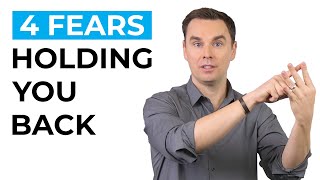
Brendon Burchard identifies four fears that stop people: rejection, ruin, regret, and responsibility. He walks through each one and how to move past it so you can actually take action on what matters.
If you've heard me talk about fears before, you know, I usually say that there's sort of three types of fear and those types of fear are usually oriented towards like loss. Like I'm scared I'm going to lose my identity, or I'm scared I'm going to lose my job, or I'm going to lose money, or I'm going to lose something. I also talk about the way that we think about fear. We're also scared of the hardship pains. You know, it's like, oh, it's going to be difficult or hard or, or I won't know how to do it or I'll look stupid or the outcome pains. And the outcome pains are well, if I do all that and it doesn't turn out well, well then, you know, what's that say about me? Or gosh, why would I wasted all that time? So usually when I think about fear, I kind of think about it in I guess, sort of three time periods. Like before I do the thing, I'm scared if I do that thing, I'm going to lose what I currently have. And then I think about, well, in the process of it, I'm scared I'm going to have some pain, it's going to be hardship and I'm scared after I do it, it won't turn out well. And I think that's where our minds usually are when we are consciously contemplating fear, right? If we sit down, we think about, okay, I'm going to do this thing and we're very conscious or aware, we sense that maybe I'll lose this, maybe that'd be hard, maybe it won't turn out well. But that's really the rationalized fears. I think there are also very impulsive fears that we have that often maybe underlie beneath the surface. The first one, which you know is the fear of rejection as a social species. Acceptance, validation, belonging is so built into our DNA. Like it's just who. It's like so important to us that doing anything that would risk us looking like a fool, that would make your family make fun of you, that would make somebody stop loving you or caring for you as much, or doing something where you would truly feel like you are now ostracized by people that you care about or care for, it's terrifying for people. It's funny though, when I sit down with a 40 year old and we're talking about their life and you know, they're secure at home and they're secure at work and things are going good, you know, so life is good, but they're trying to reach that next level. Sometimes we have to really ask, am I fearing rejection? Is that why I'm not at the next level? Please don't tell me that fear is not an issue in your life. And please don't tell me rejection is not. Because you were scared doing that thing, and this might not have been fully conscious. You were scared doing that fully thing, jumping in that goal, that dream. Somebody might say something to you they might hate on you on the Internet. Your neighbors might look at you funny if they don't already. You might have had somebody around kind of like you just knew their negativity would increase the more risk that you took, even though you knew those risks were really the next right actions of integrity for you. Right? That's what I'm always telling people. It's like when you're stuck and you don't know what to do, I always say, just take the next right action of integrity for you. Whatever that is, speak up for yourself. Take. Take that step, Move towards that dream. Whatever you gotta do, take that next right action of integrity. Well, for a lot of people, that's scary. When the spouse isn't gonna be supportive, when the boss is gonna say no, when the business is secure, but now you're gonna try something new that might risk your ROI or your cash flow. It's scary. It's scary. And what we all want so much is to be loved and validated and accepted and belong. Most people don't look at this one, so let's flip it on its head a little bit. Let's flip it on its head because we know it's a powerful driver for people, even if they're not fully aware of how much they really are doing. You know, when people read my book, the Motivation Manifesto, they're always like, man, I didn't realize how much I was doing to please other people. Because those who you might say, well, rejection's not an issue. And I'll go, well, are you a pleaser? Are you a people pleaser? Are you a someone who makes a lot of compromises in your life to help other people because you just feel like you need to do that. And they go, yeah. I said, do you ever please other people to the detriment of yourself? They go, yeah. I go, well, then you have rejection issues. If you can't say no, you have rejection issues. If you can't take risks, you have rejection issues. If you're trying to please everybody all the time at the cost of your own health, wealth, Joy, confidence in life. You have rejection issues. And so what to do? A couple simple recommendations. Number one, make sure you read at some point of your life the motivation manifesto. It will put a fire in you to stop being a people pleaser, and it will put you back onto marching the right path for yourself. And it will do it with some language that will absolutely put some fire under your belly. Second, though, let's flip the script a little bit here. If we know that human belonging, acceptance, and love is so important to us, but right now we are focused on a rejection or a concern what they might think if I say yes or no or don't do my thing, then. Then maybe we can flip it and say, oh, well, what would I have to do to gain the next level of love, connection, belonging, or validation in this group of people who I want to serve, who I want to care for, who I want to contribute to? Okay, Second, big point up here. Oh, my gosh, this is a big one. If you didn't take that big risk this year. I bet this one. Oh, I bet this one was rubbing on your brains and you're like, why didn't I do that thing? It's because we fear ruin. Ruin. The fear of complete and utter irreversibility of a negative consequence. That's what it is. It's that fear of just complete irreversibility of a negative consequence. And here's the thing. If you've ever found yourself like, I'm not gonna do that, because that could ruin us. You're in a ruined mindset versus a learning mindset. I tell people all the time who say, well, Brendan, you understand, I'm not scared of ruin. I'm just scared of being disappointed. And I said, no, you're just not into learning yet. You're not scared of disappointment. You're just not into learning yet. Because when you are into learning now, disappointment and ruin aren't even on the table anymore. Because everything is a test, everything is a data point. Everything is something to learn from, and everything is a jumping off point, not a cliff. I know a lot of people in the industry of entrepreneurialism or small business owners or people who want to be in that. And they go and they say, well, Brenda, I'm scared to start my own business because what do they say? I'll go broke. I'll face financial ruin. And I'm always like, you know what? No one ever hits financial ruin. They really don't. There is no financial can't come back from place, because every person can make a New dollar, right? And that new dollar is, that's one peg up and another new dollar, another new dollar. And I speak to this not flippantly to you. I went bankrupt in my life. Really, I mean full on bankruptcy. In the early part of my life when I first started my first business and I was trying to do teaching and training and online training and workshops, I didn't know what I was doing. Totally went bankrupt. And I never thought, this is forever. Oh my God. I was like, you know what? This sucks. Not what I want. So what's the next right action of integrity? Why is it important that I still show up and deliver with excellence? What will I do today? If there is tomorrow, there is no ruin. If there is tomorrow, there is no ruin. So what do you do? As soon as you start feeling yourself catastrophizing, Remember to ask yourself better questions and say, okay, not what I wanted. So what should I do today? Not what I wanted. What am I going to do tomorrow morning, tomorrow afternoon, tomorrow evening to start moving it forward to making that next dollar or that next right action of integrity to make that next call, that next email. There's always a next, right? Always a next. It's one of the great things, four letter words of all time, next, right? So ruin shouldn't be stopping you. Fear of ruin. You just have to know where that is because what you're doing is you're catastrophizing. And this is really important if you don't feel like you made big leaps this year. There was, you were scared, you were like, I'm going to jump off this cliff and take this action and I'm going to fall to my death. Ruin, death, destruction. Instead of saying, I'm going to jump off this cliff and I'm going to fly, baby, I don't know how and I might fall for a little bit, but I'm going to flap those wings at some point. I'm going to catch that wind. And here we go. Your expectancy was in the gutter versus in the air. You were looking down versus looking up. You were feeling down versus animating yourself so you felt better and that you moved further. So, my friends, be wary of the ruinous thoughts, those global catastrophizing, dead negative, forever things that you have. Soon as you hear it, you gotta flip it. Soon as you hear it, you gotta flip it. Third big idea in overcoming our fears is that fear of regret. Fear of regret is such, such a sort of, I would say it's like a stake in the ground that you're tied to, you know, when you just, you know, you want to go beyond a boundary, but this fear of regret stops you because you know, you don't, you don't want to regret taking an action because if you took an action and you rejected and you were ruinous and then you felt like, I knew I should have done that. Well, how doubly like doesn't this make everything else worse? Right? If you fear these things and they happen now you regret the action is 10 times worse. But that's what we keep doing. We 10 times our fears by going, well if I do it, I'll regret it. And so we gotta just like other things. We have to flip this a little bit and we have to go, oh, okay, well what if, what if I do positive things so that I don't have negative regrets versus saying well I don't want to do that because I would experience negative regret. Does that make sense? So what positive things can you do so you don't have regret versus fearing something and stopping so you don't have regret? Meaning most people use regret the wrong way. They use regret as a reason to not do something. I don't want to do that because I'll regret it versus I'm going to do those things so I don't have regret. Right? Many of you guys know my story from my car accident as a 19 year old kid. Part of the reason I live so courageously and boldly and I put myself out there so much all the time is because I don't want to get to the end of my life and say, you know what? I served half because I was scared. I don't get the end of my life and regret. Going through so many days not present. Going through so many days just going through the motions. Going through, going through so many days not engaged with my passions, my enthusiasms, my loves, my people. Like I don't want to be that guy who's rocking on the rocket chair saying I wish I woulda, shoulda, coulda at the end of my life. So I take positive daily actions to avoid that type of experience. Does it make sense? And then I would also say same thing with regret and ruin. They're really connected so closely in that we think, well, you know, I don't want to get to the end of my life. Wish I woulda, shoulda, coulda act like there's still not a tomorrow. The ideal of hope for a better tomorrow is one of the great deconstructors of fear. Because most of our fear is tied to There's a block there. Like, fear introduces like this black wall in front of us and we forget on the other side, there's all this open field of freedom. And we just keep thinking our fear, like, narrows our view so tightly that we forget that there's tomorrow. So people, their regrets are held so close. Like, I don't want to do that because I'll regret that and it'll be irrecoverable. And I'm just like, well, when you have a learning mindset, there's not much regret. Just like, I don't have a lot of disappointment. I also don't have a lot of regret because I was like, oh, I did that didn't work out. Darn it, okay. Shouldn't have done that. Learn, adjust behavior, right? A lot of people who struggle with concerns. And here's a tell if you're a person who, like, if regret is driving you, if this year you also felt a lot of guilt. Guilt is a great tell that you have a psychological propensity for the fear of regret. They're like twins. It's just like people who have lots of fear of regret also tend to have high psychological concern for guilt. Like, they're guilty, they feel guilty all the time. I feel guilty, I feel guilty, I feel guilty, I feel guilty. And so guess what? I don't wanna do anything else. Cause I'll regret it. Cause I already feel bad about myself, so why take an action? I feel so bad about myself, why take an action? And so their regret has become something that has stop them. Their guilt is something that adds on to that. And now they're immobilized because of high fear of regret and psychological guiltiness. And so what I tell people, I say, look, if you got a lot of guilt, there's the simplest ways out, right? The simplest ways out of guilt. I mean, I mean the path out of guilt starts at the path of forgiveness for yourself, for other people. And I also tell these people this. We think of forgiveness often as forgiveness of just ourselves, which you should do. I mean, you gotta let it go. You can't advance with all the baggage of self hate. You gotta let that stuff go. And so what I tell people is as much as we fear that like, I'm going to, you know, I'm going to regret and I have a lot of guilt and they don't let that go. And they think forgiveness is just about themselves and others, I also go, you know what? Forgive. Yesterday you weren't as wise or intentional or thoughtful as you could be today. And remember, that's the ideal of hope. I go, oh, I don't have to regret yesterday. I don't have to be guilty about yesterday, because you know what? I'm better today. I learned from that. I'm telling you, the learning mindset is the great release of fear, because as soon as you approach it, it's like, I'm going to learn through it and get better. Now the fear doesn't stop you anymore because you don't say, well, I'm stuck here, or stuck here, or this will happen forever. The forever goes away when you finally step into the realization that there is hope, there is a tomorrow. Because you know what? I think one side of regret would be to have lived your whole life with a bleak outlook. Because you'll get to the end and you go, I didn't appreciate it. I didn't appreciate all those days I had. I didn't appreciate all the second chances I had. Every time I woke up a new Monday morning, I didn't appreciate it. I missed the whole ride. You know, I stood in line for the ride of life the whole time. I never got on the ride. I was just a waiter, I was just a watcher. I was just. I never really engaged. That's real regret. And I can share with that because I've been there in hospices with people in the last weeks, hours, minutes of their life. And if there is regret, it's usually a lack of full engagement with life. I didn't really show up. I didn't appreciate what I had. So if you got a lot of regrets, you got to learn to forgive the guilt, forgive the bad days, and start appreciating today again. Because you know what? When you fall in love with the moment, when you fall in love with this opportunity you have, when you really appreciate the now, then there's not a lot of room for fear in that, right? In that deep feeling of appreciation. It's hard for fear to edge itself in. So let go of the regret concerns, my friend. There's a tomorrow, and it's gonna be amazing. Last piece, number four. This is what we really fear. Responsibility. We fear that we are actually very responsible for our lives. It's like that great Marianne Williamson quote you've ever heard, right? The thing we fear so much. She was basically saying. I don't remember the exact quote, but she was basically, that we're not so much afraid that we're inadequate. We're actually fearful of our full power. Because what would that really bring out in us? What would that say if we were fully responsible for the outcomes in our life. What would it say if we had more power than we were actualizing in life? That's scary. People are scared of responsibility. And in very tactical ways. Like if I said to you, hey, I'm going to make you responsible for, let's say you own a small business and I say, I'm going to make you responsible for 50 more employees and all of their mortgages. A lot of people, oh my God. Right? Total terror to be responsible for other people's lives, right? Or other people's mortgages or other people's whatevers. And so responsibility is scary to people, right? I mean, look at any, any great personal development teacher at the base of everything they teach is personal responsibility or what used to be called self reliance. That sense of personal power that says, I am in command of my life doesn't mean you're in command of everything that happens to you in life, but you are in command of your responses. And what we are scared of is that we won't show up as our best self to deal with those demands, right? We're scared of taking full responsibility for everything because what would that say about our lives? But I take full responsibility for everything in my life. It doesn't mean I believe I caused everything. That makes sense. So Law of Attraction, people, calm down. One second. Take a breather. I'm not saying you attracted cancer, babe. I'm not saying you attracted that mean person. I'm not saying you attracted the bankruptcy. A lot of that bad teaching early on in the days of the new Law of Attraction was just misguided because there's lots of things that happen to us that are cosmic, chaotic, weird things that we can't explain or we'll never be able to understand. It's things that we didn't attract. We didn't want to happen, and they happen. And it wasn't because you had bad character or you were a negative person or you'd done something bad. Look, bad things happen to good people. If you haven't read it, it's a great book. How Good People Deal with Bad Things. But I would also share with you that ultimately we are responsible for our responses. We are responsible for the people who we become. Maybe you didn't ask for that cancer. You are responsible for how you are going to deal with that. And for those who go, well, that's too flippant to say. I'm like, I just remind you, go back and read some Viktor Frankl man's Search for meaning. He said it Best. He said, the last of the human freedoms is the ability to choose one's own attitude. They can take away everything else, but they can't take away how you respond in mind. And when you know that that gives you great power and responsibility in life. And so when you feel like a victim, this is one of your great fears. You might not call it that, you might not recognize it. And I just go, oh, you're scared of responsibility. I say this to people all the time who say, brennan, I have a big dream. I go, have you told your family, your friends, the people around you what your big dream is? Well, no, I said, well, you're dealing with this and you're dealing with this. You're scared that by putting it out there, you won't be able to handle the pressure, you won't be able to handle the demands. That's scared of. That's fear of responsibility. I'm fearful that I won't be able to be response able to deal with the stuff. And I'm just like, there's a tomorrow you can learn. Like, I have extreme personal power because I have hope. I have extreme personal power because I have optimism for tomorrow. I have extreme personal power because I look at the areas of my life on a weekly basis and I say, where have I been stuck? Where am I fearful? What can I do this next week as the next right action of integrity? Everything we've talked about. Because here you flip all of these, watch what happens in your life, right? You flip rejection to doing the things that will bring greater connection in your life. Watch the quality of life go up. You stop worrying about what will be ruined and you start remembering that there's always a tomorrow and you have hope and optimism and you just always ask, okay, there's not ruin. What's my next right action of integrity? And you keep moving forward, even through the disasters of life. Watch the courage that enters your heart there. Watch the confidence that comes in when you keep moving through the storm. Guess what happens when regret is free? You let that go, you're gone. You're not worried about the regret of if I do this, maybe things will turn out bad. And you said, okay, what would I need to do so I don't experience regret at the end of my life? What positive actions could I take to live a life of my own so I don't have regret. So I'm praying, proud of my life. Because pride on the other side of regret feels good then responsibility. What would you say instead of saying, well, what if I can't handle it or what if I'm not responsible? You said, you know what? I'm totally responsible for this. I am able to shape this, guide this, change this, make it better. Now you're really stepping into your personal power. And when you move through these things on just a very tactical weekly basis, you're aware of these fears and you start flipping them. You start flipping them, you start flipping them, you start flipping them, you get in this rhythm and all of a sudden you say, wow, I feel really courageous in my life. And that's when you start making your greatest contributions. Hey y', all, I hope you enjoyed this episode. If you did, would you please smash that subscribe button and also post any questions you have down below? Because it's these questions that you're all asking that inspires these episodes. I'd love to hear what you think about it. Also, if you would love to join us on our next upcoming live training. We call it our High Performance Experience Coaching Program. If you like some coaching and have some perspective and get some two hours of Live with me every single month, then click the link in the post down below so you can join us in HPX Coaching. I'd love to give you some more strategies, more insight, and more interaction to help you reach your next level of success. Until next time. Again, please subscribe. Share this video with anybody who could be inspired by it today, and thanks one more time for being part of my community.










