Conversation with Matthew McConaughey
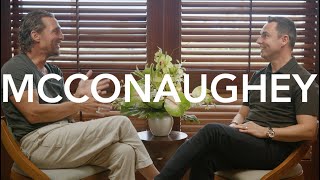
Brendon Burchard talks with Matthew McConaughey about self-improvement, leadership, and staying grounded amid fame. They discuss personal challenges, the role of humor and humility, and what it takes to build authentic relationships.
Hey, everybody, it's Bren Burchard, founder of Growth Day. And I just had the opportunity to sit down with Matthew McConaughey to have a wide ranging conversation about self improvement, his life, his book Green Lights, and his upcoming live free event called the Art of Living. The Art of living is happening April 24th with my friends Dean Graziosi and Tony Robbins and others that will really give you an inspirational look into how you can find what Matthew calls green lights in your life. You know, how do you find more of those times where you make the right decision, you speed on through? How do you recognize the yellow lights and the red lights of life so you make the right decisions and I know you're going to love that event. I had such a good time sitting down and having this conversation with Matthew. I know you'll Enjoy the interview plus the art of living. So go to growthday.com artofliving and with no further ado, please enjoy this conversation with Matthew McConaughey. That's good, right?
California dreaming.
Okay, so this morning, yeah, I'm out on the water. I got a coffee, I got an egg sandwich, and I'm watching this couple stroll by. Looks like they're on vacation. Guy goes out to the edge of the water, and there's like some coral or rocks or something out there. And I watch, I go, he's, he's. He's gonna step out, he's gonna stop out. And sure enough, he does. He steps out, steps on the first rock, just rips his ankle. Rips his ankle.
Looks back, oh, like this.
And looks at his wife, and he's like. And he kind of hobbles in, laughing at himself. And she's like, oh, why do you got to do that? What do you think it is about human behavior that we got to go to the edge and take that extra step? Because sometimes we take that extra step and you discover new worlds.
Yeah.
Other times, you take that extra step and you fall on your ass, rip your ankle out.
Yeah, we want to find out, Want to see what we can pull off as we growing up and even getting older, you have another means of doing it. To go, like, I did that when I was young. I'll do it again now. And then there comes a time where you go, the body isn't keeping up with the mind. It makes complete sense to me. How am I not making that look as easy as I did once before? I mean, to find out and to see if you can pull it off. Because you do. When you do pull it Off. Especially when the rule book or the world or the age group or the scenario says, beware, don't step on that rock. And then you go, I fit on those rocks. I grew up on those rocks. I'll do this rock. Then you pull it off. You're like, yeah, I am not the status quo. Yeah, I am not. No, we are not all created equal. I can handle these rocks. And I knew I could. And I think that's part of the enjoyment is that. And I would also say that I think that's part of. We all got to watch that. Because there is a lot of stuff the world tells us. Here's the lid, here's the roof. From this year to this year you do that, but after that you don't. And it's not a one size fits all program. So we like to go test it. And it feels really good when you're like, I knew I could. Now, when you're young, you get away with stuff out of ignorance.
Right.
You pull stuff off because you didn't know better.
Yeah.
Part of the challenge of getting older is you kind of know better, but you want to go see if you can pull it off.
Anyway, I think the guy knew. I think when he turned his ankle, he kind of went like this. Looked back at his spouse kind of like, yeah, I know I shouldn't have, but had to. I had to.
Well, he's got his action sequence for the day.
Yeah, that's right.
You know, he doesn't have to go to the gym. This even he had his action sequence this morning.
Because when I think of you and, and this is my assumption, but I see you as some of that go out beyond the outer limit. Okay. The boundary is here. This is what normal people might stop about. I'm going to go beyond. Oh, I have a dream to go to this place. I'm just going to go.
I'm going to go into this role.
That might be a little bit risky. It's like that willingness to go in a direction or in a place or step into something that maybe you don't know how it's going to go.
And.
And I think that a lot of people admire you for that, but also wonder, where does that adventure spirit come from? Not a lot of people. RV around the country and, you know, between movies.
Yeah.
So what gives the adventurous spirit that you seem to have, but maybe you even crave it.
Part of it is I do like to find out. Not finding out keeps me up at night more so than slipping on the rock and failing at What I tried to find out. The not finding out, the wondering what if? The damn it, I didn't open my mouth. The damn it. I didn't shut my mouth sometimes. Damn it. I didn't go find out. There was an opportunity and I hesitated. And just when I hesitated and said, well, maybe I will, it was too late. The not finding out keeps me up at night. Kind of always has the. The desire to pull things off. I do like to see if I can pull it off.
Yeah.
I'm still, to this day will, you know, out of the car instead of two bags of groceries, I'll try and get 1, 2, 3, 4, just to go up the steps. And I'm going to open the door with my foot and then I'm going to kick it back with my elbow. When I pull it off, I'm like, see that? I did it. One trip. Everyone said it was going to take three.
Yeah, I'd like to.
I like to pull stuff off.
Is it a nature of challenging yourself so you can see or proving yourself so you can show?
No, it always starts subjectively. I want to see if I can pull it off. Now as I'm starting to land the plane and pull it off, I might get objective and go, Everyone see, you know, want to get the approval, make sure the kid. Are we all watching pop out here or pulling that, you know. But as you all know, if you get in, that's. That's the third person. That's the jumbotron that we look at when we're running down the field, running from the kickback.
Right.
In a football game to score the touchdown.
Yeah.
That's when you get tackled. So the behavior is very subjective.
Yeah.
Selfishly, I want to see if I can do it. And it's not too close to the end. I don't want to. If I've done that too. Halfway through, oh, I'm pulling this off. Everyone check this out. Well, that's when I fumble the groceries.
Right.
You know what I mean? Make sure you kind of landed there, you've got the plane landed, or you're. You've almost got it pulled off before. You make sure everyone's watching to get approval. And I think, look, the other thing is this. Sometimes, like Mali, Africa, I won't tell the whole story, but add that story where I got challenged to a wrestling match by the village champion. My heartbeat started racing. In this ear was like, are you kidding me? No way.
Yeah.
In this ear was, are you kidding me? You got to find out, buddy. And as I said, this one's going, no, this one's going. It's at least going to be a great story. And I'm like, so. So I've done stuff or go, I don't know, man, but I'm going to find out. And at the very least, if I fall on my backside, it's at least going to be a good story.
Yes, yes.
And I've got a lot of stories that I like to tell and I love hearing stories from people. And it's not the ones where you pull it off that are fun. Some of the funnest ones are where you fell on your ass, but you tell the story and you're the brunt of the joke.
Yes.
And it's, you know, so a lot.
Of people can't do that, though. They have that fear of failure, especially people seeing them, because people's four primary fears. I teach, I'm fearful, I'm getting ruined. I'm rejected.
Okay.
I'm going to have regret or I'm going to have more responsibility than I can handle.
And that's cool.
Yeah.
And that rejection part of like, wow, you know, I'm so scared to be seen dropping the groceries or twisting my ankle or taking the role that I bomb and I don't win the award on, like, how do you get that? You know, I think we live in a culture right now where people can be tepid and they have the dream, but that courage to want to find out, it might even actually be there. Because a lot of people, man, you know, they got the vision boards, they got the journals, they got the dreams. But stepping out and being seen falling down, failing. You and I, we make a joke about it probably because where we come from and our parents a little bit. But how do you, like, let's say your children are coming up and they don't take that risk. They don't put themselves out.
I would say that that sense of humor of making a joke about it is part of what people that you fear rejection need to go. The ruining part is usually never what happens.
Right. Yeah.
That's catastrophe. That's like, it's going to be the. No, it's not.
Yeah.
When you. But when you do bust your ass doing, going after something and you give your best effort when you go down, those people that are so called rejecting you usually are on the sidelines for a reason with the whistle in their mouth, refereeing the thing. The ones that you kind of want to be with are usually right there next to you going, hey, hop, hop. I slipped on that Rock too.
Right.
So you got to pick your crowd. And I think this idea that, that I love chasing Unanimous. It's my favorite word, my favorite ambition, perfection, unit. I'm smart enough to know I ain't going to reach it.
Right.
It's impossible. So I think that wanting absolute unanimous approval, it's not happening. What's that? Sammy Davis Union. I don't know what success is, but I know what failure is. It's trying to please everybody.
Yes.
So the rejection part, I think is a part of going, no, that's gonna be part of it, bro. Let's just look at that as a mean of life.
Right.
Don't be surprised.
It happens.
It's not a debt. Don't look at it like a debit. No, the ruining would be a debit, but that's just us exaggerating the tragedy. That doesn't happen. As my buddy says, in Alabama, I've had thousands of crisis in my life and most of them never happened. You know what I mean? That's that ruining. No, it's not ruined. So usually what we think is going to be ruined is basically just a rejection.
Yeah.
And a rejection is we're looking at it eye to eye going, oh, this is part of life. Look, I suffer from this. When things are going well and I'm getting what I want and I'm succeeding, I have a tendency to think this is how life is supposed to. This is the mean. No, it's not. Enjoy that up there. Sort of. When I talk about the art of running downhill, you're running downhill, bro. Don't trip yourself. Because the inclines coming uphill will come. So don't think that this is just the mean. Because if you think that when everything's going perfectly, like, ta da, I got it, I found my frequency. It's so easy. I'll never get in a rut again. False. And then when you do, you think, oh, I failed, I'm ruined. You're like, no, you were exaggerating the realities of life. You were living like, you was heavy. Yeah. You were living in heaven on earth. But that wasn't sustainable forever.
Right.
Right. So when you fall, slip on the rock instead of going, oh, God, I failed you. I slipped in a rock. Part of the step, part of the step, part of the process. So where we go here and how quickly can we then go. I think that's a really good tool.
Yes.
I think sense of humor is undersold.
I love.
As a means of not denying.
Yeah.
Because I think that's what a Lot of people say, well what, you're laughing at that. So are you just brushing it over like it. No, I'm not brushing over. Take it seriously with it.
Yeah, Matthew, take it seriously. This was a fail. You should, you should. Why are you laughing? You should take this so seriously. This is your career, Matthew.
Yeah. Don't you understand if you did this over and over, you would be ruined. Well, I don't plan on doing it over and over. I'm not trying to make a habit of it. I saw the rock was mossy. I don't know why I stepped on the green one instead of the black one that wouldn't have moss on it, but I did and I slipped. I'm not, I'm going to go back and not try to step on the same thing. I'm not looking to fail.
Yeah.
When do you.
Can you remember a time where that became a conscious practice? So for example, when I was growing up, everybody in my peer group, we made fun of each other. We beat each other up. It was very blue collar. Beat yourselves up, make fun of everybody. But because we're all poor, we're in it together. There's a camaraderie in the, in making fun of each other. But there I remember I was probably in my early 20s where I learned to do that on purpose. I was like, you know what, if I don't have that self deprecating nature, life is going to hurt.
Yeah.
Did you, was there a time.
Well it was, it was ingrained in me and with my brothers in our family, our family was very much. If anyone was succeeded. I remember my brother Pat very fast. He'd win the hundred meter dash and he come home kicking his hair back. My mom would be like, you better get off your toes, boy. Quit walking around like the cock of the walk, you know and we, if anybody or if I showed up from Hollywood early and I was like. And they could see I had a little airs about me or a new certain attitude. My family is great at ripping you to the ground, slamming you to the ground until you cry uncle. And as soon as you cry uncle and go, yeah, you're right. Okay, okay. They hoist you up and make you your favorite cocktail and favorite meal and have you all around you and everyone laughs and you're back, man. And you're the belle of all.
Love it.
That was a practice early on. Now I do find that it took time and some tact. It does take tact with doing that with everybody because what tickled me I found bruised others.
You can cut them.
Yeah.
You know, feels like cutting stinging criticism.
To other people or what was a bruise for me. Broke their arm. Oh, geez. I'm not being insensitive, but. So you did. We did work up calluses in the right word, but we worked up some sort of resistance to being like, hey, don't take that. We're going to laugh this off. And I get back up and like. And it was always, let's go do it again. It was always, get back out there. And now you. Now we're going to tell you how much you've been kicking ass. Now we're going to tell you how great you ran that race. Now we're going to. But we didn't need you walking around like, I am the shit now.
Yeah.
You know what I mean? So we're going to whop. Bring you down. Humble you first, make you cry uncle and admit it. And then we're going to raise you higher than you were before.
Was there any part of that humility and humor that stopped what we would call in the high performance research, in my world of stop the integration of the wins, meaning you actually are succeeding and you are getting better, but there's a part of you like, I can't be on my toes, Mom. You know that part where you would be holding a sense of pride for achieving something?
Yeah.
But you. Maybe you feel like maybe I shouldn't hold that pride because you know I'm gonna get cut down. Or maybe I shouldn't hold that pride because you know what? I can't take myself too seriously. So you never gave yourself that internal strength. Does that ever happen?
Yes. Yes, did. Look, when I first went to Hollywood and succeeded. Time to kill. 1996.
Boom.
Big blockbuster hit on the star. How old are you? 23, I think.
Okay, 23.
Studio. I've been in movies before. They were. Had some form of success, but this was the first studio film where I was the guy. I understood what it was. And now all of a sudden, I can greenlight moves. All of a sudden I can do any script in town. It's a term, I think. Imposters, comics, whatever. I have imposter syndrome. Why me? Do I deserve this? Have I earned this? Oh, man, I don't. Man, all these people are. Boy, I love you. I love you. I love you, man. I only use that word with four people in my life. And this place is great, right? Or is everyone full of beer? I cannot. Ah. I can't tell. I didn't know how to handle it. But I did Do a sort. Now that you ask. A practice that I have practiced on. I removed myself from the situation. I went on a walkabout with a backpack in Peru for 22 days.
You want to know yourself versus the.
Accolades a little bit because that was one of the measurable things. I was getting praise from strangers, I was getting offers for career achievement from strangers. And I know knew it was based off that box office did really well. I understood that I could have given the same performance, which might have been good, but if the box office didn't it, I wouldn't have had that. So I was like, wait, there's a gap here. But I don't want to. Boo hoo. That box office hit really was help. And yes, you had something to do with that. But I wanted to. I needed to go to a place where no one knew my name, no one knew my fame, no one knew my celebrity, no one knew I had an $18 million opening weekend hit in a major studio blockbuster called Time to Kill. And I needed to go find a measurement again of I've just met you. You don't know who I am. I don't know who you are. But 22 days from now, when I leave, the tears that are falling from our face and the tears that are falling from your face when you hug and give me a say, Gracias, Mateo. And talk about the time we've had, it's all earned from the only from the man you met 22 days ago and what we've done and who I've met. And when I got that and gave that, I was like, I am responsible. Yeah, I'm, I'm wagging this. I had a lot to do. I've earned whatever this accolade going back into fame where, yeah, you get lucky and things came. But, oh, yeah, I'm not a voyeur on this.
Right.
The subject of this and give yourself some credit.
Oh, my gosh. We both have a lot of, you know, celebrity friends, I think in common. And I think one of the things they all struggle with is what we call in coaching. The ability to develop authentic relationships. Like the trust into that.
Like, you don't.
At some point, you have to trust in it. You have to believe it. You have to go, I can do that with or without movie, with or without book or vlog in my world. Like, oh, I can develop an authentic relationship with anybody. Anywhere I go, that's on me. That's my character. And when you have that, there's a different lock in of confidence.
I think you have to, though. Because what happens with fame is that all of a sudden you don't meet strangers anymore. Everyone has a bio on you, but you don't have a bio on them. So certain introductions and salutations and manners and graces are out the window. Someone comes up. I remember this two days after got famous, after time, someone came up and goes, oh, my God, I'm so sorry about Ms. Hud. I don't know this person. Number one. I go, how do they know that I have a dog?
Right?
How do they know she's named Ms. Hud? And how do they know she has cancer? We skipped three things, and we haven't even said, hi, my name is. Right? This is.
And this is before Green Lights. That's the only reason I know from the book, this interview. It's like, oh, okay, so this is before. This is.
Yeah, yeah. So it was. It was. It was shocking. And I'd be like, hi, my name is Matthew. Can we go back? I wasn't ready to just dive into no. But I knew because people say, no, I know you. I see your movies now. I've gotten, after decades of it, of going, yeah, well, let's pick up right there. Yeah, let's pick up right there. But to have authentic relationship, if you choose to, it does take an extra tact in the opening round, meaning, oh, my God, I love the movie. You did this. And Ms. Hud, good to hear. Ms. Hud survived that and everything to let them go. And then you go, hi, right? You got kids. You baseline, right? You baseline out of the fame and you come back and they go, huh? I remember I used to do that at Hollywood parties. Everyone's brown going in this and looking at nangalang. And I stop and I'd be, how's your family? And they go, well, what? It's a baseline.
Yes.
Bring it back into baseline. Now we can talk as two humans before a celebrity and a studio head. Yeah, maybe we can get there. But let's baseline this first.
So good.
Find a common value and something that we both have in our life that we had and have before we were ever in this business.
Right?
Yeah, Start there. Now we can find some authenticity. Now we can build currency in our relationship and even going forward, if we do work together.
Yeah.
And I go make your movie that you're financing at Warner Brothers. Now we remember that baseline and we check back in on it. There's a sobriety that I think is important.
Right.
Or, you know, literally, we teach the exact same thing to executives. So you're in a power dynamic.
Right, Right.
And you got that new employee coming in it. It's like when there's a power dynamic and they're kind of. There's this presupposition of who you are, and you can open gates for them, you can open career ladder for them, you can help them with their entrepreneurial endeavor. And so you have to understand when you're in that position, if you're the boss or you're the mentor or the person more senior in the company or in that kind of entrepreneurial endeavor, you kind of meet them where they're at, and you have to bring out the humanity in people because. Because otherwise you're just going, can you help me? And there's no real connection there.
I hear you. I got. I'm a CEO to many people and employees, and I know and have been told that I can be better at the simple thank yous. Again. Remember I told you, thinking that when everything's going well, that's the mean.
Yeah.
When people are doing a good job, I can be like, duh, that's part of it. Where we roll. You know what I mean? But it's true. To get some. To get people to invest and find meaning and want to not only pull it off themselves, but want to go, I want to please you, man. I want to do this. And where you go, yes, I got to watch going, I need to do more thank yous. Pointing out what you did. Well, that I may go, that's just how we do it. But point, point it out. Go. You know, this is what I. You know this. But this is what I love about it. And I just want to say I recognize it. That goes a long way.
Yes.
And it's efficient. Now, on the other hand, some CEOs, you have large staff, you have thousands. Oh, my gosh. You think, how am I going to have time to every conversation, find a baseline, a common. And I mean, I got eight meetings this morning, and I'm still in the first one. And it's lunchtime. We're grooving here. But I got. I need more than 24 hours in a day.
Yeah.
How do you do it? I've seen people do it that are very deft at doing it. And it is easier than I think I probably think it is, or I practice it. It's easier to do.
Yeah.
But it's a real art to be able to do it. Because, look, I had an agent once.
Who.
Never once told me he had to get off the call.
Wow.
But had an art And I know he must have been doing it like quite a few minutes before he needed.
To get off the call of landing.
The conversations plane to where it would seamlessly end. And it was time to go just in time for his one o'.
Clock.
I don't know how he did it because it was seamless and I just always applauded it. And I would always go, man, you, you've never said I got to go on the phone with me one time. But you always get off right on time for whatever. You got it.
This is my job as a coach. There's 60 minute sessions and I've been doing it every week for 17 years. I got in the call, but I can't say, you know, this story about your husband, you know, really great. But, you know, I gotta.
Yeah.
You know, there has to be.
And you can't be sitting there talking, going.
Right.
Cause the person. Yeah.
And I think that is the fluidity in that relationship with somebody, whether more positional power to make it feel like an elegant relationship. There's a flow there. I think you're well known for this. It's like you have a flow with people, you make them feel connected.
And do I stop and take the time with every single person that comes up to me, stranger in the airport? No. I have certain measurements of how sincere do I think they are. Will I spend more time with someone who comes up and goes kind of, hey, I love this. Well, I spend more time with them than if someone comes up and goes, aren't you that famous person?
Yeah.
I already know. What, you're not really necessarily a fan of me.
Yeah.
Someone told you that guy's famous. And you. I'm not going to spend as much time with that person because off the bat I'm like, it's kind of insincere you're not coming to me for me.
Yeah.
Now that person does. I'm a fan of yours because of this book. I've had people stop me, put two hands on my shoulders and make sure I'm not going anywhere and going, Matthew Conway, your book, man. It did for me and my life. Thank you. And they were not asking permission to put their hands on my shoulders, turn me around. And I'm like, badass, man.
Yeah, cool.
I'm there taking, take, taking the time. And it's. And I've also been susceptible to the other side. We've all tried to handle it gracefully and it got the leak went. And all of a sudden, you know, I've missed my own birthday party because I got hung up talking to acquaintances that weren't even invited to the birthday party.
Right.
You know what I mean? We got to watch that, too.
Yes.
I got a friend who says this. Look, sometimes I have to be what's considered rude to strangers or acquaintances and say, I gotta go, because if I spend too much time with them, I'm being rude to my family or my. Or my employees.
Right.
And there's a. There's a conscious thing that happens as an adult when you hit maturity where you realize it's actually not your responsibility to make everybody feel comfortable.
Right.
I remember I got that feeling probably it was until my 30s, and I'd already had, you know, all these dozens of employees, and I was like, I can't. I'm one guy. I can't make everybody feel comfortable. And it's not my job either. Part of their challenge and their maturity is getting comfortable with me.
Right.
Part of their challenge is managing their own emotional regulation, not looking to me aspirationally that I will do it for them.
Right.
And that's hard when it's a celebrity thing or that's hard when it's the boss thing.
But.
But I also, you know, I tell a lot of my. A lot of my, you know, my audience are. They're the strivers, they're achievers. So they're also people pleasers.
Yeah.
And I have to say, you know, you're not responsible for the train wrecks in everybody's life.
Right.
Because we want to fix or we want to cajole or we want to help or we want to serve. And by the way, we have to do that. That's, I think, part of living a meaningful life. At the same time, we just can't do it for everybody. So I think it's a delicate balance, and I think you probably have to walk it even more as a tightrope than most people.
And although it can feel our ego to have someone initially living through us, it's ultimately a disservice to them to keep them in service to them and yourself to keep them on that train, because it's one you can't. You. You end up not being able to sustain. Yeah, but relationships, marriages.
Yeah.
Children, fathers, mothers, business. It can feel an ego that goes like, yeah, they're, you know, they wouldn't be where they are without me. They have to have my approval to do what they do. But that'll run you dry, number one. But then also, it'll be a disservice to them because they're just playing the loop, going through, channeling through you to get all of their sense of achievement or significance or approval. And ultimately, that's not sustainable even in the greatest marriage.
Right.
You know what I mean? Much, much less an employee, CEO relationship, it's doing a disservice to the person. There's a place we have to go. Kids, do what you can for 18 years.
Right.
And then you got to go. Go.
Yeah.
You know, if you hadn't learned yet, I don't know, I hope we did well enough that you can go navigate.
I think one of the great things a leader has to say at some point with their people is, hey, I need you to get comfortable being here and comfortable in the discomfort.
Right.
And. And that's your next level of growth. And it's kind of like, you know, Jordan had to say to people as he continued playing, hey, I need you to get comfortable with me on the court. I need you to be here on court with me. And you might have probably had this with some, you know, you know, fellow actors who you had to say, hey, I need you in the scene. Not seeing me as McConaughey, but I need you here. You know, I need.
Yeah, well, yeah. And I. And I've had to break that down, too. And that's through my behavior in the first few days. It's also when that talk, if I'm in a scene with someone and I can tell that person's kind of maybe enamored and they're not in present because they're seeing Matthew McConaughey instead of the character, or they're seeing a famous person instead of the character, they may say something where I hear they're impressed with the fame, and I'll just undercut it and swoop under it and change the subject back to, you know, when I tell you what. What's really cool is we're now we're here. So to get them again, ground them, ground them back to where we baseline. That's going to. We can do the best work in this scene is not. We're not going to do the best work in this scene. If you're overly impressed with me, we both have to be involved. That's what I mean. In the book, by less impressed, more involved.
Yes.
If I'm impressed to be here talking to you, or you're overly impressed to be here, talk to me, you're not going to be as involved in the conversation.
Yes.
If I'm holding you in a reverence, that is. Or you're holding me in a reverence I can have high respect. But over reverential. Too reverential. I'm just lobbing softballs or coming in and going, oh, that was great. I'm just waxing the car and you're just waxing it. Like, they didn't really have a conversation. We all had those, and they're surface and like, it's okay for a piece of entertainment, but was it. Did anything really happen?
Did we find something?
Yeah, Better, more informed, more educated. Usually not.
I love that line psychologically, of less impressed, more involved. You know what? When you're thinking about that and you're diving in, how do you find that presence? Because it's very easy. I like the metaphor you're using before. Like, hey, I'm riding up here, right. I'm on the success wave right now. I can kind of ride above it all and not get into the dirt of the moment. Not find mindfulness, not find groundedness. Like, what is your personal practice to go, hey, I need to get real again. I need to get my feet in the dirt, Be here. How do you. How do you do it?
Trusting that, that, that. Don't get that unless you do that. Got it. You don't get. I know I can go back and connect the dots of when I've done the best work or had the greatest successes or got the most of what I wanted. Oh, it's not because I was down here going, no, I only want to talk about being up there. It was like, no, I did the. I was present in, involved in the doing and the behavior of doing the thing in a relationship, in a job, whatever that is of the doing. And either that took me right there or uses a succession of. Yet you're president again. Jesus showed up again. Jesus did it again. You do that, there is an ascension. It's not a flat line.
Yeah.
And that ascension leads to that place.
Where you're like.
Rolling man in a Land Cruiser, man. Feet are barely off the ground. Okay. But when it's time to go to work, learn that in Hollywood, one of the first things. Make it about the work. I don't care how famous you get. Always about the work. If you go back to the work, if you go back to the script, you can't go wrong. You can't do that too much.
Nice.
You can't go like, oh, I'm too into the scene. There's no such thing. We could do this for a year and you still could go further. You know what I mean? So trusting that that is what gets you there.
How do you do that in relationships. So, like marriage, it's like, okay, everyone's quite impressed with themselves, their marriage. But to get more engaged when this person's upset, to get more engaged when this person isn't feeling it. They're not in the Land Cruiser, but you are. How does that work? Because I think a big piece of personal development is learning to be present with people when they're actually not on the vibe.
Yeah. And you're like, how can you not be on the buy? There's room. It's not crowded. We got look around us. You know, sometimes it's like baseline on gratitude. Let's look around at what we got. No, it's not perfect, but let's look around. We root for each other. We love each other. I'm essentially the same man you fell in love with. You're essentially the same woman I fell in love with. But that's also can be surface because you can look around and go, what are we talking about? Meaningfulness and connective. You can look around and have all the things that you're like, how am I not happy? How am I not up here riding on the plane? Intellectually, you're like, I should be. But that's not the answer of, oh, no, I really am. So look, I'm. And I'm still learning this. And Camilla and I have been, you know, had a really good marriage now for relationship with three kids and married, I think, 14 years. And we. It takes. It takes maintenance. But we want to do more. We're trying to do more than just maintain.
Right.
We're trying to thrive. And part of that is I got to be patient. She's got to be patient with. Yeah. I'm essentially the same man. You're essentially the same woman. But I'm evolving on my own here.
Yes.
And I'm trying out new things because I didn't want to stay right there in my comfort zone. And in doing that. Oh, I slipped on that rock.
Yeah.
And if we just stayed over here doing. We were doing. Wouldn't have slipped.
Right.
But I had to go trying something out, and all of a sudden it's uncomfortable. I failed. I didn't get the result I wanted. Or, you know, someone comes up and something goes on with the health, physical, mental, spiritual health. And you're like, man, I'm feeling so connected to God or my spirit right now, and I'm feeling so grounded. And you're looking for an anchor now what things maybe we need to start practicing doing together more. Can I have. Can we. If we're the one rolling. Can we have the courage, I guess is the best word, maybe to go. I'm going to experience this with my partner who's lagging behind on this right now. I'm not going to judge them on that. Or go, nana, nana, boo, boo. Why are you so far behind? Because I'm not. We're not mature enough. We're not playing score anymore. It's like, who's doing better and who's doing work? We're past that if we're in a relationship. Right. Yeah, but how do we go? Let's do it together. And can I still get. Can some of my self significance not now come through? Seeing you get your own. And how is that. And that. That service, maybe to you or your service to me actually does serve me and does serve you. Tough thing to trust.
Really tough.
Because I know I got to watch men. When I'm rolling or feeling really strong, I kind of want to be the only one in the wheel. You know what I mean? And I'm like, this is great. Does everyone want to ride? And somebody like, no, I'd like to drive a little bit. You're like, right now? Or I ha. This road.
Yeah.
I don't like this town, and I don't want to be in the left lane going so fast. Can we just pull over and kind of sightsee?
Yeah.
Because I told you 10 miles ago. You're not listening yet.
We're making great time. This is awesome. And I love driving. Well, great. What are we in a rush for? I'm. You're going to. You love driving. We're going to get there in the best time ever. You're going to win. But can we just pull over and sightsee? And can we see that there's a victory in that, too? That someone else may have another measurement of what they're calling their victory.
Yeah.
You know what they're calling what to win for them.
That's good. Their win is different and their experience is different. Their emotion is different. Learning to tune in, ask the question in advance, you know, acknowledge and praise. But also just meeting someone where they're.
At is so hard.
Yeah. Yeah.
It's a good one. When you're dealing with now, like you're processing a hard time.
Yeah.
Like in the book you talk about, hey, you took this break from what people knew. McConaughey as, you know, going to take a break from romcoms or whatever, types of films and roles, and then you're facing, you know, the silence and you're Facing the desert and you're wondering what's going on and the finances aren't the same anymore. When you are processing difficulty, processing tough choices, what are you saying to yourself to survive that? Because I know you had support in your marriage. You were talking about that in the book. But like what's that internal dialogue? Because I think when people are in hardship, actually I think a lot of people right now, they're discouraged. You know, they've tried to pivot their career, their life, they're uncertain, they're feeling doubtful. I mean it's time right now to process it's difficulty, it's hard, there's some hardship. What do you say to yourself? What's that self talk that you think helps you?
This too shall pass. That doesn't mean be complacent, that doesn't mean leave it up to fate. That actually means yeah, it will pass. But I could also got a chance of getting out of here healthier and more constructively and sooner if I put my hands on the wheel as well and take some agency to start one step at a time, especially coming out of what we've been coming at. So a lot of people were rolling and then interrupted by Covid disruption and for four years are now, ah yes. And they want to come back in. They want to go right back to.
Where they were going.
Oh geez, I can't operate right back on the freeway where I was or right back in the left lane. I got to take some steps. And so it takes a lot of patience with self constructive patience. When I'm getting, when it's overwhelming to me. I do tell myself it's going to this, this is going to pass. This is a blip in time in the big picture. This is. It sounds monstrous to me right now. I feel like the world's revolving around me. This is a specific problem of mine that nobody else has. And woe be babe. And I'm like what I usually did. I go, you're gonna die one day, bro. And then all of a sudden that relaxes me in a way where I'm like, ah, now I can start dealing with this better.
Because how he's the best perspective checker.
It's such a good one that we run from it. But I do think that projection to there is a really healthy project.
I do it all the time. That's.
It's really great.
Yeah.
You know, and to go, so what's this? So this mortal sweat I'm breaking. What's the big deal? You know what I mean? So and it helps me deal more. And in the problem, that is the. You think maybe ruin turns into something more realistic, like just an honest rejection. It brings it down to. Brings it down to size. To be able to navigate it better and to be able to process, figure out how to get through it better. It does help with perspective. Perspective. I also, again, going back to what I was saying earlier, if I'm in a troubled time, some of my amnesty mental think is a little. What I was saying earlier of.
It'S.
Gonna be a good story one day. Not yet. Yeah, one day I trust that I'll look back on this and go, remember.
That I love that.
And just, yes. With the wry smile to myself, just trust that, bro. Trust that. Now some of people may be going, you still hadn't said, how the hell do you get out of it? I'm talking about just how to cope with dealing and not be paralyzed by the mounting pressure that the dire need or this is it, or else. Because again, very seldom is it really ruined.
Right?
It's often rejection, but very seldom is it the ruin. So I don't let myself get into that.
And I think the regret will come up if you don't engage it.
Find out.
If you don't find out.
And then. And then the beautiful thing can happen, though. And it happened to me in that year in Australia that I had with the very odd family where I was mentally going insane and imploding. About eight months into that, I lost my grease. My differential was split, really. About eight months into it, though, of writing 14 page letters to myself and returning letters to myself. There were 16 pages in very small writing with long run on sentences and way too many adjectives and adverbs.
You were young, you got why.
Yeah, but I was going through. I was imploding.
Was it. Were you imploding because the way they, the way they treated you or because you sensed something was false and off? I mean, it could be both, but.
I had no identity, I had no judgment. Everything that was happening to me, I kept chalking it up to a cultural difference. Oh, maybe that's something I need. Maybe I need to. Maybe that's me when.
Oh, I felt like you weren't fitting in.
Right.
So in hindsight, I look back and I'll go like, bullshit, man, that was them. But I didn't know it then. But at eight months into that. And then similar thing happened when I took the two years off for the rom com. There came about after about a year and a half of that, and then after eight Months of the year in Australia, I started to get a little bit of pride in my endurance. I started to, like, get some identity in the fact that I was on this pilgrimage of penance.
Yes.
And there was like, oh, I kind of feel like the longer this goes on, the bigger the rewards going to be.
On the other side, the strength through the struggle starts developing.
Going like, I'm building some calluses, man. I'm building strength. I got no one to rely on but me, and I don't even know who the hell I am right now, but I know that's all I can rely on. Even that turned into where all of a sudden I started to gain a little steam. And it wasn't like I didn't want it to end. It was like, oh, I want this to end tomorrow, please. But if it doesn't, I'm getting stronger now because I've endured better story.
Yes.
It's a great chapter in the book.
But I'll be living a better story because of this happened to me. And that's. That's what I mean. Probably the coup de gras of this.
Yeah.
Trusting that this penance I am going through, it's got a gift in it. I don't think that's delusional optimism. It damn well got a gift in it. And if it goes on for long enough, it's really got a gift in it.
Yes.
That gift may be realized next week, next year, 20 years from now. It may be realized after we leave this life and our kids or their kids, kids, kids, kids, kids, kids. Realize a gift from a great pain and crisis that went. That we happened in our life. So if we can expand our timeline and even go beyond. Oh, get on our deathbed. Gifts can come generationally in other people's lives of pain and crisis we go through. And I trust that. Not 100%, clearly all the time, but I go back to that often and go, this is hard, but trust, there's a gift here. You're given a green light somewhere to somebody, either by the pain and stress that you're going through, Someone will learn something from it. What you lost will pay someone else back later.
Yeah, I love the extending the timeline. Yeah, that's good. Because the sacrifice you're feeling now, the struggle you're feeling now, the payoff may or may not be for you, but it might be for something down the line that you didn't even see for that grandkid or that future.
Yeah.
We have this phrase in my work called honor the struggle. So when you're struggle. You honor it. Honor it means you acknowledge it. Okay, this is real. This is front of me, and I'm going to honor it by engaging it. Not making the problem bigger than the personhood, but saying, okay, can the person handle this problem? Can I engage this little bit? Because a struggle is going to strengthen me. It's going to teach me new skill. It's going to make me better, even if I don't know why or how or when. But I'm going to honor the struggle as it's real. It's put in front of me. He might have a plan. I don't know why he gets.
Son of a bitch.
He put this mountain in front of me. I didn't even. I wasn't even out for a hike. God, I didn't want to hike.
But you put a mountain here.
It's like.
Or I created it myself. And I go back in time and see exactly where I created.
Yeah, yeah.
Honored that reality that this is a thing you've got to deal with thing. And if you deal with the thing now, you develop strength. It's same like, you know, I work with a lot of elite military and they say the same thing, embrace the suck.
Right, Right.
You know, if you. The suck is there, if you embrace it, you get stronger through it. If you don't, you're. You're in the battle route.
Look, I. I've got a friend who looks for chaos, crisis because, oh, then he feels alive. Talk about. You talked about aliveness and connectivity and meaningfulness. I'm not, I don't go that far. I'm not that far where I'm looking for trouble or looking for a problem just so I can solve it. But I'm also curious if you go to that extent. And my mom's got a little bit of this. She can handle that stuff so well that actually when things are going smooth or everything's too Kumbaya, let me see if I can break too much in order. She'll break it just right. And you're like, jay, you know, but you saw my book. My mom's like that. She likes life, the tidal waves of life. I'm like, that's you mom. I like a little more of a river with some streams and some rapids. You know what I mean? And so I've seen, you know, that's the other extreme there of going and absolutely loving chaos. But the one I think you're talking about, that most of us have to deal with the majority of is the. Is the previous one, the one on The. On the. On the first half of. Oh, this problem is bigger than me. Oh, I can't handle it. Why me? I'll never get out of this. And that leans into that being victimized.
Yeah.
And I. But I do think that just that simple math of going, we're all victims. Victims have no. I don't know, but a couple things already today they can go my way. Was that you could say, okay, yep, you were victim. That or that was done unto you. And it isn't ideal. It isn't how you wanted it. It wasn't what you expected. I mean, life's just too random. Not for us not to all be victims of sin, but doesn't mean you got to make it a capital V, Right. I mean, you got to put it in bold print and go, oh my God. You know, it's like some of, some of these. When I talk about, in the book of one about yellow light, there's a choice. That's the life choice is at the yellow light. Yellow light to the most. Like life, you got two choices. Yes, green, go, red, stop. But yellow, you can either heed the caution and slow down and gear down because hopefully you kind of need to do a little inventory. But just as important of a choice is going, I'm putting a pedal to metal man blowing this thing. I'm not going to give credit to the crisis.
Yeah.
I'm not going to let myself be victimized. If I stop there, I might be start to wallow. I'm not giving that caution cred. So sometimes it's just blowing the yellow light and going, no, no, no, I'm not. That wasn't. That wasn't a problem.
Yeah.
Again, I've had thousand crisis in my life. Most of them never happened. That's very true.
Right.
You know, so don't give, don't acknowledge some of these ones.
Yeah.
The question is, are you. I think we have to ask ourselves, are we. Are we progressing through life struggles through life, circumstances, unfairnesses, challenges. It's like we are going it. And then, you know, if things are going really great and you keep breaking it because there's chaos that you want, that you thrive on. Sometimes that comes from competence. Like, oh, I'm just good at managing that. I need that. I need that edge.
Yeah.
You know, a lot of sports speakers do this.
Yeah.
They have to create chaos because they're so good with the edge.
Create the resistance to get overcome the obstacle.
But there's a difference. If you need chaos, it's usually maladaptive.
What's maladaptive.
It means it's coming from a place where you're trying to wreck things because something else isn't quite right. Okay, but if you need challenge now, that can be conscious.
Right.
I can choose to make things more difficult and progressively lift up to the challenge. I can make things challenging in my life without wrecking everybody else's.
Right, right, right, right.
So there's responsible levels of challenge that you are getting better, you're getting more competence, you're contributing better, you're doing your art better, you're becoming a master worker. Whatever you're doing and you keep leveling it up. And leveling it up consciously means you're not blowing up your life and everybody else's life. If you just keep blowing up everybody's life because you need that chaos, then it's a little bit maladaptive is what they would say in the coaching world.
You know, without label, there's a, there's a, there's a. You got to be considerate with the consequences. Yeah. Because I know I do plenty of stuff. I'm like, I'll be able to handle that. As I said earlier, what tickles me may bruise you, but I need to measure well, that's gonna have repercussions on other people in my life.
Yeah.
High performance, literally the way we define it in the research was it means you achieve long term success while maintaining well being and healthy relationships. It means you achieve over the long term and you don't wreck your health and you don't wreck relationships on a consistent basis. Because if you do that, you'll underperform.
In the end and you just revolving, evolving.
Yeah. Yeah.
I love, I love green lights. I love the concept of what you're doing. I'm really excited you're like going so strongly into allowing yourself some of that, you know, prescriptive like, hey, you know, here's ways to deal with. Here's, here's, here's the art of living from my perspective. And so, you know, I want to make sure to give a shout out to Dean and Tony and this whole crew that you're working on with doing the art of living and you have this upcoming, you know, live event. How did you end up kind of getting into that where you're like, okay, I got this book.
Yeah.
And now you have this live event and this opportunity to share more of your philosophy, which is courageous and a risk. So I'm wondering what your process was to say, I want to teach more.
I was asked to have a singular person by thousands of readers were going, okay, man, I love the approach in your book, and it's helped me here and here, but I wish. Could I. Could you get more. Could you get more granular with me? I'm finding green lights in my life, but, oh, I'm not sure which ones to trust. Yellow lights, man. It seems like sometimes it was easy for you to know when to slow down or push the pedal to the metal. Was it easy? Because that decision's got me going. Well, I'm not sure, man. Do I put the pedal, the metal and blow it or do I slow down? And then this stuff you talk about red lights like there's a gift in the red light. What?
How?
So I got asked the. And asked, can you go. Can you go into that more?
Love it.
Simultaneously, Dean and Tony come to me and say, look, we're fans of the book and the approach. Would you be interested in getting more prescriptive in showing how it could be more granular and the tool that. How to. How to get into how to tool. The tools for catching green lights, the tools for navigating yellow and red lights, and the tools for choosing what to do at the yellow light. And I was like, yeah, just. This has gotten more grounded. And this sounds like. This sounds like a way that I can personally share with people. Ways they go, oh, no, I see how I can use that in my life this afternoon with this decision.
Yes.
So we're to be off. We're going to be getting under the hood, talking about the process of how to create green lights, process of how to. How to navigate a red light, process of making the right choice at the yellow light in ways that were more of an approach of looking at it in the book.
That's great.
So what we're doing on 24th is we're going to get under the hood of the process to try to make it more practical for people to understand in their own lives.
I love that.
I love that. There's that move from almost like a memoir and here's my stories of how I dealt with it to, hey, we're all dealing with these things in our life. Here's some thinking tools that you can to.
How to process that so you can do.
Yeah.
With it. With whatever it is going on in your own life.
I'm excited to see you doing that. Something that uniquely happens after you've written a book. And I wonder if you get.
Yeah, I got pulled in. I got pulled into it. I mean, I had. I mean, I'm working on stuff now That's a different book. But, but, but I was just, I just, I got, I got asked and I kept getting asked.
Yeah.
And the questions became consistent.
Yeah.
And I was getting pulled in to go, can we go a level deeper into leaving more of the pragmatic in the process of this? And then just after that is when Dean and Tony reached out and I was like, you read my mail? Yes, let's do this. And so we worked, got some great people. Go on the 24th, 9am Pacific, and we're going to, for four or five hours, do this.
I love it. I love it. You know what I love is that story you were telling about person who had to come up and grab you and go, your book changed my life. I don't think anything does it more than a book. My agent used to say, he says, people watch your video, they'll watch your movie, they'll watch your course, they'll watch your documentary, they'll listen to your podcast, they'll do that. But a book, they take you to bed with them. It's like you're in their brain for four to seven hours.
It's a different kind of investment.
Different kind. And so, I mean, I think I've got 30 online courses and, you know, all these videos. But the number one thing I always get feedback is the books. It's always. It's a different relationship. And I was excited when you came out with your book because when I read Greenlights, I was like, oh, I have a different relationship of who I assume this person to be. But also, there's so much value and gold in this. I'm excited to see you take the next level and be online. And of course, everyone watching, there's a link in this video that you can click on to join free on April 24th.
That's right. That's the other thing. It's free.
It's free.
It's pretty cool.
Yeah, that's really cool. It's just reaching a lot of people with a message that is needed right now. I love to ask this last question that is important to me personally. You know, I got into self improvement because of car accident. And that car accident kind of taught me. I didn't know who I was and I didn't know what I wanted of life. And I kind of learned that my mortality was going to be defined by the questions I asked of my life at the end because I had to face my life. So it's like, did I really live my life? Did I really love others? Did I matter? And so Part of my mantra became these three words of live, love and matter. And you know, it's, you know, 24 years on my wrist now. Do you have like words that you try to live into that you try to grow into? Some people would say it's like the words that you'd have on tombstone or it's the words that kind of guide your intention each day. Is it a set of words, is it a set of thoughts that you feel like, hey, that's really kind of how I'm, I'm trying to be that guy or live that kind of life or these words are important to me. We call them the three words in my world. Is there three that you would say are relevant?
I mean, I love unpacking all kinds of lyrics, bumper stickers and one liners. But the one that's been with me since it came to me right after my father passed away, that has always passed the stress test no matter what situation is just keep living. Just keep living at the end of it. What else are we going to do now? Can that mean daily make the most life affirming choices? Yeah, it can mean that. Can it mean to the agoraphobic to get out of the house, man, go across the street, go get the mail? That might be just keep living. Can it mean to the 18 year old extrovert who loves to party and is a social animal to maybe stay home one Thursday night and read a book? Yeah, maybe that's it for that person. And then on a spiritual level, you're not gone after you leave this life. My dad passed away, he was physically gone. That's what just keep living came from. Because I tried to maintain a relationship with him and live in, to become the man that he was, taught me to be, to honor his moving on from this life so to keep him immortal. So that finish line being which is a long way to project what's our eulogy, what's the deathbed? We can even, just even go, what if we go a couple generations past it? How far can we go past it to go? Those lessons, those gifts can come even later. I can be honoring will my children honor me after I'm left this life through what hopefully I'm teaching them, they're learning from me and their mother now in our household. I want to be around and hopefully see his. It'll make me very proud and honored to see him go in this life, to be alive in this life and see him go. Become individuals and see who they are in character and success of who they're how they live, how they treat people and treat themselves and go.
That'S.
I think we had something to do with that, honey. And then for them one day to come back and go.
Thank you.
What an opportunity. Just keep living.
Yeah.
Everybody watching the Art of Living Matthew McConaughey, Dean Graziosi, Tony Robbins April 24th it's free link in this video. Make sure you watch it and join McConaughey. Just keep living. Good.
Enjoy that. All right.
I hope you enjoyed that conversation with Me and Matthew McConaughey. And do yourself a favor, go to growthday.com artofliven or click the link in this description of this video to attend for free. It's April 24th. It's Matthew McConaughey and my friends Dean Graziosi and Tony Robbins really laying out a plan for how you can take some concepts that Matthew shares in both his book Green Lights and some of the concepts we covered in this interview today. It's a free live event with millions of people registered. You can go to growthday.comartofliven to attend. Free. Again, that link is in the description of this video. I hope you enjoyed this conversation if you did, share with somebody today and I'll see you in Growth Day soon.










