Lost Your Edge? How to Reclaim Your Peak Performance NOW!
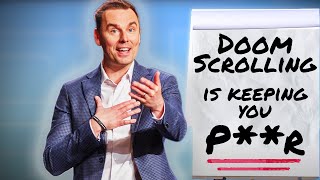
Brendon Burchard explains how social media and distractions erode your performance edge. He argues that reclaiming focus and clarity is the key to getting back to your peak.
If you have an hour a day on consuming social media, do the math with me. One hour a day, seven days a week. How many hours a week? Seven hours a week. Gone. Well, guess what? That's a work day. A week. How many weeks in a year? 52. So you lost 52 weeks, work days. That's a month and a half a year. That's a month and a half. How do you get so much done? I got a month and a half more than most people. For those who don't know, you know, I've had 3 million people take my online courses. I have 10 million followers across our brands on social media. I mean, we get input, like a lot of input. The inbound that we receive is. Is intense. And I'm always looking thematically for what are people struggling with. And if I could make a theme just for this group, I won't do it tomorrow. But just for this group right now is you gotta get your performance edge back. You have to. This is what we've lost. Everyone's like, what did we lose since the pandemic? What's going on in our offices and our buildings? I'm like, people lost the performance edge. That part of us that has that hunger and that drive, but also the that willingness and almost that where you look struggle in the eye and you kind of smile at it. Right now, as you know, everyone looks struggle in the eye and they complain about it. They're gonna go tell their neighbor, their friends, everybody else around them, they wanna tell everybody how bad it is and why it's bad and whose fault it is. And we have lost the drive in our offices. We've lost the drive on a Tuesday, on a Thursday, on a Friday. Even though a group like this, I know you can grit and grind it through and you can struggle it through and you will still win. It just doesn't feel the way winning is supposed to feel. Who's had a couple months at all in the last two years where you were like grinding and you're like this? Who almost said this? Anyone? I'm in the house of the Lord and I'm not a swear. That's the most I've ever mouthed the F word in front of an audience. Just so you know, I'm. I'm milquetoast in the industry. I'm not the controversial one. I don't swear. You know, I don't gamble. I don't take pictures in jets. You know, I'm just not that guy. So I don't have anything to show off for You. But hopefully I can tap into something that you might have been feeling on your own team, in your own house, in your own office. The worst thing that has happened is we've lost performance edge. And people don't know how to get it back because you know what they're still saying? I can't wait for it to turn back to normal. And there is no greater indication than the performance edge is gone when someone's saying, I can't wait till it comes back to 20, whatever year. Right. I can't wait until we go back and make something great again. And that's not a political statement, it's a psychological one. There's trouble. We've lost the edge, the dynamic. I love what Erwin just taught about creativity and tapping into something because what he talked about, especially at the end, which I really resonated with, I got to hear his whole speech backstage was about that sense of aliveness that comes from curiosity and trying new things. But I know a lot of people, and you do too, who they're out of the edge, they're pushing, but something, they've lost something. And I'll share with you what I think the symptom is and then maybe we'll try to do the root cause just for you. And leaders like how you think about it, right? Because what everyone blames now, oh, my people, they're disengaged, they're distracted. In fact, if I sat down with this group and I asked you and we just did this huge survey with 10,000, 10,000, six and seven figure earners across the US and we just asked a very simple question and you know how hard it is to get 10,000 people to fill out a 13 minute survey. But I have an institute, we do this kind of stuff. What they would all say is if we ask them, why aren't you achieving more? And we give them a list of things or even a box to type in, everybody says there's too much going on and everybody will blame the symptom of distraction. Oh, my people are so distracted. I'm kind of distracted. I don't know, I'm on social media too much or something. Everyone blames distraction. I really want to talk about that today and where that comes from. And it's true. I want you to think about your results that you've gotten this year. Who's happy with their results this year so far? Yeah, a couple, two, three, four, five. Come on. Six, seven, eight, nine. At least you gave me the hand gesture. He's like, ah. Other people are like, I don't know. Should I race? I don't know. If you're unhappy with it, you could blame distraction, but that's not the real root cause. But people will say it is. And in some ways it is. I don't know if you know this. The average American spends four hours a day now watching television. Another two hours on social media consumption, not creation. I'm like, where does the average American get six hours for that stuff? What are they doing? But even, even entrepreneurs in North America, their average spend just on consumption to this day on just Facebook and Instagram, just the meta platform, is an hour a day consumption. Now, that might not be you, but I really want to walk something through with you. And then we'll get to the root cause. If you have an hour a day on consuming social media, I just want to tell you what's happening to your brain. But most importantly for the high performers in the room, you'll like the math better. Do the math with me. One hour a day, seven days a week. How many hours a week? Seven hours a week gone. Who's ever showed up on one day a workday, and you had like five hours to work that day because you were on vacation or you're going to do a flight, and you just crushed it. You're just like, you just destroyed it. So seven hours is significant. Seven hours a week, that's a workday, isn't it? That's a full work day for most of us. Like, doesn't mean you don't work 14. I'm just saying in a room like this, your weapons, you can get a lot done. You know, you can get a lot done in seven hours if you have to. So a workday gone every week. So, well, at the end of the month, that's four workdays gone. Two months, that's eight work days. That means in three months, you're at 12 work days, which 12 workdays is really two full weeks. Think about it. I was like, brennan, how do you get so much done? You got all this content, you got almost 200 employees between all our companies now. You know, I had one exit at, you know, $2 billion company, you know, working on another one. Trying to ride our way up to the next unicorn. Just building all these things. We're really having a good time. Get to do so much work with Randy and Ethan, who are like my brothers from another. And how do I get so much done? I'm like, well, I actually don't think I do. The difference is that in three months, I have 12 extra day than most people do. That's the difference. In three months, I got 12 more days than most people. But run out the math now. Hour a day, seven hours a week. Well, guess what? That's a work day. A week. How many weeks in a year? 52. So you lost 52 work days. That's a month and a half. A year. That's a month and a half. How do you get so much done? I got a month and a half more than most people. Except I just lied to you. I don't have a month and a half more than most people because most people aren't consuming one hours of social media a day. The average in North America is two hours of consumption a day. 52 work days times two. That's 100 work days more I have a year than the average person. I know that's true for many of you. Now, I know at this point, some of you are like, screw you, Brandon. I'm not a social media person. I don't do that. Well, maybe television's your distraction. Or for many people, especially entrepreneurs, where you've got so many opportunities and you can chase them all. The truth is, your distraction is your opportunities. Yeah, who's got a GoDaddy account with a whole lot of URLs in there you spent too much time on? Okay, okay. You might not call it social media, but you know what I'm saying, You. You can lose some time. You lose some time sometimes, and you're losing too much time. So think about it. Just two hours of distraction a day. And I want you to teach your team this math. Don't think I'm preaching at you. I know what audience this is. You need to tell your followers, your family, and your team, hey, if we lose two hours of distraction a day, sometimes that's a little bit to social media. Sometimes it's. We just didn't write down our goals for the day. So he kind of meandered and screwed around the morning, and then it hit 2 o' clock and he got serious about the day. Who's ever been there? You don't get like, you're up, you're vibrant, you've done your workout, you feel good, but you're kind of screwing around. And then it's not until the afternoon, you kind of get at it. So maybe you're two hours in the morning somewhere, just kind of like blah, blah, blah all over the place. So now that two hours, I just want to do the math. Two hours is 100 workdays a year. Now, this is where, you know, people start judging me a little bit when I do the math with them. Because, remember, I said, I actually don't think distraction is the problem. I think it's a symptom. I think that two hours of distraction or that four hours of television, those are huge symptoms. And some people say, brendan, just don't be the efficiency guy on me right now. Please. Just don't. I need the two hours. I need the pizza and the wine and the popcorn. I just need it. I'm like, oh, I'm not taking that away. I'm not asking you to work more, because maybe your two hours is actually that break that you deserve. Maybe that two hours is like what Erwin was talking about, where he's having this beautiful experience with his wife of all these years, because maybe a few more hours with her is the thing. So don't say, I'm trying to tell you you got to work two more hours a day. I'm just saying two hours of distraction is 100 days. Two hours of distraction, 100 days. Once that hits you, this myth that I don't have time, which every real entrepreneur you know in your life says a lot. Raise your hand if that's true. Every real entrepreneur you know, because I've been coaching for 17 years. I've coached three billionaires for seven years straight. Every week, everyone says, I don't have time. And then when I fly into their life and I have them open up the calendar and we go through week by week, previous week, previous week, there's so much time. Because sometimes your disorganization is actually your distraction. Your lack of direction is the distraction that's taken 100 days a year from you. So I don't want you to say, well, Brendan came and said, I got to work more. I'm going to go, no, I want you to have clarity that two hours of unconscious lost time costs you hundred days. Now, I'm okay if you go, because I want to let you know how I live my actual life. Bless you. I'm totally okay with, hey, one of those hours. I'm kind of a little bit Irwin. If you came into my house in the morning, Brendan's kind of wandering around like a nutty professor. I really am. I'm just philosophizing. I'm capturing. I do all my reading in the morning. I mean, I kind of. I don't look high. Efficient Brendan. You know, my wife Denise, she'll come in, she'll say some things to me, and sometimes I go, I'm Sorry, what was it? Because I'm just. I'm in my creative dreamland. In the morning, it takes me a while until I do my workout, until I do my reading, until I do my journaling and my goal setting for the day, until you'd call me, oh, he's a weapon. Yeah, okay. Yeah, he's really good. If you watch me in the morning, it looks kind of stupid. Except those hour or two, that's where I'm getting my creative flow. That's how I've created four pieces of content on the Internet every day for 17 years. Broken only three days when I had a brain injury. So when you do 30 online courses and then they all did a million bucks, or I used to do, some of you all know, I did eight seminars a year. Eight four day seminars a year for 15 years, unbroken. Eight. Some of them were small, they were masterminds. Some are those big ones you see on social media with me, right? So that kind of output and that kind of marketing and that kind of content, I need that access time. So for me, you might say, brennan, get your computer faster. And I go, no, those two hours, I kind of need to just let things happen. I need to listen to God and let things flow a little bit, tap in and just hear things and write things. So please, again, I'm not the efficiency guy today. I'm here to be the high performance guy. Which says the first high performance habit is seek clarity. And what we need to seek clarity on right now is what is stealing our performance. What's stealing most people's performance as a symptom is this distraction.










