Tony Robbins New Book "Money: Master the Game." Interview with Brendon Burchard
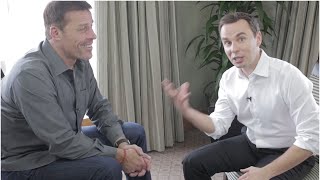
This is a YouTube video titled "Tony Robbins New Book 'Money: Master the Game.' Interview with Brendon Burchard" created on November 20, 2014. It features an in-depth interview between Brendon TEST Burchard and Tony Robbins discussing Tony's new book about financial freedom, wealth mindset, and investment strategies. The conversation covers Tony Robbins' personal financial struggles, insights from top investors, and practical advice for mastering money. The interview is conducted in English and focuses on financial empowerment and actionable steps for achieving economic security.
Hey, everybody, it's Ben Richard, host of the Charge Life. And I'm excited to welcome you here today to the worldwide premiere of Tony Robbins new book, his first new book in almost a decade. The book is called Master the seven Simple Steps to Financial Freedom. And I'd like to tell you about this worldwide premiere. We've got Tony here and we'll be going into an in depth interview with him about the book and about what you can do to take financial steps to achieve more freedom. And in this process today, we also want to say thank you for being here and for supporting the book as a worldwide premier. That means today is the first day that you can purchase the book on Amazon, on Barnes and Noble, on online retailers, and at your local bookseller. So, Tony, I want to give you a gift as thanks for supporting the book and committing to your own financial future and achieving more freedom. You're able to get some extra bonuses from him today that's not available anywhere. So as you can see beneath this video, you can click the Amazon link to go ahead and order the book. And you're welcome to order the book as hardcover or on Kindle. And then all you have to do is forward us your receipt to the email address listed below. And when you do that, our system will verify your receipt and then bam, we will send out your four exclusive bonuses that you're getting here as part of participating in the worldwide premiere. We're honored to have you here. We're excited to talk about your financial future and to figure out this question of what can you do to finally master money in your life. So with that, I'm excited to be here and to welcome my friend, Mr. Tony Robbins.
Good to be with you, brother.
Good to see you here, buddy.
Nice to see you.
So happy to have you.
Thank you.
You know, a lot of people already know your story and they know the success and the achievement and the amazing people that you coach, the 50 million people around the world that you have served and inspired. But let's go back a little bit. I'm wondering, as much as people know that story, so many of them also know that time of hardship when you're so broke you were down and out living in a tiny apartment. And they know that famous story where you didn't even have a proper apartment so you had to wash your dishes in the bathtub. Can you remember, though, like, a specific moment when you thought, I gotta figure out this money thing. I gotta figure out my financial future. I gotta figure out this wealth game, because this can't stand any longer.
Well, I think I had those moments earlier. I think sometimes you hit those moments multiple times, but you don't quite figure it out still. I mean, I grew up in an environment where we had no money and no food. I mean, part of why I'm gonna feed 50 million people this year myself, and hopefully 100 million with people's help, is because we had no money, no food at Thanksgiving. So it was magnified at that time. So I remember in those days saying, I will never have children, really, until I master this area of my life, which wasn't true. Having my son come was one of the first major things that made me wake up and say, I gotta figure this out. I don't want him to go through the pain. Because I associated all of four different fathers. I associated so much pain, not being able to take care of our family from not having economic freedom and economic security, even basic security. So I think I was driven earlier to try and solve this. But you think you solve something and you solve it to the level you are. And I'd gotten a level where I'd start to succeed a little bit, and then I got complacent, quite frankly. I wasn't doing it for the money. And I made some money and a lot of my friends, I was excited. So I went to some of my friends back from where I grew up and I said, hey, man, like, let's fly to Egypt. Let's raise camels between the pyramids and stuff.
Let's do something with this money.
Yeah. And I wanted to do it with them, and I got rejected by them. I was like, oh, easy for you. And I was like, what are you talking about? You got all this money. I said, it's not about that. We're going to go together, you know. And I think what happened in my head was money wasn't spiritual. All of a sudden. Before, you need money just for your family to be taken care of. So you didn't suffer. Now, having money was a negative. You're not liked. If you have too much money, judge you. So in my head, what I did is I think I collapsed the two. And I just went, okay, you make enough money to do okay, but not so much that people are going to judge you and not so bad that you're starving. But when you try to meet that middle world. I found myself living in Venice in this little one, you know, not one bedroom bachelor apartment, didn't have a bedroom, washing my. California, yeah, Venice, California. Not Venice, Italy. Trust me. And I'm in this Little apartment. I'm washing on a hot plate, you know, cleaning a hot plate and washing my dish in the bathtub. And. And what shifted me was there are many stacking experiences. I had an experience where I ran out of gas. Not because I hadn't filled the tank, because I had no more money. And I pulled over the side of the road and locked the car. And it was getting dark and I was praying they didn't tow my car. Cause that happened once before and I didn't have the money to get out the tow walk back home. And I literally got to the front door of my house. It was 2516 Pacific Avenue, Apartment 3A in Venice. Anybody wants to go by, they can check it out. Second story. And there's a door there, apartment 3A. And there's this note stapled to the door and it's typed. And I don't know if you've ever seen one of those in your life, you probably haven't. But it's called a quit or claim document. Which says you have three days to either pay up or remove your stuff or the sheriff's gonna do it for you. Basically, it's your eviction notice. And I went in and I lit a candle. And I didn't light a candle because I was spiritual. I lit a candle cause I also had to pay the electric bill. And it's a true story. I tease about it now, but it's a true story. And I'm reading my eviction notice and I just got so angry. So the next day I went on this run. I didn't know what I was doing, but I just. I hadn't run in godliness how many years. I was 38 pounds heavier. And I decided to put this music in my ears. I had one of those old Walkmans, that's how old I am. And I raced to Barracuda by this group, this female group that was singing at that time. And I'll never forget, I came out there and I said, I'm gonna change this. And then I did for a while. Again I started to do better, but then I dropped off again. And I think it's because inside all of us, most of us, if you don't have real wealth, I can show you everything, what to do. And I will. In my new book, I've interviewed 50 of the smartest people literally on earth. I'm talking about Carl Icahn. The day I met him, he just made $2 billion in an 18 month investment. Starting with almost nothing. Tiny numbers, guys like Paul Tudor Jones hasn't lost money in 28 straight years. I mean, it's unheard of. Legends, total legends. The best of the world. But even that won't work if you don't change what's going on in your head or your heart. A lot of us aren't aware of it. And so I finally kind of sabotaged myself again. Found myself still in that little apartment. And I got to the point where I had, I don't know, 23, 24, probably $24 and some change left over. And I was getting worried, like, how am I going to eat? You know, what am I going to do? I'm not paying my rent, but how am I going to eat? And I got myself in a place where I said, okay. When I was 17, my mom kicked my dad out, kicked me out. My dad went back east. I had to figure out what to do. So I survived by making a little money and then run into the smorgasbord and loading up for the winter, you know, eating all that I possibly could. So I went. I thought, okay, I got to get out of this environment. I'm feeling depressed, I'm feeling overwhelmed. I thought, okay, I'm not going to drive a car because I'm not going to spend the money on parking or driving. But, you know, it's only three and a half miles to Marina del Rey, which is a beautiful place in la, and there's a place that's still there called El Torito. And it's a little Mexican restaurant on the water, all these boats going by. So I go there, and I'm watching the boats go by, and I'm getting lifted back up. I'm thinking, come on, raise your consciousness. Like you can do anything. You just need to focus. Stop focusing on who screwed you over. Because I had a lot of people kept their word with me.
A lot of people have that bitterness.
Oh, I was very bitter. I was bitter towards money.
I was scared, but bitter.
I was bitter towards money. And I was also bitter towards the people around me who I felt kind of put me there because they didn't keep the word. Like, one guy in particular, I loaned him money when he was desperate. More than $1,000. And he wouldn't even return my phone calls. And I got $25, less than $25 in my name. And so I go there, I load up and everything. Tacos, everything's just loading, loading, loading. Not carb loading for a run, carb loading to live. And I was about to leave, and before I left the door open, So I could see the main door, and this little boy walks in who's in this perfect little suit and tie and the whole thing. Even had a little vest. And he's just adorable. And he opens the door and this beautiful woman walks in who's clearly his mom. And it just. I was. I don't know. I don't know what it triggered inside me, but I was deeply moved because just the way he conducted himself. He pulled his chair out for his mom, he put in, he sat down. He was just so loving, so attentive. It just struck something into me that I can remember to this day. And I watched and I watched him and I watched him. And I just. I found myself smiling inside and just thinking, you know, this is what life's about. You know, life's about more than the stuff I've been thinking about. And so I walked up to this little boy and I introduced him myself. I said, I'm Tony. And I don't remember his name. I think my name's Ronnie. I think it was. And I said, ronnie, I said, I gotta tell you something. I said, I am so impressed by you. He said, you are such a gentleman. I said, the way you treat your date, the way you open the door, the way you pull her chair. I said, I watched all those things. I said, you are a act. And he goes, she's my mom. I said, that's even better. I said, that's even more of a class actor. I'm even more impressed. I want to really reinforce him. And I said, and take her to lunch. Like, this is amazing. He goes, well, I don't really have a job yet. And I said, well, no, you are taking her to lunch. He goes, no, I can't. I said, yes, you can. I had no plan. It wasn't like I thought this thing through. I just. Instantaneously, I just paid my bill. I reached whatever it was left. $19 and some change, and it was. And I just poured it all out right there on the table in front of him. And he looked at me, and his eyes got like big as garbage can covers. And he looked at me shocked. And he smiled. And then he said, oh, I can't take that. I said, sure you can. He said, how come? I said, because I'm bigger than you are. And then he just smiled from ear to ear. And I didn't even look at his mom. I wasn't about that. And I walked out of that room, walked out of the restaurant. And I don't know how to describe it. It was I felt the lightest I've ever felt in my life. I felt euphoric. I had tears start streaming down my face, but they weren't sadness tears, they were just. It was that feeling like. I don't know how to describe it. A feeling like relief and a feeling of joy and a feeling of freedom that I can't even tell you. I should have been scared shitless. Where am I going to eat?
Where's my next meal going to come from?
I don't have another dollar. And I went home that night. I had no fear. And I just went to work on a plan, what I was going to do. And I figured, well, people fast all the time. I'll fast for five or six days.
I just ate all these tacos.
It gotta last me that long, right? And I don't know, I just. It was the most beautiful feeling. And I woke up the next morning and in those days we had the old snail mail and not electronic mail. And this envelope comes and it's. The guy that I've been calling, wouldn't return my phone calls, owes me this money. And he gave me the thousand plus interest on it. And at that stage that would make me last two, three weeks, maybe a month, I could probably drag that into. And I just started bawling. I mean, just crying. And I was like, I'm an emotional character, but I was really emotional. And then in the middle of it, the most beautiful thing that happened was asked myself, what does this mean? Why did this happen? And I don't know if it's true, but I decided that I was being rewarded for doing the right thing. That if I just. In my life, I stopped thinking about that stuff. And I just spontaneously did what I believe was right. And I didn't think about money, that it would be like oxygen. You don't stop to say, if I take this breath, will the air be there? And if I just do what's right, if I just give spontaneously, truthfully, honestly, I'm not going to worry about this. And I always. I wrote that at the end of my book. I wrote this little story, shared the story, because I was trying to think, how would I explain to people what this book's really about? It's about getting beyond scarcity. You'll never get beyond it. You got to start beyond it. Something has to click inside you.
You had this, this. This action of abundance. That's what it was.
It was the day I told people, that's the day I became a wealthy man. I gave up everything and had no Fear.
Yeah. When you give without expectation. And when you give in that moment.
When you give not for positioning, not to try and be somebody, just because it felt right. So I've let that guide me throughout my life. And it's been, you know, I've had my moments. I've been stupid. I've done dumb things and smart things and everything in between, but I've never gone back to that scarcity. And when that's gone, you can do just about anything else. But I tell people, if you don't give a dime out of a dollar, you're not going to give a million out of 10 million or 100 million out of a billion. You're bullshitting yourself.
It's a mindset thing. And the numbers fix now it's going to be the same. You throw more money on it. It's the same exact thing.
And what people don't realize is it teaches your brain there's more than enough when you will give what you don't think you can give. And until you do that, there's a war inside. And that doesn't mean you gotta go give everything away and everything else. I'm not suggesting that.
But this is a simple action.
And it wasn't huge lumps of money.
It was a lunch. It's like a lot of people where the first time they go down the soup kitchen and they actually serve something up.
Exactly right.
And they also contributed that meal, like we'll talk about, with what you're doing and giving. They see the look on other people's faces, and now they know it's not about their 20 bucks. It's not about their bank account at all. It's about, wow, this is humanity. We're all struggling. We're all in this. And maybe that money can be a transactional thing, but it can also be a very meaningful thing. And I love how you approach that in your book. It's not just about money. It's not just about wealth. It's not just about finances. It's about what's your life about. And you've done a really great job with that.
Thank you.
But I think you also went into a pretty scary territory for a lot of people talking about money. But you came at it with calling it Master the Game. So all these emotions you share, and everybody's had sort of, I think those. Those frustrations financially, where they were challenged, where they freaked out. I know you maybe you heard my story a little bit about, I went into bankruptcy.
Yes.
I remember scared to death. And I'm Writing my book on this fold out table my mom used to do use as a sewing room table. My lady walks in at the time, she sees me writing ferociously. And our apartment's so small, I had my bills and my vision boards and my dreams and my bankruptcy all in the bed because there's no desk. So she comes in late at night, goes over, crawls under the covers, trying to disturb everything. I'm typing. I look over and I see, you know, my lady sleeping under the weight of my bills.
Yeah.
Literally, you know.
Yeah.
And it was just, I gotta change the situation. And I think that happens for people. They get, you know, you get to.
Where it's a must and not a.
Should you call it your events so often? Threshold.
Yes.
That was it. I was like, for me, I was so. I was so fine with being broke. Didn't matter, really, to me.
Yeah.
And then see family and loved ones.
Yeah.
That was a huge shift.
Yeah.
So there's a lot of emotion around money. But then you have this title, Master the game.
A lot of people got upset.
They're like, game? I'd love to hear it's a game, though. And it's interesting because you've interviewed all these billion. Do they think of it as a game and why call it a game?
Well, it's interesting. When I first sent out the idea of the book and the title of the book, Marc Benioff is a dear friend of mine over here at Salesforce with Dreamforce with him, and he started Salesforce through my company, through my material. He tells people, salesforce wouldn't exist. They're now doing 5 billion. You know, when he first started leaving Oracle, he was saying, I'm going to build $100 million company.
I know his employees go through your technology.
Yeah. All of them use it. Yeah. So. But the reason I bring it up is he says, tony, you're not about money. He said, oh, oh. And he goes, in a game, he goes, you know, money, it's a tense word. I said, that's why I'm using it. Because people have such. I mean, there's only a few topics that bring this much emotion to people. You know, sex, politics and religion and maybe money. Those four. You get a reaction because you don't talk about these things, you know, in general public, around you don't talk. It's just not the subject most people want to get into because it usually creates some kind of emotion that isn't necessarily positive. Because if people have a lot of money, sometimes they feel a little, you know, Guilty. And if they don't have it, they feel embarrassed or ashamed, you know, and money, money has no power. Money has the power to create, and money has the power to destroy. You can, you know, create an opportunity you can give, you can deliver, you can make things happen. You can destroy things. You know, you can use it as an expression of your love or your hate. It can be any of those things. So money, to me really is just a tool to be used in a life of service and a life where you serve your family and your friends and yourself.
If it's the reality of your life, why not mastery a little? If it's there and you have to deal with it on a daily basis, why not do something about it, Right?
But when you talk to the most wealthy people in the world, they all see it as a game. I say all the vast majority. And why else would somebody who's just made 2, 3, or 4, $10 billion work 14 hours a day? Because when you realize it's a game, then you realize that means there's some rules. Now, some people say, well, a game that makes it sound frivolous. Not all games are frivolous. I say games are a reflection of life. Some people play to win. Some people stand the sideline and watch everybody else and clap or be upset or point fingers. How do you play? Is what I say to people. And what I say to people. You walk through these seven steps with me, you will win this game. And you got a chance to win it really big because there's nothing in this book that's me. Emotional and psychological, yes, that's been my expertise for 36 years. But most people know that. I've been coaching for 21 years. One of the top 10 financial traders in the history of the world. His name is Paul Tudor Jones. 28 straight years of victories at a company level. I've been looking for 21 consecutive years. He emails me every day, gives me his report, what he's done, measuring it. I get to go see him every 90 days. I've been with him in the crash, the tech crash of 2000, and watched him make money and figure out how to do it. I've been with him in 9, 11. I did it when the subprime crisis happened and the whole world was melting down. And in 2008, Paul made almost 30%. I mean, when everybody else was losing. I'm just.
Because he knows the rules of.
He knows the rules of the game. And so I got his rules. I've got Carl Icahn's Rules. I got a man named Ray Dalio. Most people outside the financial business don't know his name, but he's been called the Steve Jobs of investing, the da Vinci of investing, because this is a man who you had to give him $5 billion to get his advice and give him 100 million to start. That was 10 years ago. Now you can't get him no matter what governments. You're sitting down with him. And the prime minister of China calls to interrupt the meeting because he needs a little coaching from Ray. So I got him to share me what he does.
I want people to know about the book. That guy you got his literally, his formula and how he does it in this book. Something that literally billionaires are looking for and calling him on. You broke it down.
What was beautiful was when I got to these people, I got to these people by impact and by referral because I worked with Paul Tudor. He introduced me some. And then when I got to them and they saw I'm donating all the money to this book, this is not about me. I want what's real. I want to bring the average American, somebody who's just starting the journey, maybe a millennial or somebody's getting out of college and they got all this debt and they don't know how am I going to turn things around. Or maybe a soccer mom or a divorced man or woman saying, I'm trying to take care of my kids and my life and how am I going to build a future and put my kids through college? Or maybe even a sophisticated investor who wants to know what Dalio does. I want to hit all those buttons and make it real. So when I went in the beginning, I got to guys like Carl Icahn. Carl Icahn. To give you an idea. People have no clue. If you would have invested in Carl Icahn. In 1968, Carl Icahn. Kiplinger did a study. Your average annual return, average return with Carl Icahn is 31%. With Warren Buffett, it's 20%. Wow. In the last 14 years, if you'd invest in Icahn Enterprises, if you're long with him there, you would have made 1,600%. If you were in the S&P 500, you got 76%. He has dwarfed everyone on Earth. Time magazine did a cover, and they said, master of the Universe. When I went to go see him, he did a tweet about Apple. He. And in one hour, Apple Stock went up $17 billion with a B. This guy is unbelievable. But he's also rather direct and gruff. I love him now, but I went in to go see him. I thought, this guy. This guy. To get to this guy's brain and find out what he's doing. And it's the day he cashes in and makes 2 billion on Netflix that day. And it was just like, so smart. And the first thing happens, he agrees to it. And then my camera crew shows up, like your team. And he goes, I don't want a camera crew. Wait a second. This morning, your secretary said, you proved. I said, I don't want him. Right? It was like, okay. You know, he gets taken advantage of, so he's sensitized. And, you know, last minute, like, who is this guy? What's it gonna be? And then, okay, well, my sound crew. No sound crew. I said, what am I supposed to do? He said, take notes. You got 10 minutes. I'm like, holy shit. What am I gonna get him in 10 minutes? Right?
This is the game. He's setting up the game. He's setting up the game, setting up the game.
Set me down and see how can I play? How am I gonna play under pressure with his rules, right?
That's right.
And what's beautiful is he got who I really was, what I was really about. I dug in with him, and three hours later, my average interior is supposed to be 45 minutes. They're three. And he's like. He's sharing things, hugging me and saying, you can really make a difference in the world. And gave me a quote from the book where he said, all investors will be illuminated by this sophisticated or unsophisticated. It's going to change their life. So when those things happen, then I go to, let's say, for example, to Vanguard. I go find the founder of Vanguard, Bogle, Jack Bogle, in 45 minutes. I'm with him four and a half hours. He wrote a quote at the end that says the most probing interviewed. And what do you say? What's the word? The most probing. And I forget what it was. But the deepest interview, basically, he's in three hours. Yeah, absolutely. No, no. He said, in his career, wow, 63 years, he'd been interviewed by everybody. So that tells me that I was able to engage him pretty damn well. And he supported the book as well. And then Ray, the most important one is Ray. Out of all 50 people, it's like, they're all phenomenal. But with Ray, I prepared for 18 hours, literally around the clock. Stayed up that night till five in the morning, slept three hours. So I Could go be with him because I wanted to pitch and catch with him. I knew if I was going to engage him as one of the smartest minds literally on earth. And so I was ready. And then I got there and I was able to do it. And it turned out he'd been a fan of mine for 20 plus years, listening to my stuff. So we created this great chemistry. So after three hours, almost two and a half hours at that point, I said, ray, this question, I asked them all, if you couldn't give any of your money, none of it to your kids, all you could give them was the best of what you learned in the form of a formula, you know, a set of strategies or a portfolio, what would it be? He said, well, Tony, you know, my alpha fund is, you know, it's average 21% per year for the last 23 straight years. He said, that's been our average. He said, before expenses and so forth, before fees. He said, but that takes 1500 people to do and who are the best in the business. And I'm one of the best poker players. And even for me, that's tough to do. What am I going to do when I'm not here for all the things I care about, my kids? What am I going to do for all the non profits that I support? And he said, I started tinkering and saying, you know best, the best investors are always asking a different question. And he said, I started thinking, you know, everybody thinks a balanced portfolio is the way you protect yourself. He said, but a balanced portfolio, half your money in stocks, half in bonds, or, you know, 60% stocks, 40 in bonds. He said, in all the meltdowns, it doesn't work. 2008, they both went down. So this idea we have about asset allocation, which is the most important part of, by the way, investing, for anybody listening, asset allocation is where do you put your money, what proportions, what's the right formula? He said, it's all wrong. And he said, I dug and I dug and I dug and I figured something out. He said, I figured out that stocks are three times more volatile, more intense up and down than bonds. So when you think you're 50, 50 or 60, 40, you're really 95% at risk and 5% secure. He goes, when I figured that out? He said, I figured a new way. And I figured a way to make money no matter what happens, because all investments do well in different environments. And he's divided the universe of what can happen in four seasons. And he said, I figured out a formula. So that you can make money in any season. And your losses when you lose, everybody loses, but you lose is so small by comparison.
So he explains the whole thing to formula. You kind of have. This is the basis for the game.
It's the basis for the game.
Where do things go from the master?
What I tell people, if you're gonna master the game, you wanna learn from the masters in the game, right? You don't wanna try and learn. He's been doing it 40 years, and most people can't do what he does. So he's the best of the best. So I said to him, I said, explain the whole thing. So I'm gonna put that in the book. It's gonna blow people away. It's incredible. You're incredibly generous. But I said, look, what really makes this work is knowing the exact percentages. Because, you know, like, a lot of people try to copy inspired by Dalio funds, and they don't do anything close to dalio, not even in the same universe as Dalio. It's just a marketing theme. So I said, I want to know the real numbers. He goes, tony. He said, it's complex.
We can't put this in a twenty some dollar book.
No, he didn't say that, but he did say that's what he gave the whole $5 billion. He goes, look, it takes 5 billion to work, man. You know, 100 million, initial investment. I said, but you just told me that you haven't taken in anybody in any amount of money for 10 years. You don't want any more money. He goes, yeah. And I said, you're also giving away your half of your $14 billion net worth. I mean, the guy's unbelievably generous. I said, give me the secret sauce. He goes, tony, it's too complex. I said, I know it's complex. Make it simple. I can make it simple. Well, there's some leverage. I said, show me one without leverage. He goes, well. I said, come on, give me the secrets. Give it to me right. Help the little guy out. And I got him laughing, and he finally said, well, I could give you something. It won't be absolutely perfect. I said, your idea of not perfect will be better than anybody else's top piece. And as I got chills in my body, he started describing to me. And I got the video going. I'm capturing like crazy at the end. He goes, yeah. He said, you know, you go run those numbers and you can bring them back to me, and I'll look them over and make sure they're Right. But he said, I think that would do it for the average person. And they could, you know, we'll check the rebalancing probably once a year rebalance. And he said, you know, they could do most of it with ETFs and.
Things like that and they'll beat the market.
Yeah, you know, he said, so why don't you go check that out. So I now have some partners in a variety of portions of the business in the financial area and a great company I'm associated with, which is called Hightower. It's the fifth largest registered investment advisory. It's the best in the world. They strip out all the fees, they make all the banks compete to give you the best fees. You see everything transparent. 30 billion in assets. But they only work with ultra wealthy people. And I wanted to get them to work with the average person. So I went back to them, I went to two other organizations, said run these numbers. Let's do a 30 year run. Like most volatile times. Right. 40 year run, let's do a 75 year run. Just see it. Most people, they look at something over a five or ten year period. I want to see all those. Just look over a 10 year period too. 10 year period blew away the S and P. But here's what's really unbelievable. In the last 30 years, it lost money only four times. And one of those four times it lost 0.003%. So it was break even. So you really practically lost three times in 30 years. But here's the most unbelievable thing. The average loss is 1.9% but the average upside was just under 10. So if you're spread for 30 years, then same numbers in 40 years at 75 years, it's 85% successful. 30, 40, 75 years, you make money 85% of the time. And when you lose, average loss over 75 years was 1.6%. The most he ever lost in 75 years was 3.9% less than 4%. And that was 19. That was in 2008 when the market from top to bottom was 51% down. So if I said to you, you could go to Vegas and you could bet as much as you wanted, and if you bet, you'd be right 85% of the time. And if you lost, you'd lose an average of 1.9 or 1.6%. How much would you bet? How long would you bet? How much you go for?
So look, that's the surprise I think people are going to find in the book is because I'm Reading it, it's not like you're talking about this conceptual. You're telling the story, but you're not talking about conceptual level. This is exactly what you can do this.
Everybody around me said, this is a business. Don't put that in the book. Like, we want to do this over here. We want to run a fund. I said, you can go run a fund, and people want you to do it. Great. But I said it was offered in the spirit of helping everybody. So it's in the book. I mean, it's in the book. You invest in this $28 retail book. I don't know what you get it at Amazon. 25 bucks, 24 bucks, the last. Whatever it is. But I mean. And you're going to get what a guy that spent $5 billion to get now. It's not. There's no guarantee the future is the same as the past. But what's unique about this is this is designed so it doesn't matter what the future is like. Most people make money because they anticipate what the market's going to do. He's saying, I don't care what the market's doing. Any market that happens. This is how you win. And if you lose, this is how you limit the loss. And it's something you do 15 minutes a year, not just one chapter.
I'm going to be blown away by how many of these strategies are in there. But it's not just. I really want people to know. It's not a conceptual thing. This is like, literally, hey, you could take this and you could run it, or you could take it to a financial advisor, which we'll talk about your feelings there. And it's really applicable. It's actionable stuff. I think is why this book is going to crush it.
I want to say one thing about, though. In the very beginning, I tell people this is coming, and I've got like, David Swensen. David Swensen is the chief investment officer of Yale. He took their $1 billion endowment and turned into 23.9, practically $24 billion in two decades. He is the greatest institutional investor in the world. He is the rock star. The Warren Buffett institutional areas sat down with him and he gave me exact portfolio also. His does a little more. More than 10%. His does like 13%, but has more volatility. So if you want to take more risk, you do that, too. So this book filled with them, but I tell people the first chapter. I know you're gonna want to turn to those. Read those chapters or you're gonna want to turn. Read these interviews with the top 12 guys in the history of the world. Don't. Because there's seven steps. And if you know the portfolio, but you don't really know, for example, the emotional pieces in you that make you go up and down, if you don't understand how to change that, if you don't know what your real goals and numbers are and how long it's gonna take to get get there without a plan, if you don't know what the right asset allocation is, you don't want to put everything in one thing, even value, right? So if you don't understand those things, you're jumping, you're not going to maximize. And the book is fun because along the way I'm giving you stories and examples that are real and practical. And it all comes from Nobel laureates, the best on earth who figured out behavioral Nobel laureates. Here's what to do to beat your natural human tendency so you don't have to have discipline. It'll just do it automatically for you. And I'm showing you what the best of the best do along the way.
As you're doing that, I think it's important because people hear these big names, they hear billion dollars. And the average person watching goes, I don't know what institutional investing means. I don't know billions of dollars. Like you said, I'm trying to scrape together 24 bucks here. And so often they don't start because they just think, I don't have any money. Why would I read a book about money if I don't have any?
Perfect. The third chapter of the book, I explained the biggest reason why most people never become financially free or even stable, much less wealthy, is because the vast majority of people think, I got to make this big score. I'm going to make this investment in Apple go crazy. I'm going to make this thing happen, and I'm going to pour all my money into one investment. I'm going to pour all my money even in my own business. As strong as your own business is, those 96% of businesses don't make it if you don't diversify, you die. And so they're thinking this big score. And when you see the people and I fill it in, the book filled with them who've had the biggest scores in history. The vast majority of them go bankrupt or end up really, really practically bankrupt. So, I mean, I don't care if it's Kurt. I don't know if you remember Curt Schilling. Red Sox. I know I have some Boston friends. And I mean two Major League Baseball, World Series. Makes $100 million. Completely broke. Bankrupt.
See those stories a lot.
You're probably not old enough to remember Kim Basinger in nine and a half Weeks, but most men, my generation, remember that this woman made more money than any actress in history. She's making $20 million for a picture. Bankrupt. Mike Tyson made more money than most people would dream of in multiple lifetimes. He made a half a billion dollars, $500 million in income. Bankrupt. So, and I go on Billy Joel next to bankruptcy. I don't care who they are the most brilliant people in the world. Because it doesn't matter how much money you have, you'll spend it. So I show, then I give you examples of a guy that never made more than $14,000 a year. Theodore Johnson worked for UPS and end of his life, he gave away half the money to charity. So everybody knows what the number was. $70 million. Because he understood compounding, like everybody intellectually understands compounding, but very few people do it. So on the book, I show you little things like give away up that little pizza each week. And here's a half a million bucks that you can have by compounding. Look at what you have. And I show you how to take the tiniest amount and automate it. So you get there. Now there's a lot of people say, take your Starbucks money and put it here and get your return. And that's nice, but there aren't any 12% mutual funds anymore that compound annually. Those stories from the past don't exist. So I show you what do you do with that money? So you maximize it. And also what do you do right now so you can enjoy it today, not just someday when you retire? Because that's the other mistake. It's like if you make money, it's something that you're just holding on to so someday you can feel good. Then you don't have much of a life. So this is a lifestyle book as well as how do you create that abundance and wealth for the long term?
What would a person earning 35 to $50,000 learn and take away from the book versus someone who's a million or 10 million above. Do you think that they're really going to take something different from the book?
I don't think so. I think the fundamentals are the same. That's the beauty of the book. That's why I designed it that way. But I'll give you an example. Somebody just makes $35,000 a year is the first thing you got to do is you've got to tap the power that every wealthy person does. You have to stop being a consumer and you got to now become an investor. You got to own something and you got to start with 3%. Just 3% off the top. Automating it, putting aside, you don't see the money. It goes into this what we call Freedom fund. Not savings account, but a freedom fund where you're going to really build it into freedom using a tool called Save more for tomorrow. This is designed by Nobel prize winner and his partner from ucla, Shlomo Bernacio. I'm probably pronouncing his last name poorly. I apologize. But brilliant guys, they came up with this idea. It's easy to do something in the future because it's not now. If I say to you you're going to diet in a week. Yeah, of course, sure. Absolutely. Diet right now, that's good for a few hours. And so what they figured out was that if you could only save even 3% of your money, if €35,000 a year, you owe money. You take 3%, 4%, 5%, ideally 10, but some middle number. And you just commit that anytime you get a raise in the future, you do it automatically. Your boss, that 3% of that money is going to now go into your Freedom Fund. They did this in the where you.
Don'T see it just automatically happen. That's the secret. Because you don't, you automatically go away.
And it goes and it starts being invested.
You don't have to write a check somewhere.
You don't write a check somewhere, you don't transfer it.
You never count it as yours goes over here.
Just like if they raise taxes, 3%, that's the same thing, only the taxes for you, it's for your future self. What they found is they took middle American blue collar workers and one company and they started them, most of them, at just three and a half percent savings. Then they did this improvement. In 12 years, the average worker was saving 17%. Now you save 17%, you're going to be wealthy. Because compounding through time, it'll get you where you want to be. You'll certainly be financially stable and secure and free. So I show people, I do that. But then the second thing, to answer your question, what will they get? Even people making $35,000 a year, they work at a company, most people have some form of 401k or something of that nature usually. Or if they're doing any investing, that's where Most people start as an investor. Maybe some auto enrolled them. They didn't even want to do it. But the company, Auto enrolled you, right? Well, there's a gentleman that we worked with here, that Hilton Smith, who really did all the research, and this guy's brilliant guy's got a degree in economics, and he went through all of his mutual funds, all of his 401k, and he found that he thought he was paying 1%, what's called the expense ratio. Most people say, I'm paying this percentage. But he found really overall that the average Forbes found the average mutual fund, to give you an idea, cost you 3.1%, because there's 17 other fees he found, that are under different names. You have to have a PhD to figure out that are hidden fees.
Most of the wealth you supposedly earn, it's not happening. It's going to them first.
If you're making 6% return and you've got 3% in fees, you're making 3%. Oh, by the way, then you got.
To pay taxes over the course of decades, each year it's happening.
Each year, they're taking that out. So. So you're not compounding at the same level. So he figured out for someone making 30,000 a year, it's 150,000 minimum that you're throwing away. I mean, try this on for size. The second part of the book, second step, is before you get in the game, know the rules, be the insider. Because when a person with money meets a person with experience, we all know what happens. Frey's been said, person with experience ends up with your money. So what I want to do is save you that, and I give you nine myths, nine lies that you're gonna make sure never happen to you again. They're all marketed. And one of those myths, to give you an idea, is fees don't matter or it's only 1%. That's what everybody says. And I go through and show you systematically what it means. If you pay 1%, a real 1%, which almost nobody does, versus 2, versus 3 you're buying, you could have three people, they start at the same age putting in the same amount of money. They invest in the same stocks, same bonds, same mutual funds, and 30 years later, they show up, and one's got 77% more money. You know, they start out with a million bucks. You know, they got 7 million. The other guy's got 4. If it's $100,000, 700,000 versus 4, the amount of money difference of those fees. And if I said to you, Brandon, here's the deal. I want you to make an investment with me. Here's how it's going to work. I want you to give me your money. You're gonna put up all the money, you're gonna take all the risks. If it loses money, if it loses everything, you lose everything.
There's no consequence here.
You put up all the money, take all the risk, you take all the losses. But if you make money, and even if you don't make money, I get paid and I get. Over the course of your lifetime of investing 30, 40 years, I'm gonna take 60%. Would you make that deal?
Nobody would, but they don't know that they are all day long.
That is what you do with the average mutual fund today. Because the average mutual fund with Forbes is 3.1%. If you're in a 401k instead of saving money many times and you had all the other fees, according to Forbes, it's 4.1%. What that does to your ability to ever get financially free is it basically decimates it. And how you say, how's that possible? Jack Bogle, head of Vanguard, taught me this. He said, tony, watch. Because people don't know. They don't do the math. For every 1% you give away over the course of your lifetime, that's approximately 20% of your total take. So if there's 3% in fees, you give up 60%. You took the risks. You were on the line. They took no risks, and they're going to take 60% over the lifetime of what you're doing. He said, it's highway robbery. That's why you can go invest those same stocks with Vanguard on an index and you pay 14 basis points, which, that's another term, by the way. Every time I use a term in the book, I explain, like, basis points. What the hell's the basis points? It's 0.14%. If someone says 25 basis points, it means a quarter of a percent. So if I say an index, fine, you know what it is. I explain what it is in the book so that people get it along the way, and I give them examples so they see what it is. So what you do is you become an insider. Because what happens is every type of powerful institution, organization or field has its own language because that's how they keep power. So if you go to your lawyer, there's a lot of things you and I could easily do ourselves, but we don't know the right legalese. So the words you could say in English, they say in legalese and we can't do it, so we gotta pay them for it. You know, good lawyer's a good lawyer, but sometimes there are things you could do. You know, some of the online Companies are charging $20 what some lawyers used to charge 2,000 for. It's boilerplate.
You did an amazing job in the book of literally empowering people to go, oh, just go, here, check out this website. Go try this, do this. Anybody can do it.
Anybody can do it.
I mean, anybody can do it.
But I want to give you an example. In the medical field, if I said to you in the medical field and you read the book, so you know this, but if I said the average person here, did you know that according to the Journal of Medical association jama, that the number three killer of all human beings in the United States is from iatrogenic causes? Most people hear iatrogenic and they think, is that a form of Ebola? Is that some tropical disease? I have no idea what it is. Why would you use the word iatrogenic? Nobody knows what the hell it is. Iatrogenic means physician or hospital induced, which, to be fair, is when you think about all the doctors, all the number of people they deal with, unfortunately, a lot of people die because somebody's made a mistake. So a third of all deaths, 225,000, come from iatrogenic. Why don't they just say a third of all deaths are hospital induced or physician induced? Because that would.
No one would go there.
No one's going there. So they come up with a term. Well, what you see in the financial field is there's tons of iatrogenic language. So you don't even know it's a fee because they don't call it a fee, they call it something else. But it's money out of your pocket.
And it's basically paying for their marketing or for their operations. It has nothing to do with your personal.
When you go to your 401k, when you go to your 401k and you take a look at your 401k and you're trying to decide, what should I do? And you have no idea. You say, I'm going to go to this five star morning star fund, go do the research. You'll find at the end of 10 years, out of 250 five star funds, four are five stars. All my hedge fund guys, they love that you're buying high and you're going to sell it low when it drops, and then you're going to buy another one high. And it's going to sell low. They buy low and make money high. So what I do in this book is one step at a time, because I'm talking 100 miles an hour. I know I'm passionate about this stuff. I'm crazy, but it's like, I just want people to have this. I'm tired. I want to level the playing field. I'm tired of people being taken advantage of. And what I've done is put together this step so that any person, average person, go through and go, I get it. And by the way, it'll be your best. It'll be your dinner talk. You go, did you know? Like, for example, did you know it fires people up?
The myths alone, that one chapter on the myths, you're like, that's true. And then you're upset because, you know you've been sort of taken by an industry or taken by a lack of knowledge system. You just didn't know.
Yeah, you didn't know. If you don't understand the system, the system will take advantage of you. You know, that's why I say you either master money or money masters you. And what's cool is it's a lot simpler than people think. Because once you know a little bit of the language and once you know what to look out for, what to do is pretty damn simple.
You go to the tools, you set it up, and then you get it.
And then you learn from people that are the best on earth instead of some average person who may be trying to market to you. I mean, I'll give you an example. Where do most people in America put their money? Mutual funds. Most people in the world put their money in mutual funds. Well, that presupposes that somebody's going to actively study the market and they're going to come up with a list of things to invest in and they're going to do better than if I just owned an index fund, which is a simple word for you can own like 500, all the best companies, you know, in the s and P500, the top 500, you can own a piece of all them with even a, you know, $10,000, $1,000, $100. Get a piece of them all. Micro piece. So I can do that. If I do that, it cost me next to nothing. 14 basis points, 0.14 in cost, not 3%, which is like 3,000% more expense. Right. Compounded. So you go, okay, but a mutual fund manager is going to do better. What's the facts? All the research out there? I don't care if I was talking to Ray Dalio. Warren Buffett says you're not going to beat the index fund, so why would you pay for it?
That was the advice he gave his family. If he's gone, he said that's what he did. Put it in index fund. Put in Vanguard 500 index. Let it ride, because you're not going to beat it.
Check this number out if you're listening. You got to watch and listen. Over any 10 year period of time, 96% of all mutual funds don't match the market that you could have got for next to nothing.
And the mutual fund people were telling you buy mutual funds, they don't even own their own mutual funds.
I'm glad you read that. They don't own the products the very people are managing. If it was so great, wouldn't they put their own money in it? More than half have no money in their own mutual fund.
Of them are not what we would call financially free. Depending on where they're at.
That means if 96% fail, 4% succeed. So your brain says, I'm smart, I'm going to find the 4%. Well, if you go to Morningstar and you pick the ones that are five stars, that's not going to be your 4% in most cases. So how are you going to do it? What are your chances of victory? What are your chances of picking the right one? So the best metaphor I can tell you is most people have played 21 or blackjack at some point, right? We all know play, right? You get to 21, you get above 21, you're screwed, you're out of the game, right? So let's say you and I are playing blackjack and Boom, you get two face cards worth 20 points. If your inner idiot was to say, hit me or you got to get a card, only one card will work. You got an 8% chance of winning a blackjack. With two face cards, you got a 4% chance of picking the right mutual fund. So when you get that, and then you look at Warren Buffett, by the way, he bet a group of hedge fund guys five years ago, Protege Partners. He said, you picked a group of hedge funds. Pick the top five. You want hedge funds, this is what the wealthy people invest in. And I'll beat you with the index. I bet you a million dollars. And right now it's not yet done. I think there's four more years left. But he's up like 20%, 25% above it. So I want people to know, when you read this Book, you can read it one chapter a day, not as fast as I'm talking. You can take in the stories and examples you'll understand and take one action a day. And that's exactly what I do. It's roughly, you know, there's a few small chapters, so it's a little more than that, but it's roughly a chapter a day. Now if you're crazy, crazy like me, you know, some people do a section a week for seven weeks.
I read it in two and a half days.
If you like me, that sounds good. You're crazy like me. I just go swallow this thing in a weekend, you know, but I'm crazy. But you can do whatever temple you want. But what you're going to leave with this is you're going to be armed, you're not going to be taken advantage of. I did this book because in 2008, I come from a lot of pain. And I don't want anybody else have pain. I mean, suffering around economics. And like the guy that cut my hair couldn't put his kids through school anymore. You know, a dear, dear friend of mine, his retirement, which he thought he was three years away, is going to have to work for 20 more years. I mean, it was billionaire guys telling me, holy shit, what's happening? And so I thought, something's going to happen. Government's going to change the policies, the laws. And there was all this talk about it 2010, nothing's changed. And then I watched the documentary that I recommend anybody watch, but you need to be prepared to watch if you're going to do it. And it's called Inside Job. And Matt Damon did the vocals for it. But what they did is systematically walk through and show you exactly how the world economic, how the economy was almost destroyed worldwide by a few number of people. And they show you who it is and how they did it. And then you see what their punishment was was to be put in charge of the turnaround. And then they taxed you and I and everyone else in this country and gave them our money for their mistakes. If you and I lost money, we lost money. They got our money under the guise of keeping the system put together. It is the greatest rip off in the world. I mean, if you want to be angry. So when you end this thing, you're either totally depressed or totally angry. I'm the angry type when I see people take advantage of.
But now they have something, they can grab your book and literally.
Well, that's what I did. I wrote the book for that reason. I Wrote the book, said there's got to be an answer and I got access. So since I got access, I'm going to go find something. And it's been a four year journey to bring this to people today. So I'm very excited for this day.
I worked so hard on it. Two mindset things that I just thought were amazing in the book. One simple question I'd love you to talk about that you pose to people. You say, why do you invest?
Yes.
And I would love you to talk about how they usually answer versus what they should answer. Because I read that, I fairly well read in this area. But I thought that's brilliant, that one little distinction in their mind. If they knew why they invested and they knew the right answer to that, that might change the way they perceive their financial freedom.
Well, it's a good point. Most people, when you ask them why they invest, they don't really know. They'll say things like, well, so that, you know, I can retire someday. Or they'll say something like, you know, I have to build up my assets or I got to build up my financial strength, you know, or there's only one reason we invest. And when you lose sight of this, the financial system will eat you up. You're investing for income. Income is the only thing that'll buy you financial security and freedom. Income is what gives you your home. Income is what gives you food, incomes lets you travel the world. Income's lets you put your kids through college. Income lets you throw a party. Income is everything. And the reason I say that is many people, they'll say to me, I say, how are you doing? They go, well, I got built up million dollars in my 401. And I go, you don't have a million dollars in your 401. I said, what do you mean? I said, well, first of all, half of that's the government's right.
Second, you take any money, 50% tax.
Back to this person, so you have a half million, the person looks depressed. I said, better to know the truth because I can show you how to get free. But you have to know the truth. The truth will set you free and better know it so we can do something about it. He goes, wait. He goes, but wait, I got tax. Got tax deferral. But you could have done that in a different way and all that money, that million would have been all of yours. I can show you how to do that for the future, moving forward, what to do. But the thing is, you're looking for income. If you think about assets, you could build those assets up. And you have a 2008 and all of a sudden, half it's gone. And now what happens to your income? And also when you talk to financial planners, which are interesting people, There's a study of the financial planning Association. I put it in the book where they asked 2,500 financial planners, do you have a financial plan? And I couldn't believe they answered it. 47%. 47% said they didn't have one themselves.
The ones who are willing to tell.
The truth tell it in their own association. They did it. And the reason is most of them are overwhelmed. The economy's changed so much. To be fair, it's like the cobbler's kids don't have shoes. It's just like, are you kidding me? So it's not enough to go to financial planner. And most of them been trained to say, okay, we're gonna get you financially secure in your future to retirement. So here's we're gonna do how much income you make? 50,000, 100,000, 20,000. Okay, 100,000 a year. We needed 10 times that for you to have financial freedom.
They're trying to get you towards an egg number.
That's right.
And the egg, we want this egg, this group of money.
Not a bad idea. Not a bad idea. In fact, it's a good idea to know what your target is. But they tell you it's 10 times you make 100,000 is 10 times that million dollars. That presupposes that a million dollars in a secure environment will give you a 10% return each year to give you 100,000 a year for the rest of your life to draw up a certain.
Amount of interest to get a check off that interest every single year.
Continue to live right, because people used to live six years back in the 30s, 65, they made Social Security 65. Because people lived to 62.
Average age 88 now, I think for women.
But in a couple, if you're married, 50% chance want to live to age 92. The numbers growing. So now we have 20 and 30 year retirements. So the number one fear amongst baby boomers is not death. Death is number two. But number two by percentages, way down here, number one is running while I'm alive. And they should have that fear. Because most of one out of three baby boomers has $1,000 saved. So they have no source of income coming in. All they have is a little tiny.
Check from pay their heating bill for three months and be done.
They're done. They're completely Done. So what I wanted to do is show people there's ways, just like there's. First of all, you want to invest where you can figure out what that number really is. And I show people how to do that in the book, and it isn't times 10. Then I show you how to make that number smaller by having tax efficiency. Because every one of these great investors had certain things in common, and one was tax efficiency. Because if you earn more but you don't keep more, what does it matter? Just like fees, the biggest bill you're ever going to pay in your life is taxes. And instead of being mad at the irs, I just look at them as like Switzerland. Their job is to come in and take as much money as they can from as many people as they can. Your job is with absolute honesty, with truth, and with the law behind you and with total morality, to avoid as much as humanly possible to use the.
Rules of the system like you show. It's like, hey, look, did you know you can do this and keep this much more interest? And this much more interest over a period of time gains you this. I mean, it's just. You can say it's mathematical. That's why I think it bothers people. They're like, I. They don't like me.
But I show people. You don't have to know math. I just show people. If I could show you how to retire 10 years earlier or have twice as much money in the same time, or get to your goal 30 to 50% faster, would you want to know how well the ultra wealthy know how to do it? But now, because of some changes that happened in the marketplace, average people with tiny amounts of money can do the exact same thing, and that money is now yours. And one more thing. Most people know the value of life insurance. We don't like it, but I don't want my family to get in trouble if I die. So we all, most of us, buy some life insurance. But there's another question. What if you live? I'd like some insurance that if I live, I'm gonna live well. So they. Actually, I was with Alicia Linnell, who's the head of retirement research for Boston College. One of the brightest women in the world used to work for the Fed. And she said, tony, one of the most exciting tools that's come out is they now have income insurance or longevity insurance. So when you're planning for your future, you only have so much money. You either try to rationalize it, hoping that'll make it, and then maybe you don't get to use your money or you run out. She says, what you can do with this is you can get some insurance. Now, that says if you live to this age, from that age on, for as long as you live, you have $50,000 a year. And it doesn't matter if you live 10, 20, 30 years. It doesn't matter how much money you've accumulated in investments. And it's brilliant and it's cheap. Like, how old are you?
36.
36, okay. I'm 50.
37. Gosh. 37.
37. Oscar. You'll be doing that for a while. After 35, you keep forgetting I'm 54 years old. I can't believe it. That name. At my age, I can get some income insurance where I could put aside, you know, I'm fairly well to do so. I have ability, larger numbers. But let's say I did one, I did one for $100,000, and I get $75,000 a year at the age of 80, for as long as I live. I live to 95 years old, I get that. So 100,000 gives me 75 grand a year. You couldn't do that.
Yeah, you couldn't even.
I'm using a larger number. You can do a smaller number, and at your age, it's even better. You could say, I'm taking a tiny amount of money. It's got more time to compound. And they'll give you a policy that will give you incredible income as long as you live. So the book is filled with ways to make sure you have income, not.
Assets that go even if you do, because most people watching, they might have life insurance, they might have policies, but you help them say, okay, let's talk about annuities here.
Yes.
What did you get in your policy? Is the policy the thing that's actually going to print you income? And that was the brilliant part about it, because you take in a lot of people have 401ks, they have IRAs, they have life insurance, but they genuinely don't know anything about them.
They don't.
They got it because the company said, get it. And they're losing money every single year. It's not compounding, because it's not compounding. The financial wealth is just not happening for them. So I think that's important people to understand this is not just a book of big, bold, crazy new ideas. The formulas are there.
Yes.
What's also there is you probably already have these things.
That's right.
If you just made a different decision on each three of these buckets they.
Change your entire financial life. Could be the difference between being totally financially secure or having to be a greeter at Walmart at 75%.
That was when I read it. I said the book is necessary for that reason. Because some people think about money and they go, I don't want big bold bets, I want to try things. And they always think that, like you said, they think it's a big hit. But you're saying in many of these chapters, here's what you probably already got going.
That's right.
Do you know this answer, this answer and this answer. And if you just change it to be this answer, it's money straight in.
Your pocket for as long as you live for life.
I love that you've achieved so much. So what does financial freedom mean to you now?
Oh my gosh. Financial freedom means life on your terms. Financial freedom means living in the neighborhood that is safe for your family and beautiful and matches your ideal versus settling. You know, financial freedom means the capacity to bring any resource you need to make your family, your friends, life better. Financial freedom is, you know, financial freedom. Give me an example. Financial freedom. This is a long time ago because I chose to be financial free earlier on, right? Other than seeing something I was going to get to someday. I remember I called my mom, we grew up really tough environment, as I said, and not pretty environments, but by any stretch of my imagination. And we always dreamed of being near the ocean. So I called my mom and I said, mom, I said, I've done well enough that I really think I can't live there because I gotta travel. I think I can get this condo on the beach and in Huntington beach, this place we used to go and walk the pier, you know, we drive three hours to go there and it was just like this magical place. And I said, I want you to meet me there and help me decide whether I really do it or not. She's like, oh, of course I'll come, I'll come, I'll come. So she meets me down there at the beach and, and we go look at this condo and it's magnificent view and it's just, you know, a spectacular place. And she's like, she's like a little kid. She's so gay. Oh my God, you gotta do it. She really thinks I'm mom. I said, I don't know, I don't know if I should do it. She goes, are you kidding me? You have to do this. This will change your life. To get up in the morning, walk on the beach and smell the Ocean, air, and you can walk to the pier. I said, you positive? I'm absolutely positive. You gotta do this. I said, okay. And I handed her the keys. And she just. She just stared at me. She didn't know what to do. She didn't know how to process it, you know? And then she started to cry, and I started crying. And I remember, like, yesterday, she's passed away now. She's been away for a while. But that's financial freedom. There's no amount of money and there's nothing you buy for yourself that'll ever give you that kind of joy. There's nothing that meaningful as being able to do what you want for the people that you love and care about and yourself. There's certain things that are priceless. Being able to do something for the people you care about without them having to ask is priceless. Being able to dream up creative things to change people's quality of life, to me, is priceless. Showing people you care, not just with money, but with your time and your caring is priceless. Living a life that's more than yourself. Feeling like because I live somebody else's life is significantly better and will be for a very long time is priceless. So financial freedom for me is the ability to live and give at the level you want with no limits, and to not have money ever again control you or capture you or create scarcity in you. And anybody can have it start. I don't give a damn if they're upside down, if they just do a few simple steps, and if they do it just consistently. And the way I show them how to do is how to automate it so you don't have to have any discipline and you'll be there. And by the way, if you don't do this, where are you going to be in 10 or 20 years? 20 years from now, you're going to surely arrive. Question is, where? What's your life going to be like? Who are you going to be with? What are you going to be dealing with if you make some small little changes right now? Your life can be so cool right now, even better, and have to wait. But you also have a life that is compelling for as long as you live. And that's what this book's about. And I hope that people apply it, will do well enough that they'll have some of those moments like I just described, where they can do something for someone they love that will fill them up for as long as they live.
Hey, y'. All, I'm still here with Tony and just want to thank you for watching this far in the interview. If you like, do us a favor, go get the book on Amazon now and as directed go ahead and send that receipt to us via the email down below and then you'll get access to part two. So if you'd like access to additional footage of this interview, please join us. Support us again. Every single book makes a huge difference because Tony's donating so much and giving so much of that book out to you to make a difference.
It's 50 people you'll be feeding with your book on average, perhaps more if you don't sell as many books. If we only sell 100,000 books it's 500,000 people you'll be feeding. But help us get the word out and more importantly get this book for yourself so they can really change your finances once and for all and take of advantage control and have that lifelong financial stability and lifelong financial freedom.
Thanks ever just follow the directions below. Thanks so much.










