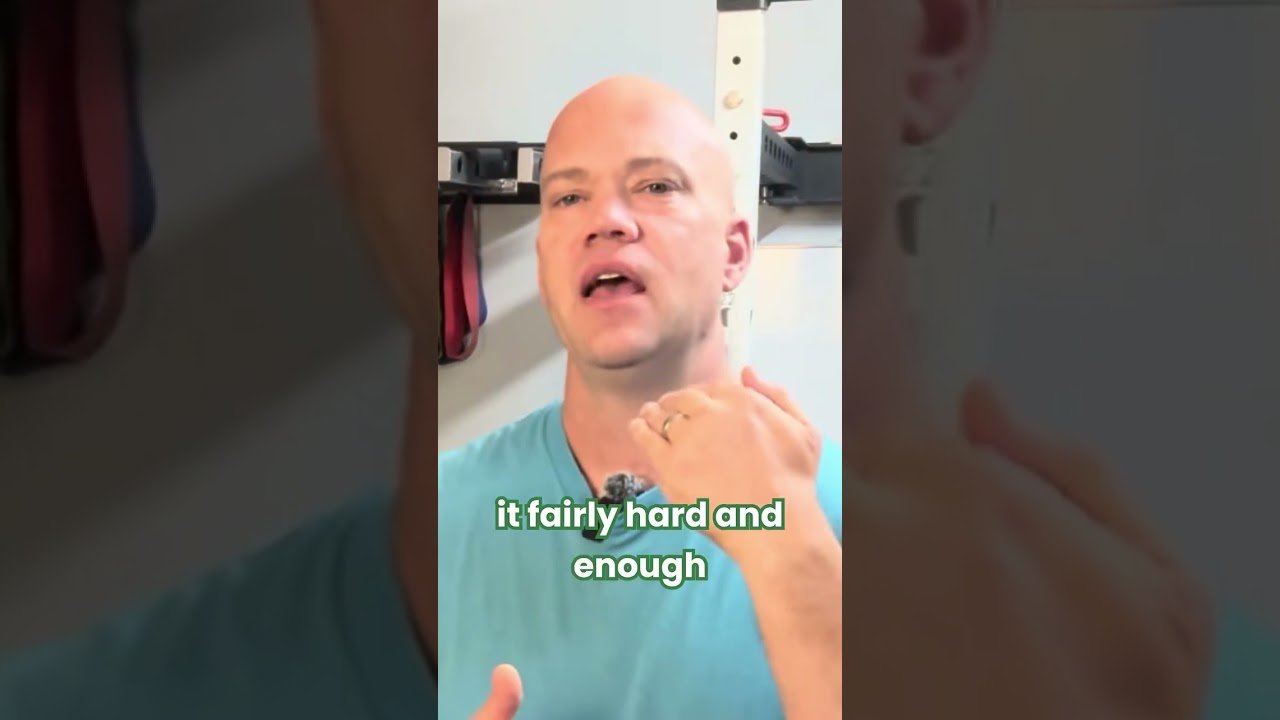
In this instructional video, Bill from beyondfitnessonline.com explains the importance of training flexor movements—muscles that enable bending actions such as elbows, hips, knees, and neck—to achieve balanced posture and better balance. He introduces the cortico‑olivary cerebellar tract, a brain pathway that facilitates flexion when a movement is planned, and argues that optimal posture requires a proper ratio of flexion to extension. Bill demonstrates a practical method: performing any flexor‑focused exercise (e.g., a banded chest press) in sync with a metronome or an internal rhythm for 15‑20 seconds, then reassessing a forward hip bend. The rhythmic cueing is claimed to improve range of motion and coordination. He shows his own before‑and‑after forward bend results after a set of 10 metronome‑timed repetitions, encouraging viewers to try the technique, ask questions, and subscribe for more content.
Chapters
Hi, I'm Bill from beyondfitnessonline.com, and today I'm going to talk to you about why it's important to train your flexor movements. Now, flexion is basically any muscle that will help you get into the fetal position, if we really oversimplify it. It's bending your elbows, bending your hips, bending your neck downward, bending your knees. Those are all flexion. Now, those are important because There's really only 2 ways your body moves, flexion and extension. And if you want to check out more on extension, check this video out right here. And we're going to kind of talk about the opposite of that. So you have a tract in your brain called your cortico-olivary cerebellar tract. Now what that means is that goes from the cortex where your brain decides this is what I want to do for a movement. And if it's a flexion movement, it goes through that medullary, that bottom of your brainstem, which helps facilitate flexion. Now what happens is if we want to create good posture and good balance, you need to have the right amount of flexion to go with the right amount of extension. So if we need to do some flexor movements, here's how we improve that. We're going to do things to a rhythm. So if we set up a metronome and it just goes beep beep beep, and you're trying to do your exercise to that, It's going to improve all of your flexor exercises. So try it out. Try bending over to touch your toes. See how far you can go. Now go ahead and do any exercise. It could be a push-up, a squat, it doesn't matter, but do it to a rhythm. It can be an internal rhythm where you're just trying to think, I'm going to go every 1 second or every 2 seconds. It could be to an outside rhythm, which is like a metronome. And do that for 15, 20 seconds, then get up and try touching your toes again. I'll show you what happened when I did it right here. So to test this, first begin by choosing a flexion motion. I chose a forward bend, flexing at the hips. You can see how far I was able to get. Then I take the band, and the exercise I'm choosing is just a simple banded chest press. Now you cannot hear it in this video, but I do have a metronome going, and I'm trying to hit the end range of motion on both ends on the beat. I do 10 repetitions here, Keeping good form and trying to maintain the rhythm. After I'm done with the 10 repetitions, you'll see the results of the new forward bend. Hope you found that interesting. It can be a really powerful tool to add this into your exercise. If you have any questions, leave them below in the comments and I'll be happy to address them. And if you haven't already, please subscribe to my channel. I post new updates every Friday. And for more information on what I do, check out my website at www.beyondfitnessonline.com. And until next time, live healthy.