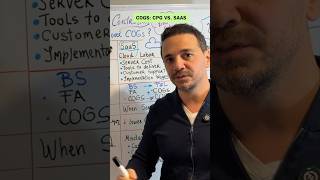
Bill Hanna, CPA, breaks down how COGS works differently for CPG and SaaS companies. CPG includes raw materials, labor, and packaging, while SaaS COGS is mostly cloud fees and customer support wages. CPG typically has 20-40% gross margin; SaaS hits 70-90%.
Chapters
Let's talk about COGS or cost of goods sold for a CPG, which is consumer packaged goods versus SaaS, software as a service. Overall for CPG, the COGS is gonna be tangible and labor. So these are the actual goods that you make or buy to resell and the labor of the customer support people who are helping you sell the product. For a SaaS business, it's gonna be typically cloud-based costs and labor of the employees helping you to deliver that service to customers. Now for breakdown, typically it's made up of raw material, direct labor, and overhead. You also include freight in. Freight in cost is part of COGS or the inventory, while freight out is part of operating expenses. The packaging also is part of COGS as well. With SaaS, what goes into it is going to be server cost. Think of AWS. Tools to deliver the service. Think of Zendesk, maybe as a customer support. Customer support wages. So these are the people who work at the company for customer support and the implementation wages employees who work in implementation. Now, the recording goes, uh, balance sheet to P&L, because when you record COGS, you record it first as inventory, and then when you sell it, it turns into COGS. With, uh, SaaS business, uh, you have a similar item here. So we have fixed assets. Sometimes if you acquire a license, a software license, the breakdown of that is gonna break down into COGS over the years. But you also have some COGS that gets recorded directly into COGS. These are things like wages for customer support and implementation wages. The timing, you record when the goods are sold. So when sold is when you record the CPG COGS. And for SaaS business is when the service is delivered to the customer. So if you have a multiple-year contract, you have to amortize it over the period that you deliver the service to the customer. With gross margin, typically the COGS are high with CPG, which means that the gross margin is gonna be lower, typically between 20% and 40%. While with a SaaS business, you have lower COGS, typically with a high gross margin between 70 and 90%. Now, common mistakes when it comes to COGS, you have a waste when it comes to CPG. So you have expired goods, stolen goods if you don't have good controls, and misclassification of freight. Sometimes you classify the freight out as COGS while it should be OPEX. Common mistakes with a SaaS COGS is going to be the misclassification of customer success. Customer success typically is a selling function, shouldn't be part of COGS. Server cost increase. If the server cost that you have with AWS is creeping up without controlling it, that could be a mistake. Revenue share. If you're recording a revenue share under COGS while the partner is only helping you with the marketing aspect of the service, it shouldn't be part of COGS and should be a selling cost part of OPEX. This has been a Finance Byte. If you are interested in hearing more of these, subscribe to the channel.