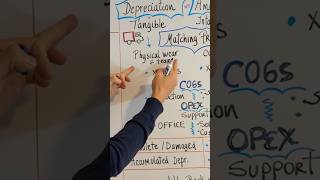
CPA Bill Hanna breaks down depreciation for tangible assets like trucks and buildings versus amortization for intangible assets like patents and software. Depreciation periods come from FASB guidance while amortization is driven by contract terms. Both are non-cash expenses that reduce asset values on the balance sheet and get added back in the cash flow statement.
Chapters
Let us talk about the difference between depreciation and amortization. When it comes to the asset related to the depreciation, typically it's a tangible asset that you can touch, like a truck or a piece of equipment or a building. With amortization, it's an intangible, and that is typically like an intellectual property or a patent or a software license. The recording of these items, you always use the matching principle. So we have to allocate the cost of the asset over a number of years based on the matching principle that says the matching the expense with the benefit that you get from this asset. So for a truck, for example, that's going to represent maybe 10 years representing the wear and tear of the truck, while for intangible asset, you break that based on the number of years in the contract representing the consumption of the economic benefit. Now, the number of years for depreciation is going to be from the guidance from the FASB, the Financial Accounting Standards Board, while with amortization, the number of years is going to depend on the contract or the agreement that you entered into. Now, on the recording for the income statement, what goes under COGS is going to be the depreciation of items used in production. So think equipment or the actual factory building itself. While what goes into operating expenses is going to be the supporting functions. So these are things like the office building where the supporting staff, lawyers, finance, selling and marketing people are sitting in that office. The depreciation of that goes under OpEx, not under COGS. With amortization, what goes under COGS is the amortization of items that support the selling of the product that you have. It's going to be things like software that you develop for resale. So these are typically products that you're going to resell to customers and that's why the amortization of it is going to go under COGS. What goes under OpEx is supporting items, so software that you use for selling and marketing. Think of Salesforce, for example. If you have a subscription for 3 years, the amortization of that is going to be under OpEx. Now, there are one-time charges with tangible assets. These are obsolescence or damaged items that you have sitting in your factory. Think of a piece of equipment that is damaged or obsolete that you have to write off. That could be one-time. Or impairment of an intangible asset. If you have an indefinite life intangible asset like goodwill you're going to have to measure whether it's still valid at the end of each period or it's impaired. If it's impaired, you'll take a one-time charge for that. On the balance sheet, the depreciation sits as an accumulated depreciation, a contra asset account on the balance sheet. And for the amortization, accumulated amortization, also a contra asset account on the balance sheet that reduces your balance sheet account. For the cash flow statement, both of them are going to be added back to cash as part of operating activity. So you take net income, add back depreciation and amortization because these are non-cash items in this period. They were cash items before, but in this period they're non-cash. That's why we add them back to cash from operations. If you are looking for more of these Finance Bytes, go ahead and subscribe to the channel. I'll see you in the next one.