Why CFOs Obsess Over COGs
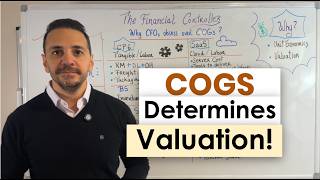
Bill Hanna explains why CFOs obsess over Cost of Goods Sold: it drives unit economics and business valuation. CPG companies see 20-40% gross margins with tangible costs like materials and labor, while SaaS companies hit 70-90% with mostly server and support expenses. Common mistakes like miscategorizing freight or customer success costs distort margins and tank valuations.
Chapters
In this video, we'll go over why CFOs obsess over COGS or cost of goods sold. And the reason why this conversation is important to you as a finance leader or even a business founder is this can help guide the discussion that you have with auditors and investors. So if this sounds good to you, let's dive right in. Hey everyone, this is Bill Hanna, your favorite financial controller, bringing about 20 years of experience in corporate accounting and finance leadership. and I teach my experience here in this YouTube channel as well as on my website, The Controller Academy, for which I'll leave a link down below. In today's video, we're discussing why CFOs obsess over COGS. But before jumping into the various elements of the video, I want to quickly address why CFOs spend a lot of time thinking about COGS. The first reason is going to be unit economics. So from each unit that we sell, say we sell something for $10, The COGS is going to determine how much money is left over that we can spend on marketing and research and development. So that's reason number 1. Reason number 2 is valuation. Uh, when VCs and private equity values a business, they think of revenue growth and gross margin. Gross margin is dependent on COGS. That's why it becomes a highly important thing for evaluation of a business. All right. So to structure today's video, we'll be talking about 2 main industries. The first one is going to be CPG or consumer packaged goods. And the other one is SaaS or software as a service because cost of goods sold is going to be different in these industries. So overall, when we talk about CPG, the cost of goods sold is going to be tangible. So the product is tangible, is something that you can touch. So think of a company like Nike that manufactures sneakers and athletic attire. So their inventory is tangible, something that you can touch, and therefore their COGS is going to be tangible, is something that you can touch. With the software as a service, an example of that is Salesforce. Salesforce sells the platform of sales and marketing business to business. So it's a B2B SaaS business. In their case, their product is not tangible. So it's a cloud-based product. And most of the COGS that goes into it is going to be labor-based, which is the salaries of the people who are supporting the delivery of that service. Okay, so let's go ahead and break that down. So for a company that is CPG, let's say Nike, the COGS is going to be raw material plus direct labor plus overhead. Raw material, if you're making a pair of sneakers, it's going to be rubber, leather, maybe laces. Direct labor is going to be the labor of the person who's standing on the manufacturing floor processing the actual manufacturing of the sneakers. The overhead is going to be the other costs such as the rent of the factory, depreciation of the factory if you own it, depreciation of the equipment, maintenance, utilities, and things that keep the manufacturing operation running. The second thing is going to be the freight-in, the cost to bring in the inventory, and then packaging at the end. When you make the pair of sneakers, you need to put it in a box, and that is part of your COGS as well. Okay, so this is the breakdown for a CPG. What is about the breakdown for a SaaS company? These are the common costs that go into COGS. So the first one is server cost. So to deliver the service to your customers, you need to have a server, and that server could be something physical that you own. So if you own an actual server, then the cost that goes here is going to be the depreciation over time of that server. But most companies nowadays don't have their own physical server. We're talking about small businesses. What you do in this case is you go to AWS, Amazon Web Services, or you go to Azure and lease or rent server space and pay a monthly rent for that. And that's going to be your server cost that goes here. The second item that goes into COGS is going to be tools to deliver the service. These are things like API or third-party tools that you need to have in place to be able to deliver that SaaS product to your customers. The third thing is going to be customer support wages. This is the wages that you pay to your customer support staff. Implementation wages, this is the salaries and the benefits that you pay to the team within your company that implements or onboards the client with the new product that they just purchased. Okay, let's spend some time talking about the recording and the timing of that recording for COGS. And for those of you who are accountants, it's really helpful to understand how information goes from data to populate the financial statements. And for that, I created an Excel file that actually helps you take a sample set of data and create financial statements from it. I'll leave a link down below for you to download that file. But for the recording of COGS for CPG, typically the information goes into the balance sheet. So when you create inventory, that becomes an asset on the balance sheet, and then that gets recorded to the P&L as COGS, When? When the inventory is sold, when you make a sale, right? For a SaaS business, you also have a similar mechanic. So there is a flow from the balance sheet to the P&L, and that has to do with your fixed asset. So a lot of times you have a fixed asset that relates to the actual delivery of the service, which could be computer costs, server costs, and these are fixed assets that flows into COGS after that. But you also have a fair amount of COGS that gets recorded directly into COGS, and these are things like customer support wages and implementation wages. And if this video is providing you with real value, don't forget to hit the like and subscribe button, which will pay me back for my efforts that I'm doing here. Okay, so the next item is going to be gross margin. So typically with a CPG manufacturing-based business, you have high COGS and low gross margin. Typically it's between 20 to 40%. So when I worked at a manufacturing company that made baby food products, the gross margin was about 30%, and that's typical for that kind of business. With a SaaS company, you typically have lower COGS in relation to revenue. You have lower COGS and you have high gross margin. So typically it's between 70% and 90% gross margin. So you might say, maybe I should go into business here in SaaS. Instead of going into a CPG product business? And the answer is yes, a SaaS has higher gross margin, but in the end it's going to depend on the skill that you have. Maybe you have a killer idea for a CPG product that's going to have a very quick and high distribution and you'll have a small slice of the pie, but you're going to have a huge pie to get a small slice from. So at the end you win. But if you, of course, if you have a really good idea for a SaaS product, the gross margins are really appealing. Okay, now let's talk about the final point, which is really most important, is the common mistakes. One of the common mistakes that finance leaders and business founders make in relation to the COGS of the products. So the first thing is going to be waste. Uh, the first item is going to be expired goods. So you need to keep tabs on the expiration and the obsolescence, uh, dates of your goods, uh, because if you're getting close to the expiration date, you should be moving the products with the near expiration first before you touch the products that have a longer expiration window or obsolescence window, right? And if you get to the point that you're very close to expiration, sometimes you have to do a fire sale so that you can sell the product quickly with a much lower margin so that you can get that product moving. With the stolen products, what I see the mistake that's being made is not implementing inventory controls that logs when the inventory leaves the warehouse. So you need to be logging the inventory when it comes in and logging it when it goes out and doing a periodic inventory count to make sure that nobody is stealing the inventory. Another mistake that I see is misclassification of freight. So freight is tricky because the cost of freight in to bring in material, direct material to your, or, and packaging to your factory, The freight in is part of COGS, but the freight out, when you're shipping the product out to customers, isn't part of COGS. Freight out is a selling cost that goes into operating expenses. So this is a mistake that I see often. What are the mistakes that I see under SaaS? So with the SaaS businesses, the first one is going to be misclassification of customer success. So within the customer or the delivery organization in a SaaS company, you typically have customer support, customer success, and implementation. These are the three functions that you typically see within the delivery organization of a SaaS business. Customer success isn't part of COGS. Customer success is a selling function, right? These are the teams that are making sure that the user is able to use the product and is buying more, so they upsell the customer on other products as well. That's why they're called customer success. Their cost typically is not part of COGS and should be part of operating expenses. Server cost increase. So typically what I see is that the cost that you're paying to AWS or Azure is left unchecked, it rises quickly. So you need to tie it to usage of the business. So when you're, if you're B2B and you're adding in a new enterprise client or account, you need to be able to tie the cost of that to an element of the cost in AWS or Azure so that your economics are moving in the right way and not paying double for an additional customer that you add into your platform. So for that to happen, you need to have periodic meetings with the engineering team. So the finance organization and the engineering organization need to be in sync into deciding how the cost should be moving up for the business. The other element that I see is revenue share. So if you are a B2B SaaS company and you are partnering with a third-party company that's going to be marketing your product and you're paying them a revenue share, A lot of times I see that revenue share being booked into COGS, which is a mistake because the revenue share for a third-party company promoting the business, if that company is not involved in the delivery of the service, then that's not COGS because COGS is only about the delivery of the service. But if all they're doing is marketing your product, then this is a marketing cost that operating expenses are not part of your COGS. So to zoom back out and remember the why, the why behind CFOs, why do you obsess over COGS in general? It's because if you get the recording correctly and the timing correctly, and you record the correct elements that go into it, and you pay attention to the waste and the misclassification and all of these things combined, you can arrive at the correct gross margin for the business. That's going to help you decide the unit economics. And that drives whether you can make more of the same product or maybe discontinue and create a new product. And it's going to help you with the valuation of the business overall. So if you like this video, give it a big thumbs up, and I'll see you in the next one.










