Built for Landscapers: The AI-Powered Future of Aspire | Podcast Ep. 242
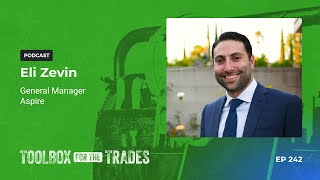
Eli Zevin, Aspire's new general manager, discusses scaling the platform for landscapers with specialist customer success managers, dedicated implementation teams, and AI features including agentic experiences that can handle tasks autonomously.
Hello, and welcome to Toolbox for the Trades. My name is Amanda Salvatore, and we have a very special episode for you today. We are joined by Aspire's new general manager, Eli Zevin. We'll get to know Eli and learn about his journey from being an early employee at Servicetitan to taking on this new leadership role at Aspire. We'll dive into his vision for the company, discuss what changes are on the horizon, and hear what excites him most about the future of the landscaping industry. We'll also touch on his thoughts on the impact of AI and on a personal note, how his experience as a summer camp director shaped his leadership style. I hope you enjoy this conversation as much as I did. Eli Zevin, you are the new general manager of Aspire, and today we are taking a deep dive into your vision for the company. Thank you so much for. For joining us on the show today.
Yeah, absolutely. This has always been something I've wanted to do. I've seen many, many episodes of Toolbox for the Trades. Absolute honor to be here with you, Amanda.
Oh, my gosh. That's so kind of you to say. I want to say congratulations again on your new role as gm.
Thank you. I'm very excited, honored, and can't wait for, you know, all the things we're going to do with Aspire and with our landscape customers here.
Yeah, absolutely. When you and I were discussing having you onto the podcast, we talked about that. This is an opportunity to not only hear about your vision, but an opportunity for us to get to know you better. So I'm excited to hear a little bit more about you. And speaking of that, we have a really fun icebreaker for you today. You're a big Dodgers fan. What's your favorite Dodgers fun fact about the team that most people might not know?
Maybe the one I would say is that the Dodgers have won the Rookie of the Year award almost twice as many times as any other team. I think we're up to like, 18 rookies of the year now. That potential doesn't always pan out, but some pretty good winners in the history of the Dodgers, including a couple of times where they had like four or five years consecutively where they won Dodger won that award in a row, including when I was a kid in the 90s. So a lot of. A lot of great rookies come through the Los Angeles Dodgers.
That is so much fun. I really thought it was going to be a fun fact about Dodger dogs, but it's okay to know. To know some.
I do love a Good Dodger dog. Mustard and onions is my jam. So, you know, I don't know what people are doing with ketchup, but that's.
A whole other conversation, that's a whole other podcast. We could really get into it. It's very divisive, for sure. So let's get into it. Some of our listeners might know that you started as employee 96 for Service Titan and now here you are, the GM of Aspire. But for those who might not be familiar with your story, could you start by sharing a bit about how you found yourself here?
Yeah, it was a long time ago, nearing 10 years now. But before I worked at Service Titan, I was working at a large overnight residential summer camp for kids as one of their full time staff members during the year. Close to a thousand kids would come through the camp at any point during the summer. I. And as a residential camp, I mean, just absolute chaos would ensue at times, as you can imagine of the large number of kids in residence for weeks at a time. But anyway, I had grown up at that camp before working there full time, and one of my former counselors found out I was looking for a job. And he was a very early employee of Service Titan. He was, I think employee five or six. And he gave me a call and said, hey, you know, I'm working at this company. It's awesome. We're in Glendale, check it out. And I came to meet with him and ultimately ended up taking a role implementing software. So big shout out to Eric Simpson. He's the reason I'm here. Eric, I love you, my man. Thank you. And yeah, ended up as Employee 96 for service time.
That is incredible. Thank you to him. We're so happy to have you. I know that you are new to the landscaping world, but you are surrounded by, by a team of experts. What are some of the key takeaways from the industry that's getting you excited?
Yeah. So one of the first things I did when I became the GM for Aspire was I started meeting with a lot of our team members individually, one on one, just to get to know them, you know, see what makes them tick, see how they're feeling about their day to day, their work and what Aspire's doing. And one of the things that blew me away was like almost to a T. Nearly every single person I talked to, hey, how did you get to Aspire? I was working at a landscape contractor. We used Aspire. I loved it. And then I ended up coming over like that was a pretty common story with all that experience from landscaping, and that really, for me, was huge. Because what that means is that, you know, number one, they are thoroughly invested in the success of landscape contractors. They understand the challenges, they understand the value that the landscape companies across the country bring, and really wanted to make an impact here at Aspire, So really motivating there. But in terms of some takeaways from the industry, you know, I think, number one, and I've seen this firsthand, meeting a lot of landscapers the last couple of weeks and months, the warmth of the industry is unmistakable. Every landscape contractor I meet is just giving me the warmest welcome, welcome to the team. We're super excited to have you touring me around their shop, talking me about, you know, what makes them tick. It's really been an incredible experience. And then things I've learned from the team. I mean, the landscape industry is growing significantly. We are seeing incredible rates of growth across the country, and that's a really exciting place to be as an industry now. There's certainly challenges that we're facing. You know, labor, other things. Obviously, the introduction of AI is a big topic right now. Nonetheless, the growth is unmistakable. So really fun time to be involved with the industry.
I have to say, I agree with you about how warm and welcoming that this community is, and it's really wonderful to see. I love seeing people with open arms and just ready to kind of dive in and get the job done. So I'm so glad you're having a great experience. What is your overarching vision for Aspire now that you're here?
Aspire is in an incredible place. I mean, the value that it delivers to our customers is unmistakable. And you see that a lot of the businesses that are growing the fastest in the landscaping industry are on Aspire. I think it helps really facilitate that growth and facilitate a lot of the goals, achieving the goals that these businesses have. Nonetheless, I think, you know, kind of referenced it a minute ago. But we really need to continue to evolve Aspire into the future, and that's going to include ensuring that our platform, our features, and our teams are ready for that scale and growth that we're starting to see in the industry. So as these companies are growing in size and scale, we need to make sure that we're able to match that and support them at that new, increased scale over time. Number two is ensuring that the latest technologies are being utilized. And, you know, as I think about what really got me excited about joining ServiceTitan all those years ago, one of the biggest things was bringing technology to people who had historically been underserved by technology. And I know that that was a big part of why AR and VAHE, our founders, founded ServiceTentin in the first place. And so I think about that with Aspire now, right, we are now in a position where we can not only ensure that landscapers aren't being underserved, but actually quite the opposite. We can make sure that they're at the cutting edge of technology. And I think that really starts right now with AI and how we think about utilizing it, both internally, so we're serving them most effectively, but also how we're building on the front end and then ultimately really redefining the entire experience of using Aspire, using AI as well.
So with new leadership comes some changes, right? What can we look forward to, especially when it comes to the service teams.
Talking more about, you know, wanting to make sure that we are scaling to support our customers, who are also in many cases scaling. There was a few areas that we initially identified that really help us to do that. Number one is on our success team right now, OR Historically, our CSMs have been working with customers of any size. And so they may have a call at 8am with a $5 million business and then another call at 9am with a $50 million business. And that's quite the context switching. You're gonna have to go from, you know, very different sized businesses back to back, back. And what you're going to be discussing with those businesses is going to be meaningfully different. What they need from the software is going to be very different. And so one of the initial changes we're making is specializing our CSMs by size segments. So we will have CSMs focused on our largest customers and then CSMs focus on our emerging customers who are really getting going and trying to get to that, that level of growth. And that will allow them to focus on the areas of Aspire that drive the most value and be able to really recommend other things that they see. So if you have a question as an inspired customer, hey, how are other businesses like me doing this? Your CSM is going to have a lot more context there, a lot more history with customers of your size and kind of relevant segments. So we're really excited about that change, really delivering value to our customers and allowing our customers to get even more from our CSMs and to help them scale as a result. Another change that we're looking at is within our implementation team, ensuring that businesses who go through implementation and are really starting with Aspire, which is such an important part of the journey Really a make or break moment in your journey with Aspire. I would say that those businesses are working one on one with an implementation manager who is responsible and accountable for their success on the platform. And so that is something I'm particularly excited about. My background from service titans and implementation, so I'm pretty passionate about it as well and really looking forward to the impact that that will have as we roll out that new model.
It sounds like there's so much going on and it's really focusing in on what the customer needs, what their specific needs are, and I love that you're taking that into consideration. I would also love to know about data imports because this is going to affect customers as well. How is this changing and how is it going to benefit customer?
So one of the changes that we really made within the service titan world in my last couple of years was really leaning into a model where the service titan implementation team owns the majority of the work within an implementation, so that a customer going through implementation remains focused on learning the software. There is enough there to chew off to learn service Titan and ensure it's going to work for your business. We wanted to make sure that that's where their focus was and we're going to start to take steps similarly within Aspire and the first one relates to data import. We are in the process now of building out a data import team who will become responsible for working with customers directly to get their data from their previous system into Aspire. And that is something that will be a huge impact, huge value driver. We do not want people focused on manually entering their data, getting them into spreadsheets and spending a lot of their mind share during implementation, worrying about how that's going to look. We really want them to again, be focused on learning the software, thinking about the change, because that is a pretty big change to their operation. And so this data team we're just in the process of building out now, but the vision for it is that they will own the data import with customers. We might not be able to do 100% of everything, but the majority of it, certainly we want to take on.
I have to ask you if there is a listener or someone who's interested in advancing in their technology, bringing technology into their business, but they are anxious about this implementation process. What would you say to them? What should they be thinking about?
Number one, I always recommend to people, is the fact that you're thinking about it is a big positive. The biggest challenge in implementation comes from not thinking about it and just diving in without any intention or planning. So number one, you're in the right place, you're thinking about the right things. Number two is think about the people on your team and the impact this is going to have, both in terms of how it's going to add value for them, make their lives easier once you are fully live, but also the challenge that it will take you have to go through to learn a new system. Right. People are going through their day to day work and on top of that do have to spend some time learning a new system. That's the reality of implementation. And so thinking about that challenge and ensuring you are setting them up for success, to be able to handle that, while also ensuring that you are communicating how much better things are going to get once you're alive and the really the why behind you would want to make this change? What's the value to the business that this is going to bring? What's the value to each individual that this change is going to bring? Ensuring that that is very well known and talked about is a huge, huge component as well. So that's a little taste. There's more to it than that, but I think again, in a really good spot if that's what you're thinking about.
Absolutely. Is there anything else you're excited to share with our listeners?
We want to continue to solicit feedback. We're going to look for additional opportunities to get feedback from our client base to ensure that what we're building into the future, how we're utilizing AI, what we're prioritizing, how we're thinking about, what we're adding to the software and changing about our services, teams aligns with what people feel they need in order to be more successful on the platform. So more to come there, but really excited to be continuing to gather that feedback from those who use the software.
AI is on top of everyone's mind right now. So I want to know what gets you excited about the future of AI.
Oh man, quite a lot when I think about AI. With Aspire, we're really thinking about it in three ways. One is how can we utilize AI internally to serve our customers more effectively? Right now we have a knowledge base as an example, it's a list of documents you can go through to learn about Aspire or maybe try to find the answer to a question. Question, can we use AI so that you can, you know, ask a question to a chatbot as an example that would then give you information from the knowledge base rather than seeking it out that opportunity and that kind of idea of how we could do things internally is really exciting. Number two is features on the front end of the platform. We recently released a beta for what we call dynamic language translation. It translates the Aspire app into other languages and uses AI to do so. So thinking about the front end and how people use the software every day and features that we can build using AI to enhance that experience is the second area. And then number three is really when we think about long term, and this may be where I'm most excited, we think about long term how you use Aspire. I think that that is going to meaningfully change as AI becomes more and more a part of how we utilize tools and software platforms. And what I mean there is really, if you think about what we would call an agentic experience, we are interacting with a bottle who can kind of understand what you're saying and reason, who can remember what you told it yesterday and utilize that context in its answers. And then the big one is that can take action on your behalf. So rather than as an example, going into Aspire and running the six reports you need for your month end close, you could just say to this bot, run my month end close reports. And it sends it to you. Right. That kind of experience meaningfully changes how our users will use Aspire in the future. And so that's not going to be an immediate change, that's going to happen right away. But that's what gets me most excited about the fundamental difference and benefits and value that AI is going to create over time here as we continue to evolve the platform.
That's very exciting indeed. I know at the beginning of the episode, we discussed your experience at this summer camp and I have to think know because when we previously spoke, you told me your age and I, and correct me if I'm wrong, but you were 22 to 27 at this time, having to be in charge of a small city, if you will. I'm sure you have some banana stories from that experience, but how did working at that camp shape your leadership style? Especially because it was. You were. It was such a young age. I'm sure it had such an impact.
Yeah, yeah. So coming right out of college, I found myself as the assistant director of the camp and it shaped me a great deal. I think when you're in that kind of an environment, you referenced it as kind of like a small city. It really feels that way. I mean, we had nurses and doctors. We had just all sorts of people that were supporting as you would need in a residential environment like that. Right. And so to be common Right out of college and having to figure out all of those challenges that come with that type of a role was really a big influence for me from a leadership standpoint. I think one of the things in particular is being calm in chaos. You know, I really had to learn that quickly because with that number of kids, you would be running around, you know, doing your regular day to day stuff, making sure everything was operating smoothly and everybody was getting where they needed to get at the right time and all that, and then find out there's some sort of medical situation, a kid got hurt in this way, maybe needs to go to urgent care, any kind of situation you can imagine that you just weren't prepared for. And so you really have to stay calm, you have to triage, you have to take things one step at a time. And I think learning that from an early age really helped me. From a leadership perspective. Things in business are different. You know, we're not dealing with sending people to urgent care necessarily in that same way, but at the same time, you know, a lot can come up at once. If we were having something happen, it really allowed me, I think, to grow very, very quickly at a young age and really develop in that way. The second thing I would say is it was a big team, you know, to operate an organization like that. We had to hire and train and supervise a really large team of people. And many of those people were younger in their careers, maybe even in college at the time. That was another area is really thinking about what are the things we're looking for in an interview process that allow us to identify if somebody's going to be successful and then what are the things we need to train them at the beginning in terms of how to do both from a hard skill and soft skill standpoint. And then when you manage people, especially younger in their careers, how can you manage them in a way that is fair, that helps them grow, but also gets what you need in terms of serving your community and making sure that the kids at the camp had a great experience. So thinking about all those things was hugely impactful for me. And I still think about a lot of them regularly, you know, but now in more of a business environment.
I know you mentioned a little bit about hiring and what those qualities are, and I know that there is this, this labor shortage as well. It seems like it's very hard to find, find people. So when hiring, what should landscapers and business owners be looking for? What are some skills that you would suggest that they keep in mind?
So, you know, interestingly, a lot of the conversations I've been having with landscapers, it depends on the region. Some are telling me, yeah, hard to find people. Others are saying, I can find people, but finding quality people is the challenge. And so to me, that really comes back to the interview process. What are you asking them to try to identify if they are quality. So a couple of things that I really learned, I think, from my summer camp experience and hiring that many people and then have continued to grow into at service, tiny. And now here at Aspire, number one is get multiple people's opinions, right? An interview process should include the perspective of more than one person and ideally people in different positions at your business because they will have different perspectives or thoughts on what's required. Number two is if you can try to evaluate them in terms of doing the work and seeing how they did it. For us at Aspire, we will ask somebody to lead a session as like almost like a mock call, right? As an exercise to see them actually in action, if you could see that. It's actually, in my opinion, a lot more eye opening than just ask them, asking them how they would handle a situation or a time that they did handle a situation like that. So sometimes there's opportunities for that, sometimes there's not. But if there are, I really try to lean in there. And then the third one to me is use the interview process as part of the training. So ensure that through the interview process, they have an understanding of your core values of a business, as a business, and what your expectations are going to be of them if they do get the position. That's a really big key for me as well, because in that moment, they're thinking about, do I want to take this role? And you're thinking about like, is this person going to be able to live those values? And I think having that as an open conversation as part of the interview process is a huge key.
Eli, that's all really great advice. Those are some things that I haven't really heard about before or things to consider, so I really appreciate it. Speaking of advice, I know that as a leader, you kind people bestow advice to you, I'm sure, all the time as you're moving up in your career. What's some advice that you've taken with you along the way?
Great question. I love kind of talking about this and also hearing other people's answers. I'm kind of curious even for others that you've heard, but for me, I've certainly received a ton of advice over my career that has helped me get here. I Think the number one thing that comes to mind is breathe. Like, just that alone, I think. And. And, you know, it's different in different contexts. Like, you're coming into an interview like this, take a couple of deep breaths before you start. It helps calm you down. You got a lot of chaotic things coming at you. In a situation you're trying to manage through, you have to breathe through it. So that's a really big part of it for me that I think about pretty regularly. And then the next one for me is really about preparation. That's why I think if you can prepare for what is coming, and that includes, like, on Sundays, I'll take a look at my calendar and make sure I'm prepared for that week and what's about to happen on my schedule. But also prepare for situations that are rare and know what you would do and be intentional with how you would act in those situations. Preparation is a huge component for me of how I operate.
That's great advice. I also love this idea of breathing. I have a small child at home. We talk about breathing quite a lot. So it is a lifelong skill and one I partake in very often. So great advice. Finally, I have to ask you this. You have had this journey from the little startup that could, and now here you are with Aspire. How does that feel on a deeper level? I must be. The gymnastics that must be going on in your brain must be incredible. How does that feel?
Yeah, it is really incredible. I think one of the things I've been really, really lucky to experience is to grow personally alongside the growth of the business. And I really think that as Service Titan and Aspire are stepping into their next era, if you will, or the next phase, I'm doing so as well. And so I just feel incredibly humbled and lucky to be a part of that. It's a great. Have been able to do that. It is pretty wild to think back on what the business was like when I first started. It was quite different. We were much smaller. Everybody knew each other. And to think now, you know, that everyone's remote, it's just a very different world that we operate in, but also really an incredible opportunity for us to make an impact. And I think that's really what's been consistent between when I started and now, is the people who work in this business are there to deliver value and make an impact. And that is what has kept me going this whole time. And I think despite our scale that we're at now really has remained consistent. It's pretty exciting. So really really honored and excited for what's next as well.
We're all excited for you as well. Before we go, is there anything that you wish we talked about today?
No, I think it was great. I really appreciate it and would love to come back at some point in the future when you'll have me. As I mentioned, this has always been a dream of mine. So really excited. Excited. And maybe as we continue to scale, there'll be another opportunity.
Yeah. We'll have to have you back on and hear how it's going. Absolutely. Eli Zevin, what a great conversation. Thank you so much for coming onto Toolbox for the Trades.
More from Bill




Capturing the 80%: How SmartAC’s Gen-2 Targets Non-Membership Homeowners | Podcast Ep. 296

Build better customer data with every booking in ServiceTitan | TAD Tune-Up Series

The Biggest Change for Roofers Coming From Other Roofing Software to #ServiceTitan?

