Dropout to CEO: How the Trades Make It Possible w/ Julian Scadden | Ep. 53 | Toolbox for the Trades
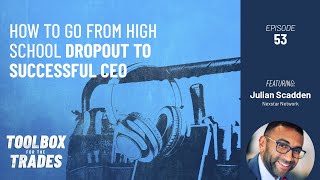
Julian Scadden went from high school dropout to CEO of Nexstar Network. He discusses how the trades offer a genuine path to ownership and wealth, what separates contractors who scale from those who stay small, and why mental health matters in an industry that often ignores it.
Julian Scaddin, welcome to the toolbox for the trades.
Happy to be here. Thanks for having me. Thanks for the platform, thanks for the time.
Oh, no problem. You are the president and CEO of the nexstar Network, which has been name dropped quite a few times in this podcast. Nexstar is also a big partner of service Titan. I've wanted you guys on this podcast, honestly, forever. I'm ashamed it's taken this long, but I am so excited to chat with you. I think we're going to get a really great conversation here, but I'm going to start our convo the way I do every single one, which is, how did you get into the trades?
It's fresh out of high school. I'm a high school dropout, so hello world, hello friends that are out there with me. But really, just school was not the place for me. I wanted a job. I wanted to make some money. And there was a mom and pop plumbing company, Snake and Rooter, in Aurora, Colorado. Some of you all will know about that because they were acquired. They were acquired by this big corporation, and a bunch of us were merged together. But I got into it wanting money, wanting cash, and I was a ditch digger. So I'm not afraid to trench out some sewer line if I need to.
Oh, nice. So ditch digger in Colorado, where did you go from there? How did your path weave from ditch digger to where you're at today? And nexstar.
As the business, as the mom and pop, was acquired, they merged five other businesses together. And this was a huge corporation, national corporation, that purchased these businesses, put us all together. And I'm not even 20 at the time, so I stayed there for about eight years. So through my formative years, professionally, in my early 20s, I learned the business and I. And I mean, I didn't. I didn't learn a culture that I want to repeat, but I learned the business. I learned numbers, I learned metrics. I learned how to make money, I learned how to keep money. I learned how to run off a lot of people. And I say that very intentionally, that it wasn't a great experience for me. And my style that I now prefer of leadership and what I think I'd like to see in our industry, but I'll tell you that the lessons that I learned in metrics, the lessons that I learned in reporting, the lessons that I learned about this industry really came from that point. So eight years there, I went from the field to the office and eventually became a manager there. And then after that, I was recruited by some people that had worked there previous to the acquisition and they had started their own business and they were nextar members. So then I went to work with them, was an office manager with them, and their business was just so totally different. The culture, you know, again, being my first real job working at that corporation, thinking that's how the industry behaves. And then I go to this other business and it's totally different. It's a complete one to 80. And I fell in love. And, you know what's so cool about this? And eventually from there had another opportunity to go and part with a new construction company and start a residential department, ran that residential department and became nextar members there because I saw what it did for the business I'd been with previously. And my business coach at that company was the first employee and first CEO of nexstar, Jack Tester. And so we had a relationship in that he was my business coach. And then when I walked away from that business, we were very successful, we grew, we did very well. And what I decided in all of my young wisdom at that time, you know, maybe in my 30s, that now I wanted to be a coach and I wanted to consult people because of what I saw happen for me in that business. And then I would. I started my own consultancy. I did that for about a year, but I'd always poke Jack. I would send him my newsletters and I would always told him I wanted to be a coach at nexstar. And eventually one day I got the call. That was eight years ago. So now I've been an employee of nexstar for eight years. Started as a coach, then on the training team. I did do some training and then the vp and now about six months into the president CEO role. So there you go. That's how I got here.
That's awesome. And what a journey from high school dropout to CEO and president. I mean, that's a pretty compelling American story, if I do say so myself. You just said a lot of really cool things that I want to get into, from the style of leadership to learning the metrics, which is the number one thing. The most successful contractors who come on this podcast, talk about to Jack Tester, who I now have heard so much about. Love to know more about that relationship in terms of mentorship. But in the off chance that anyone listening to this does not know what the NEXAR network is. Can you please define it?
Yeah. Thank you. Thank you. I took that for granted and just took off running. This is great. So for anybody out there listening, we have had a Great partnership with service Titan. I do want to take a moment and park there and just say it's been a great partnership. You know, it's really been beneficial for us to learn from you and we've watched you learn and grow with us and I just want to take a moment and acknowledge the relationships. Well, why would we have relationship? Who the heck are we? What do we do? Well, we are a member owned organization that helps with, I'll just say it the way I hate saying it, best practices and you know, what the heck does that mean? We're a coaching and training organization. We have coaches that are meant to have relationships with you and your business that help you understand the business, the operations, the metrics. We have trainers where you can go and develop skills and help change beliefs and help you open and expand your mind. And that's what we do. But I like to lead with remember owned because here's the difference, gang, as you're listening, you can join any other group out there and I encourage you to, I encourage you to find a group. I'm not telling you we're the best. We may not be the best for you, we may not be the right fit for you. But the reason that I think you need to join a group is because you do need an external set of eyes looking at your business. That'll be very helpful. But we are member owned. That's why we are different from others. Meaning that every single one of our members hold one equal share. And what's most important about that though? Everything we do, we've been as led by Jack Tester. We have grown profitably year over year by leaps and bounds. But every dollar of profit that we make does not get returned to our membership in the form of distributions. It actually is returned in the forms of goods and services. So we can only reprovide more services. So whether that's more coaches, more training, more technology, whatever it is that we need to do to better serve our membership, that's what we do. So that's who nexstar is. Thank you for that.
Oh, no problem. I sometimes get caught in this trap too. I've been in the service titan ecosystem for almost four years now and nexstar and all the other organizations and certain even names like Jack Tester, you just take them for granted. But I remember when I first came on board a service titan, I was like, who are all these people and am I supposed to know them? I think it's helpful to make that clarification. Yeah, exactly.
Nice catch.
So nexstar has been, as I said, name dropped on this podcast many, many times. We've had a lot of your clients on here who really attest their growth to nextar, but not only nextar members. There are so many people who come on this podcast and say, oh my God, our business coach. Or, oh my God, we joined this masterminds group and it really just opened our eyes. I really want to get thoughts on how one becomes a lifelong learner, because I think there's a really subtle switch that happens when you're an entrepreneur and owner operator where you kind of have to just say, all right, I have exceeded my personal knowledge and I need to now grow. So, like, what are some tactics adults can leverage to continue growing in their knowledge, successfully absorbing it and then utilizing it to improve their business?
Here's what I love in what you said is the last piece. It's utilizing it. I've witnessed and experienced the company of many avid lifelong learners who learn to be the smartest person in the room. And I really think that the true number one is the application. So I want to start where the last thing you said. It is the application. That's all that matters, in my opinion. My wife and I had a conversation recently and she said that she wants to stop using the phrase I know if she doesn't take action on it now, she's going to say aware. And she said, because there's another catchy phrase that says if you know better, you do better. And so it's like, okay, if you say, I know that means you're going to apply it, at least in our household. So she says, I'm aware. It's like, yeah, I'm aware, and I'm not going to do anything with it. So application is primary. But what I've noticed in the people that I choose to surround myself with that are lifelong learners that actually apply it, there's a level of humility and empowerment are the two things that the trends that I see. You know, first the humility that there's more to learn. There's humility in asking the questions. I have a phrase and a saying. You know, the be dumb quick movement. I want more people to join the be dumb quick movement. The be dumb quick movement is when you say something that I don't understand. Just go, I don't understand. You know, just say it as quickly as possible and just say, could you please explain that to me? And it took me a long time to figure that out for fear of being found out that I'm a high school dropout for fear of being found out that I'm not as smart as you, for fear of losing my position. So I really think that humility, the ability to say, I don't know it all and I'm seeking more, but then the empowerment, and here's what I mean by that, is to understand your strengths and limitations and then to surround yourself with people who can help you, whether they're in the industry or outside of the industry. And then you'll realize that you'll be perceived. I get perceived by many that are close to me, that know me. They say, oh, Julian, you're such a lifelong learner. I'm the same tiger with the same stripes. I really am. I have not changed much at all. The truth is, is that I've learned to be a little bit more humble. And the truth is that I've learned to leverage people's strengths and say, oh, they're really good at this, I can put them in this seat or I know I'm really good at this, so I'm going to run at that. And I can show my colors a little bit better. And I think, you know, just that subtle shift and just get away from, you know, how can. I love growth minded, growth minded people again. I think about what could be versus what is. And we could spend an hour there. So I'll pause and hang out right there.
Humility and empowerment. Yes. And I also wrote down the Bible dumb quick movement. That really triggered something in me because I think, and I'm not sure if it's just the way, you know, our public school system is set up, which this podcast is not going to tackle that issue, but how we all have that fear of being found out as not who we think we are. You know, I feel like there's such vulnerability that is required in order to admit I don't know. Tell me. Like, tell me. So I understand that imposter syndrome that I think a lot of folks run into at the beginning of their career and maybe later in their career when they find that they're running their first, their own H Vac plumbing business and they're like, I don't freaking know how to do this. I'm like learning how to do this as I go. And so I think embracing that humility of you can't possibly know everything is so crucial to becoming a lifelong learner.
But where do you go? You know that that builds up when you, when you, when you have this fear of acknowledging you don't know the answer and you're scared to look Dumb in front of your staff or even your peers, you know, beyond your business not growing. What I want to talk about for just a quick moment here, you know, just literally for mental health, these are. This is an important topic in our time specifically for many reasons, always, but especially right now, it's hyper focused. Where does that go? Where does it go when you have to carry that weight of always having to be the source of all energy and this is not healthy for you. So when you are at 1 million, 3 million. Yeah, you're the source of all energy. You need to have the answers, you need to have them quick. You need to have those results. But as you start to grow, you will cap out very quickly. And I worry and I look at around this industry the health of many business owners. And so I'm seeing this now as some of these owners are getting to the next level, revenue wise. You know, these. And I'm just going to call it here so we can cut this if you want, but you're a big, fat, nasty, slappy, sloppy dudes. And now all of a sudden, like you're getting fit and you're doing yoga and you're thinking, it's like, we get it. You know. One of the great people who helped Service Titan grow and the industry grows, Keith Mercurio. I know he's been on here, I know he'll be on again and I know he's a name that I'll drop for sure. But we used to have a saying. He and I used to train together. You know, we're quite a combination to handle in person at the same time.
I can imagine that. Yeah.
Much less on our own. But we always had this saying in training is there is no work you and there is no home you. There's one you. And we really need people to get. And we would be talking to technicians, but I talked to the owners of the business in that same vein as I really want you to get that there is no business you and there is one you. And where does all of that pressure go when you are afraid to acknowledge you don't know it is carrying on your soul, it is carrying on your weight, it is carrying on your family and it is carrying on your health. And I invite you to use this podcast as a reason for you to say, you know what, I am going to double down and take care of myself mentally, physically, in the event. And just say, I don't know who can help me.
I love this. This is my sweet spot. And Keith will be on an episode of this podcast before you. And we did talk a lot about mental health in that episode. So I'm going to use this as an opportunity to dive even more into that.
He knows a lot about that.
Yeah. I want to know. So say you have a nexstar member or just some. It doesn't have to be a nextar member. It can be anyone that you've coached in your past or someone that you see who is at that one $3 million mark. And they're running everything. They are. You know, Chris Hunter says, I think it's a John Maxwell thing, the law of the lid. They are like, their company can only get as high as or can only grow as much as they know. Right. They're kind of like almost a bottleneck. How do you honestly sit down with a business owner in that place and say, dude, you need to start taking care of yourself and you need to start delegating? Like, what is that shift that has to happen? Like, how do you get them to kind of have that moment of like, it's not all on me, and I can finally start. I can start outsourcing some of this. I can start getting help.
As with any relationship, it begins with trust. Before I can tell somebody that they have to trust and believe me, so we have to invest the time, you know, and it's just like, as you business owners have to have difficult conversations with your employees or your leaders, as you grow in any strong relationship, you have to have that trust first where they'll even consider where you're coming from. So, you know, sometimes it. Sometimes it's the blessing of the bottom as well, that sometimes you just need to let somebody crash when you could tell they're not listening, you could tell they're not ready for the message that you need to just let them crash and get to the bottom. And then from there, you know, when they seek the help, you'll be there for them. But, you know, you can. Once the trust is there and they're ready to listen, you know, it always helps to give. I found that it helps to give, you know, specific examples or correlate, you know. What else have you noticed? While a lot of times many us as humans, we want to tackle the symptom instead of the root cause. And so sometimes that's what a lot of this stuff is, especially with coaching. You know, hey, I need a new pay plan. Oh, hey, I needed a different inventory or, hey, I need a different truck. Well, why, why, why, why? You know, do the old five whys and you'll get to the Bottom of it. And many times, like, because I'm miserable at home and I just can't take any more complaints today. Oh, okay, well, what could that look like? And then you, you shift into projective questions to get them into that state of what could be. And then you transfer ownership again. As a coach, we cannot be the ones doing the lifting for you. And just like you as leaders, you can't be the ones carrying the things for your team. So at first I talked about identify future project and then transfer ownership. And that's how a conversation can really help someone move in that direction. And that's just a very high level concept.
So identify in that, identify the actual root cause of the issue. Future project. What is an ideal state of this look like? Am I following that correctly? And remind me of the third step one more time.
And then this transfer of ownership is just making sure that I'm not coming up with the solution and you just nod your head. Now as you project, it's like, okay, what does that mean to you? What does that look like for you? What's your first step? On a scale of 1 to 10, how important is this to you? So you kind of check in with those two. Well, it's about a five. Oh, well then that's not your ideal future state. And then you can challenge them again. Well, my ideal future State is this one. A scale of 1 to 10. How committed are you to it? Well, I'm about a five. Well then that's not your ideal state because you're not going to get it. And then you just get harsh with them again. Oh, well, no, I really do want it. No, you don't. No, you don't. If it's not an 11 out of 10, you're never going to have it. So what are you going to. What's the one thing that you're willing and ready and passionate to do today? And that's the heartbreaking part, is sometimes you get off of a call like that and you realize nothing's going to change this week and you just there for the next call. And when they are ready, that's when change happens.
Really interesting. Yeah. That you can only. It's the old saying, you can drink a horse, you can drink a horse to water. You can, you can, you can show a horse water, you can't force it to drink it. But you know exactly what I'm saying. It's really interesting that we have to watch, isn't it kind of hard and we'll stay on mental health a little bit longer. And then we'll, I promise we will get to, you know, metrics in leadership. But I can tell from just speaking with you, you've been on a really profound mental health journey. I have myself, I've always been a super passionate person who's really involved in psychology and super interested in it. Isn't it so hard to watch folks go through something that you personally have overcome and just having that patience to watch them struggle the way you have and you know, you can't just insert yourself. There's no shortcut to get to that greater state, so to speak. You really have to watch them go through it in their own time. Isn't that, that must be so frustrating as a coach, but also so rewarding when they finally get there, right?
It's uncomfortable. I definitely align with what you're saying. It's extremely uncomfortable if you, if you give a damn about people. So, you know, otherwise you're going to capitalize on it. So, you know, let's talk about that for, let's just park there for a second. Second, notice your behaviors. When you see someone's down, do you look at it as an opportunity or do you feel compassionate to assist and you know, something to consider is when they're in that state, when you're, when you're giving somebody corrective feedback, let's be concise and direct and specific. But when you want to help them. So that's, you know, I see somebody struggling and I have to say something corrective. Let's like, let's, this is not the time to be theoretical and big brained and all of that stuff. Just say ab. Okay, AB is what I notice and then just see if they take action. But when you're invested in that relationship in the positive times or when something is going great, that's where you expand on the theory of the concept. That's when you can inject a futuristic state or something projective and forward is when, okay, they already have a win. And again, it's not, we want to be careful here that we're not creating something that's so far out of reach that they shut down again. But that's the only place where you start to insert what the next step looks like. But when they're down or going through something harsh, you know, that's when it's just like, you know, triage mode, just quick fix but you know, long answer to say, hell yeah, it's uncomfortable. I hate watching people go, but I made them where they're at. You know, that's, that's Something that. Again, a conversation I just had today. I just. I like to. And it's not a bad thing. I'm not saying you're below me. I'm not saying you're above me. I'm just saying you're out where you're at, and I'll meet you where you're at. And that's again, you know, back to the. Be done quick. It's just like, I want you to meet me where I'm at. I don't want to get left behind, so I have to tell you where I'm at. Not everybody does that directly. You can tell. You can tell you're dragging or pushing. It's like, let's take a time out real quick. Let's see where they're at.
Got it. Really interesting. All right, so backing up a little bit. You mentioned that when you first started your career, you learned a lot from that first business. Right? You learned metrics, you learned how to run a profitable business, which is so crucial to actually surviving in the service industry. Right. But you did mention that you got a culture that you did not want to replete, that you did not want to repeat. Can you tell me a little bit about that bad example of culture and how if you had the chance to rewrite history, what would you have done differently?
Rewrite? I don't have an answer for that. I wouldn't do anything differently.
Oh, true, true, true.
It was a great experience. Yeah. I don't want to get all, you know, big and, you know, I wouldn't be here today if we change history, who knows where to be?
I understand.
Yeah, no, no, and I understand the question. I like to tease a little bit. But, yeah, looking back at it, something that's really critical. And the reason I say that, actually, there's a very intentional reason why I said what I said there is. I really invite young professionals or new business people who are starting their business. Or maybe you've been stagnant for a while. So maybe this is new for you, this endeavor to listen to these podcasts or download the book service Titan gave you all a book of KPIs. I was just. Just chatting with some gentlemen the other day. I said, that's all you need. But if that's all you needed, we'd all be smart and rich. But it's right there. Like, how much more can we give you? But my point is, in saying this, that what I learned from it and why I wouldn't change anything is you got to have the experience. And that's Tough. That's tough. You know, when I had a conversation with Jack, relative Jack Tester, here at Nexdar relatively recently, and we were talking about the succession for me to take the role here, and, and a lot of times, and I don't know if you'll have this question, but if you do, I'll proactively kind of bring it up and clear it. When people say, was there somebody who believed in you before you believed in yourself? Well, yeah, yes, of course. But the reality is, and I was telling Jack this, and this is one of my more egotistical moments, I go, not really. I always knew I was going to be something. Like, I always knew. I didn't know what the hell it was, but I always, I have a certain ambition in me. I have a certain drive, I have a certain hunger where I knew I was going to do something. And I said, jack, I'll tell you, eight years ago, when I started here as a coach, I believed I could be the CEO. And he kind of like, was bristled a little. He was like, you weren't ready. I was like, I clearly wasn't ready. But I believed it, like, in my heart of hearts. If I had the opportunity, I would have applied, I would have went for it. And so what I'm saying here in the no regrets lifestyle is, you know, learn the lesson and really just, you know, take ownership and give yourself some compassion for the things that you've been through. Because the things I saw in that business that I. I didn't want to repeat were things such as, you know, avoiding giving customers refunds or avoiding warranty calls, or not caring if somebody had to get to their kids football practice or game. And it's just like, no, you know, the dollar above all else. But seeing that again. So look, look, gang, look young people, or look people who are just starting to expand your mind a little bit. It's all good. On podcasts, it's all good. In theory, it all sounds good. But until you really have to have that conversation or until you really have to live that life, there's two words I like to use. Understanding versus realization. I had the privilege of chatting recently with Ara and Vahe of Service Titan, and we were having a conversation about wealth. They have realized a level of wealth that I haven't realized yet, but I have an understanding of. So we could talk about concepts and I have an understanding, but I'm not in their brackets. I don't have the realization. And this is something that I invite each of you to have through Your experiences, you develop, you can understand all of these concepts, you can understand culture, you can understand it all you want, but you realize it through experience that you, when it becomes real, or you bring it to reality, through conversation, through actualization, and through implementation, that's when you get the experience and that's when you become valuable. And that's why a lot of us CEOs have gray, is because, yeah, we have some young CEOs, but you're going to have to make more mistakes. And it's okay, guys, go ahead and make them. Make them quick, quick. And therefore you can realize it.
I absolutely love that answer, understanding versus realization. And I say that I'm a giant reader, big book consumer. I love reading about new concepts and it's like, it'll be fun to try that one day. But I feel until you actually get in the weeds and are able to try a business practice, a personal development strategy, you can't actually speak to whether or not it is effective. And so I'm so happy that you made that realization.
I was very idealistic, much like I see the young people today are politically, they're very idealistic. And I don't mean this to shoot anybody down. I'm just saying I was very idealistic when I left that company about, well, when I get to run a company, everybody's going to eat for free every day and I'm going to listen to every, and I'm going to approve every pto. And then you get. Then again, you know, that I had the opportunity to run a business years later and I realized that, you know, there's manipulators, there's snakes, you know, there's every animal in the jungle out there. And so you just have to do your best, just give your best and through the realization and experience, you're going to be just fine.
I had a question that I just remembered and you comparing new generation, the younger generation now so say the younger generation of incoming technical workers compared to older generation, maybe Gen X boomers as well, who are still running their business. There's a really. I'm finding there's a really big disparity in just how the generations communicate. And I have a really wonderful example. And I apologize, dad, for calling you out here, but my dad's a union carpenter and he's been working in the trades his whole life. And he told me about an experience where he may have said a swear word to a bunch of other folks who were beneath him and he got in a little bit of trouble. And I keep hearing this all the time as we talk about the hiring crisis, right, that maybe older folks will say, well, these young guys, they don't want to work, or, like, they don't have the passion that, like, I used to have, and so on and so forth. And I'm really curious about what you think needs to shift in terms of the trades as a whole to attract more young people to get the next generation in the industry, especially as we're facing this really big hiring crisis. And if that requires this level of understanding what they need, but actually realizing what they need, does that make sense?
I believe I'm trending here and tracking with you. It begins, in my opinion, with, we're always a lagging indicator, meaning us as humans, and especially in the United States. And the lagging indicator is the industrial revolution, so to speak, and that our parents were building a nation, rebuilding a nation and empowering a nation. So it was health and safety when they were in these trades. And that we have this negativity in the belief that I want my children to have it easier or do better than I did. And it starts to create some form of entitlement. And I think at times that's when folks talk about these other generations. That's where they're coming from. But the truth is that we've all been entitled in some way, shape, form, or fashion from the generation previous. My father would tell me about stories, how they would go to where the train would roll by, and it was a coal train, and their job as kids would go out and collect all the coal that had rattled off of the coal, pick it up for it to heat, and that's how they would cook. So, okay, so it's like, yeah, anything after that, of course I'm doing better than you, Pop. But what I think, since we're being a lagging indicator, what we have is we had back to the point you made earlier. Our school system has taught people, our predecessors, our parents, those who have raised and endowed us, that, you know, there's a certain association and distinction in a university degree or formal education, that of which I have no ill will towards. I'm just offering that it's really hard when we have these committees or programs that are, you know, we need to tell parents and tell the schools, and it's like, I think we need to go right to the front line and talk to the kid. And if you don't feel in place at school, well, you need to realize what your natural tilt is, inclination. And if it's kinesthetic, let's Explore that. You know, maybe you're a chef, you know, maybe, you know, maybe there's some other form of hospitality. Maybe it is repairing things. Do you enjoy breaking things down? And as we get into this augmented and virtual reality, this can, this further confuses and devalues some of the in person work that we need to do. So I know I'm not answering you, but what I'm saying is this is a lagging indicator that I really wish people would stop banging their heads against and just get on the front lines and just start inviting young people into your business or people transferring and just have more of an open door versus a rigid stance towards, well, you don't want to, you know, that's bs. You know, we're going to go out there and find people who want to work hard. You want to talk about these kids don't want to work hard. They will go 48 hours on a video game without sleeping. Now, you may not view that as work, but what they have is a commitment to the outcome and that's the difference. And I've actually heard you, because I'm a little bit of a stalker too. Talk about marketing, how important it is to have goals and how it is to be tied to the outcome. And so what we're doing, I think what we're doing, and I speak to as a parent myself, where we're failing, is to say what's the desired outcome versus vilifying what their activity is? Okay, well this is your activity. Well, what's the desired outcome and then what's the result? And have that conversation a little bit all over the road on that, on you. But I really want people to let that soak and seed that in and see how we can change our behaviors versus vilifying others.
I absolutely love that. And I'm running a webinar series right now while we're recording this in real time, which is called the Growth series. And we had Ellen Rohr from Zoom Drain talk about open book management and how one of the biggest ways to get your team in on growth is to share with them. The KPIs, share with them the overall outcomes and get them working towards a goal that's so important. I've personally been, I've been, I've missed that in most of my jobs with the exception of Service Titan. And unless you have that kind of shared vision, it's real or that idea of like, what are we actually doing this for? It can be really hard to get there. Going back a little bit. I also think that we should be asking our kids, what do you want your lifestyle to look like? Do you want to sit behind a desk for eight hours a day? Do you want to be talking with people? Do you want to be completely isolated? Do you want to be physical in your job? These are all questions that I think we should be asking instead of what do you want to be when you grow up? It's what do you want your lifestyle to look like?
Love that. I love that. Stolen.
Steal it away. All right, so we are going all over the place and I just want you know, I absolutely am loving this conversation. I cannot wait to talk with you in person. But there are. I was looking through your background and your time at nexstar as a trainer, and I mean straight up. Nextar offers everything in terms of training, like from how to do new hire orientation to how to develop a technician training schedule. Where does an owner operator even begin to pinpoint where to start when it comes to leveling up their business? So if someone comes to you and says, like, I'm at 3 million, 5 million or I've been stagnant for years, how do I even start? I want to grow. What's your answer to that?
I'll go back to our founder. Our founder Frank Blau always began with be the right price. And interestingly enough, you know, that still goes across our industry today. That, you know, it's easy for you, you devalue and it's like, you know, this is a $10 part and I can do it in an hour. So I guess give me 150 bucks and we'll call it fair versus running a business. You know, the astuteness of businesses. And our founder, Frank Blau always wanted to take the world's best tradespeople and make them world class business people. And that's our mission again to today. So, you know, the very first thing that I always start with, are you priced corre? And I tend to be, I tend to skew a little bit more operationally focused because if the bills aren't getting paid, there's not a lot else to talk about. So let's focus on are you priced correctly? What are your efficiencies, what are some of the processes and systems you have? I was talking with a gentleman recently that really impressed me. We were talking about some software support here. Many of our members in the industry needs to move to some form of software. And I was chatting with him and I said, what's the most important parts of helping people with their software? I expected him to jump Right into the pieces of the software. And he said, well, honestly, the first thing I look at is the people in the processes. Number one, do they have the right people in the right seats facing the right way and the right buzz, all that stuff he said, but secondarily I got to look at their processes because people expect software to fix broken processes. And that hit me like a bolt of lightning. And service titan, I know that I probably just made 20 developers, or at least, at least most of your crew there, jump out of their seats saying amen. Because you know we're calling you, telling you what's wrong with your software. And the reality is that I want you to do this thing that doesn't make sense, but the software is broken because it doesn't do it. No, that's not the way to go here, gang. We need to figure out exactly what we're gunning for, what the outcome is. But we have to step back and look at what are we putting in versus what are we going to get out.
Yeah. So it's focusing more on operationally. Are the right people in the right seats? Are you actually making money? Are things filtering in the right place? Are you measuring KPIs? You mentioned that metrics, metrics were super important to you earlier, so I imagine you kind of have like, all right, what metrics are you tracking? Are these the ones that you should be tracking? I don't want to like give a whole checklist here, but are there any go to metrics that you really look for when you're working with a client individually? And I don't know how much you work with clients individually nowadays, but I imagine you still dabble every once in a while.
Yeah, that's fair. And you know, this is some pretty basic average stuff, you know, that's out there. Of course you're always going to look at your profitability. You're going to look at your percentage in certain things, like labor, materials, you know, things of that nature is their percentage of sales. But what we have here is we've created the eight laws of double digit profit. And what we're working on right now, we actually have it in beta tests. So some of the members will hear this and go, wait, they already have that. And some members will go, what are you talking about? Well, we're cranking it out, gang, but the point is for those eight laws of double digit profit, we said if we're going to make up eight laws of double digit profit, we need to have a scorecard and then we need to be able to show people where they're at and where their deficiencies are. So, you know, this even ties back to the question previous to this one, is like, where do I start? I don't know. It's different for every business because, you know, then the next question could be, well, somebody's perfectly sound operationally. And again, you got these people who are successful, they're big fish and small ponds, or they might be big fish and big ponds. They go, why would I want this membership? Why do I need you? Well, again, a coach can always see things that you can't see. It, you know, an objective set of eyes from the outside can really help you fine tune your business. And so, you know, again, outside of, you know, the average ticket and task per call and conversion rates and you know, some of the other things that I mentioned here, I think that you would be wise that as you look into the relationship of who you're going to choose to bring on as a coach, beyond simply knowing the numbers, it's like, what's their theory, what is their support and what's their end game? Because we do have, and there's nothing wrong with them, but we do have certain groups out there or certain individuals out there. They're looking to grow you, to buy you or they want to buy you and then grow you or they want to absorb you. And that's the thing that's really beautiful about, you know, service titan, at least as far as I know, currently you all aren't out there buying these businesses, you're really helping them run better businesses. Same thing with nexstar. We're never going to buy you. So, you know, what do we really stand to gain by telling you what we want but raising up an industry? So what's the scorecard? If an organization can't tell you what their scorecard is, what their laws are, you know, just using our language, our vernacular, then I would just say, you know, just Google up some, Google up some metrics and check them and meet them. But how do you know a metric is a benchmark? It's not a goal, it's not aspirational. A benchmark just makes sure you don't die. So just start there, get your baseline health and then, you know, employ somebody to take you to the next level. We all need trainers, we all need coaches, we all need somebody to help us see what we can be.
I love that. And let's actually stay there for a moment because I would love you to elaborate a little bit more on how one begins to find the business group or the coach that works for them. And I just want to do a quick shout out to the always recurring guest on the toolbox for the trades being recorded during COVID times. My leaf blower who comes at random hours of the day. So in case anyone hears that, that's what's happening. But let's talk about someone who approaches you and says, I've heard about nextar, but there's all these different places to think about business coaches. How does one go about picking a association or business coach that works for them? And you already said, you know, think about what their end game is. Is there anything else you want to elaborate on there?
I think you need to think about the resources they have and the time you have to commit. We vet prospects in their ability to engage as well as their attitude. Because if you don't have the time outside of your day to day rhythm to implement and adapt and adopt some of our processes that you really shouldn't be a member. You know, you don't, you don't need to throw your money at us. We're monthly. That's the other thing too, you know, that's the other thing is there's some out there that sign you up for 10 years, you know, three years, you're in a contract, you're not going anywhere. And I'm not saying there's anything wrong with that. Again, just know what the heck you're getting into. And if you don't have the time versus their resources, and here's what I mean again, I'm going to keep shouting you guys out. The resources that you made, you know, the KPI book you just made, if you're fledgling, if you're figuring this out, I think that could be a bible for you, but it's one directional so it's only going to get you so far. So I'm complimenting it and saying, you know, as with all things, there's a next level. But if you're looking at a group like nexstar, to your point, we have everything, we have everything. And you don't have the time in the day to even focus on which way is north, we're going to be overwhelming for you and we may not be a good fit. So you may need to move in stages. And I know that some of the groups out there, you know, can really help you through some of those early adoptive stages. And then after that, you know, we all like to say we have everything for you. So I'm not going to get into that measuring, of course.
And I Love that you said we look for engagement and attitude. And it kind of goes back to what you said about Service Titan before, which we hear all the time. If you have broken processes and you're purchasing Service Titan with the. With the intention of it fixing those processes, it's not going to work. Same thing if you join a best practices group like nextar. If you join nextar with, all right, I'm floundering, I'm barely making any profit. I'm going to join nextar. But you, you don't put any effort into actually utilizing the tools, you're not going to go very far.
I love the saying, if you, if you want to, you know, show me what's important to. If I want to see what's important to you, show me your calendar. And that's it. If you're not committing this time to do the work, you know, so I'm going to go back on a soapbox real quick here. We're talking about how do we get people into the industry? How do we get people into the industry? And we kind of, you know, talk about it over dinner. Show me your damn calendar. How many hours out of the day are you, as a business leader committing to recruiting? How many hours out of the week, month and year are you committing to getting in front of people into spreading the gospel, into creating opportunities versus ranting about it at dinner, going to these vendor meetings or these vendor trips and, oh, these kids, they don't work. And bleedy blush. Shut up. Open up your damn calendar. Be proactive and let's get out there and let's start putting some efforts in the community where we can make some real change. I could care about that a little bit if you couldn't tell.
It's kind of the. I can't think of the phrase off the top of my head. I really need to, like, get a book of computers common phrases because I like, I vaguely remember them and I can never actually.
No, I love your adaptations of them, though. That makes it way more fun.
Big talker, but like, not someone who doesn't act on it exactly. It's like sometimes the loudest critics. I don't know if you're familiar with Renee Brown's work, but I've mentioned her quite a bit on this podcast.
I'm full of shame. That's fine, let's go there.
But she has this wonderful saying. I believe it's in her Dare to lead book and daring greatly, where if you're in the arena actually doing hard work and that hard work is Running a business, trying to get younger folks invested in the trades. Do not listen to the people in the stands who are criticizing you. Don't take advice from folks who aren't in the arena with you. And what you just said there really resonated for me and the way she talks about where to receive criticism and also to be mindful of, like are you in the arena actually doing the work or are you you on the sidelines just criticizing people who actually are.
And I'm totally cool with that as long as she attributes Teddy Roosevelt who actually has the great quote about the man in the arena. And it's not the critic that counts. Not really sure, you know, if we have a visual here, but I was just kind of teasing here and sharing that, you know, I'm doing some, some work right now from Brene personally and you know, going through some personal work to understand. But it's a self study guide that I was just showing you here where I have to go through and do some work about the power of vulnerability.
Amazing Power Vulnerability is a fantastic book. I'm going to add it to the recommendations for today's episode. But yes, she does quote Teddy Roosevelt who talks about the arena in that regard. I've mentioned her many times on this podcast. It is very good work. She also has. Not to take you away from my podcast, which I think is very good. But the Dare to Lead podcast on Spotify is 10 out of 10 stars in terms of leadership. I really want to get your take on leadership, actually, because I think you probably have a really fascinating take on it. And I've actually spoken with technicians. I spoke with a technician recently who told me that when he was looking for a new place to work, when he had a relocation, a personal relocation, he specifically looked for companies that, that were nexstar members, which amazing, amazing for you guys. But I want to talk a little bit about how or how you think leadership just really changes the culture of a place and how owners and operators need to think of themselves as leaners, leaners, leaders and not just kind of the head of a profit machine, if that makes sense. Sense.
Well, since we're doing book recommendations, I do feel compelled to say, well, I think the power of vulnerability is powerful for an individual and self reflective work. I Dare to Lead was one of the books that she did that really I found I feel strongly about that A leader should and could read that there's some good work in both of those. But I just think the power of vulnerability, if you want to get into self, if you want to understand some of your self limiting behaviors would be my recommendation. And dare to lead as you want to start expanding that and share it with groups. Now to the question of, you know, the leadership and the culture of leaders. I have a very a transparent opinion here. If you want to be the big dog at a profit center, that's your choice and all I ask is that you be transparent about it. That's why I had no bones. You know as I look back at the experience I had early in my career of the cutthroat, sharp elbow profit driven corporation that I worked with first in this industry, I really actually in hindsight now there was a period where I couldn't stand them. You know I was very self right, how could they. But this is, this is again getting back to experience. This is getting back to realization. Tell my nephews, tell my children, to all these my nieces, I tell them all the same thing. Get out there and experience different businesses and you will know by the way that people behave what their mission is and you will know what the in line is. And if I think as a leader the better that you can tell people. If we want to create a transactional business here, gang, that's what we're going to do. You will make the most money here and you're going to be a number and a will in the cog and that's how we're going to do it. Like I know it'll never be that direct but if that's the vibe you're going to picking up at a business you have, it's just, it's like again any relationship if you keep letting the joker come home late, smell like alcohol, full of lipstick and you want to yell at him but he gets to come home every day, that's your choice. That is your choice. So same thing. If you're at a business where this is the culture, that's your choice. Again you know, it's like don't go over here ranting. But I do think as leaders to me that is the most important thing is understanding who you are and what this business is going to be and then repeat it over and over and over and over and over and over and over again. There's a great leader that I know know who told me what he realized and he had. His business has gone off the charts ever since. But what he realized one day is that he was getting tired and looking for the next thing he got tired of the redundancy of this industry. Gang. If you're not in love with repeatable processes and just the redundancy that this industry and this business model is, you might want to get out. If you always have to find the new thing or you're always looking for the new technology or what's the latest new thing from service Titan? Look, buy your service Titan, plug it in and run the business. Don't stop chasing the next module and look up. I'm not minimizing whatever the newest thing is. I'm sure it's great. But if that's all you're living for and fighting for and chasing, you're not running your business. Right. You need to settle down, hunker down, and figure out the business and repeat it. But what I'm saying is, as a leader, know who you are, know what your mission is, know what your direction is, and if it's going to be cutthroat. Look, just live it. Do not. I think the worst thing to do as a leader is to be in the middle, is to be unsure. In writing that line of, you know, today he's nice, but you know, the next day he's a jerk. Like, I can't read it them. It's like, no, here we go. Let's have some direct conversations about where the lines are and know what your principles and values are and then live on them. Act on them daily and get. And allow your staff to call you out when you miss it. That's the thing. If you can create a staff that will tell you when you miss the mark, that's when you're winning. I promise you that.
Oh, my God, I would. I practically beg for constructive feedback. I'm like, please give it to me. How can I get better before this? Well, actually, before I even get to that, going to the power of vulnerability you mentioned, you know, that's doing a lot of personal work. But from what you just said, it sounds like you really need to do a lot of personal work before you can be at the helm of a business, before you can truly be a leader, be an owner operator.
I wish you would. Well, you don't have to. That's the issue. It's just like you don't have to go to any classes to be a parent. I wish you would. I wish you would before you run a doggone business. But that's the beauty of a America.
It's so funny. I'm really like one of those people that's like, I don't know if I'm ready for the responsibility of a dog. And then there's like, people my age who have, like, you know, 12 kids. Yeah. Three businesses, really. Just a difference in people. But when we talk about leaders, and I may have colored your answer a bit by saying, you know, not just make it a profit center, because I think that's, again, like you said, it's a totally valid, valid move to make.
It's fine.
Before we went on air, you talked about the different color schemes that you think about for leaders. Can you just tell me a little bit about that particular model for identifying, like, what kind of person or personality you are and just giving that. Giving us a peek into that specific style? Because we've talked a lot about DISC on this podcast, and I would love to hear another way to potentially do personality testing and figure out how folks work with what another.
Yeah. What I alluded to a little earlier, under the presumption that you might have taken this assessment is called color code. And here's the distinction, and here's how we choose to apply it here with our staff. So color code is your primary motivation, whereas disc is your behavior. And I think what's important, no matter what it is that you're digging into, is to first understand your strengths and limitations. You know, it sounds very basic. I get it. There's another workshop out there that I love, which is a layer of behavioral layer, though, closer to disc. And it's called Blue eq. So I don't know if we want to promote other people or not. We can cut that if we need to. But, you know, essentially any introspection that you can take action on or will take action on, I should say, is compelling. You know, it gets back to earlier when I talked about surrounding myself in areas of limitations. That's really the thing, you know, the self work. You know, we all do it. And. And I'm still that same. You know, I'm gonna keep using this. I'm the same tiger, same stripes, I am the same guy. I have the same triggers, I have the same buttons, and I sometimes have to make the same apology letters. But I think it's critical that you understand without some realization of your core motivation and how your behaviors. And you'll hear this term a lot, how you show up. And the very first way I heard this was not in that way. I hear that a lot now, like how you show up to people. But the very first way that I heard this was as some feedback I was getting and said. And they said to me, here's what it feels like to be on the other side of you. And, boy, that hit me like a Ton of bricks. And it wasn't, you know, really anything bad, but it just, it shifted my perspective to think differently. Here's what it feels like on the other side of you. Okay. And how frequently do you notice that? And here's where you want to have trusted advisors and your close group to give you this type of feedback to look for themes and patterns. Now, will I ever be a person who is not passionate again? Now, when I want to paint it as a strength, I'm passionate. When I want to paint it as a limitation, I'm self righteous. I'm very self righteous. I think what I have an idea and I think it's right. I. It's hard for you to convince me otherwise, but I say it's passionate. Oh, you just can't take my passion. I'm just too passionate about that. Oh, you can't handle me. Oh, that's my Latin blood. You okay? That's all it is. You're just soft. No, you know, sometimes it's a bit much. Sometimes it's not thoughtful. You know, there are times and situations and circumstances where your strength is going to carry you and your team through and there's other times where it's detrimental to you and your team. So I want to get back and point back to, you know, we can talk about leadership and leading others. The most difficult thing in this world to do is lead your yourself. The most difficult thing to do is to sit back and say, where did I get off the rails there? The easiest thing to do is say, they don't listen. They don't get it. They don't have my vision. Well, there's one reason why they don't. And it all falls back on you. Either your communication skills that you do or don't have or the team that you've built or created. So I really compel. I want to challenge, you know, any. Everybody's a leader. So I don't care what position you hold right now. Now here's something I like to say. I don't know if the visual will be shown here. So I'm going to paint a visual here for you. If you're just listening is I'm a brown man and many people will look at me and I'll enter the room and I just tell some of my buddies, yeah, I might look like the installer, but I'm the president. And so no matter if you're an installer, it doesn't matter if you're a service tech, doesn't matter if you're csr, it doesn't matter if you're a parts runner, you're a leader. Getting back to how you lead yourself. And the only reason that a guy who looks like the installer actually was the installer and the part runner could even move to having a title of leadership is through leadership characteristics and actions. It's. I don't care about that. The title is great, trust me, it feels good, it's nice. But the reality is that some of you have a position through authority and I sign the church checks and even in those businesses, there's actual other leaders that people go to because they have the characteristics and the character traits that people want to follow. So they have, there's, there's the characteristics, the characters, excuse me, the characteristics that people have to lead and then they also have to match that though with their competencies. So you do have to have a certain degree of skill set and competency mixed with your character and they have to be modeled and disposable, displayed. Well, they are being modeled and displayed daily. That gets back to self leadership. You need to be intentional in what you're modeling and displaying, no matter what the weather changes.
Great answer. Lot to think about. My brain feels like soup as I'm slowly processing all that information you gave me. One thing that I really, really loved that you said and I mean, I think honestly, learn how to lead yourself. Please everyone listening to this, please become more self aware. The world will be a better place because you do it. I love that feedback that you got. This is what it feels like to be on the other side of you. I'm gonna have to ask some people to do that for me, but I love how you were able to frame your passion with self righteousness. I don't know if you've ever listened, there's this wonderful psychologist, Adam Grant, and he has this podcast called Work Life and he said that I just listened to a recent episode and it was like, I think that weaknesses are either underutilized structure, strengths or like it's kind of two sides to the same coin. Like there's a. It's almost like there's a dark side and a light side or not to, you know, go black or white there. But like there's different, like you can see different characteristics in different light. And you as a leader, as an owner, operator, someone who people maybe look up to, it's your job to figure out, okay, what are my characteristics? How can I shine light on them so that they're actually moving at first forward? And where do I know I can get Stuck. I think that's a wonderful message that most people should hopefully take away with them.
I love that. I love, I love the way you articulated it in two sentences. And it took me 30 minutes.
I had time to think about it while you were talking about it. So all the good stuff was you got like, we have a couple minutes left and I really would love. I honestly, you've given me so much to think about on this episode and I hope the listeners, listeners, I know they will think that as well. I would really love to hear about some of your most, your most memorable experience in a coaching capacity. And on the flip side, one of your most challenging memories in a coaching capacity.
It's the most gratifying in a self fulfillment type of way is when somebody's able to tell you that they took action, that they took some advice that you gave or maybe some, some resources you gave them and they, you know, changing the business is cool. It's mathematics. It's freaking easy. Guys, stop making this stuff so hard. It's basic math. I still use a calculator for division and multiplication. Again, I'm dumb fast. A guy who says that tells you that business is easy. You need to look at yourself in the mirror and say, why am I making the numbers part hard? The numbers part is not hard. So some of the most gratifying memories I have are really more when I would be working with a leader, manager. Again, I think everybody's a leader, but somebody who's leading another person and I'm able to hear a situation, give them perspective and essentially let them know where they're falling short. Because many times we go to our coach or to somebody else to say, look, let me tell you about what this person's doing. Can you believe that? Tell me how to fix them versus I can listen to that and I can say, oh, okay, they're having some real challenges there. Where are your fingerprints on that? What? No, I just told you. What do you mean your fingerprints are on there? Let's. And then you help walk them through some areas that again, you can see with an objective view. And then when you hear them get it and then take an adjustment and then they come back and say, our relationship is so much better. And here's the other thing that I think is completely gratifying in my way of believing in interacting in the world. I think it's beautiful too. When they say, yeah, they chose not to work work here anymore. I think that is great. I think that's a great thing. I don't really Enjoy the success stories. Meaning that they work here now, and now they're richer than they've ever been and they bought a house and oh, you changed my life. And next. No, I love it too, when people go, you know what, they realize that we're too soft here and they want to be mean and rigid and they left. Oh, perfect. Excellent. That was a great conversation. Yay, you. The most challenging are the whimpering dogs. The story of, you know, I'm walking down the street, there's an old man and his dog on the porch. And every day the dog is just moaning. So one day I finally asked the guy, I say, why is your dog always moaning? And he says, he's sitting on a nail. So I say, well, why doesn't he move? And he says, I guess it just doesn't hurt enough. And those are the most challenging calls for me. And so what I did when I was in the coaching capacity on these calls, we had a rule and it was like you had 30 seconds to bitch. Otherwise, we're working on solutions. Or we could just talk about sports because I'm just not going to fill up our time, you know, I'm not a safe space for you to play victim. And that's just, that's a very strong belief that I have personally in life that, you know, when people need compassion, empathy and support, I'm, I'm all in. Let's go. I got your back. When it starts transferring into enabling and a victim mentality, I can't, I won't. My calendar. That's not on my calendar. You say what's important to you? Show me your calendar. That's not on my calendar. I don't book calls for that. We're not going to do that now. You need event, you need a safe place. And that's something that we created here too with some direct reports, is we have a rule number one in our one to ones, our weekly one to ones. So your direct report and you will have a weekly one to one. Number one, you cannot say anything, at least in my one to ones about somebody else if you haven't already said it to them. So that's number one. You can't do it. We won't say anything about someone else that you wouldn't say in their presence or that you haven't already said in their presence. Because then my next question is, have you told them that? And if the answer is no, it's like, when are you going to tell them? And if it's like, well, I'm not sure Then I go get them and I bring them in the room. And as soon as I started doing that, the dynamic of the team that I was on at that time changed. So the most challenging, really, is those people who just, you know, they're happy being miserable, and I just don't have time for that.
That's a really wonderful distinction between allowing space for empathy and compassion, but then also figuring out that fine line between enabling and. Yeah, that's really powerful. I mean, I can certainly think of folks in my life who fall into that second category, and it's like, am I really doing them a favor favor by continuing to hear them. And actually, I have one particular friendship that unfortunately ended that. It got to a point where I just told this person straight out, you know, I. You. Like, I. I can't listen to this anymore. And they elected to stop having a relationship with me. And it's hard. It's hard. It sucks. You know, it's never easy when something ends, but sometimes you have to set those boundaries for yourself.
The only thing that's hard is your reminiscing. You see, isn't that amazing that we sit here and we say, it's hard and I miss them. But the reality is you don't. That's the reason you had the conversation. You really don't. You don't miss what they were bring. You miss them and what you saw in them. But until they see it, like you said, shine light on that. That thing that you align with and that you want to align with, then it just can't be because. Because again, let's get back to who carries the weight. That's what I'm really feeling reoccurring here in this, that I really want every individual, not just business owners, that you always talking to the owners like they're so important. Yay, you. You're responsible for all the debt. The reality is, is that we're all in this together. And yeah, you do have responsibilities. Trust me, I get it. Look, I've been there joking a little bit, but who carries the weight? You know, at the end of the day, if you choose to allow those conversations and that. That we use here, we don't create space for it. There's just no space for it. There's no oxygen in the room when the gossip starts, there just can't be. I won't create the space for it, because who carries the weight? You do. So for all the decisions that you make today, good people listening for everything that you choose to engage in or not engage in, you get to carry the weight. There's going to be weight either way. Either way, life is going to be hard and we're going to get stronger through resistance. The beauty is, is when you realize that you get to choose the weight. So am I going to do the weight? Makes me think of a phone call like I had with a member once. You know, open up the call. How you doing? Oh, God, I'm so stressed. Let me tell you all about it. I go, okay, we have so many calls and I can't run them all. So, you know there's an alternative, right? You know, there's. There's another option here. Oh, you're right. You're always going to have stress in that language. I told you, you're always going to have stress. Do you have too many calls or not enough calls? Because you're always going to have one. But here, in this analogy, it's the weight. Like what? Who's going to carry it? You're going to carry something. So please be very selective, very protective and very intentional in what you create, because you're going to carry something today. And I'm very appreciative of the enlightened weight that you have given me through this conversation that I get to carry forward now through my other conversations and share with others. And that's a choice because otherwise there's going to be some other people that are going to knock on my door here in a minute that are going to have some different weight, but I'm not going to let them leave it here. They get to leave with it now, either we can lift it together. I'm willing to help you, but they're not going to leave it here for me to lift.
Got it. Really, really fascinating conversation with you, Julian. I really, really enjoyed it. We definitely need to meet in person one of these days. We. We really spanned the gamut today, man. We did mental health. We did frick member. Oh, my. I can't even make sense of my notes. Leadership, engaging and attituding. Like, I'm just. I'm just blown away. I want to give you some space to talk about anything in regards to nexstar that maybe we haven't spoken about again, because, again, I mean, you've said such nice things about Service Titan during this interview. Nexstar has been a tremendous partnership for us and we so value the work that you do. And I hope certainly this is not the last time that you may be a guest on Toolbox for the trades. And I would welcome any nexstar member or Any nexstar coach for that matter, to join me and have a conversation here. So is there anything else that you want to share with the listeners?
Well, I appreciate the invite. You're very kind. And I think that you will find that I am the most rudimentary, elementary and basic person of all the wonderful people you'll meet. So this is just the intro. It only gets better from here. I can assure you that, you know, many of the things that I wanted to share, I made sure that I fit in there. But here's with the space and the time that here's what I'd like to do is to share our origin, that our founder, Frank Blau truly believes that he heard the audible voice of God, that if he could help a contractor, that he must and with that type of drive and pass passion to create the disruption in the industry. Now recall, this man was, you may not recall, but research if you like, that this man, when he created flat rate pricing, the upfront pricing that we all take for granted now, that he was a heretic, that he was an outcast, that he was doing something so disingenuous to the customer and yet he persisted when he would show his tax forms at his seminars and wear the big gold bracelets and he wore a gold eagle and he had gold chains and gold rings and he was just like, boys, we need to get paid. You know, and it was like that. There was some disconnect and people misinterpreting the scripture here that money's the root of evil when it's actually the love of money is the root of evil. And he just wanted people to have a great lifestyle. So what I want to share is that our founder, our foundation, and again, that man has never taken a dime. He was never even an employee. He appointed somebody as the first employee that he had this vision in who Nexdar could and should be to rise the tide so all ships could rise. And truly, that was embedded, probably beaten into J from the way he behaves. And Jack was much more gentle. It wasn't beaten into me, but I'm indoctrinated for sure. I'm baptized in it. And I believe it too, that we truly, again, you know, getting back to the month to month membership, getting into the we can't help everybody, please find a coach at any organization that'll help you make a better business, a better ethical business. Because truly, that's what we want, is a strong ethical industry that will create opportunities for people like me. You know, I came from the streets, I came from incarcerated, dead friends, addicts, you know, the whole story. Anything that you want to make up or that you watch on TV because you could turn it off and you feel better about your life. I've lived it, all of it, trust me, times 10. But I say that to say that salvation came through this industry and through a belief. And if you can have that, you can have that in your business. And that's what nextar created for many members across the globe, for many employees here. But you know what? You have that same power, you have that same ability right there in your business to do it. And I invite you into that opportunity to capitalize. Capitalize on it.
Beautiful. And I'm so happy that you made that clarification. I've heard Frank Blau's name many times before, but I definitely need to do more research on them. Julian, thank you again. I have a couple rapid fire questions here for you that I did not send to you before. You're. I mean, you don't have to, like, give me short answers if you don't want to, but are you ready to do some rapid fire questions? Then we'll call it a day.
Let's do it.
All right. How do you take your coffee?
Coffee, don't.
If you could have dinner with one person, dead or alive, who would it be?
My firstborn son.
Oh. What's the number one thing you're trying to learn more about right now?
I have to ponder for a minute, honestly. I'm focused on some self trauma. I'm doing some healing, so I'm learning a lot about the difference between talk therapy and some other physical ways of releasing trauma so quick. I'm going to talk a little bit longer here because this is really important to me for all the trauma that I've been through. And I carry a lot of trauma. Trauma. It's, you know, with all that I have going on in life and I found, and again, being a next star trainer, we understand psychology to the highest degree. I get to hang out with Keith, trust me, I think at a higher level because I get to hang around people like him. Not saying that I'm there and I'm really smart and I'm really slippery and I'm really tricky and I've been tricking my brain for years and talk therapy never worked for me. Like, I'd be telling the therapist where they go next. Like, you're good, you should be doing this. So what I'm working on now is understanding the physical release and how to really release trauma. So those of you out there that have any form of ptsd, strong anxiety, depressions, things of that nature, they may be associated with a trauma. And I would offer that you look at some of the ways to physically release that, because it's working some wonders for me right now from somebody who's not only the president, but also a client.
Amazing. Congratulations on that. I know that work is so tough. Thank you. If money weren't an object, if you had unlimited resources, what's the first thing you would do?
Ooh, paint, draw, make some music. Whatever I felt like doing. Yeah, I don't know. There's not a priority there. I have no priority level. I'm a very creative. I like to dig graffiti for a long time too. So that's why I just go straight, like to sketch and I like to paint. I like colors and stuff like that. And music and. Oh, let's do it. I'm all up for that too. Yeah, let's. Let's figure that out real quick. I'm. I'm down.
We already mentioned Brene Brown on the podcast. Any other books that you would like to recommend to the audience?
I think here's what I'd like to mention, and I know that it's a hot topic, but the Private Equity playbook. Read that and understand it as you're getting all these offers on your business also. Well, no, I guess I'll just pause there. That's the most basic one. And I just think that everybody out there needs to understand, again, what you're getting into, what you're moving towards. I used that earlier as it relates to what coaching organization you may work with. But it's also critically important for you to understand with all of these dollars being thrown at you and you start to think about, if money were an option, what would I do? Remember, it's not what you're running from, it's what you're moving towards. So you really need to understand the playbook. And that's why I like this book. It's very basic, it's very general. It's very helpful too. But understand the basic playbook before you just start chasing the money.
Great suggestion. Final question. What's the number one thing every contractor must do to run a successful business?
Show up every day. It's really that easy. The rest is on you. So self leadership is a number one Lead yourself. Be the. Be the experience that you want your customers to have. Because if you conduct yourself with your employees, it will only precipitate through the organization.
Amazing, Julian, thank you so much for being a guest on Toolbox for the trades.
You made it easy. Thank you.
More from Bill




Capturing the 80%: How SmartAC’s Gen-2 Targets Non-Membership Homeowners | Podcast Ep. 296

Build better customer data with every booking in ServiceTitan | TAD Tune-Up Series

The Biggest Change for Roofers Coming From Other Roofing Software to #ServiceTitan?

