Finding the Right People in Strategic Acquisitions | Podcast Ep. 118 | Toolbox for the Trades
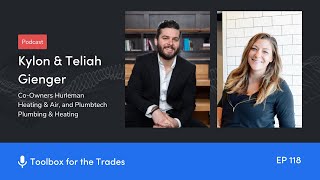
Kylan and Talia, who own Hurliman Heating & Air and Plumtech Plumbing & Heating, talk through acquiring companies in the Pacific Northwest. They saw 60-65% turnover in year one and learned you need to be hands-on for about 12 months, stagger deals, and hire the right people. They also discuss the mental toll of running multiple businesses.
Kylan and Talia, you are the co owners of Hurliman Heating and Air and Plumb Tech Plumbing and Heating in the Pacific Northwest. I am so excited to talk to you guys today. Thank you so much for joining me on Toolbox for the trades.
Likewise, Jackie. Thanks for inviting us on. We're very excited when we heard about the opportunity and told family and friends and co workers and I've been a long time listener and a big fan of the podcast and yourself. So it's, it's an honor.
Yes. Very excited.
Thank you guys so much. Full disclosure to everyone listening. They told me this in the pre interview so I was like, I've got to have them on. But it is just. Thank you so much for saying that. It's very humbling and just wonderful to hear when owners listen to my show. So I really love to hear that. Thank you. We're going to start off this podcast the way we do every single one, which is how did you get into the trades?
Yeah, I can take that one. Really started out, I, my first business I ever started was a painting company. Now whether you want to consult, consider that a trade or not, I know we could, people could debate back and forth, but that's where I got started, so. And kind of cut my teeth in business and really cut both of our teeth. We expanded pretty quickly and we had crews running out of six different states and we specialized in painting large apartment complexes. And so that was my introduction to the trades. And then the rest of the story is we got into it through acquisitions. Basically. We acquired the plumbing company and the H Vac company. The first acquisition was a little over a year and a half ago now. And so we are still fairly new, although I'm learning a lot and I have a lot of respect and admiration for the trades and really enjoy all the people we've encountered so far. But that's, that's how we got into it.
That's awesome. Yeah. We're going to talk all about strategic acquisition because your, your paths kind of mirror previous guests I've had on this show which include John Wilson and Rick Faza, millennials who are getting into the trades. You guys are my age. I totally geeked out. I was like, yay, someone. Someone who's also at the same point in life that I am. So I can't wait to hear about how you guys got into it. But real quick, do some people not consider painting a trade?
It's, you know, one could argue in terms of, you know, the moat or barrier for, you know, skill Set to be able to become a painter, it's, you know, you could set the bar pretty low. Although the kind of work we were doing, especially if you get into like the industrial side, there's a lot of knowledge that comes along with it.
Yeah.
So perhaps I'm being a little too hard on myself.
That's what I was gonna say. I was gonna offer you a reframe, Kylan. I was gonna be like, no, painting is a trade. Take ownership of that. So you guys acquired Hurliman and Plumtech and essentially in the last eight months, you both went from owning no businesses, no employees, no revenue, to having 75 employees, $15 million in revenue. What have you learned about running a service business since then?
So I took some notes on this one because the first thing I could think of was what, what have we not learned? But everything. Yeah, I would say the, the first thing is we learned that it's obviously not a walk in the park. I think a lot of this conversation will probably be framed around the acquisition point of view. There's a lot of people that own these businesses that are retiring and offloading their businesses and often selling them and people taking those over. So it's kind of a hot topic right now with entrepreneurs that want to own their own business. Why not just buy one? And the trades are very attractive, right? Because. Because they're fairly recession resilient and they're long established businesses that are steady and stable. And I think a lot of people have the mentality, especially if they're reading about all this hype on Twitter, on the Internet, you see a business and it's got $500,000 in seller discretionary earnings and it's got a team that's been there for 10 years and a customer base that's been there for 10 years and you have a key employee that can probably be worked into the general manager position. And people have this idea, you could just step into the business and maybe be there a month or so, transition some things around, take advantage of the low hanging fruits and then take off and move to the next one. Or chill on a beach somewhere and you're earning 500, you know, half a million dollars a year. And that is very far from so. As we have learned it is, we have discovered, best case scenario, you really should be there for 12 months minimum. And there's a lot of blood, sweat and tears involved in that before you can even think of getting the leadership team underneath you to be able to step out of those day to day operations.
Well, I think it's really important too to know that during that 12 months you're really trying to figure out who could be the best person to come alongside you and help run this business. You're getting to know it, you're getting to know its personality, so to say. And so to come in in the first two months, be like, oh, I know exactly what this company needs, I know who it needs. It's, it's pretty naive. And so I think you really do need that time to understand it, understand its quirks and then figure out the right kind of person to come in and lead alongside you.
And oftentimes if it's an acquisition, it's away from home, you know, we've acquired out of the state that we live in and then three hours away from where we originally lived. And so you're isolated from a lot of friends and family and that support network that would normally be there to help you through adversity and pushing your capacity. So there's a, there's a loneliness aspect to it as well, which is why it's nice to have a network that Service Titan provides, for example, and be on a podcast like this with some of the other greats that are out there working hard on this. I think one of the other things I've really learned this year, and as I told you before, we're currently on a annual sort of goal setting retreat with our extended family that we do this every year. And so we just finished up reflections and here's some of the main things and takeaways we've learned this year and in business and particularly in the trades, one of the big ones for us I think has been learning the skill of how to identify, attract, place and then develop the right people knows that out there, that they know that at the core of any business it's all, all about people. And to the extent that you have world class people in place and in the right seat, you can build a world class business. And so, and especially I know we're going to probably get into this, but us not being having an extensive multi year history in this trade, it's been vastly important for us to pull the correct people around us that have to quote somebody I'm learning from a lot right now, the ksaa, the knowledge, the skill set, the ability and the attitude around this, these businesses that we don't. You could probably speak on the humbleness aspect.
Yeah, I would say that this last year especially probably took any ego out of any ego that we might have had. It took it away. There is definitely A huge amount of humbleness that you have to have coming into this business, business and, or any business really. And, and take that humility and just try to learn from people, as many people as you can. The people that are there, people that you want to be there with you. It's kind of essential. I mean, you come into it again thinking that I know everything, I know exactly what this business needs, I know who it needs. Can kind of kick you in the butt.
Yeah, for sure.
Alienate people quick.
Yeah.
Besides that, pretty typical stuff with any business. Learning how to create strong systems and proper tracking and accountability with people in the business. That's essential for any business to run smoothly and to continue to scale. So high level. Some of the. Those are the main things we've learned this year. Of course we can go infinitely in the depth.
More in depth if you want any of that.
Yeah. So you guys just learned like one or two things this year and we will get into a lot of this stuff. My main question though is, you know, your story reminds me a lot of Rick's story. Rick Vaza took over John Padilla Plumbing in San Diego and he spoke similarly of. To go into this business and to think that in two months you're going to know exactly what this business needs. All these things. Like you have to really know its personality. Like you were saying tay. And, and you guys are not just doing that with one business, you're doing that with two businesses. So I would love to know that challenge because you're not just getting to know one organization, you're getting to know two right now. So what are the different needs you're finding between Plumtech and Hurliman?
Well, they're both very different businesses. Plumtech, without getting too much into the weeds, is mostly cert. It's plumbing company obviously and it's mostly service residential. Service based. Hurliman is just. Is. Is H Vac and it's. It's just about everything we do commercial residential. We do a large amount of commercial new construction project, public works projects and then we also have residential divisions so service and replacement just like everybody else. So we've had to learn all the different aspects of that. And frankly, this last year we've been focused more on the residential side because I think, as most people know listening to this, I think growing that side of the business, being in people's homes, it's going to make us a healthier business long term. We do, we have that. We own that relationship. With higher margin, we can set that pricing.
And it's where we can develop more of our reputation. Right. Like you, you can get more visibility with service based than you can or with residential service than you can with commercial new construction. Right. Five star online presence, that, that kind of thing. So it is more of our reputation and that didn't have a lot of focus prior so we did want to really focus on that area.
But this year for her lumen, specifically this year our big focus is on the commercial side of the business and growing that better project management and estimating systems all the way from that senior estimator down to the foreman and the workers that manage those day to day jobs. And that's a totally different ball game. It's completely different. So I'd say being able to manage those two businesses, it kind of came down to two things. One, staggering it a bit. We bought the plumbing company and it was quite a bit smaller and we were there for six months now basically the month we bought it, I started working on the second acquisition. But we had about six months time there to just focus on plum tech and that was very beneficial. And then we stepped into hurliman which was 10x the size and then from there so staggering it a bit. And from there it just came down again to people and being able to attract and hire the right people. So with plumtech stepping out of that and focusing on a much, much larger business, it was key that we got somebody in there that could run the day to day. That's a whole nother story because you know, conversely like right along with learning how to hire the right people, we've definitely made mistakes in hiring and promoting, placing the wrong people. And one of those was, you know, we, we had a general manager we'd hired for the plumbing company. Fantastic individual, great culture fit, a good friend of ours. But it became very apparent to both him and, and us about six months in that it was just not a good fit.
It.
And so there's a mutual parting of ways.
Oh thank God. A mutual parting of the ways. So those are the kind of breakups you want to hear about.
Yeah, it was good.
Yeah, it was much less of a breakup and I guess more supporting him.
In his realization he wasn't the right fit.
Sure, right. But there was some traction lost there. But then so, so really we took over Hurliman and still for another six months we were far more involved in the plumbing company still than we have would have liked to be. And that was a pretty stressful time, stretching. But then we ended up finding the right fit for a general manager. There and that was about six months ago now. And now that business probably takes up on average two to three hours of time, maybe probably less per week.
Yeah.
So we can focus all of our attention on her a little bit. So that's really the key is building a great job that systems and management and personnel structure below you and continuing to systematically delegate for you to be able to keep. Keep ascending up the org chart yourself and do more acquisitions and be able to focus on the right things.
Nice. I have to say, for the year that you just described to me, you both look very well rested. So I don't know if I'm catching you on like a good day, but if you're not well rested, you hide it very well.
Perfect. You're catching us on a terrible day.
It is a terrible day. Our daughter woke up at 3am and was awake for two and a half hours this morning and then finally went back to sleep for maybe a couple more hours. Yeah, no, it was a little rough.
Yeah. So we do have a three year old daughter and a dog that we've drug around to these acquisitions and we've been living in an RV with altogether for the last 12 months just to be close to the business and be able to focus on it.
And I'm 34 weeks pregnant with our second daughter.
Oh, my goodness.
We're typically in the office together, so it makes, you know, our three year old is around adults more than she is around children, has kind of become the office mascot. And bless her heart, she's been through a lot of adversity as well.
She has.
Oh, my goodness. Well, you look great, Tay. Congratulations on the second one. That is. I just, I have to say I'm trying to put myself in your shoes. And again I mentioned at the top of the show, we're the same age, same generation. I'm just like, I'm dizzy thinking about how much work you guys are doing. But I have to imagine there's some passion in there too, because you guys were entrepreneur, have been entrepreneurs for a while now, right?
Yeah, yeah.
We built few different business that the plumbing company and a couple of brick and mortar retail locations.
And we had those for about four years and then sold them.
We sold all of those to an.
SBA buyer too, which was kind of fun. We were on the other side of.
It and from there did a bunch of house flipping. So we're no strangers to that entrepreneurial lifestyle. But this last year has certainly stretched us a lot. We, in addition to that, we were building a house all at the same Time. So basically building a house and taking on these two businesses, all in the span of about a year and a half. So the one thing I would. The headline there, I would tell people is, I mean, maybe people could, you know, in hindsight, could have planned a bit better.
Yeah.
But we've pulled through, and it has certainly stretched us to our limits. And I don't believe there's any growth without adversity. So we have certainly grown a lot. And what I tell people is doing all of that, that kind of route in life, it doesn't necessarily promise consistent happiness. So if happiness is what you're after, it might not be the best fit, but what it does is you end up feeling extremely fulfilled. And I think I can speak for both of us when that's really what we're chasing in life, fulfilled from the standpoint of man, we've been able to grow a lot as individuals. We've been able to help our teams grow a lot and just accomplish some things we never thought we were capable of. And that leaves a sense of fulfillment. Even though the journey to get there hasn't necessarily. In the journey we have to go, it doesn't necessarily promise happiness day to day. A lot of. A lot of anxiety and depression and anger and resentment and all those fun, negative emotions you get to work through.
Despite all of that, we still very much love this process and are looking forward to our next acquisition, although we don't have one in mind at this point. But we. We genuinely love it. We love what we do. We love that we get to do it together. So.
Yeah. Well, thank you for sharing that, because as you guys know, I love getting vulnerable on this podcast. I love tapping into the mental health component because I think it's a big thing that owners, entrepreneurs are kind of just starting to openly talk about, especially in the trades. And I love what you said, Kylan, about no growth without adversity. You guys came in as outsiders, so you stepped into Plum Tech and you were just these two millennials who wanted to take over the business. They were like, this guy used to be a painter. He's not a legit contractor. So what was that like for you guys?
Definitely a lot of. We definitely encountered judgment and scoffing from people, but at the end of the day, I think it's from people that don't understand the bigger picture, which is we didn't buy these businesses to become technicians ourselves. And I mean that by, you know, technicians in the sense of actual service technicians being there with the customer doing their repairs or Technicians in the sense that, you know, I'm, I'm not the best at accounting or even creating some of the systems that need to be done in the business. So technicians in the terms of doing all the nitty gritty work that actually, you know, needs to be done in the business, what, you know, what we focus on is business. I mean that's our trade. And again it's about attracting the right people. So being the kind of people and leaders ourselves that other folks want to pitch their wagon to and then constantly pulling the right people and putting them in the right seats to take care of those things that we don't have a lot of knowledge about and then be able to build a compelling vision for them that aligns with their vision for their life and get things out of their way so they can do their job. And you know, my job is to kind of get things out of people's way and you know, find ways to make their job easier. So yes, a lot of judgment. You know, there's a specific scenario that comes to mind where when we took over the H VAC company at first we were having one of our first team meetings and a couple of the team members and we, we.
This is maybe a month into it.
Yeah. And by then we built good trust and rapport with the existing team. I think they, you. We were there for the right reasons and had their backs and wanted to take this company from good degree. But so they brought concerns. They're saying hey, at supply houses and you know, some ex employees and stuff, they're, they're talking you guys and they were saying it in a sense that.
Tank the business and that you just, you're not going to make it and you know all these things and, and.
They were bringing it to, to our, to our attention in the sense that we needed to be concerned about this somehow or retaliate somehow or track these people down and tell them to shut.
Up somehow and just go sit outside the supply houses and be like, what are you saying about me?
Stop saying bad things about me.
What are you saying about me?
Yeah, but we told them, look, I don't care about that. What I care is like time will tell. What I care about is getting results and us becoming a better team and this becoming a better business. And so time will tell. That's all just noise. I don't want to worry about it and I don't want you guys to bring it up again. Let's ignore it, move on. And I remember that specifically spoke volumes to that team as far as the type of people we were. And yeah, everybody just let's keep our heads in our lanes, head down and keep building something great here.
Yeah, it's like putting blinders on to really focus on the goal because I think if you're always an outsider, you're always going to get that chatter from people that have been in there for a while that are rooting for you to fail essentially. And, and so I think in order to succeed you really need to learn how to turn that off.
Yes, there was another nuanced part of that too where that internal team, I think they knew that our capacity to run a business of that size could only go so far. Especially with, you know, we do, we did almost 10 million of commercial new construction, remodel work and public works work last year. And out of everything, all the businesses we own, that is where we have the least expertise. And so we were very transparent with the team up front. Look, we are not the folks to be here for the next decade running the day to day operations of this business. We will be looking for the right general manager to do that and take that over. We're here to set a long term foundation, the culture, the values of the company, the long term vision and take advantage of some low hanging fruit and some other things that we're pretty good at, get the right people on, right people in the right seats. Again, I keep going back to that, but we're not the long term folks here. We're going to bring somebody in who actually has deep knowledge and expertise, not just in this trade, but that has skills beyond what we do in business and leadership and management. We were transparent from day one and actually as of the beginning of this week we found that general manager put him in place and it's certainly still early, but we've developed a great relationship with him and his family and it's working out very well. And the future looks bright and the team has just rallied around it as well. They love the guy. You know, we. Onward and upward is a sort of common phrase we use. And now people sign off with our emails and all this stuff. It's just kind of the general philosophy we, we have. But that's another, I guess, little nuance about stepping into these businesses. Not necessarily being from the trade or even having the business expertise to take a, you know, 15 million dollar company to a 30, 40, 50, 60 million dollar company.
Sure. I love that transparency you were talking about because I think that's so important and that's really the marker of what builds trust among Teams, which is what I think helps foster, you know, senses of autonomy, of accountability within teams. I think that's so great. You were really candid with me, you both, when we did our pre interview, that you had a lot of turnover when you both first took over the business. So I'd love for you to talk a little bit about that. And then I would also love to get your take on what you look for when it's finding the right people for the right to fit the right seats.
Sure. You want to start taking that or you want.
Yeah, I can. So in about a year between both businesses, we probably saw about a 60 to 65% turnover rate.
Pretty high.
Pretty high. So the majority of this was, you know, us stepping in and us seeing certain people out the door that we just instantly could tell were not really good culture fits, at least for the culture that we wanted to create. Some left on their own just because they had dealt with, you know, they had baggage from however many years. And this just felt like a good transition for them right to leave. And some left because. Well, not because, but some left. And it was really challenging. It was kind of scary because they were key people in the business, higher level managers, people who did one job and only, you know, that person only know, knew how to do that job. And so we're kind of scrambling, figuring out, okay, how do we do this? Like, what does anyone else know how to do this here? So it was kind of scary. We saw it all, wide range of it all. But I think the biggest thing is we had a clear direction on what the business needed to become. And again, like Kylan has said, it just, it all starts with having the right people in the right seats. So that's just step one, right? Like, if, you know, you have somebody in the wrong seat or they're the wrong person in that seat, maybe they can fit to another seat. But if they're just the wrong person in general for the company, then you kind of have to see them out the door and, and work through that problem.
Yeah, no, I mean, to add my two cents, I'd say there's no secret hack or special sauce here. Like, step one is get very, very clear on what the business is, needs to be, what it needs to develop into. And as you create a plan for that and what needs to start happening, you simply just start again. This is very broadly speaking, there's, there's a lot of depth we go into here, but you start measuring people against that. And so it's everything from, like, where do we Want to be in revenue? What are the certain KPIs we want to hit to, what is the kind of culture we have, what are kind of values we want to stand for as a company? And it becomes very clear in a pretty short amount of time what people that exist currently aren't in line with that aren't able to perform, don't want to go there with you. And those people, they walk themselves out the door or will eventually see them out the door through a systematic process. But yeah, it's downright scary. I mean, we lost people with key licenses, key knowledge and skills. But it's just. It's pretty amazing how when you do have that clear direction, even when you lose that person, you might hurt for a bit, but there's always somebody better that we found to step in and take their place. And that has the passion, the drive to go where you want to go and where the company's headed. So that's kind of what I tell people is if, if, if you know where the company's supposed to go and you're measuring people effectively against that and you know somebody and even they know they're not. They're not measuring up to that, even if it's scary, it's a better thing to let them go sooner than later because it's costing you untold amounts of progress. They're holding things back.
Yeah, I really like what you're saying about the vision. Kind of sets the bar for who you want to hire. Because I can imagine I'm putting myself in your shoes. And if I had just acquired two companies and would you say 65, 75 people left within a time period, I'd be like, any warm body will do you have a pulse, like, come work for us. But then having that really distinct vision of like, this is where we want to go, this is how we want to. This is where we want to go, this is how we want to grow. Can really make it easy for you to find someone to really fit that box. You know what I mean? It can. I feel like it must also feel scary to set those parameters right. Cause you're like, I don't know, necessarily want to isolate anyone out, but it must take a certain amount of fortitude to like, stand your ground with that. Am I right in assuming.
Yeah, absolutely. A very specific example would be our replacement department at Hurliman. There was a comfort advisor that came with the company, who we knew where we wanted this department to head. And his sales were very minimal compared to what is industry standard. There was when we tried to work with him to create better systems in the business, there was a lot of pushback and not a lot of follow through on these things. And also there was an attitude issue as well. Fairly vindictive and stabbing other team members in the back. And yeah, so it became very apparent early on this isn't, this probably isn't going to work. And again, that was more or less kind of a mutual thing, but that was our only comfort advisor at that point. Right. So we saw him go and then all of a sudden we didn't have a comfort advisor. So now it's a mad scramble over, you know, a month or so it took to find another one to who takes on those leads, who goes on those calls, who has the knowledge and skill set, ability that, the attitude. And definitely got scrappy there for a bit, I'd say because of all that turnover. Right. There was a lot of. Got pretty scrappy this year and it was. That contributed to a lot of the stress, I think. But to encourage people that are undoubtedly going through this, that are listening on the other side of it, looking at what we have now, look, we got a great team that almost 100% of them. I asked myself the question, would I hire them a second time and.
Oh, good question.
And the answer is yes. And they're aligned with our vision. They've. They have the skill set, the attitude, the ability. And that just feels really, really good because now, now 2023 can be a great year, right?
That's a really great question. Would I hire this person again? I think you could apply that to anyone. Would I date this person again? Would I, would I go to this restaurant again? Yeah, I marry this person again, Would I have. What I have. Did you say, would I have this kid again? Interesting. Interesting projection there, Kylon.
We'll.
We'll move on and just never let your, one of your two daughters listen to this. I didn't hear you say that again. Tay.
It'S okay. We're fine.
Love it. Okay. I want to get. I really like what you had to say there. And I have a question I haven't sent you but yet. But before I even go to that, I want to get your take on strategic acquisitions. So anyone who's listening to this podcast now, whether they be a tech or an owner or just someone who's interested in the trades, who's interested in getting into this space. What advice, what opinions do you have? What thoughts do you have about making strategic acquisitions in the trades?
Good question. Let me, let me think here. I would say it helps to start with an. If you don't have any. Let me start with this. It's going to be best if you have some kind of business experience. If you've been a manager or leader in the business, if you have some of the financial acumen required to run a business, somewhat of a basic, of a base of basic business knowledge is going to be immensely helpful for you. And then once you're ready to start looking for an acquisition, getting involved with a network of people is going to be best. There's several out there right now. I don't know if I want to name specifics on the podcast, but just some quick googling and getting involved in the Twitterverse. You'll find these people to surround yourself with and other established companies and networks that, and there was a company that was a part of and helped build for a long time that we, I, we trained hundreds of acquisition entrepreneurs specifically on how to acquire these businesses. So that's why I steer people that direction because what we did was we aggregated a lot of collective knowledge, resources and a network of vendors to help people tackle every stage of that process. And so it starts with understanding your investment thesis. What do you actually want to buy? What's the industry? What's the sde? What's the location? What's that general business profile you're after? So you can just sort through opportunities. The next step is to actually start sourcing those opportunities. And you can source them on market versus business brokers or great websites out there like Biz by sell. You can source them off market by hiring VAS or other companies or do or doing it yourself. But cold calling various businesses that can often be there. There is, it's not a significant barrier to entry, but it is a barrier to entry that put yourself in the situation of a seller and somebody that's had this business for a long time. You want to sell to somebody that knows what they're doing and they're confident. So you're more likely to sell to somebody that's already bought a business like this or has a hit history in a business like this. Yeah, it's not always the case, but it's more likely. So that really helps if you can, if you don't have that experience to maybe surround yourself with, you know, partners, investors that do have that experience that you can bring to the table and showcase to a seller. Because a lot of what you're doing up front is you're, you're selling yourself to, to the seller and your ability to Take this baby they've built over perhaps a few decades and continue to do well by their legacy. Continue to build their legacy, essentially. But frankly, in my mind, that's the easy part. You know, once you've found the deal you want now you have to think about doing due diligence on that deal and you need to think about financing that deal and you think about negotiations and all the legal work that goes behind it. And again, that's where I think a network or some of these other companies out there can help by bringing you into that ecosystem of vendors and best practices and knowledge. Even if it's just surrounding yourself with a few folks that have been there, done that. Like you mentioned, some of these names, John Wilson and Rick and Rich Jordan. I've been in a texting group with those guys for I think a couple of years now. We're just constantly texting back and forth and learning from each other information and so you can build those little ecosystems for yourself. Still harder is then once you've actually bought the business, it's a whole different ballgame actually stepping into operations and, and operating it. And I found that out firsthand when I helped build this company that helped other acquisition entrepreneurs do that. We way overestimated how many folks that came through the top of our funnel would actually execute on a deal and move forward with, with an acquisition and operate the business effectively.
Yeah.
And frankly, it's just, that's why I say it helps to already have, you know, cut your teeth somewhere in business because it's, it's not easy. And if there's any, just a word of caution too, if there's any of those groups or networks that's telling you, hey, I've got this systematic framework, this operating model, this playbook that you can take and you can apply to any business post acquisition and completely integrate the company and turn things around in three months or less. Fits all, I would say. Be skeptical of that.
Yeah.
Most of the things in those playbooks you'll see you will have to do at some point. Right. You need to focus on marketing, on sales, on finance. You need to put in place proper organizational structure and sops and meeting rhythms and financial hygiene. All, all of these things need to happen. But how they happen and the timeline that they happen in, it just varies on the business because at the end of the day, what is a business, it's just, it's a bunch of people and people are, everybody's different. People are unpredictable and they have feelings and wants and needs. And so that's why? Tay said earlier, it's a favorite saying of ours. Every business has its own personality. And until you get into that business for at least a few months to really start to understand that personality and the different dynamics and nuances, you really.
Won'T know what your action plan is going to be for the year, for even the next month or week, you know.
And then as the owner, you really should be there for at least 12 months, in my opinion, to set that groundwork. And then you can start delegating and working your way out of, you know, the lower tiers of the org chart on up to focus on on the next thing. So very broadly speaking, that is, that's my advice I will throw in there, though I imagine our contact information will be along with this. And I am more than happy to talk to anybody if they're trying to pursue an acquisition. I did this for years and talked to hundreds of people and I absolutely enjoy it. And so I can point people in the right direction and give advice and do what I can to help out.
Same.
That's very generous of you. And so just to make sure you guys don't want me to advertise this podcast as listen to this podcast and get the easy playbook to supercharging any business you acquire.
You're sharp.
All right.
That is how I. That's how I'm gonna mark. That's how I'm going to advertise it, just for SEO purposes. Don't take it personally. That is very generous of you to offer for people to reach out to you. We can include your contact information. And also I will say that that is very much. I think you guys taking on the spirit of the trades, which I say all the time on this podcast, is one of the things I love about this industry is that people are always down to help one another. And so I think that's very much you embracing the trades by offering that. So thank you guys. I have so I can't believe we've been talking for as long as we have. I could talk to you about so many. I haven't even touched on the fact that you guys are high school sweethearts and have been married for since you have been together, since you're 17 and you've been on this journey of entrepreneurship together. But I really want to get to this point newer question that I'm starting to ask. What would you say to anyone listening who wants to who's ready to quit their business, their trade business, who's maybe like had the worst couple weeks and they are just ready to hang up their hammer, like just throw in the towel and go back to being, go back to working for someone else or something like that.
I have my two cents. You want to say that now? Unless you have something right now.
No, you go for it.
I think fundamentally you are the average of the five people you hang around the most. And so to the extent your network and the people you surround yourself with are motivated, smart, driven people that ideally are a little bit further down the road than you are. Not too far because you want to be able to relate, but a little bit further to that extent, you will continue to grow and find that encouragement and that support network and information, the things, resources, the things you need to stay in the fight and in the trenches and keep on keeping on. Right. And so I would encourage people, if you are reaching that point, you are more than likely isolated. You're probably in the trenches, isolating yourself. And I know this because been there, done that. And you need to get out and find that support network and see how other folks are doing it. And even if it's just a vent to start with and just be like, this is really hard. I'm crying and screaming into my pillow. I, you know, these are all, these are all things we've done, right? It comes back to the vulnerability aspect that you, that you pointed out, right? You need to find folks to be vulnerable with and then folks you can learn from that have been a little bit further down the road. So that's why these relationships I have with all these guys, John Wilson, Jordan. Rich Jordan. I mean, I remember I was at my wit's end with how to build some of our price book structure and some of these basic things with our plumbing company. I had one hour long conversation with, with Rich Jordan that saved me months of trying to figure out the right thing to do and just set me on a path to success there that, that we're still growing from. So, right. There's immense power in the people that you hang around the most. And don't, don't isolate yourself.
I think my answer would be, and I'm trying to come at it from like, if I was in that position, typically, if I was feeling overwhelmed like that, to the point where I was like, screw it, I'm done. I. My typical course of action is to take a look at everything that I'm doing and try to get rid of and simplify as much as I possibly can. Like that's what I have to do mentally to kind of weed out all the extra stuff. And see if that helps. Right. Like, if what. What's the one thing that you can either delegate, eliminate, or there's something else but that can solve Automate, that can solve a lot of other issues. Right.
For you.
So kind of looking at like, what am I doing? How are things being done? How can they be simplified? How can just be streamlined to eliminate a lot of other stressors in. In my life or in this area of the business? It's like that I'm just. That's what I would need to do, or that's what I would typically do if I were in that position, which I've been before. So I've done this before, but that's kind of my course of action. Really. Look at what you're doing and how it can be simplified.
Yes. And. And read. Readers are. Yeah, leaders are readers, rather. And so read a lot. Read good books. Like the one I'll recommend. Here is the book Traction by Gina Wickman, which I'm sure is not the first time it's been mentioned, but the entrepreneurial operating system eos. Read something like that because that can really help you create a framework and a operating structure for your business that can bring a lot of clarity and traction and simplify things, organize things, get everybody rowing in the same direction.
I love that. Well, guys, I want to talk to you about so many other things. I want to give you a moment to talk about your partnership and how you guys are working together to unlock this entre to. I like how you guys are working together as you traverse the unknown terrain of entrepreneurship in the trades. How's that for a metaphor, maybe, or just. Is that a simile? Or what's the one where you would create imagery? I don't know. We'll move on. I want to know how you guys work together. You know, how you guys are, how you guys like, like work together. Who does what? Tell me a little bit about it. How does it work?
Yeah. So I think especially this last year, we really found out where we shine, which, which roles we shine in. Kylan. Being more the visionary role, again, going back to traction, being more the visionary role, taking on the big problems, overall strategy, where we're going to be in 15 or 1 3, in 10 years. Um, and then I, I really like the integrator operations side of it. So I really like to understand, and I think have a pretty decent ability to understand how things should be operating practically day to day to get the business where it needs to go or at least get the business on track to start Going in the right direction.
Um, yeah, that's a good way. I'm. I'm the all gas, no brakes guy and the one that gets frustrated because the company doesn't have the structural resources or cash to like, execute on the vision I have yet. And. And I'm not as great at getting into the nitty gritty details of how do things have to happen exactly this moment? How do we need to build this system? What's this reporting structure so you can.
Keep pressing on the gas?
Tay and our new general manager, these are the folks that are much better at that than I am. So it's really turned into a great yin yang kind of relationship. She compensates for my weaknesses and vice versa. Practically speaking, our roles out of necessity have just become very interchangeable. We've had to become very adaptable. So an average week for us is Tay will be in the office half the week, and I will be at home working remotely on whatever I need to. And so I will be the one putting the three year old down for naps and making food and doing the grocery shopping and the cleaning and everything that goes along with that. She's in the business running things, and then we just, we switch roles. So it's become very fluid and adaptable out of necessity. And I really view our relationship as a competitive advantage. I don't think there's any way I could have done everything we've done in the last year and a half alone, and neither could she.
Definitely not.
But together we have been able to. And it's all of that adversity has really just brought us closer together. The downside of it is on dates or if we actually do get some downtime, we have no idea what to talk about outside of work. And so, yeah, we need to get better at that.
We're working on it, but it's common. Love it. We. We really do. It's. It's hard for us to think about anything different. I don't know.
Yeah, no, for sure. And also, I've heard that is a very common thing that couples who work together have to traverse. So you. There's certain. Going back to what you said in terms of finding other people and figuring out how they did it. I mean, I've interviewed a dozen couples on this show that have said, like, how they do it, so go nuts. I think that is all the questions I have for you guys at this moment. But I would love to have you guys come back. I mean, I'd love to check in and maybe like a year or so see where Hurliman and Plumtech are. So. But gonna end this podcast with my new favorite ender question, which is if you had to choose a soundtrack to be the song, if you had to choose a song to be the soundtrack of your life, what would it be? And you can select two, because there's two of you, but if you have one, that's fine too.
No. We were on a drive yesterday for, like, about three hours, and we were kind of going through the questions, and I was like, oh, my gosh, what should this. What should our song be? And we went through, like, Under Pressure by Queen and David Bowie.
We listened to a lot of rock music, metal, punk music, so there's a lot that we explored there. But the one we landed on was one that actually, fortunately, it's. You know how if you have Apple music or something and you play Plug your phone into your car, it'll always start playing the same song or the same.
Maybe it's like a glitch, I don't know. But it's yes.
For me. That song has always been Always look on the Bright side of Life by.
Eric Idle from Monty Python and the Holy Grail.
Well, that's one of the places where it's featured anyways. It's. The lyrics are hilarious, but also very fitting for what we've done. So a quick Google, I think, would give people a good laugh. Good laugh.
First time for a Monty Python song. So thank you so much for that, Kylan and Tay. I really enjoyed chatting with you guys. Thanks so much for being on Toolbox for the trades.
Thanks for having us, Jackie.
More from Bill




Capturing the 80%: How SmartAC’s Gen-2 Targets Non-Membership Homeowners | Podcast Ep. 296

Build better customer data with every booking in ServiceTitan | TAD Tune-Up Series

The Biggest Change for Roofers Coming From Other Roofing Software to #ServiceTitan?

